
Welcome to the 'Controls & Basic Handling' unit. This lesson focuses on the critical skills of starting and stopping your moped safely. Mastering these fundamental actions is key to navigating busy Spanish urban roads with confidence and control, forming the basis for all your subsequent riding manoeuvres and preparing you for exam questions on basic moped operation.

Lesson content overview
Operating a moped safely and confidently begins with mastering the fundamental actions of starting from a standstill and coming to a complete, controlled stop. These skills are not merely mechanical but involve a keen awareness of your surroundings and precise coordination. For those preparing for their Spanish Category AM theoretical exam, a thorough understanding of these techniques is paramount. This lesson will guide you through the complete process, from your initial pre-ride safety checks to performing smooth accelerations and controlled braking, crucial for navigating urban traffic conditions.
The ability to start and stop a moped effectively forms the bedrock of all other riding skills. Without proper control during these basic maneuvers, you risk losing balance, experiencing unexpected acceleration, or encountering brake failure, which are common causes of accidents, particularly in the AM category. Reliable vehicle control from a stationary position through motion initiation to a complete stop is a blend of mechanical actions and cognitive awareness.
Starting a moped carelessly, such as with the throttle open, can cause a sudden forward thrust that compromises your balance and could lead to a fall or collision. Similarly, improper braking, especially when stationary on a slope or uneven surface, can result in loss of control. This lesson integrates the essential physics of torque, friction, and inertia into practical procedural guidance, ensuring you understand not just how to perform these actions, but why they are performed in a specific way to maximize safety.
Before you even think about starting your moped's engine, a systematic verification of its critical systems is essential. This pre-ride checklist is a structured routine designed to identify potential issues that could lead to equipment failure or compromise your safety while riding. Neglecting this step is a common oversight that can have serious consequences.
Lights: Check that the headlamp (low and high beam), brake lights, and turn signals (indicators) all illuminate correctly when activated. This ensures you can see and, more importantly, be seen by other road users, fulfilling DGT requirements for functional lighting and signaling equipment.
Brakes: Test both the front and rear brake levers/pedals for smooth operation and adequate stopping power. Ensure they activate the brake lights. Any spongy feeling or excessive travel indicates a potential issue.
Tires: Visually inspect tire pressure and tread depth. Look for any cuts, bulges, or embedded objects. Proper tire inflation is vital for handling and stability.
Fuel Level: Confirm you have sufficient fuel for your planned journey. Running out of fuel unexpectedly can leave you in a vulnerable position.
Mirrors: Check that your rearview mirrors are clean, undamaged, and correctly adjusted to provide a clear view of the traffic behind you.
Control Levers: Ensure the throttle operates smoothly, snapping back to the idle position when released. Confirm brake levers and any other controls (like the horn) are easily accessible and functional.
Spanish DGT regulations (Artículo 9.4.1) mandate that all lighting and signaling equipment must be fully functional before departure. A brief visual check is not enough; a functional test of each component is required. Any defect identified during this checklist means you must take corrective action before riding.
Once your pre-ride checks are complete, you can proceed with starting the moped. The ignition sequence is an ordered series of actions designed to safely bring the engine to life without unintended movement. Most AM category mopeds feature either a mechanical ignition with a key or an electronic push-button start.
Position: Sit astride the moped with both feet firmly on the ground, maintaining balance.
Insert Key (if applicable): Insert the ignition key and turn it to the 'ON' position. This powers the electrical system.
Engage Safety Switch: Many mopeds have a safety kill switch (often red) on the handlebar. Ensure it is in the 'RUN' or 'ON' position.
Confirm Neutral Gear: Before pressing the starter, it is crucial to verify that the transmission is in neutral gear (no forward or reverse gear engaged). Look for the 'N' indicator light on your dashboard, or for manual transmissions, gently rock the moped while feeling the gear lever to confirm it's not engaged.
Apply Brake: Hold the rear brake lever (or foot pedal) firmly. This acts as an additional safety measure to prevent any unexpected forward roll.
Press Starter Button: With the brake applied and neutral confirmed, press the starter button. Release the button once the engine starts.
Starting a moped while it's in gear can cause a sudden, uncontrolled forward lurch, which is dangerous for both the rider and nearby pedestrians. Spanish DGT regulations (Reglamento de Circulación 2009, Art. 73) strictly mandate that the vehicle must be stationary and in neutral gear when the engine is started. Always make neutral gear confirmation a non-negotiable step in your starting routine.
Many mopeds, especially those under 50 cc in the AM category, are equipped with a centrifugal clutch. This is an automatic clutch system that simplifies riding by engaging and disengaging based on engine RPM (revolutions per minute). Unlike motorcycles with manual clutches, you don't have a clutch lever to operate.
The centrifugal clutch will engage automatically once the engine reaches a specific RPM threshold. This means that as you gently apply the throttle after starting the engine, the moped will begin to move forward smoothly as the clutch engages. Riders must be aware of this automatic engagement speed to avoid a sudden, unexpected thrust forward. It simplifies the starting process by removing the need for manual clutch coordination, but it still requires careful throttle modulation to ensure a smooth departure.
Achieving smooth acceleration from a standstill and executing controlled stops relies heavily on throttle-brake coordination. This is the simultaneous, delicate modulation of both the throttle (accelerator) and the brakes to manage your moped's speed and stability.
When preparing to move off, whether from a stop sign or a traffic light, smooth throttle application is key.
Maintain Rear Brake: Keep a light hold on the rear brake lever/pedal.
Gentle Throttle: Slowly twist the throttle grip (the right-hand twist grip) with small, deliberate increments. This will increase engine RPM.
Release Brake: As you feel the centrifugal clutch begin to engage and the moped gently try to move forward, gradually release the rear brake.
Look Ahead: Always look in the direction you intend to go, not down at your controls.
Avoid "snapping" the throttle open, as this can cause the rear wheel to spin (especially on wet or loose surfaces) or result in a sudden, jerky start that can destabilize you. The goal is a seamless transition from stationary to motion, maintaining full control and balance.
Stopping your moped effectively and safely is just as important as starting it. Progressive braking involves applying the front and rear brakes in a graduated, coordinated manner to bring the moped to a halt without locking the wheels, losing control, or skidding.
The hand lever on the right handlebar that controls the front wheel brake. It typically provides the majority of the moped's stopping power (up to 70%).
The pedal on the right side (or a foot-operated lever) that controls the rear wheel brake. It contributes to stopping power and helps maintain stability.
Release Throttle: Close the throttle completely as you begin to slow down.
Initial Rear Brake: Gently apply the rear brake first. This helps stabilize the moped and slightly compresses the rear suspension, preparing for the front brake.
Add Front Brake: Immediately after or almost simultaneously, begin to progressively squeeze the front brake lever. Increase pressure smoothly and gradually.
Balance Pressure: Coordinate the pressure on both brakes. The front brake will provide most of the stopping force, but the rear brake contributes to overall stability and shortens stopping distances.
Look Through the Stop: Keep your eyes focused ahead on where you want to stop, not down at the wheel.
Come to a Stop: As you come to a complete stop, continue to apply the brakes just enough to hold the moped stationary, placing both feet firmly on the ground for balance.
For most controlled stops, especially in urban traffic, the DGT recommends using both brakes. While the front brake offers superior stopping power, relying solely on it can cause the front wheel to lock, leading to a loss of control. Conversely, using only the rear brake dramatically increases stopping distance and can cause the rear wheel to skid, particularly on wet or slippery surfaces.
Understanding and adhering to the relevant Spanish traffic regulations (Dirección General de Tráfico - DGT) is critical for all AM category license holders. These rules are designed to ensure safety for both riders and other road users.
Rule: Mopeds must be started with the transmission in neutral.
Rule: All lighting functions (headlamp, brake lights, turn signals) must be operational before departure.
Rule: Both front and rear brakes must be functional and used for stopping when conditions allow.
Rule: Mopeds must not be left unattended while the engine is running.
Rule: When starting on an incline, the rider must hold the brake until throttle is applied and the clutch (if present) is engaged.
Even experienced riders can sometimes develop bad habits, but as a learner, it's vital to identify and correct common errors from the outset.
Your starting and stopping techniques must be adaptable to a variety of environmental and traffic conditions. A rigid approach can be dangerous.
Let's look at how these concepts apply in typical riding situations for the Spanish AM category.
Urban Stop at a Traffic Light
Starting on a Slight Uphill Gradient
Night Ride Using Headlights
Emergency Stop to Avoid a Pedestrian
Every technique and regulation in this lesson is rooted in principles of physics, human psychology, and accident prevention.
To ensure safe and confident moped operation, particularly for your Spanish AM license, remember these key takeaways:
This lesson covers the essential skills for safely starting and stopping a moped, critical for passing the Spanish AM driving theory exam. Learners must master the pre-ride checklist to verify lights, brakes, tires, and controls before departure, and follow the strict ignition sequence that requires neutral gear confirmation and rear brake application. The centrifugal clutch in most AM mopeds engages automatically, demanding careful throttle modulation for smooth departures. Progressive braking—applying rear brake first then progressively adding front brake pressure—provides the safest controlled stops while maintaining steering ability. These techniques are grounded in specific DGT regulations and adapted for varying conditions including weather, lighting, and traffic scenarios.
A short set of high-value points that capture the most important learning from this lesson.
Always perform a complete pre-ride checklist covering lights, brakes, tires, fuel, mirrors, and controls before every journey.
The ignition sequence requires confirming neutral gear before pressing the starter while holding the rear brake as a safety measure.
Centrifugal clutches engage automatically at specific RPM thresholds, requiring gentle throttle modulation to avoid sudden forward lurch.
Progressive braking applies the rear brake first, then progressively adds front brake pressure to maintain steering control.
Both front and rear brakes must be functional and used together for safe stopping, with the front providing up to 70% of stopping power.
Explore all units and lessons included in this driving theory course.
DGT Article 73 mandates that mopeds must be started with the transmission in neutral gear to prevent uncontrolled movement.
DGT Article 9.4.1 requires all lighting and signaling equipment to be fully functional before departure.
On inclines, hold the rear brake until forward motion begins to prevent dangerous rollback.
Avoid snapping the throttle open; use small, deliberate increments to prevent wheel spin and loss of traction.
Leaving a moped unattended with the engine running violates Article 10 and poses safety and security risks.
Rolling back on an incline by releasing the brake before applying sufficient throttle.
Attempting to start the engine while in gear, causing sudden uncontrolled forward movement.
Neglecting to verify brake lights function during pre-ride checks, risking rear-end collisions.
Using only the rear brake on wet surfaces, which dramatically increases stopping distance and skid risk.
Aggressive throttle application on start, leading to wheel spin, loss of traction, or destabilizing jerks.
Lesson content overview
A short set of high-value points that capture the most important learning from this lesson.
Always perform a complete pre-ride checklist covering lights, brakes, tires, fuel, mirrors, and controls before every journey.
The ignition sequence requires confirming neutral gear before pressing the starter while holding the rear brake as a safety measure.
Centrifugal clutches engage automatically at specific RPM thresholds, requiring gentle throttle modulation to avoid sudden forward lurch.
Progressive braking applies the rear brake first, then progressively adds front brake pressure to maintain steering control.
Both front and rear brakes must be functional and used together for safe stopping, with the front providing up to 70% of stopping power.
Explore all units and lessons included in this driving theory course.
DGT Article 73 mandates that mopeds must be started with the transmission in neutral gear to prevent uncontrolled movement.
DGT Article 9.4.1 requires all lighting and signaling equipment to be fully functional before departure.
On inclines, hold the rear brake until forward motion begins to prevent dangerous rollback.
Avoid snapping the throttle open; use small, deliberate increments to prevent wheel spin and loss of traction.
Leaving a moped unattended with the engine running violates Article 10 and poses safety and security risks.
Rolling back on an incline by releasing the brake before applying sufficient throttle.
Attempting to start the engine while in gear, causing sudden uncontrolled forward movement.
Neglecting to verify brake lights function during pre-ride checks, risking rear-end collisions.
Using only the rear brake on wet surfaces, which dramatically increases stopping distance and skid risk.
Aggressive throttle application on start, leading to wheel spin, loss of traction, or destabilizing jerks.
Explore search topics learners often look for when studying Starting and Stopping the Moped. These topics reflect common questions about road rules, driving situations, safety guidance, and lesson level theory preparation for learners in Spain.
Browse additional driving theory lessons that cover connected traffic rules, road signs, and common driving situations related to this topic. Improve your understanding of how different rules interact across everyday traffic scenarios.
Explore advanced techniques for modulating throttle and brakes to achieve smooth acceleration from a standstill and execute controlled stops. Essential for safe urban moped operation according to DGT regulations.

This lesson focuses on mastering acceleration and deceleration to integrate smoothly with traffic. It teaches how to apply the throttle gradually for steady speed control and how to use front and rear brakes in a balanced manner to slow down without destabilizing the moped. Learners will understand how to adjust their speed in response to changing traffic conditions, ensuring safe following distances and predictable movements for other road users.

This lesson focuses on low-speed manoeuvres within congested urban traffic, detailing techniques for navigating tight corners and weaving through traffic. Learners analyze urban traffic flow, pedestrian zones, and cyclist interactions to anticipate hazards. The lesson also explains DGT regulations regarding slow-speed movement and lane positioning.
This lesson teaches riders how to react effectively in a sudden, critical situation. It explains the technique for applying maximum braking force without locking the wheels, ensuring the shortest possible stopping distance while maintaining stability. The content also covers how to perform a swift and controlled swerve to avoid an obstacle when stopping is not possible, emphasizing the importance of looking where you want to go.
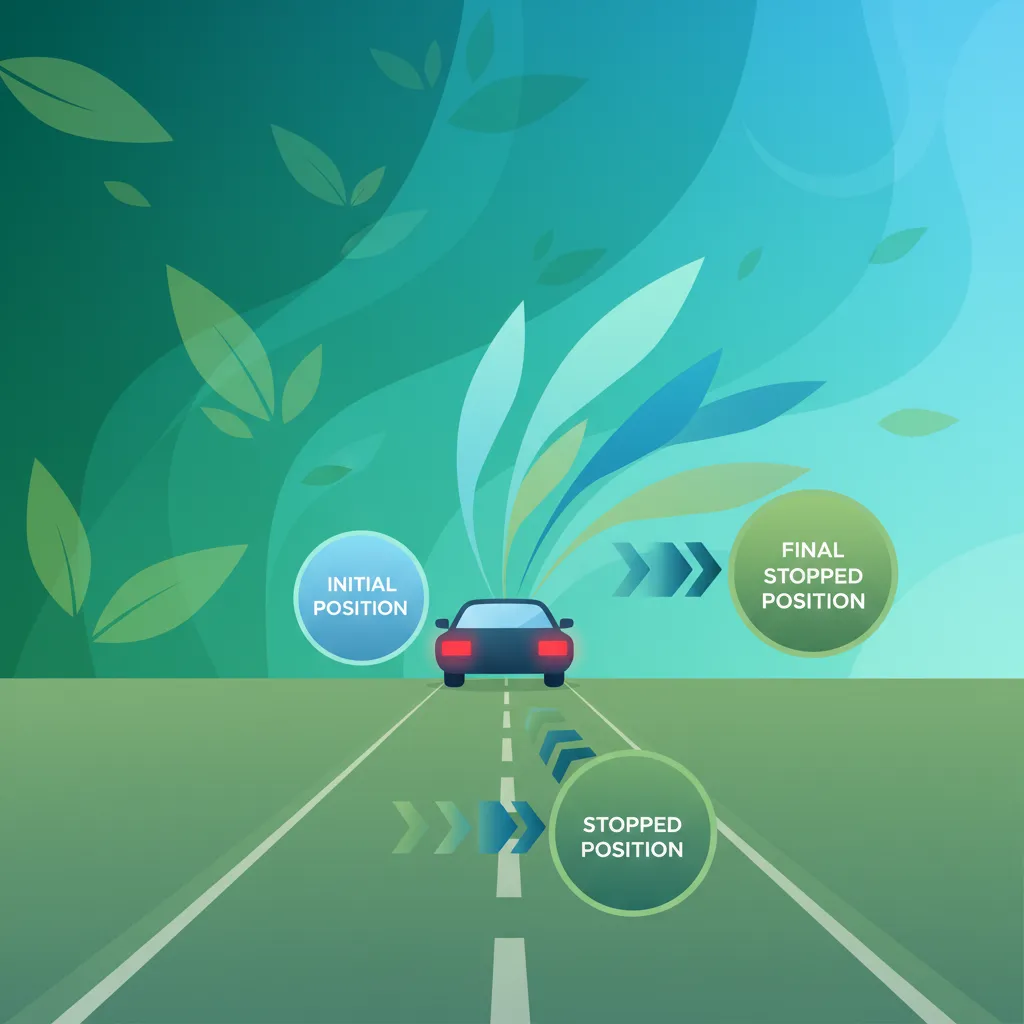
This lesson focuses on the correct application of a moped's brakes for effective and stable deceleration. It explains the concept of balanced braking, using both front and rear brakes simultaneously for maximum stopping power without losing traction. Learners will understand how factors like speed, road surface, and weather dramatically affect total stopping distance, and will learn techniques for emergency braking.

This lesson focuses on the optimal position for a moped within a traffic lane to maximize visibility and safety. It discusses the importance of maintaining a safety buffer from other vehicles and hazards, particularly the risk posed by the doors of parked cars. The content explains how to use lane positioning strategically to discourage unsafe overtaking and to be clearly seen by drivers in front and behind, especially when approaching intersections.
This lesson focuses on the coordination of acceleration and deceleration to maintain vehicle stability. It explains how to modulate the accelerator pedal for smooth acceleration and how to apply the brake pedal for controlled deceleration. The content covers the role of the ABS system, the calculation of stopping distances, and the importance of maintaining stability during speed changes.

This lesson provides strategies for navigating tight, confined environments such as multi-story car parks and narrow urban lanes. It emphasizes the importance of slow and controlled movements, constant observation, and a thorough understanding of the vehicle's dimensions and turning circle. Learners will develop the skills to maneuver with precision while avoiding obstacles.
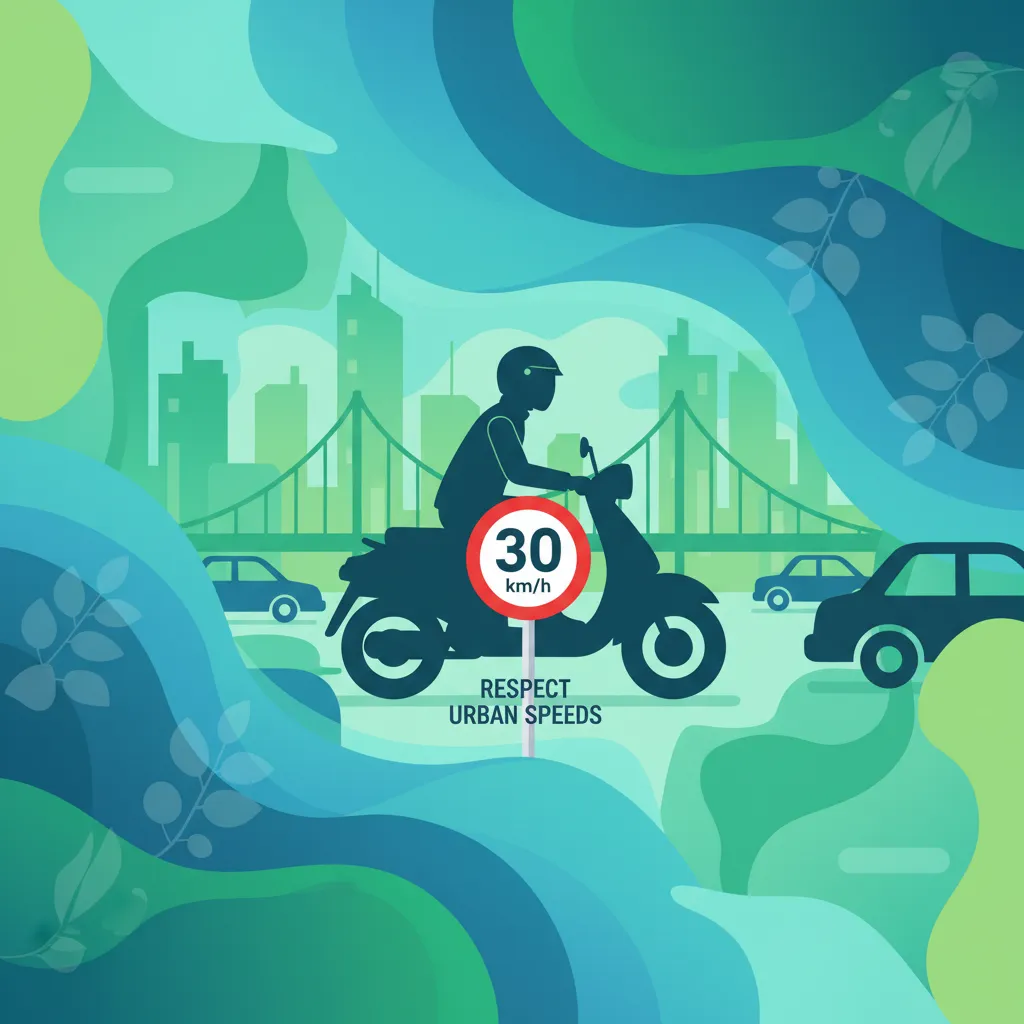
This lesson details the specific speed limits applicable to mopeds within Spanish urban areas, such as the 30 km/h limit on single-lane roads and the 50 km/h limit on roads with two or more lanes per direction. It teaches learners to identify speed zone signage and understand the legal rationale behind these restrictions. Adhering to these DGT-mandated limits is crucial for safety and avoiding penalties.
This lesson explains the physical principles of balance and steering specific to two-wheeled vehicles. It details the concept of counter-steering, where a slight push on the handlebar initiates a lean for turning, and explains how it applies at different speeds. Proper body positioning and weight distribution are also covered as key components for maintaining stability and executing smooth, controlled turns in tight urban environments.
Learn the critical steps for a thorough pre-ride inspection and the correct ignition sequence to safely start your moped, ensuring all DGT required safety features are functional before riding.
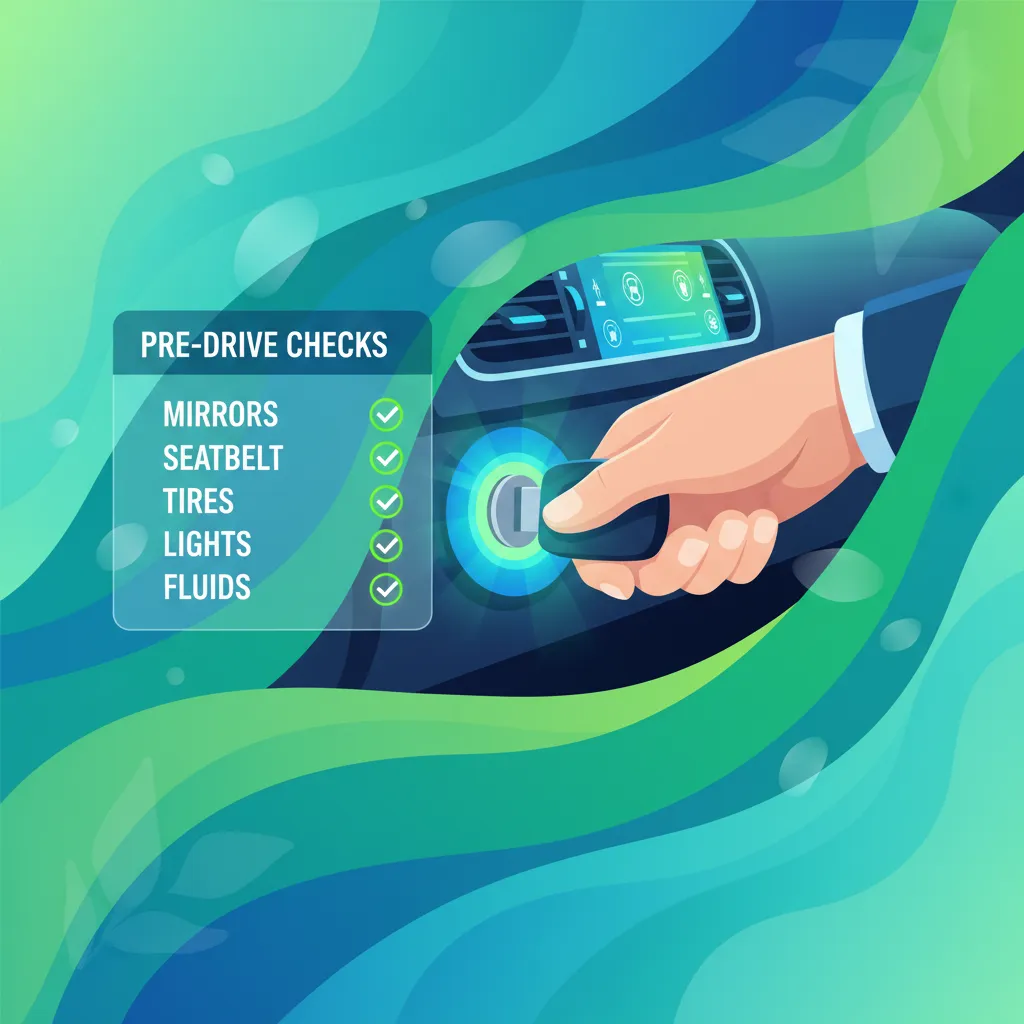
This lesson details the systematic steps required to start a vehicle safely and prepare it for motion. It describes the ignition sequence and confirmation of dashboard indicators before starting the engine. The content also outlines essential pre-drive checks, including verification of fluid levels, tire pressure, mirror adjustment, and seat position.
This lesson presents a systematic pre-ride safety checklist covering tire pressure, brake fluid levels, lighting operation, and chain tension to ensure the motorcycle is road-ready. It also emphasizes personal checks such as helmet strap security and appropriate gear for weather conditions. Integrating DGT-recommended inspection procedures helps minimize equipment-related failures.

This lesson outlines the compulsory equipment and documentation required for an AM-class vehicle. It emphasizes the legal mandate for an approved helmet, a valid insurance policy, and a vehicle registration plate. Learners will also understand the requirements for the roadworthiness certificate (ITV) and other essential documents needed to prove compliance with DGT safety and legal standards during a traffic stop.
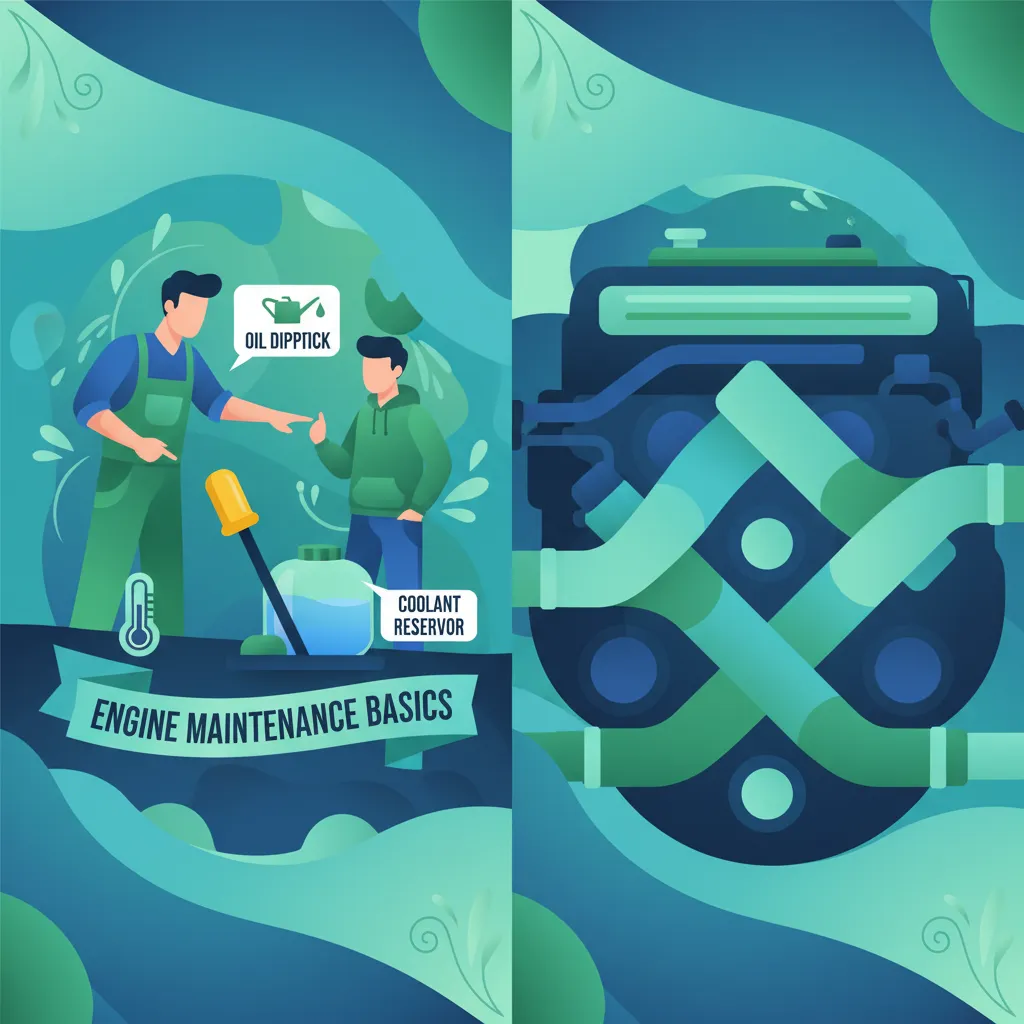
This lesson introduces essential mechanical checks to ensure motorcycle reliability and safety. Topics include monitoring engine oil and coolant levels, chain lubrication procedures, and tire pressure verification. By establishing a routine maintenance schedule, riders can proactively address issues and comply with DGT guidelines.
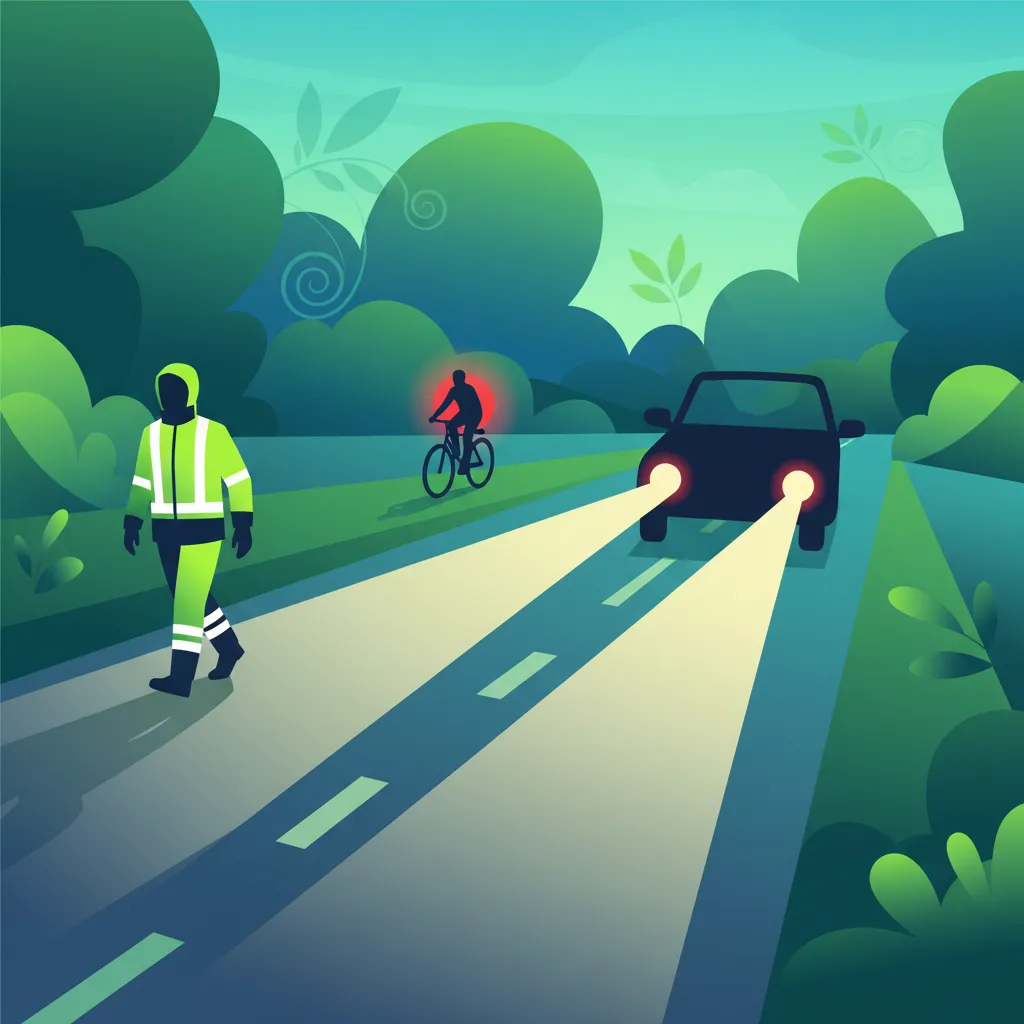
This lesson outlines the mandatory lighting and visibility equipment as per DGT regulations. It covers the correct use of headlights (low and high beams), taillights, and turn signals, ensuring the moped is visible to others, especially at night or in poor weather. The importance of wearing high-visibility or reflective clothing is also emphasized as a critical measure to enhance personal safety by making the rider more conspicuous.

This lesson teaches riders the critical importance of maintaining a safe following distance to allow for adequate reaction and braking time. It explains practical methods for judging this distance, such as the 'two-second rule,' and how this gap must be increased in adverse weather or poor visibility. Understanding this principle is fundamental to preventing rear-end collisions, one of the most common types of traffic accidents.
This lesson teaches riders how to react effectively in a sudden, critical situation. It explains the technique for applying maximum braking force without locking the wheels, ensuring the shortest possible stopping distance while maintaining stability. The content also covers how to perform a swift and controlled swerve to avoid an obstacle when stopping is not possible, emphasizing the importance of looking where you want to go.

This lesson outlines procedures for handling emergency situations and accidents. It covers emergency braking techniques, hazard avoidance strategies, and the DGT emergency protocol for accident reporting. Emphasis is placed on rider protective actions, post-crash first aid, roadside safety, and legal obligations after an incident.
Find clear answers to common questions learners have about Starting and Stopping the Moped. Learn how the lesson is structured, which driving theory objectives it supports, and how it fits into the overall learning path of units and curriculum progression in Spain. These explanations help you understand key concepts, lesson flow, and exam focused study goals.
Before starting your moped, always perform a quick check of your lights (headlight, taillight, indicators), brakes (front and rear), and tyre condition. Ensure your mirrors are adjusted correctly. This ensures your vehicle is safe and legal to ride, as you might be tested on this in the AM theory exam.
To avoid stalling, it's crucial to coordinate the throttle and clutch smoothly. Apply a small amount of throttle as you gently release the clutch lever. If your moped has an automatic transmission, focus on a steady, gradual increase in throttle after engaging the gear and releasing the brake.
For a smooth stop, anticipate the need to slow down. Gently apply both front and rear brakes simultaneously, increasing pressure gradually. As you slow down, prepare to put your foot down to support the moped as you come to a complete halt. Avoid sudden braking unless it's an emergency.
Automatic mopeds simplify the process as there's no clutch lever to operate. You primarily focus on throttle control and brake application. Manual mopeds require you to use the clutch lever in conjunction with the throttle to prevent stalling when starting and to engage gears, making the coordination more complex.
Yes, the AM driving theory exam often includes questions about safe starting procedures, correct use of controls in different situations (like starting on a hill), and appropriate braking distances. Understanding these basics is vital for passing.
Use our powerful search functionality to pinpoint specific Spanish DGT driving theory practice sets. Filter by road sign categories, traffic law topics, or question difficulty to build custom study sessions and reinforce your knowledge precisely where it matters for your official exam.