
Navigating urban Spanish roads means sharing space with many different road users. This lesson focuses on safely interacting with pedestrians, cyclists, and other motorcyclists, building on your understanding of urban traffic rules and hazard awareness from previous units. Mastering these skills is crucial for both passing your AM license theory exam and ensuring your safety as a moped rider.

Lesson content overview
Riding a moped (Category AM) in urban environments requires a heightened sense of awareness, particularly when sharing the road with pedestrians, cyclists, and other motorcyclists. These road users are collectively known as vulnerable road users (VRUs) because they lack the protective enclosure of a car, making them more susceptible to serious injury in a collision. This lesson, crucial for your Spanish Driving License Theory – AM Category, focuses on the specific regulations and best practices to ensure safe and harmonious interactions, minimizing risks for everyone.
Vulnerable road users are individuals who have little to no physical protection in the event of a crash. This broad category includes pedestrians, cyclists, and motorcyclists. For moped riders, understanding the unique characteristics and potential behaviors of these users is paramount to preventing accidents and complying with Spanish traffic law (Reglamento General de Circulación, RGC). Their increased vulnerability means that moped riders must adopt defensive riding strategies, adjust speed, and maintain significant safety margins.
Pedestrians are individuals traveling on foot, whether walking, running, or using assistive devices like wheelchairs. They can be found on sidewalks, crossing at designated crosswalks, or even in the roadway in areas without pavements. As a moped rider, you must always anticipate pedestrian presence, especially in residential zones, near schools, commercial areas, and public transport stops.
Key Considerations for Pedestrians:
Cyclists are riders of two-wheeled human-powered vehicles (bicycles), including electric bicycles with assistance up to 25 km/h. They frequently share the roadway with motor vehicles, may use dedicated bike lanes, or, where permitted, ride on pavement. Due to their smaller profile and varying speeds, cyclists can be less visible and may react differently to traffic than other motorized vehicles.
Key Considerations for Cyclists:
While mopeds are also two-wheeled motorized vehicles, in the context of Category AM training, "motorcyclists" generally refers to riders of higher-displacement motorcycles (over 50 cc). However, the principles of vulnerable user treatment still apply to them. Like moped riders, motorcyclists are exposed and lack the protection of a car, making them vulnerable to side impacts and other collisions.
Key Considerations for Motorcyclists:
Successfully navigating traffic with vulnerable users requires adherence to several core principles that prioritize safety and compliance with Spanish traffic laws.
The legally required lateral gap you must maintain when overtaking a vulnerable user is critical. This distance reduces the chance of physical contact, allows for sudden movements, and accounts for factors like vehicle sway or wind buffeting.
Reducing your speed when approaching pedestrians, cyclists, or motorcyclists, especially in confined or busy urban environments, provides crucial benefits. Lower speeds increase your reaction time, giving you more opportunity to perceive and respond to hazards. It also dramatically limits impact forces if a collision were to occur, reducing the potential for severe injuries. You must anticipate slower movements from vulnerable users and plan your maneuvers, including overtaking, accordingly.
Actively establishing visual confirmation with a vulnerable user before proceeding is a powerful safety measure. Eye contact confirms that the other user is aware of your presence and intentions, reducing surprise and uncertainty for both parties. Before overtaking or at an intersection, a brief glance to ensure the pedestrian, cyclist, or motorcyclist sees you can prevent misjudgments and unexpected maneuvers. This mutual awareness significantly lowers the demand on reaction time and contributes to smoother interactions.
In many urban contexts, Spanish traffic law establishes a clear hierarchy of right-of-way that prioritizes the most vulnerable. Generally, the order is: pedestrians > cyclists > motorcyclists > motor vehicles (including mopeds). This means that moped riders must be prepared to yield according to this hierarchy, even if they might have the right-of-way in other traffic situations. For instance, at a marked crosswalk, pedestrians always have priority.
Selecting a lane position that provides the greatest safety buffer for vulnerable users enhances visibility and ensures adequate maneuvering space. In narrow streets or when sharing lanes, you may need to adjust your moped's position to give cyclists and pedestrians as much space as possible. This might involve staying further to the right in the lane or, where present, understanding how to interact safely with dedicated bike lanes. Good lane discipline ensures you are visible and allows for safe passing distances without infringing on other traffic.
Compliance with DGT regulations is not just about avoiding fines; it's about protecting lives. Understanding and adhering to these specific rules for Category AM riders is non-negotiable.
As discussed, the RGC (specifically Article 88, 1995, and subsequent amendments) mandates minimum lateral passing distances:
Moped riders must yield to pedestrians who are on a marked crosswalk or clearly indicating their intention to cross, regardless of traffic signals. (RGC Art. 68-72). This rule protects foot traffic and acknowledges their priority. Even at unmarked crossings, if a pedestrian is clearly crossing the road, a moped rider should slow down and be prepared to stop.
Correct Example: A moped approaches a zebra crossing. The rider observes two pedestrians stepping onto the crossing. The rider immediately slows down and stops before the crossing lines, waiting for the pedestrians to safely clear the road.
Incorrect Example: The moped rider sees pedestrians at a crosswalk but believes they can pass before the pedestrians reach their side. The rider maintains speed, forcing the pedestrians to hurry or risk collision.
Spanish law also restricts overtaking in areas where visibility is limited or where it could create undue risk (RGC Art. 89). This includes:
While not always a specific numerical limit, the RGC (Art. 54) strongly recommends and often implies the need for speed reduction in urban zones, especially when approaching turns, crosswalks, school zones, or crowded pedestrian areas. Lower speeds provide more reaction time and significantly reduce the kinetic energy in a potential impact, lessening injury severity.
Correct Example: A moped rider enters a residential area known for children playing and reduces speed to 30 km/h, continuously scanning for potential hazards.
Incorrect Example: A rider maintains the maximum urban speed limit (e.g., 45 km/h) through a dense pedestrian zone, making it difficult to react to sudden movements.
Understanding common violations is crucial for AM license holders to avoid dangerous situations and legal penalties.
Safe interaction with vulnerable users is not static; it changes with environmental conditions and road types.
The regulations and recommendations for interacting with vulnerable users are rooted in fundamental principles of physics, human psychology, and accident statistics.
This lesson is foundational and builds upon knowledge gained in other parts of the Spanish Driving License Theory – AM Category curriculum:
This comprehensive understanding prepares learners for more complex scenarios involving pedestrians and cyclists in mixed-traffic environments, such as roundabouts and intersections, covered later in your course.
These scenarios illustrate the application of the principles and rules in real-world situations for AM license holders.
Scenario: Urban Crossing at Dusk
Scenario: Overtaking a Cyclist Near a Parked Car Zone
Scenario: Approaching a School Zone During Recess
These examples highlight the need for constant vigilance, adherence to regulations, and a proactive, defensive riding style when sharing the road with vulnerable users.
This lesson covers the mandatory rules for sharing Spanish roads with vulnerable road users as required for the AM license theory exam. The core regulations are the 1.0m minimum passing distance for pedestrians and 1.5m for cyclists and motorcyclists under RGC Article 88. Riders must yield to pedestrians at all marked crossings regardless of signals, and eye contact should be established before overtaking or making any maneuver near vulnerable users. Key restrictions prohibit overtaking at intersections, curves, and in blind spots. Speed reduction and increased distances are essential in adverse weather, low-light conditions, and areas with high pedestrian traffic such as school zones. These rules directly address the disproportionate share of urban collisions involving vulnerable users in Spain.
A short set of high-value points that capture the most important learning from this lesson.
Moped riders must maintain at least 1.0 metre lateral distance when overtaking pedestrians and 1.5 metres when overtaking cyclists or motorcyclists, as mandated by RGC Article 88.
Eye contact with vulnerable road users before any maneuver confirms mutual awareness and significantly reduces collision risk in urban environments.
Spanish traffic law establishes a right-of-way hierarchy prioritizing pedestrians first, then cyclists, then motorcyclists, then motor vehicles including mopeds.
Overtaking vulnerable users is prohibited at intersections, curves, and any location with limited visibility, regardless of speed or confidence.
Reduced speed in pedestrian zones, school areas, and adverse weather conditions provides crucial additional reaction time and lessens impact severity.
Explore all units and lessons included in this driving theory course.
The 1.0m passing rule applies to pedestrians on any public road; the 1.5m rule applies to cyclists and motorcyclists including when they are in dedicated bike lanes.
You must yield to pedestrians at marked crosswalks regardless of traffic signals if they have already stepped onto the crossing (RGC Art. 68-72).
Bike lanes do not exempt moped riders from the 1.5m overtaking distance when operating in an adjacent motor vehicle lane.
In rain, fog, or low-light conditions, increase minimum passing distances by approximately 0.3m and reduce speed further.
Cyclists may move toward the centre of a lane to avoid obstacles; never assume they will stay to the right or that this permits closer overtaking.
Assuming cyclists will always stay to the right edge of the road and cutting too close when overtaking without maintaining the mandatory 1.5m distance.
Believing the 1.5m passing rule does not apply when cyclists are in a dedicated bike lane, then squeezing past in the same lane.
Failing to yield at unmarked crossings when a pedestrian is clearly crossing, assuming yield rules only apply at marked zebra crossings.
Overtaking vulnerable users within intersections or around curves where visibility is limited, creating dangerous blind-spot situations.
Maintaining regular urban speed through dense pedestrian zones like school areas, leaving insufficient reaction time for unexpected movements.
Lesson content overview
A short set of high-value points that capture the most important learning from this lesson.
Moped riders must maintain at least 1.0 metre lateral distance when overtaking pedestrians and 1.5 metres when overtaking cyclists or motorcyclists, as mandated by RGC Article 88.
Eye contact with vulnerable road users before any maneuver confirms mutual awareness and significantly reduces collision risk in urban environments.
Spanish traffic law establishes a right-of-way hierarchy prioritizing pedestrians first, then cyclists, then motorcyclists, then motor vehicles including mopeds.
Overtaking vulnerable users is prohibited at intersections, curves, and any location with limited visibility, regardless of speed or confidence.
Reduced speed in pedestrian zones, school areas, and adverse weather conditions provides crucial additional reaction time and lessens impact severity.
Explore all units and lessons included in this driving theory course.
The 1.0m passing rule applies to pedestrians on any public road; the 1.5m rule applies to cyclists and motorcyclists including when they are in dedicated bike lanes.
You must yield to pedestrians at marked crosswalks regardless of traffic signals if they have already stepped onto the crossing (RGC Art. 68-72).
Bike lanes do not exempt moped riders from the 1.5m overtaking distance when operating in an adjacent motor vehicle lane.
In rain, fog, or low-light conditions, increase minimum passing distances by approximately 0.3m and reduce speed further.
Cyclists may move toward the centre of a lane to avoid obstacles; never assume they will stay to the right or that this permits closer overtaking.
Assuming cyclists will always stay to the right edge of the road and cutting too close when overtaking without maintaining the mandatory 1.5m distance.
Believing the 1.5m passing rule does not apply when cyclists are in a dedicated bike lane, then squeezing past in the same lane.
Failing to yield at unmarked crossings when a pedestrian is clearly crossing, assuming yield rules only apply at marked zebra crossings.
Overtaking vulnerable users within intersections or around curves where visibility is limited, creating dangerous blind-spot situations.
Maintaining regular urban speed through dense pedestrian zones like school areas, leaving insufficient reaction time for unexpected movements.
Explore search topics learners often look for when studying Pedestrians, Cyclists, and Motorcyclists. These topics reflect common questions about road rules, driving situations, safety guidance, and lesson level theory preparation for learners in Spain.
Browse additional driving theory lessons that cover connected traffic rules, road signs, and common driving situations related to this topic. Improve your understanding of how different rules interact across everyday traffic scenarios.
Explore complex scenarios and detailed DGT rules for safe interactions with pedestrians, cyclists, and motorcyclists. Understand specific passing distances, right-of-way nuances, and hazard perception for AM license holders in Spain.

This lesson examines the dynamic interactions between mopeds, cars, and bicycles in an urban environment. It emphasizes strategies for staying visible and avoiding the blind spots of larger vehicles. The content provides clear guidelines on overtaking bicycles safely, respecting dedicated bike lanes, and signaling intentions clearly to all other road users to ensure predictable and harmonious coexistence in mixed traffic.

This lesson focuses on interaction dynamics with larger vehicles like cars, trucks, and buses, detailing their specific blind spot zones. Strategies for safely sharing lanes, overtaking etiquette, and proper approach when a bus stops are covered. The lesson also includes guidance on merging onto acceleration lanes following DGT policies.

This lesson explores the design and legal requirements of pedestrian crossings in Spanish urban areas. It clarifies the rules at zebra crossings, signal-controlled crossings, and areas where cyclists or other vulnerable users share space. The content explains the required safety distances and signage indicating crossing zones to ensure drivers respect all road users.

This lesson focuses on the absolute priority of pedestrians at marked crosswalks, often known as zebra crossings. It explains that riders must always be prepared to stop and yield the right-of-way to any pedestrian waiting to cross or already crossing. The content also covers signaled pedestrian crossings and general awareness in urban areas where pedestrians may cross unexpectedly, reinforcing safety and legal compliance.

This lesson examines the interaction between large vehicles, such as trucks, and vulnerable road users within roundabouts. It addresses the wide turning radius of heavy vehicles, the importance of checking blind spots, and the correct yielding behavior toward pedestrians and cyclists. Learners will understand how to maintain safe distances and anticipate the movements of different road users.

This lesson focuses on defensive maneuvers in mixed traffic environments where various vehicles share the road. It outlines lane discipline, appropriate overtaking safety measures, and strategies for maintaining a safety corridor. The content incorporates DGT defensive guidelines, teaching riders to manage space and anticipate unpredictable driver behavior.

This lesson examines the principles of maintaining a safe following distance, including the 'two-second rule' and its adjustments for speed and weather. It focuses on effective blind-spot management, teaching drivers how to use mirrors and head checks. The content integrates DGT guidelines on creating a safety buffer around the vehicle to allow time to react to unexpected events.
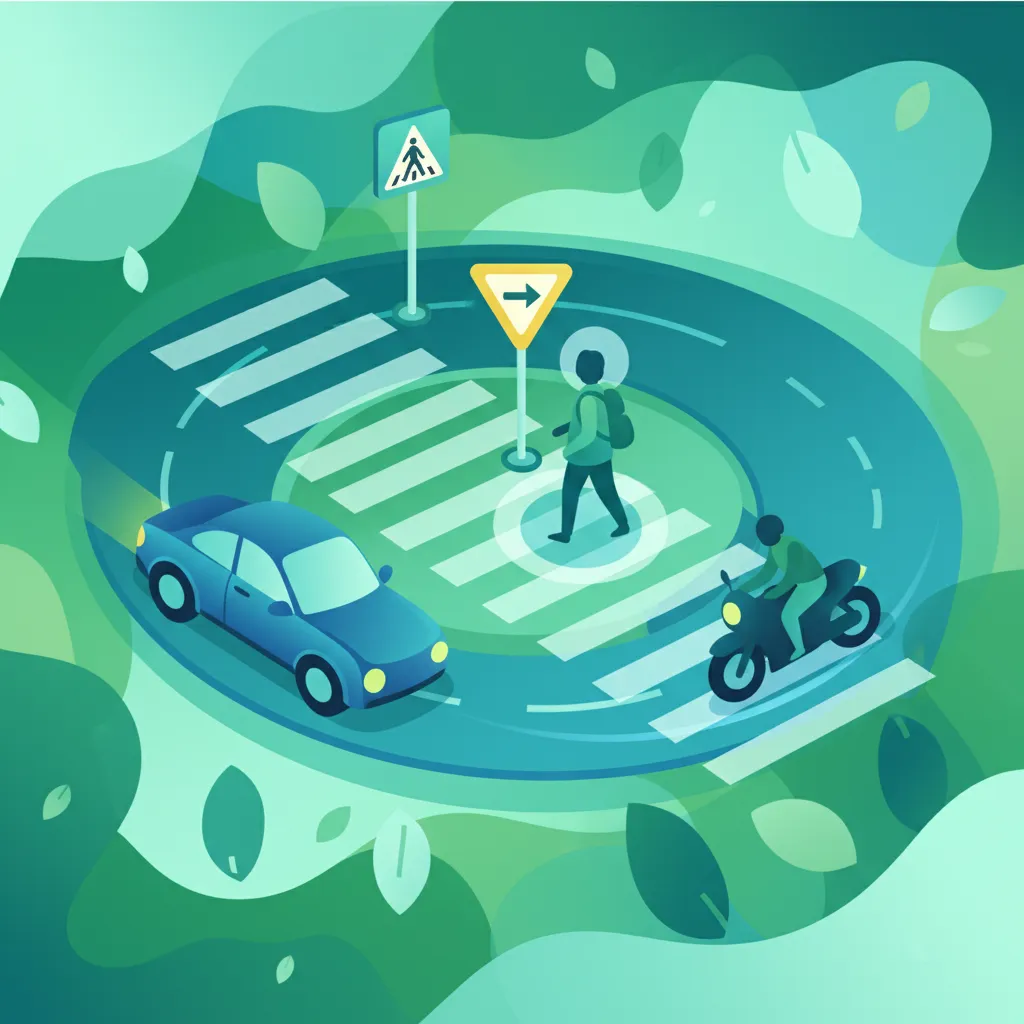
This lesson outlines the proper techniques for negotiating roundabouts and signal-controlled intersections in Spain. It explains priority rules at entry, lane selection based on the intended exit, and yielding to circulating traffic. The content also covers compliance with traffic signals and DGT regulations, including handling cyclist crossings.

This lesson presents advanced cornering scenarios common on Spanish roads, such as mountain hairpins and high-speed autovía exits. It outlines specific techniques for descent control, ascent maneuvers, and safely merging into traffic after cornering. Interaction with cyclists and emergency cornering strategies are also covered in accordance with DGT regulations.
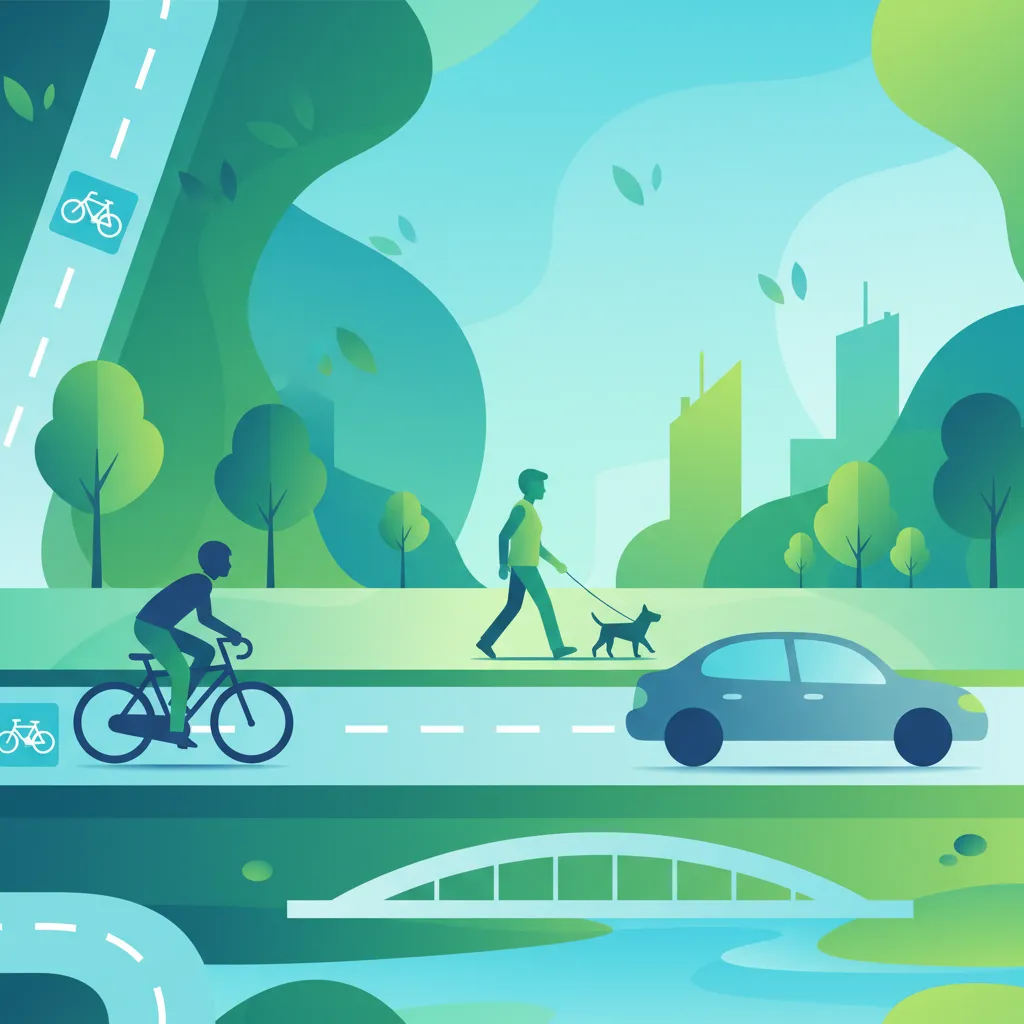
This lesson discusses the infrastructure dedicated to cyclists, covering dedicated bike lanes and the rules governing interaction and overtaking. It explains DGT regulations on safe passing distances and how to navigate mixed-traffic scenarios where vehicles and bicycles share the road. The content emphasizes driver responsibilities to maintain a safe corridor and respect cyclist priority.
Learn from typical errors and real-world examples when sharing the road with pedestrians, cyclists, and motorcyclists. This lesson focuses on hazard recognition and avoiding critical mistakes to ensure safety and compliance with Spanish traffic law.
This lesson examines the dynamic interactions between mopeds, cars, and bicycles in an urban environment. It emphasizes strategies for staying visible and avoiding the blind spots of larger vehicles. The content provides clear guidelines on overtaking bicycles safely, respecting dedicated bike lanes, and signaling intentions clearly to all other road users to ensure predictable and harmonious coexistence in mixed traffic.
This lesson focuses on the absolute priority of pedestrians at marked crosswalks, often known as zebra crossings. It explains that riders must always be prepared to stop and yield the right-of-way to any pedestrian waiting to cross or already crossing. The content also covers signaled pedestrian crossings and general awareness in urban areas where pedestrians may cross unexpectedly, reinforcing safety and legal compliance.
This lesson explores the design and legal requirements of pedestrian crossings in Spanish urban areas. It clarifies the rules at zebra crossings, signal-controlled crossings, and areas where cyclists or other vulnerable users share space. The content explains the required safety distances and signage indicating crossing zones to ensure drivers respect all road users.
This lesson examines the interaction between large vehicles, such as trucks, and vulnerable road users within roundabouts. It addresses the wide turning radius of heavy vehicles, the importance of checking blind spots, and the correct yielding behavior toward pedestrians and cyclists. Learners will understand how to maintain safe distances and anticipate the movements of different road users.
This lesson focuses on interaction dynamics with larger vehicles like cars, trucks, and buses, detailing their specific blind spot zones. Strategies for safely sharing lanes, overtaking etiquette, and proper approach when a bus stops are covered. The lesson also includes guidance on merging onto acceleration lanes following DGT policies.
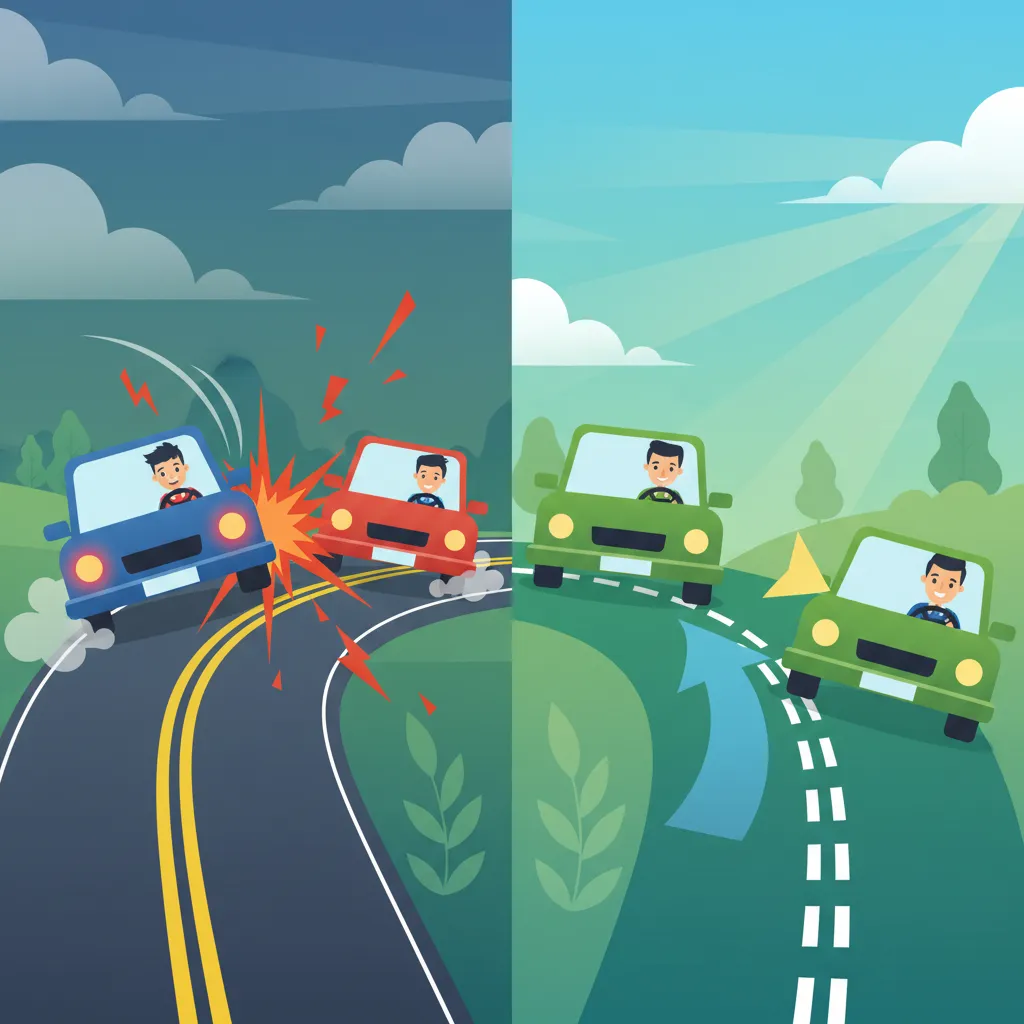
This lesson addresses common errors made by drivers when using roundabouts and presents corrective strategies. It covers issues such as entering from the wrong lane, failing to yield to circulating traffic, exceeding the recommended speed, and not signaling an exit correctly. By understanding these mistakes, drivers can improve their roundabout proficiency and reduce accident risk.

This lesson delves deeper into the mechanics and prevention of 'dooring' incidents, a common and serious urban hazard. It provides specific strategies for risk mitigation, such as adjusting lane position to ride outside the typical door-swing radius. Learners will be taught to observe cues like interior lights or visible occupants to anticipate a door opening and to always have a planned escape path.
This lesson focuses on defensive maneuvers in mixed traffic environments where various vehicles share the road. It outlines lane discipline, appropriate overtaking safety measures, and strategies for maintaining a safety corridor. The content incorporates DGT defensive guidelines, teaching riders to manage space and anticipate unpredictable driver behavior.
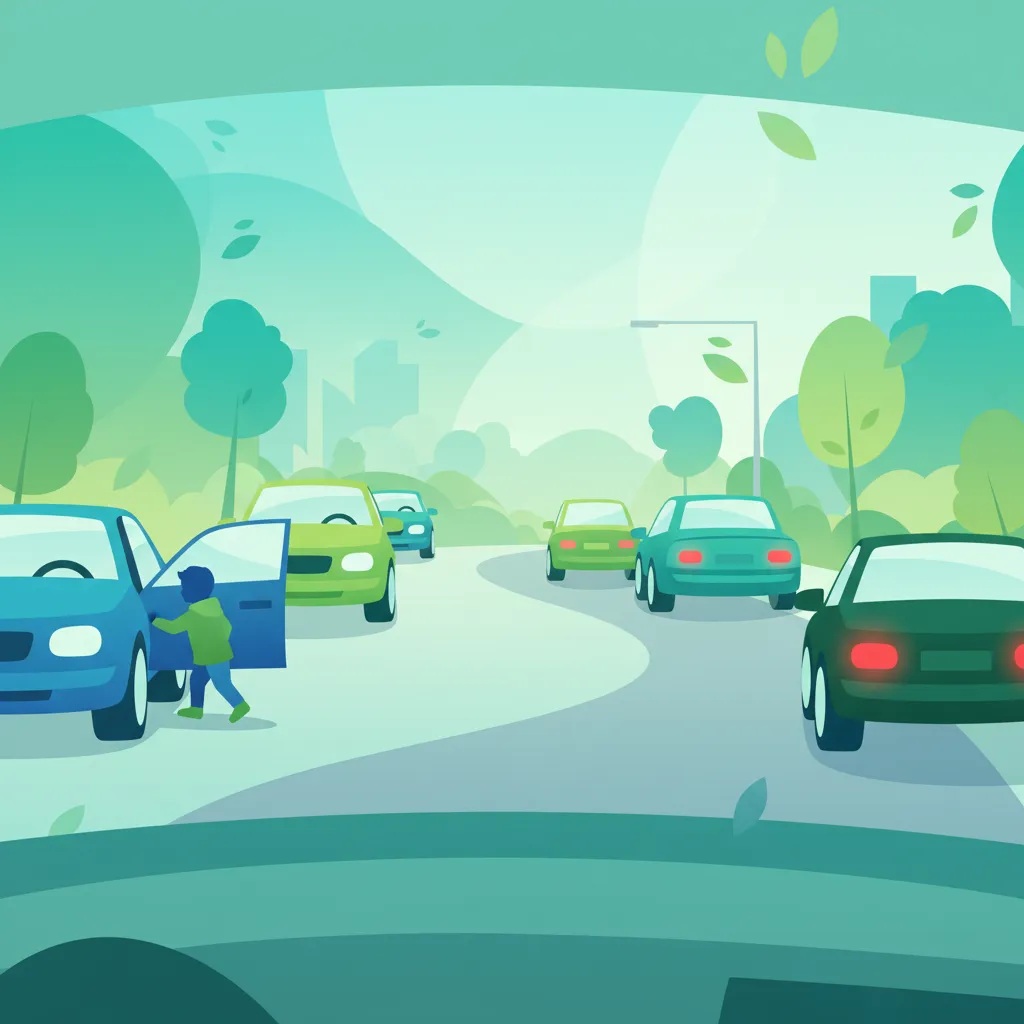
This lesson examines the specific hazards posed by vehicles parked along the roadside. It highlights the primary risk of a driver or passenger opening a door into the path of an approaching moped. Learners will understand the importance of maintaining a safe lateral distance and positioning themselves in the lane to avoid the 'door zone' while continuously scanning for signs of occupant activity.
This lesson identifies frequent beginner errors such as over-application of throttle, misuse of the clutch, and improper braking timing. It analyzes the underlying causes of these mistakes and offers corrective techniques to develop safe riding habits. By referencing DGT exam examples, learners gain insight into how to avoid these common pitfalls.
Find clear answers to common questions learners have about Pedestrians, Cyclists, and Motorcyclists. Learn how the lesson is structured, which driving theory objectives it supports, and how it fits into the overall learning path of units and curriculum progression in Spain. These explanations help you understand key concepts, lesson flow, and exam focused study goals.
According to DGT regulations in Spain, when overtaking a cyclist on your moped, you must maintain a minimum lateral distance of 1.5 meters. Ensure you reduce speed and, if necessary, cross the central line if safe to do so, checking for oncoming traffic.
Making eye contact is crucial because it helps confirm that the other road user has seen you. This mutual awareness reduces the risk of them unexpectedly stepping into your path or you failing to notice their intentions, which is a common cause of accidents.
On narrow streets where pedestrians might be present, especially if there are no sidewalks, you must reduce your speed significantly and be prepared to stop. Always give pedestrians ample space and prioritize their safety, as they are the most vulnerable road users.
Cyclists can be unpredictable; they may swerve to avoid obstacles, change direction suddenly, or be less visible than cars. Always maintain a safe distance, anticipate their movements, and be particularly cautious when they are close to parked cars where door openings are a risk.
While the principle of safe passing remains, the specific lateral distance requirement might differ depending on the situation and local regulations, but generally, it's safer to provide ample space to all other motorized vehicles. However, the 1.5-meter rule is specifically highlighted for cyclists due to their increased vulnerability.
Use our powerful search functionality to pinpoint specific Spanish DGT driving theory practice sets. Filter by road sign categories, traffic law topics, or question difficulty to build custom study sessions and reinforce your knowledge precisely where it matters for your official exam.