
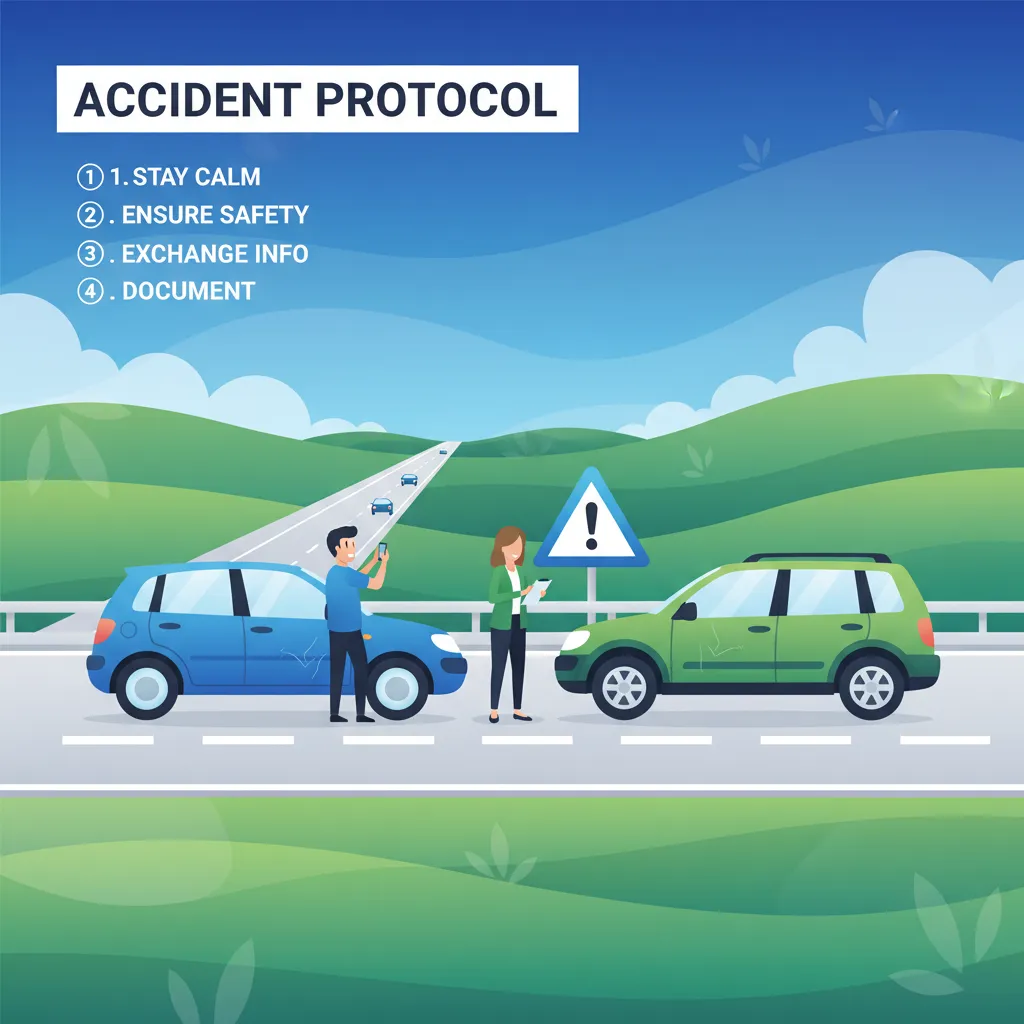
This lesson provides a crucial checklist of actions to take immediately after a traffic accident involving your moped, as required by Spanish DGT regulations. It prioritizes safety by explaining how to secure the scene and check for injuries before anything else. Understanding these steps is vital for your AM theory exam and ensuring you react correctly and legally on Spanish roads.
Lesson content overview
Being involved in a traffic accident, even a minor one, can be a stressful and confusing experience. As a rider of a Category AM vehicle – a moped or light scooter – knowing the correct steps to take immediately after a collision is crucial. This lesson provides a clear, step-by-step guide to ensure your safety, fulfill your legal obligations under Spanish traffic law, and protect your interests for insurance and legal purposes. Prompt and appropriate actions can prevent further harm, preserve vital evidence, and facilitate a smoother resolution process.
This guide is specifically tailored for riders of Category AM vehicles (mopeds and light scooters) within Spain, adhering to the regulations set forth by the Dirección General de Tráfico (DGT) and the Reglamento General de Circulación (RGC).
The moments immediately following an accident are critical. Your first priority should always be the safety of yourself and others. Spanish traffic law, specifically Article 82 of the RGC, mandates that all drivers involved in an accident must stop at the scene. This isn't just a legal requirement; it's a fundamental step to prevent further incidents and initiate proper accident management.
After an accident, the scene itself can pose significant risks, primarily from approaching traffic. Protecting the site to prevent a secondary collision is paramount for everyone's safety.
Stop Safely: Bring your moped or scooter to a complete stop as close to the accident scene as possible without creating further obstruction or danger. This prevents you from being cited for leaving the scene and allows for immediate assessment.
Activate Hazard Warning Lights: Immediately switch on your vehicle's hazard warning lights (intermitentes de emergencia). This makes your stationary vehicle visible to other road users, especially in poor light or adverse weather conditions, significantly reducing the risk of further collisions.
Assess the Location for Hazards: Evaluate if your moped's position creates an immediate danger to other traffic. If your vehicle is drivable and you can move it safely without disturbing critical evidence or risking further injury, relocate it to the shoulder or a safe spot away from the main flow of traffic. However, if moving it is unsafe or might compromise evidence, it's better to leave it in place and focus on warning others.
Deploy the Warning Triangle: If you are outside an urban area, or if your vehicle is creating a hazard within an urban area, you must place a warning triangle (triángulo de preseñalización de peligro). The triangle must be placed at a distance sufficient to alert approaching traffic effectively.
For urban roads, the warning triangle should be placed at least 30 meters behind your vehicle. On secondary roads, this distance increases to at least 50 meters, and on motorways or dual carriageways, it's typically 100 meters. The triangle should be clearly visible from at least 100 meters away. Always consider adverse conditions like fog or heavy rain, which may require placing it even further back for maximum effectiveness.
Wear a Reflective Vest: Before exiting your moped or moving around the accident scene, especially on roads outside urban areas or at night, put on a reflective safety vest (chaleco reflectante). This significantly enhances your visibility to other drivers, fulfilling another key safety measure and a legal requirement for drivers who exit their vehicle on public roads.
Failure to activate hazard lights or correctly place a warning triangle can lead to fines and, more importantly, can significantly increase the risk of another vehicle colliding with the accident scene, turning a minor incident into a serious one. The legal basis for using hazard warning devices is found in Article 85 of the RGC.
After securing the scene, your next immediate concern is checking for injuries. This applies to yourself, any passengers, other drivers, pedestrians, cyclists, or anyone else involved. Spanish law places a strong emphasis on the duty to render assistance (deber de socorro), as outlined in Article 93 of the RGC. This legal obligation requires you to help anyone injured in the accident, as long as doing so does not put your own safety at undue risk.
Self-Assessment: First, check yourself for any injuries. Even low-speed impacts can cause unseen harm, such as whiplash or internal bruising, especially for moped riders who are more exposed. If you feel dizzy, disoriented, or experience any pain, assume you are injured and proceed with extreme caution.
Check Others: Systematically check on all other parties involved. Ask if anyone is hurt and needs immediate medical attention. Be observant for visible injuries, signs of shock, or distress in others. Remember, some injuries may not be immediately apparent.
Call Emergency Services (112): If anyone is injured, no matter how minor the injury appears, or if there is any doubt about their condition, immediately call the universal emergency number, 112. Provide clear and concise information about the precise location of the accident, the number and types of vehicles involved, and the nature of any injuries. It is crucial not to move injured persons unless there is an immediate and grave threat to their life (e.g., imminent fire, explosion, or being in the direct path of moving traffic).
Provide Basic First Aid: If you have first-aid training and it is safe to do so, administer basic care to injured individuals while waiting for professional emergency services to arrive. This could involve stopping bleeding, comforting the injured, or ensuring they maintain an open airway. Never put yourself at risk while providing assistance; your primary role is to summon professional help.
It's a common misunderstanding to assume that only severe injuries require an emergency call. Even seemingly minor bumps can mask underlying issues that may only become apparent hours later. Calling 112 ensures that medical professionals can assess the situation properly and that an official record of injuries is made, which is vital for both immediate care and subsequent insurance claims.
Once immediate safety and medical concerns are addressed, the next crucial step is to exchange information with all other parties involved. Article 82.b of the RGC explicitly mandates this obligation in Spain. This comprehensive data is absolutely essential for insurance claims, police reports, and any potential legal proceedings, ensuring accountability and facilitating resolution.
Personal Identification: Obtain the full name, address, contact phone number, and DNI/NIE (Spanish national identity document) or passport number of the other driver(s), any passengers, and any witnesses. This is vital for positive identification and contact later.
Vehicle Information: Collect the full registration number (matrícula), make, model, and color of all vehicles involved. Note any specific vehicle details that might be relevant, such as obvious modifications or distinguishing features.
Insurance Details: Obtain the name of their insurance company and their policy number. If the other driver has an accident declaration form (Parte de Accidente), fill it out together on the spot. This standardized form simplifies the claim process by documenting mutually agreed facts and can prevent later disputes.
Witness Information: If there are any independent witnesses to the accident, ask for their names, contact details, and a brief statement of what they observed. Their unbiased account can be invaluable in objectively determining liability, especially if there are conflicting versions of events.
Never leave the scene of an accident without exchanging information, even if the other party suggests it or if the damage seems negligible. Doing so is a serious legal violation in Spain and can lead to severe consequences, including substantial fines, significant loss of license points, and potential criminal charges for hit-and-run, especially if injuries occurred.
Ensure all information is written down accurately and comprehensively. Relying on verbal exchange alone is risky, as details can be forgotten, misremembered, or deliberately misrepresented later, complicating your ability to file a successful claim.
Thorough documentation of the accident scene is paramount for accurately determining fault and expediting insurance claims. This objective evidence can prevent disputes and strongly support your account of events. While not explicitly codified in a single RGC article, DGT guidelines strongly endorse this practice for reliable liability verification.
Photographic and Video Evidence: Use your smartphone to take numerous photos and videos from various angles immediately after the accident.
Detailed Written Notes: Jot down key details while they are fresh in your mind. This helps to supplement visual evidence with factual observations.
Sketches or Diagrams: If possible, draw a simple sketch or diagram showing the relative final resting positions of all vehicles, relevant road markings, and signs. This visual aid can help clarify the sequence of events and impact points.
Capturing comprehensive details can make a significant difference in how your insurance claim is handled and prevent potential liability disputes. Do not assume minor details are unimportant; they could become crucial evidence later.
Once the immediate scene is secured and evidence is collected, you have legal and contractual obligations to report the accident to the authorities and your insurance company within specific timeframes.
In Spain, reporting an accident to the police is mandatory under specific circumstances, as per Article 92 of the RGC:
Call 112 (if not already done): If any of the above conditions apply and you haven't yet called emergency services for injuries, do so immediately. The police (Guardia Civil for rural roads and highways, Policía Local for urban areas) will attend the scene to investigate and create an official accident report (Atestado or Parte de Accidente).
Cooperate Fully: Provide all collected information, including witness details, other parties' information, and your photographic evidence, to the attending officers. Be clear, concise, and truthful in your statement, sticking to the facts.
Obtain a Copy or Reference: Request a copy of the police report or at least the incident reference number. This official document is invaluable for insurance claims and any potential legal proceedings.
Regardless of police involvement, you are contractually obliged to notify your own insurance company about the accident. This is a critical step to initiate the claims process for damage to your moped or injuries.
In Spain, you typically have 15 days from the date of the accident to inform your insurer. Failure to do so within this timeframe could result in your claim being denied, delayed, or processed under less favorable terms, as you may be in breach of your insurance contract.
Contact Your Insurer Promptly: Call your insurance company as soon as possible after the accident, preferably within 24-48 hours, even if you don't have all the finalized details yet. An initial notification helps to open a claim file.
Provide All Information: Give them all the details you've collected: the exact date, time, and location of the accident, the other parties' information, witness details, a concise description of how the accident occurred, and details of any injuries or damage sustained by yourself, your moped, or others.
Submit Documentation: Send your insurer copies of any police reports, the completed Parte de Accidente form (if applicable), and all your photographic and written evidence. The more comprehensive your documentation, the smoother the claims process is likely to be.
The preservation of physical evidence is closely linked to documentation and is crucial for accurately determining liability. It means taking steps to ensure that crucial clues about the accident's dynamics are not lost or altered before official documentation can occur. While not explicitly codified as a single law, DGT safety guidelines recommend this practice to avoid loss of critical data that could affect liability assessment and accident reconstruction.
Leave Vehicles in Place (if safe): Unless moving your moped is absolutely necessary for immediate safety (e.g., to prevent further collisions, clear a dangerous obstruction, or if directed by police), try to leave it in its final resting position until the police or accident investigators have arrived and thoroughly documented the scene.
Do Not Disturb Debris: Avoid moving, disturbing, or discarding any debris, broken parts, fluid spills, or personal belongings scattered on the road surface. These items can indicate impact points, vehicle trajectories, and the severity of the collision.
Record Skid Marks: If present, take clear and multiple angle photos of any skid marks or tire marks on the road surface. These are vital for accident reconstruction, as they provide clues about vehicle speed, braking actions, and direction of travel before impact.
Only move your vehicle if it poses an immediate and severe danger to traffic, or if you are specifically directed to do so by a police officer. If you absolutely must move it, ensure you take as many photos as possible of its original position first, noting any relevant ground markings, before relocation.
Moving vehicles or clearing debris prematurely can inadvertently destroy critical evidence, making it harder to prove fault and potentially weakening your insurance claim. Always prioritize evidence preservation after immediate safety measures are in place.
Understanding the specific articles of the Reglamento General de Circulación (RGC) that govern post-accident procedures is essential for every Category AM rider in Spain to ensure legal compliance and proper action.
| Rule | Statement | Applicability | Rationale |
|---|---|---|---|
| Duty to Stop (Article 82 RGC) | All drivers involved in a traffic accident must stop immediately at the scene. | Mandatory for every collision, regardless of perceived severity or whether other parties are present. | Prevents secondary accidents, allows for assistance, and ensures identification of parties. |
| Obligation to Exchange Information (Article 82.b RGC) | Drivers must provide their identification and insurance details to other involved parties. | Applies to any traffic accident involving two or more parties where personal or property damage occurs. | Enables proper identification and liability determination for insurance claims and legal processes. |
| Use of Hazard Warning Devices (Article 85 RGC) | Activate hazard lights and place warning triangles at appropriate distances if the vehicle creates a hazard on the roadway. | Mandatory for any incident that renders a vehicle stationary and creates a potential hazard to other traffic, especially outside urban areas. | Ensures visibility of the stopped vehicle for approaching traffic, reducing the risk of further collisions. |
| Reporting to Police (Article 92 RGC) | Report accidents to the police if injuries or death occur, significant property damage is involved, or if there is a dispute over liability. | Mandatory for accidents causing personal injury (even minor), substantial property damage, or disagreements on fault. | Creates an official record (Atestado) for legal and insurance processes, crucial for dispute resolution. |
| Duty to Assist (Article 93 RGC) | Drivers must render assistance to persons injured in the accident, without putting themselves at undue risk. | Applies when injuries are evident or reasonably suspected, extending beyond immediate collision participants. | Upholds a fundamental humanitarian and legal duty to protect life and health, preventing aggravation of injuries. |
| Insurance Notification (Spanish Insurance Law) | The driver must inform their insurer of the accident within 15 days of its occurrence. | Mandatory for all accidents where the driver’s vehicle is damaged, an injury occurs, or a claim might be filed. | Allows timely claim processing, compliance with contractual obligations, and avoids potential claim rejection or delays. |
Being prepared for an accident means not only knowing what to do but also understanding what not to do. Many issues and legal complications arise from common errors committed in the stressful aftermath of a traffic incident.
The specific environment and conditions surrounding an accident can significantly alter the immediate actions required. As a Category AM rider, it's crucial to adapt your standard response to these contextual factors.
If a pedestrian or cyclist is involved in the accident with your moped, your immediate priority shifts even more strongly to their well-being, as they are likely to sustain more serious injuries.
Successfully navigating the aftermath of a moped accident in Spain hinges on a systematic approach that balances immediate safety with legal and evidentiary requirements. Adhering to these steps will help protect you, others, and your legal and financial interests.
Stop Safely and Warn Others: Immediately stop your moped after a collision. Activate your hazard lights and, if you need to exit the vehicle, put on your reflective vest to enhance visibility.
Secure the Scene: Deploy a warning triangle at the appropriate distance behind your moped (30 meters in urban areas, 50 meters on secondary roads, 100 meters on motorways) to alert approaching traffic and prevent secondary collisions.
Assess Injuries and Call for Help: Check yourself and all other parties for injuries. If anyone is hurt, or if there's any doubt about their condition, call emergency services (112) immediately and provide accurate details.
Exchange Information: Collect full identification (name, address, DNI/NIE) and vehicle details (registration, insurance policy number) from all involved parties and any witnesses. Provide your own information in return.
Document the Incident: Take numerous photos and videos of vehicle damage, road conditions, skid marks, road signs, and the overall scene from multiple angles. Make detailed written notes of the time, date, location, and specific weather conditions.
Fulfill Reporting Obligations: If there are injuries, significant damage (e.g., over €300), or a dispute over fault, file a police report (Parte de Accidente). Inform your insurance company within 15 days of the accident, providing all gathered documentation.
Preserve Evidence: Avoid moving vehicles or disturbing debris unless absolutely necessary for safety, ensuring that physical clues are maintained for accurate accident reconstruction.
Adapt to Conditions: Always adjust your actions based on specific circumstances like adverse weather, nighttime, the type of road, or the involvement of vulnerable road users, ensuring that safety measures scale with environmental risk.
By mastering these steps, Category AM riders will be fully prepared to act responsibly and legally after any traffic incident on Spanish roads, safeguarding personal safety, facilitating accurate claim processing, and upholding the standards set by Spanish traffic law.
This lesson teaches Category AM riders the critical step-by-step procedures to follow immediately after a moped accident in Spain, prioritizing personal safety, scene security, and legal compliance. Key actions include activating hazard lights, deploying the warning triangle at regulation distances, checking for injuries and calling 112, and systematically exchanging information with all parties involved. The lesson also covers thorough documentation requirements (photos, witness details, written notes), police reporting obligations when injuries or significant damage occur, and the mandatory 15-day insurance notification window. Understanding these procedures is essential for both passing DGT theory exams and reacting correctly in real-world driving scenarios on Spanish roads.
A short set of high-value points that capture the most important learning from this lesson.
Stop immediately at the accident scene and activate hazard lights to prevent secondary collisions, as mandated by Article 82 of the RGC.
Deploy the warning triangle at specific distances: 30 meters in urban areas, 50 meters on secondary roads, and 100 meters on motorways.
Check all parties for injuries and call emergency services (112) if anyone is hurt or if there's any doubt about their condition.
Exchange full identification, vehicle details, and insurance information with all parties before leaving the scene.
Document the scene thoroughly with photos, videos, written notes, and witness details before moving anything.
Explore all units and lessons included in this driving theory course.
The Duty to Assist (Article 93 RGC) obligates you to help injured persons without putting yourself at undue risk.
The 15-day deadline to notify your insurance company is contractual; missing it can result in claim denial or unfavorable terms.
Unless for immediate safety, never move your moped before police document the scene, as this destroys critical evidence like skid marks and debris positions.
Warning triangle placement must be at least 100 meters from your vehicle on motorways, clearly visible from that distance.
The Parte de Accidente form is the standardized document both parties complete on-site to simplify the insurance claims process.
Leaving the scene without exchanging information constitutes a hit-and-run in Spain, carrying heavy fines, license point loss, and potential criminal charges.
Placing the warning triangle too close or failing to use hazard lights dramatically increases the risk of another vehicle colliding with the scene.
Moving vehicles or clearing debris prematurely destroys physical evidence needed for accurate accident reconstruction and liability determination.
Underestimating minor injuries and not calling 112 can worsen medical conditions and complicate future insurance or legal claims.
Relying solely on verbal information exchange without written documentation creates problems if details are misremembered or disputed later.
Lesson content overview
A short set of high-value points that capture the most important learning from this lesson.
Stop immediately at the accident scene and activate hazard lights to prevent secondary collisions, as mandated by Article 82 of the RGC.
Deploy the warning triangle at specific distances: 30 meters in urban areas, 50 meters on secondary roads, and 100 meters on motorways.
Check all parties for injuries and call emergency services (112) if anyone is hurt or if there's any doubt about their condition.
Exchange full identification, vehicle details, and insurance information with all parties before leaving the scene.
Document the scene thoroughly with photos, videos, written notes, and witness details before moving anything.
Explore all units and lessons included in this driving theory course.
The Duty to Assist (Article 93 RGC) obligates you to help injured persons without putting yourself at undue risk.
The 15-day deadline to notify your insurance company is contractual; missing it can result in claim denial or unfavorable terms.
Unless for immediate safety, never move your moped before police document the scene, as this destroys critical evidence like skid marks and debris positions.
Warning triangle placement must be at least 100 meters from your vehicle on motorways, clearly visible from that distance.
The Parte de Accidente form is the standardized document both parties complete on-site to simplify the insurance claims process.
Leaving the scene without exchanging information constitutes a hit-and-run in Spain, carrying heavy fines, license point loss, and potential criminal charges.
Placing the warning triangle too close or failing to use hazard lights dramatically increases the risk of another vehicle colliding with the scene.
Moving vehicles or clearing debris prematurely destroys physical evidence needed for accurate accident reconstruction and liability determination.
Underestimating minor injuries and not calling 112 can worsen medical conditions and complicate future insurance or legal claims.
Relying solely on verbal information exchange without written documentation creates problems if details are misremembered or disputed later.
Explore search topics learners often look for when studying What to Do After an Accident. These topics reflect common questions about road rules, driving situations, safety guidance, and lesson level theory preparation for learners in Spain.
Browse additional driving theory lessons that cover connected traffic rules, road signs, and common driving situations related to this topic. Improve your understanding of how different rules interact across everyday traffic scenarios.
Understand your legal duties following a traffic accident in Spain, including mandatory reporting to authorities, required information exchange with other parties, and insurance notification timelines. This lesson ensures compliance with Spanish traffic law and facilitates smooth claims processes.
This lesson details the formal and legal obligations for reporting a traffic accident to the authorities. It clarifies the circumstances under which police must be called to the scene and the procedures for completing the official European Accident Statement form ('parte amistoso'). Understanding these responsibilities ensures that the rider complies with Spanish law and that the incident is properly documented for insurance and liability purposes.
This lesson provides guidance on responding to a road accident, following the 'Protect, Alert, Assist' protocol. It details the steps for securing the scene, notifying emergency services, and providing basic aid if necessary. The content covers the legal responsibilities of the driver, including completing an accident report form (parte amistoso) and exchanging insurance information.
This lesson outlines the compulsory equipment and documentation required for an AM-class vehicle. It emphasizes the legal mandate for an approved helmet, a valid insurance policy, and a vehicle registration plate. Learners will also understand the requirements for the roadworthiness certificate (ITV) and other essential documents needed to prove compliance with DGT safety and legal standards during a traffic stop.
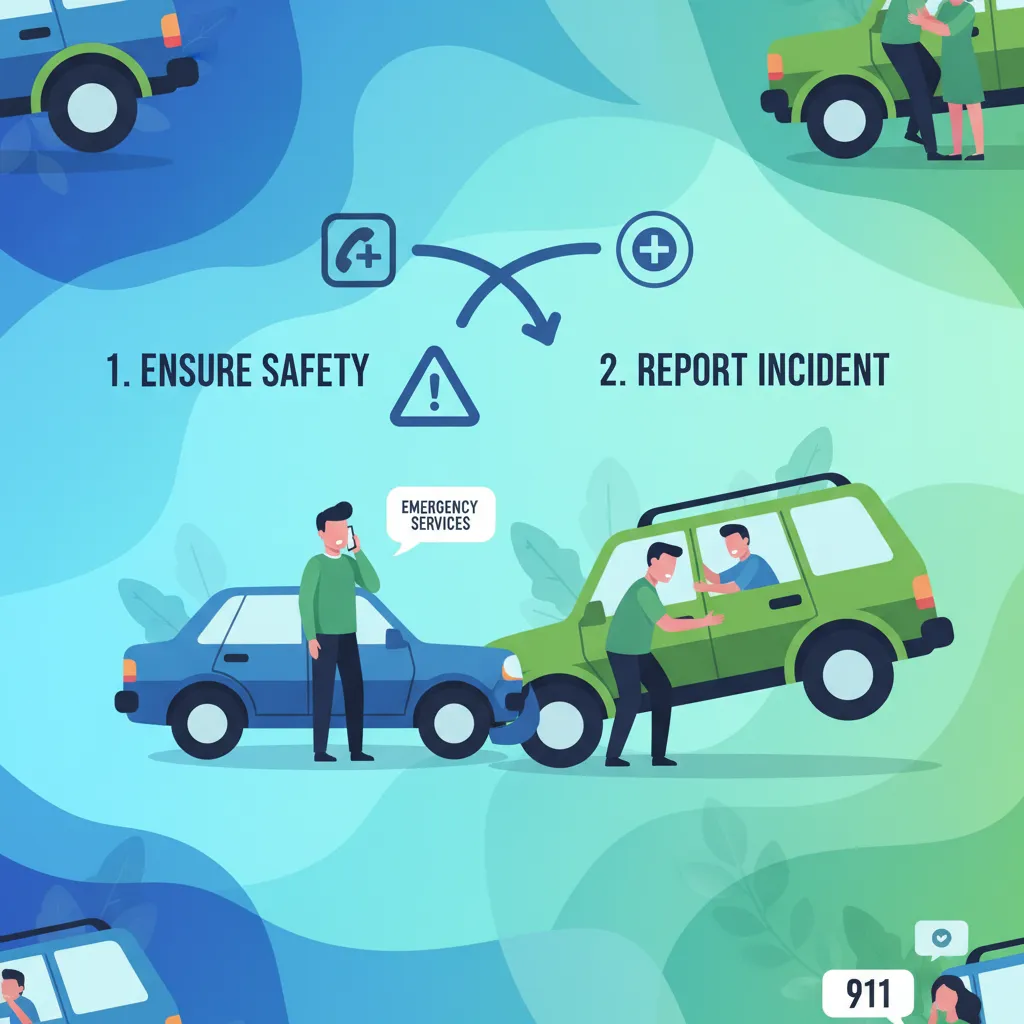
This lesson outlines the comprehensive steps required to safely manage an accident scene, including securing the area and providing immediate aid to any injured parties. Learners will be taught the legal reporting requirements, how to properly notify the DGT, and the specific documentation needed for insurance claims. The module also covers the process for collecting witness statements and interacting effectively with responding police authorities.
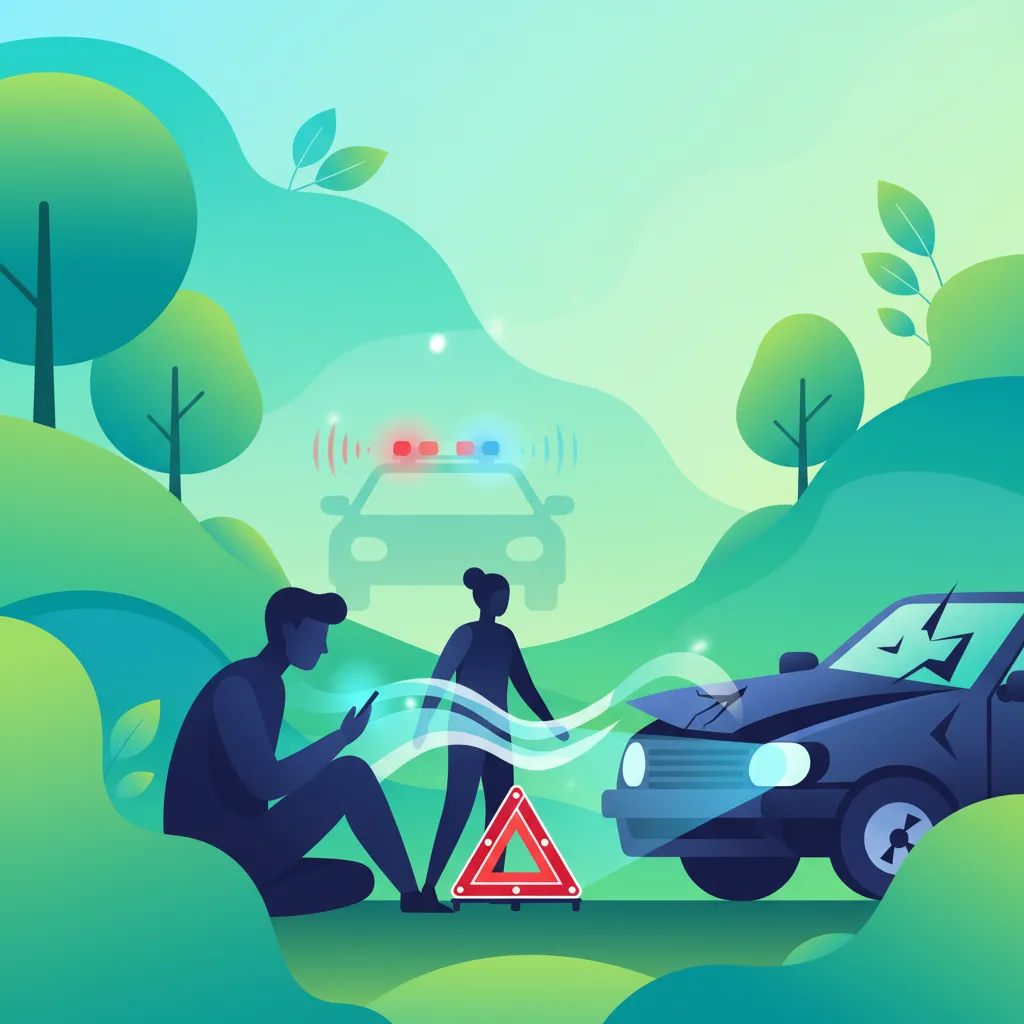
This lesson outlines the correct and legally required procedures to follow in the event of a traffic incident or accident. It covers the driver's immediate responsibilities at the scene, including securing the area and contacting emergency services. The content details the process for documenting the incident and formally reporting it to the DGT and insurance companies as required by law.
Learn how to effectively secure a traffic accident scene and preserve critical evidence. This lesson covers immediate safety measures like hazard lights and warning triangles, as well as crucial steps for documenting damage, road conditions, and witness information for insurance and legal purposes.
This lesson details the formal and legal obligations for reporting a traffic accident to the authorities. It clarifies the circumstances under which police must be called to the scene and the procedures for completing the official European Accident Statement form ('parte amistoso'). Understanding these responsibilities ensures that the rider complies with Spanish law and that the incident is properly documented for insurance and liability purposes.
This lesson outlines the compulsory equipment and documentation required for an AM-class vehicle. It emphasizes the legal mandate for an approved helmet, a valid insurance policy, and a vehicle registration plate. Learners will also understand the requirements for the roadworthiness certificate (ITV) and other essential documents needed to prove compliance with DGT safety and legal standards during a traffic stop.
This lesson teaches riders how to react effectively in a sudden, critical situation. It explains the technique for applying maximum braking force without locking the wheels, ensuring the shortest possible stopping distance while maintaining stability. The content also covers how to perform a swift and controlled swerve to avoid an obstacle when stopping is not possible, emphasizing the importance of looking where you want to go.
This lesson provides guidance on responding to a road accident, following the 'Protect, Alert, Assist' protocol. It details the steps for securing the scene, notifying emergency services, and providing basic aid if necessary. The content covers the legal responsibilities of the driver, including completing an accident report form (parte amistoso) and exchanging insurance information.
This lesson outlines procedures for handling emergency situations and accidents. It covers emergency braking techniques, hazard avoidance strategies, and the DGT emergency protocol for accident reporting. Emphasis is placed on rider protective actions, post-crash first aid, roadside safety, and legal obligations after an incident.
This lesson outlines the comprehensive steps required to safely manage an accident scene, including securing the area and providing immediate aid to any injured parties. Learners will be taught the legal reporting requirements, how to properly notify the DGT, and the specific documentation needed for insurance claims. The module also covers the process for collecting witness statements and interacting effectively with responding police authorities.
This lesson examines the legal framework for motorcyclists in Spain, including mandatory registration, compulsory insurance, and equipment standards enforced by the DGT. It covers the legal necessity of a homologated helmet, reflective clothing, and compliance with noise and emission standards. Learners also review documentation checks, vehicle inspections, and penalties for non-compliance.
This lesson delves deeper into the mechanics and prevention of 'dooring' incidents, a common and serious urban hazard. It provides specific strategies for risk mitigation, such as adjusting lane position to ride outside the typical door-swing radius. Learners will be taught to observe cues like interior lights or visible occupants to anticipate a door opening and to always have a planned escape path.
Find clear answers to common questions learners have about What to Do After an Accident. Learn how the lesson is structured, which driving theory objectives it supports, and how it fits into the overall learning path of units and curriculum progression in Spain. These explanations help you understand key concepts, lesson flow, and exam focused study goals.
The very first step is to ensure the safety of yourself and others. Move to a safe location if possible, switch on your hazard lights, and set up warning triangles if applicable. Then, immediately check for any injuries to yourself, passengers, or others involved before taking any other action.
You should always call the police if there are injuries, if there is significant damage to vehicles or public property, if the other party leaves the scene, or if there is a dispute over fault. For minor incidents with no injuries and clear agreement, it might not be strictly necessary, but it's often advisable for official documentation.
Yes, Spanish law requires you to exchange identifying information, vehicle details, and insurance information with all parties involved, even in very minor incidents. Failing to do so can lead to legal complications and issues with insurance claims, so always prioritize this step.
Collect as much evidence as possible. This includes taking clear photos of all vehicles involved, their positions, road markings, traffic signs, and any damage. Also, get contact details from any witnesses, note the exact location, time, and weather conditions. This documentation is crucial for insurance and DGT reports.
If another driver refuses to provide details or attempts to leave the scene, do not engage in a confrontation. Instead, try to note down their vehicle's license plate number, make, and model. Immediately call the police (Guardia Civil or Policía Local) and inform them of the situation. This is a serious offense under Spanish traffic law.
Use our powerful search functionality to pinpoint specific Spanish DGT driving theory practice sets. Filter by road sign categories, traffic law topics, or question difficulty to build custom study sessions and reinforce your knowledge precisely where it matters for your official exam.