
This lesson guides you through the essential formal and legal obligations for reporting a traffic accident involving a moped in Spain. You'll learn when police involvement is mandatory and how to correctly complete the official European Accident Statement, known as a 'parte amistoso'. Understanding these DGT requirements is crucial for ensuring legal compliance, proper incident documentation, and handling insurance claims effectively after an accident.

Lesson content overview
Understanding your legal responsibilities following a traffic accident is crucial for any driver in Spain, especially for those operating Category AM vehicles like mopeds and light scooters. A traffic incident, even a minor one, triggers a series of obligations that must be fulfilled to ensure compliance with Spanish law, protect all involved parties, and facilitate accurate documentation for insurance and liability purposes. This lesson details these formal and legal duties, clarifying when law enforcement must be involved and how to properly document an incident using the official European Accident Statement form, known in Spain as the Parte amistoso.
Proper adherence to these regulations is not just a legal requirement; it also safeguards your interests and helps ensure fair resolutions. Failure to comply can lead to significant administrative penalties, potential criminal liability, and difficulties in processing insurance claims.
The moments immediately following a traffic collision can be stressful, but it is imperative for all drivers, including moped riders, to act swiftly and responsibly. Spanish traffic law imposes specific duties designed to prevent further danger, provide assistance to those in need, and preserve the integrity of the accident scene. These initial steps are fundamental regardless of the severity of the incident.
Your very first obligation is to stop your vehicle at the incident site, or as close to it as safely possible, without creating additional hazards. This duty is enshrined in Article 149 of the Reglamento General de Circulación (General Traffic Regulations). Leaving the scene prematurely without stopping can be considered a serious offense, potentially leading to charges of hit-and-run.
Once stopped, you must take immediate steps to secure the area and make it safe for yourself, other road users, and any injured parties.
Activate Hazard Warning Lights: Switch on your moped's hazard lights (intermitentes de emergencia) to alert other drivers to the danger.
Assess Personal Safety: Before approaching anyone or anything, ensure your own safety. Look out for oncoming traffic and other potential dangers.
Place Warning Triangle (If Applicable): If your moped has one, or if you are in a situation where a warning triangle is required (e.g., on an interurban road, or if your vehicle obstructs traffic on any road), place it at a suitable distance to warn approaching vehicles. On conventional roads, this is typically at least 50 metres behind the vehicle, visible from at least 100 metres.
Switch Off Engine: Turn off your moped's engine to prevent accidental movement or potential fire hazards.
The legal obligation to provide assistance to injured parties is a cornerstone of Spanish traffic law (Article 152 of the RGTC) and a humanitarian principle. If there are injuries, or even if someone appears shaken or in shock, your duty to render assistance is paramount.
Check for Injuries: Carefully assess if anyone involved, including yourself, has sustained injuries. Even seemingly minor discomforts should be taken seriously.
Call Emergency Services (112): If there are any injuries, regardless of how minor they appear, immediately call 112, the pan-European emergency number. Provide clear and concise information about the location, the nature of the accident, and the number of injured persons.
Provide Basic First Aid (if trained and safe): If you are trained in first aid and it is safe to do so, provide basic assistance to the injured while waiting for professional help. Do not move injured persons unless absolutely necessary to prevent further danger (e.g., from fire or traffic).
Stay with the Injured: Remain with any injured person until emergency services arrive, offering comfort and support.
Failure to stop and render assistance, especially when there are injured persons, can lead to severe criminal charges, including "omission of the duty to help," which carries significant penalties under Spanish law.
Once the immediate safety and assistance steps are taken, it is important to preserve the accident scene as much as possible. This means avoiding moving vehicles or objects unless absolutely necessary for safety or to clear an essential path for emergency vehicles. An undisturbed scene allows authorities to accurately reconstruct the events and determine liability.
While it might seem that police are only required for severe accidents, Spanish law specifies several circumstances under which law enforcement (the Guardia Civil or local police, depending on the road type) must be called to the scene. Understanding these conditions is crucial for any Category AM driver.
Police must be called to the scene of an accident in the following situations:
When in doubt, it is always safer to call the police. An official police report provides an undeniable record of the incident, which can be invaluable for insurance claims and legal proceedings.
For AM riders, who often operate in urban environments, these rules are particularly relevant. A seemingly minor bump with another vehicle or even a parked object could easily exceed the damage threshold. Similarly, accidents involving pedestrians or cyclists almost always result in some form of personal injury, mandating police involvement.
Example Scenario: You are riding your moped and accidentally collide with a parked car while maneuvering. You check the damage and estimate it to be a dent on the car's bumper, which looks like it will cost around €600 to repair. In this situation, despite no personal injuries, you must call the police because the estimated property damage exceeds the typical threshold.
Conversely, if you have a very minor scrape with another moped at low speed, with both parties agreeing on fault and minimal damage (e.g., a scratch estimated at €100), police presence may not be legally required, provided both parties are willing to exchange information and complete a Parte amistoso.
The Parte amistoso (literally "friendly part" or "friendly report") is Spain's version of the standardized European Accident Statement form. This form is a critical document designed to facilitate the rapid and amicable resolution of minor traffic accidents across EU member states. It provides a legally recognized record for insurance companies and judicial proceedings.
The standardized "Declaración Amistosa de Accidentes" (Friendly Accident Statement) form used across EU member states to record details of a traffic accident, exchanged between parties, and signed on site.
The Parte amistoso is a single-page, carbon-copy form, typically consisting of two identical sheets. Both drivers involved in an accident fill out the form simultaneously. It is designed to capture all essential information relevant to the incident.
The form is generally divided into several key sections:
It is absolutely crucial that the Parte amistoso is completed and signed by both parties at the scene of the accident. Leaving the scene before filling out and exchanging the form can be considered equivalent to abandonment, especially if police are not called. Each driver should retain a signed copy for their records, police if called, and insurance company.
Providing false or intentionally misleading information on the Parte amistoso can lead to severe legal sanctions, including fines and potential criminal charges for fraud.
After managing the immediate aftermath of an accident and completing the necessary documentation, your next critical step is to notify your insurance company. This is a mandatory legal obligation under the Ley de Contrato de Seguro (Insurance Contract Law) in Spain.
While specific insurer policies may vary slightly, the general legal requirement in Spain mandates that you notify your insurance company of an accident within a short, stipulated timeframe. Typically:
This timeframe begins from the moment you become aware of the accident. Prompt notification is essential, regardless of how minor the accident might seem.
When you contact your insurer, be prepared to provide:
You will then typically need to forward the signed Parte amistoso (if applicable) and any other relevant documentation (e.g., police report, photos of the scene) to your insurer as soon as possible. Many insurance companies now allow digital submission via their apps or websites.
Delaying notification to your insurer beyond the legally allowed period can have serious consequences:
Always keep your insurance policy documents, including contact numbers, easily accessible. Consider having a blank Parte amistoso form in your moped's storage or a digital version on your phone, though a physical copy is often preferred.
When the police are present at an accident scene, either because they were called or arrived coincidentally, all drivers involved have a legal duty to cooperate fully with them. This cooperation is vital for an accurate investigation and proper official record-keeping.
You must comply with all instructions given by law enforcement officers (Guardia Civil, Policía Local, or any other competent authority). This includes directives on where to move your vehicle (if necessary and safe), where to stand, or how to proceed at the scene. Obstruction or refusal to follow instructions can lead to administrative penalties or even charges of disobedience.
Police officers will typically request to see several key documents from you:
Ensure you have these documents readily available. It is a legal requirement to carry them when operating your moped.
Under Article 149.2 of the Reglamento General de Circulación, drivers have an obligation to provide truthful statements to the police regarding the accident. This means recounting the events accurately and refraining from fabricating or withholding information. Misleading statements can undermine the investigation and may lead to legal repercussions, including charges for providing false information.
Police may also inspect your moped and other vehicles involved to assess damage, look for contributing factors (e.g., tire condition, lighting), or check for any technical irregularities. You must allow such inspections.
The information gathered by law enforcement forms the basis of the official police report (Atestado or Informe Policial), which is an essential document for serious accidents, criminal proceedings, and complex insurance claims.
Failure to adhere to the legal obligations following a traffic accident can result in a range of penalties, from administrative fines and loss of driving licence points to severe criminal charges. Understanding these consequences underscores the importance of proper conduct.
Always prioritize compliance with the law. The financial, legal, and personal costs of non-compliance far outweigh any perceived benefit of avoiding responsibility.
While the core legal obligations remain constant, certain circumstances can alter how you apply them. Awareness of these contextual variations helps ensure you act appropriately in diverse situations.
To navigate the legal and practical aspects of accident reporting in Spain, familiarity with specific terminology is highly beneficial.
For drivers of Category AM vehicles in Spain, understanding and fulfilling post-accident legal obligations is non-negotiable.
By mastering these legal and practical responsibilities, you contribute to road safety, protect yourself, and ensure fair resolution in the unfortunate event of a traffic incident.
When involved in a traffic accident on a moped in Spain, you must immediately stop, activate hazard lights, and place a warning triangle if required by road conditions. Your legal duty is to check for injuries, call 112 for any personal harm, and remain at the scene while assisting injured parties. Police must be called whenever there are injuries, when property damage exceeds the typical €500 threshold, or when parties dispute liability or data exchange. The Parte amistoso (European Accident Statement) should be completed and signed by both drivers at the scene before departure, as it serves as primary evidence for insurance claims and records agreed-upon facts rather than legal liability. You must notify your insurer within 24 hours for injury accidents or 48 hours for property-damage-only incidents, and when police attend, you must provide truthful statements and present your AM licence, vehicle registration, ITV card, and insurance documents.
A short set of high-value points that capture the most important learning from this lesson.
Always stop, activate hazard lights, and if on interurban roads or when obstructing traffic, place your warning triangle at least 50 metres behind your moped.
Call 112 immediately if anyone involved shows any sign of injury, however minor, and do not leave the scene until emergency services arrive.
Police must be called if there are any injuries, if property damage exceeds the threshold (historically around €500), or if there's any dispute between parties.
The Reglamento General de Circulación (Article 149) requires you to stop at the accident scene; leaving prematurely can constitute a hit-and-run offense.
The Parte amistoso records accident facts for insurance; signing it confirms agreement on circumstances, not an admission of legal liability.
Explore all units and lessons included in this driving theory course.
The 24/48-hour rule: notify your insurer within 24 hours for personal injury accidents, and within 48 hours for property-damage-only incidents.
The monetary threshold for mandatory police involvement due to property damage is typically around €500—any estimate at or above this requires calling police.
Both drivers must sign the Parte amistoso at the scene before leaving; each party retains a signed copy for their insurance company.
You must carry your AM licence, vehicle registration (Permiso de Circulación), Technical Inspection card (Tarjeta de Inspección Técnica), and proof of insurance at all times.
Providing false or misleading information on the Parte amistoso is considered fraud and can result in criminal charges.
Assuming police are only needed for serious accidents and failing to call them when damage exceeds the €500 threshold or any injury occurs.
Delaying insurance notification beyond the legally required 24 or 48 hours, which can lead to claim invalidation or reduction.
Leaving the accident scene before the Parte amistoso is fully completed and signed by both parties, causing problems with claims.
Believing that signing the Parte amistoso means admitting legal guilt, when it only confirms agreement on the accident facts recorded.
Forgetting to place the warning triangle in reduced visibility conditions or on interurban roads, risking secondary accidents and fines.
Lesson content overview
A short set of high-value points that capture the most important learning from this lesson.
Always stop, activate hazard lights, and if on interurban roads or when obstructing traffic, place your warning triangle at least 50 metres behind your moped.
Call 112 immediately if anyone involved shows any sign of injury, however minor, and do not leave the scene until emergency services arrive.
Police must be called if there are any injuries, if property damage exceeds the threshold (historically around €500), or if there's any dispute between parties.
The Reglamento General de Circulación (Article 149) requires you to stop at the accident scene; leaving prematurely can constitute a hit-and-run offense.
The Parte amistoso records accident facts for insurance; signing it confirms agreement on circumstances, not an admission of legal liability.
Explore all units and lessons included in this driving theory course.
The 24/48-hour rule: notify your insurer within 24 hours for personal injury accidents, and within 48 hours for property-damage-only incidents.
The monetary threshold for mandatory police involvement due to property damage is typically around €500—any estimate at or above this requires calling police.
Both drivers must sign the Parte amistoso at the scene before leaving; each party retains a signed copy for their insurance company.
You must carry your AM licence, vehicle registration (Permiso de Circulación), Technical Inspection card (Tarjeta de Inspección Técnica), and proof of insurance at all times.
Providing false or misleading information on the Parte amistoso is considered fraud and can result in criminal charges.
Assuming police are only needed for serious accidents and failing to call them when damage exceeds the €500 threshold or any injury occurs.
Delaying insurance notification beyond the legally required 24 or 48 hours, which can lead to claim invalidation or reduction.
Leaving the accident scene before the Parte amistoso is fully completed and signed by both parties, causing problems with claims.
Believing that signing the Parte amistoso means admitting legal guilt, when it only confirms agreement on the accident facts recorded.
Forgetting to place the warning triangle in reduced visibility conditions or on interurban roads, risking secondary accidents and fines.
Explore search topics learners often look for when studying Reporting Incidents and Legal Obligations. These topics reflect common questions about road rules, driving situations, safety guidance, and lesson level theory preparation for learners in Spain.
Browse additional driving theory lessons that cover connected traffic rules, road signs, and common driving situations related to this topic. Improve your understanding of how different rules interact across everyday traffic scenarios.
Understand your legal duties for reporting incidents in Spain. This lesson covers official procedures, mandatory documentation like the 'parte amistoso', and timely insurance notification to comply with traffic law.
This lesson provides guidance on responding to a road accident, following the 'Protect, Alert, Assist' protocol. It details the steps for securing the scene, notifying emergency services, and providing basic aid if necessary. The content covers the legal responsibilities of the driver, including completing an accident report form (parte amistoso) and exchanging insurance information.
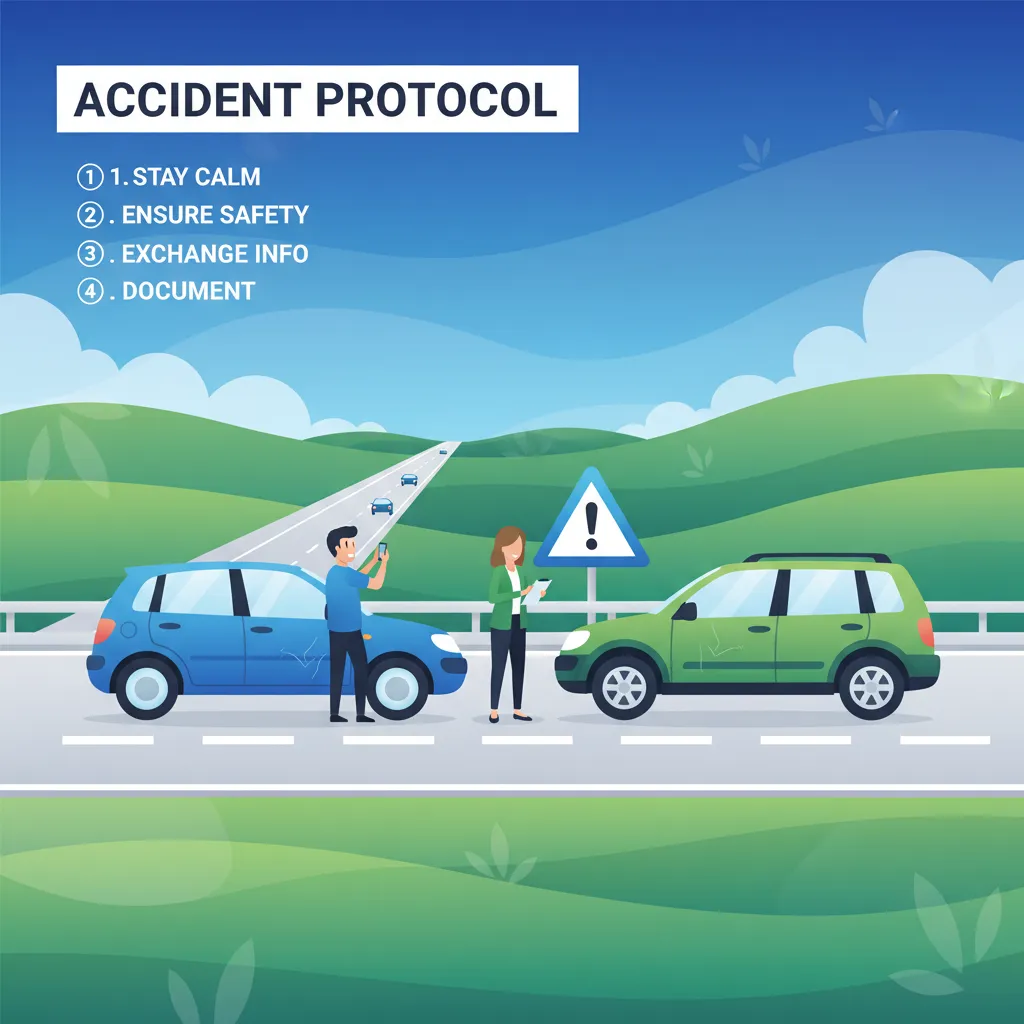
This lesson provides a clear checklist of actions to take in the immediate aftermath of a traffic accident. It prioritizes safety by explaining how to secure the scene and check for injuries before anything else. The content guides learners on the legal requirement to exchange information with other parties involved and the importance of documenting the scene with photos and collecting witness details for insurance and legal purposes.
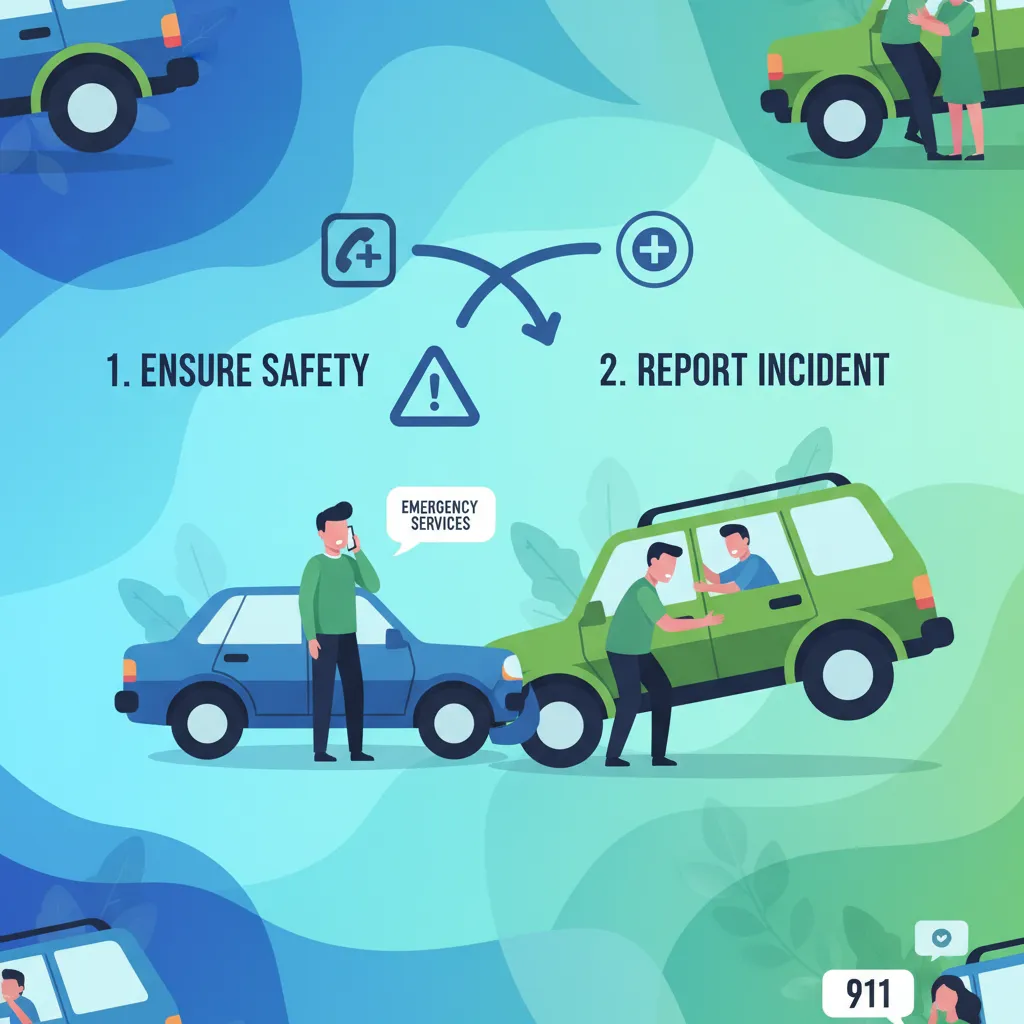
This lesson outlines the comprehensive steps required to safely manage an accident scene, including securing the area and providing immediate aid to any injured parties. Learners will be taught the legal reporting requirements, how to properly notify the DGT, and the specific documentation needed for insurance claims. The module also covers the process for collecting witness statements and interacting effectively with responding police authorities.
This lesson outlines the correct and legally required procedures to follow in the event of a traffic incident or accident. It covers the driver's immediate responsibilities at the scene, including securing the area and contacting emergency services. The content details the process for documenting the incident and formally reporting it to the DGT and insurance companies as required by law.
Explore real-world scenarios of accidents involving vulnerable road users like pedestrians and cyclists. Learn your specific legal obligations and immediate actions required in Spain for these critical situations.

This lesson addresses the critical skill of safely sharing the road with other vulnerable users like pedestrians, cyclists, and other motorcyclists. It emphasizes the need for increased awareness, speed adaptation, and providing ample space when passing. The content covers DGT regulations regarding minimum passing distances and highlights the importance of making eye contact to ensure mutual awareness and prevent common urban accidents.
This lesson outlines procedures for handling emergency situations and accidents. It covers emergency braking techniques, hazard avoidance strategies, and the DGT emergency protocol for accident reporting. Emphasis is placed on rider protective actions, post-crash first aid, roadside safety, and legal obligations after an incident.
This lesson provides guidance on responding to a road accident, following the 'Protect, Alert, Assist' protocol. It details the steps for securing the scene, notifying emergency services, and providing basic aid if necessary. The content covers the legal responsibilities of the driver, including completing an accident report form (parte amistoso) and exchanging insurance information.

This lesson focuses on the absolute priority of pedestrians at marked crosswalks, often known as zebra crossings. It explains that riders must always be prepared to stop and yield the right-of-way to any pedestrian waiting to cross or already crossing. The content also covers signaled pedestrian crossings and general awareness in urban areas where pedestrians may cross unexpectedly, reinforcing safety and legal compliance.
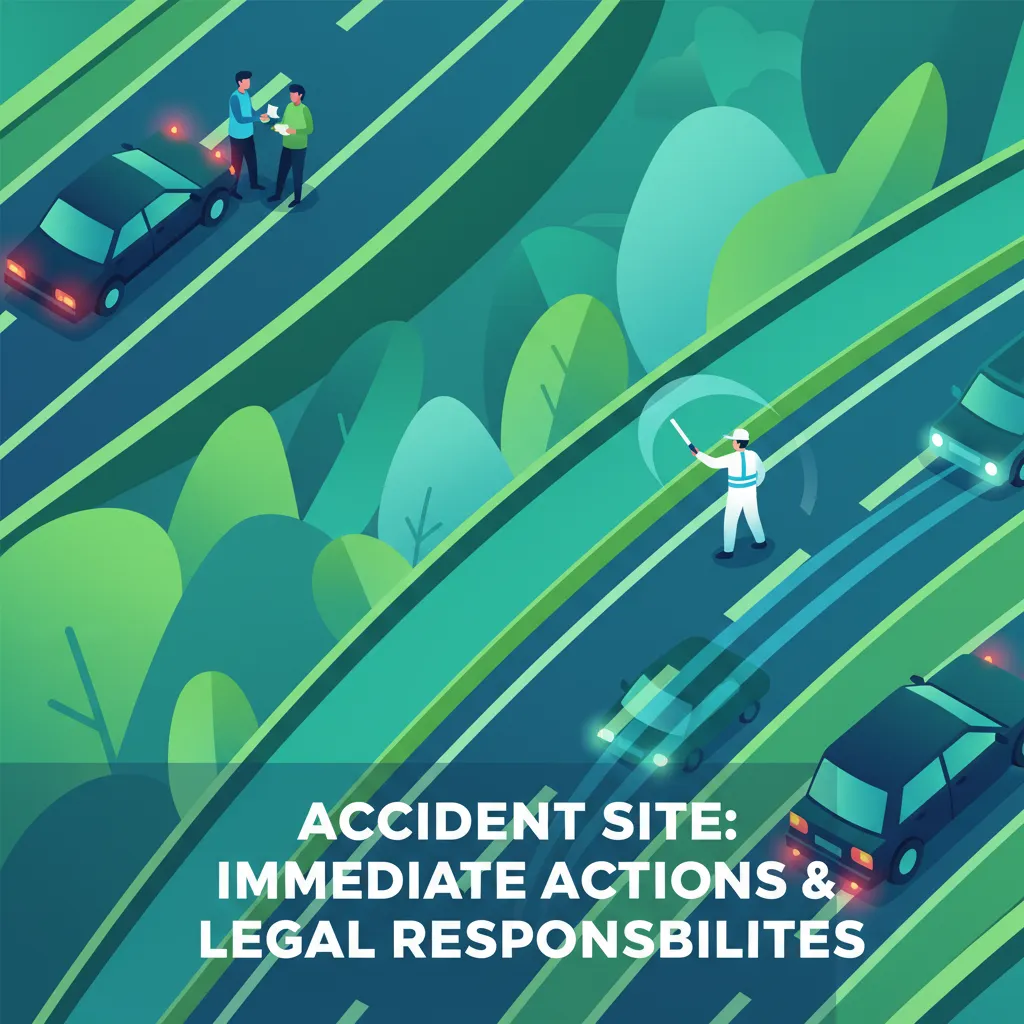
This lesson explains the driver's legal and ethical responsibilities when involved in or witnessing an accident. It covers the immediate priorities of protecting the scene from further incidents and providing aid to the injured within one's capabilities. The content details the legal requirements for exchanging information with other parties and reporting the accident to the police and DGT.
This lesson focuses on interaction dynamics with larger vehicles like cars, trucks, and buses, detailing their specific blind spot zones. Strategies for safely sharing lanes, overtaking etiquette, and proper approach when a bus stops are covered. The lesson also includes guidance on merging onto acceleration lanes following DGT policies.
This lesson discusses the infrastructure dedicated to cyclists, covering dedicated bike lanes and the rules governing interaction and overtaking. It explains DGT regulations on safe passing distances and how to navigate mixed-traffic scenarios where vehicles and bicycles share the road. The content emphasizes driver responsibilities to maintain a safe corridor and respect cyclist priority.

This lesson explores the design and legal requirements of pedestrian crossings in Spanish urban areas. It clarifies the rules at zebra crossings, signal-controlled crossings, and areas where cyclists or other vulnerable users share space. The content explains the required safety distances and signage indicating crossing zones to ensure drivers respect all road users.
This lesson provides a clear checklist of actions to take in the immediate aftermath of a traffic accident. It prioritizes safety by explaining how to secure the scene and check for injuries before anything else. The content guides learners on the legal requirement to exchange information with other parties involved and the importance of documenting the scene with photos and collecting witness details for insurance and legal purposes.

This lesson focuses on defensive maneuvers in mixed traffic environments where various vehicles share the road. It outlines lane discipline, appropriate overtaking safety measures, and strategies for maintaining a safety corridor. The content incorporates DGT defensive guidelines, teaching riders to manage space and anticipate unpredictable driver behavior.
Find clear answers to common questions learners have about Reporting Incidents and Legal Obligations. Learn how the lesson is structured, which driving theory objectives it supports, and how it fits into the overall learning path of units and curriculum progression in Spain. These explanations help you understand key concepts, lesson flow, and exam focused study goals.
No, police involvement isn't always mandatory. You generally need to call them if there are serious injuries, significant material damage, if one party is under the influence, or if there's disagreement between parties regarding fault or circumstances. For minor incidents where all parties agree, the 'parte amistoso' is often sufficient.
The 'parte amistoso', or European Accident Statement, is a standardized form used to document minor accidents between two vehicles. For AM riders, it's crucial for recording incident details, involved parties, and damage, which is vital for insurance claims. Completing it accurately and thoroughly helps expedite the claims process and avoids disputes.
If the other party refuses to cooperate, do not force them. Instead, immediately call the police (092 or 112). Document everything you can: vehicle registration, driver details, witness contacts, photos of the scene and damages. This evidence will be crucial for the authorities and your insurance company.
Proper and timely reporting, along with accurate documentation (like a well-filled 'parte amistoso' or police report), is fundamental for a successful insurance claim. Inaccurate or delayed reporting can lead to complications, delays, or even rejection of your claim. It ensures all facts are clear and legally sound.
Yes, failing to report an accident when legally required, or providing false information, can lead to serious DGT penalties, including fines and potential licence points deduction. It can also complicate legal liability and insurance payouts significantly, so always adhere to correct procedures.
Use our powerful search functionality to pinpoint specific Spanish DGT driving theory practice sets. Filter by road sign categories, traffic law topics, or question difficulty to build custom study sessions and reinforce your knowledge precisely where it matters for your official exam.