
This final lesson in the course prepares you for critical situations by teaching emergency braking and collision avoidance techniques. Understanding how to react swiftly and effectively in emergencies is vital for both passing your AM category theory exam and ensuring your safety on Spanish roads.
Lesson content overview
Navigating the roads on a moped requires not only a solid understanding of traffic rules but also the ability to react swiftly and effectively in unexpected, critical situations. This comprehensive lesson, designed for the Spanish Driving License Theory – AM Category, focuses on the essential skills of emergency braking and collision avoidance. By mastering these techniques, moped riders can significantly reduce the risk of accidents, ensure their own safety, and meet the legal obligations for responsible road use.
Understanding how to bring your moped to a rapid, controlled stop, or how to skillfully maneuver around an obstacle when braking alone is insufficient, is paramount for safe riding. This knowledge builds upon your foundational skills in vehicle control, road positioning, and hazard awareness, preparing you for the unpredictable nature of urban and rural environments.
Emergency braking is the critical process of applying maximum braking force to your moped to achieve the shortest possible stopping distance without losing control. This technique is vital when a sudden hazard appears, such as a pedestrian stepping onto the road or a vehicle stopping abruptly ahead. Effective emergency braking involves understanding the physics of weight transfer and applying the correct balance of front and rear brake pressure.
The goal is to achieve maximal deceleration while keeping the wheels rotating. A wheel that stops rotating (locks up) loses its ability to steer, transforming a controlled stop into a dangerous skid. This section will delve into the specific techniques and principles required to perform a safe and efficient emergency stop on an AM category moped.
During any braking event, your moped's weight shifts forward. This phenomenon, known as weight transfer, significantly increases the traction available at the front wheel while simultaneously reducing the traction at the rear wheel. For moped riders, comprehending weight transfer is fundamental to effective braking.
Because of this forward weight shift, the front wheel becomes far more efficient at braking. Consequently, the majority of your braking force, especially during an emergency, should be applied to the front brake. Over-reliance on the rear brake can easily lead to the rear wheel locking up, resulting in a loss of stability and potentially a dangerous skid. Conversely, an excessive, abrupt application of the front brake can also cause the front wheel to lock, leading to a loss of steering control and a high risk of falling. The key is a balanced and progressive application.
Performing an emergency stop on a moped requires precise coordination and a progressive approach to brake application. It's not about simply slamming the brakes; it's about smoothly building pressure to the threshold of optimal friction.
Perceive and React: The moment you identify a hazard, your brain needs time to process and your body to react. This is your perception and reaction time. Initiate braking immediately.
Apply Both Brakes Simultaneously: Do not rely on just one brake. Begin applying both the front and rear brakes at the same time.
Progressive Front Brake Application: Gradually and firmly squeeze the front brake lever. Increase pressure smoothly, feeling for the point where the front wheel is almost about to lock. This is the threshold braking point, where you achieve maximum deceleration.
Modulated Rear Brake Application: Apply the rear brake pedal with less force than the front. Its primary role is to help stabilize the moped and contribute to braking without causing the rear wheel to lock. If the rear wheel begins to skid, ease off the rear brake slightly until traction is regained, then reapply.
Maintain Visual Focus: Look ahead at your intended stopping point, not down at your wheels. Your body naturally steers where your eyes are focused.
Keep the Moped Upright: Avoid sudden steering inputs while braking hard. Maintain a straight line as much as possible to ensure stability.
Practice is crucial for developing the muscle memory needed for progressive braking versus panic braking. While a true panic situation might lead to immediate maximal application, practicing progressive braking allows you to maintain control and reduce stopping distances even under extreme pressure. Understanding your moped's braking system, including whether it has an Anti-lock Braking System (ABS), is also vital. While rare on older mopeds, ABS prevents wheel lock-up, allowing you to brake hard and steer simultaneously.
The total distance your moped travels from the moment you perceive a hazard until you come to a complete stop is called the total stopping distance. This distance is composed of three critical components:
It is a common misunderstanding to underestimate the perception and reaction distances, leading riders to believe they can stop much faster than is realistic. For example, at 45 km/h, your perception and reaction distance alone can be around 19 metres before you even begin to brake effectively. Understanding these components underscores the importance of maintaining a safe following distance and managing your speed.
Sometimes, even with perfect emergency braking, the stopping distance is simply too great to avoid a collision. In such scenarios, a controlled swerve, also known as an avoidance maneuver, becomes your last resort. This technique involves a brief, intentional steering input combined with continued braking to move your moped laterally away from an unavoidable obstacle, rather than attempting a full stop.
The primary goal of a controlled swerve is to change your moped's trajectory quickly and safely, allowing you to bypass the hazard. This maneuver is most effective when executed after initial braking has reduced some of your speed, giving you more time and control.
The success of a controlled swerve largely depends on two key principles: reducing speed and "look where you want to go".
Controlled swerves can be categorized as a single-lane swerve (avoiding an obstacle within your current lane) or a lane-change swerve (moving into an adjacent lane). If a lane-change swerve is necessary, it is crucial to check your mirrors, signal your intention, and ensure the adjacent lane is clear and safe before initiating the maneuver. Failing to signal can surprise other drivers and lead to another collision.
Effective emergency handling hinges on a few core principles that intertwine physics, human psychology, and proactive riding habits.
Situational awareness is your continuous perception of environmental elements, your understanding of their meaning, and your ability to project their status in the near future. For moped riders, this means constantly scanning the road ahead, to the sides, and behind you, looking for potential hazards.
By actively scanning, you can identify static hazards (like potholes, debris, or parked cars) and dynamic hazards (such as other moving vehicles, pedestrians, or cyclists) much earlier. Early detection buys you precious time—time to perceive, react, and execute an emergency maneuver. A lack of situational awareness, often called "tunnel vision," leads to delayed reactions and significantly increases your accident risk.
Always scan at least 10-15 seconds ahead of your moped. This gives you time to process potential dangers and formulate an escape plan before they become immediate threats.
Your reaction time—the interval between perceiving a hazard and initiating an action like braking—is a non-negotiable component of total stopping distance. While individual reaction times vary, factors like fatigue, distraction (e.g., from a phone or loud music), or impairment (e.g., alcohol or drugs) can drastically increase it.
Reducing reaction time is about being prepared: maintaining focus, keeping both hands on the handlebars, and keeping fingers near the brake levers. This readiness allows for a more immediate response, which can shave crucial metres off your stopping distance and significantly impact the outcome of an emergency situation.
Adhering to traffic laws and regulations is not just about avoiding fines; it's about ensuring safety for yourself and other road users. In Spain, riders of AM category mopeds are bound by specific rules that indirectly or directly govern emergency maneuvers.
Spanish traffic law, guided by the Dirección General de Tráfico (DGT), mandates safe driving practices that apply directly to emergency braking scenarios:
When a controlled swerve involves moving into an adjacent lane, specific rules apply to maintain order and prevent further accidents:
Speed and following distance are preventive measures that directly impact your ability to perform emergency maneuvers successfully:
Violation of speed limits or failure to maintain a safe following distance are common causes of accidents and can lead to penalties under Spanish traffic law.
The effectiveness of emergency braking and collision avoidance is not static; it changes dramatically based on environmental factors and your vehicle's state. Responsible riders adjust their techniques and awareness accordingly.
Understanding common pitfalls in emergency situations is as important as knowing the correct techniques. Identifying these mistakes can help you prevent them.
Let's explore how these concepts come together in real-world scenarios for AM category moped riders.
Mastering emergency braking and collision avoidance techniques is not just about knowing the theory; it's about developing the confidence and muscle memory through practice and constant vigilance. For Spanish AM category moped riders, these skills are fundamental for navigating the diverse challenges of the road.
By integrating these principles into your daily riding, you will be better prepared to handle unforeseen circumstances, ensuring a safer and more confident experience on your moped.
This lesson teaches AM moped riders essential emergency skills for Spanish roads, covering progressive emergency braking that applies front-dominant brake force while preventing wheel lock, and controlled swerve maneuvers that require looking at your escape path rather than the obstacle. Key physics concepts include weight transfer during deceleration and how it affects brake distribution, while legal requirements mandate using both brakes and signaling lane changes. Environmental factors such as wet conditions, fog, and night riding require adjusted braking techniques and increased following distances. Practicing these techniques builds the muscle memory and confidence needed to react decisively in real emergency situations.
A short set of high-value points that capture the most important learning from this lesson.
Apply both brakes progressively during emergency braking, with stronger front brake pressure, while keeping wheels rotating to maintain steering control.
Use the 'look where you want to go' technique during avoidance maneuvers—your moped steers toward your visual focus point, not the obstacle.
Understand weight transfer: braking shifts weight forward, increasing front-wheel traction and requiring front-dominant braking.
Always reduce speed before attempting a swerve, as this shortens the turning radius and makes the maneuver more controllable.
Cultivate continuous situational awareness by scanning at least 10-15 seconds ahead to detect hazards early and maximize reaction time.
Explore all units and lessons included in this driving theory course.
Total stopping distance = perception distance + reaction distance + braking distance; reaction time alone can be ~1.5 seconds (~19m at 45 km/h).
Front wheel lock causes loss of steering; rear wheel lock causes loss of stability; progressive braking prevents both.
Spanish law requires using both front and rear brakes for emergency stops and prohibits abrupt steering with locked wheels.
A lane-change swerve requires mirror check and signal if time permits, but immediate collision avoidance takes precedence.
Wet or icy conditions drastically reduce friction, requiring gentler brake modulation and increased following distance.
Stomping only on the rear brake during panic stops, causing rear-wheel lock, skid, and loss of control.
Fixating on an obstacle during a swerve, which causes the moped to steer directly into it instead of the escape path.
Applying maximum front brake abruptly on slippery surfaces, leading to front-wheel lock and immediate loss of steering.
Failing to signal when performing a lane-change swerve, potentially causing a secondary collision with an unsuspecting driver.
Riding above the 45 km/h AM limit in urban areas, drastically reducing available time and distance for emergency maneuvers.
Lesson content overview
A short set of high-value points that capture the most important learning from this lesson.
Apply both brakes progressively during emergency braking, with stronger front brake pressure, while keeping wheels rotating to maintain steering control.
Use the 'look where you want to go' technique during avoidance maneuvers—your moped steers toward your visual focus point, not the obstacle.
Understand weight transfer: braking shifts weight forward, increasing front-wheel traction and requiring front-dominant braking.
Always reduce speed before attempting a swerve, as this shortens the turning radius and makes the maneuver more controllable.
Cultivate continuous situational awareness by scanning at least 10-15 seconds ahead to detect hazards early and maximize reaction time.
Explore all units and lessons included in this driving theory course.
Total stopping distance = perception distance + reaction distance + braking distance; reaction time alone can be ~1.5 seconds (~19m at 45 km/h).
Front wheel lock causes loss of steering; rear wheel lock causes loss of stability; progressive braking prevents both.
Spanish law requires using both front and rear brakes for emergency stops and prohibits abrupt steering with locked wheels.
A lane-change swerve requires mirror check and signal if time permits, but immediate collision avoidance takes precedence.
Wet or icy conditions drastically reduce friction, requiring gentler brake modulation and increased following distance.
Stomping only on the rear brake during panic stops, causing rear-wheel lock, skid, and loss of control.
Fixating on an obstacle during a swerve, which causes the moped to steer directly into it instead of the escape path.
Applying maximum front brake abruptly on slippery surfaces, leading to front-wheel lock and immediate loss of steering.
Failing to signal when performing a lane-change swerve, potentially causing a secondary collision with an unsuspecting driver.
Riding above the 45 km/h AM limit in urban areas, drastically reducing available time and distance for emergency maneuvers.
Explore search topics learners often look for when studying Emergency Braking and Collision Avoidance. These topics reflect common questions about road rules, driving situations, safety guidance, and lesson level theory preparation for learners in Spain.
Browse additional driving theory lessons that cover connected traffic rules, road signs, and common driving situations related to this topic. Improve your understanding of how different rules interact across everyday traffic scenarios.
Understand the theory behind emergency braking and controlled swerving for AM category mopeds. Learn how to react to critical road situations and maintain control to avoid accidents, as required by Spanish traffic law.
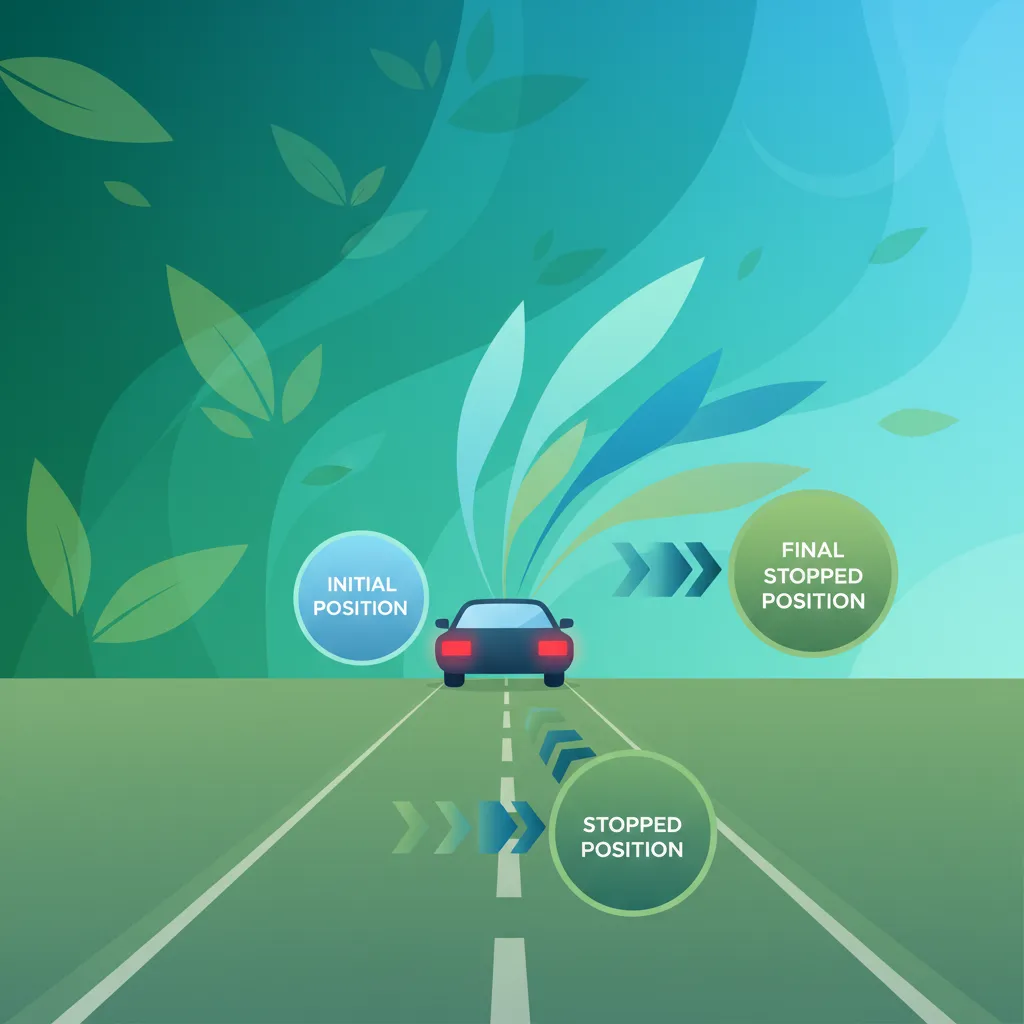
This lesson focuses on the correct application of a moped's brakes for effective and stable deceleration. It explains the concept of balanced braking, using both front and rear brakes simultaneously for maximum stopping power without losing traction. Learners will understand how factors like speed, road surface, and weather dramatically affect total stopping distance, and will learn techniques for emergency braking.

This lesson provides a detailed guide to safely starting a moped, from the ignition sequence to the coordinated use of the throttle and brakes. It explains the importance of a pre-ride checklist to verify lights and controls are functional. The content also covers techniques for achieving smooth acceleration from a standstill and performing controlled stops, which is crucial for managing stop-and-go urban traffic conditions.
This lesson teaches riders the critical importance of maintaining a safe following distance to allow for adequate reaction and braking time. It explains practical methods for judging this distance, such as the 'two-second rule,' and how this gap must be increased in adverse weather or poor visibility. Understanding this principle is fundamental to preventing rear-end collisions, one of the most common types of traffic accidents.

This lesson details the protocol for performing an emergency stop, emphasizing full-force application of both front and rear brakes while maintaining optimal rider posture. It covers the importance of visual fixation and the role of ABS in stabilizing the bike under panic conditions. Learners also study the calculation of stopping distances based on speed and road conditions.
This lesson outlines procedures for handling emergency situations and accidents. It covers emergency braking techniques, hazard avoidance strategies, and the DGT emergency protocol for accident reporting. Emphasis is placed on rider protective actions, post-crash first aid, roadside safety, and legal obligations after an incident.

This lesson examines the dynamic interactions between mopeds, cars, and bicycles in an urban environment. It emphasizes strategies for staying visible and avoiding the blind spots of larger vehicles. The content provides clear guidelines on overtaking bicycles safely, respecting dedicated bike lanes, and signaling intentions clearly to all other road users to ensure predictable and harmonious coexistence in mixed traffic.

This lesson focuses on mastering acceleration and deceleration to integrate smoothly with traffic. It teaches how to apply the throttle gradually for steady speed control and how to use front and rear brakes in a balanced manner to slow down without destabilizing the moped. Learners will understand how to adjust their speed in response to changing traffic conditions, ensuring safe following distances and predictable movements for other road users.

This lesson focuses on the optimal position for a moped within a traffic lane to maximize visibility and safety. It discusses the importance of maintaining a safety buffer from other vehicles and hazards, particularly the risk posed by the doors of parked cars. The content explains how to use lane positioning strategically to discourage unsafe overtaking and to be clearly seen by drivers in front and behind, especially when approaching intersections.
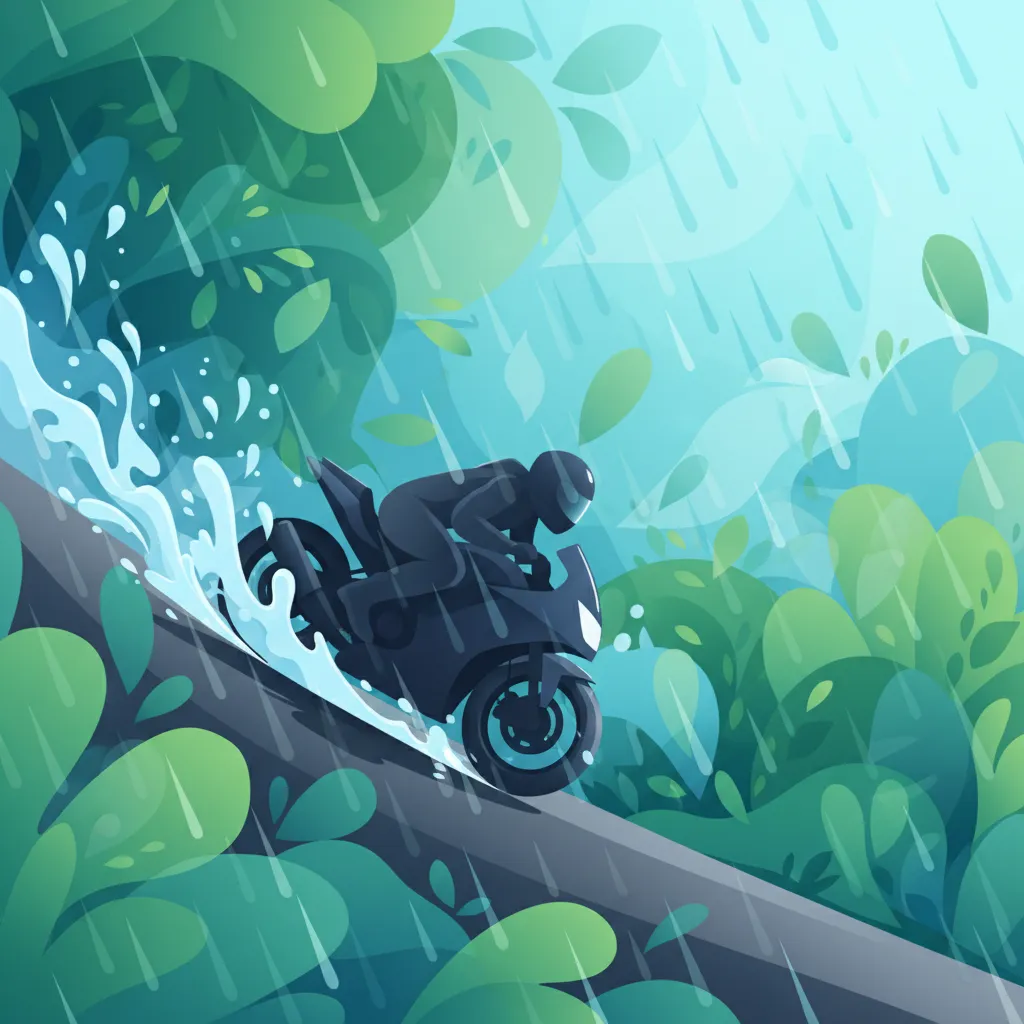
This lesson focuses on the specific techniques required for riding in rainy and slippery conditions. It explains how water on the road surface reduces tire grip and significantly increases braking distances. Learners will be taught to reduce speed, use controls smoothly and progressively, and be particularly cautious of painted lines and manhole covers, which become extremely slippery when wet.
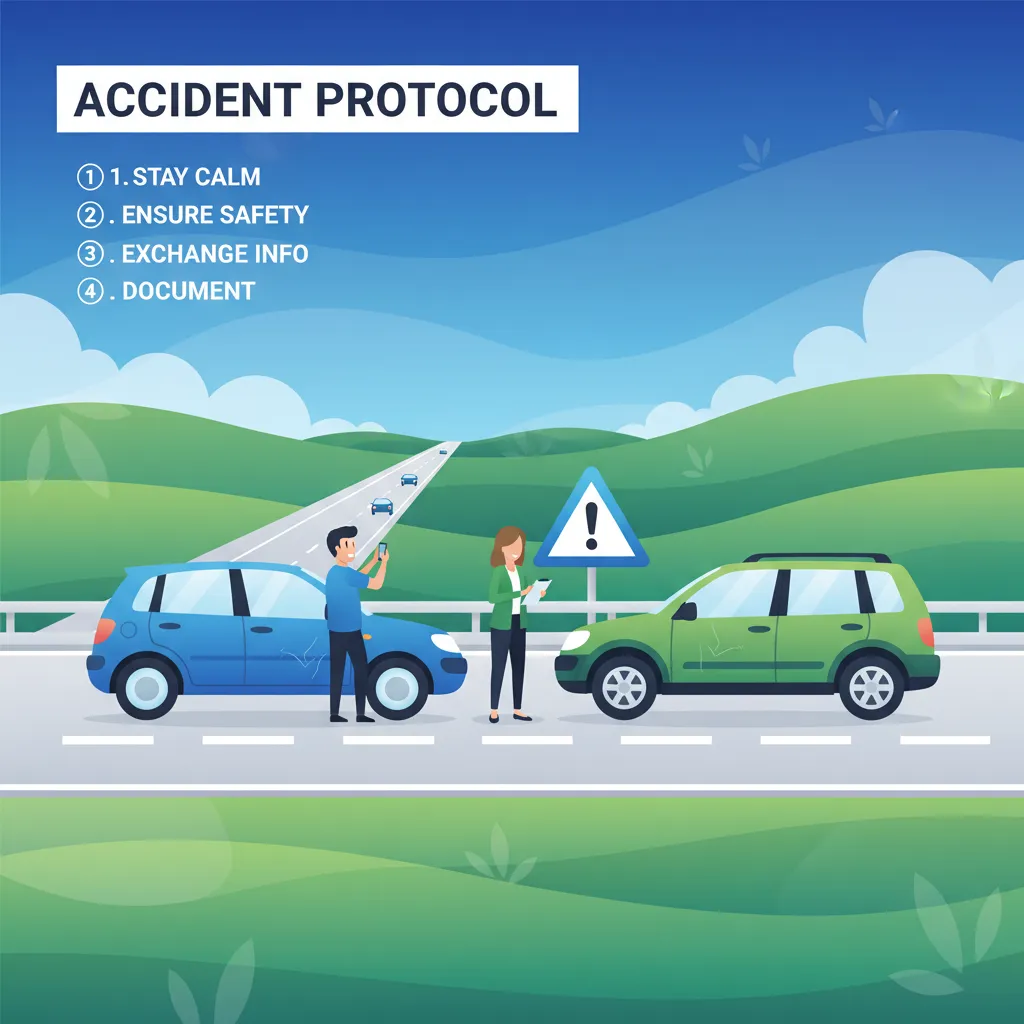
This lesson provides a clear checklist of actions to take in the immediate aftermath of a traffic accident. It prioritizes safety by explaining how to secure the scene and check for injuries before anything else. The content guides learners on the legal requirement to exchange information with other parties involved and the importance of documenting the scene with photos and collecting witness details for insurance and legal purposes.
Learn the theory of total stopping distance, including perception, reaction, and braking distances. This lesson covers factors affecting stopping time and distance for mopeds, crucial for safe driving in Spain.
This lesson focuses on the correct application of a moped's brakes for effective and stable deceleration. It explains the concept of balanced braking, using both front and rear brakes simultaneously for maximum stopping power without losing traction. Learners will understand how factors like speed, road surface, and weather dramatically affect total stopping distance, and will learn techniques for emergency braking.
This lesson provides a detailed examination of the components that determine a vehicle’s stopping distance: perception time, reaction time, and braking distance. It outlines how to calculate safe stopping distances under various speeds and road conditions like wet or dry surfaces. Learners will be equipped to compute appropriate safety margins and understand the physics of emergency braking.
This lesson teaches riders the critical importance of maintaining a safe following distance to allow for adequate reaction and braking time. It explains practical methods for judging this distance, such as the 'two-second rule,' and how this gap must be increased in adverse weather or poor visibility. Understanding this principle is fundamental to preventing rear-end collisions, one of the most common types of traffic accidents.
This lesson provides a detailed guide to safely starting a moped, from the ignition sequence to the coordinated use of the throttle and brakes. It explains the importance of a pre-ride checklist to verify lights and controls are functional. The content also covers techniques for achieving smooth acceleration from a standstill and performing controlled stops, which is crucial for managing stop-and-go urban traffic conditions.
This lesson focuses on mastering acceleration and deceleration to integrate smoothly with traffic. It teaches how to apply the throttle gradually for steady speed control and how to use front and rear brakes in a balanced manner to slow down without destabilizing the moped. Learners will understand how to adjust their speed in response to changing traffic conditions, ensuring safe following distances and predictable movements for other road users.
This lesson details the protocol for performing an emergency stop, emphasizing full-force application of both front and rear brakes while maintaining optimal rider posture. It covers the importance of visual fixation and the role of ABS in stabilizing the bike under panic conditions. Learners also study the calculation of stopping distances based on speed and road conditions.
This lesson focuses on the coordination of acceleration and deceleration to maintain vehicle stability. It explains how to modulate the accelerator pedal for smooth acceleration and how to apply the brake pedal for controlled deceleration. The content covers the role of the ABS system, the calculation of stopping distances, and the importance of maintaining stability during speed changes.
This lesson provides a clear and serious overview of the laws concerning driving under the influence of alcohol or drugs. It specifies the legal blood alcohol concentration (BAC) limits for moped riders and explains the zero-tolerance policy for illicit substances. The content details the severe consequences of impairment, which include heavy fines, license suspension, and potential criminal charges, reinforcing the absolute necessity of riding sober.
This lesson focuses on adapting braking techniques for wet and slippery roads. Topics include hydroplaning risk, reduced tire friction, and how ABS assists in preventing wheel lock-up. Learners are taught to employ progressive braking, reduce speed, and assess tire tread depth to maintain adequate grip.
This lesson teaches the crucial skill of adapting speed to match prevailing environmental conditions. It explains that the posted speed limit is a maximum for ideal conditions and that riders must slow down significantly in rain, fog, or darkness. The content emphasizes maintaining a larger safety margin to account for reduced visibility and longer stopping distances, ensuring the rider can always stop within the distance they can see clearly.
Find clear answers to common questions learners have about Emergency Braking and Collision Avoidance. Learn how the lesson is structured, which driving theory objectives it supports, and how it fits into the overall learning path of units and curriculum progression in Spain. These explanations help you understand key concepts, lesson flow, and exam focused study goals.
Emergency braking involves applying maximum brake force to stop as quickly as possible, aiming to avoid locking the wheels. Regular braking is smoother and focused on controlled deceleration, maintaining comfort and stability, and is used in normal traffic flow.
When swerving, your natural instinct might be to look at the obstacle you're trying to avoid. Instead, you must actively look at the safe path you want to steer into. Your body and the moped will naturally follow your eyes, making the maneuver more controlled and successful.
On most mopeds, especially older ones without ABS, locking the wheels (skidding) can lead to a loss of steering control and a fall. The goal of emergency braking is to apply maximum pressure without locking the wheels, achieving the shortest stopping distance while remaining upright and steerable.
Learners often fail because they misunderstand the physics of braking or confuse emergency stopping with regular braking. Questions might test knowledge of maintaining stability, the correct sequence of actions, or the importance of looking in the intended direction of travel when swerving.
Swerve maneuvers are safest on dry, well-maintained tarmac. Loose gravel, wet surfaces, or uneven road conditions significantly increase the risk of skidding or losing control. Always assess the road surface before attempting any evasive action.
Use our powerful search functionality to pinpoint specific Spanish DGT driving theory practice sets. Filter by road sign categories, traffic law topics, or question difficulty to build custom study sessions and reinforce your knowledge precisely where it matters for your official exam.