
As an AM category rider in Spain, urban streets present unique hazards, including the risk of 'dooring' from parked cars. This lesson builds on your knowledge of urban traffic positioning by focusing specifically on how to anticipate and avoid incidents where a car door suddenly opens into your path. It's crucial for safe navigation and passing your DGT theory exam.
Lesson content overview
Riding a moped in urban environments presents unique challenges, and one of the most prevalent and serious hazards is the phenomenon known as "dooring." A dooring incident occurs when an occupant of a parked vehicle suddenly opens a door into the path of a passing moped, bicycle, or motorcycle. For riders preparing for their Spanish Category AM Driving License, understanding and mitigating these risks is crucial for safe navigation and adherence to traffic regulations.
This lesson delves into the mechanics of door-swing incidents, providing specific strategies to anticipate, avoid, and react to these sudden dangers. By learning to adjust your lane position, identify subtle visual cues, and always maintain an escape path, you can significantly reduce your risk of collision and navigate busy city streets with greater confidence.
The core concept in preventing dooring incidents is understanding the door-swing radius. This refers to the geometric area a vehicle door occupies when opened from a parked position. For a standard passenger car, this radius typically extends between 0.5 to 0.8 metres outward from the hinge side of the door. This area immediately adjacent to parked vehicles is a potentially hostile zone for vulnerable road users like moped riders.
When a vehicle is parked parallel to the flow of traffic, its doors—especially the driver's side door on the left (in right-hand traffic countries like Spain) or the passenger's side door on the right—can swing unexpectedly into the lane. While most doors swing outwards from the hinge, some rare vehicle designs might feature "reverse-swing" doors that open towards the traffic lane. Regardless of the door type, the critical takeaway is that any door can open suddenly, requiring riders to treat the entire door-swing radius as a potential danger zone. Riders must be acutely aware of this radius when overtaking parked vehicles to avoid entering a collision course.
One of the most effective strategies for moped riders to avoid dooring incidents is adopting an outside-the-door-swing positioning. This means choosing a trajectory within your lane that places your moped beyond the typical door-swing radius of adjacent parked cars.
In Spain, where traffic drives on the right, parked vehicles are usually found on the right side of the road. Therefore, the safest position for a moped rider is towards the left side of their lane, providing a buffer zone between the moped and potential opening doors. This "left-side positioning" (when cars are parked on the right curb) creates a lateral offset, minimizing your exposure to sudden door openings. It is a common misconception that hugging the curb provides greater safety; in fact, it places you directly within the most dangerous zone for a door-swing collision. Maintaining a lateral distance of at least 0.5 metres, or ideally more, from parked cars significantly increases your safety margin.
The Reglamento General de Circulación (RGTC) Article 96 on Lane Discipline supports this by emphasizing the need to keep the vehicle within lane boundaries while allowing for adjustments to maintain safety. Choosing a smart lane position isn't just about adhering to rules; it's a proactive risk mitigation strategy that empowers you to control your exposure to hazards.
Developing strong visual cue anticipation is a vital skill for every moped rider. This involves actively scanning and observing subtle signals that might indicate an imminent door opening, allowing you to react preemptively. By detecting these cues early, you gain precious extra seconds to adjust your speed or position before a door swings into your path.
Key visual cues to look for include:
These cues, though subtle, can make a significant difference in your reaction time. The RGTC Article 4 (Due Care) implicitly obliges all drivers to anticipate hazards. Moped riders, as vulnerable road users, must be extra vigilant. Never assume that a parked car's occupants will check for traffic before opening their door; many do not, especially in busy urban settings. Consistent scanning technique and peripheral awareness are essential to catch these warnings.
When approaching parked cars, train your eyes to quickly scan for interior lights, movements within the vehicle, and hands near door handles. This proactive scanning can give you critical early warning.
Beyond proper positioning and anticipation, escape path planning is a crucial element of hazard awareness for moped riders. An escape path is an unobstructed line of travel that allows you to maneuver away from a sudden door opening safely. This isn't just about avoiding a collision; it's about having a contingency for rapid maneuvering without causing a secondary accident with other road users or obstacles.
Every time you approach or pass a parked car, you should mentally (or physically) identify:
Maintaining an escape path requires continuous assessment of your surroundings. Look ahead for potential hazards, assess the traffic conditions around you, and ensure you always have enough lateral space to steer away without colliding with another vehicle or roadside obstruction. The RGTC mandates safe overtaking distances (Article 151), which inherently supports the principle of maintaining an escape path. Even in seemingly narrow lanes, a few centimeters of lateral clearance can be the difference between a near-miss and a collision.
Your speed-related reaction time is a critical factor in how safely you can respond to an unexpected door opening. Reaction time is the total duration required for a rider to perceive a hazard, process the information, decide on an appropriate action, and then execute that maneuver. This time is inversely related to your speed; the faster you travel, the less distance you cover during your reaction time, and therefore, the less margin you have for error.
Breaking down reaction time:
At higher speeds, the distance covered during these phases increases significantly. For instance, an average rider's total reaction time can be around 1.5 seconds. At 30 km/h, you would travel approximately 12.5 metres in that time before you even begin to brake or swerve. At 50 km/h, this distance jumps to over 20 metres. This underscores why reducing your speed in areas with parked cars is not merely a recommendation but a fundamental safety principle. The RGTC Article 131 explicitly requires vehicles to adjust speed according to road conditions, traffic, visibility, and the safety of other users. Lower speeds in high-density urban areas with parked cars improve your response capabilities dramatically, allowing for safer avoidance of sudden door openings.
Moped riders fall into the category of Vulnerable Road Users (VRUs), alongside cyclists and pedestrians. This classification is crucial because VRUs are inherently more exposed and possess significantly less protective structure than occupants of cars or larger vehicles. This physical vulnerability means that even minor door-swing incidents can result in serious injury or fatality for a moped rider.
Several factors contribute to the heightened vulnerability of moped riders:
Given these inherent vulnerabilities, moped riders must compensate by adopting a profoundly cautious approach. Heightened situational awareness, proactive positioning, and conservative speed management are not optional; they are essential for survival on urban roads. The RGTC Article 104 reinforces the duty of care for all road users, particularly towards vulnerable ones, but riders must not rely solely on others to ensure their safety.
Spanish traffic law, as outlined in the Reglamento General de Circulación (RGTC), places clear obligations on all road users to prevent accidents, including those related to door openings. Understanding these specific articles is vital for safe and legal riding.
Ignoring the principles of door-swing risk management can lead to dangerous situations and potential legal penalties. Here are common violations and the correct behaviors to adopt:
| Violation | Why It’s Wrong | Correct Behavior | Potential Consequence |
|---|---|---|---|
| Hugging the curb beside parked cars | Places the moped rider directly within the door-swing radius, significantly increasing the risk of collision. | Maintain a lateral offset of at least 0.5 metres from the curb, riding towards the left side of your lane. | Minor collisions, vehicle damage, personal injury, and potential legal liability. |
| Passing a parked car at excessive speed | Drastically reduces the rider's reaction time and stopping distance, making it impossible to avoid an opening door. | Reduce speed to a safe level (e.g., ≤30 km/h) when approaching areas with parked vehicles. | Severe injury or fatality due to insufficient time to brake or swerve. |
| Failing to anticipate door opening with interior lights on | Ignoring this crucial visual cue means missing an early warning, preventing timely adjustments. | Actively scan for interior lights in parked cars, interpret them as a potential warning, and adjust position/speed. | Abrupt evasive maneuvers, loss of control, or secondary collisions with other traffic. |
| Overtaking a parked car when oncoming traffic is present | This creates a dilemma: no space to move left to avoid a door, forcing a choice between the door and oncoming traffic. | Wait for a clear stretch of road with ample space to both overtake safely and avoid any door opening. | Risk of head-on collision or being forced into an opening door. |
| Riding too close to a parked car’s side mirror or door handle | These protruding elements can snag a rider, causing loss of balance or direct impact, even if the door doesn't fully open. | Maintain a clear lateral distance from all parts of the parked car, using the lane’s centre as a reference. | Vehicle damage, potential for the rider to be thrown off the moped, minor injuries. |
| Ignoring adverse weather conditions affecting visibility | Reduced visibility (rain, fog, night) makes it harder to spot visual cues like interior lights or occupant movement. | Adjust speed significantly and increase vigilance during rain, fog, or low-light conditions; use auxiliary lighting. | Increased risk of undetected hazards leading to accidents due to delayed reaction. |
| Assuming a parked car’s driver will open the door slowly | Over-reliance on the driver's caution, which is not guaranteed. Many drivers open doors without checking or with great speed. | Treat all parked cars as potential door hazards, regardless of apparent driver behavior. Always be prepared for a sudden swing. | Unexpected sudden door swing causing unavoidable collision and severe consequences. |
| Attempting to pass between two parked cars with a narrow gap | Insufficient lateral space eliminates any margin for error if a door opens, or if either vehicle shifts slightly. | Avoid tight squeezes. Pass only when the gap meets minimum safe width standards (e.g., ≥1.5 metres). | Side-collision with a parked car or an opening door, leading to loss of stability or impact. |
The risk of a door-swing incident is not constant; it varies significantly with different environmental and traffic conditions. Moped riders must adapt their strategies based on these contextual factors.
Understanding the cause-and-effect relationships underlying door-swing incidents can reinforce safe riding behaviors:
This lesson on door-swing risks builds upon foundational knowledge acquired in earlier parts of the Spanish Driving License Theory – AM Category curriculum.
Mastering these concepts prepares riders for future lessons on Risk Mitigation Strategies and Emergency Situations, where the decision-making process for avoiding sudden, unexpected hazards like door-swings is further refined and integrated into overall defensive riding.
Let's consider practical examples to solidify your understanding of these concepts.
Successfully navigating urban environments on a moped, especially for those preparing for their Spanish Category AM Driving License, requires a thorough understanding and proactive approach to "dooring" incidents.
By internalizing these principles, you will develop the essential skills to ride safely and confidently, effectively mitigating the significant hazard of door-swing incidents in the urban landscape.
This lesson teaches AM category riders how to avoid dangerous 'dooring' incidents in Spanish urban environments by understanding the door-swing radius (0.5-0.8 metres), positioning themselves outside this hazard zone towards the left side of their lane, and scanning for visual cues like interior lights and occupant movement to anticipate door openings. Key strategies include maintaining a minimum 0.5-metre lateral offset from parked vehicles, reducing speed to increase reaction time, and always keeping a pre-planned escape path clear. Spanish traffic law (RGTC Articles 112, 96, and 131) supports these practices, mandating safe distances, proper lane discipline, and speed adjustment according to conditions. As vulnerable road users with minimal protection, moped riders must compensate through heightened situational awareness, defensive positioning, and contextual adaptation to weather, road type, and traffic density.
A short set of high-value points that capture the most important learning from this lesson.
The door-swing radius (0.5-0.8 metres) defines a hostile zone adjacent to parked vehicles where doors can suddenly open into your path.
Position your moped towards the left side of your lane (in right-hand traffic Spain) to maintain a lateral offset outside the door-swing radius, never hugging the curb.
Actively scan for visual cues—interior lights, occupant movement, or hands on door handles—as early warnings that a door may open.
Always plan and maintain an escape path: a clear trajectory that allows you to maneuver away from a sudden door opening without causing secondary hazards.
Reduce speed near parked vehicles because at 30 km/h you travel 12.5 metres during a typical 1.5-second reaction time, leaving little margin for error.
Explore all units and lessons included in this driving theory course.
Lateral offset of at least 0.5 metres from parked cars keeps you outside the door-swing hazard zone.
Three key visual cues signal imminent door opening: illuminated interior lights, occupant movement inside, and hands gripping door handles.
RGTC Article 112 mandates safe distance from parked vehicles; Article 96 permits lane-position adjustments within lane boundaries for safety.
At higher speeds, reaction distance increases dramatically—at 50 km/h you travel over 20 metres before initiating any avoidance action.
Moped riders are classified as Vulnerable Road Users (VRUs) with minimal physical protection, requiring defensive riding as essential rather than optional.
Hugging the curb beside parked cars places you directly within the most dangerous door-swing zone and should be avoided.
Maintaining excessive speed near parked vehicles drastically reduces reaction time and makes avoiding a sudden door opening nearly impossible.
Ignoring interior lights in parked cars as a warning sign, assuming the vehicle is empty or occupants are inattentive.
Failing to pre-plan an escape path leaves you with no safe maneuver option when a door suddenly opens.
Assuming drivers will check before opening doors, when many open them without looking for approaching moped traffic.
Lesson content overview
A short set of high-value points that capture the most important learning from this lesson.
The door-swing radius (0.5-0.8 metres) defines a hostile zone adjacent to parked vehicles where doors can suddenly open into your path.
Position your moped towards the left side of your lane (in right-hand traffic Spain) to maintain a lateral offset outside the door-swing radius, never hugging the curb.
Actively scan for visual cues—interior lights, occupant movement, or hands on door handles—as early warnings that a door may open.
Always plan and maintain an escape path: a clear trajectory that allows you to maneuver away from a sudden door opening without causing secondary hazards.
Reduce speed near parked vehicles because at 30 km/h you travel 12.5 metres during a typical 1.5-second reaction time, leaving little margin for error.
Explore all units and lessons included in this driving theory course.
Lateral offset of at least 0.5 metres from parked cars keeps you outside the door-swing hazard zone.
Three key visual cues signal imminent door opening: illuminated interior lights, occupant movement inside, and hands gripping door handles.
RGTC Article 112 mandates safe distance from parked vehicles; Article 96 permits lane-position adjustments within lane boundaries for safety.
At higher speeds, reaction distance increases dramatically—at 50 km/h you travel over 20 metres before initiating any avoidance action.
Moped riders are classified as Vulnerable Road Users (VRUs) with minimal physical protection, requiring defensive riding as essential rather than optional.
Hugging the curb beside parked cars places you directly within the most dangerous door-swing zone and should be avoided.
Maintaining excessive speed near parked vehicles drastically reduces reaction time and makes avoiding a sudden door opening nearly impossible.
Ignoring interior lights in parked cars as a warning sign, assuming the vehicle is empty or occupants are inattentive.
Failing to pre-plan an escape path leaves you with no safe maneuver option when a door suddenly opens.
Assuming drivers will check before opening doors, when many open them without looking for approaching moped traffic.
Explore search topics learners often look for when studying Door Opening (Door-Swing) Risks. These topics reflect common questions about road rules, driving situations, safety guidance, and lesson level theory preparation for learners in Spain.
Browse additional driving theory lessons that cover connected traffic rules, road signs, and common driving situations related to this topic. Improve your understanding of how different rules interact across everyday traffic scenarios.
Explore the mechanics and prevention strategies for 'dooring' incidents involving parked cars. Learn how to identify hazards, adjust lane position, and maintain escape paths to ensure moped safety in urban traffic as per Spanish regulations.
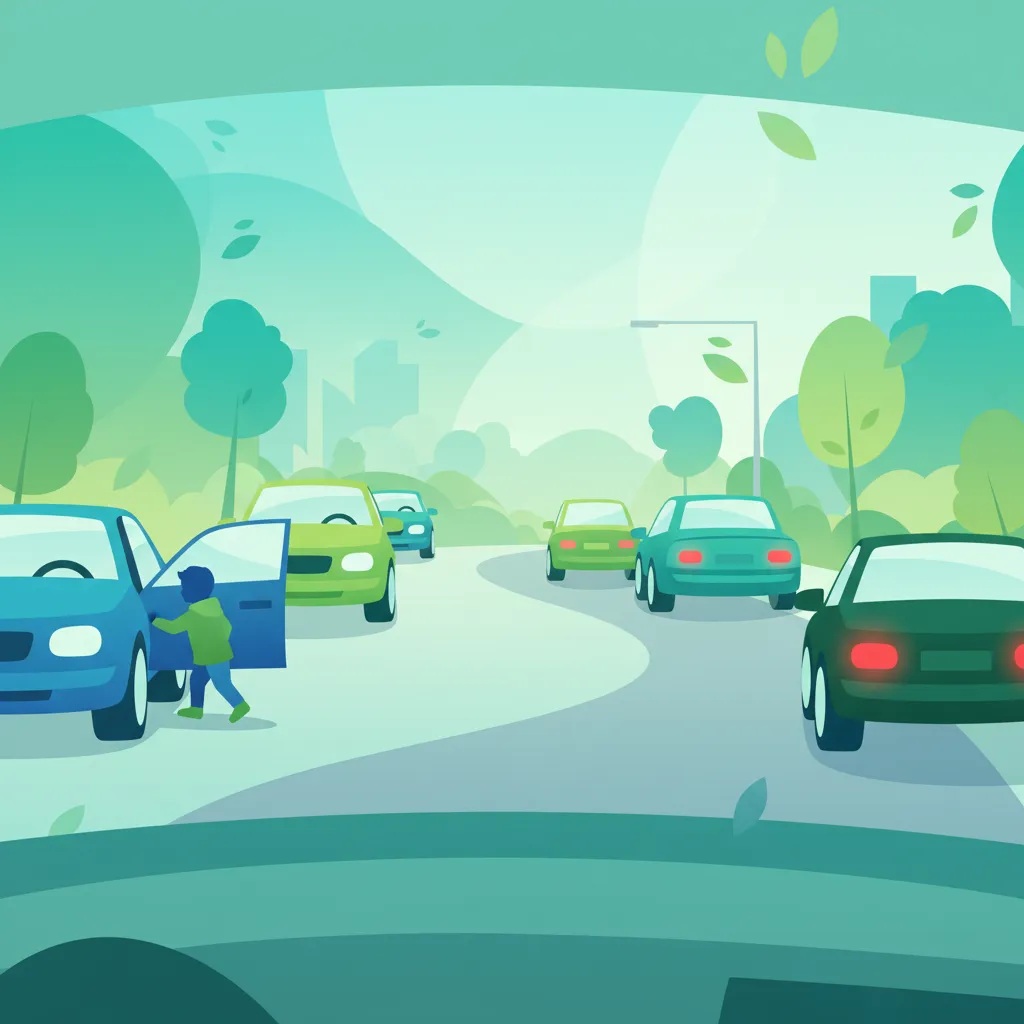
This lesson examines the specific hazards posed by vehicles parked along the roadside. It highlights the primary risk of a driver or passenger opening a door into the path of an approaching moped. Learners will understand the importance of maintaining a safe lateral distance and positioning themselves in the lane to avoid the 'door zone' while continuously scanning for signs of occupant activity.

This lesson focuses on the optimal position for a moped within a traffic lane to maximize visibility and safety. It discusses the importance of maintaining a safety buffer from other vehicles and hazards, particularly the risk posed by the doors of parked cars. The content explains how to use lane positioning strategically to discourage unsafe overtaking and to be clearly seen by drivers in front and behind, especially when approaching intersections.
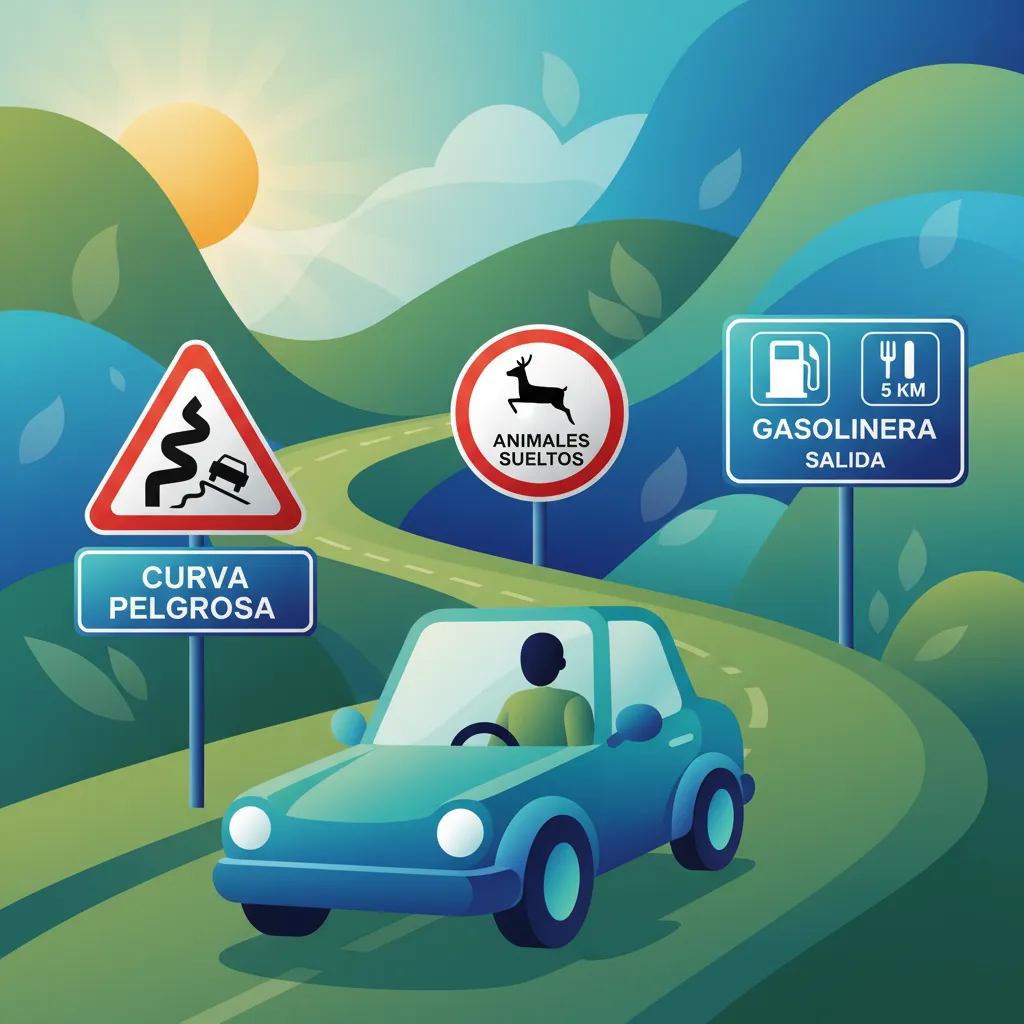
This lesson covers warning and informational signs, which are crucial for anticipating road conditions. It explains how triangular warning signs alert riders to upcoming hazards like sharp curves, slippery surfaces, or pedestrian crossings. The content also describes rectangular informational signs that provide directions, distances, and other useful guidance, helping riders to plan their route and adjust their driving in advance.
This lesson introduces the regulatory signs that impose obligations or prohibitions on road users, with a focus on those pertinent to mopeds. It covers common signs such as speed limits, 'no entry', and mandatory turn directions, explaining how their shape and color indicate their function. Learners will be able to identify and correctly interpret these signs to navigate urban road networks legally and safely, avoiding potential fines.
This lesson teaches riders how to react effectively in a sudden, critical situation. It explains the technique for applying maximum braking force without locking the wheels, ensuring the shortest possible stopping distance while maintaining stability. The content also covers how to perform a swift and controlled swerve to avoid an obstacle when stopping is not possible, emphasizing the importance of looking where you want to go.
This lesson teaches riders the critical importance of maintaining a safe following distance to allow for adequate reaction and braking time. It explains practical methods for judging this distance, such as the 'two-second rule,' and how this gap must be increased in adverse weather or poor visibility. Understanding this principle is fundamental to preventing rear-end collisions, one of the most common types of traffic accidents.
This lesson outlines the mandatory lighting and visibility equipment as per DGT regulations. It covers the correct use of headlights (low and high beams), taillights, and turn signals, ensuring the moped is visible to others, especially at night or in poor weather. The importance of wearing high-visibility or reflective clothing is also emphasized as a critical measure to enhance personal safety by making the rider more conspicuous.

This lesson provides a detailed guide to safely starting a moped, from the ignition sequence to the coordinated use of the throttle and brakes. It explains the importance of a pre-ride checklist to verify lights and controls are functional. The content also covers techniques for achieving smooth acceleration from a standstill and performing controlled stops, which is crucial for managing stop-and-go urban traffic conditions.

This lesson focuses on the specific techniques required for riding in rainy and slippery conditions. It explains how water on the road surface reduces tire grip and significantly increases braking distances. Learners will be taught to reduce speed, use controls smoothly and progressively, and be particularly cautious of painted lines and manhole covers, which become extremely slippery when wet.

This lesson focuses on the absolute priority of pedestrians at marked crosswalks, often known as zebra crossings. It explains that riders must always be prepared to stop and yield the right-of-way to any pedestrian waiting to cross or already crossing. The content also covers signaled pedestrian crossings and general awareness in urban areas where pedestrians may cross unexpectedly, reinforcing safety and legal compliance.
Learn how Spanish traffic regulations (RGTC) apply to preventing dooring incidents. Understand rider responsibilities, legal distances, and essential tips for safe interaction with parked vehicles for your AM category license.

This lesson details the formal and legal obligations for reporting a traffic accident to the authorities. It clarifies the circumstances under which police must be called to the scene and the procedures for completing the official European Accident Statement form ('parte amistoso'). Understanding these responsibilities ensures that the rider complies with Spanish law and that the incident is properly documented for insurance and liability purposes.

This lesson outlines the compulsory equipment and documentation required for an AM-class vehicle. It emphasizes the legal mandate for an approved helmet, a valid insurance policy, and a vehicle registration plate. Learners will also understand the requirements for the roadworthiness certificate (ITV) and other essential documents needed to prove compliance with DGT safety and legal standards during a traffic stop.
This lesson examines the specific hazards posed by vehicles parked along the roadside. It highlights the primary risk of a driver or passenger opening a door into the path of an approaching moped. Learners will understand the importance of maintaining a safe lateral distance and positioning themselves in the lane to avoid the 'door zone' while continuously scanning for signs of occupant activity.
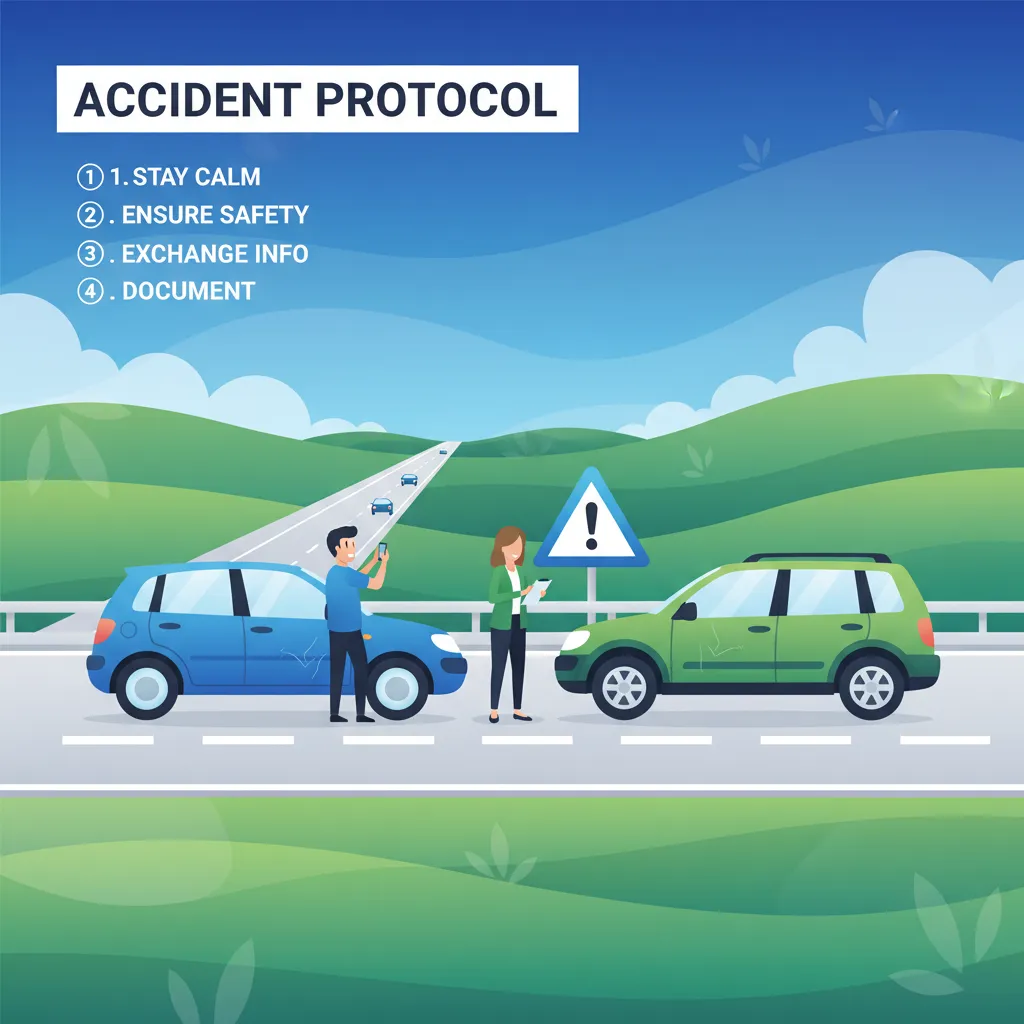
This lesson provides a clear checklist of actions to take in the immediate aftermath of a traffic accident. It prioritizes safety by explaining how to secure the scene and check for injuries before anything else. The content guides learners on the legal requirement to exchange information with other parties involved and the importance of documenting the scene with photos and collecting witness details for insurance and legal purposes.
This lesson focuses on the optimal position for a moped within a traffic lane to maximize visibility and safety. It discusses the importance of maintaining a safety buffer from other vehicles and hazards, particularly the risk posed by the doors of parked cars. The content explains how to use lane positioning strategically to discourage unsafe overtaking and to be clearly seen by drivers in front and behind, especially when approaching intersections.
This lesson teaches riders how to react effectively in a sudden, critical situation. It explains the technique for applying maximum braking force without locking the wheels, ensuring the shortest possible stopping distance while maintaining stability. The content also covers how to perform a swift and controlled swerve to avoid an obstacle when stopping is not possible, emphasizing the importance of looking where you want to go.
This lesson introduces the regulatory signs that impose obligations or prohibitions on road users, with a focus on those pertinent to mopeds. It covers common signs such as speed limits, 'no entry', and mandatory turn directions, explaining how their shape and color indicate their function. Learners will be able to identify and correctly interpret these signs to navigate urban road networks legally and safely, avoiding potential fines.
This lesson outlines the mandatory lighting and visibility equipment as per DGT regulations. It covers the correct use of headlights (low and high beams), taillights, and turn signals, ensuring the moped is visible to others, especially at night or in poor weather. The importance of wearing high-visibility or reflective clothing is also emphasized as a critical measure to enhance personal safety by making the rider more conspicuous.
This lesson covers warning and informational signs, which are crucial for anticipating road conditions. It explains how triangular warning signs alert riders to upcoming hazards like sharp curves, slippery surfaces, or pedestrian crossings. The content also describes rectangular informational signs that provide directions, distances, and other useful guidance, helping riders to plan their route and adjust their driving in advance.
This lesson teaches riders the critical importance of maintaining a safe following distance to allow for adequate reaction and braking time. It explains practical methods for judging this distance, such as the 'two-second rule,' and how this gap must be increased in adverse weather or poor visibility. Understanding this principle is fundamental to preventing rear-end collisions, one of the most common types of traffic accidents.
Find clear answers to common questions learners have about Door Opening (Door-Swing) Risks. Learn how the lesson is structured, which driving theory objectives it supports, and how it fits into the overall learning path of units and curriculum progression in Spain. These explanations help you understand key concepts, lesson flow, and exam focused study goals.
'Dooring' refers to an accident where a cyclist or moped rider collides with a car door that is suddenly opened by an occupant. In Spain, this is a significant risk in urban areas with parallel parking.
A general rule of thumb is to maintain at least one meter's distance from parked cars, or more if space allows. This creates a buffer zone outside the typical door-swing radius and allows room for error or unexpected movements.
Watch for the car's interior lights turning on, the driver or passengers looking over their shoulder before opening, or the door handle being grasped. Also, be wary of vehicles parked in a way that suggests someone is about to exit, like being angled slightly or having clear space around it.
By positioning yourself slightly further away from parked cars within your lane, you can avoid the immediate path of an opening door. This means not riding too close to the kerb where doors are likely to open.
Yes, understanding and preventing common urban hazards like 'dooring' is a key part of the DGT theory exam for the AM category. Questions will test your ability to identify the risk and choose the safest course of action.
Use our powerful search functionality to pinpoint specific Spanish DGT driving theory practice sets. Filter by road sign categories, traffic law topics, or question difficulty to build custom study sessions and reinforce your knowledge precisely where it matters for your official exam.