
Navigating urban environments requires understanding how to safely share the road with cyclists. This lesson covers the dedicated infrastructure for cyclists, such as bike lanes, and the rules for interacting with them and other road users in shared spaces. It's a crucial part of mastering urban driving for your Category B license exam.

Lesson content overview
This lesson covers the DGT regulations for safely interacting with cyclists in Spanish urban environments, including dedicated bike lanes (carril bici) and shared spaces (espacio compartido). Drivers must maintain at least 1.5 meters lateral distance when passing cyclists, increasing to 2 meters in adverse conditions, and must only overtake on the left. Overtaking is prohibited in curves, at intersections, and within 50 meters of pedestrian crossings. Cyclists have priority in their dedicated lanes, meaning drivers turning across bike lanes must always yield. Common violations include insufficient passing distance, parking in bike lanes, and failing to check for cyclists before turning, all of which create serious hazards for this vulnerable road user group.
A short set of high-value points that capture the most important learning from this lesson.
DGT mandates a minimum 1.5-meter lateral clearance when overtaking cyclists, increasing to 2 meters in rain, fog, or poor visibility conditions.
Overtaking cyclists is strictly prohibited within curves, at intersections, and within 50 meters of pedestrian crossings where visibility is limited.
Dedicated bike lanes (carril bici) marked with sign R-407 are exclusively for cyclists; motor vehicles must not enter except when turning and always yielding priority.
Drivers turning across a bike lane must always yield to cyclists already in the lane or approaching the intersection.
Parking or stopping in dedicated bike lanes is prohibited and creates significant safety hazards by forcing cyclists into motor traffic.
Explore all units and lessons included in this driving theory course.
Always overtake cyclists on the left side only; overtaking from the right is prohibited.
Increase passing distance to 2 meters when conditions reduce visibility: rain, fog, darkness, or when cyclists are in groups.
Cyclists have priority in their dedicated lanes; vehicles crossing bike lanes must stop and yield to approaching cyclists.
The 50-meter rule: overtaking cyclists is forbidden within 50 meters before signalized intersections or pedestrian crossings.
Never assume cyclists will stay at the far right edge of a lane; they may move to avoid obstacles or maintain stability.
Squeezing past cyclists with less than the required 1.5-meter lateral clearance, especially in narrow urban streets.
Attempting to overtake cyclists while still in a curve where visibility is limited, violating the prohibition on overtaking in bends.
Turning across a bike lane without properly checking for cyclists and yielding priority, causing left-hook or right-hook scenarios.
Failing to increase the passing distance to 2 meters during adverse weather conditions like heavy rain.
Parking or stopping in dedicated bike lanes, forcing cyclists to merge dangerously into traffic.
Lesson content overview
A short set of high-value points that capture the most important learning from this lesson.
DGT mandates a minimum 1.5-meter lateral clearance when overtaking cyclists, increasing to 2 meters in rain, fog, or poor visibility conditions.
Overtaking cyclists is strictly prohibited within curves, at intersections, and within 50 meters of pedestrian crossings where visibility is limited.
Dedicated bike lanes (carril bici) marked with sign R-407 are exclusively for cyclists; motor vehicles must not enter except when turning and always yielding priority.
Drivers turning across a bike lane must always yield to cyclists already in the lane or approaching the intersection.
Parking or stopping in dedicated bike lanes is prohibited and creates significant safety hazards by forcing cyclists into motor traffic.
Explore all units and lessons included in this driving theory course.
Always overtake cyclists on the left side only; overtaking from the right is prohibited.
Increase passing distance to 2 meters when conditions reduce visibility: rain, fog, darkness, or when cyclists are in groups.
Cyclists have priority in their dedicated lanes; vehicles crossing bike lanes must stop and yield to approaching cyclists.
The 50-meter rule: overtaking cyclists is forbidden within 50 meters before signalized intersections or pedestrian crossings.
Never assume cyclists will stay at the far right edge of a lane; they may move to avoid obstacles or maintain stability.
Squeezing past cyclists with less than the required 1.5-meter lateral clearance, especially in narrow urban streets.
Attempting to overtake cyclists while still in a curve where visibility is limited, violating the prohibition on overtaking in bends.
Turning across a bike lane without properly checking for cyclists and yielding priority, causing left-hook or right-hook scenarios.
Failing to increase the passing distance to 2 meters during adverse weather conditions like heavy rain.
Parking or stopping in dedicated bike lanes, forcing cyclists to merge dangerously into traffic.
Explore search topics learners often look for when studying Cyclist Lanes and Shared Spaces in Cities. These topics reflect common questions about road rules, driving situations, safety guidance, and lesson level theory preparation for learners in Spain.
Browse additional driving theory lessons that cover connected traffic rules, road signs, and common driving situations related to this topic. Improve your understanding of how different rules interact across everyday traffic scenarios.
Explore complex scenarios and specific DGT regulations for driving alongside cyclists in shared urban spaces and dedicated lanes. Understand nuanced priority rules and safe overtaking in challenging conditions. Essential for comprehensive Spanish driving theory.

This lesson explores the design and legal requirements of pedestrian crossings in Spanish urban areas. It clarifies the rules at zebra crossings, signal-controlled crossings, and areas where cyclists or other vulnerable users share space. The content explains the required safety distances and signage indicating crossing zones to ensure drivers respect all road users.

This lesson addresses the critical skill of safely sharing the road with other vulnerable users like pedestrians, cyclists, and other motorcyclists. It emphasizes the need for increased awareness, speed adaptation, and providing ample space when passing. The content covers DGT regulations regarding minimum passing distances and highlights the importance of making eye contact to ensure mutual awareness and prevent common urban accidents.

This lesson examines the dynamic interactions between mopeds, cars, and bicycles in an urban environment. It emphasizes strategies for staying visible and avoiding the blind spots of larger vehicles. The content provides clear guidelines on overtaking bicycles safely, respecting dedicated bike lanes, and signaling intentions clearly to all other road users to ensure predictable and harmonious coexistence in mixed traffic.

This lesson examines the interaction between large vehicles, such as trucks, and vulnerable road users within roundabouts. It addresses the wide turning radius of heavy vehicles, the importance of checking blind spots, and the correct yielding behavior toward pedestrians and cyclists. Learners will understand how to maintain safe distances and anticipate the movements of different road users.

This lesson focuses on the absolute priority of pedestrians at marked crosswalks, often known as zebra crossings. It explains that riders must always be prepared to stop and yield the right-of-way to any pedestrian waiting to cross or already crossing. The content also covers signaled pedestrian crossings and general awareness in urban areas where pedestrians may cross unexpectedly, reinforcing safety and legal compliance.
Learn about frequent errors drivers make around cyclist lanes and shared spaces in Spain, and understand the associated risks and DGT regulations. Focuses on identifying and avoiding dangerous situations for cyclists and drivers.
This lesson examines the dynamic interactions between mopeds, cars, and bicycles in an urban environment. It emphasizes strategies for staying visible and avoiding the blind spots of larger vehicles. The content provides clear guidelines on overtaking bicycles safely, respecting dedicated bike lanes, and signaling intentions clearly to all other road users to ensure predictable and harmonious coexistence in mixed traffic.
This lesson addresses the critical skill of safely sharing the road with other vulnerable users like pedestrians, cyclists, and other motorcyclists. It emphasizes the need for increased awareness, speed adaptation, and providing ample space when passing. The content covers DGT regulations regarding minimum passing distances and highlights the importance of making eye contact to ensure mutual awareness and prevent common urban accidents.
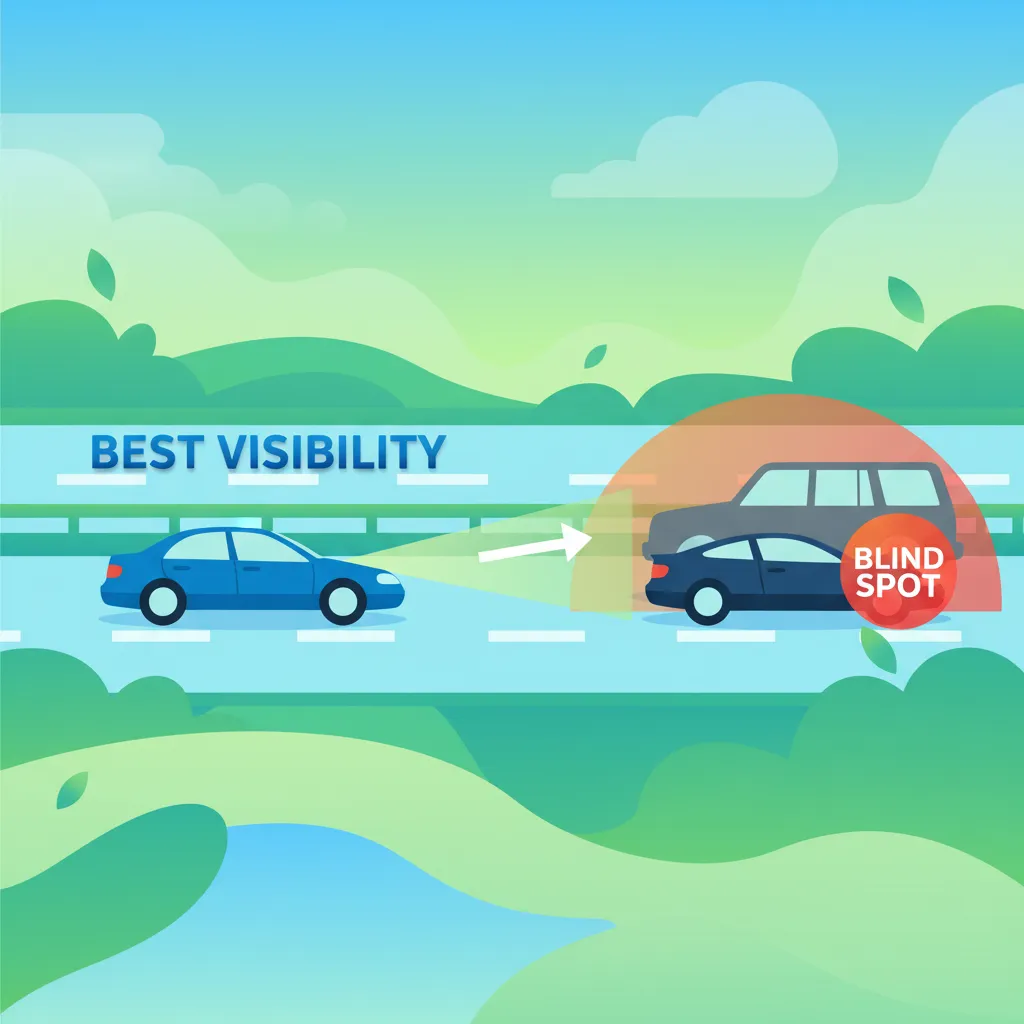
This lesson explores proper lane positioning, emphasizing strategic selection of traffic lanes for optimal visibility. It explains the importance of rider line of sight and peripheral vision in maintaining situational awareness. The content also covers legal aspects of lane splitting and correct usage of road shoulders, abiding by DGT regulations.

This lesson focuses on interaction dynamics with larger vehicles like cars, trucks, and buses, detailing their specific blind spot zones. Strategies for safely sharing lanes, overtaking etiquette, and proper approach when a bus stops are covered. The lesson also includes guidance on merging onto acceleration lanes following DGT policies.

This lesson addresses common errors made by drivers when using roundabouts and presents corrective strategies. It covers issues such as entering from the wrong lane, failing to yield to circulating traffic, exceeding the recommended speed, and not signaling an exit correctly. By understanding these mistakes, drivers can improve their roundabout proficiency and reduce accident risk.
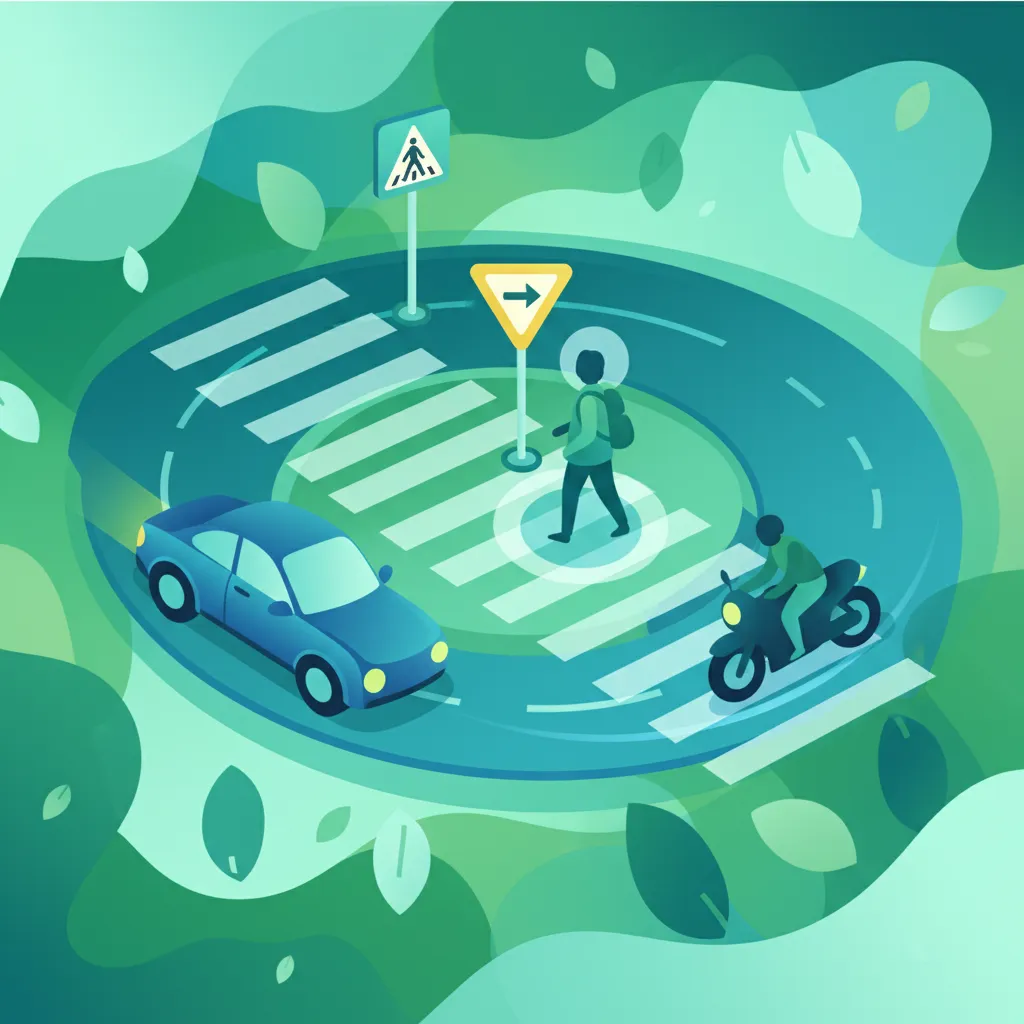
This lesson outlines the proper techniques for negotiating roundabouts and signal-controlled intersections in Spain. It explains priority rules at entry, lane selection based on the intended exit, and yielding to circulating traffic. The content also covers compliance with traffic signals and DGT regulations, including handling cyclist crossings.
This lesson explores the design and legal requirements of pedestrian crossings in Spanish urban areas. It clarifies the rules at zebra crossings, signal-controlled crossings, and areas where cyclists or other vulnerable users share space. The content explains the required safety distances and signage indicating crossing zones to ensure drivers respect all road users.
This lesson focuses on the absolute priority of pedestrians at marked crosswalks, often known as zebra crossings. It explains that riders must always be prepared to stop and yield the right-of-way to any pedestrian waiting to cross or already crossing. The content also covers signaled pedestrian crossings and general awareness in urban areas where pedestrians may cross unexpectedly, reinforcing safety and legal compliance.
This lesson examines the interaction between large vehicles, such as trucks, and vulnerable road users within roundabouts. It addresses the wide turning radius of heavy vehicles, the importance of checking blind spots, and the correct yielding behavior toward pedestrians and cyclists. Learners will understand how to maintain safe distances and anticipate the movements of different road users.

This lesson examines the specific hazards posed by vehicles parked along the roadside. It highlights the primary risk of a driver or passenger opening a door into the path of an approaching moped. Learners will understand the importance of maintaining a safe lateral distance and positioning themselves in the lane to avoid the 'door zone' while continuously scanning for signs of occupant activity.
Find clear answers to common questions learners have about Cyclist Lanes and Shared Spaces in Cities. Learn how the lesson is structured, which driving theory objectives it supports, and how it fits into the overall learning path of units and curriculum progression in Spain. These explanations help you understand key concepts, lesson flow, and exam focused study goals.
According to DGT regulations, when overtaking a cyclist or a group of cyclists, you must maintain a minimum lateral distance of 1.5 meters. This is crucial for ensuring the cyclist's safety and avoiding accidents, especially on narrower roads or when encountering uneven surfaces.
In shared spaces, such as "zonas 30" or areas marked for shared use, cyclists often have priority. You must always be prepared to yield to them, especially at intersections, when entering or exiting these zones, and when their path is clearly defined. Always observe and anticipate their movements.
Dedicated cyclist lanes are exclusively for bicycles. You may only enter a cyclist lane temporarily to cross it when accessing a property or parking, or to overtake vehicles in specific, marked circumstances, provided it does not endanger cyclists. Never drive or park in a cyclist lane.
On shared roads, drivers must exercise extra caution and be aware of cyclists as equal road users. Maintain a safe speed, keep your distance, and look carefully before changing lanes or turning. Cyclists may be more vulnerable to sudden movements or fast-approaching vehicles.
Yes, when overtaking a group of cyclists, the 1.5-meter rule applies to the entire group. You must ensure you maintain this safe distance throughout the entire overtaking manoeuvre, even if it means temporarily slowing down or waiting for a safe opportunity.
Use our powerful search functionality to pinpoint specific Spanish DGT driving theory practice sets. Filter by road sign categories, traffic law topics, or question difficulty to build custom study sessions and reinforce your knowledge precisely where it matters for your official exam.