
This lesson provides a complete guide to interpreting Spanish traffic light signals, a crucial skill for all drivers. You'll learn the meaning of every light, from steady colors to flashing amber and arrow signals, along with pedestrian and cyclist phases. Understanding these rules is essential for safe navigation in urban environments and for securing a passing score on your DGT theory exam for categories B and BE. It builds directly on prior knowledge of intersection types and right-of-way rules.

Lesson content overview
Understanding traffic light signals and their precise timing is fundamental for safe and compliant driving in Spain, especially for those pursuing a Spanish driving license for categories B and BE. Traffic lights are critical tools that manage traffic flow, prevent collisions, and allocate the right-of-way at intersections. This comprehensive guide will equip you with the knowledge to interpret every signal, understand their timing sequences, and respond correctly in various driving scenarios.
Traffic signals serve as a universal communication system on our roads, ensuring order and safety where multiple vehicle streams, pedestrians, and cyclists converge. By dictating who can proceed, stop, or yield at any given moment, they drastically reduce uncertainty and the potential for dangerous conflicts. This system is meticulously designed to accommodate human reaction times and vehicle dynamics, making it a cornerstone of urban traffic management.
All drivers must adhere strictly to traffic light commands, as they represent the highest authority in traffic control at an intersection. This principle, known as Signal Dominance, means that a traffic light's instruction overrides other signs like 'Yield' or 'Stop' if there's a conflict. Your obedience to these signals is not merely a suggestion but a legal requirement under the Spanish Reglamento General de Circulación (General Traffic Regulations).
Key principles you must internalize include:
The most common traffic light signals are universally recognized: red, amber (yellow), and green. Understanding the exact implications of each, beyond just "stop" or "go," is vital.
A steady, solid red light is an unequivocal command to stop. When you encounter a steady red light, you must bring your vehicle to a complete halt before the designated stop line. If there is no painted stop line, you must stop before the pedestrian crossing. Should there be neither a stop line nor a pedestrian crossing, you must stop before entering the intersection, ensuring you do not impede other traffic or block visibility.
You must remain stationary until the signal changes, typically to green. Proceeding through a steady red light, even if you perceive no immediate danger, is a serious traffic violation and significantly increases the risk of collision.
The steady amber (or yellow) light serves as a crucial transition signal, indicating that the light is about to turn red. Upon seeing a steady amber light, your primary action should be to prepare to stop.
The minimum duration for a steady amber light in Spain is 3 seconds. This timing is critical and legally mandated to provide drivers with sufficient time to react and stop safely.
If you are approaching the intersection and the amber light illuminates, you are expected to decelerate and stop safely before the stop line. The only exception is if you are already so close to the stop line that stopping safely would require harsh braking, potentially endangering yourself or the vehicles behind you. In such cases, you may proceed cautiously through the intersection to clear it. However, deliberately accelerating to "beat" the red light is illegal and highly dangerous.
A steady green light grants you permission to proceed through the intersection in the direction indicated. While it signals "go," it does not automatically guarantee a conflict-free path. Drivers must still exercise caution and ensure the way is clear before moving.
You must always check for pedestrians or cyclists who may still be crossing, especially if they have a dedicated green phase or are slow-moving. Furthermore, if you are turning left, you might need to yield to oncoming traffic that has the right-of-way. Proceeding on a green light requires active observation, not just passive acceptance.
Beyond the standard red, amber, and green, drivers will encounter flashing lights and directional arrow signals that convey specific instructions, particularly at less busy intersections or for managing complex turns.
A flashing amber light is a signal for caution and mandates a "yield" condition. This light, typically flashing at about one pulse per second, indicates that the traffic light is either operating outside of its normal sequence (e.g., late at night) or that the intersection requires drivers to proceed with extreme care.
When faced with a flashing amber light, you are not required to stop if the way is clear. However, you must give way to all conflicting traffic, including vehicles from other directions, pedestrians, and cyclists, before entering the intersection. Treat it as if there were a Yield sign at the intersection. Failing to yield can lead to serious accidents and is a violation of traffic regulations.
A flashing red light functions identically to a Stop sign. It requires you to come to a complete and mandatory stop before the stop line or, if none, before the pedestrian crossing or the intersection itself.
After stopping completely, you must then yield to all conflicting traffic before proceeding. This signal is often used at railway crossings, fire station exits, or on minor roads entering a major one, where a full red light phase might be unnecessary but a mandatory stop is crucial for safety.
Directional arrow signals allow for more complex traffic management, enabling specific turning movements to be controlled independently from the main circular signals. These arrows are crucial for managing intersections with high traffic volumes or specific turning lanes.
Always prioritize the instruction of a directional arrow over a general circular signal if both are present for your lane. For example, if your lane has a red arrow for a left turn, you cannot turn left, even if the main circular light for straight-ahead traffic is green.
In modern urban planning, dedicated phases for vulnerable road users (VRUs), such as pedestrians and cyclists, are increasingly common. These signals are designed to minimize conflict points and enhance safety, reflecting the DGT's strong emphasis on protecting those outside vehicles.
Pedestrian signals typically display a red standing man (meaning "do not cross") or a green walking man (meaning "cross"). Some may also feature countdown timers to indicate the remaining crossing time.
When the green walking man is displayed, pedestrians have the right-of-way to cross. As a driver, even if your vehicle's traffic light is green, you must not enter the pedestrian crossing area and must yield to all pedestrians. If the pedestrian signal is a flashing green man, it means the crossing time is ending, and pedestrians should finish crossing quickly. Drivers must still wait until the signal turns red for pedestrians before proceeding.
Similar to pedestrians, cyclists often have dedicated signals, sometimes in the form of a green bicycle symbol or a green arrow specifically for cyclists. These signals grant cyclists exclusive right-of-way to cross or make turns at an intersection.
When a cyclist green arrow or symbol is displayed, drivers must yield to cyclists. Even if your vehicle's general traffic light is green, you cannot proceed if it means entering a conflict zone where cyclists have the right-of-way. This dedicated phasing is critical in promoting safer urban environments for two-wheeled commuters.
Adherence to traffic light regulations is not just about safety; it is a legal obligation with clear consequences for non-compliance under the Reglamento General de Circulación (RGC).
The rule to stop at a solid red circular light is absolute. Drivers must halt their vehicle before the stop line, or the pedestrian crossing if no line is present. Failure to do so is considered a serious infringement and can result in significant fines and points deducted from your license. This rule ensures that cross-traffic or dedicated turning movements have a clear path, preventing T-bone collisions.
Stopping correctly means the front of your vehicle (or the front axle) must be entirely behind the stop line. Crossing this line, even slightly, can be deemed a violation.
A flashing amber light legally transforms the intersection into a yield situation. The RGC mandates that drivers facing this signal must give way to any other vehicle, pedestrian, or cyclist that has the right-of-way or is already within the intersection. This ensures that caution is prioritized without unnecessarily stopping traffic when conditions are clear.
The minimum amber duration of 3 seconds is a crucial safety measure specified in DGT regulations. This time allows the average driver to perceive the change, decide to stop, and begin braking effectively before the light turns red. It prevents situations where drivers are forced into sudden, dangerous emergency stops.
The Reglamento General de Circulación places a strong emphasis on protecting vulnerable road users. When a pedestrian or cyclist signal indicates they have the right-of-way (green man, green arrow for bikes), vehicle drivers must stop and yield, regardless of their own vehicle light. This is a non-negotiable rule designed to prevent serious injuries.
Arrow signals provide precise instructions for specific lanes or movements. DGT regulations stipulate that drivers must obey the color of the arrow that applies to their intended direction, even if it contradicts the general circular light for other movements. For example, a red left-turn arrow always means "no left turn," even if the straight-ahead traffic has a green light.
In some autonomous communities or specific locations within Spain, you might encounter a red light simultaneously with an amber light. This signal is a transitional phase, often indicating that the light will soon turn green. Drivers must remain stopped during this red + amber phase and only proceed when the light turns to a solid green. This is not a signal to start preparing to move, but rather a warning that the green is imminent.
Traffic light violations are among the most frequent causes of urban accidents and carry significant penalties. Understanding these common mistakes can help you avoid them.
red + amber signal as permission to proceed prematurely is a violation of the stop requirement.The way you approach and react to traffic lights should vary based on environmental conditions, your vehicle, and the complexity of the intersection.
Adverse weather conditions like heavy rain, fog, or snow significantly reduce visibility and increase stopping distances. In such situations, you must anticipate traffic light changes much earlier. Begin decelerating sooner when you see an amber light, and allow greater following distances. Even at night, reduced visibility can affect your perception of signals, so remain vigilant.
The type of vehicle you are driving impacts your stopping distance. Heavy vehicles, lorries, or cars towing trailers require considerably more distance to come to a complete stop. When driving these vehicles, you must react to an amber light much earlier than you would in a light passenger car. This proactive approach prevents hard braking and ensures stability.
Complex intersections often feature multi-phase signals, including multiple sets of lights, arrow signals, and dedicated VRU phases. At such intersections, pay close attention to which signal applies to your lane and your intended direction of travel. Always obey the most restrictive signal that applies to you. For instance, if the main light is green but your left-turn arrow is red, you must wait.
The design and timing of traffic lights are rooted in scientific and safety principles. The minimum 3-second amber duration, for example, is calculated to accommodate average human reaction times (around 1.5 seconds) plus the time needed for a vehicle to begin braking safely. This prevents panic stops and reduces rear-end collisions.
Traffic light colors are chosen for maximum visibility and distinctiveness under various lighting conditions, making them easily identifiable even for color-deficient individuals due to their position and sequence. By providing dedicated phases for pedestrians and cyclists, signals reduce the "human factors" of decision-making, minimizing conflicts and promoting automatic, safer compliance for all road users. Data from the DGT consistently shows a significant reduction in pedestrian-vehicle collisions at intersections with dedicated pedestrian phases, underscoring the effectiveness of these designs.
Applying theoretical knowledge to real-world driving situations is key to mastering traffic light interpretation.
Imagine you are approaching a busy urban intersection in broad daylight. Your light is currently green. As you near the stop line, it changes to amber, then after 3 seconds, to red.
You are on a minor side street attempting to turn right onto a main road. The traffic light for your direction is flashing amber.
You are at an intersection, and your vehicle light is green. However, the pedestrian signal (green walking man) for the crosswalk in front of you is also illuminated.
At a complex intersection, your vehicle light is green, but there is also a dedicated green arrow for cyclists indicating they can cross your path.
You are driving on a minor road that merges onto a major road, and the traffic light for your direction displays a flashing red.
Mastering traffic light interpretation is not an isolated skill. It is intricately linked to several other crucial aspects of driving, forming a cohesive understanding of road rules. This lesson builds directly upon your knowledge from Intersection Types and Right-of-Way Rules (Section 4.1), which explains the fundamental hierarchy of movement at junctions. It also provides essential groundwork for Pedestrian Crossings and Vulnerable Users (Section 4.3) and Cyclist Lanes and Shared Spaces in Cities (Section 4.4), as traffic lights often coordinate dedicated phases for these users.
Furthermore, a solid grasp of traffic light timing helps you apply Speed Limits and Zone Signage in Urban Areas (Section 4.5) more effectively, allowing you to approach signals at appropriate speeds to react safely. In later parts of the Spanish Driving License Theory Course, understanding traffic lights will be crucial for navigating Roundabouts & Priority Rules (Section 5) where signals may be present, and for honing your Hazard Perception & Defensive Driving (Section 7) skills, where correctly anticipating signal changes and others' reactions is vital.
Spanish traffic lights follow a strict hierarchy of rules defined in the Reglamento General de Circulación, where signals override other signs. Steady red demands a full stop behind the line, while steady amber requires preparation to stop with a legally mandated minimum of 3 seconds. Flashing amber functions as a yield condition, and flashing red requires a complete stop like a Stop sign. Directional arrow signals control specific turning movements independently and take precedence over circular signals for their lane. Drivers must always yield to pedestrians and cyclists during their dedicated phases, regardless of their own green light, and must adapt braking distance based on vehicle type and weather conditions.
A short set of high-value points that capture the most important learning from this lesson.
Signal Dominance: Traffic lights override other signs like Yield or Stop when in conflict.
Amber light must illuminate for at least 3 seconds before turning red, providing legally mandated reaction time.
Flashing amber requires yielding to all conflicting traffic and vulnerable road users; flashing red requires a full mandatory stop.
Directional arrow signals take precedence over circular signals for their specific turning direction.
Pedestrians and cyclists have dedicated phases with right-of-way that drivers must respect even on a green light.
Explore all units and lessons included in this driving theory course.
Stop behind (not on or over) the stop line at a steady red; if no line, stop before the crossing or intersection.
A green light grants permission to proceed but does not guarantee a clear path—always check for pedestrians, cyclists, and oncoming traffic.
Red + amber (regional signal) means remain stopped; proceed only when solid green appears.
At flashing amber, treat it as a Yield sign; at flashing red, treat it as a Stop sign.
When your lane has a red arrow, you cannot proceed in that direction even if the circular light for straight-ahead traffic is green.
Accelerating through amber to beat the red, which is illegal and increases rear-end collision risk.
Proceeding into a crosswalk when pedestrians have a green signal, even if your own light is green.
Treating a flashing amber light as permission to go without adequately yielding to conflicting traffic.
Making a turn when a specific directional red arrow prohibits it, creating conflict with other traffic streams.
Performing a rolling stop at a flashing red light instead of coming to a complete halt, equivalent to ignoring a Stop sign.
Lesson content overview
A short set of high-value points that capture the most important learning from this lesson.
Signal Dominance: Traffic lights override other signs like Yield or Stop when in conflict.
Amber light must illuminate for at least 3 seconds before turning red, providing legally mandated reaction time.
Flashing amber requires yielding to all conflicting traffic and vulnerable road users; flashing red requires a full mandatory stop.
Directional arrow signals take precedence over circular signals for their specific turning direction.
Pedestrians and cyclists have dedicated phases with right-of-way that drivers must respect even on a green light.
Explore all units and lessons included in this driving theory course.
Stop behind (not on or over) the stop line at a steady red; if no line, stop before the crossing or intersection.
A green light grants permission to proceed but does not guarantee a clear path—always check for pedestrians, cyclists, and oncoming traffic.
Red + amber (regional signal) means remain stopped; proceed only when solid green appears.
At flashing amber, treat it as a Yield sign; at flashing red, treat it as a Stop sign.
When your lane has a red arrow, you cannot proceed in that direction even if the circular light for straight-ahead traffic is green.
Accelerating through amber to beat the red, which is illegal and increases rear-end collision risk.
Proceeding into a crosswalk when pedestrians have a green signal, even if your own light is green.
Treating a flashing amber light as permission to go without adequately yielding to conflicting traffic.
Making a turn when a specific directional red arrow prohibits it, creating conflict with other traffic streams.
Performing a rolling stop at a flashing red light instead of coming to a complete halt, equivalent to ignoring a Stop sign.
Explore search topics learners often look for when studying Traffic Light Interpretation and Timing. These topics reflect common questions about road rules, driving situations, safety guidance, and lesson level theory preparation for learners in Spain.
Browse additional driving theory lessons that cover connected traffic rules, road signs, and common driving situations related to this topic. Improve your understanding of how different rules interact across everyday traffic scenarios.
Learn how traffic light signals in Spain are designed to protect vulnerable road users like pedestrians and cyclists. Understand dedicated phases and driver responsibilities at intersections according to DGT regulations.
This lesson explains each phase of a Spanish traffic light, detailing the specific action required for red, amber, and green signals. It clarifies the meaning of a flashing amber light, which indicates yielding to other traffic or pedestrians, and the red-amber combination. Understanding these signals is fundamental for safely navigating controlled intersections and ensuring compliance with traffic flow rules established by the DGT.

This lesson explores the design and legal requirements of pedestrian crossings in Spanish urban areas. It clarifies the rules at zebra crossings, signal-controlled crossings, and areas where cyclists or other vulnerable users share space. The content explains the required safety distances and signage indicating crossing zones to ensure drivers respect all road users.

This lesson focuses on the absolute priority of pedestrians at marked crosswalks, often known as zebra crossings. It explains that riders must always be prepared to stop and yield the right-of-way to any pedestrian waiting to cross or already crossing. The content also covers signaled pedestrian crossings and general awareness in urban areas where pedestrians may cross unexpectedly, reinforcing safety and legal compliance.

This lesson addresses the critical skill of safely sharing the road with other vulnerable users like pedestrians, cyclists, and other motorcyclists. It emphasizes the need for increased awareness, speed adaptation, and providing ample space when passing. The content covers DGT regulations regarding minimum passing distances and highlights the importance of making eye contact to ensure mutual awareness and prevent common urban accidents.

This lesson discusses the infrastructure dedicated to cyclists, covering dedicated bike lanes and the rules governing interaction and overtaking. It explains DGT regulations on safe passing distances and how to navigate mixed-traffic scenarios where vehicles and bicycles share the road. The content emphasizes driver responsibilities to maintain a safe corridor and respect cyclist priority.

This lesson outlines the proper use and legal requirements of vehicle lighting and mirror systems. It covers headlamps, fog lights, turn signals, and brake lights, clarifying when each must be used according to DGT regulations. The lesson also explains the correct adjustment of rearview and side mirrors and strategies for effective blind-spot monitoring.

This lesson examines the dynamic interactions between mopeds, cars, and bicycles in an urban environment. It emphasizes strategies for staying visible and avoiding the blind spots of larger vehicles. The content provides clear guidelines on overtaking bicycles safely, respecting dedicated bike lanes, and signaling intentions clearly to all other road users to ensure predictable and harmonious coexistence in mixed traffic.
This lesson outlines the proper techniques for negotiating roundabouts and signal-controlled intersections in Spain. It explains priority rules at entry, lane selection based on the intended exit, and yielding to circulating traffic. The content also covers compliance with traffic signals and DGT regulations, including handling cyclist crossings.

This lesson introduces the regulatory signs that impose obligations or prohibitions on road users, with a focus on those pertinent to mopeds. It covers common signs such as speed limits, 'no entry', and mandatory turn directions, explaining how their shape and color indicate their function. Learners will be able to identify and correctly interpret these signs to navigate urban road networks legally and safely, avoiding potential fines.
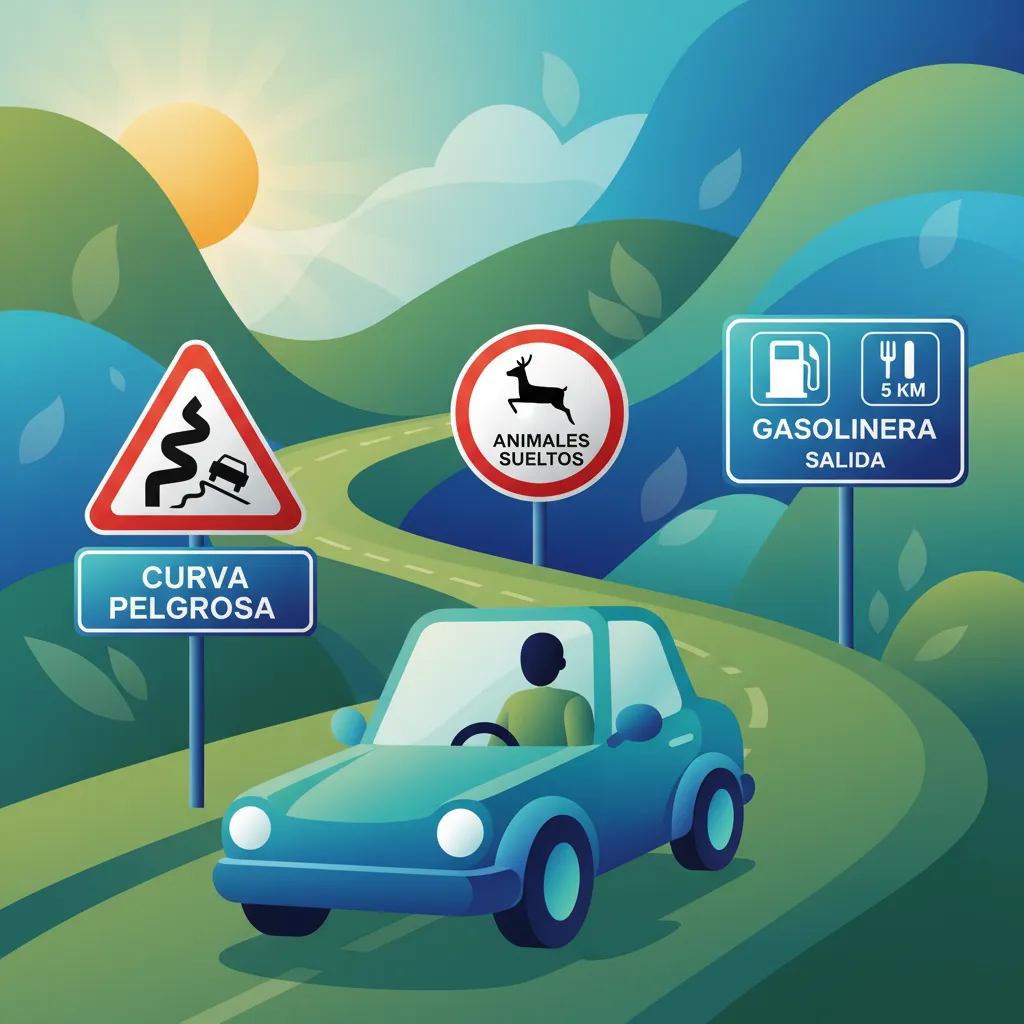
This lesson covers warning and informational signs, which are crucial for anticipating road conditions. It explains how triangular warning signs alert riders to upcoming hazards like sharp curves, slippery surfaces, or pedestrian crossings. The content also describes rectangular informational signs that provide directions, distances, and other useful guidance, helping riders to plan their route and adjust their driving in advance.
Detailed explanation of non-standard traffic light signals in Spain, including flashing amber, flashing red, arrow signals, and red+amber lights. Covers DGT rules and how to interpret them safely and legally.
This lesson explains each phase of a Spanish traffic light, detailing the specific action required for red, amber, and green signals. It clarifies the meaning of a flashing amber light, which indicates yielding to other traffic or pedestrians, and the red-amber combination. Understanding these signals is fundamental for safely navigating controlled intersections and ensuring compliance with traffic flow rules established by the DGT.
This lesson outlines the proper use and legal requirements of vehicle lighting and mirror systems. It covers headlamps, fog lights, turn signals, and brake lights, clarifying when each must be used according to DGT regulations. The lesson also explains the correct adjustment of rearview and side mirrors and strategies for effective blind-spot monitoring.
This lesson addresses the specific challenges posed by rain and fog, focusing on reduced visibility and loss of traction. It explains the proper use of windshield wipers and fog lights, and the need to adjust speed and increase following distance. The content covers how to prevent and react to hydroplaning (aquaplaning) to maintain vehicle control.

This lesson focuses on the primary components displayed on a vehicle's dashboard and their functional significance. Learners will identify instruments like the speedometer and fuel gauge and understand the meaning of key warning lights, including ABS, oil pressure, and check engine. The lesson explains how to interpret these signals while driving and the immediate actions required upon their illumination.
This lesson outlines the proper techniques for negotiating roundabouts and signal-controlled intersections in Spain. It explains priority rules at entry, lane selection based on the intended exit, and yielding to circulating traffic. The content also covers compliance with traffic signals and DGT regulations, including handling cyclist crossings.

This lesson introduces the visual language of road markings, focusing on the distinction between solid and broken lines and what they permit regarding lane changes and overtaking. It explains the meaning of directional arrows painted on the road surface, which guide drivers into the correct lane for their intended maneuver. Understanding these markings is crucial for maintaining proper lane discipline and navigating complex intersections and multi-lane roads.
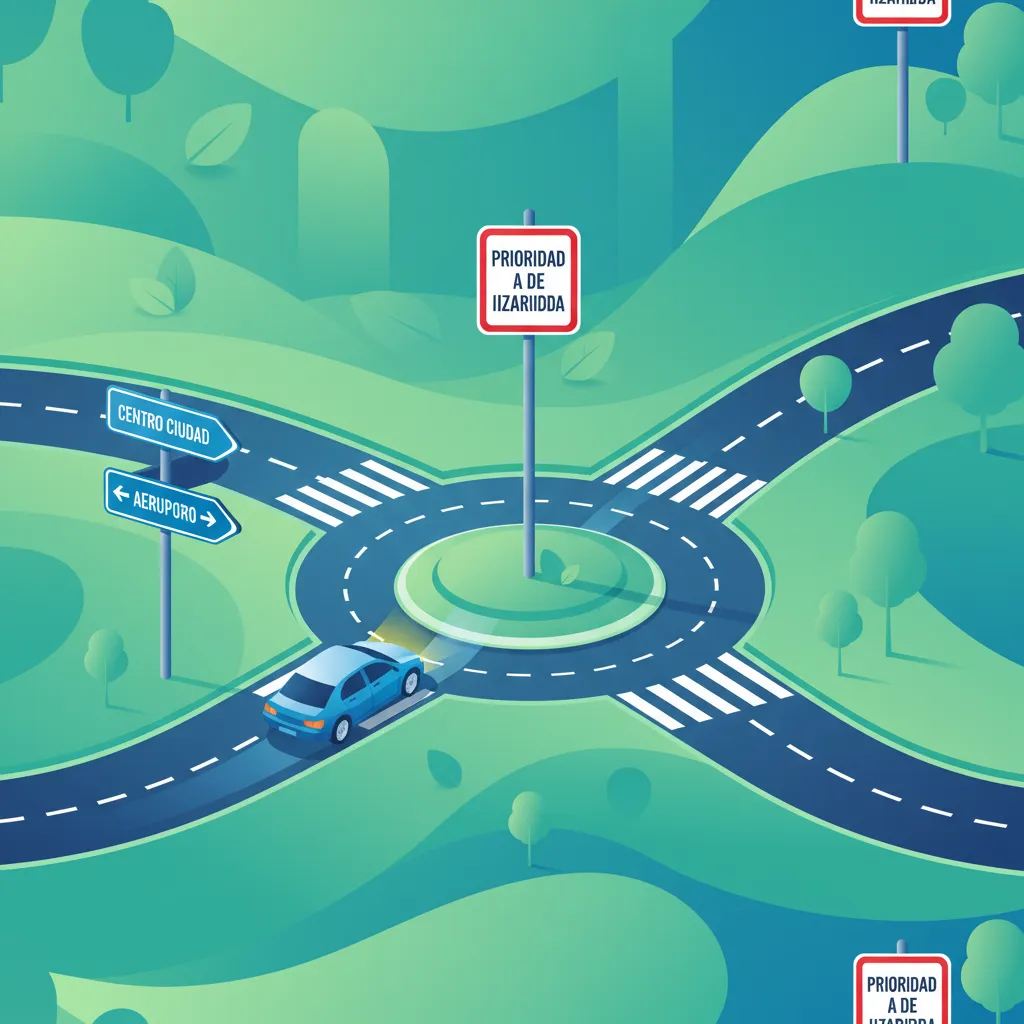
This lesson presents the variety of signs that guide drivers through roundabout navigation. It explains the significance of the roundabout warning symbol, priority signs, lane arrows, and directional signs placed before and within the roundabout. Mastery of roundabout signage ensures that drivers follow legal requirements and maintain safe traffic flow.
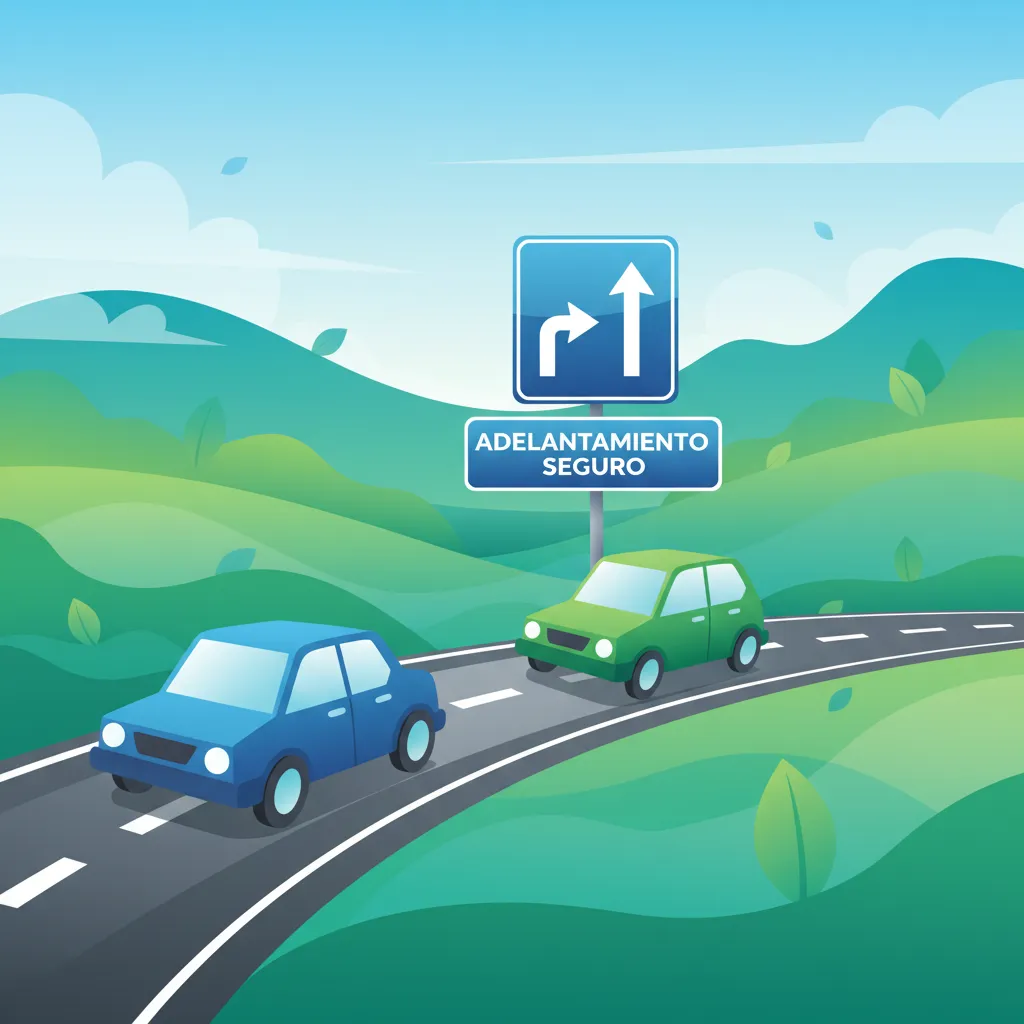
This lesson covers the legal overtaking procedures applicable on different road types, focusing on identifying safe passing zones and executing maneuvers correctly. Learners will be taught how to maintain adequate safety distances before, during, and after overtaking. The content includes DGT regulations for overtaking, appropriate signaling, and visibility checks to ensure safe completion of the maneuver.

This lesson addresses the crucial 'priority to the right' rule that governs traffic at intersections without signs or signals. It explains that drivers must yield to any vehicle approaching from their right-hand side. The content provides practical examples of how to assess traffic, determine the correct order of passage, and proceed with caution to safely navigate these common but potentially confusing intersections.
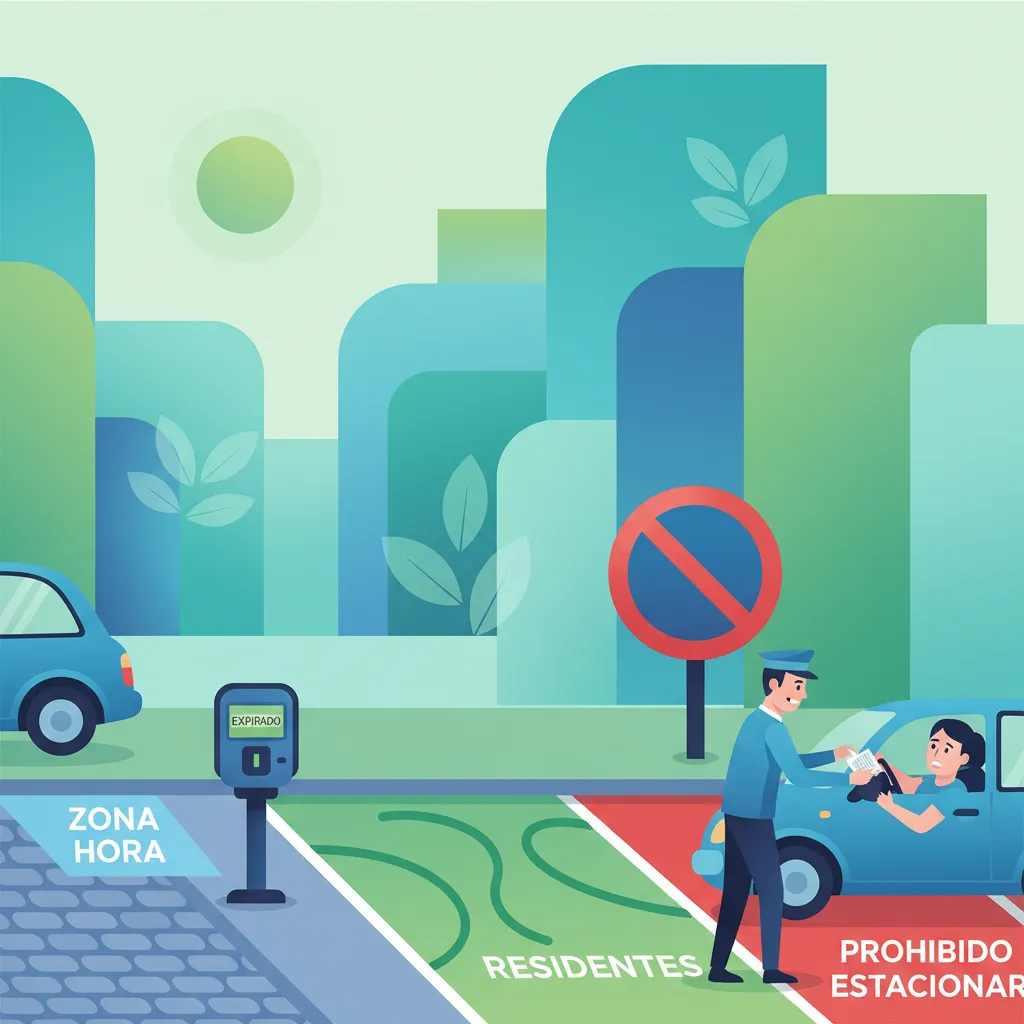
This lesson outlines the legal framework surrounding parking regulations in Spain, including the identification of regulated zones (e.g., ORA/SER), no-parking areas, and disabled parking spaces. It explains DGT signage interpretation and how improper parking can affect traffic flow and result in penalties. Learners will understand the regulatory environment to comply with parking laws and avoid fines.
Find clear answers to common questions learners have about Traffic Light Interpretation and Timing. Learn how the lesson is structured, which driving theory objectives it supports, and how it fits into the overall learning path of units and curriculum progression in Spain. These explanations help you understand key concepts, lesson flow, and exam focused study goals.
A flashing amber light indicates that you may proceed with caution, but you must yield the right-of-way to vehicles or pedestrians that are already in the intersection or crossing your path. It often signals a situation where priority is given by other means, such as signs or general right-of-way rules, and serves as a warning.
No, in Spain, you cannot turn right on a red light unless a specific green arrow signal is illuminated, indicating that the right turn is permitted while other directions remain red. Unlike some other countries, a general "turn on red" rule does not apply here; a red light always means stop and wait.
A steady amber light means you must stop before the stop line if it is safe to do so, as the light is about to turn red. A flashing amber light, however, means you can proceed but with extreme caution, yielding to all other traffic or pedestrians as applicable. They require very different driver actions.
Arrow signals override the main traffic light for a specific direction. For example, a green arrow pointing left means you may turn left even if the main light is red, provided it's safe. You must only follow the direction indicated by the arrow while it's lit.
Pedestrian and cyclist traffic lights have distinct designs and phases separate from vehicle lights. They typically show red or green pedestrian/cyclist symbols. Drivers must always be aware of these signals and yield to pedestrians or cyclists when their corresponding light is green, regardless of the vehicle light status.
Use our powerful search functionality to pinpoint specific Spanish DGT driving theory practice sets. Filter by road sign categories, traffic law topics, or question difficulty to build custom study sessions and reinforce your knowledge precisely where it matters for your official exam.