
This lesson is crucial for navigating urban environments safely, focusing on the rules surrounding pedestrian crossings and vulnerable road users in Spain. You'll learn DGT regulations on priority, required safety distances, and how to interpret specific signage. Mastering this content is essential for both your Category B/BE theory exam and safe driving in real-world Spanish traffic.

Lesson content overview
Driving in urban areas in Spain requires a comprehensive understanding of pedestrian crossings and the specific rules governing interactions with vulnerable road users. This lesson, part of your Complete Spanish Driving License Theory Course for Categories B & BE (DGT), provides a detailed guide to ensure safety, legal compliance, and a smooth flow of traffic. Mastering these principles is crucial for preventing accidents, avoiding penalties, and cultivating a responsible driving mindset in busy city environments.
Pedestrian crossings are specially designated areas designed to provide a safe passage for people walking across the road. In Spain, these crossings come in various forms, each with specific rules that drivers must meticulously follow to ensure the safety of pedestrians and other vulnerable users. Knowing the distinct characteristics of each type is fundamental to anticipate and react correctly.
A zebra crossing (often referred to as paso de peatones sin semáforo) is an uncontrolled pedestrian crossing, meaning it is not regulated by traffic lights. It is visually identified by a series of wide, white longitudinal stripes painted on the road surface, resembling a zebra's pattern. Before the stripes, a solid white stop line indicates where vehicles must halt.
At a zebra crossing, pedestrians have absolute priority. This means that when a pedestrian is either waiting to cross, stepping onto the crossing, or already on it, drivers must stop their vehicle before the white stop line. Failure to do so is a serious traffic violation and significantly endangers pedestrians. It is essential for drivers to approach these crossings with caution, reducing speed and being prepared to stop at any moment.
Practical Implications:
A signalized pedestrian crossing (known as paso de peatones con semáforo) is equipped with traffic lights that control both vehicle flow and pedestrian movement. These crossings are indicated by specific signs and are designed to manage traffic flow efficiently, especially in busier areas.
At these crossings, drivers must strictly obey the vehicle traffic lights. However, the presence of pedestrian signals (often showing a red standing figure or a green walking figure) adds an extra layer of complexity, particularly in cases of mixed signals.
Practical Implications:
Always check for pedestrians before proceeding, even on a green light, especially when turning. Pedestrians may still be crossing or a mixed signal might grant them priority.
The Spanish traffic law, particularly the Reglamento General de Circulación (RC), places a strong emphasis on protecting vulnerable users. These are road users who, due to their lack of physical protection, are at a higher risk of severe injury in the event of a collision. Drivers have a heightened responsibility to exercise caution and grant priority to these users.
Vulnerable users are defined as road users with limited protection compared to occupants of motor vehicles. This category specifically includes:
Why the Special Priority? The underlying logic is safety. Vulnerable users lack the protective chassis, airbags, and seatbelts of a car. A collision at even low speeds can result in serious injury or fatality. Therefore, the law mandates that drivers anticipate their actions, adapt their speed, and always grant them the legal right-of-way at designated crossing points.
Cyclists often navigate urban environments using a combination of dedicated infrastructure and shared road space. Understanding their rights and obligations at pedestrian crossings is crucial for safe interaction.
Dedicated Cycle Lanes: When a cycle lane (carril ciclista) is present, cyclists are generally expected to use it. These lanes are marked with a blue line and a "C" symbol on the ground. If a cycle lane runs through a crossing and maintains its separation from the pedestrian path, cyclists may have their own signal or priority.
Cycle Lanes Terminating at Pedestrian Crossings: A common scenario is a cycle lane that ends just before a zebra crossing or a signalized pedestrian crossing. In such cases, the cyclist's priority changes:
When a cyclist uses a pedestrian crossing without a dedicated cycle lane, treat them as a pedestrian for priority purposes. Be prepared to stop and yield.
Shared Spaces: In some urban areas, especially residential zones or specific city designs, motor vehicles and vulnerable users may share the same road surface without segregation. These shared spaces demand heightened vigilance from drivers. Speed limits are typically very low (e.g., 20 km/h), and drivers must constantly be aware of pedestrians, cyclists, and children who may enter the road at any point. There is often no formal crossing, so drivers must yield to pedestrians as a general principle of caution.
To navigate pedestrian crossings safely and legally, drivers must adhere to several core rules laid out in the Spanish Reglamento General de Circulación (RC). These rules are designed to create predictable interactions and minimize risks for all road users.
The stop line is a critical marking at any crossing. It is a solid white line painted across the lane, indicating the precise point where vehicles must halt when required.
Rule: Vehicles must stop before the stop line.
Never stop your vehicle on the pedestrian crossing itself, even if you are momentarily delayed by traffic. This obstructs the flow of pedestrians and is a violation.
Safety distance refers to the minimum distance drivers must maintain from the vehicle in front, and also the distance required to stop safely when a hazard (like a pedestrian stepping onto a crossing) appears.
Rule: Drivers must maintain an adequate distance that allows safe stopping, especially when approaching crossings.
The total distance a vehicle travels from the moment the driver perceives a hazard until the vehicle comes to a complete halt. This includes both reaction distance and braking distance.
Specific maneuvers are strictly prohibited at or near pedestrian crossings to prevent serious accidents.
Rule: Overtaking another vehicle that is stopped at a pedestrian crossing is forbidden.
The use of audible warning signals (the horn) is regulated to prevent noise pollution and ensure their effectiveness when truly needed.
Rule: Drivers must use the horn or flash lights only to warn of a sudden hazard, except in designated quiet zones.
In these zones, horn use is strictly prohibited unless there is an immediate and unavoidable risk of collision. Using your horn in a quiet zone unnecessarily is an infraction.
Safe driving at pedestrian crossings requires constant adaptation to changing conditions and the ability to anticipate potential hazards. Drivers must adjust their approach based on environmental factors, their vehicle's state, and the specific behavior of vulnerable users.
Environmental conditions play a significant role in a driver's ability to safely navigate crossings.
The state of your vehicle directly impacts its stopping performance.
Vulnerable users are not a monolithic group; their needs and behaviors can vary.
Understanding common mistakes and the underlying safety principles can significantly improve your driving behavior at pedestrian crossings.
Navigating pedestrian crossings safely and legally is a cornerstone of responsible driving in Spain. This lesson has detailed the critical elements for drivers of categories B and BE:
By diligently applying these principles, you will contribute to safer urban environments, comply with Spanish traffic legislation, and confidently interact with all road users. These concepts build upon your understanding of right-of-way rules and traffic signal interpretation, and will serve as a vital foundation for hazard perception and defensive driving skills.
This lesson covers Spanish DGT rules for pedestrian crossings and vulnerable road users, essential for safe urban driving and the Category B/BE theory exam. It details priority at zebra crossings where pedestrians have absolute right-of-way, signal interpretation at light-controlled crossings including mixed signal scenarios, and the legal requirement to stop before the white stop line. The content explains that overtaking a stopped vehicle at a crossing is strictly forbidden, describes how cyclists must yield at crossings where their lane terminates, and emphasizes that drivers must maintain adequate safety distances accounting for speed, road conditions, and vehicle load. Special considerations include quiet zones where horn use is restricted, environmental adaptations for weather and visibility, and heightened vigilance for children, elderly, and people with reduced mobility.
A short set of high-value points that capture the most important learning from this lesson.
Pedestrians have absolute priority at zebra crossings and must be given way before the stop line.
Drivers must stop completely before the white stop line and never encroach on the crossing area.
Overtaking a vehicle that has stopped for a pedestrian at a crossing is strictly prohibited.
Vulnerable users include pedestrians, cyclists, motorcyclists, children, elderly, and people with reduced mobility.
Cyclists must yield to pedestrians and may need to dismount when their dedicated lane ends at a crossing.
Explore all units and lessons included in this driving theory course.
Zebra crossings (paso de peatones sin semáforo) are uncontrolled; signalized crossings (con semáforo) are traffic light regulated.
Safety distance must account for reaction time (approx 1.5 seconds) and braking distance, which increases quadratically with speed.
Quiet zones (Zonas Tranquilas) marked by sign A-2 prohibit horn use unless immediate danger exists.
In mixed signal scenarios, always yield to pedestrians even if your vehicle light is green.
Loaded vehicles and trailers significantly increase stopping distance; reduce speed earlier when carrying heavy loads.
Stopping over or beyond the white stop line, encroaching on pedestrian crossing space.
Overtaking another vehicle that is stopped at a pedestrian crossing.
Proceeding on a green light when turning, without checking for pedestrians who also have a walk signal.
Approaching crossings at excessive speed, leaving insufficient distance to stop safely.
Cyclists continuing to ride through a pedestrian crossing after their dedicated lane terminates without yielding.
Lesson content overview
A short set of high-value points that capture the most important learning from this lesson.
Pedestrians have absolute priority at zebra crossings and must be given way before the stop line.
Drivers must stop completely before the white stop line and never encroach on the crossing area.
Overtaking a vehicle that has stopped for a pedestrian at a crossing is strictly prohibited.
Vulnerable users include pedestrians, cyclists, motorcyclists, children, elderly, and people with reduced mobility.
Cyclists must yield to pedestrians and may need to dismount when their dedicated lane ends at a crossing.
Explore all units and lessons included in this driving theory course.
Zebra crossings (paso de peatones sin semáforo) are uncontrolled; signalized crossings (con semáforo) are traffic light regulated.
Safety distance must account for reaction time (approx 1.5 seconds) and braking distance, which increases quadratically with speed.
Quiet zones (Zonas Tranquilas) marked by sign A-2 prohibit horn use unless immediate danger exists.
In mixed signal scenarios, always yield to pedestrians even if your vehicle light is green.
Loaded vehicles and trailers significantly increase stopping distance; reduce speed earlier when carrying heavy loads.
Stopping over or beyond the white stop line, encroaching on pedestrian crossing space.
Overtaking another vehicle that is stopped at a pedestrian crossing.
Proceeding on a green light when turning, without checking for pedestrians who also have a walk signal.
Approaching crossings at excessive speed, leaving insufficient distance to stop safely.
Cyclists continuing to ride through a pedestrian crossing after their dedicated lane terminates without yielding.
Explore search topics learners often look for when studying Pedestrian Crossings and Vulnerable Users. These topics reflect common questions about road rules, driving situations, safety guidance, and lesson level theory preparation for learners in Spain.
Browse additional driving theory lessons that cover connected traffic rules, road signs, and common driving situations related to this topic. Improve your understanding of how different rules interact across everyday traffic scenarios.
Understand the specific Spanish traffic laws regarding pedestrian crossings, including zebra crossings and signal-controlled intersections. Learn how to safely interact with pedestrians, cyclists, and other vulnerable road users to ensure compliance and safety on urban roads.

This lesson focuses on the absolute priority of pedestrians at marked crosswalks, often known as zebra crossings. It explains that riders must always be prepared to stop and yield the right-of-way to any pedestrian waiting to cross or already crossing. The content also covers signaled pedestrian crossings and general awareness in urban areas where pedestrians may cross unexpectedly, reinforcing safety and legal compliance.
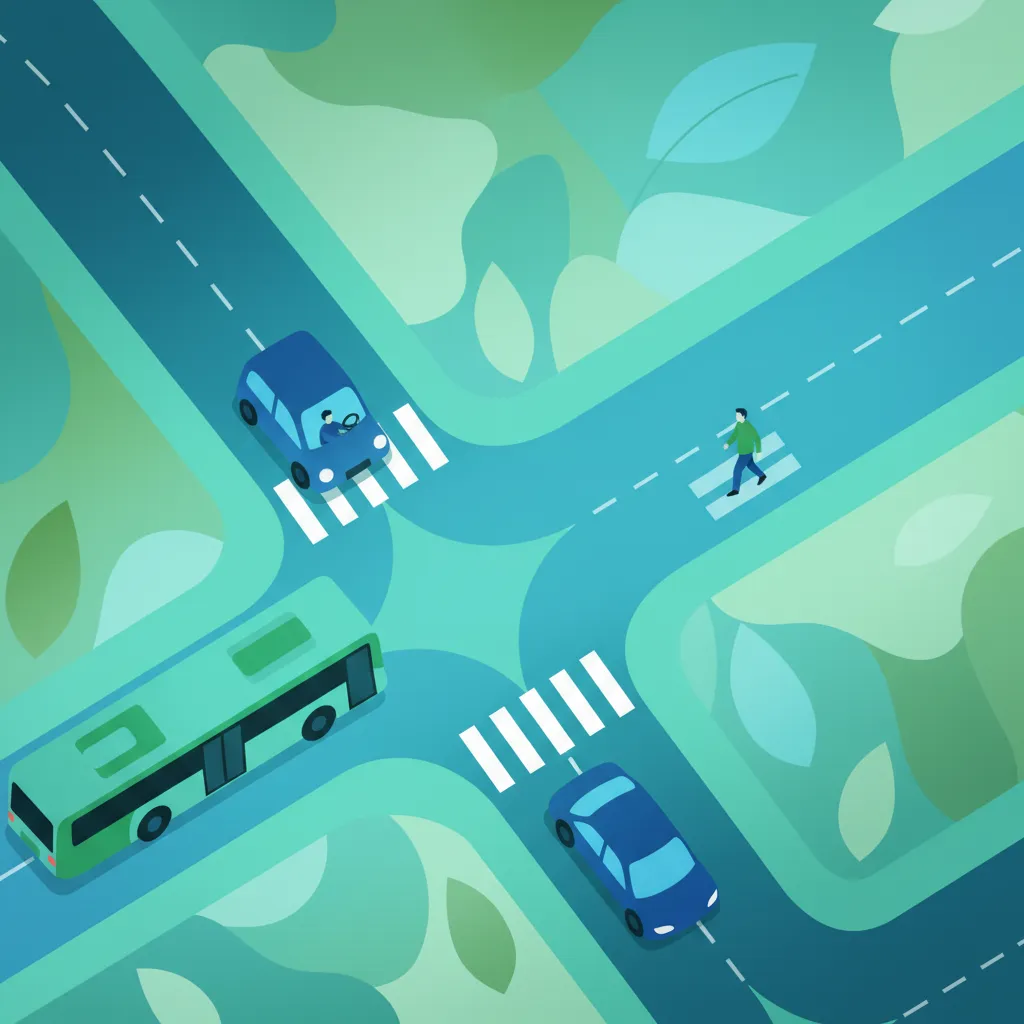
This lesson addresses the crucial 'priority to the right' rule that governs traffic at intersections without signs or signals. It explains that drivers must yield to any vehicle approaching from their right-hand side. The content provides practical examples of how to assess traffic, determine the correct order of passage, and proceed with caution to safely navigate these common but potentially confusing intersections.

This lesson analyzes the various intersection configurations found in Spanish cities, such as controlled and uncontrolled junctions. It explains the hierarchy of right-of-way, detailing when vehicles must yield, when pedestrians have priority, and how traffic signs dictate movement. Learners are guided through DGT signage conventions that determine priority at each intersection type.
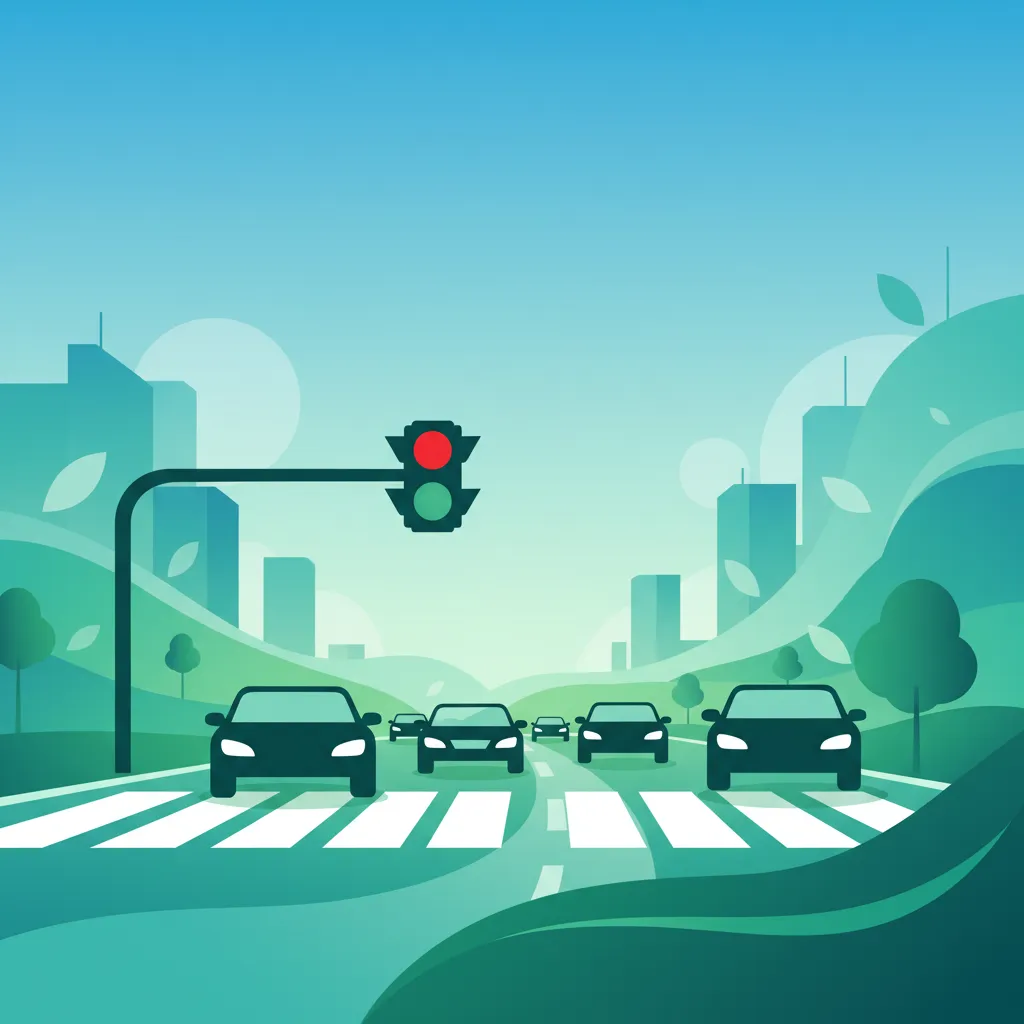
This lesson focuses on the comprehensive understanding of traffic light signals and their timing sequences. It defines the meanings of steady red, amber, and green lights, as well as flashing amber and arrow signals. The content also covers pedestrian and cyclist phases, describing the actions drivers must take during each signal change to maintain safety and compliance.
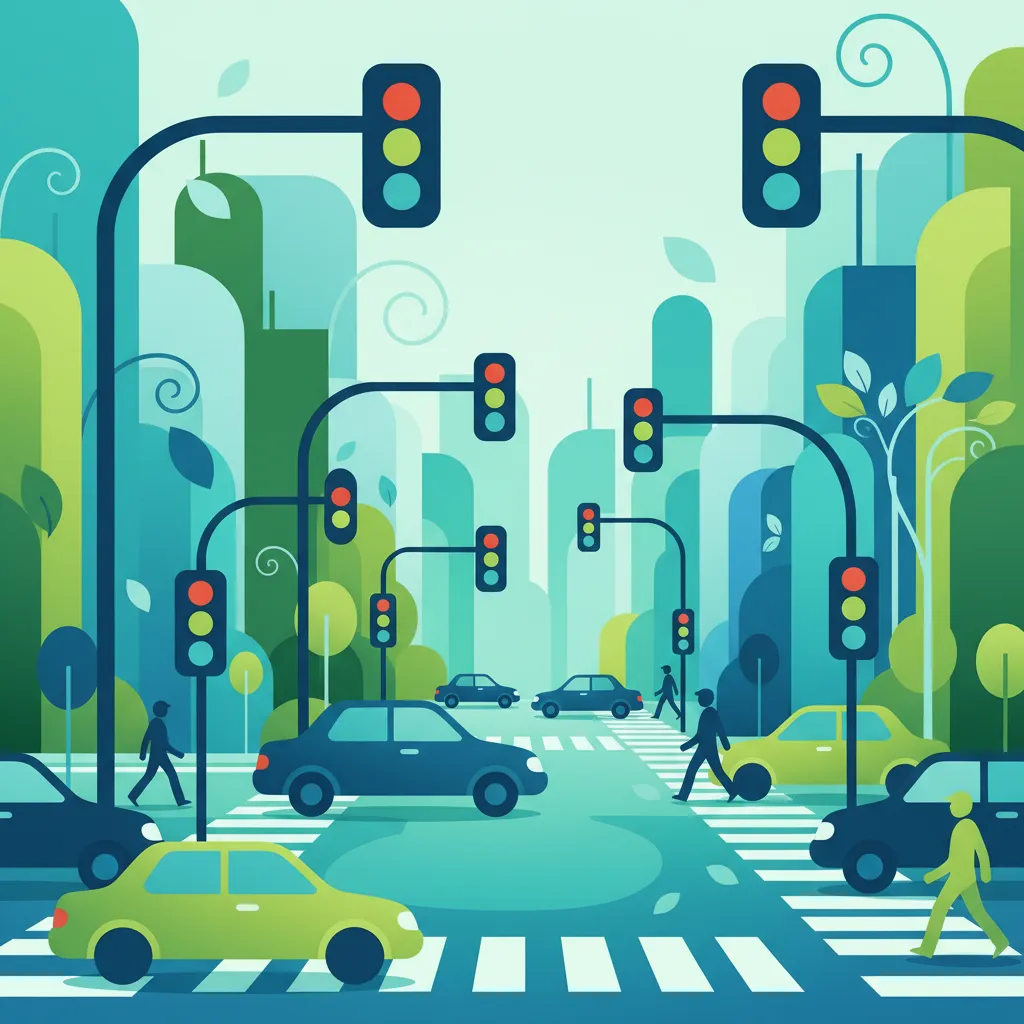
This lesson explains each phase of a Spanish traffic light, detailing the specific action required for red, amber, and green signals. It clarifies the meaning of a flashing amber light, which indicates yielding to other traffic or pedestrians, and the red-amber combination. Understanding these signals is fundamental for safely navigating controlled intersections and ensuring compliance with traffic flow rules established by the DGT.

This lesson focuses on the critical skill of safely interacting with vulnerable road users, such as pedestrians and cyclists, in an urban setting. It highlights the extensive blind spots around a truck and teaches drivers to be extra vigilant, especially at intersections and crosswalks. The content covers the legal requirements for yielding and the importance of making eye contact to confirm intentions.

This lesson addresses the critical skill of safely sharing the road with other vulnerable users like pedestrians, cyclists, and other motorcyclists. It emphasizes the need for increased awareness, speed adaptation, and providing ample space when passing. The content covers DGT regulations regarding minimum passing distances and highlights the importance of making eye contact to ensure mutual awareness and prevent common urban accidents.
Identify frequent driver errors and violations at pedestrian crossings and vulnerable user zones in Spain. Learn from common scenarios to improve anticipation, reaction time, and defensive driving techniques to prevent accidents and ensure road safety.
This lesson addresses the critical skill of safely sharing the road with other vulnerable users like pedestrians, cyclists, and other motorcyclists. It emphasizes the need for increased awareness, speed adaptation, and providing ample space when passing. The content covers DGT regulations regarding minimum passing distances and highlights the importance of making eye contact to ensure mutual awareness and prevent common urban accidents.
This lesson focuses on the absolute priority of pedestrians at marked crosswalks, often known as zebra crossings. It explains that riders must always be prepared to stop and yield the right-of-way to any pedestrian waiting to cross or already crossing. The content also covers signaled pedestrian crossings and general awareness in urban areas where pedestrians may cross unexpectedly, reinforcing safety and legal compliance.

This lesson examines the principles of maintaining a safe following distance, including the 'two-second rule' and its adjustments for speed and weather. It focuses on effective blind-spot management, teaching drivers how to use mirrors and head checks. The content integrates DGT guidelines on creating a safety buffer around the vehicle to allow time to react to unexpected events.

This lesson examines the interaction between large vehicles, such as trucks, and vulnerable road users within roundabouts. It addresses the wide turning radius of heavy vehicles, the importance of checking blind spots, and the correct yielding behavior toward pedestrians and cyclists. Learners will understand how to maintain safe distances and anticipate the movements of different road users.

This lesson discusses the infrastructure dedicated to cyclists, covering dedicated bike lanes and the rules governing interaction and overtaking. It explains DGT regulations on safe passing distances and how to navigate mixed-traffic scenarios where vehicles and bicycles share the road. The content emphasizes driver responsibilities to maintain a safe corridor and respect cyclist priority.

This lesson focuses on defensive maneuvers in mixed traffic environments where various vehicles share the road. It outlines lane discipline, appropriate overtaking safety measures, and strategies for maintaining a safety corridor. The content incorporates DGT defensive guidelines, teaching riders to manage space and anticipate unpredictable driver behavior.

This lesson outlines the core principles of defensive driving, focusing on maintaining a safe following distance, creating a protective space cushion around the vehicle, and anticipating potential hazards. Learners will be taught how to develop contingency plans for unexpected events and employ risk mitigation techniques to actively avoid accidents. The content reinforces the vital importance of remaining vigilant and proactive at all times when driving.
This lesson focuses on the critical skill of safely interacting with vulnerable road users, such as pedestrians and cyclists, in an urban setting. It highlights the extensive blind spots around a truck and teaches drivers to be extra vigilant, especially at intersections and crosswalks. The content covers the legal requirements for yielding and the importance of making eye contact to confirm intentions.
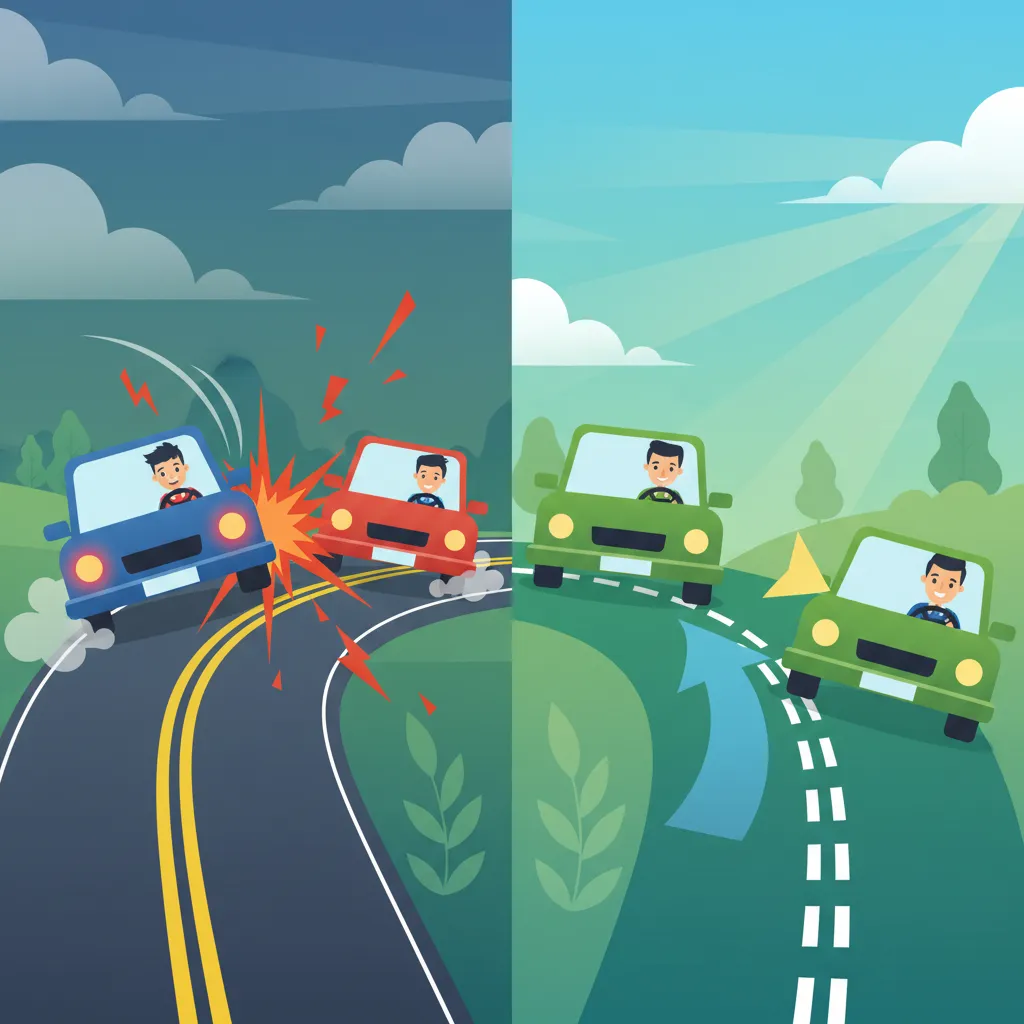
This lesson addresses common errors made by drivers when using roundabouts and presents corrective strategies. It covers issues such as entering from the wrong lane, failing to yield to circulating traffic, exceeding the recommended speed, and not signaling an exit correctly. By understanding these mistakes, drivers can improve their roundabout proficiency and reduce accident risk.

This lesson examines the dynamic interactions between mopeds, cars, and bicycles in an urban environment. It emphasizes strategies for staying visible and avoiding the blind spots of larger vehicles. The content provides clear guidelines on overtaking bicycles safely, respecting dedicated bike lanes, and signaling intentions clearly to all other road users to ensure predictable and harmonious coexistence in mixed traffic.
Find clear answers to common questions learners have about Pedestrian Crossings and Vulnerable Users. Learn how the lesson is structured, which driving theory objectives it supports, and how it fits into the overall learning path of units and curriculum progression in Spain. These explanations help you understand key concepts, lesson flow, and exam focused study goals.
Yes, at marked zebra crossings without traffic lights, you must always stop and give way to pedestrians who are crossing or show clear intent to cross the road. This is a fundamental DGT rule to protect vulnerable road users.
At unmarked crossings, pedestrians typically do not have automatic priority unless a traffic light or police officer indicates otherwise. However, drivers should always be vigilant, anticipate pedestrian movements, and be prepared to stop, especially when turning into a street where pedestrians may be crossing.
When cyclists share lanes or paths with pedestrians, both are considered vulnerable users. Drivers must exercise extreme caution, maintain extra safety distance, and be prepared for unpredictable movements. Always give them ample space and respect their priority when indicated by signs or markings.
Yes, personal mobility vehicles (VMP) like electric scooters are generally considered vulnerable users. Drivers must treat them with caution, maintain safe distances, and respect any specific DGT rules regarding their circulation, especially in urban zones and shared spaces.
Not respecting pedestrian priority at a marked crossing is a serious infraction under DGT rules, leading to significant fines and potential loss of several points from your driving license. It is crucial to always yield to pedestrians to ensure their safety and avoid penalties.
Use our powerful search functionality to pinpoint specific Spanish DGT driving theory practice sets. Filter by road sign categories, traffic law topics, or question difficulty to build custom study sessions and reinforce your knowledge precisely where it matters for your official exam.