
This lesson is your essential guide to understanding intersection types and right-of-way rules in Spain. As the first lesson in the Urban Driving unit, it lays the foundation for navigating complex city junctions, explaining DGT priority regulations and signage for your Category B & BE driving theory exam. Mastering these rules is crucial for safe and confident urban driving.

Lesson content overview
Intersections are critical points on any road network where different traffic flows converge, cross, or diverge. In the context of the Complete Spanish Driving License Theory Course for Categories B & BE (DGT), understanding how to navigate these junctions safely and efficiently is paramount. This lesson provides a comprehensive guide to intersection types and the specific right-of-way (prioridad de paso) rules applied across Spain, ensuring you can anticipate actions and react appropriately to prevent accidents.
Navigating intersections correctly is not merely about following rules; it's about making quick, safe decisions that protect yourself and other road users. Intersections are statistically among the most common locations for traffic accidents due to the inherent conflicts between various traffic streams. Mastery of Spanish right-of-way rules, as stipulated by the Dirección General de Tráfico (DGT) in the Reglamento General de Circulación (RGC), is essential for passing your theory exam and, more importantly, for safe urban driving. This knowledge minimizes risk at conflict points and contributes to a smoother traffic flow.
Intersections in Spain are categorized based on whether they are regulated by explicit control devices. This fundamental distinction dictates the set of rules drivers must apply upon approach.
A controlled intersection is equipped with specific devices designed to manage and direct traffic flow. Drivers must always prioritize and obey these control devices.
There are several subcategories of controlled intersections:
Failing to obey these explicit control devices is a serious traffic violation in Spain.
An uncontrolled intersection lacks any traffic control devices such as traffic lights, stop signs, or yield signs. In these situations, drivers must apply the general right-of-way hierarchy established by Spanish traffic law.
At uncontrolled intersections, drivers rely heavily on observation, anticipation, and a clear understanding of the DGT’s priority rules to ensure safety.
The concept of right-of-way is fundamental to managing traffic flow and preventing collisions. It establishes a clear hierarchy that dictates which road user has precedence at a conflict point.
The Spanish traffic law (RGC) defines a clear hierarchy for right-of-way, primarily based on road type, specific signage, and the presence of vulnerable users. The goal is to eliminate ambiguity and assign clear responsibilities, thereby reducing decision-making time and the potential for accidents.
Roads designated as "priority roads" inherently have precedence over intersecting secondary roads, unless otherwise indicated by specific signs. This priority is usually maintained for a continuous stretch until an "end of priority road" sign is encountered. Drivers on a priority road can generally expect to proceed without yielding, though caution and awareness of potential rule violations by others are always necessary.
Vehicles on secondary roads must generally yield to traffic on intersecting primary roads, even if no explicit yield sign is present, based on the established road hierarchy.
Certain situations grant absolute priority, overriding other general rules:
Specific DGT signs are crucial for indicating right-of-way and managing expectations at Spanish intersections.
The Stop sign (R-2), an unmistakable red octagon with the word "ALTO," requires all drivers to come to a complete halt before the white stop line. Even if no cross-traffic is visible, a full stop is legally mandatory. After stopping, drivers must ensure the intersecting road is clear in both directions before proceeding safely. This sign guarantees a clear assessment point at potentially high-conflict intersections.
Failing to make a complete stop at an Alto sign, even if no other vehicle is present, is a serious traffic offense in Spain.
The Yield sign (R-1), an inverted white triangle with a red border, instructs drivers to slow down and give way to vehicles already on the intersecting road or those approaching so closely as to pose a hazard. Unlike a stop sign, a complete stop is not always required, but drivers must be prepared to stop if necessary to avoid interfering with the priority traffic. This sign aims to ensure smoother merging and prevent sudden stops that could cause rear-end collisions.
The Priority Road sign (S-3), a yellow diamond with a white border, signifies that the road on which you are traveling has priority over any intersecting roads until you encounter an "End of Priority Road" sign. This provides clear, consistent priority across multiple junctions, simplifying driving on main arteries.
The End of Priority Road sign (S-4), identical to the Priority Road sign but with a black diagonal stripe, indicates that the priority previously granted by the S-3 sign has ended. From this point onwards, general priority rules (e.g., priority to the right at uncontrolled intersections) or new signage will apply.
The Pedestrian Crossing sign (S-28), along with white "zebra" stripes on the road, designates a Paso para Peatones. At these marked crossings, pedestrians have absolute priority. Drivers must approach with caution, be prepared to stop, and yield to any pedestrian who is on or about to enter the crossing. Drivers must stop before the crossing line and allow pedestrians to complete their crossing safely.
Traffic lights dictate vehicle movement with specific color signals:
The DGT places significant emphasis on protecting vulnerable road users, who are at higher risk in traffic. At intersections, special attention must be paid to pedestrians, cyclists, and motorcyclists.
Pedestrians are the most vulnerable group. At marked pedestrian crossings (Paso para Peatones), they always have priority over vehicles, even if traffic lights are green for vehicles. Drivers must stop safely before the crossing line and allow pedestrians to cross completely. At uncontrolled intersections where a pedestrian has already entered the roadway, drivers must also yield. Always anticipate pedestrians, especially in urban areas and near schools.
Cyclists are treated as vehicles but are also considered vulnerable due to their lack of protection. They have priority when using dedicated bike lanes that intersect a junction, especially when turning or when motorists intend to merge into their path. When a vehicle is turning, and a cyclist is proceeding straight along a designated cycle path or lane, the cyclist usually has priority. Always check blind spots for cyclists before turning.
Motorcyclists have the same rights and obligations as other vehicle drivers. However, their smaller size and often high speeds can make them less visible, especially at intersections. Drivers must exercise heightened awareness, checking mirrors and blind spots thoroughly before changing lanes or turning at intersections to ensure no motorcyclists are present.
Misinterpreting priority rules is a significant cause of accidents. Be aware of these common pitfalls:
All rules governing right-of-way and intersection behavior in Spain are enshrined in the Reglamento General de Circulación (RGC), the general traffic regulations. Compliance with these articles is mandatory for all road users, particularly for drivers holding Category B and BE licenses. The RGC details specific requirements for stopping, yielding, and respecting traffic signals, ensuring a consistent framework for safe driving. Violations carry penalties, including fines and potential points deductions from your driving license.
Driving conditions can significantly impact how you approach and navigate intersections. Always adjust your behavior to the prevailing circumstances.
Let's illustrate the right-of-way rules with practical examples that you might encounter on Spanish roads.
Situation: You (Driver A) are on a main road, approaching an intersection with a side street. There are no stop signs, yield signs, or traffic lights. Driver B is approaching the intersection from your right-hand side on the side street. Rule Applied: Priority to the right. Correct Behavior: You (Driver A) must yield to Driver B, even though you are on what appears to be the "main" road. Slow down, check for Driver B, and allow them to proceed first if there's any conflict. Rationale: In the absence of specific signage, the general rule of priority to the right applies at uncontrolled intersections in Spain.
Situation: You (Driver C) are approaching a four-way intersection. Your approach has an "ALTO" (Stop) sign. Simultaneously, Driver D approaches from the road to your right, also facing an "ALTO" sign. Rule Applied: Stop sign requirement and simultaneous arrival rule. Correct Behavior: Both you (Driver C) and Driver D must come to a complete stop before the stop line. Since you arrived simultaneously, the driver on the right (Driver D) would technically have precedence, but often at four-way stops, drivers proceed cautiously based on who arrived "first" or communicate with eye contact. The safest action is for Driver D to proceed first. Rationale: All drivers must fully stop. If vehicles arrive at a four-way stop simultaneously, the priority to the right rule is often applied, but careful observation and communication are key.
Situation: You (Driver E) are at a traffic light, which turns green, permitting you to go straight. Just as you are about to proceed, a pedestrian (P) steps onto the marked pedestrian crossing (zebra crossing) directly in front of your vehicle. Rule Applied: Pedestrian priority at marked crossings. Correct Behavior: Despite having a green light, you (Driver E) must stop before the crossing line and allow Pedestrian P to complete their crossing safely. Rationale: Pedestrians at marked crossings always have priority over vehicles, regardless of the traffic light color. This is a critical safety rule for vulnerable road users (Article 52 RGC).
Situation: You (Driver F) are on a minor road intending to merge onto a main road. Your approach has a "CEDA EL PASO" (Yield) sign. Vehicle G is approaching on the main road from your left. Rule Applied: Yield sign requirement. Correct Behavior: You (Driver F) must slow down, observe Vehicle G's speed and distance, and give way to Vehicle G. Merge only when there is a sufficient gap and it is safe to do so without forcing Vehicle G to brake or swerve. Rationale: The yield sign explicitly requires you to give priority to traffic on the intersecting road, ensuring a safe merge.
Situation: You (Driver H) are approaching a traffic-light intersection at 30 km/h. As you reach the stop line, the light turns from green to a steady amber. Rule Applied: Amber light transition rule. Correct Behavior: You (Driver H) should apply the brakes smoothly and stop safely before the stop line. Rationale: A steady amber light indicates that you must stop, unless you are so close to the stop line that stopping safely would create a dangerous situation (e.g., a high risk of being rear-ended). Generally, at 30 km/h, there should be ample time to stop safely. Accelerating through an amber light is incorrect and dangerous.
Mastering intersection rules is fundamental to safe and legal driving in Spain. Key takeaways from this lesson include:
By internalizing these principles and practicing them diligently, you will be well-prepared to navigate any intersection safely and confidently on Spanish roads.
This lesson covers the two main categories of Spanish intersections—controlled (signalized, stop, or yield regulated) and uncontrolled (general rules apply)—and explains the DGT right-of-way hierarchy that determines who must yield at each type. Key signs include the Stop (R-2), Yield (R-1), Priority Road (S-3), and Pedestrian Crossing (S-28), each with specific mandatory behaviors. Special priority rules apply to emergency vehicles, tramways, and pedestrians at marked crossings. The lesson emphasizes that green lights do not grant absolute right-of-way, and provides five practical scenarios illustrating correct application of priority rules. All rules derive from the Reglamento General de Circulación (RGC) and are essential for safe urban driving and the DGT theory exam.
A short set of high-value points that capture the most important learning from this lesson.
Intersections are categorized as controlled (regulated by signals or signs) or uncontrolled (governed by general priority rules).
The priority hierarchy places emergency vehicles and trams at the top, followed by vehicles on priority roads, then vehicles following the 'priority to the right' rule at uncontrolled junctions.
The Stop sign (R-2, red octagon) requires a complete halt, while the Yield sign (R-1, inverted triangle) requires slowing and giving way without mandatory stopping.
Pedestrians at marked crossings (Paso para Peatones, S-28) have absolute priority regardless of traffic light color.
A green light permits movement but does not grant absolute right-of-way; drivers must still yield to pedestrians and vehicles already in the intersection.
Explore all units and lessons included in this driving theory course.
At uncontrolled intersections without signs, always yield to vehicles approaching from your right (priority to the right).
A steady amber light means stop unless you are too close to do so safely; accelerating through amber is dangerous and often illegal.
The Priority Road sign (S-3, yellow diamond) grants priority until an End of Priority Road sign (S-4, yellow diamond with diagonal stripe) is encountered.
Emergency vehicles with active signals (lights and/or sirens) override all other priority rules and must be yielded to immediately.
When turning at any intersection, always check blind spots for cyclists and motorcyclists who may be less visible.
Assuming main road traffic always has priority at uncontrolled intersections, ignoring the 'priority to the right' rule.
Treating a green light as absolute right-of-way and failing to yield to pedestrians already on a crossing.
Confusing Yield and Stop signs—failing to stop completely at an Alto sign is a serious violation.
Accelerating through an amber light instead of preparing to stop, risking rear-end collisions or conflicts with cross-traffic.
Entering a roundabout without yielding to traffic already circulating within it, which is a common intersection error.
Lesson content overview
A short set of high-value points that capture the most important learning from this lesson.
Intersections are categorized as controlled (regulated by signals or signs) or uncontrolled (governed by general priority rules).
The priority hierarchy places emergency vehicles and trams at the top, followed by vehicles on priority roads, then vehicles following the 'priority to the right' rule at uncontrolled junctions.
The Stop sign (R-2, red octagon) requires a complete halt, while the Yield sign (R-1, inverted triangle) requires slowing and giving way without mandatory stopping.
Pedestrians at marked crossings (Paso para Peatones, S-28) have absolute priority regardless of traffic light color.
A green light permits movement but does not grant absolute right-of-way; drivers must still yield to pedestrians and vehicles already in the intersection.
Explore all units and lessons included in this driving theory course.
At uncontrolled intersections without signs, always yield to vehicles approaching from your right (priority to the right).
A steady amber light means stop unless you are too close to do so safely; accelerating through amber is dangerous and often illegal.
The Priority Road sign (S-3, yellow diamond) grants priority until an End of Priority Road sign (S-4, yellow diamond with diagonal stripe) is encountered.
Emergency vehicles with active signals (lights and/or sirens) override all other priority rules and must be yielded to immediately.
When turning at any intersection, always check blind spots for cyclists and motorcyclists who may be less visible.
Assuming main road traffic always has priority at uncontrolled intersections, ignoring the 'priority to the right' rule.
Treating a green light as absolute right-of-way and failing to yield to pedestrians already on a crossing.
Confusing Yield and Stop signs—failing to stop completely at an Alto sign is a serious violation.
Accelerating through an amber light instead of preparing to stop, risking rear-end collisions or conflicts with cross-traffic.
Entering a roundabout without yielding to traffic already circulating within it, which is a common intersection error.
Explore search topics learners often look for when studying Intersection Types and Right‑of‑Way Rules. These topics reflect common questions about road rules, driving situations, safety guidance, and lesson level theory preparation for learners in Spain.
Browse additional driving theory lessons that cover connected traffic rules, road signs, and common driving situations related to this topic. Improve your understanding of how different rules interact across everyday traffic scenarios.
Understand the specific rules governing priority at different types of urban and rural intersections in Spain. Learn how traffic lights, stop signs, yield signs, and general priority rules dictate who proceeds first at junctions.
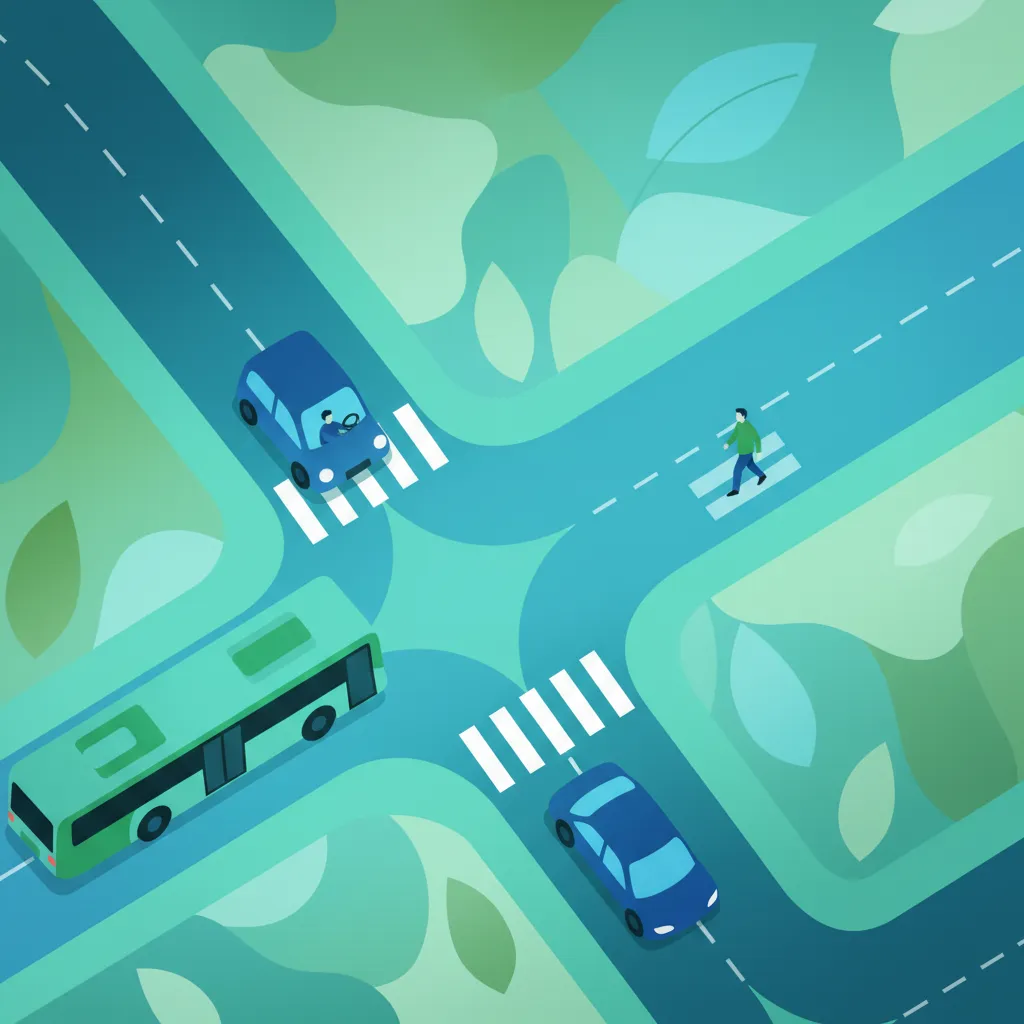
This lesson addresses the crucial 'priority to the right' rule that governs traffic at intersections without signs or signals. It explains that drivers must yield to any vehicle approaching from their right-hand side. The content provides practical examples of how to assess traffic, determine the correct order of passage, and proceed with caution to safely navigate these common but potentially confusing intersections.
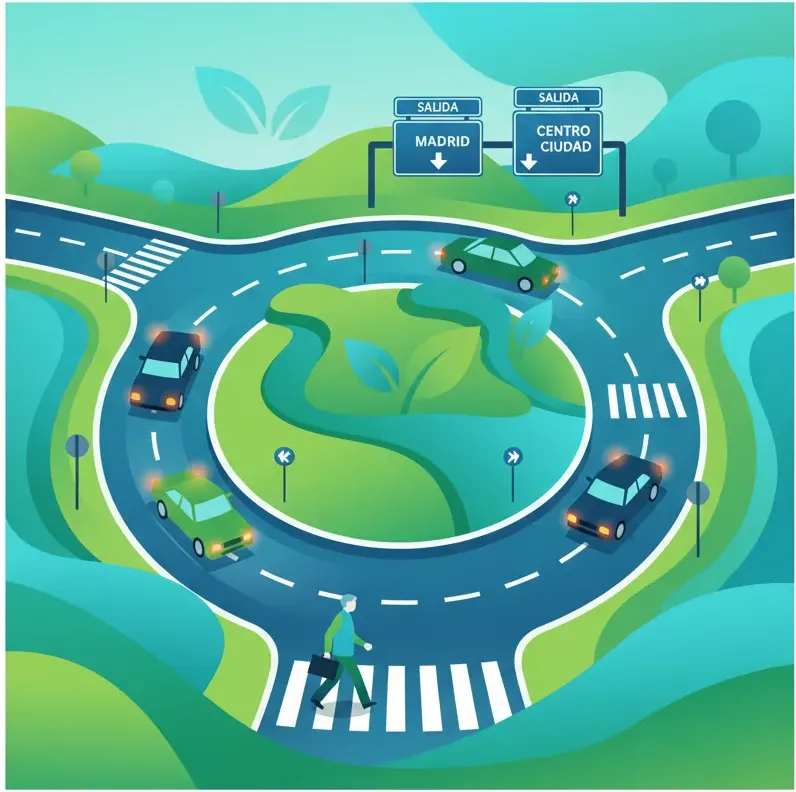
This lesson provides specific instructions on how to safely navigate complex junctions such as roundabouts and intersections with a large vehicle. It explains the rules of priority, the correct lane to use based on the intended exit, and the importance of proper vehicle positioning to account for off-tracking. The content also covers clear signaling to communicate intentions to other road users for safe and efficient passage.
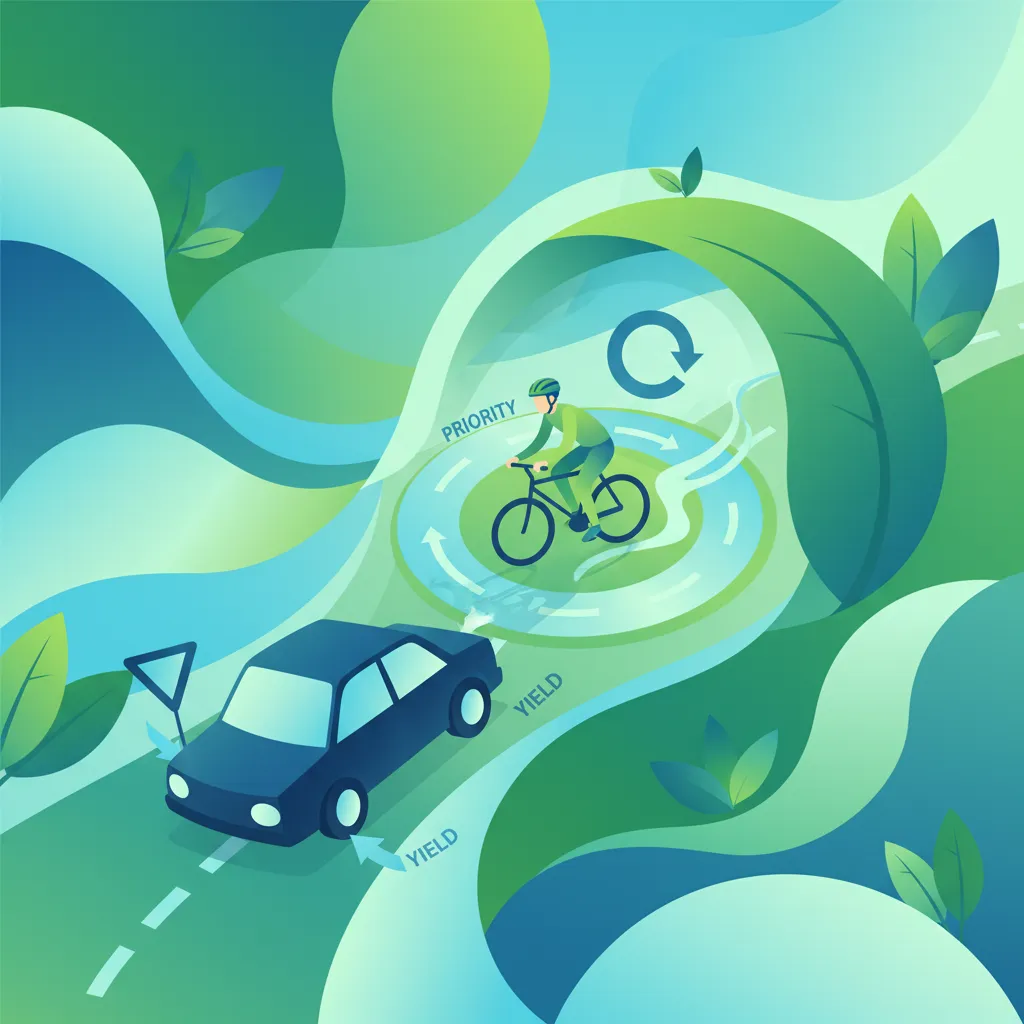
This lesson clarifies the primary rule for roundabouts: all vehicles entering must yield to traffic already on the circular roadway. It explains how to approach a roundabout, select the appropriate lane based on the intended exit, and merge safely into the flow of traffic. Proper signaling before exiting is also covered, ensuring other drivers can anticipate the rider's movements for a smooth and safe negotiation of the junction.
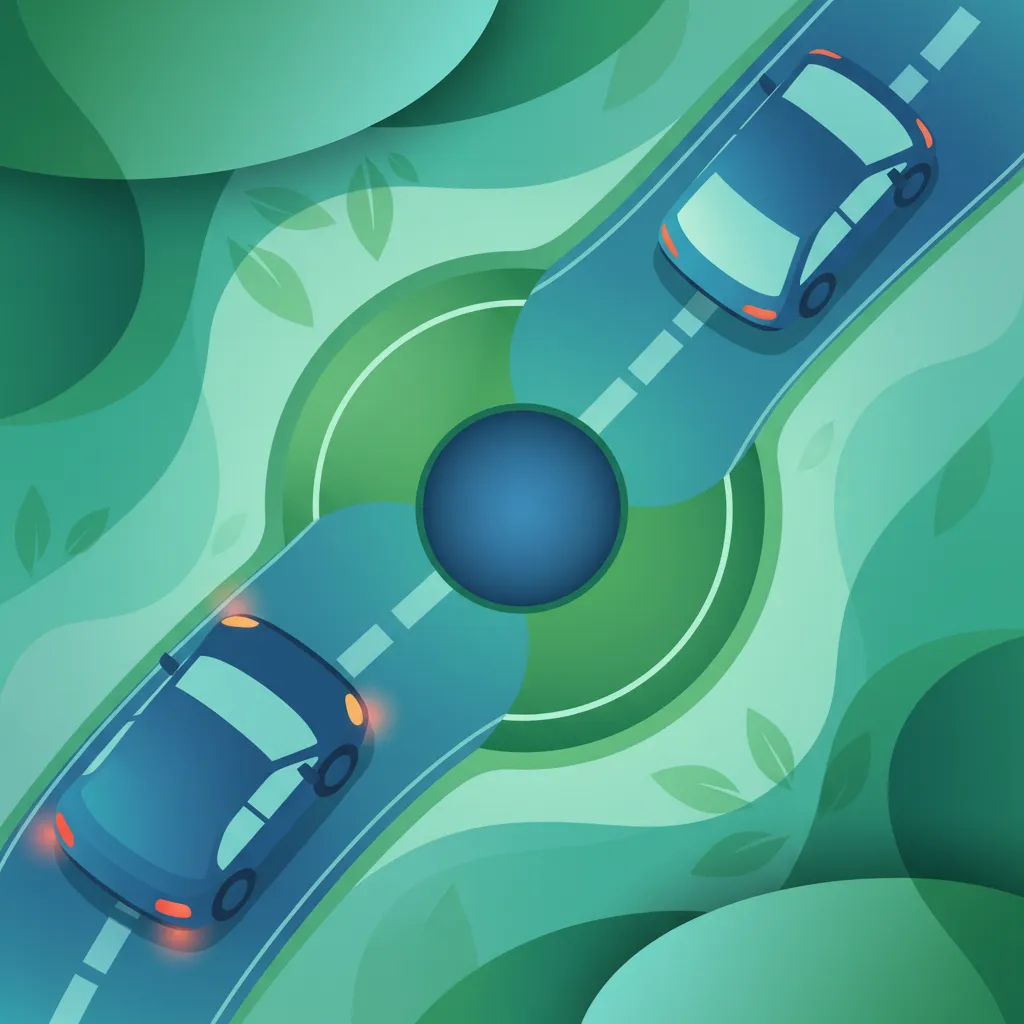
This lesson focuses on the yielding hierarchy that governs roundabout usage in Spain. It clarifies that vehicles already circulating have priority over those entering and explains the proper lane positioning based on the intended exit. The content includes the correct use of signals for changing lanes and exiting, and safe merging techniques.
This lesson examines the structural components of a typical Spanish roundabout, describing the central island, entry and circulating lanes, and the placement of yield signs. It outlines how DGT standards dictate the geometric design and entry/exit points to ensure smooth traffic flow. Understanding these design elements enables drivers to anticipate vehicle movements and navigate safely.

This lesson focuses on the absolute priority of pedestrians at marked crosswalks, often known as zebra crossings. It explains that riders must always be prepared to stop and yield the right-of-way to any pedestrian waiting to cross or already crossing. The content also covers signaled pedestrian crossings and general awareness in urban areas where pedestrians may cross unexpectedly, reinforcing safety and legal compliance.
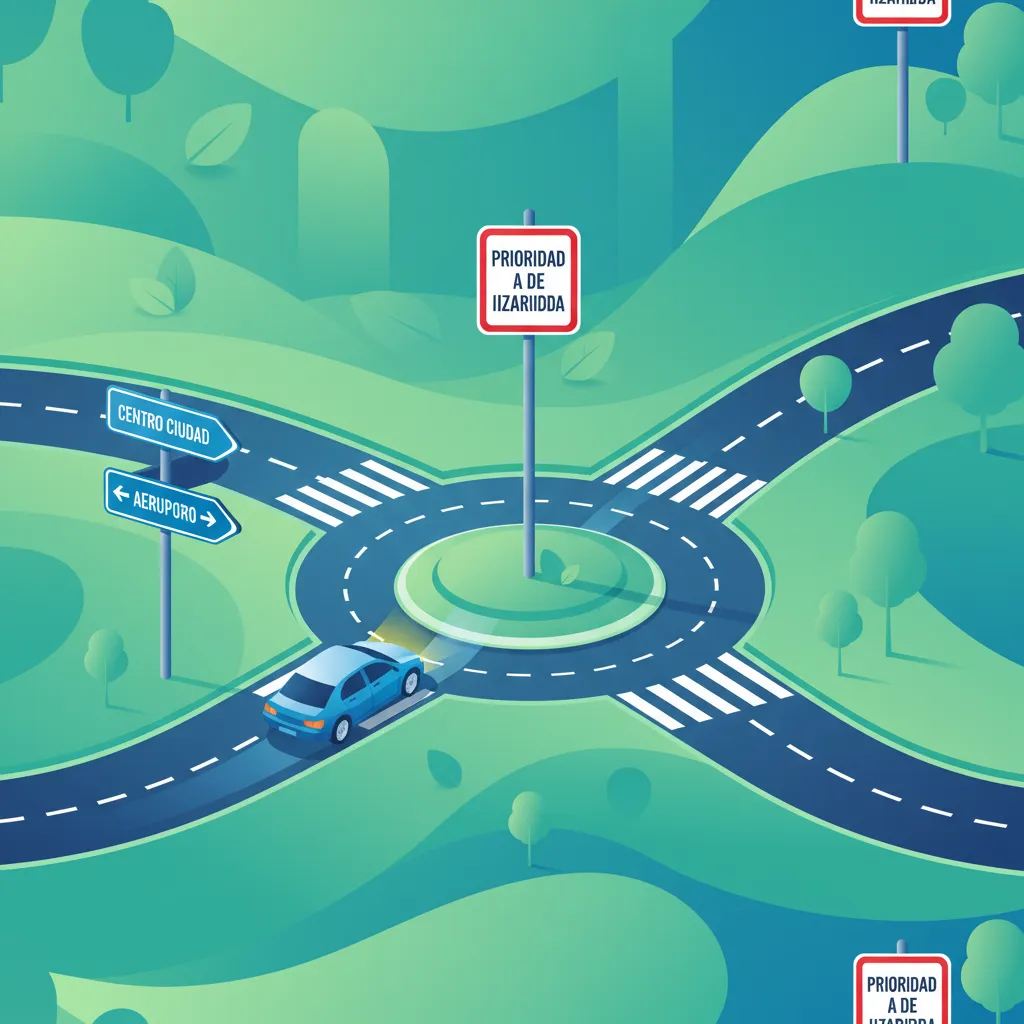
This lesson presents the variety of signs that guide drivers through roundabout navigation. It explains the significance of the roundabout warning symbol, priority signs, lane arrows, and directional signs placed before and within the roundabout. Mastery of roundabout signage ensures that drivers follow legal requirements and maintain safe traffic flow.
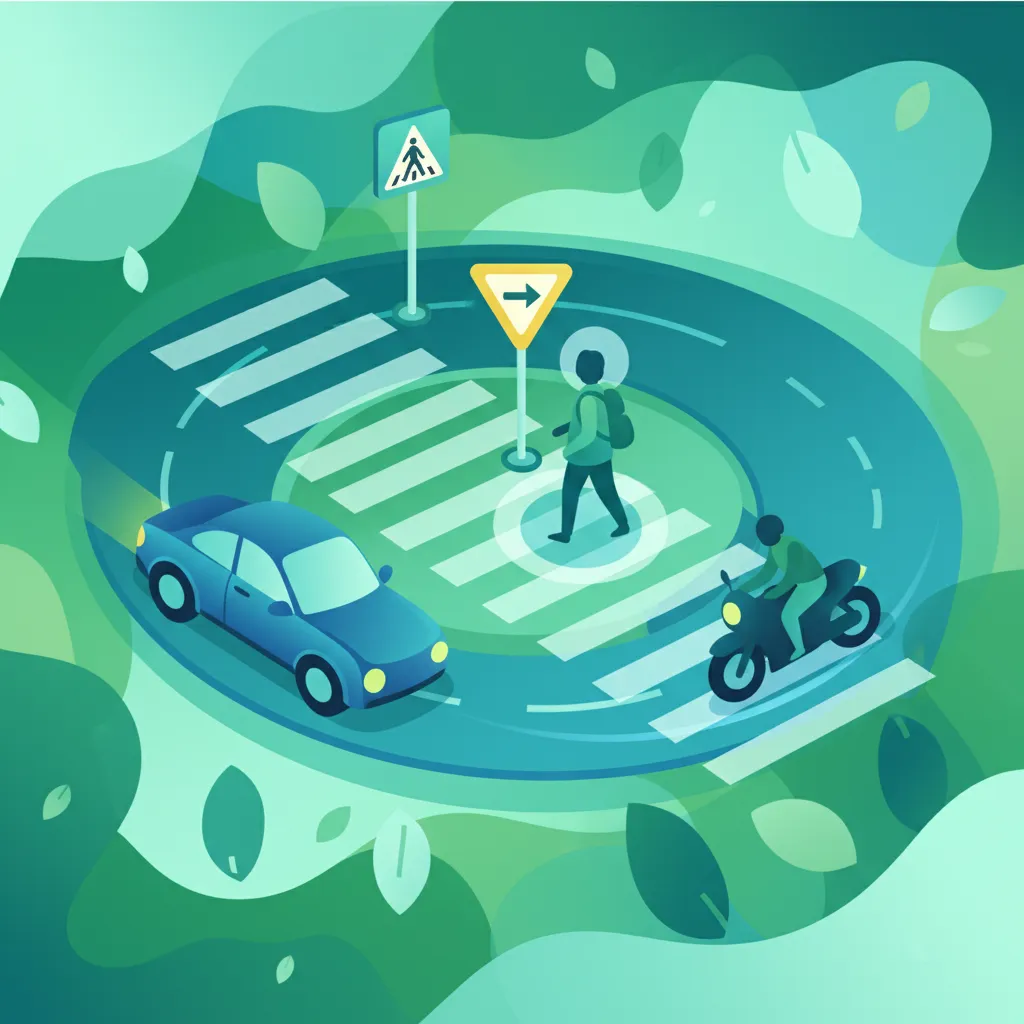
This lesson outlines the proper techniques for negotiating roundabouts and signal-controlled intersections in Spain. It explains priority rules at entry, lane selection based on the intended exit, and yielding to circulating traffic. The content also covers compliance with traffic signals and DGT regulations, including handling cyclist crossings.
This lesson defines proper lane discipline on highways, emphasizing correct lane positioning and the rule to drive in the right-hand lane except when overtaking. It details safe merging onto main carriageways from an acceleration lane and effective exit strategies using deceleration lanes. Learners will understand DGT merge rules and the importance of signaling lane changes early.

This lesson introduces the visual language of road markings, focusing on the distinction between solid and broken lines and what they permit regarding lane changes and overtaking. It explains the meaning of directional arrows painted on the road surface, which guide drivers into the correct lane for their intended maneuver. Understanding these markings is crucial for maintaining proper lane discipline and navigating complex intersections and multi-lane roads.
Learn the critical rules for yielding priority to pedestrians, cyclists, and other vulnerable road users at various types of intersections and crossings across Spain. Essential knowledge for safe urban driving and the DGT theory exam.

This lesson explores the design and legal requirements of pedestrian crossings in Spanish urban areas. It clarifies the rules at zebra crossings, signal-controlled crossings, and areas where cyclists or other vulnerable users share space. The content explains the required safety distances and signage indicating crossing zones to ensure drivers respect all road users.
This lesson focuses on the absolute priority of pedestrians at marked crosswalks, often known as zebra crossings. It explains that riders must always be prepared to stop and yield the right-of-way to any pedestrian waiting to cross or already crossing. The content also covers signaled pedestrian crossings and general awareness in urban areas where pedestrians may cross unexpectedly, reinforcing safety and legal compliance.
This lesson clarifies the primary rule for roundabouts: all vehicles entering must yield to traffic already on the circular roadway. It explains how to approach a roundabout, select the appropriate lane based on the intended exit, and merge safely into the flow of traffic. Proper signaling before exiting is also covered, ensuring other drivers can anticipate the rider's movements for a smooth and safe negotiation of the junction.
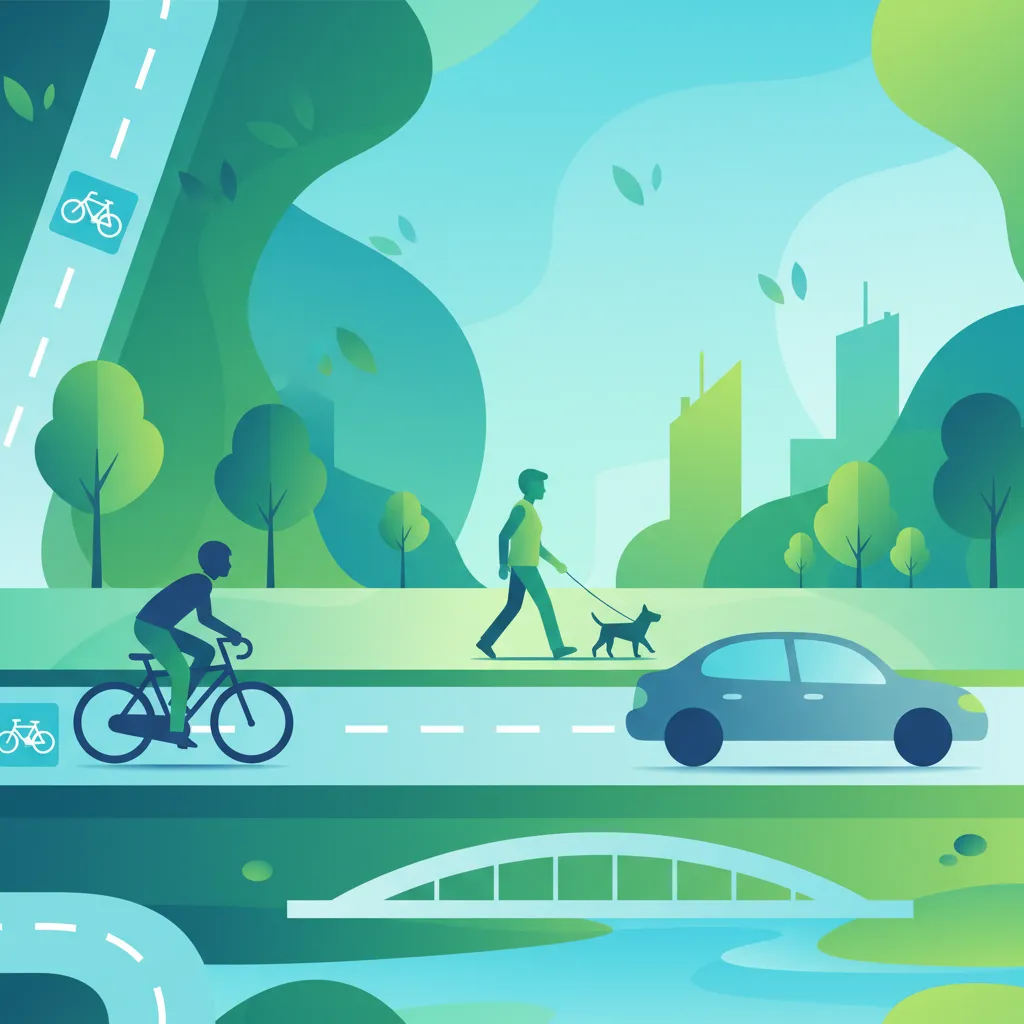
This lesson discusses the infrastructure dedicated to cyclists, covering dedicated bike lanes and the rules governing interaction and overtaking. It explains DGT regulations on safe passing distances and how to navigate mixed-traffic scenarios where vehicles and bicycles share the road. The content emphasizes driver responsibilities to maintain a safe corridor and respect cyclist priority.
This lesson focuses on the yielding hierarchy that governs roundabout usage in Spain. It clarifies that vehicles already circulating have priority over those entering and explains the proper lane positioning based on the intended exit. The content includes the correct use of signals for changing lanes and exiting, and safe merging techniques.
This lesson outlines the proper techniques for negotiating roundabouts and signal-controlled intersections in Spain. It explains priority rules at entry, lane selection based on the intended exit, and yielding to circulating traffic. The content also covers compliance with traffic signals and DGT regulations, including handling cyclist crossings.
This lesson addresses the crucial 'priority to the right' rule that governs traffic at intersections without signs or signals. It explains that drivers must yield to any vehicle approaching from their right-hand side. The content provides practical examples of how to assess traffic, determine the correct order of passage, and proceed with caution to safely navigate these common but potentially confusing intersections.

This lesson examines the interaction between large vehicles, such as trucks, and vulnerable road users within roundabouts. It addresses the wide turning radius of heavy vehicles, the importance of checking blind spots, and the correct yielding behavior toward pedestrians and cyclists. Learners will understand how to maintain safe distances and anticipate the movements of different road users.

This lesson focuses on the critical skill of safely interacting with vulnerable road users, such as pedestrians and cyclists, in an urban setting. It highlights the extensive blind spots around a truck and teaches drivers to be extra vigilant, especially at intersections and crosswalks. The content covers the legal requirements for yielding and the importance of making eye contact to confirm intentions.
This lesson addresses the critical skill of safely sharing the road with other vulnerable users like pedestrians, cyclists, and other motorcyclists. It emphasizes the need for increased awareness, speed adaptation, and providing ample space when passing. The content covers DGT regulations regarding minimum passing distances and highlights the importance of making eye contact to ensure mutual awareness and prevent common urban accidents.
Find clear answers to common questions learners have about Intersection Types and Right‑of‑Way Rules. Learn how the lesson is structured, which driving theory objectives it supports, and how it fits into the overall learning path of units and curriculum progression in Spain. These explanations help you understand key concepts, lesson flow, and exam focused study goals.
At uncontrolled intersections in Spain, the general rule is to give way to vehicles approaching from your right. This applies unless specific DGT signs or markings dictate otherwise. Always proceed with caution, even if you have priority.
Pedestrians have priority at marked crossings and when a vehicle is turning into a road they are crossing. However, they don't automatically have priority at all intersections. Drivers must always be attentive and follow DGT rules regarding pedestrian right-of-way, which are often indicated by signs or road markings.
DGT traffic signs such as 'Stop' (PARE) and 'Yield' (CEDA EL PASO) signs override the general right-of-way rules. A 'Stop' sign means you must come to a complete halt, while a 'Yield' sign requires you to give way to traffic on the main road, even if it's coming from your left. Traffic light signals also dictate priority.
A controlled intersection is regulated by traffic lights, Stop signs, Yield signs, or traffic police, which explicitly dictate priority. An uncontrolled intersection has no such specific signals, meaning the general right-of-way rules (typically yielding to the right) apply. Recognizing this distinction is crucial for safe navigation and DGT exam success.
Use our powerful search functionality to pinpoint specific Spanish DGT driving theory practice sets. Filter by road sign categories, traffic law topics, or question difficulty to build custom study sessions and reinforce your knowledge precisely where it matters for your official exam.