
Riding on wet or slippery surfaces demands extra caution and specific braking techniques. This lesson is crucial for understanding how reduced grip affects your motorcycle and how to adapt your braking to maintain control and safety, directly preparing you for scenarios tested in the DGT motorcycle theory exam.

Lesson content overview
Braking is arguably the most critical maneuver for a motorcycle rider, essential for preventing accidents and maintaining control. When road surfaces become wet or slippery due to rain, oil, leaves, or other factors, the dynamics of braking change dramatically. Understanding and mastering specific braking techniques for these conditions is not only vital for your safety on the road but also a core requirement for passing your Spanish Motorcycle Theory Exam for A, A1, and A2 licences.
This comprehensive lesson will delve into the physics of reduced traction, the mechanics of effective braking on wet surfaces, and the legal obligations for riders in Spain. We will explore how systems like Anti-Lock Braking Systems (ABS) assist you and how fundamental techniques like progressive braking are adapted to low-grip environments. By the end of this lesson, you will possess a solid understanding of how to brake safely and confidently, even when the road conditions are less than ideal.
Riding a motorcycle demands constant attention to road conditions and impeccable control. Wet and slippery surfaces introduce significant challenges that can drastically increase stopping distances and the risk of losing control. Unlike cars, motorcycles rely heavily on their two tires for stability, and any reduction in grip on either wheel can lead to a fall.
On a wet road, the available friction between your tires and the pavement can be reduced by as much as 50% compared to dry conditions. This reduction directly translates to longer braking distances and a higher likelihood of a wheel locking up, which can cause the motorcycle to slide or tip over. Therefore, adapting your braking technique and riding style to these conditions is not merely a recommendation; it is an absolute necessity for accident avoidance and personal safety.
For your Spanish DGT theory exam, demonstrating knowledge of wet-surface braking is crucial. This topic frequently appears in questions, testing your understanding of hazard perception, speed adaptation, and correct control inputs. Beyond the exam, these skills are indispensable for real-world safe riding, allowing you to react effectively to unexpected situations on slippery roads.
The fundamental challenge of braking on wet surfaces stems from a reduction in the friction between your motorcycle tires and the road. This phenomenon profoundly affects stopping distances and overall vehicle stability.
The coefficient of friction (μ) is a numerical value that describes the amount of grip available between two surfaces. On dry asphalt, this coefficient is relatively high, allowing for strong braking forces and quick deceleration. However, when water, oil, gravel, or other contaminants are present, the coefficient of friction significantly decreases.
When μ is lower, your tires have less "bite" on the road, meaning they can transmit less braking force before losing traction and starting to slide. This directly translates to longer stopping distances. For instance, braking from 80 km/h on a wet highway might require an additional 10 metres or more to stop compared to a dry surface. Riders must always be aware that wet surfaces demand earlier and gentler braking applications.
Hydroplaning, also known as aquaplaning, occurs when a layer of water builds up between your motorcycle tire and the road surface, causing a complete or partial loss of contact. When this happens, your tires are essentially riding on water, leading to a sudden and complete loss of traction for braking, accelerating, and steering.
Hydroplaning is primarily caused by a combination of factors:
The best way to avoid hydroplaning is to significantly reduce your speed in wet conditions, especially when encountering standing water. Ensure your tires are in good condition with adequate tread depth, as this is crucial for evacuating water from under the contact patch. If you feel your motorcycle hydroplaning, ease off the throttle and avoid sudden braking or steering inputs. Allow the motorcycle to slow down naturally until tire contact with the road is re-established.
The tread depth of your motorcycle tires refers to the depth of the grooves on the tire surface. These grooves are specifically designed to channel water away from the contact patch—the area of the tire touching the road. This water evacuation is crucial for maintaining grip on wet surfaces.
As tires wear down, their tread depth decreases, reducing their ability to clear water. This dramatically increases the risk of hydroplaning and reduces overall wet-weather grip. In Spain, the minimum legal tread depth for motorcycles is 1.6 mm (as per Real Decreto 2822/1998). However, for optimal safety and performance in wet conditions, it is strongly recommended that tire tread depth be at least 3 mm. Below this recommendation, your tires' ability to provide safe grip in the rain is significantly compromised. Always check your tire pressure regularly, as incorrect pressure can also reduce the contact patch and impair water evacuation.
Effective braking on wet and slippery surfaces requires a refined understanding of how your motorcycle reacts and how modern safety systems can assist you.
When you apply the brakes on a motorcycle, the vehicle's weight shifts forward. This phenomenon, known as load transfer, increases the pressure on the front tire and decreases it on the rear tire. On dry pavement, this load transfer enhances the front tire's grip, making the front brake significantly more effective for stopping.
However, on wet or slippery surfaces, load transfer becomes a critical factor in maintaining stability. While the front tire still gains load, its absolute friction capability is much lower. Excessive application of the front brake can easily exceed the reduced friction limit of the front tire, leading to a front-wheel lock-up. A front-wheel lock-up on a motorcycle is particularly dangerous, often resulting in an immediate loss of balance and a fall. Conversely, the rear tire, having less weight on it, can also lock up easily with even moderate rear brake application. Mastering the delicate balance of brake application is paramount to prevent loss of control.
An Anti-Lock Braking System (ABS) is a safety feature designed to prevent the wheels from locking up during hard braking, especially on low-traction surfaces. When a wheel begins to lock, ABS rapidly modulates (pulsates) the brake pressure to that wheel, allowing it to continue rotating just below the point of lock-up. This process helps maintain steering control while braking forcefully.
For motorcycles, ABS is a significant safety enhancement, particularly on wet and slippery roads. It allows riders to apply maximum braking force without fear of a wheel locking up and causing a loss of control. This means you can brake hard and still steer around an obstacle, a crucial advantage in emergency situations.
It is important to understand that ABS does not inherently shorten braking distances on all wet surfaces. While it prevents uncontrolled skids, the overall stopping distance is still primarily dictated by the available friction between the tires and the road. On very slick surfaces, ABS will help maintain steerability but cannot defy the laws of physics to provide "more" grip than is inherently available. Spanish law encourages, and for motorcycles above 125 cc, mandates the use of ABS, considering it a vital component for enhanced safety. Riders must ensure their ABS system is always functional and never disabled.
Progressive braking is a technique characterized by a gradual and increasing application of brake pressure. This method is fundamental for all braking, but it becomes absolutely critical on wet and slippery surfaces. Instead of grabbing the brakes abruptly, progressive braking involves a smooth, controlled squeeze.
The primary goal of progressive braking on wet roads is to avoid sudden load transfer and to gently "feel" for the available grip. You typically begin with a light application of the rear brake to help stabilize the motorcycle and then progressively increase pressure on the front brake lever. This allows the weight to transfer forward smoothly, and the tires can adapt to the increasing braking force without suddenly exceeding their reduced friction limits. This technique significantly reduces the risk of wheel lock-up and helps maintain overall stability, even during an emergency stop.
Anticipate and Plan Early: Identify potential hazards and begin your braking sequence much earlier than you would on dry roads. This gives you more time and space to react.
Gentle Initial Rear Brake Application: Lightly apply the rear brake first. This helps to stabilize the motorcycle, compresses the rear suspension, and shifts a small amount of weight forward in a controlled manner, preparing the front tire for its main role.
Smooth, Gradual Front Brake Increase: With the rear brake gently engaged, begin to smoothly and progressively squeeze the front brake lever. Increase pressure gradually, allowing the motorcycle to settle and the front tire to gain maximum available grip.
Balance and Feel for Grip: Constantly monitor the feedback from your tires. If you feel a wheel starting to slide or if ABS activates, ease off the brake pressure slightly before re-applying smoothly. Maintain a relaxed grip on the handlebars and keep your body centered to help with balance.
Use ABS Effectively (If Equipped): If your motorcycle has ABS, trust the system. Apply progressive braking as usual, but in an emergency, you may need to apply firm pressure. ABS will modulate the brakes to prevent lock-up, allowing you to maintain steering.
Release Brakes Smoothly: As you come to a stop or complete your maneuver, gradually release the brake levers to avoid any sudden shifts in weight or unsettling the motorcycle.
Riding on wet and slippery surfaces is not just a matter of technique; it is also governed by specific legal obligations in Spain. These rules are in place to ensure rider safety and contribute to overall road safety.
Rule: Drivers, including motorcyclists, must adjust their speed to the prevailing conditions and the state of the road surface. This explicitly includes wet, rainy, or icy conditions on all types of roads, from urban streets to motorways.
Legal Status: Mandatory (Article 40-2, Spanish Traffic Code). Rationale: Reducing speed is the most effective way to diminish the risk of hydroplaning, provide sufficient braking distance, and allow more time to react to hazards. Maintaining high speed in heavy rain significantly increases accident probability. Example: Correct action is reducing your speed to 50 km/h on a wet city road when the normal limit is 70 km/h. Incorrect is maintaining 80 km/h.
Rule: Motorcycles must maintain a minimum tire tread depth of 1.6 mm. This is a critical safety check performed during the mandatory technical inspection (ITV) and can be checked by traffic authorities at any time.
Legal Status: Mandatory (Real Decreto 2822/1998, which approves the General Regulations for Vehicles). Rationale: Adequate tread is essential for evacuating water from under the tire's contact patch, which directly prevents hydroplaning and ensures grip on wet surfaces. Riding with worn tires is extremely dangerous and illegal. Example: Riding with 2 mm of tread is legal and advisable. Riding with 0.8 mm tread is illegal and poses a severe safety risk, likely resulting in a fine and vehicle immobilization.
Rule: If a motorcycle is equipped with ABS, the system must be fully functional. Riders are legally obligated not to disable the ABS. For new motorcycles over 125 cc sold in Spain, ABS is mandatory.
Legal Status: Mandatory (Regulation 4.1 of the European Directive 2009/37/EC, transposed into Spanish law). Rationale: ABS is a key safety feature designed to prevent wheel lock-up and maintain steering control during emergency braking, especially on low-traction surfaces. Its functionality is crucial for preventing accidents. Example: Ensuring your motorcycle's ABS indicator light operates correctly upon startup and goes out is correct. Deliberately disabling ABS for "performance" or any other reason is incorrect and illegal.
Rule: Drivers must avoid sudden, hard braking on wet surfaces unless an immediate emergency absolutely requires it. This regulation promotes smooth, controlled braking techniques.
Legal Status: Mandatory (Article 23-4, Spanish Traffic Code). Rationale: Sudden or abrupt braking, particularly with the front brake, can easily cause a wheel to lock up on a wet surface, leading to a loss of control, a skid, or a fall. Progressive braking is the recommended approach. Example: Using a gentle, progressive application of both brakes to slow down for a wet curve is correct. Slamming on the front brake immediately before or within a wet curve is incorrect and highly dangerous.
Beyond the basic principles and legal requirements, understanding advanced applications and avoiding common mistakes can significantly enhance your safety on wet roads.
Riders often make predictable errors when braking on wet roads, usually due to lack of experience or misjudgment of conditions. Recognizing these pitfalls is the first step toward preventing them.
The optimal braking technique can vary depending on the specific conditions you encounter.
Increase your following distance significantly on wet roads. This provides more time to react, allows for longer braking distances, and reduces the need for emergency stops. A common recommendation is to double or triple your normal following distance.
Let's examine how these principles apply in typical riding situations.
Scenario 1: Urban Wet Intersection
Scenario 2: Motorway Rainstorm
Scenario 3: Rural Curve with Standing Water
Braking a motorcycle on wet and slippery surfaces is a nuanced skill that combines an understanding of physics, adherence to legal regulations, and refined riding techniques. Mastering this skill is not just about passing an exam; it's about safeguarding your life and the lives of others on the road.
Here are the fundamental takeaways:
By diligently applying these principles, you will significantly enhance your safety and confidence when riding your motorcycle on wet and slippery roads, a crucial skill for both your Spanish A, A1, A2 licence and a lifetime of safe riding.
This lesson covers the physics of reduced traction on wet roads, explaining how the coefficient of friction drops significantly and can cause hydroplaning at higher speeds. Key technical skills include progressive braking technique, understanding load transfer dynamics, and the proper use of ABS systems. Spanish legal requirements are clearly outlined, including mandatory speed adaptation, minimum tire tread depth of 1.6 mm (recommended ≥3 mm), and functional ABS requirements. The content addresses common rider mistakes such as abrupt front braking on curves and over-reliance on ABS, while providing practical guidance for adapting braking strategies to various weather intensities and road types.
A short set of high-value points that capture the most important learning from this lesson.
Wet roads can reduce tire friction by up to 50%, dramatically increasing stopping distances and the risk of wheel lock-up
Hydroplaning occurs when water separates tires from the road surface, causing complete loss of traction, steering, and braking ability
Tire tread depth is critical for water evacuation; the Spanish legal minimum is 1.6 mm but 3 mm or more is recommended for safe wet-weather riding
Progressive braking—starting with gentle rear brake application then gradually increasing front brake pressure—is the essential technique for wet surfaces
ABS prevents wheel lock-up and maintains steering control but cannot shorten stopping distances beyond what physics allows on low-friction surfaces
Explore all units and lessons included in this driving theory course.
Speed adaptation to adverse weather conditions is mandatory under Spanish law (Article 40-2, Traffic Code)
Always brake before entering a wet curve, never while leaning—the combination of braking and cornering forces overwhelms reduced tire grip
ABS systems on motorcycles over 125 cc are legally mandatory and must never be disabled
Increase your following distance significantly on wet roads, ideally doubling or tripling the normal gap
Recently wet roads can be slicker than in heavy rain due to accumulated oil and grime mixed with water
Assuming ABS automatically shortens stopping distances on wet roads—it maintains steering but cannot overcome reduced road friction
Applying front brake abruptly on wet curves, which easily causes front-wheel lock-up and loss of balance
Braking while already leaned into a wet turn instead of completing all braking before entering the curve
Riding with insufficient tire tread depth or incorrect tire pressure, both of which dramatically reduce wet-weather grip
Failing to reduce speed sufficiently in heavy rain, assuming ABS will compensate for the reduced traction
Lesson content overview
A short set of high-value points that capture the most important learning from this lesson.
Wet roads can reduce tire friction by up to 50%, dramatically increasing stopping distances and the risk of wheel lock-up
Hydroplaning occurs when water separates tires from the road surface, causing complete loss of traction, steering, and braking ability
Tire tread depth is critical for water evacuation; the Spanish legal minimum is 1.6 mm but 3 mm or more is recommended for safe wet-weather riding
Progressive braking—starting with gentle rear brake application then gradually increasing front brake pressure—is the essential technique for wet surfaces
ABS prevents wheel lock-up and maintains steering control but cannot shorten stopping distances beyond what physics allows on low-friction surfaces
Explore all units and lessons included in this driving theory course.
Speed adaptation to adverse weather conditions is mandatory under Spanish law (Article 40-2, Traffic Code)
Always brake before entering a wet curve, never while leaning—the combination of braking and cornering forces overwhelms reduced tire grip
ABS systems on motorcycles over 125 cc are legally mandatory and must never be disabled
Increase your following distance significantly on wet roads, ideally doubling or tripling the normal gap
Recently wet roads can be slicker than in heavy rain due to accumulated oil and grime mixed with water
Assuming ABS automatically shortens stopping distances on wet roads—it maintains steering but cannot overcome reduced road friction
Applying front brake abruptly on wet curves, which easily causes front-wheel lock-up and loss of balance
Braking while already leaned into a wet turn instead of completing all braking before entering the curve
Riding with insufficient tire tread depth or incorrect tire pressure, both of which dramatically reduce wet-weather grip
Failing to reduce speed sufficiently in heavy rain, assuming ABS will compensate for the reduced traction
Explore search topics learners often look for when studying Braking on Wet and Slippery Surfaces. These topics reflect common questions about road rules, driving situations, safety guidance, and lesson level theory preparation for learners in Spain.
Browse additional driving theory lessons that cover connected traffic rules, road signs, and common driving situations related to this topic. Improve your understanding of how different rules interact across everyday traffic scenarios.
Understand the physics behind reduced traction, hydroplaning risks, and tire grip on wet surfaces. Learn the specific Spanish traffic laws and regulations governing speed, tire tread, and ABS for motorcycles.

This lesson focuses on the specific techniques required for riding in rainy and slippery conditions. It explains how water on the road surface reduces tire grip and significantly increases braking distances. Learners will be taught to reduce speed, use controls smoothly and progressively, and be particularly cautious of painted lines and manhole covers, which become extremely slippery when wet.

This lesson examines the impact of rain, wind, and heat on motorcycle dynamics and rider comfort. It discusses wet road grip, hydroplaning risk, and appropriate speed adaptation to maintain traction. Wind gust compensation techniques are presented, along with methods for managing heat-related tyre pressure changes and rider cooling.
This lesson addresses the specific challenges posed by rain and fog, focusing on reduced visibility and loss of traction. It explains the proper use of windshield wipers and fog lights, and the need to adjust speed and increase following distance. The content covers how to prevent and react to hydroplaning (aquaplaning) to maintain vehicle control.

This lesson covers the principles of anti-lock braking systems (ABS), describing how wheel slip detection prevents wheel lock-up. It explains combined braking operation, where front and rear brakes are applied in a calibrated ratio to maintain stability. Learners also explore how ABS enhances safety on low-traction surfaces and review DGT braking regulations.
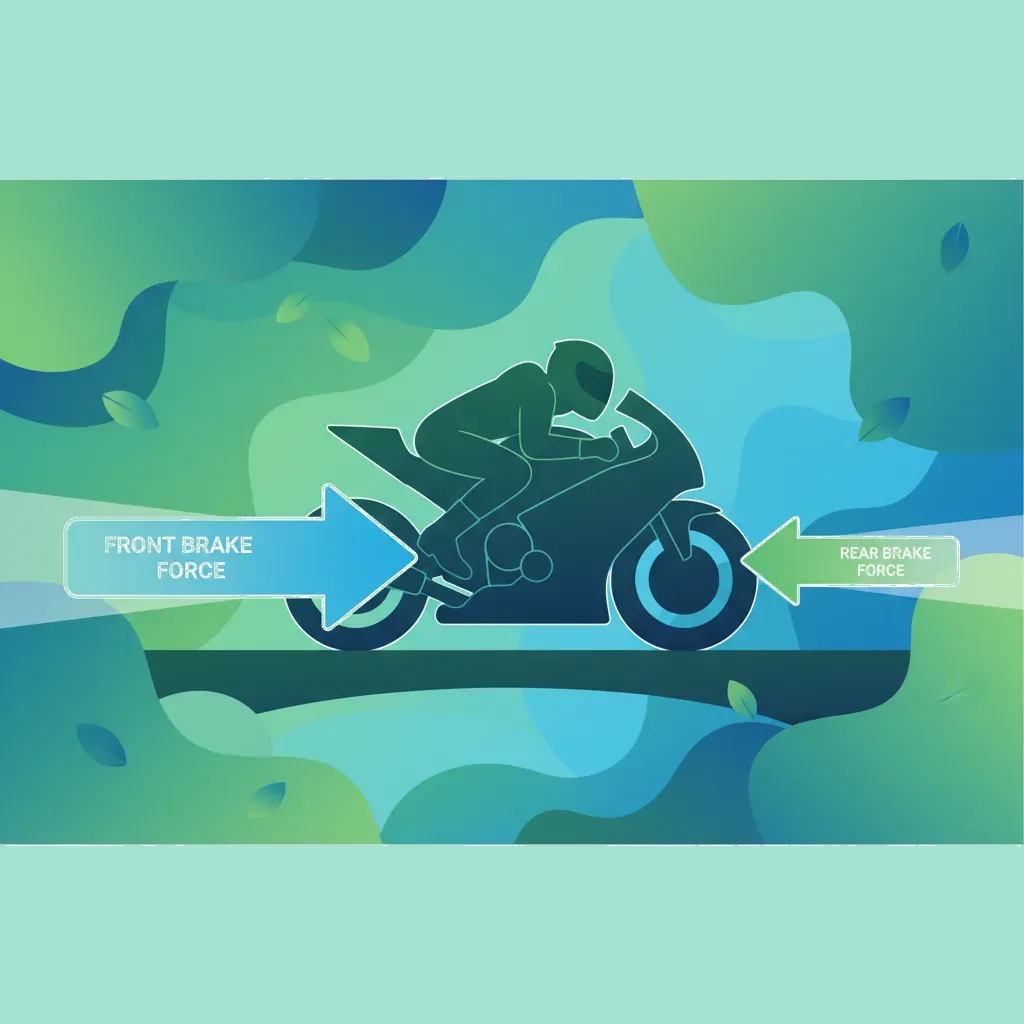
This lesson explores the physics behind brake torque distribution, explaining why the front brake provides greater stopping power due to weight shift during deceleration. It discusses the optimal brake bias for various speeds and surface conditions. Understanding these principles enables riders to modulate braking forces effectively.

This lesson explores the concept of the traction circle and how slip angle influences grip limits during a curve. Learners study the impact of road camber and surface friction on tyre performance. Strategies for maintaining apex and exit speeds while preventing traction loss are presented, including rider feedback cues.

This lesson outlines procedures for handling emergency situations and accidents. It covers emergency braking techniques, hazard avoidance strategies, and the DGT emergency protocol for accident reporting. Emphasis is placed on rider protective actions, post-crash first aid, roadside safety, and legal obligations after an incident.

This lesson details the protocol for performing an emergency stop, emphasizing full-force application of both front and rear brakes while maintaining optimal rider posture. It covers the importance of visual fixation and the role of ABS in stabilizing the bike under panic conditions. Learners also study the calculation of stopping distances based on speed and road conditions.

This lesson examines common road hazards such as oil slicks, loose gravel, and faded road markings. It teaches riders to identify visual cues indicating hazardous surfaces and understand how these conditions affect tyre grip. The content references DGT hazard standards, encouraging proactive incident anticipation and appropriate speed adjustment.

This lesson covers how environmental conditions such as rain, fog, and darkness affect driving safety. It instructs drivers on adjusting speed, using appropriate lighting, and increasing following distance to compensate for reduced visibility and traction. The lesson incorporates DGT safety recommendations for handling adverse weather to mitigate risk and maintain control.
Explore common mistakes and advanced strategies for braking on wet and slippery surfaces. Learn how to adapt to varying weather and road types, and understand the nuances of ABS on low-traction Spanish roads.
This lesson covers the principles of anti-lock braking systems (ABS), describing how wheel slip detection prevents wheel lock-up. It explains combined braking operation, where front and rear brakes are applied in a calibrated ratio to maintain stability. Learners also explore how ABS enhances safety on low-traction surfaces and review DGT braking regulations.
This lesson focuses on the specific techniques required for riding in rainy and slippery conditions. It explains how water on the road surface reduces tire grip and significantly increases braking distances. Learners will be taught to reduce speed, use controls smoothly and progressively, and be particularly cautious of painted lines and manhole covers, which become extremely slippery when wet.
This lesson examines the impact of rain, wind, and heat on motorcycle dynamics and rider comfort. It discusses wet road grip, hydroplaning risk, and appropriate speed adaptation to maintain traction. Wind gust compensation techniques are presented, along with methods for managing heat-related tyre pressure changes and rider cooling.
This lesson details the protocol for performing an emergency stop, emphasizing full-force application of both front and rear brakes while maintaining optimal rider posture. It covers the importance of visual fixation and the role of ABS in stabilizing the bike under panic conditions. Learners also study the calculation of stopping distances based on speed and road conditions.

This lesson presents advanced cornering scenarios common on Spanish roads, such as mountain hairpins and high-speed autovía exits. It outlines specific techniques for descent control, ascent maneuvers, and safely merging into traffic after cornering. Interaction with cyclists and emergency cornering strategies are also covered in accordance with DGT regulations.

This lesson details the technique of safely reducing speed while entering a corner, known as trail braking. It explains how the motorcycle’s lean angle affects front-wheel load and rear-wheel traction. The content aligns with DGT cornering safety standards to ensure riders execute controlled deceleration without compromising grip.
This lesson outlines procedures for handling emergency situations and accidents. It covers emergency braking techniques, hazard avoidance strategies, and the DGT emergency protocol for accident reporting. Emphasis is placed on rider protective actions, post-crash first aid, roadside safety, and legal obligations after an incident.

This lesson introduces anticipation techniques that improve a rider’s ability to predict potential hazards before they manifest. It covers scanning ahead, evaluating traffic patterns, and applying DGT risk assessment criteria. Emphasis is placed on developing a defensive riding mindset and maintaining safety margins to reduce accident likelihood.
This lesson examines common road hazards such as oil slicks, loose gravel, and faded road markings. It teaches riders to identify visual cues indicating hazardous surfaces and understand how these conditions affect tyre grip. The content references DGT hazard standards, encouraging proactive incident anticipation and appropriate speed adjustment.

This lesson teaches riders how to react effectively in a sudden, critical situation. It explains the technique for applying maximum braking force without locking the wheels, ensuring the shortest possible stopping distance while maintaining stability. The content also covers how to perform a swift and controlled swerve to avoid an obstacle when stopping is not possible, emphasizing the importance of looking where you want to go.
Find clear answers to common questions learners have about Braking on Wet and Slippery Surfaces. Learn how the lesson is structured, which driving theory objectives it supports, and how it fits into the overall learning path of units and curriculum progression in Spain. These explanations help you understand key concepts, lesson flow, and exam focused study goals.
Stopping distances can increase significantly on wet surfaces, often by 50% or more. This is due to reduced friction between the tires and the road. The Spanish DGT theory exam often tests your awareness of this increased distance, so always anticipate needing more space to stop safely.
Hydroplaning occurs when a layer of water builds up between your tires and the road surface, causing a loss of traction. To reduce the risk when braking, maintain good tire tread depth, reduce your speed before braking, and brake progressively rather than sharply. Avoid sudden changes in speed or direction.
Anti-lock Braking System (ABS) prevents wheel lock-up by rapidly pulsing the brakes. On wet or slippery surfaces, this is crucial for maintaining steering control and preventing skids. While ABS is a significant safety aid, it doesn't eliminate the risk entirely, and you still need to brake more gently and with greater distance.
It's generally advisable to use both brakes but favour the front brake slightly more, as it provides the majority of stopping power. However, on very slippery surfaces, excessive front brake can lead to a front-wheel lock-up or loss of control. Apply both brakes progressively and smoothly, being mindful of the reduced grip.
Tire tread is essential for channeling water away from the contact patch between the tire and the road. Adequate tread depth ensures that water can be displaced effectively, maintaining better grip. Worn tires with shallow tread significantly increase the risk of hydroplaning and drastically reduce braking effectiveness, a key point in DGT theory exam scenarios.
Use our powerful search functionality to pinpoint specific Spanish DGT driving theory practice sets. Filter by road sign categories, traffic law topics, or question difficulty to build custom study sessions and reinforce your knowledge precisely where it matters for your official exam.