
Welcome to the final lesson in Unit 6, focusing on 'Advanced Cornering Scenarios in Spain'. Building on your understanding of body positioning and counter-steering, this lesson tackles the specific challenges of Spanish roads, preparing you for complex situations tested in the DGT motorcycle theory exam.

Lesson content overview
Mastering advanced cornering scenarios is fundamental for safe and proficient motorcycle riding, especially on the diverse and often challenging terrain found across Spain. This lesson, part of your Spanish Motorcycle Theory Exam: A, A1, A2 Licence Prep Course, delves into complex turning situations, integrating vehicle dynamics, DGT (Dirección General de Tráfico) traffic law, and crucial rider perception skills. Understanding these techniques is not just about passing your A, A1, or A2 licence theory exam; it is about developing the practical foresight and control necessary to navigate Spanish roads confidently and safely, from winding mountain passes to high-speed autovía exits.
Effective cornering involves more than just leaning the motorcycle; it demands precise speed control, optimal line selection, and anticipatory decision-making to prevent loss of traction, avoid collisions, and maintain stability. This lesson builds upon foundational cornering principles, such as body positioning, counter-steering, and basic traction management, to prepare you for real-world complexities.
Advanced cornering requires a refined understanding and application of several core principles to ensure safety and stability. These principles are interdependent, forming a holistic approach to managing complex turns.
The careful allocation of available tire grip among braking, acceleration, and cornering forces to prevent wheel slip and ensure stability.
Every tire has a finite amount of grip, often visualized as a "friction circle" or "traction circle." This represents the maximum combined force a tire can exert in any direction (forward, backward, or sideways) before it begins to slip. When cornering, a significant portion of the tire's grip is dedicated to lateral forces. Riders must modulate throttle and brake inputs to stay within this limit, preventing the tires from exceeding their grip capabilities. Exceeding this limit, particularly when combining heavy braking or acceleration with significant lean angles, can lead to a loss of control.
The process of determining and achieving the ideal velocity before initiating a turn.
Controlling your entry speed is paramount for safe cornering. The goal is to enter the curve at a speed that allows for a smooth, stable trajectory without requiring abrupt braking or excessive steering input mid-corner. Proper entry speed reduces the need for emergency corrections, maintains motorcycle stability, and ensures the available traction is primarily used for steering. This requires early anticipation of the curve's radius, gradient, and road conditions, along with skilled use of both engine braking and conventional braking systems.
Choosing the most advantageous path through a corner, typically following an outside-inside-outside trajectory for most bends.
The "line" refers to the specific path a rider chooses through a turn. For most corners, the optimal line for motorcycles involves entering wide (outside), approaching the tightest part of the curve (the apex) from the inside, and then exiting wide (outside). This "outside-inside-outside" trajectory maximizes the cornering radius, minimizing the required lean angle and steering input, which enhances stability and allows for a smoother, faster exit. Strategic line selection also improves visibility through the bend, allowing riders to spot potential hazards earlier.
The coordinated technique where the rider leans their body into the turn more than the motorcycle, reducing the bike's necessary lean angle.
By actively shifting their body weight into a turn, riders can reduce the amount the motorcycle itself needs to lean to achieve a desired cornering radius. This technique improves the tire's contact patch with the road, as the motorcycle remains more upright, reducing side-force stresses on the tires. Proper body positioning enhances stability, increases ground clearance, and offers a greater margin of safety, particularly in tighter turns or when unexpected corrections are needed.
The process of safely re-establishing lane position after completing a turn or exiting a ramp, while considering surrounding traffic flow and right-of-way rules.
Merging smoothly after exiting a corner, especially from an exit ramp onto a main carriageway, is a critical skill. It requires careful assessment of traffic speed and distances, coupled with clear signaling and checking blind spots. The objective is to match the speed of the traffic you intend to join and integrate seamlessly, adhering to DGT regulations regarding lane changes and priority.
Techniques used for rapid and controlled changes in direction when faced with unexpected obstacles or hazards in a turn.
Despite the best planning, unforeseen obstacles can emerge. Emergency cornering involves precise techniques to facilitate a rapid direction change while maintaining control. This might include a combination of increased counter-steering, a slight reduction in speed using gentle braking, and a focus on maintaining traction within the friction circle to avoid lock-up. The ability to react instinctively and effectively can prevent serious accidents.
Specific protocols and awareness when sharing road space, particularly on corners, with vulnerable road users such as cyclists.
Spanish roads, especially in rural and mountain areas, are frequently shared with cyclists. When encountering cyclists on corners, specific DGT regulations and safety protocols apply. These mandate increased lateral clearance when overtaking, speed reduction, and anticipatory signaling to protect vulnerable road users and avoid dangerous situations.
Spanish roads present distinct challenges for motorcyclists, particularly in mountainous regions and at junctions with high-speed traffic flows. This section details specific advanced cornering scenarios you will encounter.
Mountain hairpin turns are extremely tight, often 180-degree bends, frequently encountered on steep, winding roads in Spain's numerous mountain ranges. They are characterised by limited sight distance, significant gradients, and reduced road width.
When ascending a mountain, uphill hairpins require precise throttle control to maintain momentum without stalling or losing traction. As you approach, reduce speed, downshift to a low gear (typically second or even first, depending on the gradient and tightness), and use a wide entry line. Smoothly apply throttle through the apex and exit, allowing the motorcycle to accelerate out of the turn. This technique leverages the engine's power band for effective climbing.
Descending hairpins demand a strong emphasis on engine braking and careful traction control. DGT Article 141-4 specifically addresses speed limits on steep descents, often mandating the use of low gears to control speed. Before entering, downshift proactively to engage engine braking. Use the front brake gently and progressively to further reduce speed before leaning into the turn. Over-reliance on continuous braking can lead to brake fade, especially on long descents, compromising stopping power. Maintain a wide entry, use minimal steering input through the turn, and gradually release the brakes as you begin to accelerate out.
On downhill hairpins, avoid "dragging" your brakes continuously. Instead, apply firm, controlled braking before the turn, then release or feather them as you lean. This reserves brake capacity and reduces the risk of fade.
Common Mistakes in Hairpins:
Autovía exits in Spain are typically high-speed off-ramps that transition from a dual carriageway to a slower-speed road. These ramps often feature a decreasing radius curve, meaning the turn gets progressively tighter as you proceed. Misjudging the entry speed is a common cause of incidents.
Whether the exit is flat or features a vertical incline/decline, the principle of early speed reduction is critical. DGT regulations for autovías typically set a maximum speed of 100 km/h for motorcycles, but this must be significantly reduced well before the exit sign. You should aim to be at a safe speed (often 50 km/h or less, unless otherwise posted) before you even begin to lean into the ramp.
Use the deceleration lane to gradually reduce speed, ensuring you are in the appropriate gear before initiating the turn. Gentle, progressive braking should occur while the motorcycle is still upright or only slightly leaned. As the curve tightens, maintain a consistent throttle to stabilize the chassis and gently steer through the decreasing radius.
Common Mistakes on Autovía Exits:
Merging refers to the process of re-entering the main flow of traffic after completing a turn or exiting a ramp. This requires precise timing, speed matching, and strict adherence to DGT signaling rules.
A merging technique where the rider uses an acceleration lane to match the speed of the main traffic flow before gradually integrating into a gap.
A direct merge occurs when you immediately re-enter a lane after a corner without an extended acceleration lane. A staggered merge allows you to use an acceleration lane to match the speed of the main carriageway before finding a safe gap. Spanish regulations, like DGT Article 119-3, mandate signaling at least 200 metres before a lane change or merge when possible.
Assess Traffic: Scan ahead and use mirrors to gauge the speed and density of traffic in the target lane.
Signal Early: Activate your turn signal well in advance (DGT recommends at least 200m if applicable) to inform other drivers of your intentions.
Match Speed: Use the acceleration lane to match the speed of the main traffic flow. Do not merge at a significantly lower speed.
Check Blind Spot: Perform a head check over your shoulder to verify no vehicles are in your blind spot.
Merge Smoothly: Once a safe gap exists, steer gently into the target lane. Avoid abrupt movements that could force other drivers to brake.
Common Merging Mistakes:
Sharing the road with cyclists, especially on corners, demands heightened awareness and specific safety protocols under DGT regulations. Cyclists' slower speeds and smaller profiles can make them difficult to spot and assess, particularly when you are negotiating a turn.
DGT Article 79-2 specifies a minimum lateral clearance when overtaking vulnerable road users. While generally 1.5 metres, this distance increases to 2 metres on curves where visibility is limited, or when the cyclist is travelling at a low speed. It is crucial to respect this space to prevent forcing cyclists into traffic or off the road.
When approaching a curve with a cyclist:
Common Mistakes with Cyclists on Corners:
Despite best efforts, unexpected obstacles or hazards can appear mid-corner, requiring immediate and decisive action to avoid a collision while maintaining control. These situations demand rapid decision-making and precise motorcycle control.
If an unexpected obstacle appears mid-corner, your primary goal is to change direction quickly while preserving traction.
Identify Obstacle: Spot the hazard immediately.
Target Avoidance Path: Focus your vision on the clear escape route, not the obstacle itself.
Apply Front Brake Gently: A brief, controlled application of the front brake can help slow the motorcycle and transfer weight to the front tire, enhancing steering response. Avoid sudden, harsh braking, especially with the rear brake, as this can cause lock-up while leaned.
Increase Counter-Steering: Sharply push the handlebar in the direction you want to turn (e.g., push left to turn left). This will rapidly increase your lean angle and tighten your turn radius.
Maintain Stability: Once past the obstacle, gradually reduce your lean and return to your intended line.
Avoid sudden, heavy braking, especially with the rear brake, while heavily leaned over. This can easily lead to a skid and loss of control, as it uses up too much of the tire's limited traction for longitudinal forces.
Common Mistakes in Emergency Cornering:
Adherence to DGT regulations is not only a legal requirement but a fundamental aspect of safe riding. Several articles of the Reglamento General de Circulación (RGC) are particularly pertinent to advanced cornering scenarios.
Awareness of frequent errors can significantly improve your safety margins. Many advanced cornering incidents stem from a few predictable mistakes:
Safe advanced cornering is highly dependent on adapting your technique to varying conditions.
Understanding the underlying physics and human factors enhances your ability to ride safely.
Mastering advanced cornering scenarios on Spanish roads is a journey that integrates theory, practical skills, and continuous adaptation. From the tight confines of mountain hairpins to the high-speed transitions of autovía exits, the principles of traction management, entry speed control, and line selection are your constant companions. Applying DGT regulations, especially concerning vulnerable users and emergency maneuvers, is crucial. By understanding the physics, anticipating hazards, and adjusting to conditional variations, you equip yourself with the knowledge and confidence to navigate Spain's diverse riding environments safely and skillfully, laying a strong foundation for your A, A1, or A2 licence and a lifetime of safe riding.
This lesson covers advanced cornering techniques tailored for Spanish roads, including mountain hairpins, high-speed autovía exits, and cyclist interactions, aligned with DGT regulations. Key principles include traction management via the friction circle concept, optimal line selection using the outside-inside-outside trajectory, and proper entry speed control before initiating turns. Learners should understand that most braking must occur while the motorcycle is upright, that engine braking is essential on downhill descents, and that cyclist clearance increases to 2 metres on curves. Emergency cornering strategies emphasize counter-steering with gentle braking while directing vision toward the escape path rather than the obstacle. These techniques prepare riders for both the DGT A, A1, A2 theory exam and real-world Spanish driving conditions.
A short set of high-value points that capture the most important learning from this lesson.
The traction circle concept shows that tires have limited grip shared between braking, acceleration, and cornering forces, requiring careful throttle and brake modulation to stay within safe limits.
For most corners, the optimal line follows an outside-inside-outside trajectory that maximizes the cornering radius and reduces necessary lean angle for greater stability.
Mountain hairpins demand specific techniques: uphill requires smooth throttle and low gears, while downhill mandates early engine braking and minimal continuous brake use to prevent fade.
When overtaking cyclists on curves in Spain, lateral clearance must increase to at least 2 metres, not the standard 1.5 metres, due to reduced visibility.
Emergency cornering requires looking toward your escape path, not the obstacle, combined with gentle front braking and increased counter-steering to change direction while preserving traction.
Explore all units and lessons included in this driving theory course.
DGT Article 141-4 requires low gear use and speed reduction on steep descents to control speed through engine braking rather than continuous brake application.
Signaling for lane changes or merges must occur at least 200 metres in advance per DGT Article 119-3 whenever conditions permit.
Most braking should be completed before entering a turn; braking while leaned significantly reduces available traction and risks front-wheel washout.
Entry speed for autovía exits must be reduced well before the ramp, typically to 50 km/h or less, to handle the decreasing radius curve safely.
Strong weather conditions or heavy loads shrink the effective traction circle, requiring slower entry speeds and smoother inputs throughout the corner.
Braking while already leaned into a curve, which uses up traction needed for steering and can cause wheel lock-up or front-wheel washout.
Entering mountain hairpins or autovía exits at excessive speed, forcing mid-corner corrections that stress the tires beyond their grip limits.
Failing to signal before merging or exiting, depriving other drivers of critical information about your intended path.
Cutting too close when overtaking cyclists on curves by not maintaining the required 2-metre lateral clearance.
Target fixation on obstacles during emergency cornering, causing the motorcycle to drift toward the hazard instead of the intended escape route.
Lesson content overview
A short set of high-value points that capture the most important learning from this lesson.
The traction circle concept shows that tires have limited grip shared between braking, acceleration, and cornering forces, requiring careful throttle and brake modulation to stay within safe limits.
For most corners, the optimal line follows an outside-inside-outside trajectory that maximizes the cornering radius and reduces necessary lean angle for greater stability.
Mountain hairpins demand specific techniques: uphill requires smooth throttle and low gears, while downhill mandates early engine braking and minimal continuous brake use to prevent fade.
When overtaking cyclists on curves in Spain, lateral clearance must increase to at least 2 metres, not the standard 1.5 metres, due to reduced visibility.
Emergency cornering requires looking toward your escape path, not the obstacle, combined with gentle front braking and increased counter-steering to change direction while preserving traction.
Explore all units and lessons included in this driving theory course.
DGT Article 141-4 requires low gear use and speed reduction on steep descents to control speed through engine braking rather than continuous brake application.
Signaling for lane changes or merges must occur at least 200 metres in advance per DGT Article 119-3 whenever conditions permit.
Most braking should be completed before entering a turn; braking while leaned significantly reduces available traction and risks front-wheel washout.
Entry speed for autovía exits must be reduced well before the ramp, typically to 50 km/h or less, to handle the decreasing radius curve safely.
Strong weather conditions or heavy loads shrink the effective traction circle, requiring slower entry speeds and smoother inputs throughout the corner.
Braking while already leaned into a curve, which uses up traction needed for steering and can cause wheel lock-up or front-wheel washout.
Entering mountain hairpins or autovía exits at excessive speed, forcing mid-corner corrections that stress the tires beyond their grip limits.
Failing to signal before merging or exiting, depriving other drivers of critical information about your intended path.
Cutting too close when overtaking cyclists on curves by not maintaining the required 2-metre lateral clearance.
Target fixation on obstacles during emergency cornering, causing the motorcycle to drift toward the hazard instead of the intended escape route.
Explore search topics learners often look for when studying Advanced Cornering Scenarios in Spain. These topics reflect common questions about road rules, driving situations, safety guidance, and lesson level theory preparation for learners in Spain.
Browse additional driving theory lessons that cover connected traffic rules, road signs, and common driving situations related to this topic. Improve your understanding of how different rules interact across everyday traffic scenarios.
Master specific motorcycle cornering techniques for Spanish mountain hairpins and high-speed autovía exits. Understand DGT regulations for descent control, ascent maneuvers, and safe merging after curves.

This lesson details the technique of safely reducing speed while entering a corner, known as trail braking. It explains how the motorcycle’s lean angle affects front-wheel load and rear-wheel traction. The content aligns with DGT cornering safety standards to ensure riders execute controlled deceleration without compromising grip.

This lesson focuses on counter-steering at higher speeds, highlighting how pre-steer torque initiates a lean. It outlines the rider input timing required for effective torque steer and discusses how speed affects the front-wheel angle necessary for stable cornering. The content includes dynamic lean initiation techniques and DGT guidelines for fast turns.

This lesson examines the optimal body positioning during a turn, covering rider lean, hip shift, and foot placement to maintain balance. It explains how adjusting body posture improves mass distribution through the motorcycle. Different phases of the turn are described, with guidance on how posture should adapt at each stage.
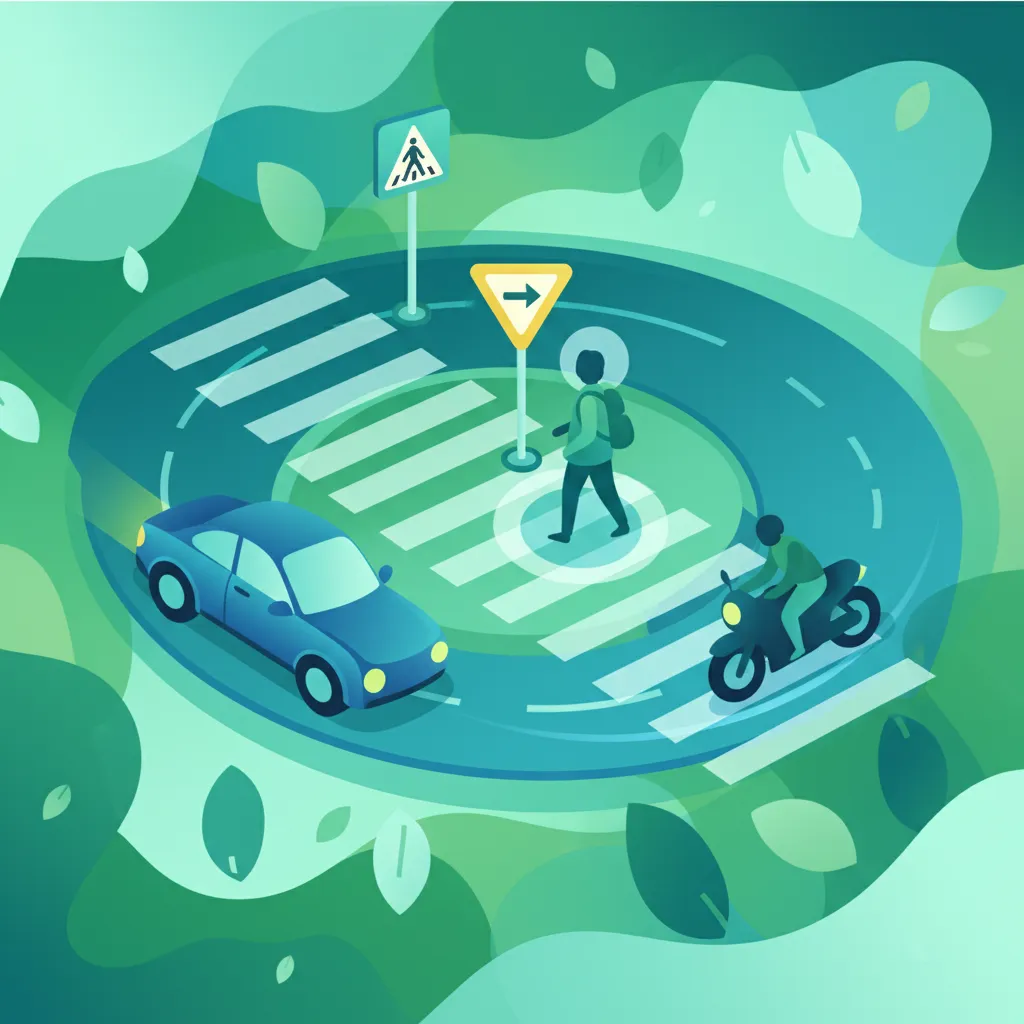
This lesson outlines the proper techniques for negotiating roundabouts and signal-controlled intersections in Spain. It explains priority rules at entry, lane selection based on the intended exit, and yielding to circulating traffic. The content also covers compliance with traffic signals and DGT regulations, including handling cyclist crossings.

This lesson explains the physics of counter-steering, where the rider initiates a turn by briefly steering the front wheel opposite to the desired direction. It details how body shift and rider lean influence the turn entry and exit phases. Understanding these principles enables riders to achieve precise directional control and maintain turning stability.

This lesson focuses on low-speed manoeuvres within congested urban traffic, detailing techniques for navigating tight corners and weaving through traffic. Learners analyze urban traffic flow, pedestrian zones, and cyclist interactions to anticipate hazards. The lesson also explains DGT regulations regarding slow-speed movement and lane positioning.

This lesson details overtaking rules specific to motorcyclists, covering safe zones, required visibility distance, and assessment of oncoming traffic. It emphasizes the importance of speed matching and correct timing of lane changes. The module references DGT regulations, including conditions for passing on the left or right in various environments.
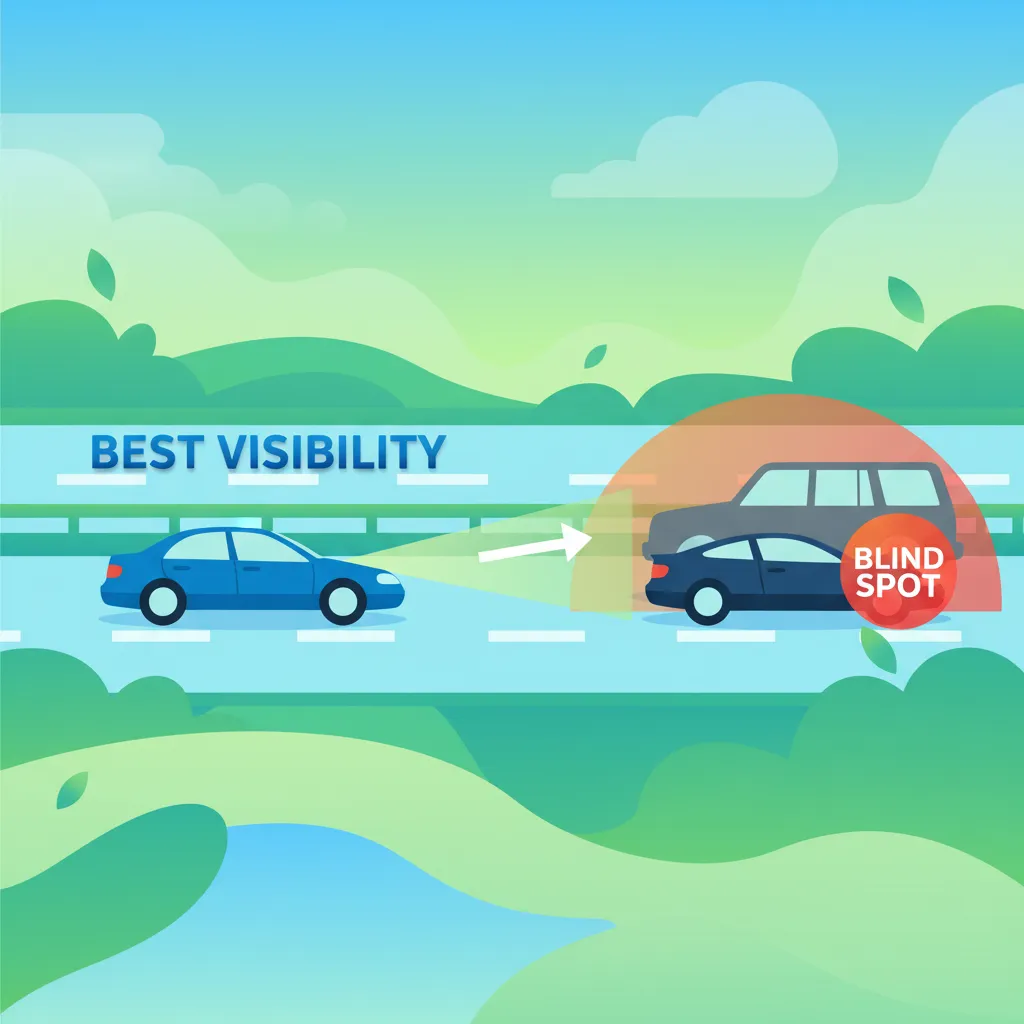
This lesson explores proper lane positioning, emphasizing strategic selection of traffic lanes for optimal visibility. It explains the importance of rider line of sight and peripheral vision in maintaining situational awareness. The content also covers legal aspects of lane splitting and correct usage of road shoulders, abiding by DGT regulations.

This lesson clarifies the primary rule for roundabouts: all vehicles entering must yield to traffic already on the circular roadway. It explains how to approach a roundabout, select the appropriate lane based on the intended exit, and merge safely into the flow of traffic. Proper signaling before exiting is also covered, ensuring other drivers can anticipate the rider's movements for a smooth and safe negotiation of the junction.

This lesson covers the essential techniques for perpendicular parking (reversing into a bay) and executing a three-point turn. It details the approach, turning points, and use of mirrors and observation to ensure proper vehicle positioning. Learners will understand how to assess the required space and comply with DGT regulations for these common maneuvers.
Learn to identify and avoid common errors in advanced motorcycle cornering scenarios on Spanish roads, including handling unexpected obstacles and emergency maneuvers according to DGT guidelines.

This lesson outlines procedures for handling emergency situations and accidents. It covers emergency braking techniques, hazard avoidance strategies, and the DGT emergency protocol for accident reporting. Emphasis is placed on rider protective actions, post-crash first aid, roadside safety, and legal obligations after an incident.
This lesson details the technique of safely reducing speed while entering a corner, known as trail braking. It explains how the motorcycle’s lean angle affects front-wheel load and rear-wheel traction. The content aligns with DGT cornering safety standards to ensure riders execute controlled deceleration without compromising grip.

This lesson introduces anticipation techniques that improve a rider’s ability to predict potential hazards before they manifest. It covers scanning ahead, evaluating traffic patterns, and applying DGT risk assessment criteria. Emphasis is placed on developing a defensive riding mindset and maintaining safety margins to reduce accident likelihood.
This lesson identifies frequent beginner errors such as over-application of throttle, misuse of the clutch, and improper braking timing. It analyzes the underlying causes of these mistakes and offers corrective techniques to develop safe riding habits. By referencing DGT exam examples, learners gain insight into how to avoid these common pitfalls.

This lesson teaches riders how to react effectively in a sudden, critical situation. It explains the technique for applying maximum braking force without locking the wheels, ensuring the shortest possible stopping distance while maintaining stability. The content also covers how to perform a swift and controlled swerve to avoid an obstacle when stopping is not possible, emphasizing the importance of looking where you want to go.

This lesson focuses on defensive maneuvers in mixed traffic environments where various vehicles share the road. It outlines lane discipline, appropriate overtaking safety measures, and strategies for maintaining a safety corridor. The content incorporates DGT defensive guidelines, teaching riders to manage space and anticipate unpredictable driver behavior.
This lesson focuses on counter-steering at higher speeds, highlighting how pre-steer torque initiates a lean. It outlines the rider input timing required for effective torque steer and discusses how speed affects the front-wheel angle necessary for stable cornering. The content includes dynamic lean initiation techniques and DGT guidelines for fast turns.
This lesson outlines the proper techniques for negotiating roundabouts and signal-controlled intersections in Spain. It explains priority rules at entry, lane selection based on the intended exit, and yielding to circulating traffic. The content also covers compliance with traffic signals and DGT regulations, including handling cyclist crossings.

This lesson details the protocol for performing an emergency stop, emphasizing full-force application of both front and rear brakes while maintaining optimal rider posture. It covers the importance of visual fixation and the role of ABS in stabilizing the bike under panic conditions. Learners also study the calculation of stopping distances based on speed and road conditions.
This lesson examines the optimal body positioning during a turn, covering rider lean, hip shift, and foot placement to maintain balance. It explains how adjusting body posture improves mass distribution through the motorcycle. Different phases of the turn are described, with guidance on how posture should adapt at each stage.
Find clear answers to common questions learners have about Advanced Cornering Scenarios in Spain. Learn how the lesson is structured, which driving theory objectives it supports, and how it fits into the overall learning path of units and curriculum progression in Spain. These explanations help you understand key concepts, lesson flow, and exam focused study goals.
Spanish mountain roads often feature tight hairpins, steep gradients (ascents and descents), and potentially uneven surfaces. This requires precise throttle control, effective use of both brakes for speed management, and advanced counter-steering to maintain stability and avoid skids. Visibility can also be limited, making anticipation crucial.
After exiting a high-speed corner onto a Spanish autovía or autopista, ensure you have fully straightened your motorcycle and are at a safe speed relative to traffic. Check your mirrors and blind spots thoroughly before indicating and smoothly merging into the appropriate lane, maintaining a safe distance from other vehicles.
On descents, gravity increases your speed. Use a combination of engine braking (downshifting) and gentle, consistent pressure on both front and rear brakes to control your speed before and during the corner. Avoid abrupt braking, especially on loose surfaces, and be aware of potential overheating of the brakes on very long descents.
When cornering, you must give ample space to cyclists. This means not overtaking in confined spaces where you cannot maintain the legally required safety distance (1.5 meters if overtaking). In narrow Spanish streets or on winding roads, you may need to reduce speed significantly or wait until you have a clear, safe opportunity to pass after the corner.
Emergency cornering requires advanced skills. Practicing in a controlled environment, such as a closed circuit or a motorcycle safety course, is highly recommended. Focus on smooth, deliberate inputs and understanding your motorcycle's limits. For the theory exam, focus on recognizing scenarios requiring such maneuvers and the correct sequence of actions.
Use our powerful search functionality to pinpoint specific Spanish DGT driving theory practice sets. Filter by road sign categories, traffic law topics, or question difficulty to build custom study sessions and reinforce your knowledge precisely where it matters for your official exam.