
Welcome to the 'Curve Safety and Traction Management' lesson, part of the 'Cornering & Advanced Control' unit for your Spanish A, A1, A2 licence theory exam. Understanding how your motorcycle behaves in a turn is crucial for safe riding. This lesson will equip you with the knowledge to maintain grip and control, ensuring you can confidently navigate curves on any Spanish road.

Lesson content overview
Mastering the art of cornering safely is fundamental for every motorcycle rider, whether you are preparing for your Spanish Motorcycle Theory Exam: A, A1, A2 Licence Prep Course or simply aiming to enhance your riding skills. This lesson dives into the critical physics and practical techniques that govern tyre grip and control during a curve. Understanding concepts such as the traction circle, slip angle, and the influence of road conditions like camber and surface friction will empower you to maintain optimal speed, prevent skidding, and navigate bends with confidence and precision.
Safe cornering isn't just about speed; it's about managing the forces acting on your motorcycle within the limits of its tyres. By learning to balance these forces, you significantly reduce the risk of losing control, ensuring a smoother, safer, and more enjoyable ride.
The foundation of safe cornering lies in comprehending the physical limits of your motorcycle's tyres. The traction circle, sometimes called the "friction circle" or "force envelope," is a powerful conceptual tool that helps visualise these limits.
Imagine a circle where the horizontal axis represents longitudinal forces (acceleration or braking) and the vertical axis represents lateral forces (cornering). Any point within this circle represents a combination of these forces that your tyre can safely handle. The edge of the circle signifies the absolute maximum combined grip available from the tyre.
The critical takeaway is that a tyre has a finite amount of grip. If you demand too much from it in one direction (e.g., heavy braking), there is less grip available for other directions (e.g., cornering). Attempting to use forces beyond the radius of this circle will inevitably lead to tyre slip, resulting in a skid or loss of control. This means that braking aggressively while leaned into a high-speed turn is extremely risky because you are asking the tyres to provide both significant lateral and longitudinal forces simultaneously, potentially exceeding their combined grip limits.
While the traction circle defines the total available grip, the slip angle explains how that grip is generated and managed during a turn.
When a motorcycle turns, the tyres don't simply roll in the direction they are pointed. Instead, the sidewalls and tread slightly deform, creating a small angle between the wheel's orientation and the bike's actual path. This deformation, the slip angle, is what generates the lateral force required for cornering.
Understanding slip angle helps you appreciate the fine line between optimal grip and a slide. Smooth, progressive inputs to steering and throttle are key to managing slip angle effectively and staying within the tyre's limits.
The road itself plays a significant role in how much grip your tyres can achieve. Two crucial factors are road camber and the friction coefficient of the surface.
Camber refers to the angle of the road surface relative to the horizontal. It significantly influences the normal force (the vertical force pressing the tyre onto the road) and, consequently, the available grip.
Riders must adjust their speed and lean angle to account for camber. A curve with positive camber will offer less grip on the inside, requiring a smoother approach and potentially less lean or speed than a flat or negatively cambered curve.
The friction coefficient (μ) is a fundamental property determining the maximum achievable grip between your tyres and the road surface.
A higher friction coefficient means more grip, while a lower coefficient means less grip. The value of μ varies dramatically with:
Practical Impact: A lower friction coefficient effectively shrinks the size of your traction circle, meaning you have less combined grip available for braking, accelerating, and cornering.
For instance, on a wet road, your braking distance may increase by 30-40% compared to dry conditions. Your safe cornering speed will also be substantially lower. Always assess the road surface condition and adjust your riding accordingly.
Navigating a curve efficiently and safely involves more than just understanding grip limits; it requires a strategic approach to your line through the bend, specifically through apex management and exit speed control.
The apex is the geometric point on the inside of a curve where your motorcycle's trajectory comes closest to the inner edge of the road. Selecting the correct apex is crucial for setting yourself up for a smooth, stable, and safe exit.
Proper apex selection allows you to "straighten out" the curve as much as possible, effectively increasing its radius, which in turn reduces the centripetal force required to stay on your line.
Once you pass the apex, your focus shifts to exit speed control, which is about smoothly transitioning from cornering forces to acceleration forces.
The goal is to align the motorcycle with the exit path of the curve, standing it up gradually as you increase the throttle. This technique ensures that the tyre forces remain within the traction circle, allowing for a smooth, controlled acceleration out of the bend. This is particularly important for motorcycles, as aggressive throttle application can easily overpower the rear tyre's grip, especially on uneven or low-friction surfaces.
Adhering to local traffic laws is paramount for safety and for successfully passing your Spanish A, A1, or A2 motorcycle licence exam. Several regulations directly pertain to navigating curves.
Statement: Drivers must adjust their speed to safely negotiate curves, always respecting posted speed limits and prevailing road conditions. Applicability: This rule applies to all vehicles and all curves, urban or inter-urban, throughout Spain. Rationale: Excessive speed is the primary cause of loss of control on curves. The centripetal force required to turn increases exponentially with speed ((F_c = \frac)). Exceeding the tyre's lateral grip will lead to a skid. Example (Correct): Approaching a blind curve posted at 30 km/h, a rider reduces speed well in advance, completing braking before entering the curve, and maintains a safe speed of 25-30 km/h throughout. Example (Incorrect): A rider attempts to maintain 60 km/h through the same 30 km/h curve, necessitating an extreme lean angle that exceeds tyre grip, resulting in a loss of control.
Statement: All significant braking must be completed before entering the corner. Braking while leaned into a turn is generally prohibited, with a limited exception for vehicles equipped with advanced ABS systems. Applicability: This rule is crucial for all motorcycle types (A, A1, A2) due to the inherent instability of braking while leaned. Rationale: Braking while leaned significantly reduces the tyre's contact patch and its ability to generate lateral grip, increasing the risk of wheel lock, front-end wash-out, or a slide. Even with ABS, the rider should aim to minimise braking while leaned. Example (Correct): Before entering a curve, the rider smoothly applies front and/or rear brakes to achieve the desired entry speed, then releases the brakes before initiating the lean and turn. Example (Incorrect): A rider realises they are too fast mid-corner and applies the front brake while leaned, causing the front wheel to lock or slip, leading to an immediate fall.
Statement: Motorcyclists must remain within their designated lane markings while negotiating curves and are strictly prohibited from using the shoulder for overtaking or to "cut" the corner. Applicability: This applies to all urban and inter-urban roads in Spain. Rationale: Riding outside your lane, especially on shoulders or by crossing solid lines, is extremely dangerous. It creates a collision risk with oncoming traffic, vehicles exiting the road, or vulnerable road users like pedestrians and cyclists. It also violates the principle of predictable riding. Example (Correct): The rider maintains a consistent line within their lane, respecting the road markings throughout the curve. Example (Incorrect): A rider drifts into the opposing lane to widen their line or uses the shoulder to overtake a slower vehicle within a curve, risking a head-on collision or hitting an unforeseen obstacle.
Understanding the theory is one thing; applying it safely means identifying and correcting common mistakes.
Safe cornering isn't a one-size-fits-all skill. It demands constant adaptation to the environment and your motorcycle's current state.
On curves, always maintain a safe distance from vulnerable road users such as cyclists and pedestrians. Overtaking them on the inside of a curve, or where visibility is limited, is strictly prohibited and highly dangerous. Always assume they might make an unpredictable move.
To confidently and safely navigate curves, integrate these principles into your riding:
This lesson explains how the traction circle defines the finite grip available from your tyres, showing how combined lateral and longitudinal forces must stay within its boundary to avoid slipping. Slip angle describes how tyre deformation generates cornering force up to a peak point beyond which traction is lost. Road camber and surface friction significantly affect grip, with positive camber reducing inner-tyre grip and wet surfaces shrinking the effective traction circle. Effective cornering uses a late apex strategy followed by progressive throttle application, while Spanish traffic regulations mandate that all braking be completed before entering a curve. Adapting to weather conditions, road type, and vehicle load is essential for maintaining safety within tyre grip limits.
A short set of high-value points that capture the most important learning from this lesson.
Your tyres have a finite amount of grip represented by the traction circle; demanding too much combined cornering and braking force will cause a slide.
Slip angle is the difference between where your tyre points and where it's actually travelling; exceeding the peak slip angle causes rapid loss of traction.
Positive camber (road slopes toward the outside of the curve) reduces grip on the inside tyre, requiring lower speeds and smoother inputs.
A late apex strategy maximises visibility, reduces required lean angle, and allows earlier, smoother throttle application on exit.
In Spain, all significant braking must be completed before entering a curve; braking while leaned is prohibited except for vehicles with advanced ABS systems.
Explore all units and lessons included in this driving theory course.
Brake before the bend, not during it: complete braking while upright and in a straight line before initiating lean.
The friction coefficient (μ) drops dramatically on wet roads (0.5–0.7 vs 0.9–1.0 on dry asphalt), effectively shrinking your traction circle.
Late apex opens sightlines and reduces lean angle; early apex forces mid-corner corrections that risk exceeding tyre grip limits.
Progressive throttle after the apex smoothly transfers forces from lateral to longitudinal; abrupt throttle while leaned can spin the rear wheel.
Spanish law prohibits overtaking on the inside of a curve and using the shoulder as a travel lane.
Braking while leaned into a curve reduces the contact patch and lateral grip, risking front-wheel lock or a slide.
Taking an early apex without adjusting speed forces either sharp mid-corner lean increases or late braking while already leaned.
Applying full throttle immediately after the apex while still leaned over demands excessive longitudinal force, potentially exceeding traction limits.
Maintaining dry-road speeds on wet roads drastically reduces grip and extends braking distances by 30–40% or more.
Riding on the shoulder within a curve violates Spanish lane discipline rules and creates collision risks with vulnerable road users.
Lesson content overview
A short set of high-value points that capture the most important learning from this lesson.
Your tyres have a finite amount of grip represented by the traction circle; demanding too much combined cornering and braking force will cause a slide.
Slip angle is the difference between where your tyre points and where it's actually travelling; exceeding the peak slip angle causes rapid loss of traction.
Positive camber (road slopes toward the outside of the curve) reduces grip on the inside tyre, requiring lower speeds and smoother inputs.
A late apex strategy maximises visibility, reduces required lean angle, and allows earlier, smoother throttle application on exit.
In Spain, all significant braking must be completed before entering a curve; braking while leaned is prohibited except for vehicles with advanced ABS systems.
Explore all units and lessons included in this driving theory course.
Brake before the bend, not during it: complete braking while upright and in a straight line before initiating lean.
The friction coefficient (μ) drops dramatically on wet roads (0.5–0.7 vs 0.9–1.0 on dry asphalt), effectively shrinking your traction circle.
Late apex opens sightlines and reduces lean angle; early apex forces mid-corner corrections that risk exceeding tyre grip limits.
Progressive throttle after the apex smoothly transfers forces from lateral to longitudinal; abrupt throttle while leaned can spin the rear wheel.
Spanish law prohibits overtaking on the inside of a curve and using the shoulder as a travel lane.
Braking while leaned into a curve reduces the contact patch and lateral grip, risking front-wheel lock or a slide.
Taking an early apex without adjusting speed forces either sharp mid-corner lean increases or late braking while already leaned.
Applying full throttle immediately after the apex while still leaned over demands excessive longitudinal force, potentially exceeding traction limits.
Maintaining dry-road speeds on wet roads drastically reduces grip and extends braking distances by 30–40% or more.
Riding on the shoulder within a curve violates Spanish lane discipline rules and creates collision risks with vulnerable road users.
Explore search topics learners often look for when studying Curve Safety and Traction Management. These topics reflect common questions about road rules, driving situations, safety guidance, and lesson level theory preparation for learners in Spain.
Browse additional driving theory lessons that cover connected traffic rules, road signs, and common driving situations related to this topic. Improve your understanding of how different rules interact across everyday traffic scenarios.
Explore the advanced physics of motorcycle cornering, including detailed explanations of the traction circle, slip angle, and factors affecting tyre grip. Learn strategies for managing maximum grip limits and maintaining control in challenging curve situations.

This lesson details the technique of safely reducing speed while entering a corner, known as trail braking. It explains how the motorcycle’s lean angle affects front-wheel load and rear-wheel traction. The content aligns with DGT cornering safety standards to ensure riders execute controlled deceleration without compromising grip.

This lesson explains the physics of counter-steering, where the rider initiates a turn by briefly steering the front wheel opposite to the desired direction. It details how body shift and rider lean influence the turn entry and exit phases. Understanding these principles enables riders to achieve precise directional control and maintain turning stability.

This lesson focuses on adapting braking techniques for wet and slippery roads. Topics include hydroplaning risk, reduced tire friction, and how ABS assists in preventing wheel lock-up. Learners are taught to employ progressive braking, reduce speed, and assess tire tread depth to maintain adequate grip.

This lesson examines the optimal body positioning during a turn, covering rider lean, hip shift, and foot placement to maintain balance. It explains how adjusting body posture improves mass distribution through the motorcycle. Different phases of the turn are described, with guidance on how posture should adapt at each stage.

This lesson focuses on counter-steering at higher speeds, highlighting how pre-steer torque initiates a lean. It outlines the rider input timing required for effective torque steer and discusses how speed affects the front-wheel angle necessary for stable cornering. The content includes dynamic lean initiation techniques and DGT guidelines for fast turns.

This lesson presents advanced cornering scenarios common on Spanish roads, such as mountain hairpins and high-speed autovía exits. It outlines specific techniques for descent control, ascent maneuvers, and safely merging into traffic after cornering. Interaction with cyclists and emergency cornering strategies are also covered in accordance with DGT regulations.

This lesson explains the physical principles of balance and steering specific to two-wheeled vehicles. It details the concept of counter-steering, where a slight push on the handlebar initiates a lean for turning, and explains how it applies at different speeds. Proper body positioning and weight distribution are also covered as key components for maintaining stability and executing smooth, controlled turns in tight urban environments.
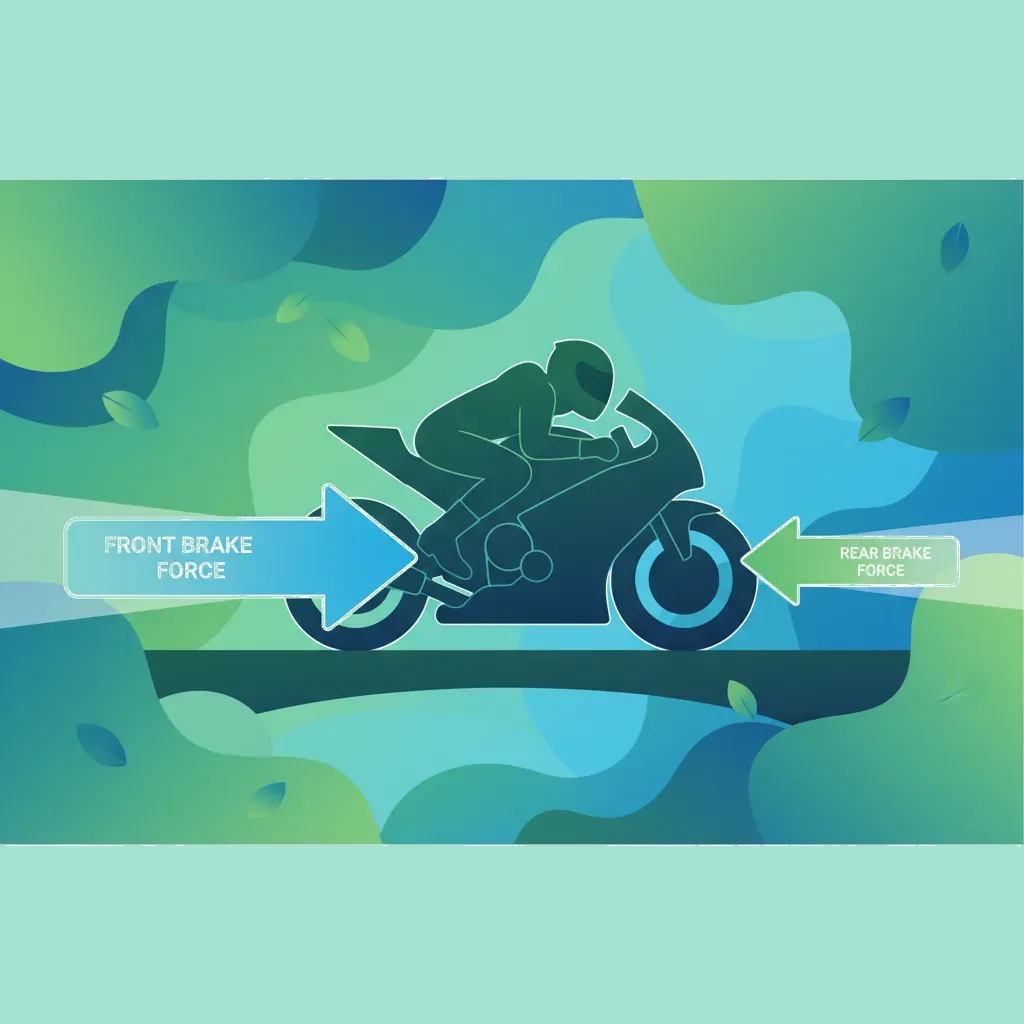
This lesson explores the physics behind brake torque distribution, explaining why the front brake provides greater stopping power due to weight shift during deceleration. It discusses the optimal brake bias for various speeds and surface conditions. Understanding these principles enables riders to modulate braking forces effectively.
This lesson covers the principles of anti-lock braking systems (ABS), describing how wheel slip detection prevents wheel lock-up. It explains combined braking operation, where front and rear brakes are applied in a calibrated ratio to maintain stability. Learners also explore how ABS enhances safety on low-traction surfaces and review DGT braking regulations.
Understand essential Spanish traffic regulations for safe cornering, including speed adjustments for road conditions like camber and friction. Learn how to apply DGT-approved techniques to manage curves effectively on various Spanish road types.
This lesson presents advanced cornering scenarios common on Spanish roads, such as mountain hairpins and high-speed autovía exits. It outlines specific techniques for descent control, ascent maneuvers, and safely merging into traffic after cornering. Interaction with cyclists and emergency cornering strategies are also covered in accordance with DGT regulations.
This lesson details the technique of safely reducing speed while entering a corner, known as trail braking. It explains how the motorcycle’s lean angle affects front-wheel load and rear-wheel traction. The content aligns with DGT cornering safety standards to ensure riders execute controlled deceleration without compromising grip.
This lesson focuses on adapting braking techniques for wet and slippery roads. Topics include hydroplaning risk, reduced tire friction, and how ABS assists in preventing wheel lock-up. Learners are taught to employ progressive braking, reduce speed, and assess tire tread depth to maintain adequate grip.
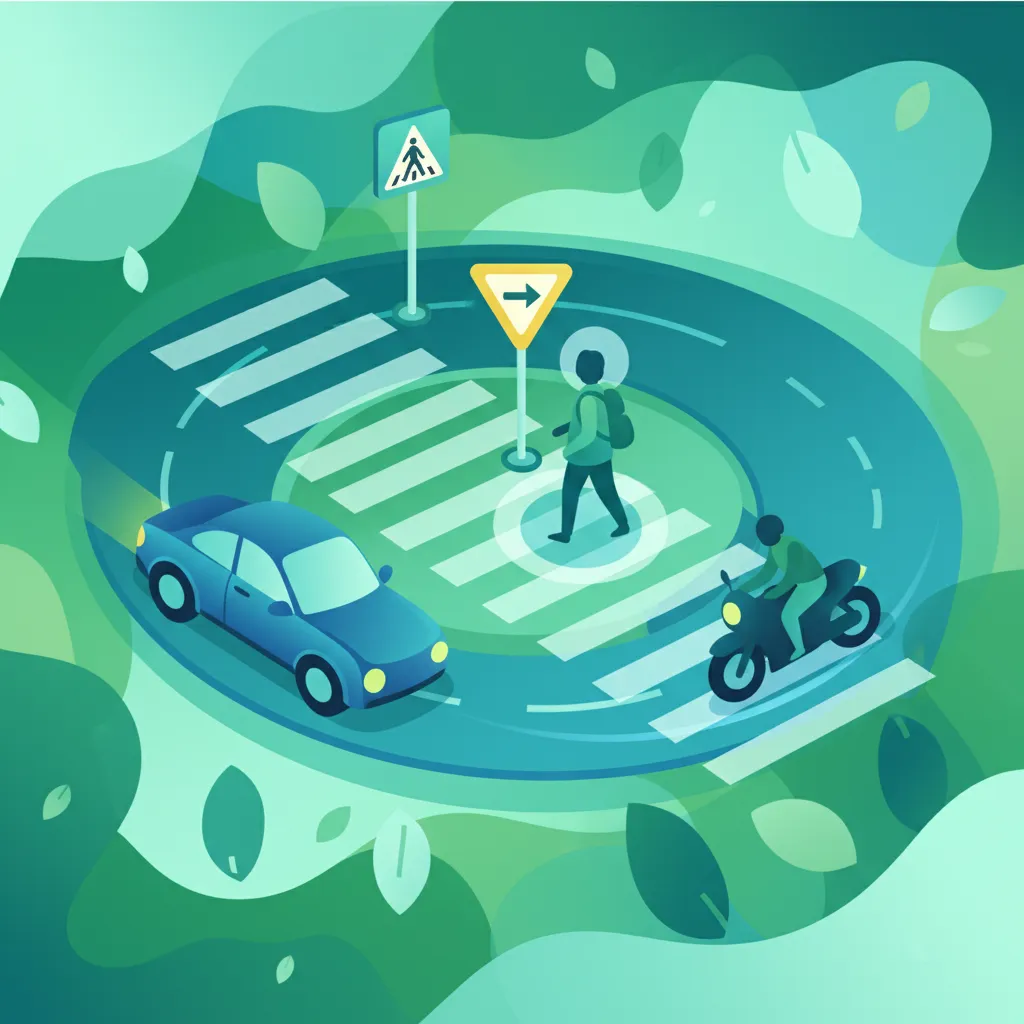
This lesson outlines the proper techniques for negotiating roundabouts and signal-controlled intersections in Spain. It explains priority rules at entry, lane selection based on the intended exit, and yielding to circulating traffic. The content also covers compliance with traffic signals and DGT regulations, including handling cyclist crossings.
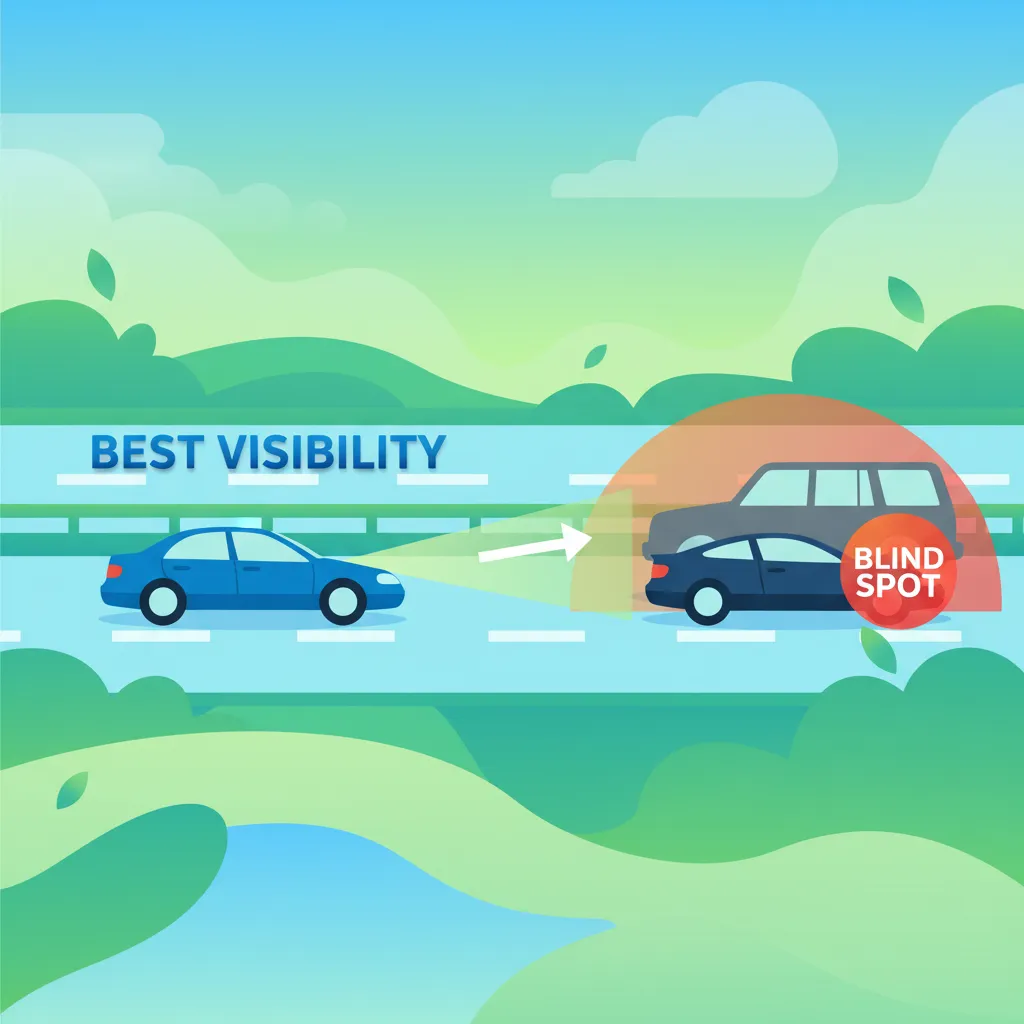
This lesson explores proper lane positioning, emphasizing strategic selection of traffic lanes for optimal visibility. It explains the importance of rider line of sight and peripheral vision in maintaining situational awareness. The content also covers legal aspects of lane splitting and correct usage of road shoulders, abiding by DGT regulations.
This lesson focuses on counter-steering at higher speeds, highlighting how pre-steer torque initiates a lean. It outlines the rider input timing required for effective torque steer and discusses how speed affects the front-wheel angle necessary for stable cornering. The content includes dynamic lean initiation techniques and DGT guidelines for fast turns.

This lesson focuses on low-speed manoeuvres within congested urban traffic, detailing techniques for navigating tight corners and weaving through traffic. Learners analyze urban traffic flow, pedestrian zones, and cyclist interactions to anticipate hazards. The lesson also explains DGT regulations regarding slow-speed movement and lane positioning.
This lesson examines the optimal body positioning during a turn, covering rider lean, hip shift, and foot placement to maintain balance. It explains how adjusting body posture improves mass distribution through the motorcycle. Different phases of the turn are described, with guidance on how posture should adapt at each stage.

This lesson focuses on defensive maneuvers in mixed traffic environments where various vehicles share the road. It outlines lane discipline, appropriate overtaking safety measures, and strategies for maintaining a safety corridor. The content incorporates DGT defensive guidelines, teaching riders to manage space and anticipate unpredictable driver behavior.

This lesson outlines procedures for handling emergency situations and accidents. It covers emergency braking techniques, hazard avoidance strategies, and the DGT emergency protocol for accident reporting. Emphasis is placed on rider protective actions, post-crash first aid, roadside safety, and legal obligations after an incident.
Find clear answers to common questions learners have about Curve Safety and Traction Management. Learn how the lesson is structured, which driving theory objectives it supports, and how it fits into the overall learning path of units and curriculum progression in Spain. These explanations help you understand key concepts, lesson flow, and exam focused study goals.
The traction circle represents the total grip a motorcycle tyre can generate. It illustrates that the tyre's grip can be used for accelerating, braking, or leaning into a corner. Applying forces in one direction (e.g., braking hard) reduces the available grip for other forces (e.g., leaning).
Different road surfaces offer varying levels of friction. Smooth, dry asphalt provides the most grip. Surfaces like wet roads, gravel, oil patches, or painted lines significantly reduce available traction, meaning you must reduce speed and lean angle to maintain grip and avoid skidding.
Slip angle is the small angle between the direction the wheel is pointing and the direction the motorcycle is actually travelling. Tyres need a small slip angle to generate cornering forces and grip. However, excessive slip angle indicates the tyre is starting to lose grip, which can lead to a slide.
To avoid losing traction, maintain a smooth throttle, brake before the corner rather than in it, avoid sudden movements, and ensure your lean angle is appropriate for the available traction. Be extra cautious on wet, oily, or gravelly surfaces and adjust your speed and lean angle accordingly, respecting Spanish road conditions.
Yes, road camber (the tilt of the road surface) can affect grip. A properly banked (crowned) road can help the motorcycle lean into the turn, potentially increasing stability. Conversely, a poorly cambered or flat road might require more effort from the tyre to generate the necessary lean angle for the turn.
Use our powerful search functionality to pinpoint specific Spanish DGT driving theory practice sets. Filter by road sign categories, traffic law topics, or question difficulty to build custom study sessions and reinforce your knowledge precisely where it matters for your official exam.