
This lesson focuses on the critical skills needed to safely operate your moped in rainy and slippery conditions, a common challenge on Spanish urban roads. Building on basic handling, you'll learn how reduced grip impacts braking and control. This is crucial for passing your AM licence theory exam and navigating adverse weather safely.

Lesson content overview
Riding a moped (Category AM) in wet weather or on slippery roads presents unique challenges that demand specific skills and awareness from the rider. Water on the road surface significantly alters the dynamics of your moped, reducing tire grip, extending braking distances, and increasing the risk of losing control. This lesson will equip you with the essential knowledge and techniques to navigate these conditions safely, ensuring compliance with Spanish traffic laws and enhancing your confidence on the road.
When rain falls, water accumulates on the road surface, creating a thin film between your moped's tires and the pavement. This film acts as a lubricant, drastically lowering the friction coefficient – the measure of grip your tires have on the road. A reduced friction coefficient means less traction, which is crucial for accelerating, braking, and steering.
The interaction between your tire and the road surface is fundamental to vehicle control. In dry conditions, the rubber of your tire directly contacts the asphalt, providing maximum friction. When water is present, the tire tread must work to displace this water. If the tire cannot clear the water quickly enough, a layer of water can build up beneath the tire, leading to what is known as micro-hydroplaning.
While full hydroplaning (where the tire completely loses contact with the road) is less common for mopeds due to their lighter weight and typically lower speeds, micro-hydroplaning can still occur. This phenomenon, even on a small scale, significantly diminishes the effective contact patch of the tire, making the moped feel "lighter" and less responsive. This loss of direct contact directly translates to reduced ability to grip, slow down, or change direction effectively.
Not all wet surfaces are equally slippery. Certain features on the road become exceptionally slick when wet, posing immediate hazards to moped riders. It is critical to identify and approach these areas with extreme caution:
Always assume that painted lines, metal covers, and other non-asphalt surfaces will be significantly more slippery in wet conditions. Reduce your speed and maintain a straight path when crossing them.
To compensate for reduced grip and maintain control, riders must consciously adjust their technique. These adjustments are vital for safe moped operation under adverse conditions, reducing the risk of accidents and ensuring compliance with traffic regulations.
One of the most critical adjustments in wet weather is reducing your speed. A lower friction coefficient means that your braking distance – the distance your moped travels from the moment you apply the brakes until it comes to a complete stop – increases substantially. For example, a moped that might stop in 9 metres on a dry road at 30 km/h could require 13 metres or more on a wet surface.
This extended stopping distance necessitates several changes in your riding habits:
The distance a vehicle travels from the moment the brakes are first applied until it comes to a complete stop. This distance is significantly increased on wet or slippery surfaces due to reduced tire-road friction.
Abrupt actions on a moped can easily lead to a loss of traction, especially in wet conditions. Therefore, all your control inputs – throttle, brakes, and steering – must be progressive and smooth.
Rain not only makes the road slippery but also severely reduces visibility for both you and other road users. It is a legal requirement in Spain to use your moped's dipped beams (luces de cruce) whenever visibility is reduced due to rain, even during daylight hours.
Turn on your dipped beams as soon as rain begins, regardless of how bright it is outside. This significantly increases your visibility to other drivers, making you much safer.
The weight carried by your moped (your own weight, plus any passengers or cargo) affects its handling and braking performance, especially in wet conditions. A heavier load increases the moped's inertia, meaning it requires more force to slow down or change direction.
Always ensure any cargo is securely fastened and distributed evenly to maintain balance. If you are carrying a heavy load, compensate by further reducing your speed and allowing even more braking distance than usual in wet conditions.
Compliance with Spanish traffic laws (Ley de Tráfico) is paramount when riding a moped in adverse weather. These regulations are designed to ensure the safety of all road users by mitigating the risks associated with reduced visibility and grip.
According to the Spanish Traffic Code (Reglamento General de Circulación), Article 50, it is mandatory to use your dipped beams (luces de cruce) whenever conditions of visibility are reduced, including during rain, fog, snowfall, or dust clouds. This applies even during daylight hours.
A low-intensity headlight that illuminates the road without dazzling oncoming drivers, legally required for mopeds in Spain during any condition that reduces visibility, such as rain.
Failing to use appropriate lighting in these conditions is a legal infraction and can result in a fine. More importantly, it drastically increases the risk of an accident because other road users may not see your moped.
While mopeds have a general maximum speed limit (45 km/h, though AM category vehicles are often designed for 30 km/h), Spanish law (Ley de Tráfico, Article 81) explicitly states that drivers must adapt their speed to the prevailing road, traffic, and weather conditions. This means that even if you are below the maximum speed limit, you could still be driving too fast for wet or slippery roads.
The law requires you to drive at a "reasonable and prudent speed" that allows you to control your vehicle at all times and stop within the limits of your visibility and reaction distance.
In rain, reducing your speed significantly below the legal maximum for your vehicle type is not just a recommendation, it is a legal obligation to ensure safety. This is crucial for maintaining control and being able to react to unexpected situations.
Spanish traffic law places a general duty of care on all drivers. This means you are responsible for ensuring your driving actions do not endanger yourself or others. In adverse weather conditions like rain, this duty is heightened. It encompasses:
Failing to adapt your driving to adverse weather can lead to penalties for reckless driving or driving without due care, even if no accident occurs.
The legal load limits for Category AM mopeds are established in the Regulations on Technical Characteristics of Vehicles (RTM). Exceeding these limits is an administrative infraction and can result in a fine. Beyond the legal aspect, overloading a moped, especially in wet conditions, severely compromises its safety. It strains the engine, wears tires faster, and most critically, extends braking distances and negatively impacts handling and stability. Always adhere to the manufacturer's and legal load specifications.
Understanding common pitfalls specific to wet road riding can prevent accidents and maintain your safety.
One of the most frequent causes of moped accidents in the rain is abrupt maneuvers. This includes:
Plan your movements well in advance, giving yourself ample time to brake, turn, or change lanes without needing sudden inputs.
Even after the rain stops, roads can remain hazardous for some time.
Continue to ride with caution, maintaining reduced speed and increased following distances, until the road surface is visibly dry and clear.
Let's consider how to apply these principles in real-world situations:
You are riding your moped in an urban area as a light drizzle begins. You approach a traffic light that turns red, with a car already stopped ahead.
Correct Action:
Reasoning: Dipped beams ensure visibility. Reduced speed and increased following distance compensate for extended braking distances. Progressive braking prevents wheel lock-up on the wet asphalt and painted lines.
You are on a residential street with several painted speed bumps and lane markings, and it starts to rain heavily.
Correct Action:
Reasoning: Heavy rain severely reduces grip; extremely low speed and smooth handling are vital over slick painted surfaces. Increased awareness of vulnerable road users is crucial in residential zones.
You are approaching a school zone where children might be present, and you spot a wet manhole cover directly in your path.
Correct Action:
Reasoning: Metal manhole covers are extremely slippery when wet. A straight line and consistent (but very low) speed minimize the chance of losing traction. Avoid braking or sudden changes in direction on such a surface.
Understanding the "why" behind these recommendations enhances your ability to make safe decisions.
Riding a moped in rain and slippery conditions requires understanding that water reduces the friction coefficient between tires and road, fundamentally altering braking distances and control. Painted road markings, metal manhole covers, and polished stone surfaces become especially hazardous when wet. Safe riding demands progressive control inputs, significantly reduced speeds, increased following distances, and smooth anticipatory braking. Spanish law mandates the use of dipped beams whenever visibility is reduced by rain, and drivers must always adapt their speed to prevailing conditions—failing to do so constitutes a legal infraction even if below the posted speed limit. Riders should remain cautious after rainfall ends, as residual water and oil mixtures can create additional slippery hazards at intersections.
A short set of high-value points that capture the most important learning from this lesson.
Water on roads drastically reduces the friction coefficient between tires and pavement, fundamentally affecting acceleration, braking, and steering control.
Painted road markings, metal manhole covers, and polished stone surfaces become extremely slippery when wet and must be approached with a straight-line trajectory and minimal input changes.
Progressive, smooth control inputs for throttle, brakes, and steering are essential in wet conditions to prevent wheel lock-up and loss of traction.
Using dipped beams (luces de cruce) in rain is a mandatory legal requirement under Spanish traffic regulations, not an optional safety measure.
Speed must be actively reduced in wet conditions to compensate for significantly increased braking distances—sometimes requiring 30% or more reduction below dry-weather speeds.
Explore all units and lessons included in this driving theory course.
Braking distance increases substantially on wet surfaces (e.g., stopping from 30 km/h may require 13+ metres versus 9 metres on dry asphalt).
Always brake earlier, steer gradually, and accelerate smoothly—sudden inputs on wet roads easily cause skids.
Spanish Traffic Code Article 50 requires dipped beams whenever visibility is reduced, including in light rain during daylight hours.
Post-storm conditions remain hazardous: residual water, oil mixed with rainwater at intersections, and mist can persist long after rain stops.
Load affects braking distance and stability—exceeding legal load limits for Category AM mopeds is both illegal and especially dangerous in wet conditions.
Assuming normal braking distances apply in wet conditions, leading to insufficient following distance and rear-end collision risk.
Braking suddenly or sharply on painted pedestrian crossings, speed bumps, or manhole covers, which become significantly more slippery than asphalt when wet.
Neglecting to turn on dipped beams in light rain, which is both unsafe and a legal infraction under Spanish law.
Crossing metal or painted surfaces while simultaneously braking or steering, which dramatically increases the chance of a skid.
Continuing to ride at normal speeds after heavy rain has stopped, unaware that oil and dirt washed into traffic lanes create additional slick patches.
Lesson content overview
A short set of high-value points that capture the most important learning from this lesson.
Water on roads drastically reduces the friction coefficient between tires and pavement, fundamentally affecting acceleration, braking, and steering control.
Painted road markings, metal manhole covers, and polished stone surfaces become extremely slippery when wet and must be approached with a straight-line trajectory and minimal input changes.
Progressive, smooth control inputs for throttle, brakes, and steering are essential in wet conditions to prevent wheel lock-up and loss of traction.
Using dipped beams (luces de cruce) in rain is a mandatory legal requirement under Spanish traffic regulations, not an optional safety measure.
Speed must be actively reduced in wet conditions to compensate for significantly increased braking distances—sometimes requiring 30% or more reduction below dry-weather speeds.
Explore all units and lessons included in this driving theory course.
Braking distance increases substantially on wet surfaces (e.g., stopping from 30 km/h may require 13+ metres versus 9 metres on dry asphalt).
Always brake earlier, steer gradually, and accelerate smoothly—sudden inputs on wet roads easily cause skids.
Spanish Traffic Code Article 50 requires dipped beams whenever visibility is reduced, including in light rain during daylight hours.
Post-storm conditions remain hazardous: residual water, oil mixed with rainwater at intersections, and mist can persist long after rain stops.
Load affects braking distance and stability—exceeding legal load limits for Category AM mopeds is both illegal and especially dangerous in wet conditions.
Assuming normal braking distances apply in wet conditions, leading to insufficient following distance and rear-end collision risk.
Braking suddenly or sharply on painted pedestrian crossings, speed bumps, or manhole covers, which become significantly more slippery than asphalt when wet.
Neglecting to turn on dipped beams in light rain, which is both unsafe and a legal infraction under Spanish law.
Crossing metal or painted surfaces while simultaneously braking or steering, which dramatically increases the chance of a skid.
Continuing to ride at normal speeds after heavy rain has stopped, unaware that oil and dirt washed into traffic lanes create additional slick patches.
Explore search topics learners often look for when studying Riding in Rain and Slippery Conditions. These topics reflect common questions about road rules, driving situations, safety guidance, and lesson level theory preparation for learners in Spain.
Browse additional driving theory lessons that cover connected traffic rules, road signs, and common driving situations related to this topic. Improve your understanding of how different rules interact across everyday traffic scenarios.
Learn essential techniques for riding mopeds safely in the rain, including managing speed, progressive braking, and understanding reduced tire grip on wet surfaces as per DGT regulations for the AM licence.
This lesson focuses on adapting braking techniques for wet and slippery roads. Topics include hydroplaning risk, reduced tire friction, and how ABS assists in preventing wheel lock-up. Learners are taught to employ progressive braking, reduce speed, and assess tire tread depth to maintain adequate grip.
This lesson teaches the crucial skill of adapting speed to match prevailing environmental conditions. It explains that the posted speed limit is a maximum for ideal conditions and that riders must slow down significantly in rain, fog, or darkness. The content emphasizes maintaining a larger safety margin to account for reduced visibility and longer stopping distances, ensuring the rider can always stop within the distance they can see clearly.
This lesson focuses on the optimal position for a moped within a traffic lane to maximize visibility and safety. It discusses the importance of maintaining a safety buffer from other vehicles and hazards, particularly the risk posed by the doors of parked cars. The content explains how to use lane positioning strategically to discourage unsafe overtaking and to be clearly seen by drivers in front and behind, especially when approaching intersections.

This lesson provides a detailed guide to safely starting a moped, from the ignition sequence to the coordinated use of the throttle and brakes. It explains the importance of a pre-ride checklist to verify lights and controls are functional. The content also covers techniques for achieving smooth acceleration from a standstill and performing controlled stops, which is crucial for managing stop-and-go urban traffic conditions.

This lesson focuses on mastering acceleration and deceleration to integrate smoothly with traffic. It teaches how to apply the throttle gradually for steady speed control and how to use front and rear brakes in a balanced manner to slow down without destabilizing the moped. Learners will understand how to adjust their speed in response to changing traffic conditions, ensuring safe following distances and predictable movements for other road users.
This lesson teaches riders how to react effectively in a sudden, critical situation. It explains the technique for applying maximum braking force without locking the wheels, ensuring the shortest possible stopping distance while maintaining stability. The content also covers how to perform a swift and controlled swerve to avoid an obstacle when stopping is not possible, emphasizing the importance of looking where you want to go.
This lesson addresses the specific challenges posed by rain and fog, focusing on reduced visibility and loss of traction. It explains the proper use of windshield wipers and fog lights, and the need to adjust speed and increase following distance. The content covers how to prevent and react to hydroplaning (aquaplaning) to maintain vehicle control.
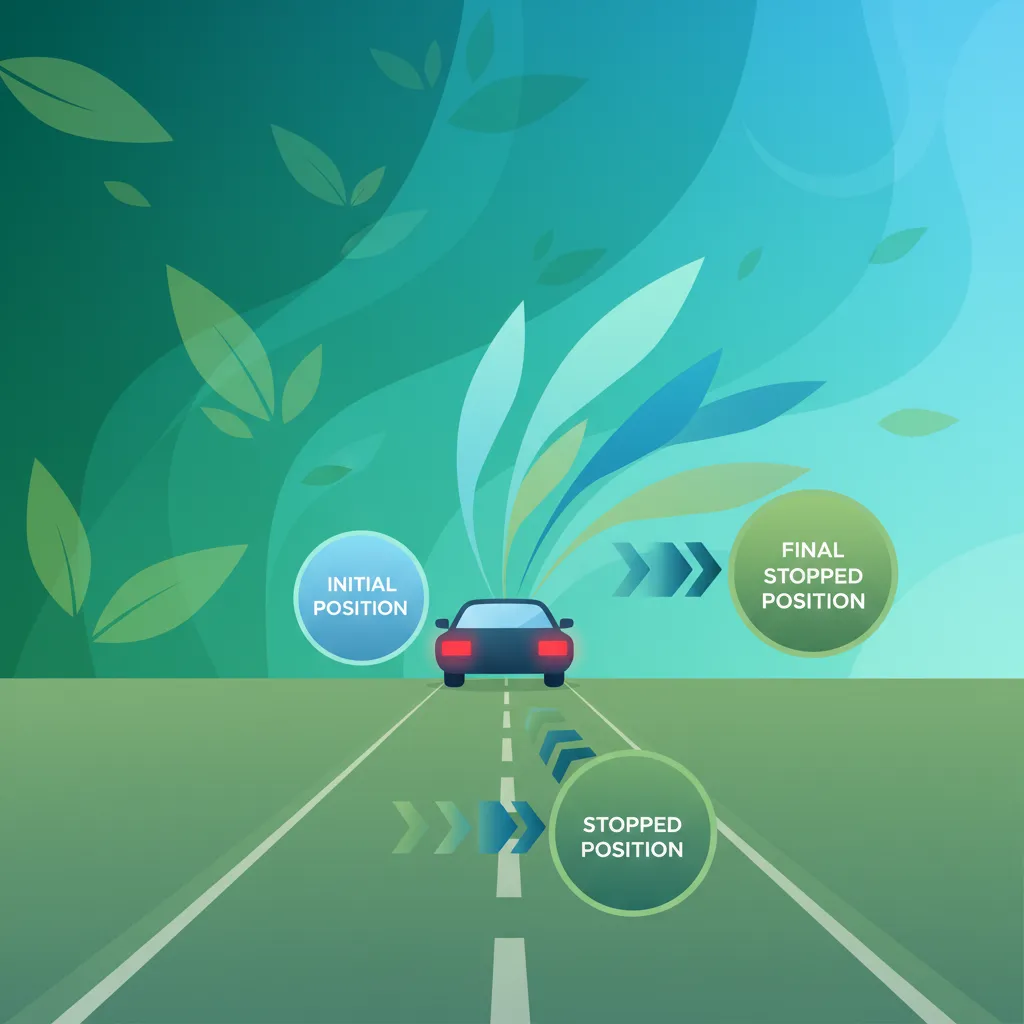
This lesson focuses on the correct application of a moped's brakes for effective and stable deceleration. It explains the concept of balanced braking, using both front and rear brakes simultaneously for maximum stopping power without losing traction. Learners will understand how factors like speed, road surface, and weather dramatically affect total stopping distance, and will learn techniques for emergency braking.
This lesson teaches riders the critical importance of maintaining a safe following distance to allow for adequate reaction and braking time. It explains practical methods for judging this distance, such as the 'two-second rule,' and how this gap must be increased in adverse weather or poor visibility. Understanding this principle is fundamental to preventing rear-end collisions, one of the most common types of traffic accidents.

This lesson examines the dynamic interactions between mopeds, cars, and bicycles in an urban environment. It emphasizes strategies for staying visible and avoiding the blind spots of larger vehicles. The content provides clear guidelines on overtaking bicycles safely, respecting dedicated bike lanes, and signaling intentions clearly to all other road users to ensure predictable and harmonious coexistence in mixed traffic.
Discover how to identify and navigate extremely slippery road surfaces like painted lines and metal covers, and understand mandatory lighting rules (dipped beams) for mopeds in rain according to Spanish DGT traffic laws.
This lesson outlines the mandatory lighting and visibility equipment as per DGT regulations. It covers the correct use of headlights (low and high beams), taillights, and turn signals, ensuring the moped is visible to others, especially at night or in poor weather. The importance of wearing high-visibility or reflective clothing is also emphasized as a critical measure to enhance personal safety by making the rider more conspicuous.
This lesson teaches the crucial skill of adapting speed to match prevailing environmental conditions. It explains that the posted speed limit is a maximum for ideal conditions and that riders must slow down significantly in rain, fog, or darkness. The content emphasizes maintaining a larger safety margin to account for reduced visibility and longer stopping distances, ensuring the rider can always stop within the distance they can see clearly.
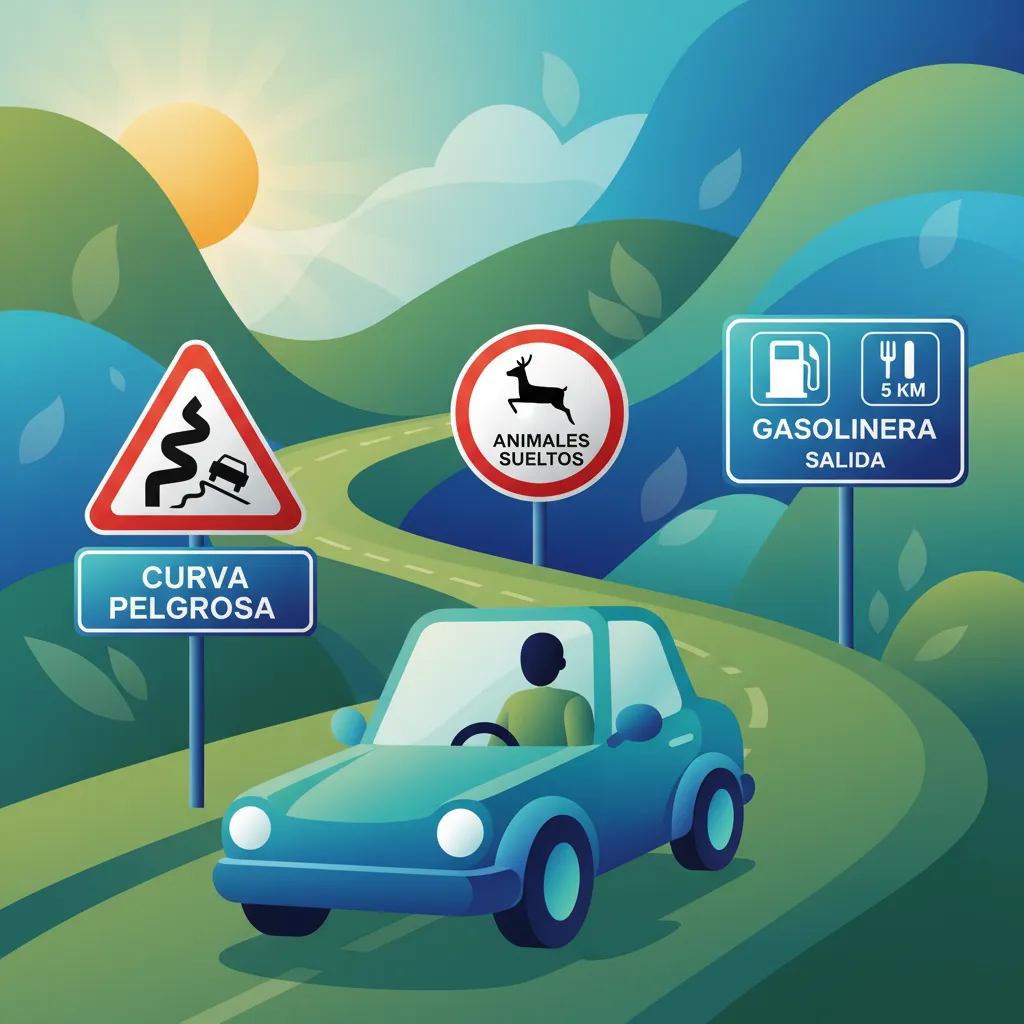
This lesson covers warning and informational signs, which are crucial for anticipating road conditions. It explains how triangular warning signs alert riders to upcoming hazards like sharp curves, slippery surfaces, or pedestrian crossings. The content also describes rectangular informational signs that provide directions, distances, and other useful guidance, helping riders to plan their route and adjust their driving in advance.
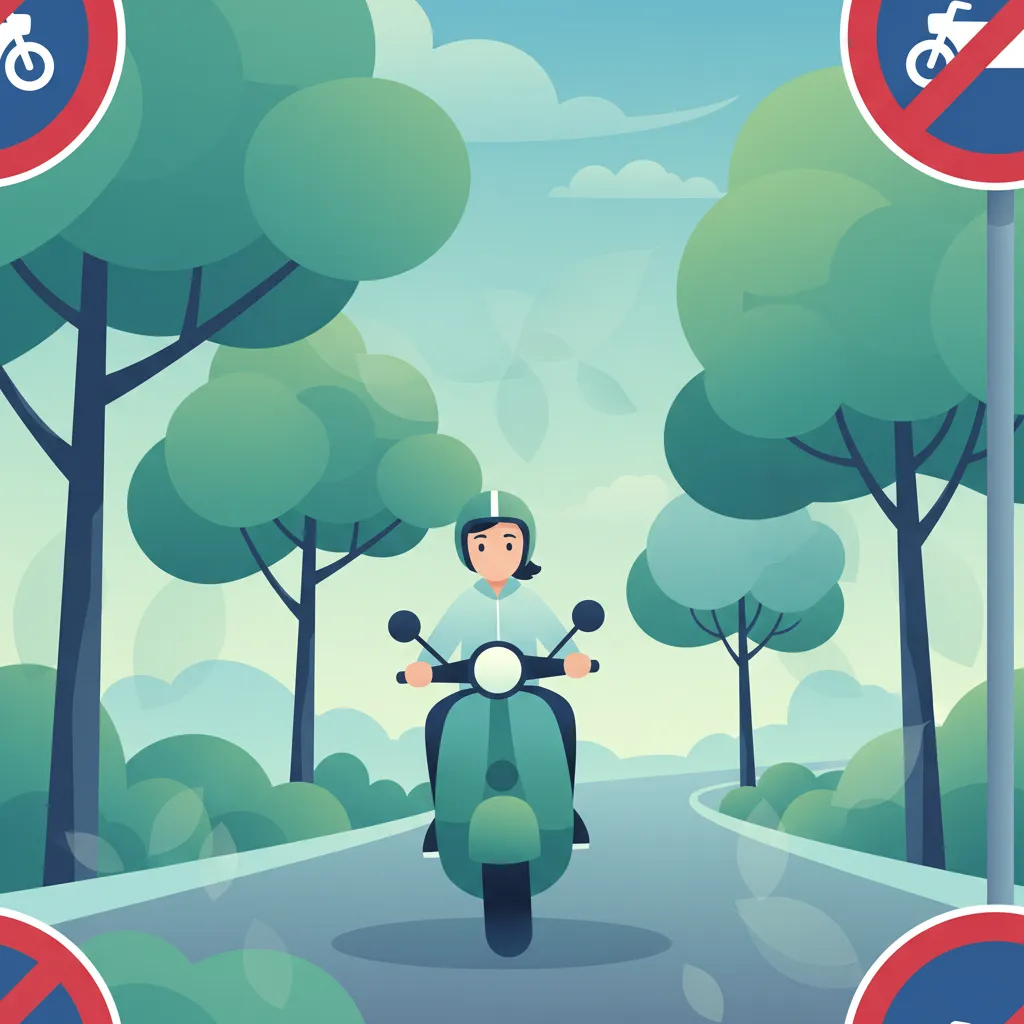
This lesson introduces the regulatory signs that impose obligations or prohibitions on road users, with a focus on those pertinent to mopeds. It covers common signs such as speed limits, 'no entry', and mandatory turn directions, explaining how their shape and color indicate their function. Learners will be able to identify and correctly interpret these signs to navigate urban road networks legally and safely, avoiding potential fines.

This lesson outlines the compulsory equipment and documentation required for an AM-class vehicle. It emphasizes the legal mandate for an approved helmet, a valid insurance policy, and a vehicle registration plate. Learners will also understand the requirements for the roadworthiness certificate (ITV) and other essential documents needed to prove compliance with DGT safety and legal standards during a traffic stop.
This lesson focuses on the optimal position for a moped within a traffic lane to maximize visibility and safety. It discusses the importance of maintaining a safety buffer from other vehicles and hazards, particularly the risk posed by the doors of parked cars. The content explains how to use lane positioning strategically to discourage unsafe overtaking and to be clearly seen by drivers in front and behind, especially when approaching intersections.
This lesson focuses on safe nighttime riding, covering headlight alignment, rear-light visibility, and the use of reflective gear to enhance conspicuity. It explains DGT night riding requirements, including mandatory lighting standards. Topics also include managing glare from oncoming vehicles and mitigating rider fatigue during low-light conditions.
This lesson examines the dynamic interactions between mopeds, cars, and bicycles in an urban environment. It emphasizes strategies for staying visible and avoiding the blind spots of larger vehicles. The content provides clear guidelines on overtaking bicycles safely, respecting dedicated bike lanes, and signaling intentions clearly to all other road users to ensure predictable and harmonious coexistence in mixed traffic.
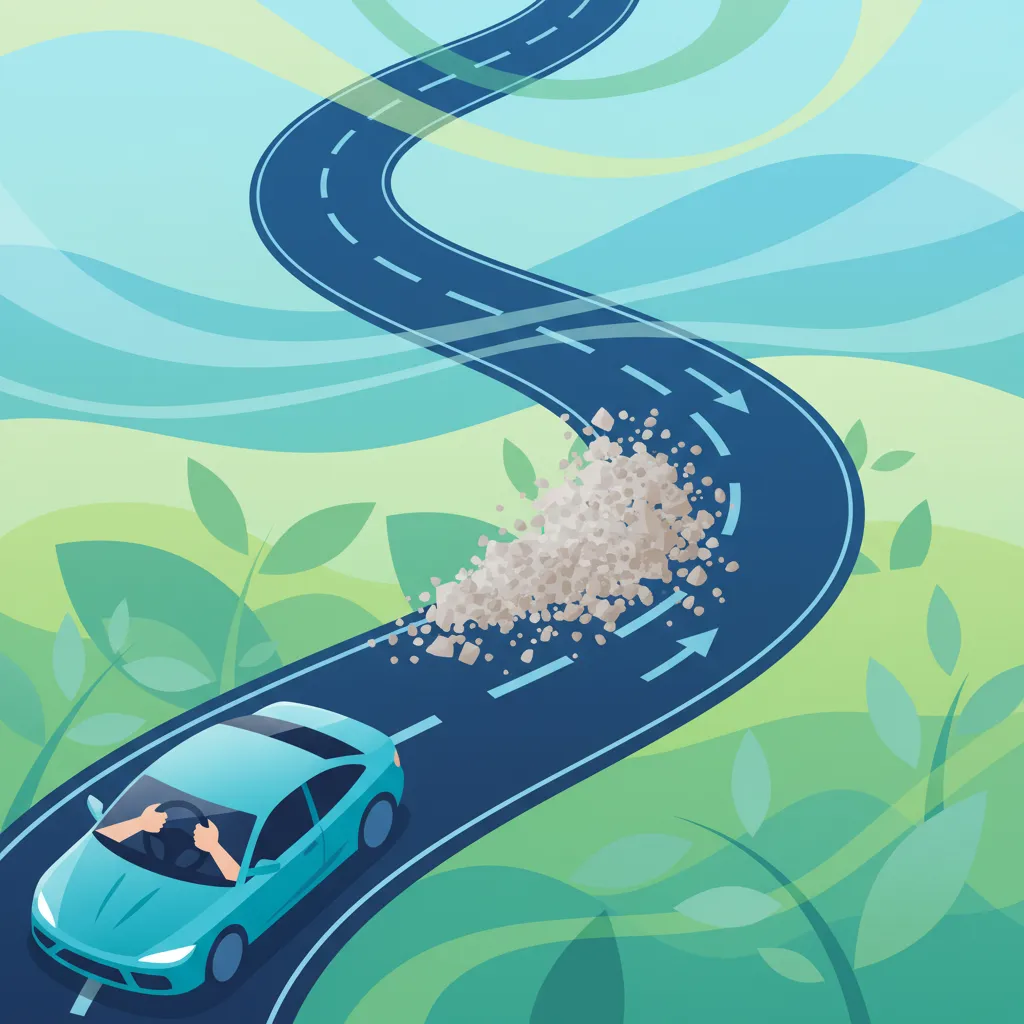
This lesson examines common road hazards such as oil slicks, loose gravel, and faded road markings. It teaches riders to identify visual cues indicating hazardous surfaces and understand how these conditions affect tyre grip. The content references DGT hazard standards, encouraging proactive incident anticipation and appropriate speed adjustment.
This lesson focuses on strategies for maximizing rider visibility in daylight and nighttime conditions, covering high-visibility apparel, reflective vests, and LED accessories. It delves into rider posture and lane positioning that improve sightlines and reduce collision risk. The content aligns with DGT regulations for illumination levels on motorcycles.
Find clear answers to common questions learners have about Riding in Rain and Slippery Conditions. Learn how the lesson is structured, which driving theory objectives it supports, and how it fits into the overall learning path of units and curriculum progression in Spain. These explanations help you understand key concepts, lesson flow, and exam focused study goals.
Braking distances can increase by up to 50% or more in wet conditions. This is because the water film between the tyre and the road surface reduces friction. For your AM licence theory exam, remember to always anticipate a longer stopping distance and allow for more space.
Painted road markings, such as lane lines, crosswalks, and traffic signal markings, become extremely slippery when wet. Also, be cautious of manhole covers, metal plates, and oily patches. The DGT exam often tests awareness of these specific hazards.
The most important techniques are to reduce your speed significantly, use your brakes and throttle very smoothly and progressively, avoid sudden movements, and increase your following distance. Look further ahead to anticipate traffic and potential hazards.
Yes, you should apply both brakes gently and progressively. Avoid heavy or sudden braking, as this can easily cause the wheels to lock up and lead to a skid. Feathering the brakes helps maintain control and stop safely.
Always ensure your moped's headlights and taillights are on during rain or poor visibility, even during the day, as required by DGT regulations for safety. This makes you more visible to other road users.
Use our powerful search functionality to pinpoint specific Spanish DGT driving theory practice sets. Filter by road sign categories, traffic law topics, or question difficulty to build custom study sessions and reinforce your knowledge precisely where it matters for your official exam.