
Logo
Yellow Markings

Practice Spanish Yellow Urban Markings and No-Block Grid Rules for Your DGT Exam

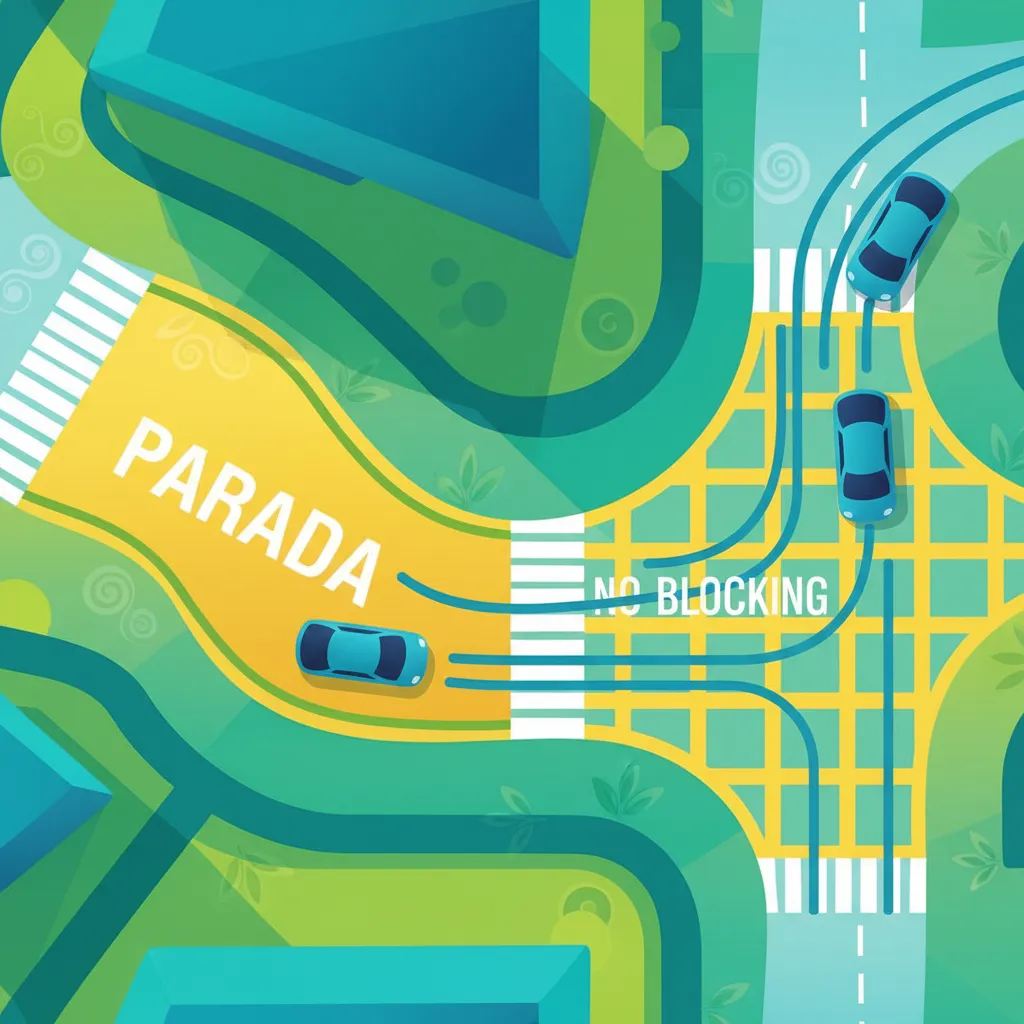
This practice set is vital for any learner preparing for the Spanish DGT driving theory exam. You'll tackle questions on various yellow urban markings, including continuous and broken lines, zig-zag areas, and especially the 'Cuadrícula de marcas amarillas'. Understand when you can stop, when you can park, and how to avoid obstructing traffic at intersections, ensuring you pass this tricky section of the exam.
yellow markingsurban drivingparkingstoppingtraffic rulesDGT examroad markings
Practice Spanish Yellow Urban Markings and No-Block Grid Rules for Your DGT Exam

Key Revision: Spanish Yellow Urban Markings and No-Block Grids

This practice set helps you master official DGT rules for yellow urban markings, distinguishing "parada" from "estacionamiento" and understanding no-block grids. Comprehensive driving theory practice is essential for avoiding fines and ensuring confidence for your Spanish driving licence theory test.

Navigate complex urban scenarios by learning the official DGT rules for yellow pavement markings. This set focuses on understanding 'parada' (stop) versus 'estacionamiento' (parking) and the crucial 'no blocking' rule for yellow grids, preparing you for common exam questions.

Example Questions in Yellow Urban Markings

Preview sample questions from the Yellow Urban Markings practice set to see how they help you prepare for the driving theory exam in Spain.

Parada Definition CorrectBroken Yellow Line Stop/ParkYellow Grid Green Light BlockedZig-Zag Line Passenger Drop-offEntering a Yellow GridBroken Yellow Line RuleZig-Zag vs. Continuous LineYellow Zig-Zag Line UseWhat is 'Estacionamiento'?Yellow Grid Roundabout ExitContinuous Yellow Line Quick StopWhat is 'Parada'?Continuous Yellow Line StoppingEmergency Stop on Yellow GridYellow Zig-Zag Parking

Why Learners Search for Yellow Urban Markings When Preparing for the Theory Exam

Learners choose Yellow Urban Markings to improve accuracy and understanding of key exam themes in Spain. It offers realistic driving theory questions and targeted revision for effective preparation.

Spanish yellow grid rules DGT examContinuous yellow line meaning Spain driving testBroken yellow line parking rules DGTYellow zig-zag area stopping Spanish driving theoryCuadrícula de marcas amarillas driving rulesParada vs estacionamiento yellow markings Spain

Questions Learners Have About Yellow Urban Markings

Find answers to the most common queries learners have when practising Yellow Urban Markings, including how questions match the official theory exam in Spain, how scoring works, and how this practice improves exam readiness.

What does a continuous yellow line on the pavement mean in Spain?

A continuous yellow line along the edge of the road or kerb in Spain means that both stopping ('parada') and parking ('estacionamiento') are strictly prohibited along its entire length and on that side of the road.

Can I stop in an area marked with a broken yellow line?

Yes, a broken yellow line along the edge of the road or kerb in Spain prohibits parking ('estacionamiento') but does allow for a brief stop ('parada'). This is often used for restricted parking zones.

What is the purpose of a yellow zig-zag marking in Spain?

A yellow zig-zag marking indicates a reserved area where parking ('estacionamiento') is prohibited, but stopping ('parada') is allowed. These areas are typically designated for specific uses like bus stops or loading/unloading zones, ensuring quick access and traffic flow.

When can I enter a yellow grid marking ('Cuadrícula de marcas amarillas') at an intersection?

You may only enter a yellow grid marking if you can cross it completely without being forced to stop within it. Even if your traffic light is green, you must not enter if traffic ahead is backed up and you would obstruct transversal traffic, violating the 'no blocking' rule.

What is the difference between 'parada' and 'estacionamiento' in Spanish traffic law?

'Parada' (stop) refers to the immobilization of a vehicle for a period of less than two minutes, without the driver leaving the vehicle. 'Estacionamiento' (parking) is the immobilization of a vehicle for more than two minutes, or for any duration if the driver leaves the vehicle.

Skills You Will Build for the Driving Theory Exam

By completing Yellow Urban Markings, you will gain stronger rule knowledge, faster recognition of signs and situations, better decision making in traffic scenarios, and increased accuracy on exam style questions used in Spain. These outcomes directly support higher scoring exam performance.

Understand the meaning and application of continuous yellow lines on Spanish roads.
Recognize situations where broken yellow lines prohibit parking but permit stopping.
Interpret yellow zig-zag markings and distinguish between stopping ('parada') and parking ('estacionamiento').
Apply the 'no blocking' rule for yellow grid markings ('Cuadrícula de marcas amarillas') at intersections.
Identify correct driving behavior to maintain urban traffic fluidity in areas with yellow markings.

Reinforce Your Spanish Road Markings Knowledge

Mastering related practice questions on Spanish road markings enhances your understanding of DGT traffic rules, crucial for navigating real-world driving situations. Deepen your topic revision to ensure comprehensive exam preparation for your official theory test.
Special Urban Road Markings: Avanzabicis, Cycle Lanes & Sharrows in Spain

Special Cycle Markings

Navigate Spanish City Streets Confidently: Master Vulnerable User Markings for Your DGT Exam!

road markingscyclistsmotorcyclists
12 questionsView details
Loading and Unloading Zones in Spanish Urban Areas

Loading & Unloading Zones

Master Spanish Loading Zones: Avoid Fines and Keep Traffic Flowing

loading zonesunloadingparking
10 questionsView details
Stopping and Parking Rules in Spanish Urban Areas and on Slopes

Stopping & Parking Rules

Master Spanish Stopping & Parking: Avoid Fines and Pass Your DGT Exam!

stoppingparkingurban driving
23 questionsView details
Absolute Prohibitions: Where You Can Never Park in Spain

Absolute Parking Bans

Master Spanish DGT Rules: Avoid Critical Mistakes in Stopping and Parking Zones.

parkingstoppingprohibitions
20 questionsView details
Navigating One-Way and Two-Way Streets in Spain

One-Way vs Two-Way Streets

Avoid Common Mistakes: Master Urban Street Logic for Your DGT Exam.

urban drivingone-way streettwo-way street
16 questionsView details
Parada, Estacionamiento, y Detención: Essential Spanish Traffic Definitions

Parada & Estacionamiento

Master the key distinctions between stopping, parking, and involuntary halts to ace your DGT theory test.

parkingstoppingmaneuvers
15 questionsView details

Questions in Yellow Urban Markings

Exam focused questionss

0

Difficulty Level

How This Driving Theory Practice Helps You Pass Faster

Yellow Urban Markings offers quick, focused exam style practice to boost your Spanish knowledge for the driving theory exam in Spain.

Improve your score on DGT exam questions related to yellow urban markings.
Gain confidence in distinguishing between legal stopping ('parada') and parking ('estacionamiento').
Learn to correctly navigate intersections with yellow grids, preventing traffic obstruction.
Develop a deeper understanding of urban traffic rules to drive safely and avoid penalties.
Reduce common driving theory mistakes related to urban pavement markings.

Who Should Practise Yellow Urban Markings?

Yellow Urban Markings helps learners in Spain with clear explanations and targeted Spanish practice to improve essential driving theory topics.

This set is ideal for intermediate learners preparing for the Spanish DGT driving theory exam who want to solidify their understanding of urban road markings. It specifically addresses common confusions regarding stopping, parking, and avoiding obstruction, which are frequent sources of mistakes on the official test.

Start Practice

Ready to Start Practicing? Choose Your Theory Category

Dive deeper into your Spanish DGT driving theory preparation by selecting a specific practice category. Whether you need to review road signs, master traffic priority rules, or understand vehicle safety, pick a topic to begin targeted exercises and reinforce your knowledge for the official exam.

Explore Practice Categories

CTA Decorative Squares

Practice Spanish driving theory questions

Spanish road signsSpanish article topicsSearch Spanish road signsSpanish driving theory homeSpanish road sign categoriesSpanish driving theory topicsSpanish Moped Theory AM courseSearch Spanish theory articlesSpanish driving theory coursesSpanish driving theory articlesSpanish driving theory practiceSpanish driving licence proceduresSpanish Driving Theory D & D1 courseSpanish Driving Theory B & BE courseLane Signs Spanish road sign categoryOther Signs Spanish road sign categorySpanish Truck Driving Theory C/C1 courseService Signs Spanish road sign categoryPriority Signs Spanish road sign categoryLocation Signs Spanish road sign categoryMandatory Signs Spanish road sign categoryDirection Signs Spanish road sign categorySpanish Motorcycle Theory (A, A1, A2) courseRestriction Signs Spanish road sign categoryAdditional Panels Spanish road sign categoryRoute Number Signs Spanish road sign categoryConfirmation Signs Spanish road sign categoryPre-signaling Signs Spanish road sign categoryGeneral Danger Signs Spanish road sign categoryDe-restriction Signs Spanish road sign categoryEntry Prohibition Signs Spanish road sign categoryGeneral Indication Signs Spanish road sign categoryConstruction Warning Signs Spanish road sign categoryConstruction Indication Signs Spanish road sign categoryConstruction Speed Limit Signs Spanish road sign categoryConstruction De-restriction Signs Spanish road sign categoryConstruction Reflective Marking Signs Spanish road sign categoryOther Prohibition or Restriction Signs Spanish road sign categorySigns for Specific Use in Built-up Areas Spanish road sign categoryConstruction Regulation and Priority Signs Spanish road sign category