
Understand the precise legal definitions of 'Parada' (stopping), 'Estacionamiento' (parking), and 'Detención' (involuntary stop) as mandated by Spanish DGT traffic law. This practice set provides essential clarity on time limits and driver presence, preparing you to correctly identify scenarios for your Spanish driving license theory exam.

This practice set helps you understand the foundational legal definitions of Parada, Estacionamiento, and Detención as per Spanish traffic rules. You'll practice scenarios related to vehicle immobilisation, time limits, and driver presence, ensuring solid preparation for your DGT theory test. Improve your driving theory practice and confidence.
This set focuses on the foundational legal definitions of voluntary and involuntary vehicle immobilisations in Spain. You'll tackle scenarios that challenge your understanding of time limits and driver presence, ensuring you avoid common errors on the DGT exam related to 'Parada', 'Estacionamiento', and 'Detención'.
Preview sample questions from the Parada & Estacionamiento practice set to see how they help you prepare for the driving theory exam in Spain.
Learners choose Parada & Estacionamiento to improve accuracy and understanding of key exam themes in Spain. It offers realistic driving theory questions and targeted revision for effective preparation.
Find answers to the most common queries learners have when practising Parada & Estacionamiento, including how questions match the official theory exam in Spain, how scoring works, and how this practice improves exam readiness.
The key differences are duration and driver presence. A 'Parada' is a voluntary stop lasting less than two minutes where the driver does not abandon the vehicle. An 'Estacionamiento' (parking) is any voluntary stop lasting two minutes or more, or any stop where the driver leaves the vehicle's immediate vicinity, regardless of duration.
If you stay in or immediately next to your vehicle and the stop is less than two minutes, it is a 'Parada'. If you abandon the vehicle, even for 30 seconds, it becomes an 'Estacionamiento'.
Abandoning the vehicle means the driver leaves the immediate vicinity of the car, making it impossible to move it instantly if needed. For example, entering a shop, even for a very short time, is considered abandoning the vehicle, making the action an 'Estacionamiento'.
A 'Detención' is an involuntary stop, such as due to heavy traffic, a red light, a breakdown, or to comply with a regulatory precept like a stop sign. Unlike 'Parada' and 'Estacionamiento', a 'Detención' is not a voluntary manoeuvre.
Understanding these definitions is fundamental for the DGT exam because questions often present scenarios requiring you to correctly classify a vehicle's immobilisation. Misinterpreting these terms can lead to incorrect answers and potential penalties in real driving situations.
By completing Parada & Estacionamiento, you will gain stronger rule knowledge, faster recognition of signs and situations, better decision making in traffic scenarios, and increased accuracy on exam style questions used in Spain. These outcomes directly support higher scoring exam performance.
Continue your DGT theory test practice with related questions that reinforce your knowledge of Spanish traffic law concerning stopping, parking, and detention. These additional sets help solidify crucial definitions and practical applications, preparing you thoroughly for your driving licence exam.

Master Spanish DGT Rules: Avoid Critical Mistakes in Stopping and Parking Zones.

Master Spanish Stopping & Parking: Avoid Fines and Pass Your DGT Exam!
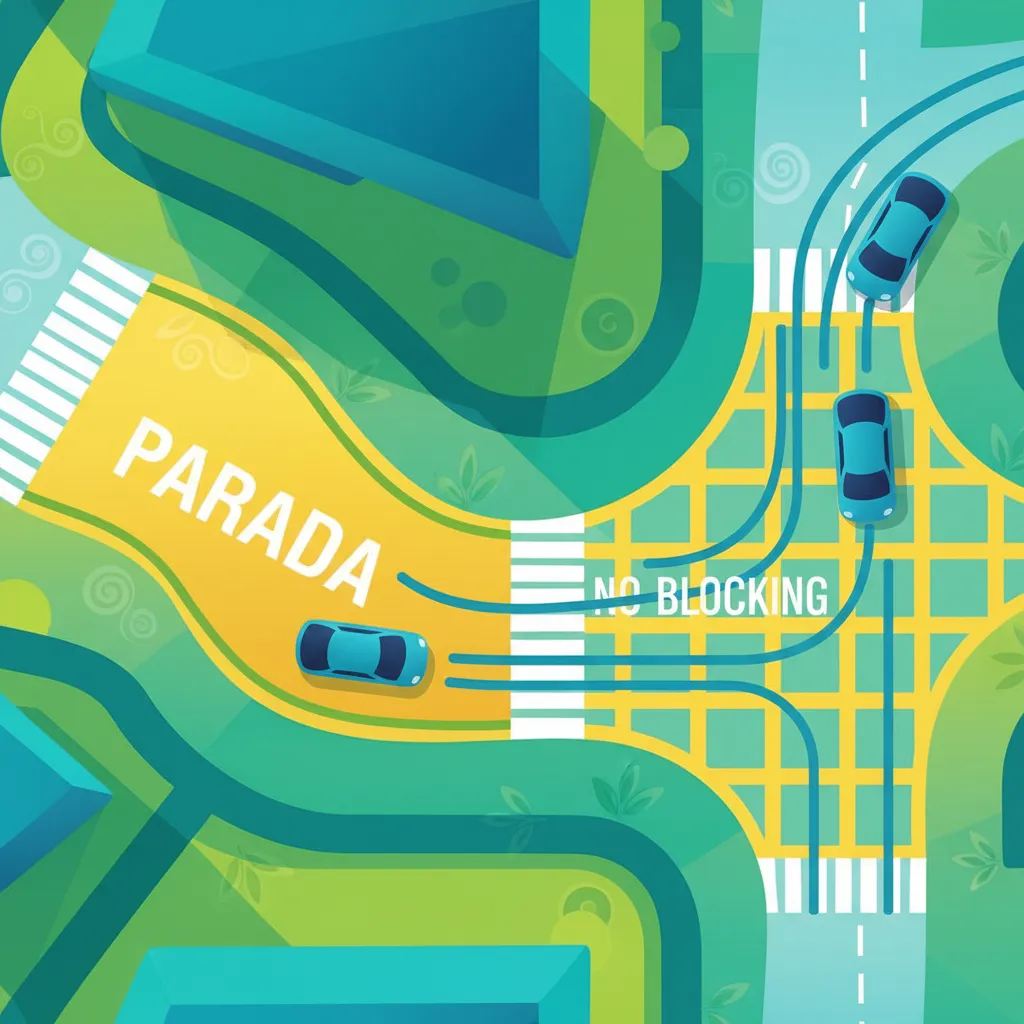
Avoid Fines and Traffic Jams: Master Spanish Yellow Urban Markings for Your DGT Exam!

Master Spanish Loading Zones: Avoid Fines and Keep Traffic Flowing
Master Spanish Reversing Rules: Avoid Common Mistakes on Your DGT Exam

Master the Tricky Rules of When NOT to Overtake in Spain and Avoid Exam Mistakes.
Questions in Parada & Estacionamiento
Exam focused questionss
Parada & Estacionamiento offers quick, focused exam style practice to boost your Spanish knowledge for the driving theory exam in Spain.
Parada & Estacionamiento helps learners in Spain with clear explanations and targeted Spanish practice to improve essential driving theory topics.
This practice set is ideal for beginners and intermediate learners preparing for the Spanish driving theory exam who often confuse the nuances of stopping and parking. It addresses typical misconceptions and provides the precise DGT-approved definitions needed to confidently answer questions on these fundamental concepts.
Explore more topics for the Spanish driving theory exam in Spain.
Dive deeper into your Spanish DGT driving theory preparation by selecting a specific practice category. Whether you need to review road signs, master traffic priority rules, or understand vehicle safety, pick a topic to begin targeted exercises and reinforce your knowledge for the official exam.
Explore Practice Categories