
The S-348 Detour Destination sign is a crucial guidance sign within Spain's traffic system, designed to help you choose the right route, lane, or access point. Unlike warning or prohibition signs, it primarily provides directional information. Always interpret this sign in conjunction with the symbols, arrows, route numbers, and any accompanying panels or road markings to make safe and timely decisions. Understanding these signs is essential for smooth navigation and passing your Spanish driving theory test.
This specific guidance sign (S-348) is crucial for understanding detour routes and destinations in Spain. Mastering its meaning is vital for theory test revision and navigating road diversions effectively.
The sign for detour destination sign belongs to the Spanish information and guidance system that helps road users understand where they are, where to go, or how a section of road is organized. Unlike a prohibition sign, it mainly provides route, lane, service, location, or access information so the driver can make the correct decision in time. Its practical effect depends on the symbol, arrows, road names, route numbers, and any extra panels shown with it. For safe driving, read it early and combine it with the current lane layout, road markings, and any nearby regulatory signs.
This guidance sign indicates detour destination sign. It helps road users choose the correct route, lane, access point, or destination in time.
Get clear, practical answers to the most common questions about the S-348 - Detour destination sign road sign. Learn how the sign works, what rules it represents, and how it affects real driving situations. This FAQ strengthens your understanding and supports accurate decision making for the Spanish driving theory exam in Spain.
The S-348 sign's main purpose is to provide guidance, helping road users select the correct route, lane, or destination, especially during diversions or complex road layouts. It ensures you can make informed decisions about where to go.
When you see the S-348 sign, you should read it early and interpret it alongside any accompanying arrows, route numbers, and road markings. Follow the indicated direction or lane to reach your intended detour destination or follow the diversion.
A common mistake is ignoring the sign or failing to combine its information with the surrounding road layout and markings. Learners might also try to make a maneuver too late, when earlier reading would have allowed for a safer and more lawful response.
No, the S-348 Detour Destination sign is an information sign, not a prohibition sign. It guides you on where to go or how to navigate a detour, rather than restricting your movement. However, always pay attention to other signs that might be present.
The S-348 sign is meant to be read in conjunction with other traffic control devices. You must interpret the sign together with lane layouts, road markings, and any additional panels or regulatory signs to understand the full message and react appropriately.
A clear reference image of the S-348 - Detour destination sign road sign used in Spain.

The S-348 - Detour destination sign road sign may also be known by these alternative names or terms.
The S-348 - Detour destination sign road sign is part of the Direction Signs category, which groups together signs with similar rules and functions.
Comparing this detour destination sign with similar directional signs enhances your ability to recognize them quickly. Effective traffic sign comparison is key for successful theory test revision and safe driving.
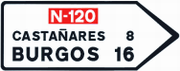
Navigate with confidence using the S-300 sign for towns on conventional routes.
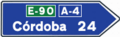
Guide your route with the Towns on a Highway Sign (S-301)
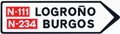
The S-310 sign helps you navigate towns on different routes in Spain.
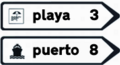
Navigate efficiently with the 'Places of Interest by Conventional Road' sign (S-320).
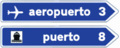
The S-321 Sign: Guiding You to Places of Interest on Highways and Dual Carriageways
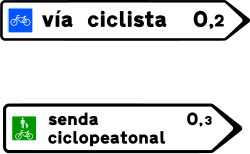
Follow the S-322 sign for directions to cycle routes or paths.

This sign guides you to an immediate exit for a conventional highway.
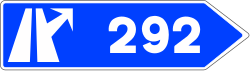
Navigate your route with Destination Signs for Immediate Exit to highways or dual carriageways.
Connect visual signage with the specific Spanish traffic laws and priority rules required to pass your theory test. Explore detailed articles and practice sets that explain how these regulatory markers influence daily driving on local roads.
Traffic lights in Spain go well beyond the standard red, yellow, and green circular signals. This article covers the specific legal requirements for lane-control lights, cycle signals, and public transport indicators, providing the necessary clarity for your theory exam preparation and real-world driving. You will learn the exact behavior required for flashing yellow lights and how to interpret specialized directional arrows to ensure you navigate intersections safely and in full compliance with the General Traffic Regulations.
Master Road Arrows to Avoid Confusion and Drive Confidently
Navigate Spanish roads with confidence by understanding every arrow you encounter. This article breaks down the significance of pavement arrows and traffic light signals, as mandated by the DGT, ensuring you know exactly what directions are permitted or obligatory. This knowledge is vital for both safe driving and achieving a passing score on your Spanish driving theory test.
Master the 'Alphabet' of Spanish Driving Permits for Your Theory Exam
The sign for pre-signaling of directions on a highway or dual carriageway to any road belongs to the Spanish information and guidance system that helps road users understand where they are, where to go, or how a section of road is organized. Unlike a prohibition sign, it mainly provides route, lane, service, location, or access information so the driver can make the correct decision in time. Its practical effect depends on the symbol, arrows, road names, route numbers, and any extra panels shown with it. For safe driving, read it early and combine it with the current lane layout, road markings, and any nearby regulatory signs.
The sign for advance sign with side panel on a conventional or multi-lane road toward a conventional or multi-lane road and the current direction belongs to the Spanish information and guidance system that helps road users understand where they are, where to go, or how a section of road is organized. Unlike a prohibition sign, it mainly provides route, lane, service, location, or access information so the driver can make the correct decision in time. Its practical effect depends on the symbol, arrows, road names, route numbers, and any extra panels shown with it. For safe driving, read it early and combine it with the current lane layout, road markings, and any nearby regulatory signs.
You've explored the complete list of Spanish road signs. Now, deepen your understanding by reviewing specific sign groups or testing your knowledge with practice questions. Fully prepare for your DGT driving theory exam and confidently navigate Spanish roads.
Browse All Spanish Road Signs