
This S-571 sign is an important information sign found on Spanish highways and dual carriageways, indicating your current kilometer position and also confirming that the road is part of a European route. Its primary purpose is to help you orient yourself and choose the correct route, lane, or destination. Always interpret this sign alongside road markings and arrows to ensure safe and informed driving decisions, especially when preparing for your driving licence theory exam.
Master the meaning of the S-571 Kilometer Marker sign, crucial for understanding your location on Spanish highways and European routes. This sign's interpretation is key for effective theory test revision and safe driving.
The sign for kilometer marker on the highway and dual carriageway that is also part of a european route belongs to the Spanish information and guidance system that helps road users understand where they are, where to go, or how a section of road is organized. Unlike a prohibition sign, it mainly provides route, lane, service, location, or access information so the driver can make the correct decision in time. Its practical effect depends on the symbol, arrows, road names, route numbers, and any extra panels shown with it. For safe driving, read it early and combine it with the current lane layout, road markings, and any nearby regulatory signs.
This guidance sign indicates kilometer marker on the highway and dual carriageway that is also part of a european route. It helps road users choose the correct route, lane, access point, or destination in time.
Get clear, practical answers to the most common questions about the S-571 - Kilometer marker on the highway and dual carriageway that is also part of a European route road sign. Learn how the sign works, what rules it represents, and how it affects real driving situations. This FAQ strengthens your understanding and supports accurate decision making for the Spanish driving theory exam in Spain.
The S-571 sign specifically marks your location on a highway or dual carriageway and simultaneously indicates that this road is also part of a designated European route. It helps you understand your progress and the road network.
You don't need to change your driving behaviour solely because of this sign, but you should use the information it provides to orient yourself. Always read it early and combine its message with road markings, lane layouts, and any additional panels to make safe driving decisions.
The inclusion of European route information means the road you are on is part of a larger international network of important roads. This can be useful for long-distance navigation, especially if you are travelling outside of Spain.
A common mistake is not integrating the information from the kilometer marker sign with other road signals. Learners might ignore it, or they might make a sudden maneuver based on the sign without checking lane markings or other drivers. Remember to always check all available information for a safe decision.
You will find these signs on Spanish highways (autopistas) and dual carriageways (autovías). They are placed at regular intervals to provide continuous information about your position on the road and its classification as part of a European route.
A clear reference image of the S-571 - Kilometer marker on the highway and dual carriageway that is also part of a European route road sign used in Spain.
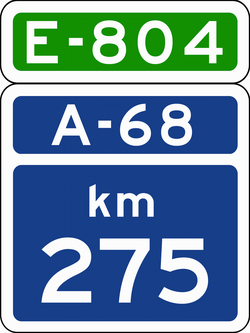
The S-571 - Kilometer marker on the highway and dual carriageway that is also part of a European route road sign may also be known by these alternative names or terms.
The S-571 - Kilometer marker on the highway and dual carriageway that is also part of a European route road sign is part of the Location Signs category, which groups together signs with similar rules and functions.
Studying similar road signs side-by-side helps cement recognition and reduce confusion for your theory test revision. Practicing traffic sign comparison ensures you can quickly distinguish between related symbols, improving your overall sign recognition skills for the exam.
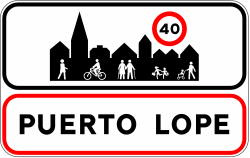
Understand the 'Entrance to Town' Sign (S-500) in Spain
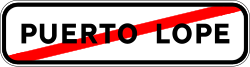
The S-510 'Exit from Town' sign guides you out of populated areas.
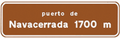
The S-520 Sign: Navigating with Roadside Landmarks
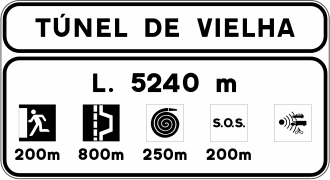
Learn to navigate safely with the Spanish Tunnel Location Sign (S-530)
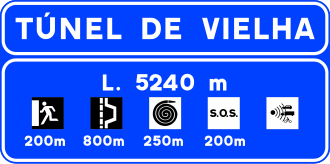
Understand the S-531 Tunnel Location Sign on Motorways with Safety Facility Information
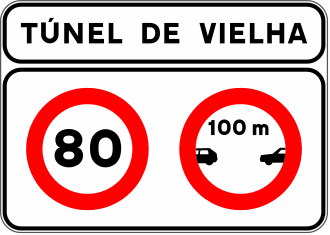
Navigate Safely with the S-532 Tunnel Location Sign on Conventional Roads
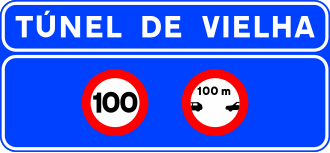
Understand the S-533 Tunnel Location Sign for Motorway Navigation in Spain
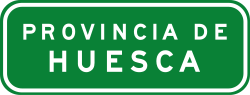
Understand the S-540 'Entrance to Province' Guidance Sign in Spain
Connect visual signage with the specific Spanish traffic laws and priority rules required to pass your theory test. Explore detailed articles and practice sets that explain how these regulatory markers influence daily driving on local roads.
Traffic lights in Spain go well beyond the standard red, yellow, and green circular signals. This article covers the specific legal requirements for lane-control lights, cycle signals, and public transport indicators, providing the necessary clarity for your theory exam preparation and real-world driving. You will learn the exact behavior required for flashing yellow lights and how to interpret specialized directional arrows to ensure you navigate intersections safely and in full compliance with the General Traffic Regulations.
Master the 'Alphabet' of Spanish Driving Permits for Your Theory Exam
Navigate Spanish roads with confidence by understanding every arrow you encounter. This article breaks down the significance of pavement arrows and traffic light signals, as mandated by the DGT, ensuring you know exactly what directions are permitted or obligatory. This knowledge is vital for both safe driving and achieving a passing score on your Spanish driving theory test.
Navigate Spain's Strict Drug Laws: Any Trace Can Lead to Serious Consequences.
The sign for immediate exit sign above the carriageway on a motorway or dual carriageway toward a motorway or dual carriageway and the current direction belongs to the Spanish information and guidance system that helps road users understand where they are, where to go, or how a section of road is organized. Unlike a prohibition sign, it mainly provides route, lane, service, location, or access information so the driver can make the correct decision in time. Its practical effect depends on the symbol, arrows, road names, route numbers, and any extra panels shown with it. For safe driving, read it early and combine it with the current lane layout, road markings, and any nearby regulatory signs.
The sign for pre-signaling with signs on the carriageway on a conventional road towards a highway or dual carriageway and its own direction belongs to the Spanish information and guidance system that helps road users understand where they are, where to go, or how a section of road is organized. Unlike a prohibition sign, it mainly provides route, lane, service, location, or access information so the driver can make the correct decision in time. Its practical effect depends on the symbol, arrows, road names, route numbers, and any extra panels shown with it. For safe driving, read it early and combine it with the current lane layout, road markings, and any nearby regulatory signs.
You've explored the complete list of Spanish road signs. Now, deepen your understanding by reviewing specific sign groups or testing your knowledge with practice questions. Fully prepare for your DGT driving theory exam and confidently navigate Spanish roads.
Browse All Spanish Road Signs