The S-115 'Port' sign is a blue informational service sign used in Spain to alert drivers to the presence of port facilities. While it doesn't impose a restriction, it's crucial for planning your journey, helping you locate essential services without last-minute decisions. Always plan your approach to use these services safely, avoiding abrupt maneuvers or late lane changes. This sign is part of Spain's comprehensive system of road signs designed to enhance driver awareness and safety.
The S-115 'Port' sign is a crucial service indicator for drivers in Spain, helping locate port facilities easily. Understanding this road sign's meaning is essential for efficient travel planning and vital for your theory test revision.
The sign for port is a Spanish service sign used to identify a facility that may be helpful during a journey. These blue signs are informational rather than restrictive, but they are still operationally important because they guide drivers toward services without abrupt lane changes or unnecessary searching. You will usually see them in advance of the facility itself or near the access point. Where distances, arrows, or route references are shown, they explain where the service is located in relation to the current road.
This service sign indicates port. It helps drivers identify a useful facility or roadside service without waiting until the last moment to react.
Get clear, practical answers to the most common questions about the S-115 - Port road sign. Learn how the sign works, what rules it represents, and how it affects real driving situations. This FAQ strengthens your understanding and supports accurate decision making for the Spanish driving theory exam in Spain.
The S-115 sign indicates that port facilities are available in the vicinity. It's an informational service sign designed to help drivers find useful locations like ferry terminals or related services without interrupting their journey abruptly.
No, the S-115 sign is purely informational. It does not legally require you to stop or turn. However, if you intend to use the port facilities, you should plan your approach well in advance, ensuring you can do so safely by signalling early and positioning your vehicle correctly.
A common trap is mistaking this informational sign for a mandatory instruction. Learners might think they must immediately turn or slow down, which can be dangerous. Remember, it's about providing guidance for planning, not dictating immediate action. Always prioritize safe lane usage and avoid sudden maneuvers.
If you intend to use the port, use the sign as an early warning to prepare. Check your mirrors, signal your intentions in advance, and move to the appropriate lane gradually. If you don't need to access the port, you can continue on your way as normal. Never treat it as a reason to make sudden, unsafe changes in direction or speed.
While the S-115 sign itself is informational, once you decide to access the port area, you must follow all local traffic regulations applicable within the port zone. This includes any specific signage, speed limits, or priority rules that might be in effect within the port's operational areas.
A clear reference image of the S-115 - Port road sign used in Spain.
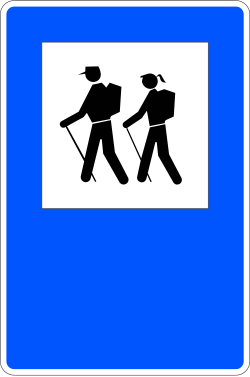
The S-115 - Port road sign may also be known by these alternative names or terms.
The S-115 - Port road sign is part of the Service Signs category, which groups together signs with similar rules and functions.
Comparing related road signs, like S-115 'Port' with other service signs, sharpens your recognition skills for the Spanish theory test. This focused review helps solidify your understanding of official Spanish traffic rules and improves sign recall during your exam preparation.
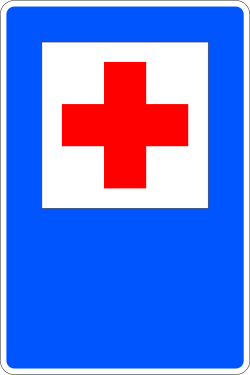
Understand the S-100 First Aid Post Service Sign in Spain
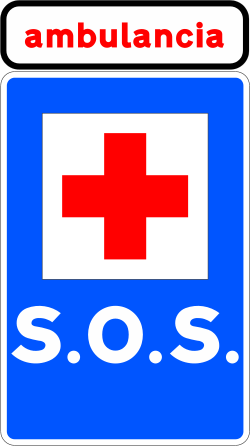
S-101 Petrol Station Sign: Your Guide to Essential Roadside Services

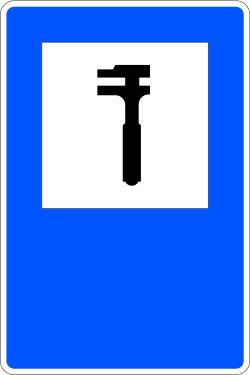
Find Mechanical Repair Services with the S-102 Sign
The S-104 'Restaurant' sign guides you to essential services while driving.
The S-105 Hotel or Motel sign guides you to essential roadside accommodation.
This 'Campsite' sign guides you to essential services on your journey.
The S-105c Picnic Area sign guides you to a rest stop.
Connect visual signage with the specific Spanish traffic laws and priority rules required to pass your theory test. Explore detailed articles and practice sets that explain how these regulatory markers influence daily driving on local roads.
Traffic lights in Spain go well beyond the standard red, yellow, and green circular signals. This article covers the specific legal requirements for lane-control lights, cycle signals, and public transport indicators, providing the necessary clarity for your theory exam preparation and real-world driving. You will learn the exact behavior required for flashing yellow lights and how to interpret specialized directional arrows to ensure you navigate intersections safely and in full compliance with the General Traffic Regulations.
This guide explains how vehicles registered outside Spain are classified concerning the Dirección General de Tráfico (DGT) environmental labels, which dictate access to Low Emission Zones (ZBEs). You will learn which foreign environmental classifications are recognized as equivalent and what steps to take if your vehicle is from a country without a reciprocal agreement, ensuring you avoid potential penalties.
Master Road Arrows to Avoid Confusion and Drive Confidently
Master the 'Alphabet' of Spanish Driving Permits for Your Theory Exam
The sign for first aid post is a Spanish service sign used to identify a facility that may be helpful during a journey. These blue signs are informational rather than restrictive, but they are still operationally important because they guide drivers toward services without abrupt lane changes or unnecessary searching. You will usually see them in advance of the facility itself or near the access point. Where distances, arrows, or route references are shown, they explain where the service is located in relation to the current road.
The sign for petrol station is a Spanish service sign used to identify a facility that may be helpful during a journey. These blue signs are informational rather than restrictive, but they are still operationally important because they guide drivers toward services without abrupt lane changes or unnecessary searching. You will usually see them in advance of the facility itself or near the access point. Where distances, arrows, or route references are shown, they explain where the service is located in relation to the current road.
You've explored the complete list of Spanish road signs. Now, deepen your understanding by reviewing specific sign groups or testing your knowledge with practice questions. Fully prepare for your DGT driving theory exam and confidently navigate Spanish roads.
Browse All Spanish Road Signs