
This S-53c sign is an information sign from Spain's traffic system, guiding you about upcoming road changes. It signals a transition from two to three traffic lanes, where each lane will have a different maximum speed limit. You must interpret this sign in conjunction with road markings, lane layouts, and any additional panels to ensure safe driving and compliance with Spanish traffic laws. Always read such signs early to plan your lane choice and speed adjustment calmly.
This sign alerts you to a transition from two to three traffic lanes, each with a specific maximum speed. Mastering its meaning is crucial for understanding lane discipline and speed regulations in Spain, aiding your theory test revision.
The sign for transition from two to three traffic lanes with maximum speed per lane belongs to the Spanish information and guidance system that helps road users understand where they are, where to go, or how a section of road is organized. Unlike a prohibition sign, it mainly provides route, lane, service, location, or access information so the driver can make the correct decision in time. Its practical effect depends on the symbol, arrows, road names, route numbers, and any extra panels shown with it. For safe driving, read it early and combine it with the current lane layout, road markings, and any nearby regulatory signs.
This sign indicates transition from two to three traffic lanes with maximum speed per lane. Read it together with the road layout, markings, and any additional panels so you apply it correctly.
Get clear, practical answers to the most common questions about the S-53c - Transition from Two to Three Traffic Lanes with Maximum Speed per Lane road sign. Learn how the sign works, what rules it represents, and how it affects real driving situations. This FAQ strengthens your understanding and supports accurate decision making for the Spanish driving theory exam in Spain.
The S-53c sign in Spain indicates that the road ahead is transitioning from two traffic lanes to three lanes, and importantly, each of these new lanes will have a specific maximum speed limit. It's crucial information to prepare for lane changes and speed adjustments.
When you see the S-53c sign, anticipate the road widening to three lanes. You must also be prepared to observe and adhere to the maximum speed limits indicated for each lane, which might be displayed on the sign itself or on supplementary panels. Combining this information with road markings and the actual lane layout is essential for safe driving.
A common trap is focusing only on the lane increase and forgetting to check for specific speed limits per lane. Learners might also miss crucial instructions on additional panels or misinterpret lane markings, leading to incorrect lane selection or speed. Always read the full message presented by the sign and the road environment.
While the S-53c sign itself doesn't prohibit actions like a red warning sign, it implicitly prohibits ignoring the lane configuration and speed limits it signifies. It is prohibited to proceed without considering the lane layout, markings, and any associated speed restrictions. It's also forbidden to make abrupt maneuvers if you've read the sign early enough to plan a smooth transition.
You are allowed to follow the indicated lane configuration and adjust your speed accordingly. The sign provides information to help you make a lawful and safe driving decision, allowing you to choose the appropriate lane for your destination or speed, provided you comply with the speed limits. The key is to use the information proactively to confirm your response matches the actual traffic situation.
A clear reference image of the S-53c - Transition from Two to Three Traffic Lanes with Maximum Speed per Lane road sign used in Spain.
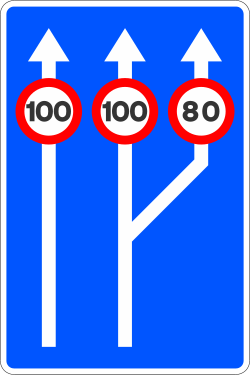
The S-53c - Transition from Two to Three Traffic Lanes with Maximum Speed per Lane road sign may also be known by these alternative names or terms.
The S-53c - Transition from Two to Three Traffic Lanes with Maximum Speed per Lane road sign is part of the Lane Signs category, which groups together signs with similar rules and functions.
Comparing related signs like this 'Transition from Two to Three Traffic Lanes with Maximum Speed per Lane' sign helps you distinguish subtle differences. This targeted approach to traffic sign comparison aids memory and reduces errors, crucial for your theory test revision.
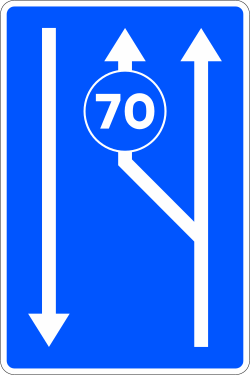
Understand Spain's S-50a sign for lanes reserved by speed.
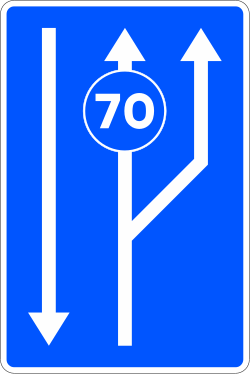
Understand 'Lanes Reserved According to Signed Speed' Road Signs (S-50b)
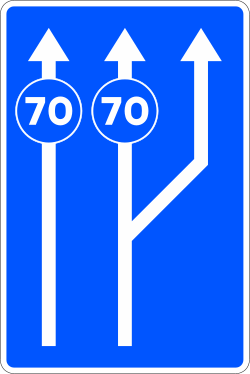
Understand the S-50c sign: Lanes Reserved According to the Signed Speed
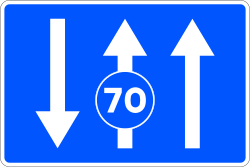
Know Your Lanes: Understanding the S-50d 'Lanes Reserved According to Signed Speed' Sign
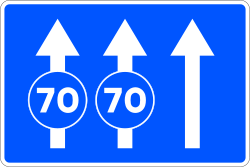
Know Your Lanes: Understanding the 'Lanes Reserved According to Signed Speed' Sign (S-50e)
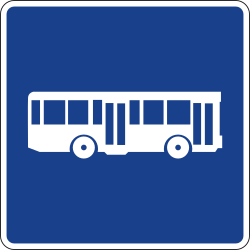
The S-51 Bus Lane sign tells you where buses have priority or exclusive access.
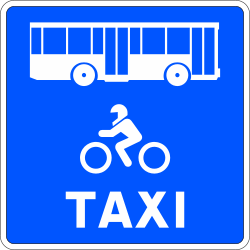
What Does the S-51a 'Lane Reserved for Specific Vehicle Types' Sign Mean?
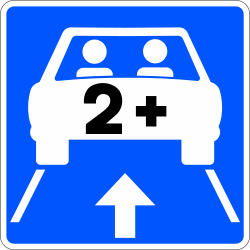
Understand the High-Occupancy Vehicle Lane (HOV) sign (S-51b)
Connect visual signage with the specific Spanish traffic laws and priority rules required to pass your theory test. Explore detailed articles and practice sets that explain how these regulatory markers influence daily driving on local roads.
Traffic lights in Spain go well beyond the standard red, yellow, and green circular signals. This article covers the specific legal requirements for lane-control lights, cycle signals, and public transport indicators, providing the necessary clarity for your theory exam preparation and real-world driving. You will learn the exact behavior required for flashing yellow lights and how to interpret specialized directional arrows to ensure you navigate intersections safely and in full compliance with the General Traffic Regulations.
Navigate Spanish roads with confidence by understanding every arrow you encounter. This article breaks down the significance of pavement arrows and traffic light signals, as mandated by the DGT, ensuring you know exactly what directions are permitted or obligatory. This knowledge is vital for both safe driving and achieving a passing score on your Spanish driving theory test.
Master the 'Alphabet' of Spanish Driving Permits for Your Theory Exam
Navigate Spain's Strict Drug Laws: Any Trace Can Lead to Serious Consequences.
The sign for limited-access highway belongs to the Spanish information and guidance system that helps road users understand where they are, where to go, or how a section of road is organized. Unlike a prohibition sign, it mainly provides route, lane, service, location, or access information so the driver can make the correct decision in time. Its practical effect depends on the symbol, arrows, road names, route numbers, and any extra panels shown with it. For safe driving, read it early and combine it with the current lane layout, road markings, and any nearby regulatory signs.
The sign for end of limited-access highway belongs to the Spanish information and guidance system that helps road users understand where they are, where to go, or how a section of road is organized. Unlike a prohibition sign, it mainly provides route, lane, service, location, or access information so the driver can make the correct decision in time. Its practical effect depends on the symbol, arrows, road names, route numbers, and any extra panels shown with it. For safe driving, read it early and combine it with the current lane layout, road markings, and any nearby regulatory signs.
You've explored the complete list of Spanish road signs. Now, deepen your understanding by reviewing specific sign groups or testing your knowledge with practice questions. Fully prepare for your DGT driving theory exam and confidently navigate Spanish roads.
Browse All Spanish Road Signs