
This lesson guides you through the unique challenges of operating a large passenger vehicle on narrow Swiss rural roads. You will learn to manage vehicle dimensions, anticipate hazards like farm machinery, and use passing places effectively to ensure passenger safety.
Lesson content overview
Operating a bus or coach on rural and narrow country roads demands a distinct skill set and a heightened sense of awareness compared to urban driving. The unique characteristics of these routes—limited road width, varied surfaces, and specific local hazards—present significant challenges for large passenger vehicles. This lesson, part of your Swiss Category D Driving License Theory Course, will equip you with the knowledge and strategies necessary to safely and efficiently navigate these environments.
Rural roads, often charming and scenic, pose unique safety considerations for professional passenger vehicle drivers. Unlike well-maintained urban or motorway networks, country roads can feature uneven surfaces, tight bends, steep gradients, and sudden changes in road conditions. For a large vehicle like a bus or coach, these conditions amplify the risks of collision, particularly when encountering other road users or unexpected obstacles.
The primary goal in rural driving is to ensure the safety and comfort of passengers while maintaining control of the vehicle and respecting the road code. This involves proactive hazard identification, precise vehicle positioning, and a cooperative mindset when interacting with other traffic. Mastery of these techniques is crucial for efficient operations on countryside routes and forms a fundamental part of responsible professional driving.
Successfully navigating rural roads with a large vehicle relies on several core principles:
One of the most critical aspects of rural driving is accurately assessing the available road width. Unlike wider urban streets or multi-lane motorways, country roads often have no clear lane markings, or are only wide enough for one vehicle at a time. Misjudging the usable width can lead to dangerous situations, including head-on collisions or damage to the vehicle.
Adequate width means the road is wide enough for your bus or coach to comfortably pass oncoming traffic with a safe margin on both sides. This margin accounts for potential vehicle sway, minor steering corrections, and the presence of roadside verges or obstacles.
Inadequate width exists when the road is too narrow for two vehicles to pass simultaneously with a safety margin. In such cases, one or both vehicles must yield, often by using a designated passing place. As a professional driver of a Category D vehicle, you must develop a keen visual sense to gauge these situations quickly and accurately. Remember that the overall width of your bus or coach, including exterior mirrors, is considerably greater than a standard car.
On narrow roads, your vehicle's positioning is paramount.
When approaching a blind bend or the crest of a hill, always position your vehicle to maximize your line of sight and allow for potential oncoming traffic. This often means staying slightly closer to the left-hand side of the road (in countries with right-hand traffic flow, such as Switzerland) to increase the visible distance around a right-hand bend, or to leave more room if you encounter a hazard coming from a left-hand bend. However, avoid driving too close to the left edge if there's a ditch, soft verge, or other hazard there.
On very narrow single-track roads, even without an oncoming vehicle, maintaining a central position might be necessary to avoid overhanging vegetation or other roadside obstacles. However, always be prepared to adjust immediately if you spot oncoming traffic or a passing place.
Passing places are essential features on narrow rural roads, designed to allow two vehicles traveling in opposite directions to pass each other safely without causing a blockage. Understanding how and when to use them is a cornerstone of cooperative rural driving.
Passing places can vary in design but generally fall into two categories:
When you see a passing place, assess its suitability and whether you or the oncoming driver should use it. Factors like vehicle size, proximity to the passing place, and the speed of both vehicles will influence this decision.
The key to using passing places effectively is cooperation.
Anticipate: Scan ahead for oncoming traffic and identify potential passing places well in advance.
Assess: Determine if there's enough road for both vehicles to pass safely. If not, one vehicle must yield.
Communicate (Implicitly): Often, the vehicle closer to a passing place or the one that can more easily enter it will do so. Look for signals from the other driver, such as slowing down or indicating.
Yield: If you are approaching a narrow section and an oncoming vehicle is already in a passing place, you must give way to allow them to exit. If you are the one using the passing place, pull in completely to allow the other vehicle ample room.
Stop Safely: When you need to stop to allow an oncoming vehicle to pass, do so gently and well before the narrowest section, preferably behind a passing place if you are using it. Ensure your vehicle is fully clear of the main carriageway.
Proceed with Caution: Once the other vehicle has passed and the way is clear, proceed carefully, checking for any other hazards.
A common rule in Switzerland, as in many European countries, is that when two vehicles meet on a narrow road and there is no clear priority, the vehicle on the side where it is easier to give way (e.g., if there's a wider shoulder or a clear passing place) should do so. When road markings or signs are absent, mutual understanding and courtesy are paramount.
Never accelerate to try and "beat" an oncoming vehicle to a passing place. This creates a dangerous situation and negates the principle of cooperative passing.
Rural roads are often shared by a diverse range of users and present unique, often unpredictable, hazards that require a high level of anticipation from a professional driver.
Agricultural equipment, such as tractors, harvesters, and sprayers, are common sights on country roads. These vehicles are often slow-moving (typically ≤ 30 km/h), very wide, and can have limited visibility for their operators.
Rural areas are home to various animals, both domestic and wild, that can stray onto the roadway. This includes farm animals like cattle, sheep, and horses being moved between pastures, or wild animals like deer suddenly darting across the road.
Many rural roads feature junctions or side roads that are not fully visible until you are very close to them, due to bends, vegetation, or changes in elevation. These are known as concealed junctions or blind junctions.
Effective speed management is arguably the most critical factor for safe rural driving, especially in a large vehicle. While posted speed limits provide a legal maximum, the appropriate speed for a bus or coach on a narrow country road is often much lower.
Your speed must always be adjusted to the prevailing conditions:
Rural roads in Switzerland typically have a general speed limit of 80 km/h (unless otherwise indicated), but this limit is the absolute maximum under ideal conditions for standard vehicles. For a bus or coach, and given the nature of rural roads, a safe driving speed will frequently be well below this posted limit.
Always ask yourself: "Can I stop safely within the distance I can see ahead, accounting for my vehicle's size and weight?" If the answer is no, you are driving too fast.
Excessive speed on narrow, winding roads reduces your reaction time, increases stopping distances, and significantly heightens the risk of losing control, especially on curves or when encountering unexpected hazards. Prioritize safety over speed.
Professional drivers of Category D vehicles must have an intimate understanding of their vehicle's exact dimensions. Rural routes often feature older infrastructure, such as narrow bridges, low underpasses, or overgrown hedgerows, which may impose strict width and height restrictions.
Always observe signs indicating width restrictions. These signs typically show the maximum permissible width in meters. Ignoring such a sign can lead to your vehicle becoming wedged or damaged.
Just as critical as width is height clearance. Buses and coaches often have a considerable height, and rural areas can have low railway bridges, old stone arches, or tunnels with restricted vertical clearance.
Collisions with overhead structures due to ignored height restrictions can lead to catastrophic damage, passenger injury, and severe legal penalties. Always err on the side of caution.
Compliance with Swiss traffic regulations (SVG - Road Traffic Act and VTS - Vehicle Ordinance) is mandatory. While general rules apply everywhere, specific interpretations and practices are crucial for rural environments.
Professional drivers must be acutely aware of common mistakes made on rural roads, as the consequences for a large passenger vehicle can be severe:
Rural driving conditions are highly variable. A professional driver must constantly adapt their driving strategy based on prevailing environmental factors.
Rural roads are often shared by pedestrians, cyclists, and horse riders, who are highly vulnerable.
The various aspects of rural driving are interconnected. Understanding these relationships enhances your overall safety strategy:
To solidify your understanding, consider these applied scenarios:
Scenario: Approaching a narrow, historic bridge with a known height restriction.
Scenario: Meeting an oncoming tractor and trailer on a single-lane road with a passing place ahead.
Scenario: Overtaking a slow-moving agricultural sprayer on a winding country road.
Scenario: Encountering a herd of cattle being moved across the road at dusk.
Scenario: Driving in dense fog on a narrow country lane.
Navigating rural and narrow country roads as a Category D driver requires a professional, anticipatory, and cooperative approach. Always prioritize safety by:
By integrating these principles, you will enhance your ability to operate your bus or coach safely, efficiently, and responsibly on Switzerland's diverse rural routes, ensuring the comfort and security of your passengers.
This lesson equips Category D drivers with the specialized skills needed to navigate Switzerland's narrow rural roads safely with large passenger vehicles. Core competencies include accurately assessing road width and positioning strategically, using passing places through cooperative protocols rather than competitive maneuvering, and anticipating specific rural hazards such as farm machinery, wandering livestock, and concealed junctions. Speed management must account for vehicle dimensions, road geometry, and conditions rather than relying solely on posted limits. Drivers must also maintain constant awareness of height and width restrictions, accounting for both static vehicle dimensions and dynamic overhang during turns, while adhering to Swiss traffic regulations governing right-of-way, passing place etiquette, and headlight use.
A short set of high-value points that capture the most important learning from this lesson.
Assess road width accurately—your bus or coach is considerably wider than a standard car when including mirrors and overhang.
Use passing places cooperatively by anticipating encounters, yielding appropriately, and stopping fully clear of the carriageway.
Anticipate rural hazards like slow-moving farm machinery, livestock crossings, and blind junctions by reducing speed and increasing vigilance.
Adjust speed to conditions and vehicle size rather than just posted limits—a loaded coach requires significantly longer braking distances.
Always verify height and width clearance before attempting narrow passages, and account for overhang when turning.
Explore all units and lessons included in this driving theory course.
At blind junctions, reduce speed so you can stop within your visible distance ahead—never assume priority at unmarked Swiss junctions.
Static width includes mirrors; dynamic width (overhang) swings outward during turns and can strike curbs or obstacles.
The vehicle already positioned in a passing place has priority—always yield to allow them to rejoin safely.
A fully loaded coach has increased braking distance and higher center of gravity compared to an empty vehicle.
On narrow rural roads, position slightly left on right-hand bends to improve visibility, but avoid soft verges on the left.
Maintaining speed through blind junctions until the last moment, leaving insufficient reaction distance for crossing traffic.
Attempting to overtake farm machinery on curves or hills where visibility is limited, risking head-on collisions.
Ignoring height restriction signs and driving into tunnels or under bridges that the coach cannot clear.
Only partially pulling into a passing place, obstructing the carriageway and forcing oncoming vehicles to maneuver dangerously.
Using high beams in fog or towards other traffic, which reduces visibility for everyone and causes dangerous glare.
Lesson content overview
A short set of high-value points that capture the most important learning from this lesson.
Assess road width accurately—your bus or coach is considerably wider than a standard car when including mirrors and overhang.
Use passing places cooperatively by anticipating encounters, yielding appropriately, and stopping fully clear of the carriageway.
Anticipate rural hazards like slow-moving farm machinery, livestock crossings, and blind junctions by reducing speed and increasing vigilance.
Adjust speed to conditions and vehicle size rather than just posted limits—a loaded coach requires significantly longer braking distances.
Always verify height and width clearance before attempting narrow passages, and account for overhang when turning.
Explore all units and lessons included in this driving theory course.
At blind junctions, reduce speed so you can stop within your visible distance ahead—never assume priority at unmarked Swiss junctions.
Static width includes mirrors; dynamic width (overhang) swings outward during turns and can strike curbs or obstacles.
The vehicle already positioned in a passing place has priority—always yield to allow them to rejoin safely.
A fully loaded coach has increased braking distance and higher center of gravity compared to an empty vehicle.
On narrow rural roads, position slightly left on right-hand bends to improve visibility, but avoid soft verges on the left.
Maintaining speed through blind junctions until the last moment, leaving insufficient reaction distance for crossing traffic.
Attempting to overtake farm machinery on curves or hills where visibility is limited, risking head-on collisions.
Ignoring height restriction signs and driving into tunnels or under bridges that the coach cannot clear.
Only partially pulling into a passing place, obstructing the carriageway and forcing oncoming vehicles to maneuver dangerously.
Using high beams in fog or towards other traffic, which reduces visibility for everyone and causes dangerous glare.
Explore search topics learners often look for when studying Navigating Rural and Narrow Country Roads. These topics reflect common questions about road rules, driving situations, safety guidance, and lesson level theory preparation for learners in Switzerland.
Browse additional driving theory lessons that cover connected traffic rules, road signs, and common driving situations related to this topic. Improve your understanding of how different rules interact across everyday traffic scenarios.
Master cooperative passing techniques and appropriate speed management for Category D vehicles on narrow country lanes. Essential theory for ensuring smooth traffic flow and passenger safety in rural Swiss environments.
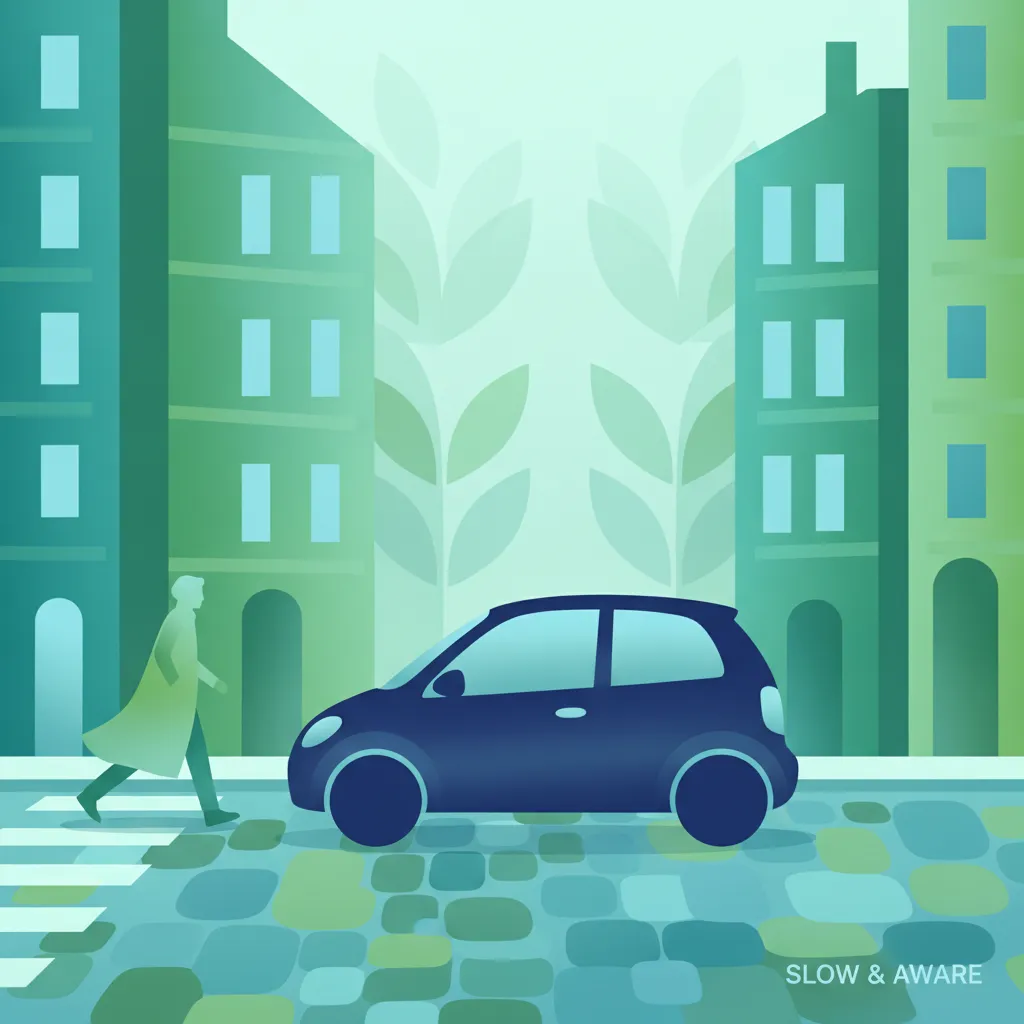
Driving a bus in older parts of a city requires exceptional spatial awareness and precise control. This lesson focuses on assessing clearances, managing front and rear overhang, and negotiating tight turns around parked cars and buildings. A key theme is slow, careful, and deliberate manoeuvring to avoid contact.
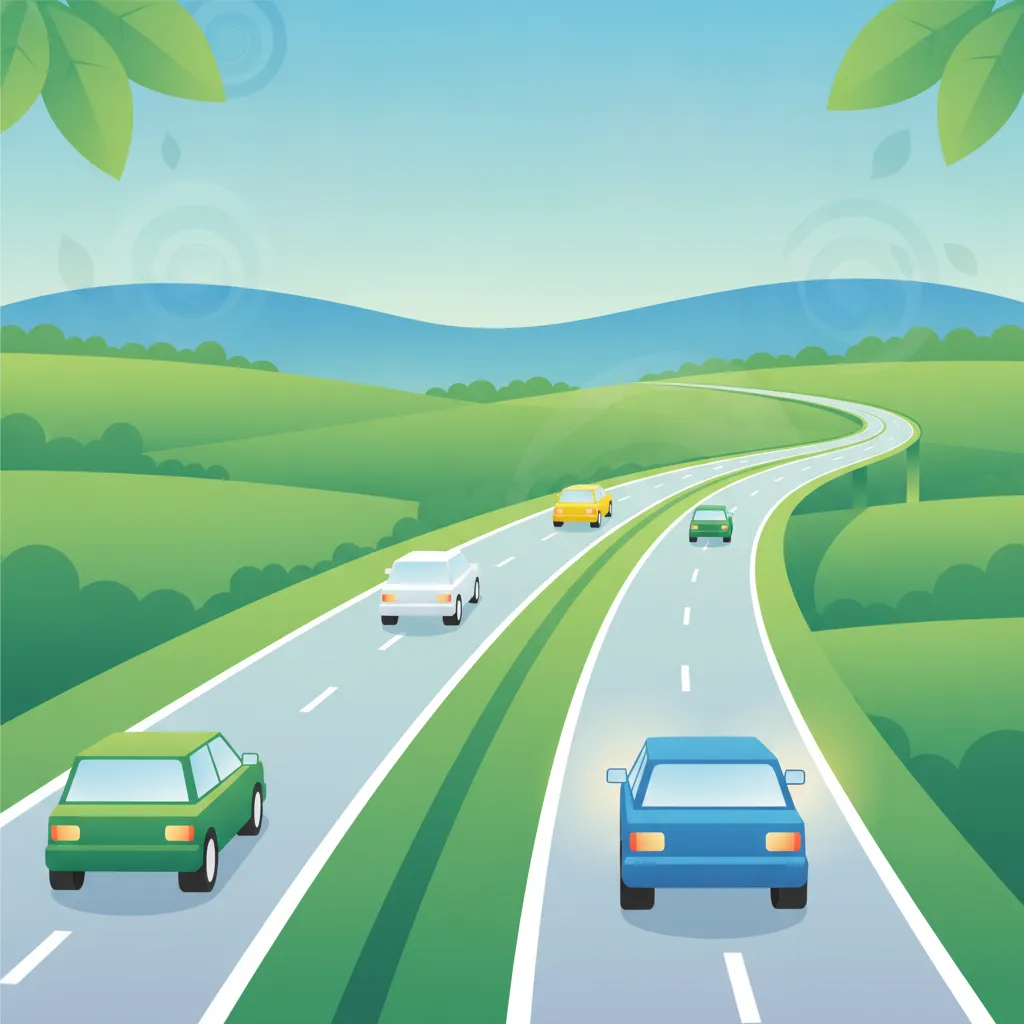
Motorway driving involves high speeds and requires constant concentration. This lesson covers correct lane discipline, safe procedures for joining and leaving the motorway, and techniques for overtaking other large vehicles. Maintaining appropriate speed and a safe following distance is emphasized throughout.

Driving a large vehicle on mountain passes is a demanding skill. This lesson covers selecting the correct gear for both ascents and descents to maintain control and avoid overheating the brakes. It also explains the specific priority rules that apply on mountain roads and the importance of being aware of sudden weather changes.

The legal speed limit is a maximum, not a target. This lesson teaches the professional driver's approach to speed management, which involves constantly assessing traffic, road, and weather conditions. You will learn to adjust your speed to ensure you can always stop safely within the distance you can see to be clear.
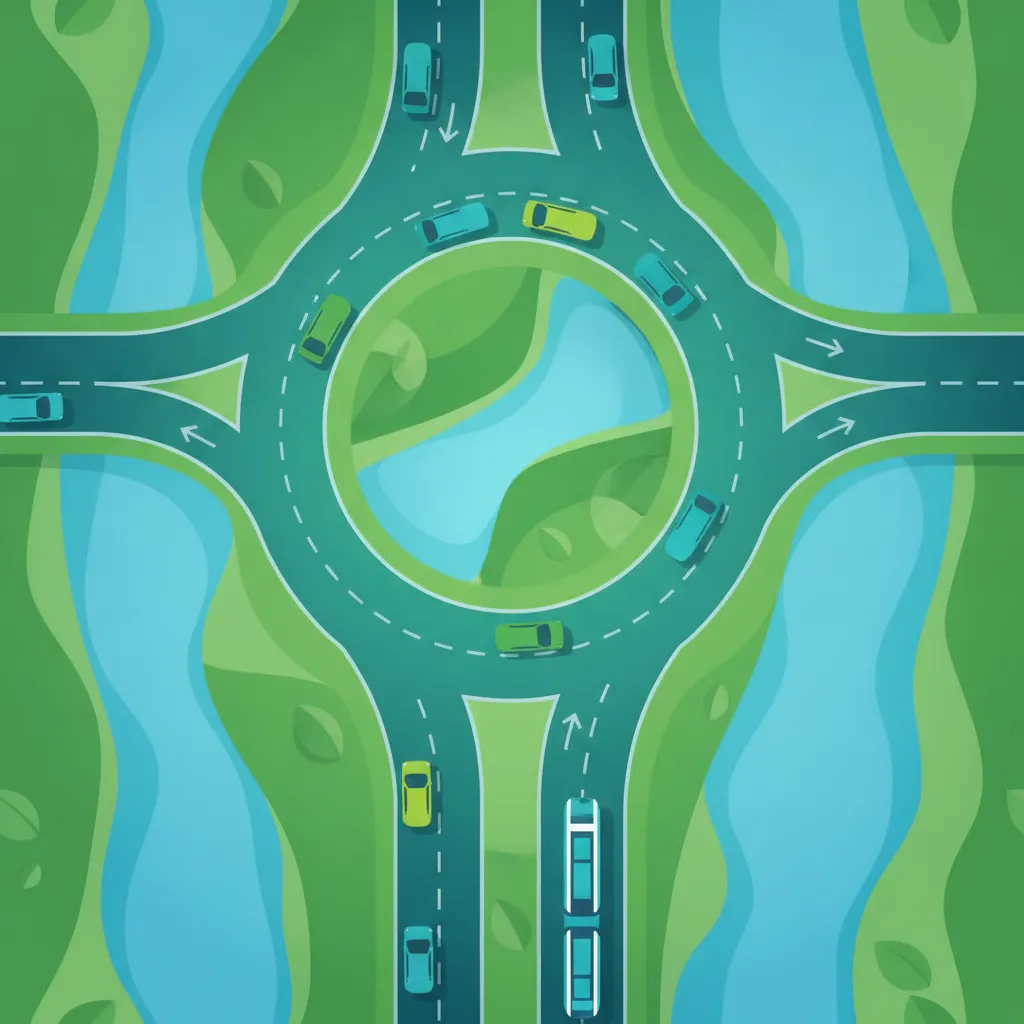
The size of a bus requires careful planning when negotiating complex intersections. This lesson teaches the importance of early lane selection, clear signalling, and comprehensive observation. It provides specific techniques for managing the vehicle's swept path through multi-lane roundabouts and other challenging urban junctions.

Rural roads present challenges like narrow lanes, poor surfaces, sharp bends, and limited visibility. This lesson teaches drivers how to position their large vehicle to maximize space and visibility, anticipate oncoming traffic at blind corners, and be aware of specific rural hazards. These hazards include slow-moving agricultural vehicles, animals on the road, and concealed farm entrances.

This lesson moves beyond simply staying within the lines, teaching how to actively position your vehicle within the lane to manage risk. You will learn to create a 'safety cushion' of space around your bus. This proactive approach improves your reaction time and gives other road users more space, reducing the likelihood of conflicts.

This lesson focuses on general driving safety in areas with a high concentration of children. It stresses the importance of significantly reducing speed, being prepared for unexpected events, and scanning for children between parked cars. The driver must exhibit maximum vigilance in these high-risk environments at all times.

Bus lanes are a key tool for improving service reliability, but they come with specific rules. This lesson covers how to correctly interpret bus lane signs and markings. It also explains the regulations for entering and leaving the lane to make turns or avoid obstructions, and the priority rules associated with them.
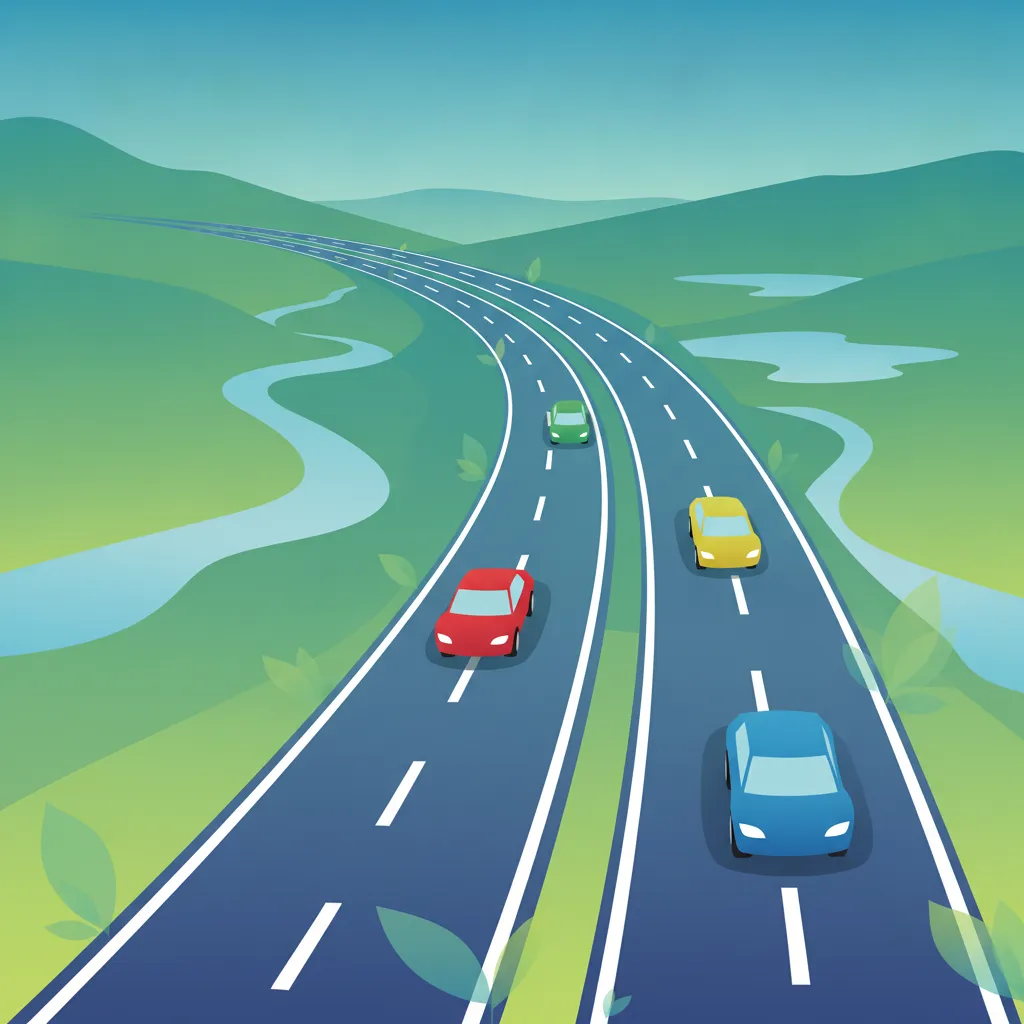
Motorway driving requires constant concentration due to high speeds. This lesson emphasizes the importance of staying in the right-hand lane unless overtaking and the specific restrictions on lorry overtaking in Switzerland. It reinforces the need for a following distance of at least four seconds to compensate for the vehicle's long stopping distance and provides guidance on safely merging and exiting.
Learn to identify and manage specific hazards on Swiss rural roads, including farm machinery and livestock. Understand critical width and height clearance requirements for buses and coaches to ensure safe navigation.
Rural roads present challenges like narrow lanes, poor surfaces, sharp bends, and limited visibility. This lesson teaches drivers how to position their large vehicle to maximize space and visibility, anticipate oncoming traffic at blind corners, and be aware of specific rural hazards. These hazards include slow-moving agricultural vehicles, animals on the road, and concealed farm entrances.
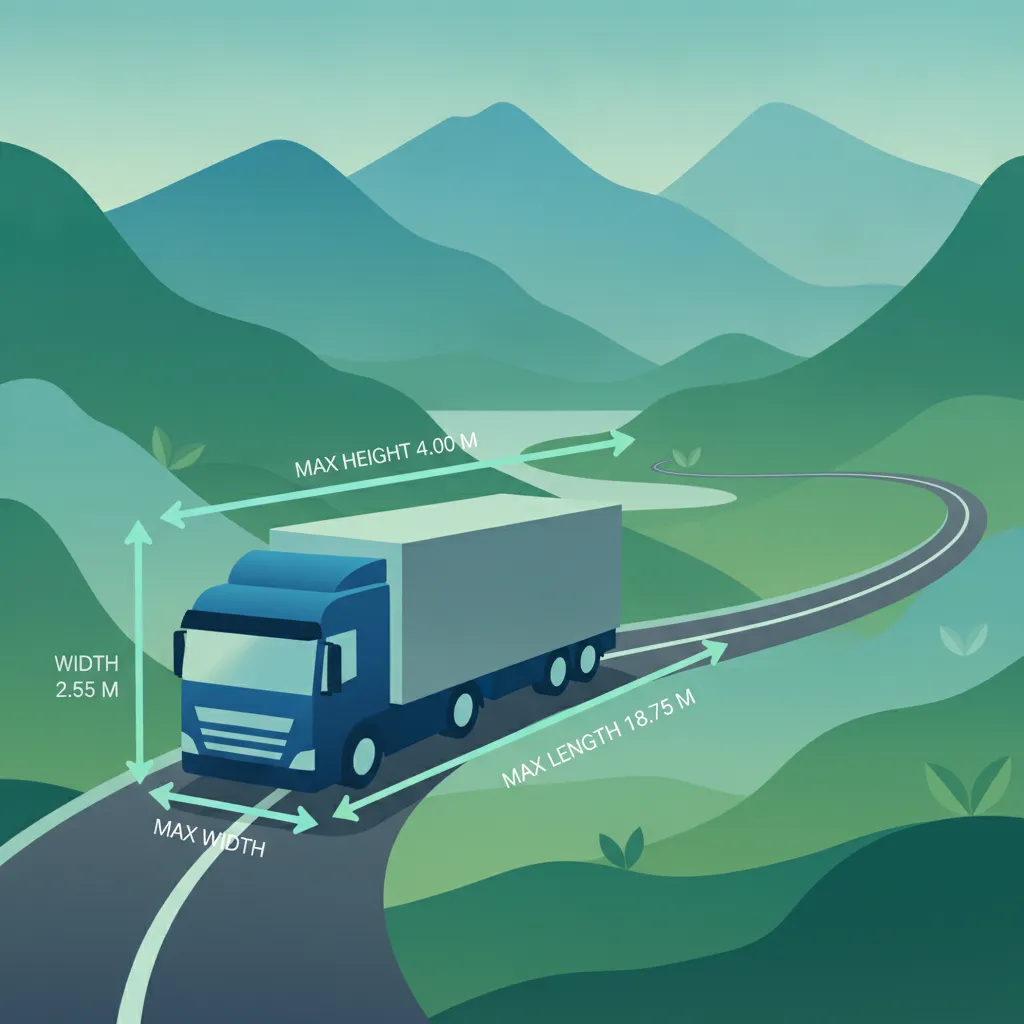
Swiss law strictly regulates the maximum dimensions of commercial vehicles to ensure they can safely navigate the infrastructure. This lesson specifies the standard limits for vehicle height (4.0m), width (2.55m), and length for various lorry and trailer combinations. Adhering to these dimensions is crucial for avoiding collisions with bridges, tunnels, and other structures, and for navigating narrow roads.
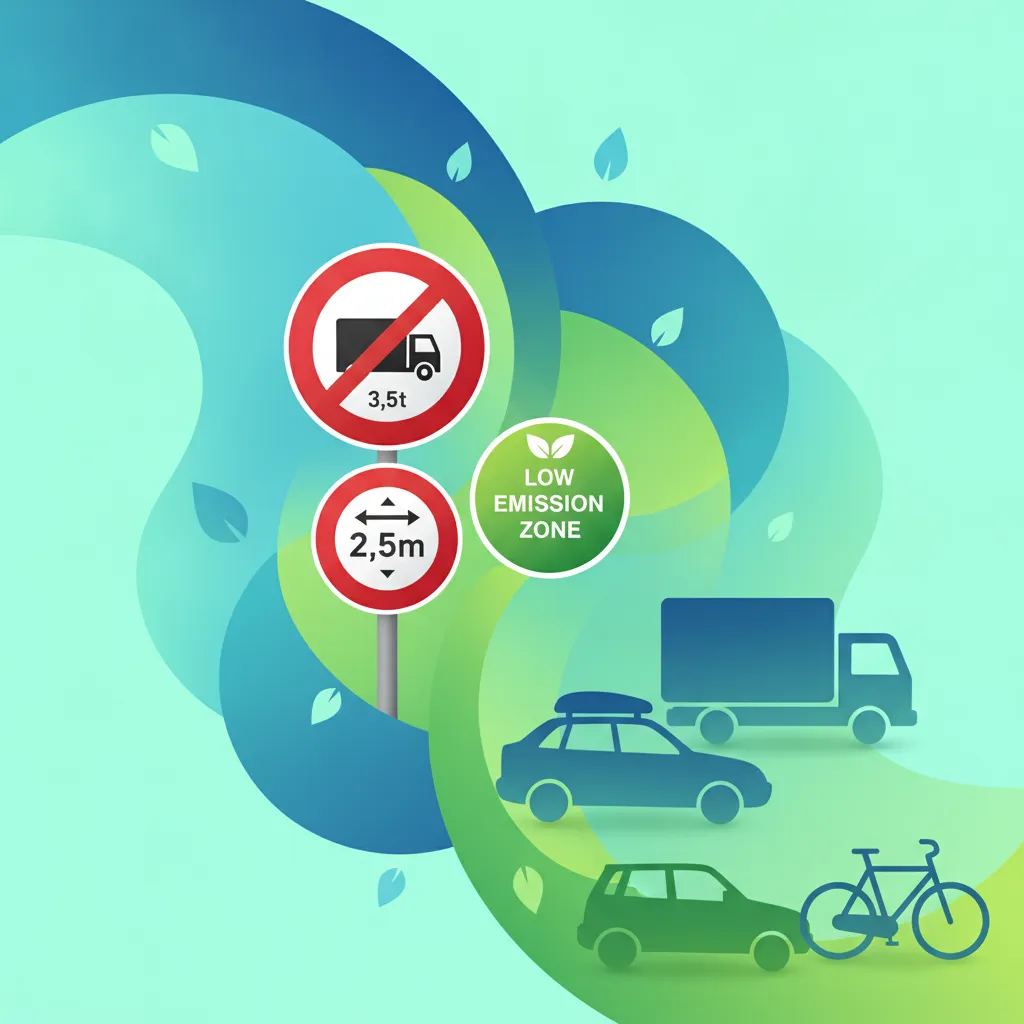
Many urban areas have restrictions to manage traffic and protect infrastructure. This lesson teaches drivers to identify and interpret traffic signs that prohibit access based on gross vehicle weight, axle load, height, or width. It also covers the growing prevalence of environmental or low-emission zones, which may restrict entry for older, more polluting vehicles.
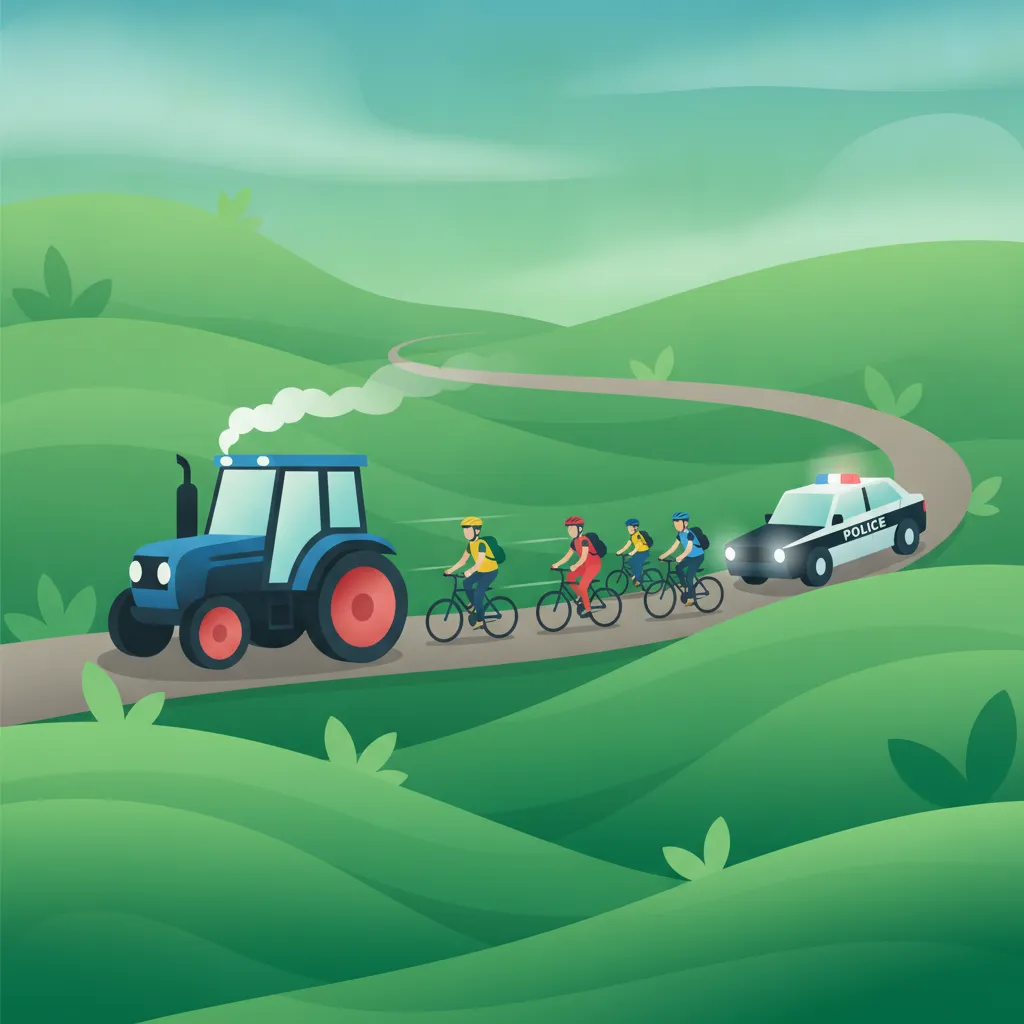
This lesson focuses on strategies for safely interacting with non-standard traffic common on rural roads. It covers how to anticipate the behaviour of slow-moving farm equipment and tourist vehicles, and the legal requirement to yield to emergency services. The importance of patience and safe passing opportunities is stressed.
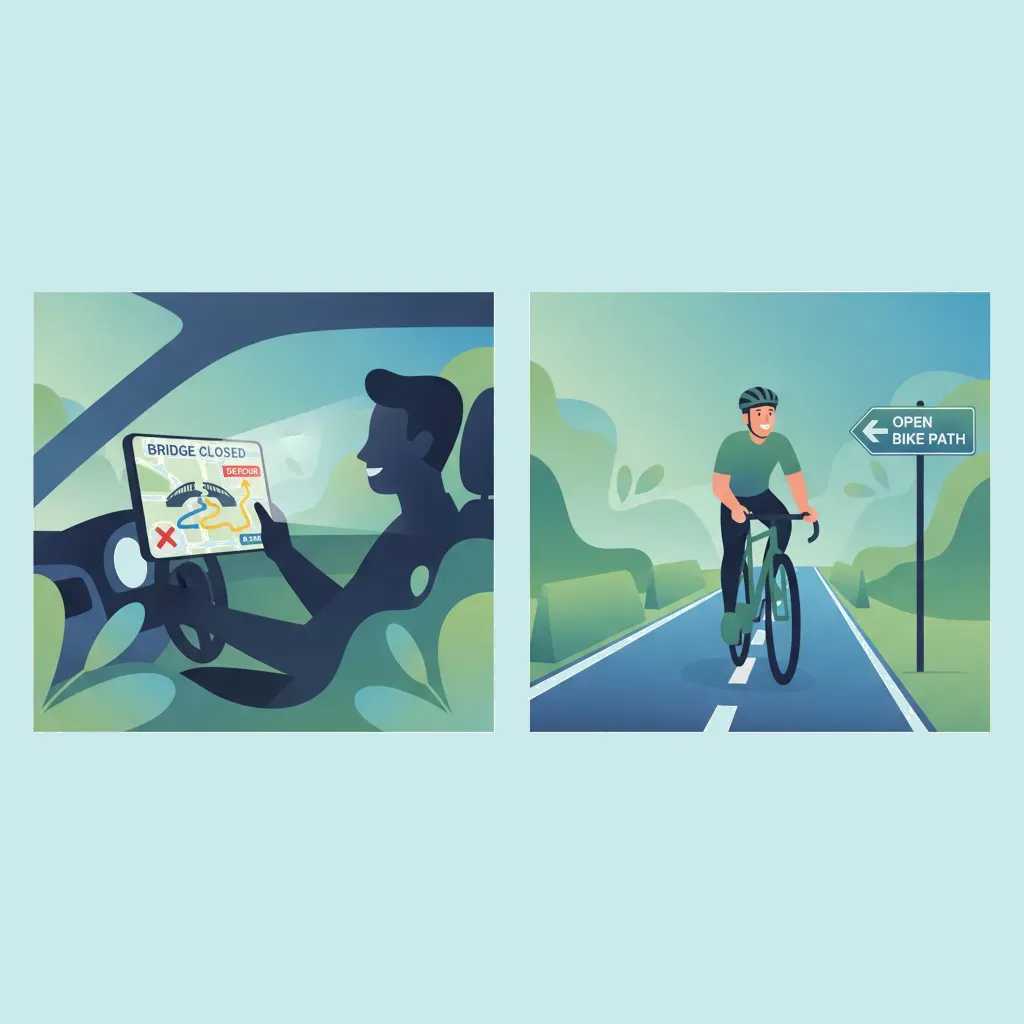
Unlike cars, heavy vehicles cannot travel on every road. This lesson stresses the importance of using HGV-specific satellite navigation systems or carefully checking maps to plan routes that avoid low bridges, weak bridges, and roads with weight or width restrictions. Proper planning saves time, fuel, and prevents dangerous situations or costly damage.
Motorway driving requires constant concentration due to high speeds. This lesson emphasizes the importance of staying in the right-hand lane unless overtaking and the specific restrictions on lorry overtaking in Switzerland. It reinforces the need for a following distance of at least four seconds to compensate for the vehicle's long stopping distance and provides guidance on safely merging and exiting.

This lesson focuses on safe interaction with large vehicles. It highlights the significant blind spots (or 'no-zones') around trucks and buses and teaches riders how to position themselves to remain visible. The content also provides guidance on overtaking large vehicles safely and anticipating their wide turning radius at intersections.
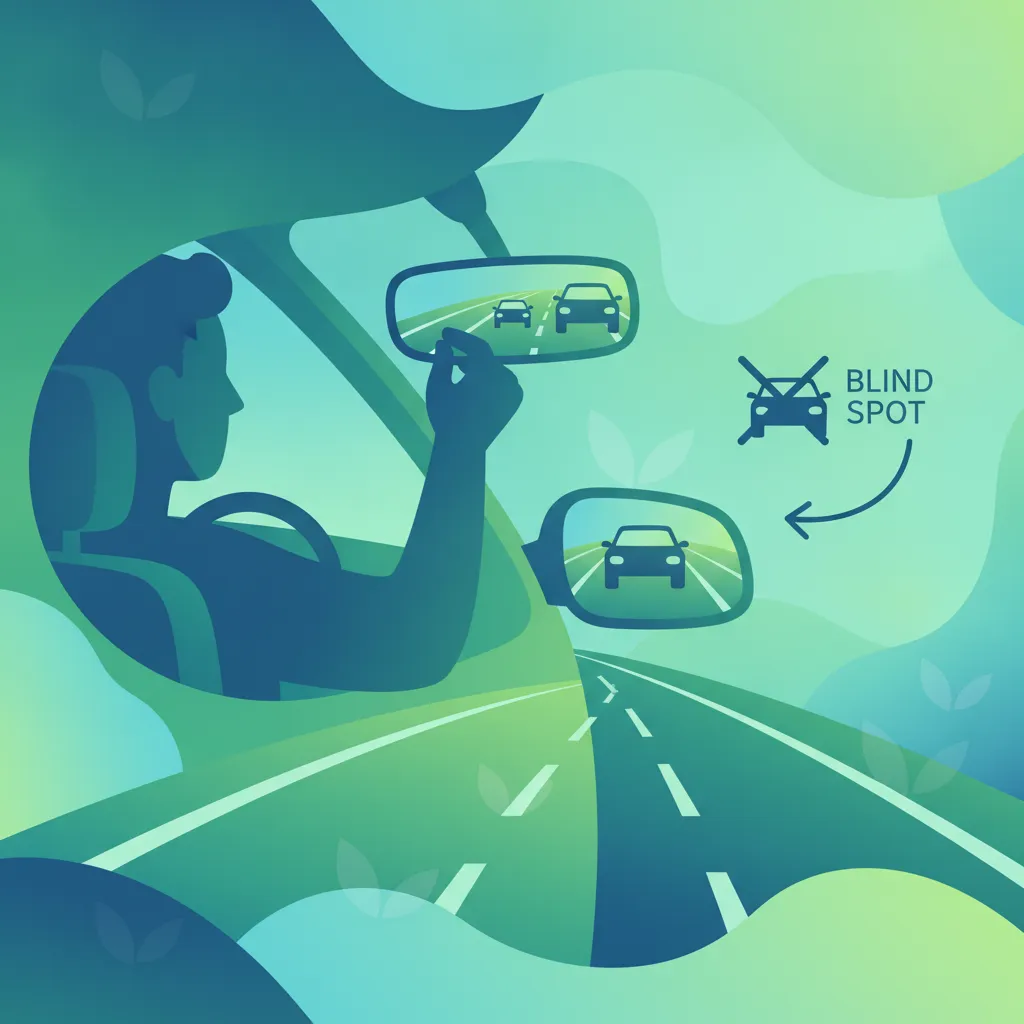
Despite the complex mirror systems, large areas around a truck remain hidden from the driver's view. This lesson maps out these significant blind spots: directly in front, behind, and along both sides of the vehicle. It teaches drivers to be constantly aware of these 'no-zones' and to anticipate that smaller vehicles, cyclists, or pedestrians may be hidden within them, especially before changing lanes or turning.

This lesson explores the typical features of rural and alpine roads, such as narrow lanes, sharp bends, and significant elevation changes. It discusses the need for heightened awareness due to limited sight distances and the potential for unexpected hazards like wildlife or agricultural vehicles. Riders will learn to adapt their speed and positioning for these challenging conditions.
This lesson focuses on general driving safety in areas with a high concentration of children. It stresses the importance of significantly reducing speed, being prepared for unexpected events, and scanning for children between parked cars. The driver must exhibit maximum vigilance in these high-risk environments at all times.
Find clear answers to common questions learners have about Navigating Rural and Narrow Country Roads. Learn how the lesson is structured, which driving theory objectives it supports, and how it fits into the overall learning path of units and curriculum progression in Switzerland. These explanations help you understand key concepts, lesson flow, and exam focused study goals.
Always maintain a position that keeps your bus clearly within your lane, being cautious of the verge. On very narrow roads, slow down significantly and be prepared to stop if the road is too tight to share, ensuring you do not drop your wheels onto soft ground which could cause the vehicle to tilt or sink.
Exercise extreme patience and only pass when you have a clear, long view of the road ahead. Agricultural machinery is often wider than it appears and may have attachments that swing out; maintain a generous side clearance and be prepared for the vehicle to turn into hidden field entrances.
Yes, you must continuously monitor your side and front-view mirrors to track the rear overhang and side clearance. When driving a bus, the tail swing during steering on tight curves is a major hazard to road signs and other road users, so constant observation is required.
Observe warning signs regarding vehicle width, height, and weight restrictions before entering rural routes. If a road is marked as unsuitable for heavy vehicles, do not attempt to pass, as you may find yourself unable to reverse or complete a turn, creating a dangerous blockage.
Pinpoint specific Swiss traffic rules, road signs, or driving situations you need to master. Use the practice search to start a focused revision session now and build confidence for your official driving theory exam.