
This lesson provides an in-depth look at the warning signs you will encounter on Swiss roads, teaching you how to identify potential dangers early. By mastering these signals, you will develop the anticipatory driving skills necessary to safely manage curves, intersections, and roadwork. This knowledge is essential for your Category B theoretical exam and serves as a foundation for your practical driving experience.
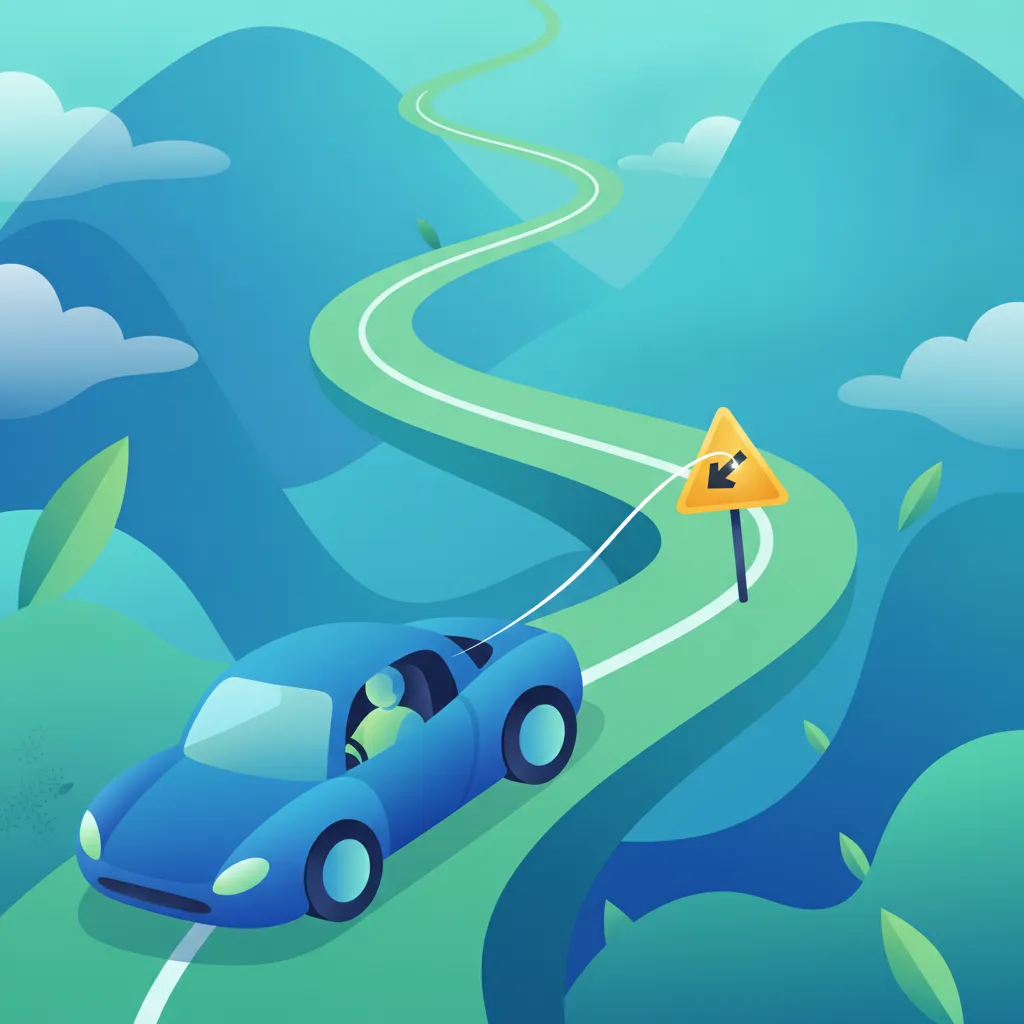
Lesson content overview
Driving safely on Swiss roads requires a keen understanding of traffic signs, especially those that warn of potential hazards. This lesson, part of the Comprehensive Swiss Driving Theory Course for Category B License, focuses on warning signs, their critical role in preventing accidents, and how they prompt anticipatory driving behavior. By understanding these triangular red-bordered signs, drivers can adjust their speed, position, and overall approach to safely navigate changing road conditions and potential dangers ahead.
Warning signs are crucial visual cues placed along the roadway to alert drivers to upcoming dangers or special conditions that require increased caution. Unlike regulatory signs that command or prohibit actions, warning signs serve to inform, giving drivers precious time to prepare and react appropriately. Their primary purpose is to enhance road safety by providing advance notice of physical road conditions or situations that could affect vehicle handling, visibility, or decision-making.
Warning signs in Switzerland, like in many European countries, are easily recognizable by their triangular shape with a red border and a black symbol on a white background. Each symbol graphically represents a specific type of hazard, from sharp curves and steep descents to roadworks or animal crossings. Their presence is a direct call for drivers to reduce speed, heighten vigilance, and adapt their driving style to the impending conditions. These signs are a cornerstone of road safety theory, ensuring that drivers are not caught unaware by sudden changes in the road environment.
The fundamental principle behind warning signs is to enable anticipatory driving. This means adjusting your speed, trajectory, and overall driving behavior before reaching a hazardous area, rather than reacting abruptly once you are already in it. By providing advance notice, warning signs significantly increase a driver's reaction time, allowing for smoother speed modulation, safer maneuvering, and a reduced likelihood of accidents. Proactive adjustment, informed by warning signs, improves safety margins for all road users.
Adjusting speed and trajectory before reaching a hazardous area based on pre-emptive information from warning signs or road conditions.
For warning signs to be effective, their placement is critical. They are strategically positioned at a distance that provides sufficient reaction time for typical vehicle speeds on that particular stretch of road. This distance can vary significantly based on the road type (e.g., urban, rural, motorway), the posted speed limit, and the severity of the impending hazard. For instance, a warning sign for a sharp bend on a fast rural road will be placed further in advance than a sign for a gentle curve in a residential area. Drivers must always be attentive to these signs, as their timely perception is the first step towards safe navigation.
Swiss warning signs cover a wide array of potential hazards. Recognizing and correctly interpreting these signs, along with understanding the appropriate driver response, is paramount for safe driving.
Curves and bends are common features on Swiss roads, ranging from gentle sweeping turns on motorways to tight hairpin bends in mountainous regions. Warning signs indicating curves are designed to prompt drivers to reduce speed and prepare for changes in direction.
When approaching a curve warning sign, it is essential to adapt your speed to the curve's radius. For sharper bends, a more significant speed reduction is necessary. Proper lane positioning is also crucial; for right-hand curves, staying slightly towards the left side of your lane (while remaining within it) can improve visibility and provide a better entry angle, and vice-versa for left-hand curves. Overtaking is generally prohibited where signs indicate a curve ahead, especially if visibility is limited.
For sharper curves, consider shifting to a lower gear before entering the bend. This uses engine braking to help control your speed and keeps power readily available for acceleration out of the curve.
Switzerland's mountainous terrain means drivers frequently encounter steep descents and ascents. Warning signs for these conditions prepare drivers for significant changes in gradient that require specific vehicle handling techniques.
On a steep descent, reducing speed is critical to prevent brake overheating, also known as brake fade, which can lead to a loss of braking power. It is advisable to select a lower gear to engage engine braking, allowing the engine to help slow the vehicle and reduce reliance on the foot brake. Heavy vehicles, in particular, often have specific speed restrictions on steep descents due to their mass and momentum. For steep ascents, maintaining appropriate speed and selecting a suitable gear will help prevent engine strain and potential stalling, especially in manual transmission vehicles.
Roadwork zones present temporary and often dynamic changes to the road layout, requiring heightened attention and adherence to temporary regulations. Warning signs for roadworks alert drivers to these altered conditions.
These signs are frequently accompanied by supplementary signs indicating temporary lane shifts, reduced speed limits, or temporary stop lines. Drivers must strictly follow all temporary lane markings, reduce their speed to the posted limit, and be prepared for potential hazards such as loose gravel, uneven surfaces, or construction workers on the roadway. Ignoring temporary signs in roadwork zones significantly increases the risk of accidents and poses a danger to both drivers and workers. Overtaking may also be prohibited in these zones.
In many rural and forested areas of Switzerland, wildlife can unexpectedly cross the road. Animal crossing signs are a crucial warning in such locations.
Upon seeing an animal crossing sign, drivers should reduce their speed and be prepared to stop suddenly. This caution is especially important during dusk and dawn, when many animals are most active and visibility is often reduced. It is a common misunderstanding to assume animals will use only fixed crossing points; wildlife can appear anywhere in designated areas. Maintaining heightened vigilance in these zones can prevent collisions with animals, which can be dangerous for both the animal and vehicle occupants.
Blind spots on the road refer to areas where visibility is restricted, such as around sharp bends, over hill crests, or at intersections with obscured views. Warning signs for blind spots indicate these zones of limited sight.
When encountering a blind spot warning sign, drivers must reduce their speed, maintain a safe distance from the vehicle ahead, and be prepared for unseen obstacles or oncoming traffic. Overtaking is almost always prohibited in areas with restricted visibility, as it dramatically increases the risk of a head-on collision. Underestimating the stopping distance needed in blind spots is a common error, highlighting the importance of caution and reduced speed.
Warning signs are frequently accompanied by supplementary signs, which provide additional critical information, clarifying or modifying the primary warning. These smaller panels are usually placed directly below the main sign and are essential for a complete understanding of the hazard.
Some supplementary signs specify particular rules or warnings for certain types of vehicles. For example, a sign below a steep descent warning might state "Heavy vehicles max speed 30 km/h," indicating a special regulation for trucks or vehicles towing trailers. Other signs might restrict certain vehicle types or indicate specific conditions for cyclists or pedestrians within the hazardous zone.
Supplementary signs can also include arrows that clarify the direction of the hazard relative to your current path. For instance, an arrow might indicate that a particular danger, like a specific blind spot or an obstacle, is to the left or right of your immediate path, helping you adjust your lane positioning or vigilance accordingly.
Adherence to Swiss traffic laws, specifically the Strassenverkehrsgesetz (SVG) and its Verkehrsregeln, dictates how drivers must respond to warning signs. These regulations are designed to ensure consistent and safe driving practices across the country.
The overarching obligation for drivers is to adapt their speed and driving behavior to ensure the safe passage of any hazards signaled by warning signs. This means the speed must be reduced to a level that ensures full control of the vehicle, often necessitating a speed lower than the posted general speed limit for the road if conditions demand it. The principle is that the driver is always responsible for adjusting to the prevailing circumstances, irrespective of general limits.
Swiss traffic law generally prohibits overtaking where a warning sign indicates reduced visibility or dangerous conditions. This includes sharp bends, hill crests, and areas specifically designated as blind spots. These restrictions are in place to prevent head-on collisions, which are particularly severe. Drivers must exercise patience and only overtake when visibility is clear and the maneuver can be completed safely without endangering others.
Heavy vehicles are subject to additional scrutiny and rules, especially on steep descents. Regulations may require them to observe specific, lower speed limits than lighter vehicles to prevent brake failure and maintain control. Heavy vehicle operators must also make judicious use of engine braking and lower gears to manage their speed effectively on gradients.
In roadwork zones, any temporary speed limits, lane configurations, or traffic light signals indicated by warning signs and supplementary signs are legally binding. These temporary regulations supersede permanent ones and must be followed meticulously to ensure the safety of both drivers and road workers. Failure to comply can result in fines and increased risk of accidents.
The interpretation and appropriate response to a warning sign are not always static; they must be adapted based on various contextual factors. Safe driving involves processing the sign's information in conjunction with the real-time driving environment.
Adverse weather conditions significantly impact how drivers should react to warning signs. In rain, fog, snow, or icy conditions, the required speed reduction for a given hazard, such as a curve or a steep descent, will be substantially greater than in dry conditions. Reduced grip and visibility necessitate a more cautious approach and larger safety margins. For instance, a "Winding Road" sign demands much slower speeds on an icy surface than on a dry one.
The type and state of your vehicle also influence your response. A heavily loaded vehicle or one towing a trailer will require earlier and more significant speed reductions, especially on descents and before curves, due to increased mass and momentum. Such vehicles also have longer stopping distances and are more susceptible to stability issues. Conversely, a lighter, more agile vehicle might handle certain hazards with slightly less dramatic speed reductions, though caution remains paramount.
The presence of vulnerable road users, such as pedestrians, cyclists, or motorcyclists, in an area indicated by a warning sign further influences required driver behavior. For example, a blind spot warning sign in an urban area with high pedestrian traffic requires even stricter overtaking prohibitions and slower speeds to protect these users. Drivers must always assume the presence of vulnerable users, particularly in areas like villages, schools, or recreational zones.
Reduced visibility at night or during twilight hours, or in conditions like heavy fog or glare from the sun, increases the required safety margin. Drivers must anticipate hazards earlier and adopt more conservative speeds, as their perception range is significantly diminished. Proper use of headlights and fog lights becomes crucial in such circumstances to improve both your visibility and your ability to be seen by others.
Ignoring or misinterpreting warning signs is a common cause of road incidents. Understanding these pitfalls can help drivers avoid them:
The proper use of warning signs is deeply rooted in fundamental safety principles and effective risk management.
Understanding the theory of warning signs is best solidified through practical application. Here are a few scenarios:
This lesson teaches the essential role of Swiss warning signs in enabling anticipatory driving, where drivers adjust speed and positioning before reaching hazards rather than reacting inside them. It covers key sign categories including curves, steep descents and ascents, roadwork zones, animal crossings, and blind spots, along with their associated driver responses. The lesson explains how supplementary signs provide critical details about distance to hazards, hazard length, and vehicle-specific restrictions. Understanding these signs is vital for passing the Category B theory exam and for safe driving in Switzerland's varied terrain, from motorways to mountain roads.
A short set of high-value points that capture the most important learning from this lesson.
Swiss warning signs are triangular with red borders and black symbols on white backgrounds, each indicating a specific hazard type.
Anticipatory driving means adjusting speed, gear, and position before reaching a hazard, not reacting once you are in it.
Steep descent signs require using lower gears for engine braking to prevent brake fade, which is especially critical in Switzerland's mountainous terrain.
Supplementary signs below warning signs provide essential details like distance to hazard, hazard length, and vehicle-specific restrictions that must be observed.
All warning signs are legally binding safety directives requiring behavioral adaptation; they are not optional recommendations.
Explore all units and lessons included in this driving theory course.
Warning signs are placed at distances proportional to road speed, giving adequate reaction time for typical traffic conditions.
Sharp curves require downshifting before entry and positioning slightly toward the outside of the lane for better visibility.
Overtaking is prohibited where visibility is restricted, including blind spot zones, hill crests, and before curves with limited sight lines.
Animal crossing signs demand extra vigilance at dawn and dusk when wildlife is most active and visibility is reduced.
Temporary speed limits and lane configurations in roadwork zones are legally enforceable and supersede permanent posted limits.
Speeding through curve warning signs underestimating lateral forces, risking skidding or losing vehicle control.
Attempting to overtake in blind spot zones where visibility is restricted, creating high risk of head-on collisions.
Ignoring temporary speed limits in roadwork zones, endangering workers and facing potential fines.
Failing to use lower gears on steep descents, relying solely on foot brakes and risking brake fade and loss of braking power.
Neglecting to check supplementary signs indicating hazard length, leading to premature acceleration back into an ongoing danger zone.
Lesson content overview
A short set of high-value points that capture the most important learning from this lesson.
Swiss warning signs are triangular with red borders and black symbols on white backgrounds, each indicating a specific hazard type.
Anticipatory driving means adjusting speed, gear, and position before reaching a hazard, not reacting once you are in it.
Steep descent signs require using lower gears for engine braking to prevent brake fade, which is especially critical in Switzerland's mountainous terrain.
Supplementary signs below warning signs provide essential details like distance to hazard, hazard length, and vehicle-specific restrictions that must be observed.
All warning signs are legally binding safety directives requiring behavioral adaptation; they are not optional recommendations.
Explore all units and lessons included in this driving theory course.
Warning signs are placed at distances proportional to road speed, giving adequate reaction time for typical traffic conditions.
Sharp curves require downshifting before entry and positioning slightly toward the outside of the lane for better visibility.
Overtaking is prohibited where visibility is restricted, including blind spot zones, hill crests, and before curves with limited sight lines.
Animal crossing signs demand extra vigilance at dawn and dusk when wildlife is most active and visibility is reduced.
Temporary speed limits and lane configurations in roadwork zones are legally enforceable and supersede permanent posted limits.
Speeding through curve warning signs underestimating lateral forces, risking skidding or losing vehicle control.
Attempting to overtake in blind spot zones where visibility is restricted, creating high risk of head-on collisions.
Ignoring temporary speed limits in roadwork zones, endangering workers and facing potential fines.
Failing to use lower gears on steep descents, relying solely on foot brakes and risking brake fade and loss of braking power.
Neglecting to check supplementary signs indicating hazard length, leading to premature acceleration back into an ongoing danger zone.
Explore search topics learners often look for when studying Warning Signs and Hazard Awareness. These topics reflect common questions about road rules, driving situations, safety guidance, and lesson level theory preparation for learners in Switzerland.
Browse additional driving theory lessons that cover connected traffic rules, road signs, and common driving situations related to this topic. Improve your understanding of how different rules interact across everyday traffic scenarios.
Learn how supplementary signs provide crucial details for warning signs, including distance, length, and specific vehicle restrictions. Essential for adapting your driving behaviour safely in Switzerland.
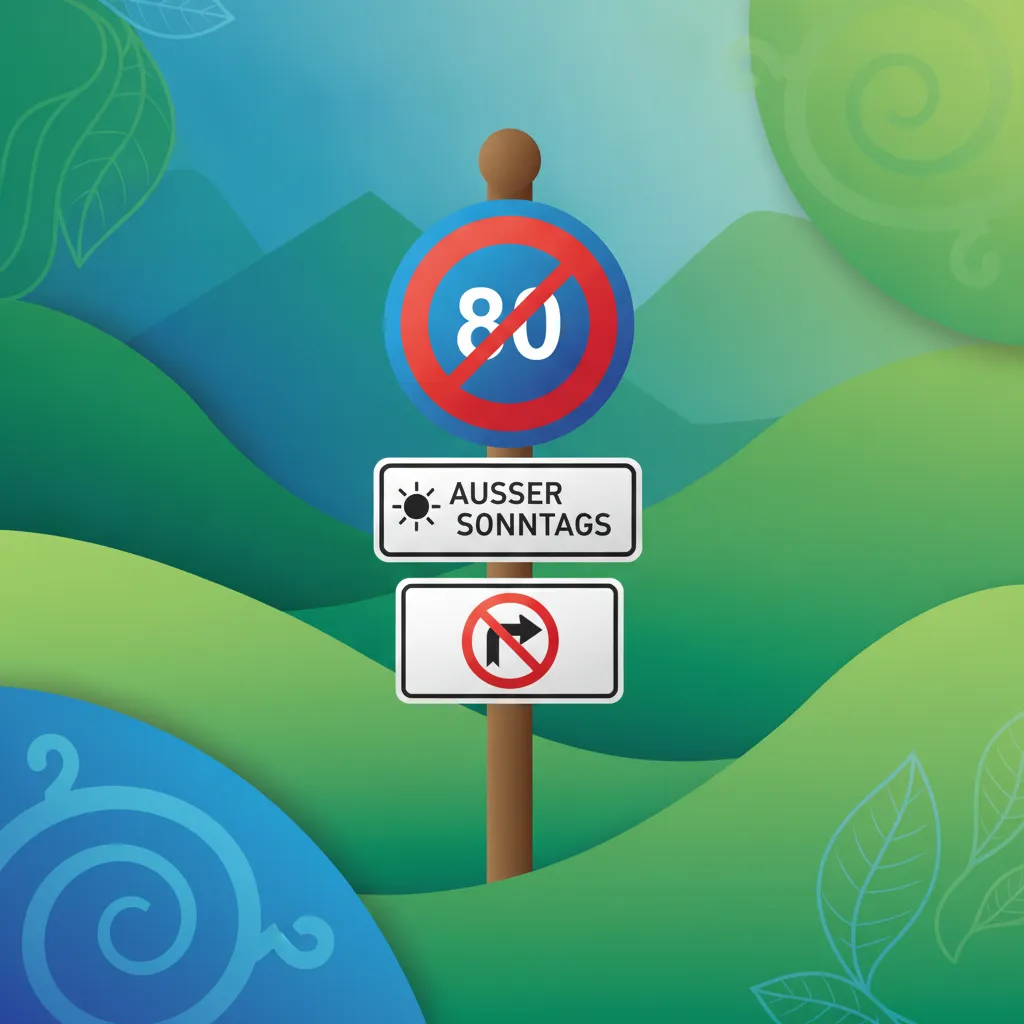
This lesson delves into supplementary signs that modify or clarify the meaning of primary traffic signs. You will learn to interpret signs indicating time restrictions, vehicle-specific limitations, and lane-specific instructions. The content also highlights how these signs interact with main regulatory signs to convey precise, context-sensitive traffic rules.
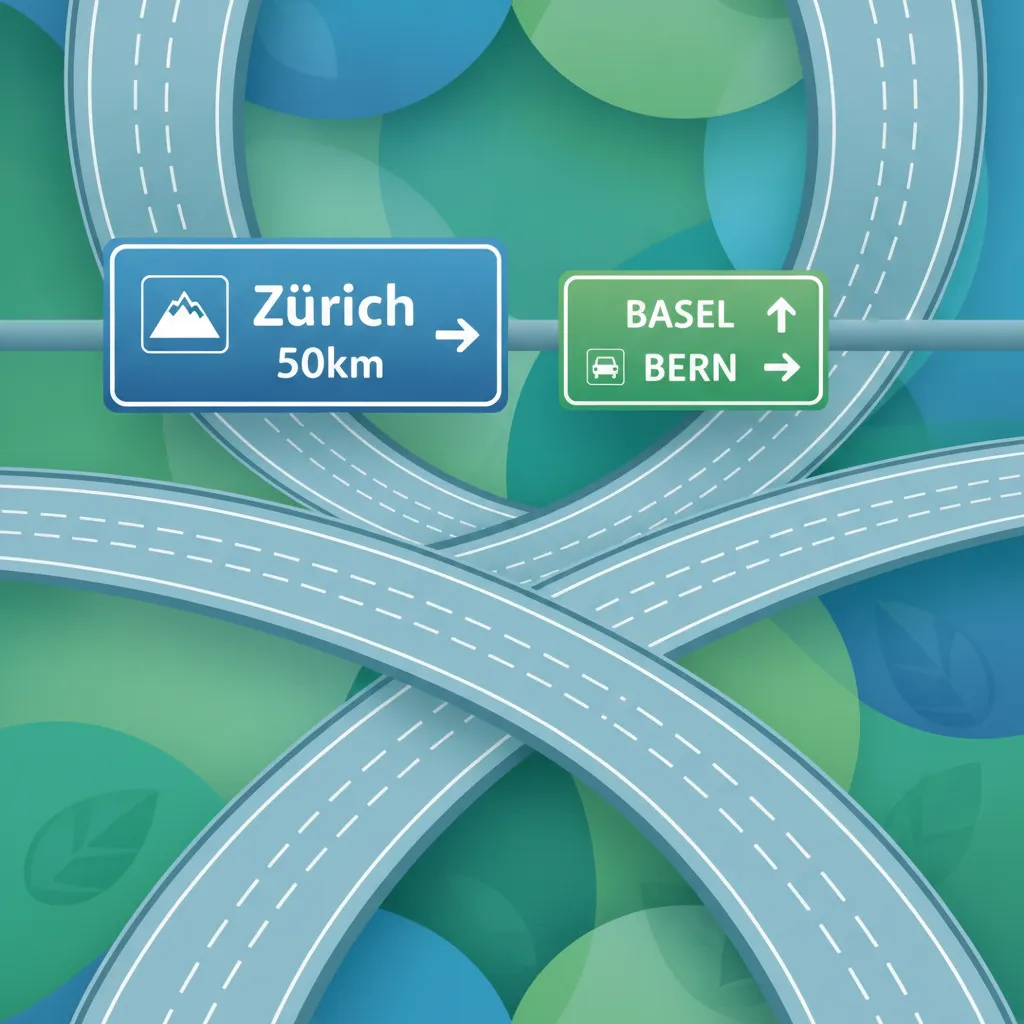
This lesson examines informational signs that provide route guidance, destination distances, and tourist information. It explains how direction signs, distance markers, and service area signs assist drivers in planning routes and making informed decisions. Understanding the logic of informational signage ensures efficient and safe navigation through the Swiss road network.
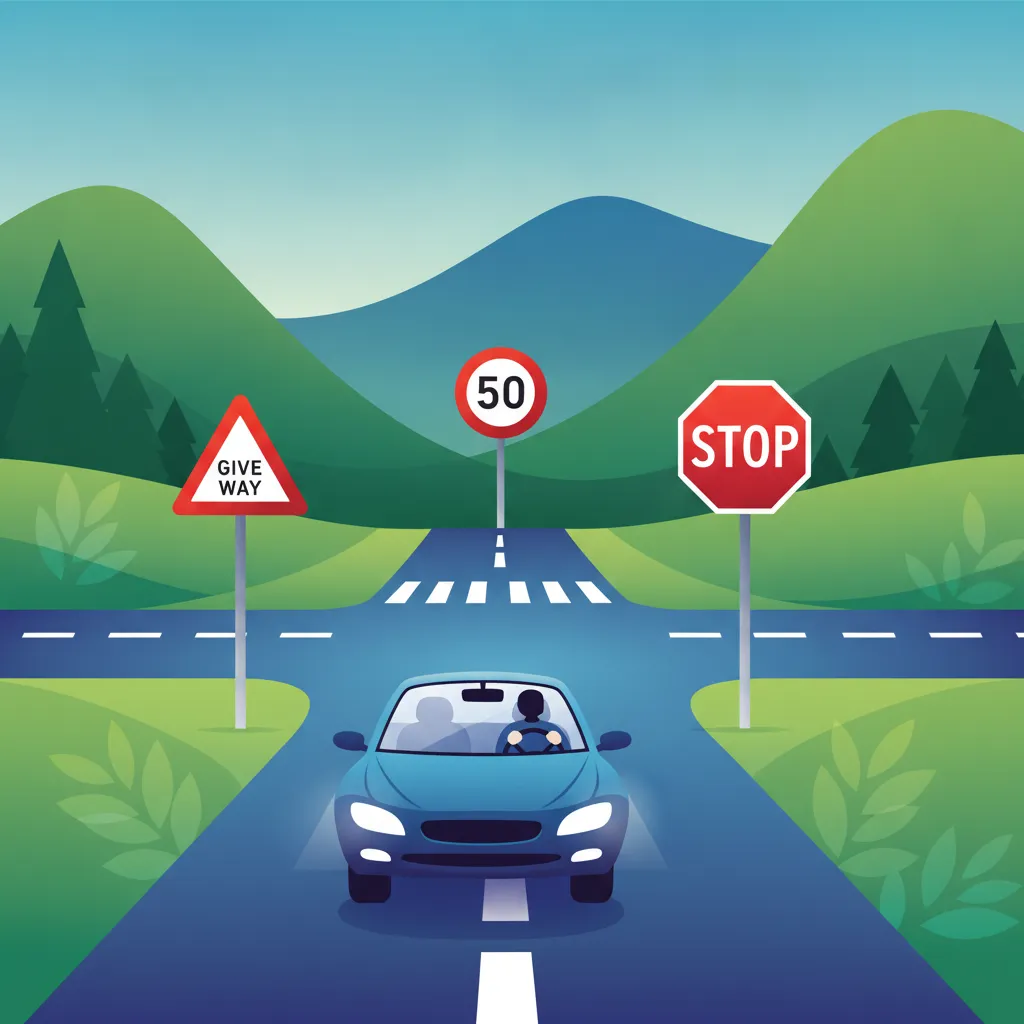
This lesson explores the category of regulatory signs, which dictate permissible and prohibited actions for drivers. It covers speed limit signs, entry restrictions, and mandatory direction signs, explaining their legal significance. Emphasis is placed on recognizing the shapes and colours that distinguish these critical signs within the Swiss traffic system.

This lesson focuses on driving on mountain roads, addressing steep gradients, hairpin bends, and altitude-related challenges. You will learn proper techniques for climbing ascents and using engine braking on descents. The content also covers the use of snow chains, recognizing avalanche risks, and interpreting mountain road signs for safe alpine navigation.
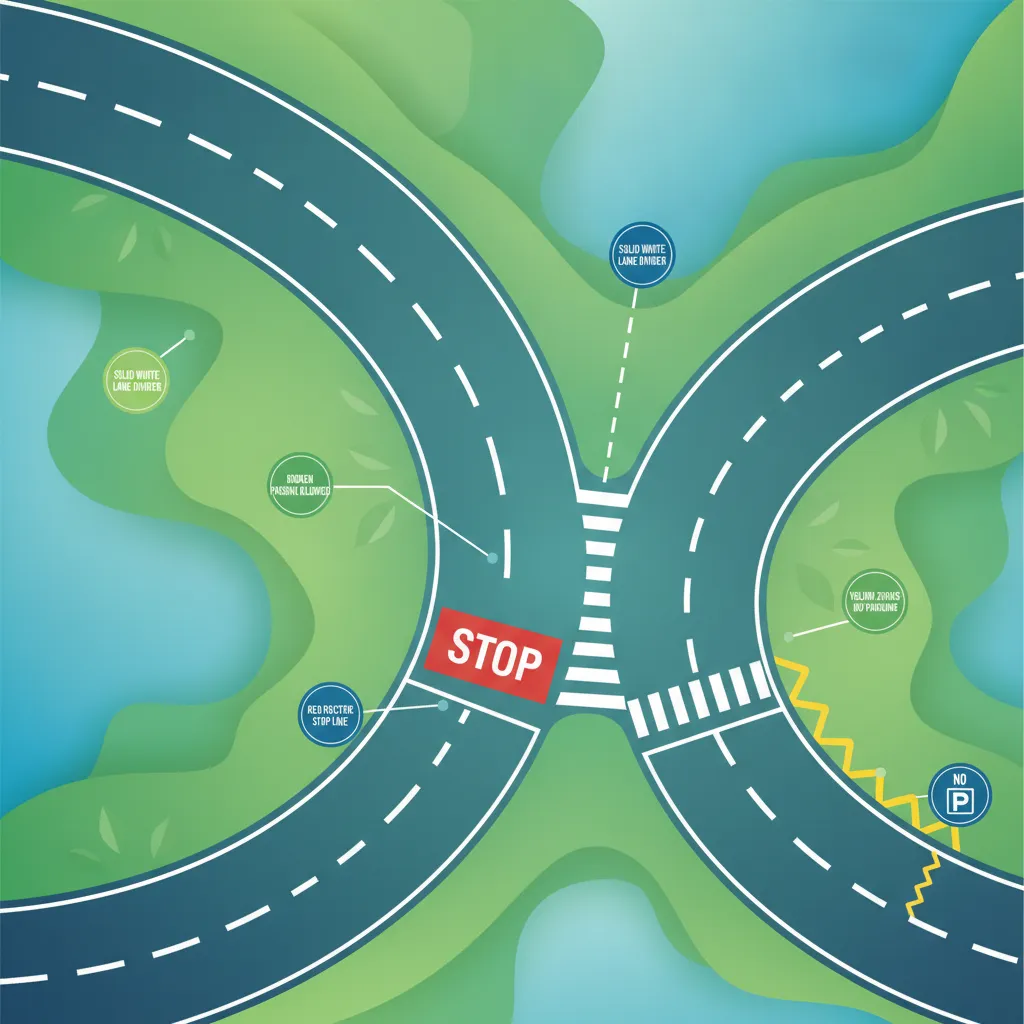
This lesson covers the various road surface markings that dictate lane usage, turning movements, and pedestrian zones. It explains the significance of solid versus broken lines, directional arrows, and specific markings for bike lanes. Understanding these markings is crucial for maintaining lane discipline and ensuring safe interactions in complex traffic environments.

This lesson introduces the fundamental traffic signs that directly impact small vehicle riders. It covers the classification of signs into regulatory, warning, and mandatory categories, explaining how their shape and color indicate their function. Learners will be able to recognize and correctly interpret speed limits, priority signs, and other key information vital for safe navigation.

This lesson focuses on general driving safety in areas with a high concentration of children. It stresses the importance of significantly reducing speed, being prepared for unexpected events, and scanning for children between parked cars. The driver must exhibit maximum vigilance in these high-risk environments at all times.

This lesson introduces the core behaviour rules governing safe communication, focusing on the use of signals, mirrors, and eye contact. It emphasizes the importance of timely indicator usage and the correct procedure for checking mirrors and blind spots. The content also covers non-verbal communication cues that help convey intent and foster predictable traffic flow.
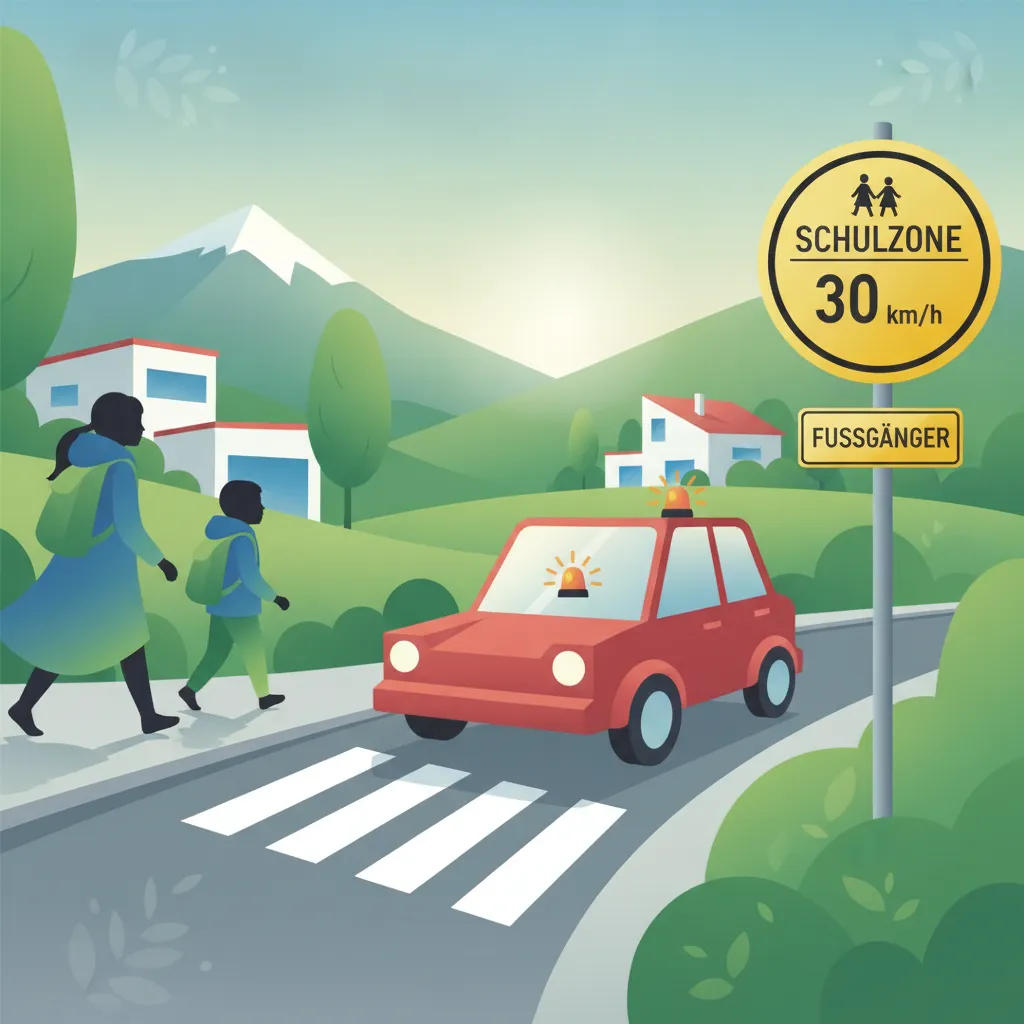
This lesson focuses on school zones, where special speed limits and cautionary measures are required. You will learn to recognize school zone signs, understand reduced speed limits, and be aware of designated child crossing zones. The content also emphasizes the need for heightened vigilance when school buses stop for students to ensure child safety.
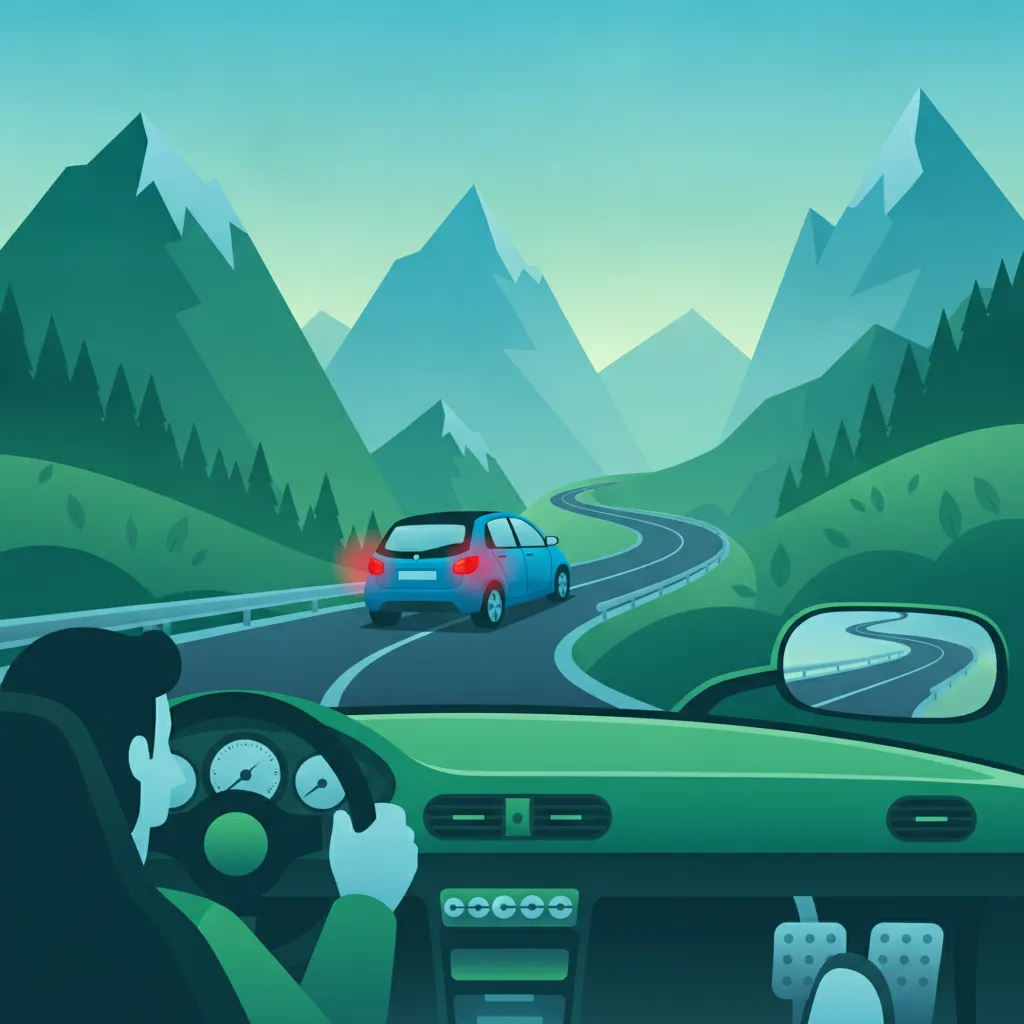
This lesson introduces defensive driving principles, focusing on hazard anticipation, continuous scanning, and proactive positioning. You will learn how to anticipate potential hazards by observing traffic patterns and maintaining situational awareness. Emphasis is placed on proactive speed management to avoid dangerous situations before they arise.
Explore how to adjust your driving response to warning signs considering weather, road conditions, vehicle load, and time of day. Essential for safe driving in diverse Swiss environments.

This lesson examines the impact of various weather conditions on driving safety. It explains how to adjust speed in low visibility and the risks of aquaplaning in heavy rain. The content also covers using snow chains in snowy conditions, handling icy surfaces, and dealing with strong winds, particularly on bridges and open roads.
This lesson examines the impact of weather and visibility on driving safety and speed selection. It covers how fog, rain, snow, and darkness affect visibility and reaction times, providing guidelines on adjusting speed. It also includes strategies for improving visibility, such as proper headlamp use, to ensure you can adapt to varying weather conditions.
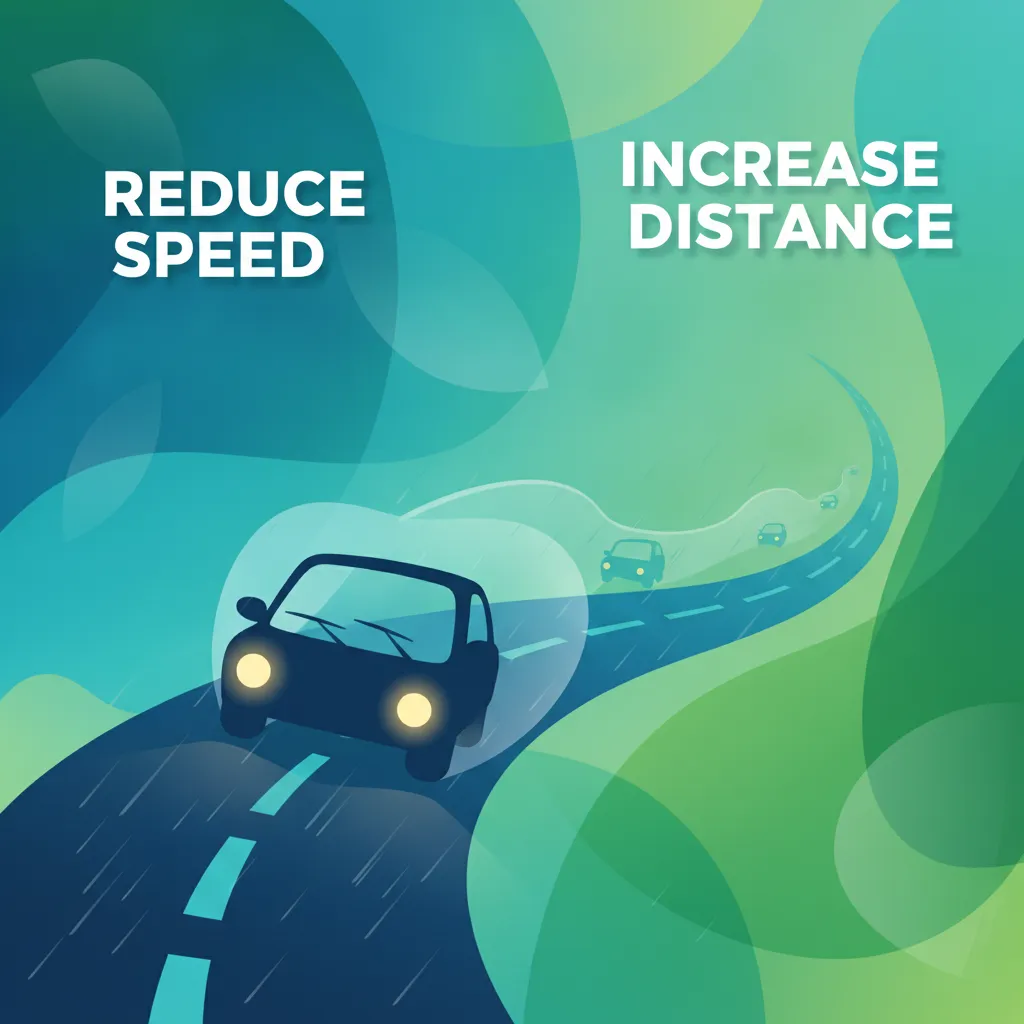
Weather has a profound impact on vehicle handling and visibility. This lesson teaches you how to reduce speed, increase following distances, and use controls smoothly to maintain traction in poor conditions. It also covers the legal requirements and practical application of snow chains in winter.
This lesson delves into supplementary signs that modify or clarify the meaning of primary traffic signs. You will learn to interpret signs indicating time restrictions, vehicle-specific limitations, and lane-specific instructions. The content also highlights how these signs interact with main regulatory signs to convey precise, context-sensitive traffic rules.
This lesson focuses on driving on mountain roads, addressing steep gradients, hairpin bends, and altitude-related challenges. You will learn proper techniques for climbing ascents and using engine braking on descents. The content also covers the use of snow chains, recognizing avalanche risks, and interpreting mountain road signs for safe alpine navigation.
This lesson details how adverse weather conditions like rain, fog, and snow affect motorcycle safety. It explains how wet surfaces reduce tyre grip, requiring smoother control inputs and longer braking distances. Strategies for managing reduced visibility in fog and the extreme hazards of riding on snow and ice are also covered.
This lesson examines informational signs that provide route guidance, destination distances, and tourist information. It explains how direction signs, distance markers, and service area signs assist drivers in planning routes and making informed decisions. Understanding the logic of informational signage ensures efficient and safe navigation through the Swiss road network.

Wet or icy roads drastically reduce tyre grip and can double or triple braking distances. This lesson stresses the importance of significantly reducing overall speed and increasing following distances in such conditions. It advises on using brakes with extreme care to avoid skidding and explains how the vehicle's retarder should be used with caution as it can cause the drive wheels to lock up on slippery surfaces.

This lesson examines the different lighting systems on a vehicle, including headlamps, fog lights, and turn signals. It explains the appropriate use of low-beam and high-beam headlights and the conditions for activating fog lights. Understanding proper lighting usage improves visibility and safety, especially in low-light or adverse weather conditions.
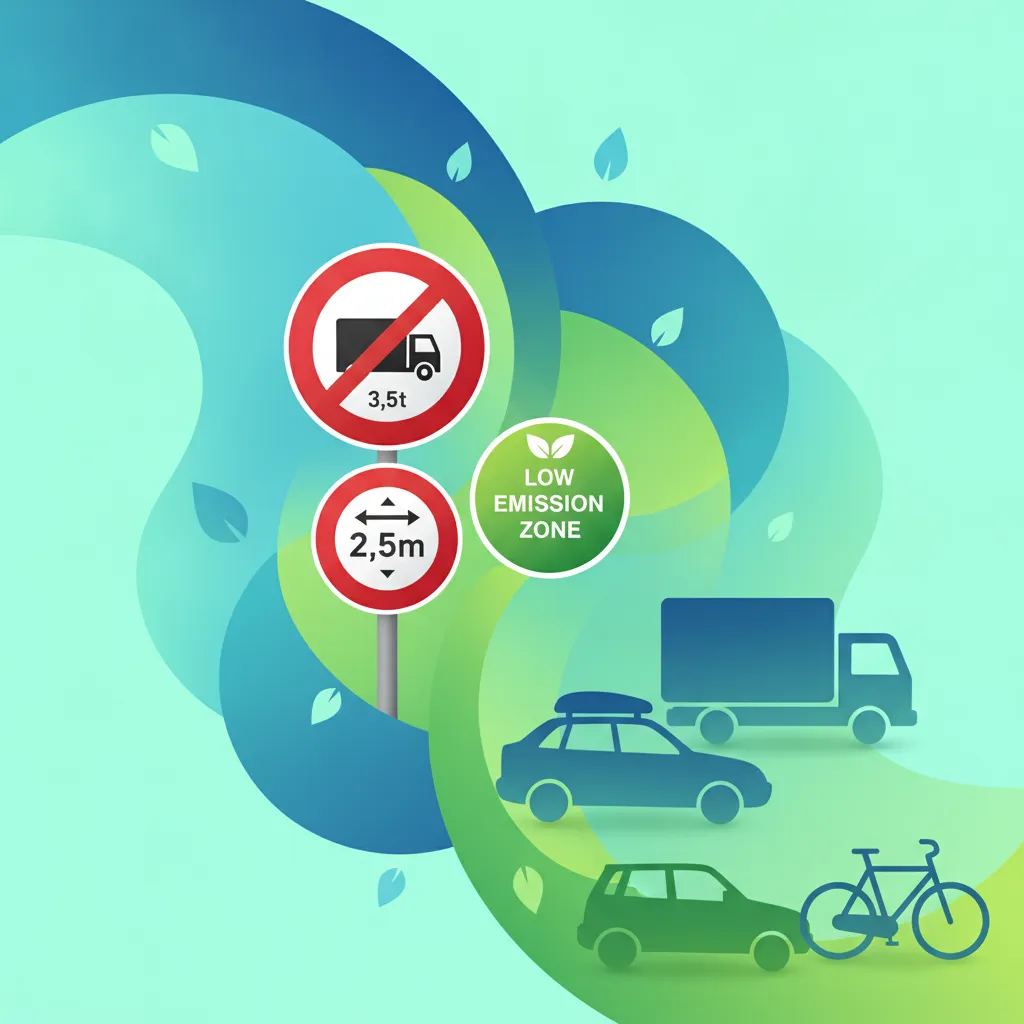
Many urban areas have restrictions to manage traffic and protect infrastructure. This lesson teaches drivers to identify and interpret traffic signs that prohibit access based on gross vehicle weight, axle load, height, or width. It also covers the growing prevalence of environmental or low-emission zones, which may restrict entry for older, more polluting vehicles.
Find clear answers to common questions learners have about Warning Signs and Hazard Awareness. Learn how the lesson is structured, which driving theory objectives it supports, and how it fits into the overall learning path of units and curriculum progression in Switzerland. These explanations help you understand key concepts, lesson flow, and exam focused study goals.
In built-up areas, warning signs are usually placed shortly before the hazard. Outside built-up areas, they are generally placed 150 to 250 meters in advance to allow sufficient time to slow down and prepare.
Not always, but they always require increased attention. You must evaluate the specific hazard indicated and reduce your speed if necessary to maintain control of your vehicle.
Reduce your speed, increase your distance from the vehicle ahead, and be prepared for lane shifts or workers on the road. Always follow any additional temporary signs or markings provided.
Most Swiss warning signs are triangular with a red border and white background. However, understanding the specific symbol inside is crucial to knowing exactly what type of hazard is ahead.
Pinpoint specific Swiss traffic rules, road signs, or driving situations you need to master. Use the practice search to start a focused revision session now and build confidence for your official driving theory exam.