
This lesson guides you through the crucial probationary phase following the successful completion of your Swiss Category B practical exam. We will cover the specific restrictions, legal obligations, and the serious consequences of traffic infractions to ensure you navigate your early driving years safely. Understanding these rules is essential for maintaining your driving privileges and successfully transitioning to a full license.
Lesson content overview
The period immediately following the successful acquisition of your Swiss Category B driving licence is a crucial phase known as the probationary period. This phase, legally termed Führerausweis auf Probe (probationary driving licence), is designed to ensure that new drivers develop safe and responsible driving habits under heightened scrutiny. Understanding its specific rules, restrictions, and implications is essential for every new driver to successfully transition to a full, unrestricted driving licence. This lesson provides a comprehensive overview of this important phase, detailing everything from zero tolerance alcohol policies to mandatory remedial training.
Upon passing your practical driving test for a Category B licence in Switzerland, you will initially receive a probationary driving licence, not a full, unrestricted one. This Führerausweis auf Probe is a temporary licence issued to new drivers to help them gain experience safely. It reflects a legal framework aimed at mitigating the higher accident risk statistically associated with inexperienced drivers.
A probationary licence is a legally mandated phase that all new drivers must successfully complete before being granted a permanent driving licence (unbefristeter Führerausweis). Its primary purpose is to provide a structured period for new drivers to consolidate their driving skills and demonstrate responsible behaviour on the road. The heightened restrictions and increased penalties during this time serve as a strong incentive to comply with traffic laws, thereby reducing the likelihood of accidents and fostering safer driving habits from the outset. This system is supported by statistical evidence that correlates reduced infractions with lower crash rates among drivers during their probation period.
The probationary period for a Swiss Category B driving licence typically lasts for three years. During this time, drivers are subject to specific rules that are stricter than those for experienced drivers. These restrictions are not merely bureaucratic; they are fundamental to reducing the risks associated with novice drivers, such as overconfidence, slower hazard perception, and limited experience in diverse driving conditions. Failure to adhere to these rules can lead to severe consequences, including extended probation, licence suspension, or even revocation.
Key restrictions during this phase include:
One of the most critical regulations for probationary drivers in Switzerland is the absolute zero tolerance policy regarding alcohol consumption. This rule is in place to eliminate any impairment risk, which is significantly amplified among inexperienced drivers.
For all probationary drivers holding a Führerausweis auf Probe, the legal threshold for blood alcohol concentration (BAC) is 0.0‰. This means that no measurable amount of alcohol is permitted in your system while driving. Even a very small quantity of alcohol can impair judgment, reaction time, and coordination, factors that are already less developed in new drivers compared to experienced ones. The zero tolerance policy removes any ambiguity and underscores the seriousness of driving under the influence for this demographic.
Violating the zero tolerance alcohol policy carries immediate and severe consequences. If a probationary driver is found to have any measurable alcohol in their bloodstream (i.e., above 0.0‰ BAC), they will face:
These strict measures highlight the grave risks associated with alcohol-impaired driving and serve as a strong deterrent, particularly for those still developing their driving skills.
Even residual alcohol from the previous day can result in a measurable BAC. Always ensure you are completely alcohol-free before getting behind the wheel.
While general speed limits apply to all drivers, probationary drivers in Switzerland face specific restrictions and are expected to exercise enhanced caution, particularly regarding speed. These measures are designed to give new drivers ample time to react to unexpected situations and to develop a better sense of speed management.
For a specific period during probation, new drivers are subject to a reduced speed limit on motorways. For the first six months after acquiring your Category B probationary licence, you may not exceed 80 km/h on motorways. This rule applies even if the posted speed limit for other vehicles is higher (e.g., 120 km/h). The rationale behind this restriction is to reduce the accident risk during the critical initial phase of skill acquisition, where high speeds can quickly overwhelm an inexperienced driver's ability to react and control the vehicle.
Beyond the specific motorway restriction, probationary drivers are expected to adhere to all standard speed limits with utmost diligence. Driving at appropriate speeds for the conditions, even if below the legal maximum, is a cornerstone of defensive driving. For new drivers, whose hazard perception and reaction times may still be developing, maintaining a safe and controlled speed is paramount. Violation of speed limits during the probationary period will typically result in higher fines and more points being accrued compared to experienced drivers, reflecting the heightened risk profile. This accelerated penalty structure serves to incentivize stricter compliance with all traffic laws.
Switzerland operates a points system for traffic violations, which serves as a cumulative accountability mechanism. For probationary drivers, this system is particularly stringent, with lower thresholds for licence suspension.
Each traffic offense, from minor infringements to serious violations, results in the accumulation of points on a driver's record. The number of points awarded depends on the severity of the offense. For instance, minor offenses like slight speeding might accrue fewer points, while major offenses such as dangerous overtaking or significant speeding can lead to a higher number of points. The system is designed to track repeated non-compliance with traffic regulations.
For probationary drivers, the points accumulation threshold that triggers licence suspension is notably lower than for full licence holders. Exceeding this threshold during the probationary period will result in the temporary revocation of your driving privileges.
Consequences of exceeding the points threshold:
The points accumulated generally do not reset annually during the probation period; they are cumulative over the entire three years. Therefore, consistent safe driving is critical to avoid reaching the suspension threshold.
A key aspect of the probationary period in Switzerland is the requirement for mandatory remedial training following certain serious traffic violations. This isn't just a punishment; it's an educational intervention designed to address specific risk behaviours and improve driver safety.
If a probationary driver commits a serious traffic offense, such as significantly exceeding the speed limit (e.g., more than 30 km/h over the limit in a 50 km/h zone) or violating other major traffic laws, they will be legally obliged to attend remedial training. These courses typically combine:
Completion of all mandatory remedial training courses is a prerequisite for renewing your probationary licence to a full, unrestricted licence. Failure to attend or successfully complete these courses will directly impede your transition to a permanent licence. It underscores the legal system's commitment to ensuring that drivers demonstrate a clear understanding of road safety and a willingness to comply with regulations before being granted full driving privileges. Proof of attendance and completion must be submitted to the authorities as part of the licence renewal process.
Always keep detailed records and certificates of any remedial training you attend, as these will be essential for your full licence renewal application.
The ultimate goal of the probationary period is to transition to a full, unrestricted driving licence (unbefristeter Führerausweis). This signifies that you have demonstrated consistent safe driving habits and compliance with all traffic laws throughout your probationary phase.
To successfully complete your probationary period and be granted a full Category B driving licence, you must satisfy several key conditions:
Once these conditions are met, you can apply for your full licence. The process usually involves submitting an application to the relevant cantonal road traffic office and providing necessary documentation.
The probationary period is a chance to prove your capability as a safe driver. Any significant infractions or repeated non-compliance can lead to extensions of this period, delaying your full licence. In the most severe cases, particularly if your probationary licence is suspended twice, it can be permanently revoked. This would mean that you would have to wait for a certain period before being allowed to apply for a new learner permit, effectively restarting the entire licensing process from the very beginning. This severe consequence highlights the importance of maintaining an impeccable driving record during probation.
Understanding common pitfalls can help probationary drivers avoid infractions and ensure a smooth path to a full licence. Vigilance and adherence to specific rules are key.
The Swiss probationary licence system is not arbitrary; it is based on sound scientific principles and extensive data regarding driver behaviour and accident statistics.
New drivers, regardless of their theoretical knowledge or practical test performance, inherently possess less real-world experience. This lack of experience translates to several risk factors:
The probationary restrictions, such as reduced speed limits and the zero tolerance alcohol policy, directly address these factors. For instance, reducing speed results in an exponential reduction in kinetic energy, significantly decreasing crash severity if an accident occurs. This systematic approach has been shown by statistical analysis to result in a measurable reduction in accidents among drivers who adhere to probationary restrictions.
Beyond immediate risk reduction, the probationary phase aims to instill a culture of safe and responsible driving from the outset. By imposing stricter rules and higher penalties, the system incentivizes new drivers to:
This comprehensive approach helps bridge the gap between passing a driving test and becoming a truly experienced, safe, and responsible road user.
The Swiss probationary licence period lasts three years and imposes stricter rules than for experienced drivers. The most critical rule is the absolute zero tolerance alcohol policy requiring 0.0‰ BAC, with severe consequences including fines, suspension, and mandatory remedial courses for any violation. During the first six months, motorway speed is limited to 80 km/h regardless of posted limits. The points system applies lower thresholds for probationary drivers, meaning fewer infractions can trigger suspension or licence revocation. Successfully completing the probationary period requires no threshold exceedances and completion of any required remedial training before applying for the full unrestricted licence (Unbefristeter Führerausweis).
A short set of high-value points that capture the most important learning from this lesson.
The Swiss probationary licence (Führerausweis auf Probe) is a mandatory three-year period following the practical Category B test, not a full unrestricted licence.
Probationary drivers must maintain 0.0‰ blood alcohol concentration with no exceptions—any measurable alcohol results in immediate fines, suspension, and mandatory remedial training.
During the first six months, motorway speed is restricted to 80 km/h regardless of posted limits, reflecting the heightened accident risk for inexperienced drivers.
The points accumulation threshold for licence suspension is significantly lower for probationary drivers compared to full licence holders, making compliance critical.
All mandatory remedial training must be completed and documented before the probationary licence can be renewed to a full unrestricted licence (Unbefristeter Führerausweis).
Explore all units and lessons included in this driving theory course.
Zero tolerance means exactly 0.0‰ BAC—no small drinks the night before are safe if any measurable alcohol remains.
The 80 km/h motorway restriction applies only during the first six months, after which standard limits resume.
Points accumulate cumulatively over the full three years and do not reset annually, requiring consistent safe driving throughout.
Exceeding the suspension threshold can extend your probationary period, delaying full licence acquisition.
Licence revocation (permanent cancellation) means restarting the entire licensing process from the beginning.
Assuming a small amount of alcohol the previous evening is safe—residual BAC can still exceed 0.0‰.
Believing the 80 km/h motorway restriction ends after the first few weeks rather than the full six months.
Thinking minor violations carry the same weight as for experienced drivers when probationary drivers face lower suspension thresholds.
Failing to keep records of remedial training completion, which are required for full licence renewal.
Assuming points reset annually during probation when they actually accumulate over the entire three-year period.
Lesson content overview
A short set of high-value points that capture the most important learning from this lesson.
The Swiss probationary licence (Führerausweis auf Probe) is a mandatory three-year period following the practical Category B test, not a full unrestricted licence.
Probationary drivers must maintain 0.0‰ blood alcohol concentration with no exceptions—any measurable alcohol results in immediate fines, suspension, and mandatory remedial training.
During the first six months, motorway speed is restricted to 80 km/h regardless of posted limits, reflecting the heightened accident risk for inexperienced drivers.
The points accumulation threshold for licence suspension is significantly lower for probationary drivers compared to full licence holders, making compliance critical.
All mandatory remedial training must be completed and documented before the probationary licence can be renewed to a full unrestricted licence (Unbefristeter Führerausweis).
Explore all units and lessons included in this driving theory course.
Zero tolerance means exactly 0.0‰ BAC—no small drinks the night before are safe if any measurable alcohol remains.
The 80 km/h motorway restriction applies only during the first six months, after which standard limits resume.
Points accumulate cumulatively over the full three years and do not reset annually, requiring consistent safe driving throughout.
Exceeding the suspension threshold can extend your probationary period, delaying full licence acquisition.
Licence revocation (permanent cancellation) means restarting the entire licensing process from the beginning.
Assuming a small amount of alcohol the previous evening is safe—residual BAC can still exceed 0.0‰.
Believing the 80 km/h motorway restriction ends after the first few weeks rather than the full six months.
Thinking minor violations carry the same weight as for experienced drivers when probationary drivers face lower suspension thresholds.
Failing to keep records of remedial training completion, which are required for full licence renewal.
Assuming points reset annually during probation when they actually accumulate over the entire three-year period.
Explore search topics learners often look for when studying Probationary Licence Phase and Its Implications. These topics reflect common questions about road rules, driving situations, safety guidance, and lesson level theory preparation for learners in Switzerland.
Browse additional driving theory lessons that cover connected traffic rules, road signs, and common driving situations related to this topic. Improve your understanding of how different rules interact across everyday traffic scenarios.
Understand the specific penalties and consequences for traffic violations during the Swiss probationary licence period. Learn about licence suspension, mandatory remedial training, and how to avoid extending your probation.

This lesson explores the specific restrictions that apply during the probationary licence period for beginner drivers. It covers the legal requirement for a beginner driver badge, zero tolerance for alcohol, and speed limitations. Understanding these regulations helps new drivers comply with legal obligations and reduce accident risk during the early driving phase.

This lesson explains the Swiss penalty points system, detailing how points are assigned for various traffic violations. You will understand the thresholds for point accumulation and the legal consequences, such as licence suspension. The content also covers fine structures and the administrative process for point assessment for all driver license types.
For professional drivers, traffic violations can have career-altering consequences beyond standard fines. This lesson details the heightened penalties for infringements such as speeding, overloading, insecure loads, and violations of driving time regulations. It outlines the process of warnings, license suspension or withdrawal, and potential criminal liability, emphasizing the importance of strict legal compliance in the transport industry.
This lesson outlines the legal repercussions for breaking traffic laws in Switzerland. It details the system of fines and administrative measures, including the potential for license withdrawal for serious offenses. The content also explains a rider's legal duties after being involved in an accident, including reporting and insurance obligations.
This lesson outlines the legal and administrative repercussions of committing traffic violations or being involved in an accident. It covers the system of fines, licence points, and potential licence revocation under Swiss law. Understanding these consequences reinforces the importance of lawful and responsible riding.
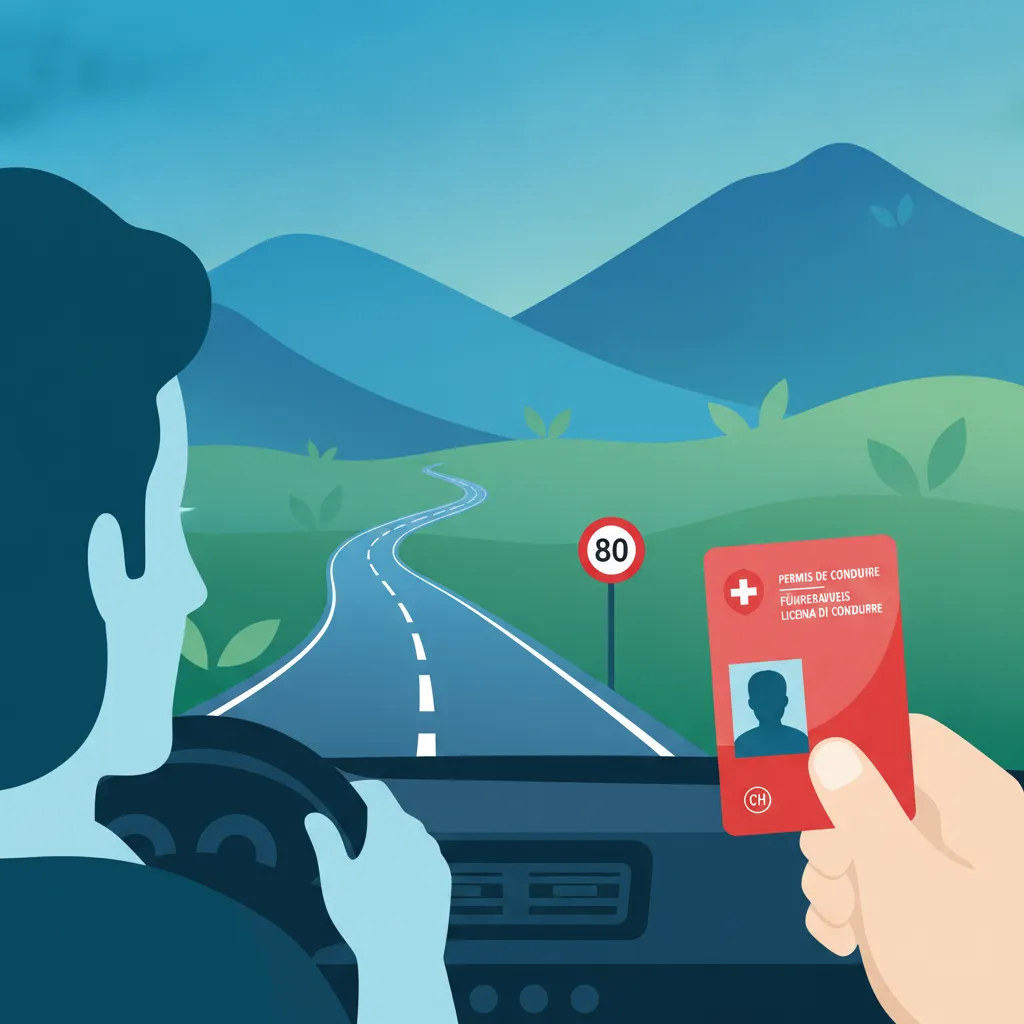
This lesson emphasizes the broad responsibilities of holding a driver's licence in Switzerland, including adherence to traffic laws and maintaining vehicle roadworthiness. It covers legal obligations related to insurance, registration, and reporting accidents, as well as the consequences of violations. The content reinforces the duty of care drivers owe to all other road users.

This lesson focuses on general driving safety in areas with a high concentration of children. It stresses the importance of significantly reducing speed, being prepared for unexpected events, and scanning for children between parked cars. The driver must exhibit maximum vigilance in these high-risk environments at all times.
For professional drivers, the rules regarding intoxicating substances are extremely strict. This lesson explains the severe effects of alcohol and illegal drugs on driving ability and the serious legal consequences of being caught under their influence. It also highlights the importance of checking with a doctor or pharmacist whether any prescribed or over-the-counter medication can cause drowsiness or otherwise impair driving.

This lesson focuses on the impact of alcohol, drugs, and medication on driving ability. You will learn the legal blood alcohol concentration limits and the zero-tolerance policy for beginner drivers. The content also covers how certain medications may affect performance and the importance of declaring health conditions that could impair safe driving.

The driver is legally responsible for the roadworthiness of their vehicle at the start of and during every journey. This lesson outlines the formal process for reporting any identified defects to the transport manager or maintenance staff. It stresses the critical rule that a vehicle with a known safety-critical defect must not be driven until it has been professionally repaired and declared safe.
Detailed explanation of the rules and restrictions for the Swiss Category B probationary licence, including the zero-tolerance alcohol policy and the process for obtaining a full licence.
This lesson explores the specific restrictions that apply during the probationary licence period for beginner drivers. It covers the legal requirement for a beginner driver badge, zero tolerance for alcohol, and speed limitations. Understanding these regulations helps new drivers comply with legal obligations and reduce accident risk during the early driving phase.
This lesson focuses on the impact of alcohol, drugs, and medication on driving ability. You will learn the legal blood alcohol concentration limits and the zero-tolerance policy for beginner drivers. The content also covers how certain medications may affect performance and the importance of declaring health conditions that could impair safe driving.
For professional drivers, the rules regarding intoxicating substances are extremely strict. This lesson explains the severe effects of alcohol and illegal drugs on driving ability and the serious legal consequences of being caught under their influence. It also highlights the importance of checking with a doctor or pharmacist whether any prescribed or over-the-counter medication can cause drowsiness or otherwise impair driving.
This lesson explains the Swiss penalty points system, detailing how points are assigned for various traffic violations. You will understand the thresholds for point accumulation and the legal consequences, such as licence suspension. The content also covers fine structures and the administrative process for point assessment for all driver license types.
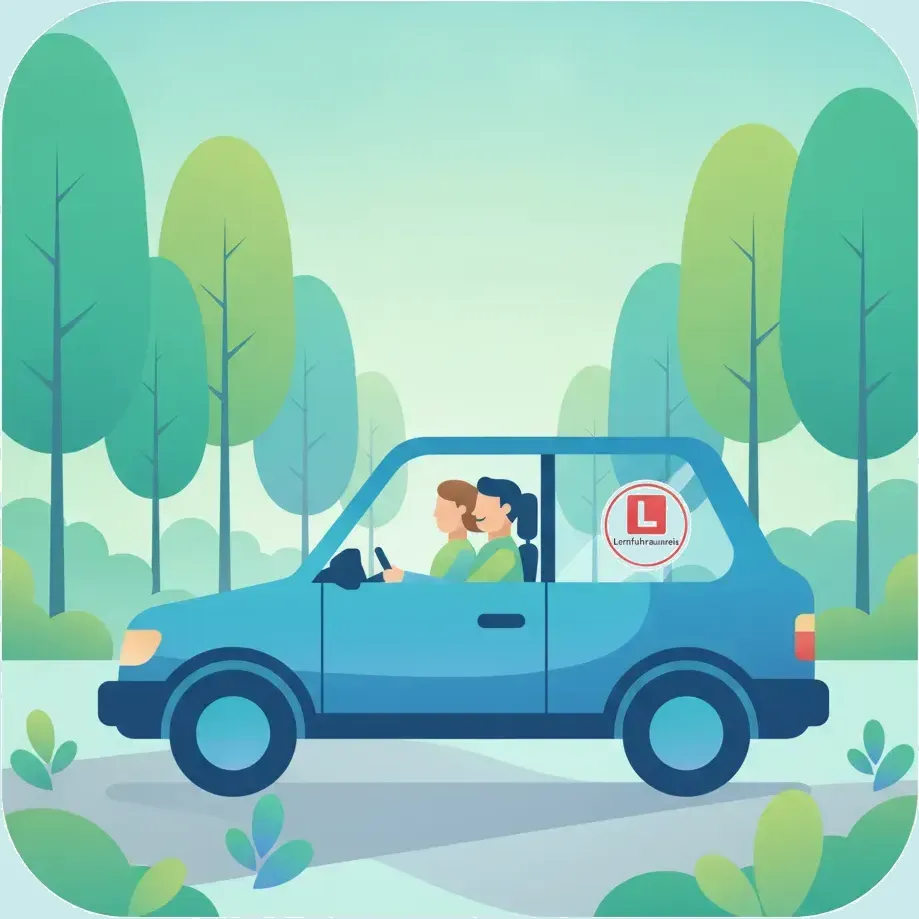
This lesson provides a comprehensive overview of the Swiss learner permit (Lernfahrausweis), detailing eligibility criteria and the role of the accompanying driver. It places emphasis on the legal responsibilities of both the learner and supervisor, including age and experience requirements. The lesson clarifies procedural steps and common misconceptions about supervised driving practice.
This lesson emphasizes the broad responsibilities of holding a driver's licence in Switzerland, including adherence to traffic laws and maintaining vehicle roadworthiness. It covers legal obligations related to insurance, registration, and reporting accidents, as well as the consequences of violations. The content reinforces the duty of care drivers owe to all other road users.

Gain insight into the two-stage examination process for the Swiss Category B licence, covering both the theory exam and the practical driving test. This lesson outlines the question format, passing score thresholds, and the nature of the practical assessment. Administrative aspects such as registration procedures, test locations, and retake policies are also addressed.
This lesson focuses on general driving safety in areas with a high concentration of children. It stresses the importance of significantly reducing speed, being prepared for unexpected events, and scanning for children between parked cars. The driver must exhibit maximum vigilance in these high-risk environments at all times.
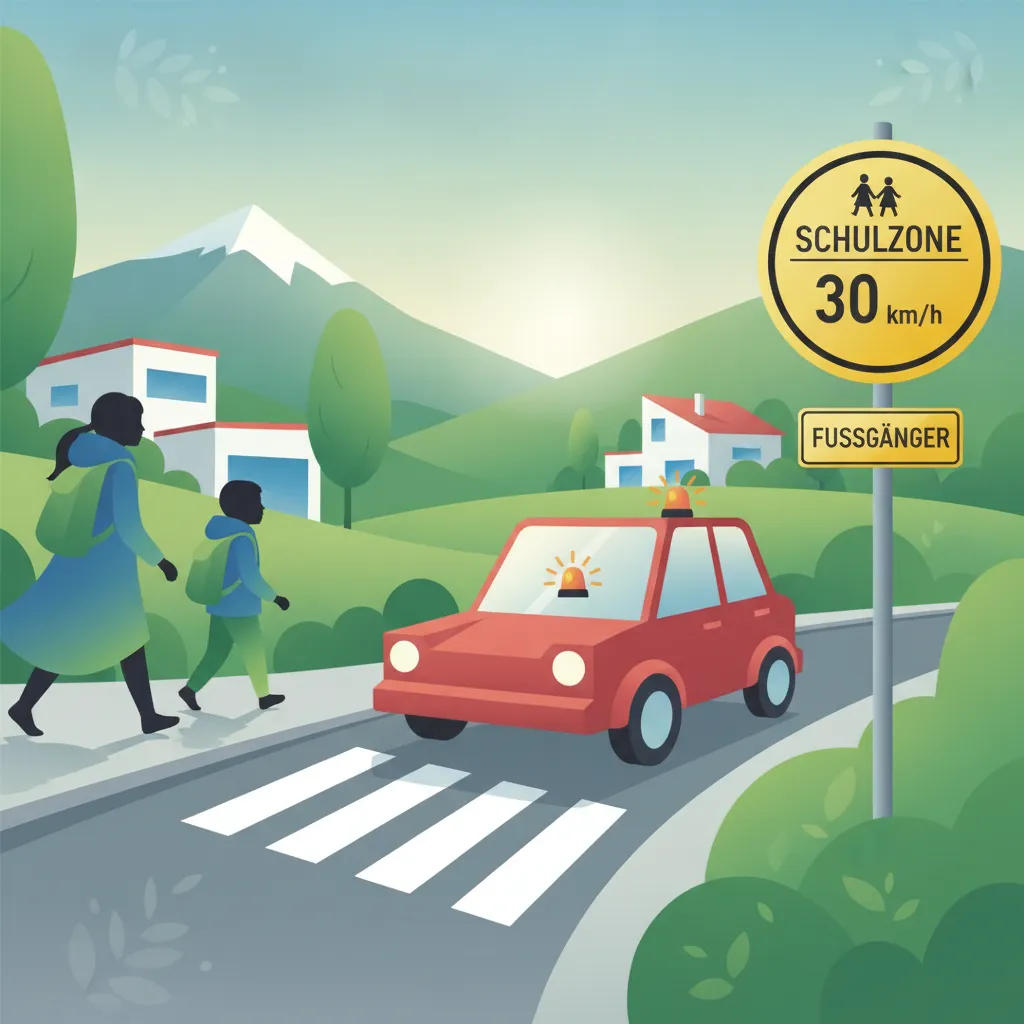
This lesson focuses on school zones, where special speed limits and cautionary measures are required. You will learn to recognize school zone signs, understand reduced speed limits, and be aware of designated child crossing zones. The content also emphasizes the need for heightened vigilance when school buses stop for students to ensure child safety.
Find clear answers to common questions learners have about Probationary Licence Phase and Its Implications. Learn how the lesson is structured, which driving theory objectives it supports, and how it fits into the overall learning path of units and curriculum progression in Switzerland. These explanations help you understand key concepts, lesson flow, and exam focused study goals.
The probationary period lasts for three years from the date you pass your practical driving test and receive your full Category B license.
There is a zero-tolerance policy. This means you must have a blood alcohol concentration of 0.00% while driving during your probationary period.
A serious offence will lead to the cancellation of your probationary licence. You will be required to undergo a mandatory remedial training course before you can even begin the process of reapplying for your license.
Yes, if you commit a traffic offence that leads to the revocation of your license, the probationary period is extended by one additional year upon successfully regaining your license.
Pinpoint specific Swiss traffic rules, road signs, or driving situations you need to master. Use the practice search to start a focused revision session now and build confidence for your official driving theory exam.