
This lesson teaches you the principles of eco-driving, an essential skill for modern, environmentally conscious drivers in Switzerland. You will learn how simple adjustments to your driving style can significantly lower your vehicle's emissions and fuel consumption, a topic frequently tested in the Category B theory exam.
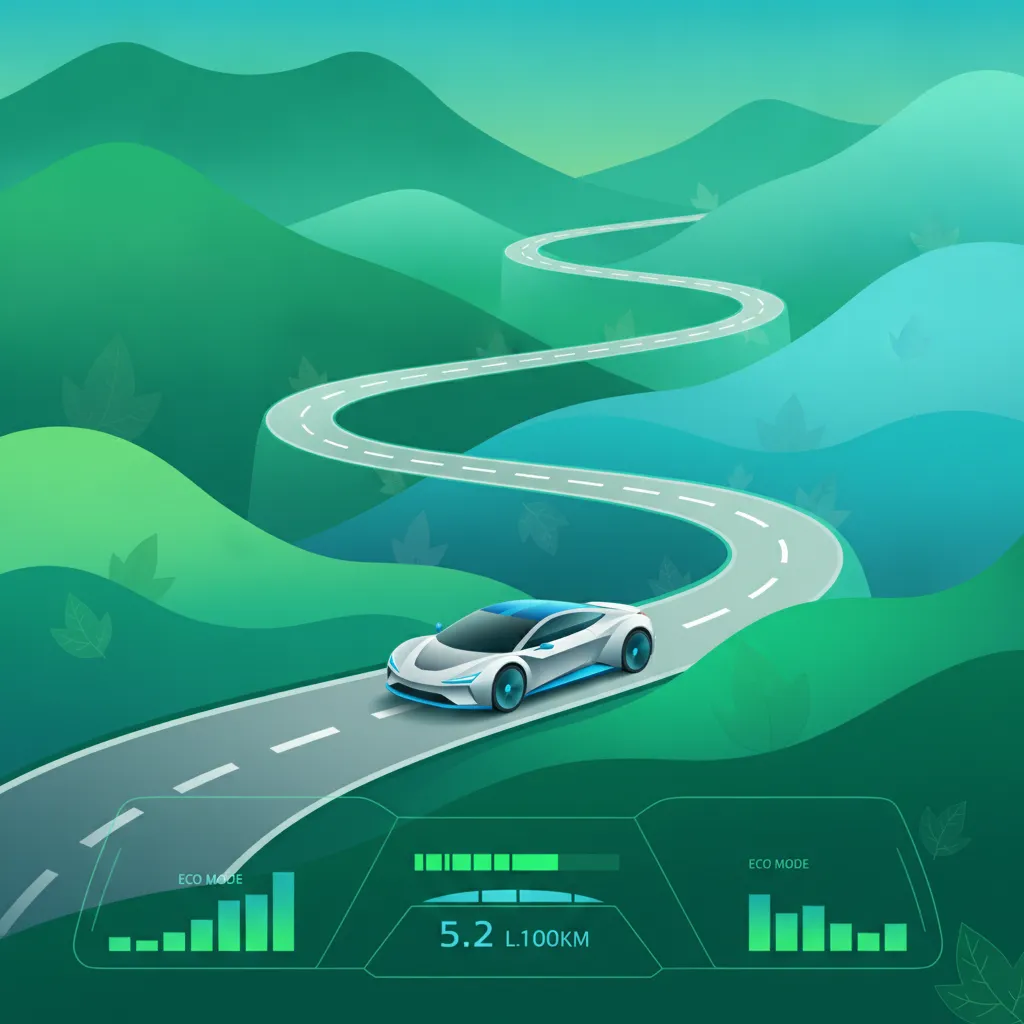
Lesson content overview
Operating a vehicle efficiently is a crucial skill for any driver, especially within the Comprehensive Swiss Driving Theory Course for Category B License. Eco-driving, also known as fuel-efficient driving, encompasses a set of techniques designed to minimize fuel consumption and reduce harmful emissions, all while maintaining safe vehicle operation. These practices align with Switzerland's strong ecological objectives and contribute significantly to both environmental protection and your personal driving economy.
This lesson delves into the principles and practical applications of eco-driving, providing you with the knowledge to make your journeys more sustainable and cost-effective. By understanding how your driving style impacts fuel usage and emissions, you can contribute to cleaner air and enjoy the financial benefits of reduced operating costs.
Eco-driving is a proactive driving style focused on optimizing energy use during vehicle operation. It involves making conscious decisions to drive more smoothly, anticipate traffic, and use your vehicle's features in the most efficient way possible. The core aim is to extract the maximum distance from every litre of fuel while producing the fewest possible emissions. This approach doesn't compromise safety or travel time significantly; instead, it often enhances both by promoting a more relaxed and predictable driving style.
The principles of eco-driving are deeply intertwined with the mechanics of your vehicle and the physics of motion. Understanding concepts like engine load, kinetic energy, and aerodynamic drag is key to appreciating why certain driving techniques lead to greater fuel efficiency. This holistic approach makes eco-driving a fundamental aspect of modern driving responsibility.
Achieving optimal fuel efficiency and emissions reduction relies on several key driving principles. Each technique, when applied consistently, contributes to substantial savings and a reduced environmental footprint.
Smooth acceleration involves gradually increasing your vehicle's speed using moderate pressure on the accelerator pedal, rather than abrupt, heavy inputs. When you press the accelerator sharply, the engine demands a sudden rush of fuel, leading to fuel injection peaks and increased engine load. This consumes significantly more fuel than a gentle, progressive increase in speed.
For instance, when starting from a traffic light in a city like Zurich or Geneva, a smooth, controlled acceleration to the speed limit will use considerably less fuel than rapid acceleration. This also contributes to a calmer traffic flow and reduces wear on your vehicle's drivetrain.
Steady speed maintenance means keeping your vehicle's speed as constant as possible, minimizing unnecessary fluctuations. Each time you accelerate, your vehicle consumes extra fuel to overcome inertia and air resistance. Conversely, braking wastes the kinetic energy (energy of motion) that you just used fuel to generate. Therefore, avoiding frequent acceleration and deceleration cycles is paramount for fuel economy.
Driving at a consistent 120 km/h on the motorway, for example, is far more fuel-efficient than constantly fluctuating between 110 km/h and 130 km/h. High speeds inherently increase fuel consumption exponentially due to increased air resistance.
Early deceleration and anticipation involve actively predicting traffic conditions ahead and reacting proactively, rather than abruptly. This means looking far down the road to identify potential slowdowns, traffic lights, or junctions, and starting to reduce your speed well in advance.
Consider approaching a red traffic light: instead of speeding up to the light and then braking sharply, an eco-driver would lift off the accelerator earlier, potentially downshifting or letting the vehicle coast, allowing it to slow down naturally. This reduces fuel use and brake wear.
Optimal gear selection means choosing the highest possible gear that still provides sufficient power for the current driving conditions without straining the engine. This keeps the engine RPM lower, reducing fuel consumption and engine wear.
Staying in too low a gear, especially on flat roads, causes the engine to rev higher than necessary, burning more fuel. Conversely, staying in too high a gear on an incline can lug the engine, meaning it struggles to produce enough power, which is also inefficient and harmful to the engine.
Reducing the energy required to move your vehicle significantly impacts fuel consumption. This involves two main aspects: lightening the vehicle load and reducing aerodynamic drag.
Always check your tyre pressure when the tyres are cold. Driving generates heat, which can temporarily increase tyre pressure readings.
Your vehicle's auxiliary systems, such as air conditioning, heating, and electric accessories, draw power from the engine. This parasitic load means the engine has to work harder, increasing fuel consumption.
While Switzerland doesn't have explicit "eco-driving laws," many existing Swiss Road Traffic Regulations (SVG) indirectly support or complement eco-driving principles. Adhering to these regulations naturally promotes fuel-efficient and environmentally responsible driving.
Article 20.1 of the SVG (Fuel Efficiency) mandates that vehicles must be maintained in a roadworthy condition. This includes proper tire pressure and engine tuning, which are directly linked to fuel efficiency and emissions. A well-maintained engine runs more efficiently, and correctly inflated tires reduce rolling resistance. Ignoring these basic maintenance requirements can lead to higher fuel consumption and increased emissions, and potentially legal consequences.
Furthermore, Article 21 of the SVG (Emission Standards) requires vehicles to meet specific emission standards (e.g., Euro 5 or later for new vehicles). Eco-driving helps compliant vehicles perform within these standards by minimizing unnecessary emissions. Using tampered emission control systems is strictly illegal and carries severe penalties.
Article 8.1 of the SVG states that drivers must adapt their speed to road, traffic, and weather conditions. This fundamental rule directly supports eco-driving principles like steady speed maintenance and early deceleration. By adjusting your speed to maintain a steady flow, you avoid abrupt acceleration and braking, which are inefficient and potentially unsafe. Aggressive driving, characterized by frequent speed changes, is not only wasteful but also creates unnecessary hazards for other road users.
Article 39 of the SVG (Brake Use) implicitly encourages progressive and anticipatory braking by requiring drivers to maintain control and avoid abrupt stops. This aligns perfectly with early deceleration techniques and engine braking, which save fuel and prevent excessive brake wear.
Many drivers unknowingly engage in habits that undermine fuel efficiency. Recognizing these common violations is the first step towards becoming a more eco-conscious driver.
Eco-driving principles remain constant, but their application varies depending on the driving environment and your vehicle's characteristics. Adapting your techniques to specific Swiss road conditions ensures maximum efficiency and safety.
Adopting eco-driving techniques offers a multitude of advantages that extend beyond just saving fuel.
By understanding and applying these eco-driving principles, drivers can achieve measurable fuel savings, lower emissions, and enhanced vehicle longevity while upholding Swiss road safety standards.
Eco-driving is a proactive driving style that maximizes fuel efficiency while reducing emissions through smooth acceleration, steady speed maintenance, and anticipatory braking. Key techniques include upshifting at low RPMs (1,800-2,500), using engine braking instead of foot brakes for deceleration, and removing unnecessary load or aerodynamic accessories like roof racks. In Switzerland, eco-driving aligns with SVG regulations on vehicle maintenance (Article 20.1) and speed adaptation (Article 8.1), making these skills essential for both passing the Category B theory exam and becoming a responsible driver on Swiss roads including urban areas, motorways, and Alpine passes.
A short set of high-value points that capture the most important learning from this lesson.
Eco-driving optimizes energy use through smooth, anticipatory driving rather than aggressive inputs
Smooth acceleration prevents fuel injection peaks by gradually increasing vehicle speed
Maintaining steady speed avoids wasteful acceleration-braking cycles and is most efficient on motorways
Optimal gear selection keeps engine RPM within the torque band (1,800-2,500 RPM) to minimize fuel consumption
Engine braking decelerates the vehicle using virtually no fuel and reduces brake wear
Explore all units and lessons included in this driving theory course.
Upshift early in manual transmissions, targeting 1,800-2,500 RPM on flat roads to stay within the efficient torque band
Use cruise control on Swiss motorways (A1, A2, A13) to maintain consistent speed and avoid unconscious speed fluctuations
Remove roof racks, bike carriers, and roof boxes when not in use as they can increase fuel consumption by 10-15% at motorway speeds
Every 100 kg of unnecessary weight increases fuel consumption by approximately 2%
Check tire pressure when tires are cold; under-inflated tires increase rolling resistance and fuel consumption
Hard acceleration from standstill wastes significant fuel by creating sudden engine load demands
Late upshifting (high RPM operation) in manual transmissions burns more fuel than necessary
Approaching red lights or congestion at full speed then braking sharply wastes kinetic energy that was purchased with fuel
Leaving roof racks or aerodynamic accessories mounted when not carrying cargo unnecessarily increases drag at all speeds
Keeping air conditioning running in moderate weather conditions adds parasitic load to the engine
Lesson content overview
A short set of high-value points that capture the most important learning from this lesson.
Eco-driving optimizes energy use through smooth, anticipatory driving rather than aggressive inputs
Smooth acceleration prevents fuel injection peaks by gradually increasing vehicle speed
Maintaining steady speed avoids wasteful acceleration-braking cycles and is most efficient on motorways
Optimal gear selection keeps engine RPM within the torque band (1,800-2,500 RPM) to minimize fuel consumption
Engine braking decelerates the vehicle using virtually no fuel and reduces brake wear
Explore all units and lessons included in this driving theory course.
Upshift early in manual transmissions, targeting 1,800-2,500 RPM on flat roads to stay within the efficient torque band
Use cruise control on Swiss motorways (A1, A2, A13) to maintain consistent speed and avoid unconscious speed fluctuations
Remove roof racks, bike carriers, and roof boxes when not in use as they can increase fuel consumption by 10-15% at motorway speeds
Every 100 kg of unnecessary weight increases fuel consumption by approximately 2%
Check tire pressure when tires are cold; under-inflated tires increase rolling resistance and fuel consumption
Hard acceleration from standstill wastes significant fuel by creating sudden engine load demands
Late upshifting (high RPM operation) in manual transmissions burns more fuel than necessary
Approaching red lights or congestion at full speed then braking sharply wastes kinetic energy that was purchased with fuel
Leaving roof racks or aerodynamic accessories mounted when not carrying cargo unnecessarily increases drag at all speeds
Keeping air conditioning running in moderate weather conditions adds parasitic load to the engine
Explore search topics learners often look for when studying Eco‑Driving: Fuel Efficiency and Emissions Reduction. These topics reflect common questions about road rules, driving situations, safety guidance, and lesson level theory preparation for learners in Switzerland.
Browse additional driving theory lessons that cover connected traffic rules, road signs, and common driving situations related to this topic. Improve your understanding of how different rules interact across everyday traffic scenarios.
Identify frequent eco-driving errors and learn how to adapt fuel-efficient techniques to various Swiss road conditions, including urban, rural, and mountain driving. Understand differences between manual and automatic transmission approaches.

Driving in the Alps requires a high level of skill and vehicle sympathy. This lesson covers techniques for climbing steep gradients by selecting the correct gear to maintain momentum without straining the engine. It reiterates the critical importance of using low gears and auxiliary brakes for descending, to ensure the service brakes remain cool and effective for the entire descent.

Driving a large vehicle on mountain passes is a demanding skill. This lesson covers selecting the correct gear for both ascents and descents to maintain control and avoid overheating the brakes. It also explains the specific priority rules that apply on mountain roads and the importance of being aware of sudden weather changes.

This lesson focuses on driving on mountain roads, addressing steep gradients, hairpin bends, and altitude-related challenges. You will learn proper techniques for climbing ascents and using engine braking on descents. The content also covers the use of snow chains, recognizing avalanche risks, and interpreting mountain road signs for safe alpine navigation.
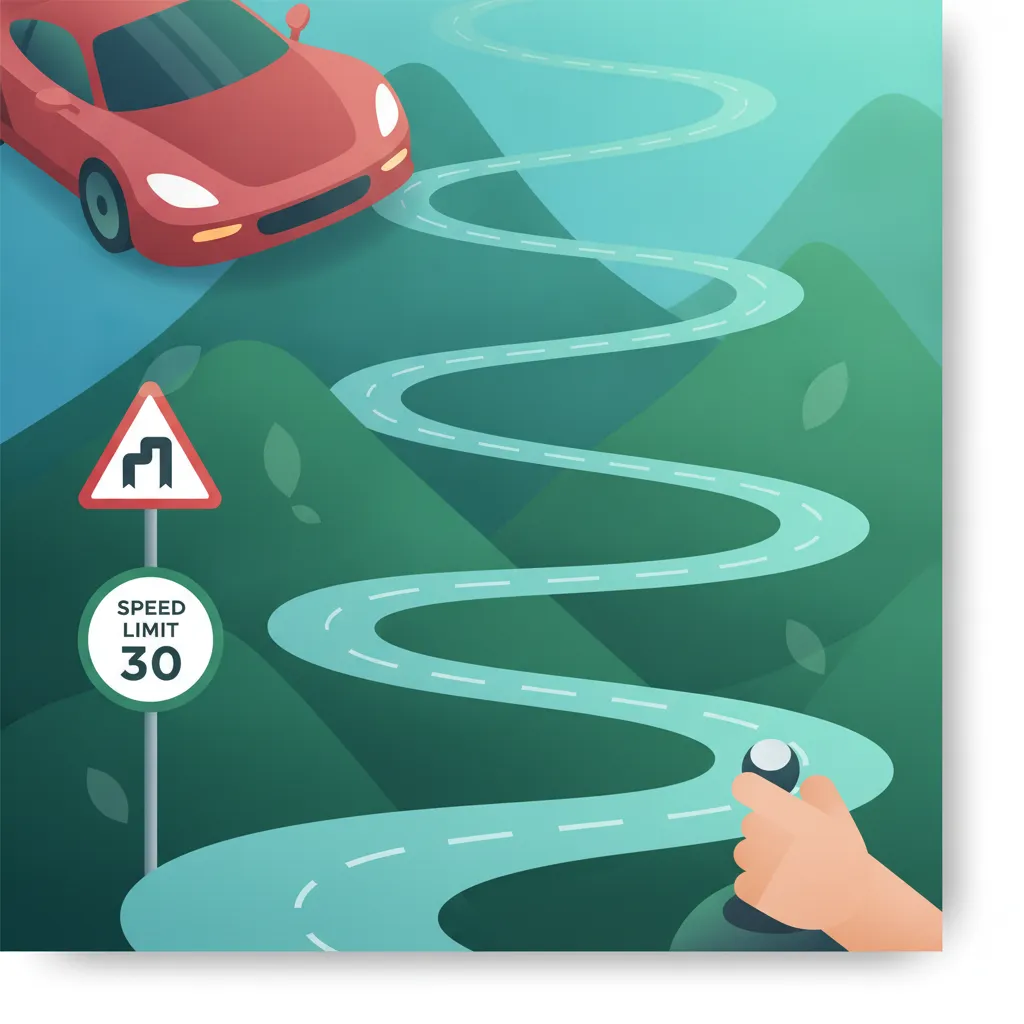
Controlling a heavy vehicle on a steep downhill grade requires a specific technique to avoid disaster. This lesson teaches the golden rule: select a low gear before starting the descent, one that is low enough to control the speed with minimal use of the service brakes. It explains how to effectively combine this with the engine brake or retarder to maintain a safe, steady speed and keep the service brakes cool and ready for an emergency.

Rural roads present challenges like narrow lanes, poor surfaces, sharp bends, and limited visibility. This lesson teaches drivers how to position their large vehicle to maximize space and visibility, anticipate oncoming traffic at blind corners, and be aware of specific rural hazards. These hazards include slow-moving agricultural vehicles, animals on the road, and concealed farm entrances.
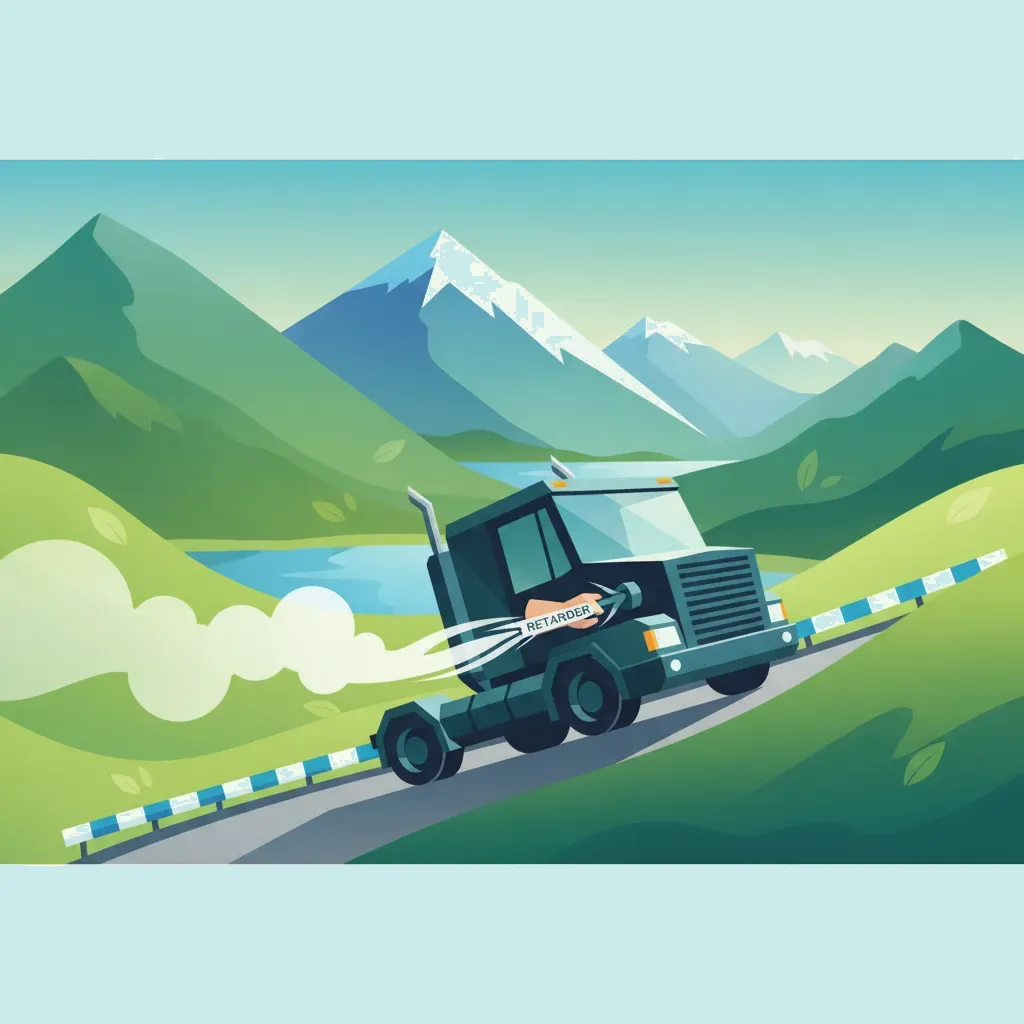
Relying solely on the service brakes on a long downhill stretch can lead to overheating and complete brake failure (brake fade). This lesson explains the function of auxiliary brakes like retarders. You will learn how and when to engage them to maintain a safe, controlled speed, preserving the main brakes for when they are truly needed.
Motorway driving requires constant concentration due to high speeds. This lesson emphasizes the importance of staying in the right-hand lane unless overtaking and the specific restrictions on lorry overtaking in Switzerland. It reinforces the need for a following distance of at least four seconds to compensate for the vehicle's long stopping distance and provides guidance on safely merging and exiting.

This lesson introduces the core behaviour rules governing safe communication, focusing on the use of signals, mirrors, and eye contact. It emphasizes the importance of timely indicator usage and the correct procedure for checking mirrors and blind spots. The content also covers non-verbal communication cues that help convey intent and foster predictable traffic flow.

This lesson focuses on general driving safety in areas with a high concentration of children. It stresses the importance of significantly reducing speed, being prepared for unexpected events, and scanning for children between parked cars. The driver must exhibit maximum vigilance in these high-risk environments at all times.
This lesson introduces defensive driving principles, focusing on hazard anticipation, continuous scanning, and proactive positioning. You will learn how to anticipate potential hazards by observing traffic patterns and maintaining situational awareness. Emphasis is placed on proactive speed management to avoid dangerous situations before they arise.
Find clear answers to common questions learners have about Eco‑Driving: Fuel Efficiency and Emissions Reduction. Learn how the lesson is structured, which driving theory objectives it supports, and how it fits into the overall learning path of units and curriculum progression in Switzerland. These explanations help you understand key concepts, lesson flow, and exam focused study goals.
Switzerland promotes environmentally responsible driving to reduce pollution and noise. The exam tests your knowledge of these techniques to ensure you understand how to minimize your impact on the environment while operating a vehicle.
Generally, using a higher gear keeps engine revolutions lower, which saves fuel. However, you must always choose the appropriate gear for the current speed and road conditions to maintain safety and engine health.
Rapid acceleration requires significantly more fuel as the engine works harder to overcome inertia. By accelerating gently and progressively, you maintain better fuel efficiency and reduce strain on the vehicle's engine.
Yes, Swiss regulations discourage unnecessary idling. If you are stopped for an extended period, such as at a closed railway crossing or waiting for passengers, turning off the engine is a standard eco-driving practice.
Pinpoint specific Swiss traffic rules, road signs, or driving situations you need to master. Use the practice search to start a focused revision session now and build confidence for your official driving theory exam.