
This lesson provides essential training on navigating tunnels safely within the Swiss road network. You will learn to manage your vehicle's speed and lighting, as well as the critical emergency procedures required if you face a fire or breakdown in a confined space.
Lesson content overview
Driving through tunnels is a common experience in Switzerland, connecting valleys and bypassing mountains. While efficient, tunnels present unique challenges for drivers, demanding heightened awareness and adherence to specific safety protocols. This comprehensive lesson, part of the Comprehensive Swiss Driving Theory Course for Category B License, is designed to equip you with the essential knowledge and procedures for safe navigation through tunnels, including how to react effectively in emergencies. Understanding these safety measures is crucial for protecting yourself, your passengers, and other road users.
Tunnels, by their very nature, are confined spaces with reduced visibility and limited escape routes, amplifying the potential consequences of accidents or fires. A minor incident on an open road can quickly escalate into a severe hazard within a tunnel environment. Proper speed management, keen observation of signage, and readiness for emergency situations are not merely suggestions but mandatory requirements for minimizing risks and ensuring a swift, organized response from emergency services. This lesson connects directly to prior knowledge of road signs, speed limits, and general vehicle operation, building upon the principles of hazard perception and defensive driving.
Entering a tunnel requires an immediate shift in driving behavior. The environment changes rapidly, from bright daylight to artificial lighting, often with reduced space and visibility. Your primary responsibility is to adapt your driving style to these unique conditions, ensuring safety and smooth traffic flow.
Road signs play an even more critical role in tunnels than on open roads. They provide vital information, warnings, and mandatory instructions that are often specific to the tunnel environment. These signs dictate your speed, lane usage, and what actions to take in various situations.
These signs indicate actions you must take. Examples include speed limits, which are often reduced inside tunnels, and minimum speed limits in longer tunnels to maintain traffic flow.
Warning signs alert you to potential dangers ahead, such as fire hazards, steep gradients, or changes in ventilation systems. Pay close attention to these as they prepare you for altered conditions.
These signs forbid certain actions. A common prohibition in tunnels is "No Overtaking," crucial due to limited visibility and space. Stopping is generally prohibited unless in designated emergency bays.
Informational signs guide you, indicating emergency exits, the location of emergency equipment (such as telephones and fire extinguishers), and sometimes dynamic information regarding traffic conditions or lane closures.
Practical Meaning: Always adjust your speed, maintain your lane, and prepare for potential hazards as indicated by these signs. Failing to observe tunnel-specific signs can lead to dangerous situations and is a violation of Swiss traffic regulations (e.g., Art. 73 of the Swiss Traffic Regulations).
Controlling your speed is paramount in tunnels. The confined environment reduces reaction time and increases the severity of collisions.
Tunnels frequently have specific posted speed limits, often lower than on open roads. Some modern tunnels also employ dynamic speed limits displayed on overhead gantries, which can change based on real-time traffic flow, congestion, or emergency situations. Always comply with the displayed limit. Exceeding the maximum allowed speed is illegal and dramatically increases accident risk (Swiss Traffic Regulations Art. 78). Conversely, some long tunnels may also have a minimum speed limit to prevent traffic bottlenecks (Art. 79).
Beyond posted limits, you must adjust your speed according to current conditions. If visibility is reduced due to smoke, fog, or heavy traffic, you should reduce your speed further, even if it means driving below the maximum posted limit. Maintaining a consistent, safe speed helps prevent sudden braking and potential chain reactions.
Maintaining a safe following distance is even more critical in tunnels. Reduced visibility and the hard surfaces of tunnel walls mean that the consequences of a rear-end collision are amplified.
The fundamental "two-second rule" serves as a minimum guideline for following distance. However, in tunnels, especially longer ones, or during adverse conditions like heavy traffic or poor visibility, it is prudent to increase this gap to three, four, or even five seconds. This extended distance provides more time to react to sudden braking by the vehicle ahead and allows for safer stopping.
Stopping within a tunnel is generally prohibited and extremely dangerous, as it creates an unexpected obstruction for following traffic. In the event of a breakdown, emergency, or any situation requiring you to stop, you must try to reach a designated stopping bay or emergency lay-by, which are usually marked. These bays are designed to keep your vehicle out of the main flow of traffic, ensuring safety and allowing emergency services access (Swiss Traffic Regulations Art. 13).
Maintaining strict lane discipline is vital in the often-narrow and sometimes curving confines of a tunnel.
Drivers must maintain a steady, central path within their lane and avoid unnecessary lane changes. Drifting or swerving can lead to collisions with tunnel walls or other vehicles. Unless overtaking is explicitly permitted and safe, stay in your lane (Swiss Traffic Regulations Art. 11).
Many tunnels prohibit overtaking entirely, marked by "No Overtaking" signs. This is due to limited sightlines, potential for oncoming traffic (in two-way tunnels), and the reduced space to maneuver safely. Always respect these prohibitions.
Proper use of vehicle lighting is non-negotiable in tunnels. Even in seemingly well-lit tunnels, your headlights make your vehicle visible to others and illuminate the road surface and signage.
Upon entering any tunnel, you must switch on your low-beam headlights, regardless of the time of day or how bright the tunnel appears internally (Swiss Traffic Regulations Art. 62). High-beam headlights are generally prohibited as they can blind other drivers due to reflections from tunnel walls and the contained environment.
If your vehicle breaks down or you are forced to stop unexpectedly within a tunnel, immediately activate your hazard warning lights. These flashing lights are crucial for alerting other drivers to your stationary vehicle and preventing rear-end collisions (Swiss Traffic Regulations Art. 48).
Knowing how to react in a tunnel emergency can be life-saving. From breakdowns to fires, specific protocols are in place to guide your actions and assist emergency responders.
A breakdown in a tunnel requires immediate, decisive action to ensure your safety and that of others.
Try to Reach a Stopping Bay: If your vehicle experiences a mechanical failure, try to coast or drive to the nearest designated stopping bay or emergency shoulder.
Activate Hazard Warning Lights: Immediately switch on your hazard warning lights to alert approaching traffic.
Position Your Vehicle: If a stopping bay is unreachable, pull your vehicle as far to the right as possible, close to the tunnel wall.
Switch Off Engine and Remove Key: This prevents accidental restarting and potential fire hazards.
Evacuate Safely: If it is safe to do so and the vehicle is a hazard, exit your vehicle and move to a safe location behind the crash barrier or to the nearest emergency walkway.
Contact Emergency Services: Use the nearest emergency telephone, typically located at regular intervals along tunnel walls. These phones connect directly to the tunnel control centre or emergency services (Swiss Traffic Regulations Art. 42). Clearly state your location (tunnel name, kilometer marker) and the nature of the emergency. If no emergency phone is available, use your mobile phone.
Wait for Help: Stay in a safe place until emergency services arrive.
Fires and accidents within tunnels are extremely dangerous due to smoke propagation and confined spaces. Your rapid and correct response is vital.
Stop Safely: If possible, stop your vehicle at a safe distance from the incident, ideally in a stopping bay or as far to the right as possible.
Activate Hazard Lights: Immediately turn on your hazard warning lights.
Switch Off Engine: Turn off your engine and remove the key.
Assess the Situation: Quickly determine the extent of the fire or accident.
Evacuate if Necessary: If smoke is present, or if there is an immediate threat of fire, evacuate your vehicle immediately. Leave the key in the ignition (or easily accessible) and doors unlocked to allow emergency services to move your car if needed.
Move to Nearest Emergency Exit: Follow the illuminated green emergency exit signs to the nearest safe zone outside the tunnel (Swiss Traffic Regulations Art. 27). Do not try to continue driving through a smoke-filled tunnel.
Use Emergency Equipment (if safe and trained): If a small fire can be safely extinguished with a tunnel's provided fire extinguisher and you are trained to do so, you may attempt it. However, your primary concern is personal safety.
Contact Emergency Services: Use an emergency telephone. Provide clear details about the incident and your location.
Do Not Obstruct Exits: Ensure your vehicle or personal belongings do not block emergency exits or equipment.
Never open your windows during a fire in a tunnel. This can disrupt the ventilation system, drawing smoke into your vehicle and spreading it more rapidly throughout the tunnel.
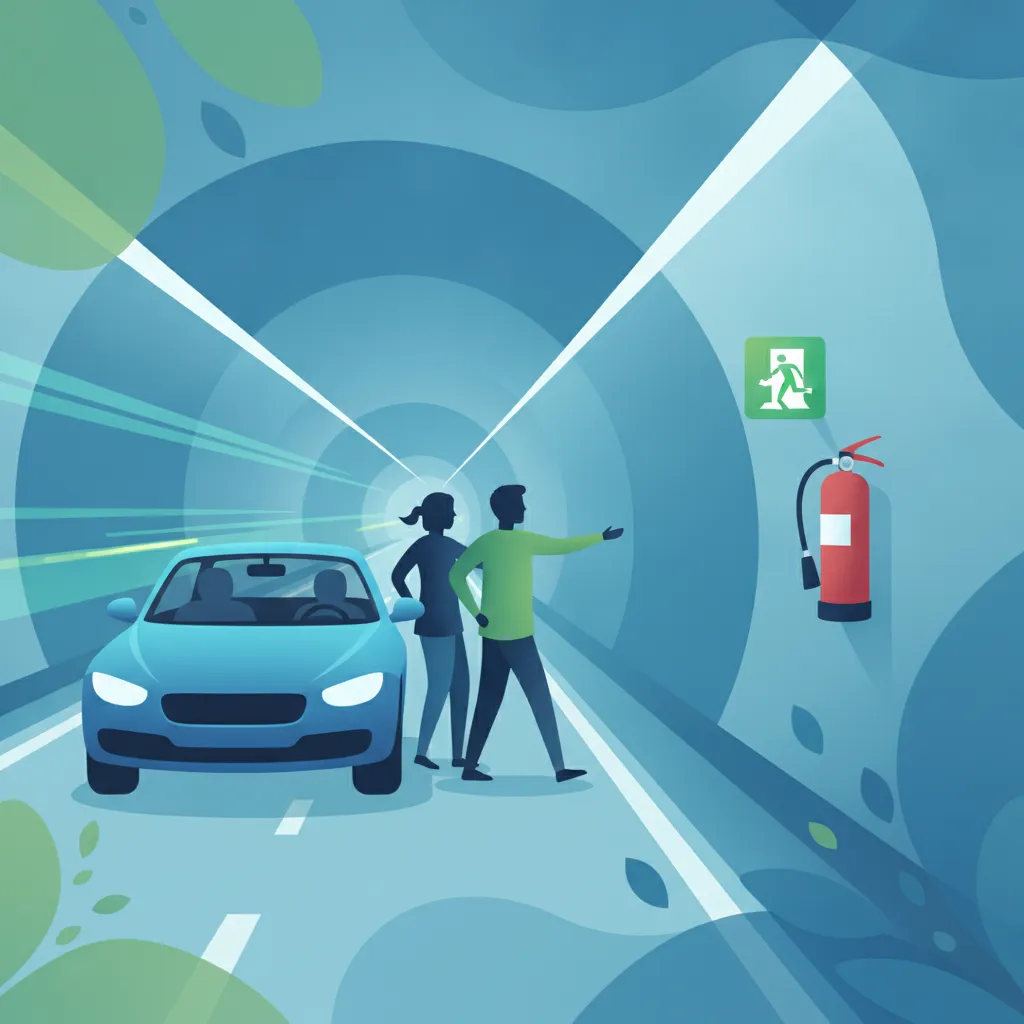
Tunnels are equipped with emergency exits (also known as cross-passages or escape tunnels) at regular intervals. These are clearly marked with green signs displaying a white running figure and an arrow. Knowing their location is paramount for quick evacuation.
These exits lead to a safe, protected area or a parallel escape tunnel, which provides a route out of the main tunnel and fresh air. During an emergency, follow these signs diligently to lead you to safety.
Tunnels are equipped with various safety systems to manage incidents.
Along tunnel walls, you will find emergency niches containing fire extinguishers, fire hydrants, and emergency telephones. While emergency services primarily use these, portable fire extinguishers can be used by drivers if a fire is small, contained, and you are trained and feel safe to do so. Never tamper with this equipment.
Tunnels have sophisticated ventilation systems designed to circulate fresh air and, crucially, to extract smoke and heat during a fire. In the event of an incident, these systems activate automatically or are controlled by the tunnel management centre to direct smoke away from evacuation routes. This is another reason why keeping windows closed during a fire is important, to allow the system to operate effectively.
Clear communication is vital in the low-visibility, enclosed environment of a tunnel.
Several factors can impact tunnel driving safety, requiring you to adjust your behavior.
Adherence to tunnel safety regulations is legally binding in Switzerland. Violations can lead to severe penalties, including fines, driving license suspension, and even imprisonment, especially if an incident results from negligence. The Swiss Road Traffic Act (SVG) and the Road Traffic Regulations (VRV) govern these rules.
Common violations include:
Successful and safe tunnel driving in Switzerland hinges on a combination of knowledge, vigilance, and adherence to protocols.
By internalizing these principles, you will be well-prepared to navigate Swiss tunnels safely and confidently, contributing to the safety of all road users.
This lesson covers essential Swiss tunnel safety protocols including mandatory low-beam headlight use, strict lane discipline, and adherence to posted or dynamic speed limits. For emergencies, learners are taught specific breakdown procedures involving hazard lights, stopping bays, and emergency phone contact, as well as fire response protocols emphasizing immediate evacuation via green emergency exit signs and keeping windows closed to support ventilation. The content also addresses conditional adjustments for low visibility, heavy traffic, and construction zones, all governed by specific articles of the Swiss Traffic Regulations.
A short set of high-value points that capture the most important learning from this lesson.
Always switch to low-beam headlights when entering any Swiss tunnel, regardless of external light conditions or how bright the tunnel appears internally.
In a breakdown, immediately activate hazard lights and try to reach a designated stopping bay; if unreachable, pull as far right as possible and evacuate to safety.
During a fire or smoke incident, evacuate immediately via green emergency exit signs and keep all windows closed to avoid smoke inhalation.
Maintain a significantly larger following distance in tunnels than on open roads, increasing it further during poor visibility or heavy traffic.
Use emergency telephones at regular intervals along tunnel walls to report incidents with your exact location and the nature of the emergency.
Explore all units and lessons included in this driving theory course.
Low-beam headlights are mandatory in Swiss tunnels (Art. 62); high-beam headlights are prohibited due to reflections from tunnel walls.
Stopping in a traffic lane is generally prohibited in tunnels; emergency bays and stopping bays are the only safe places to stop (Art. 13).
Green signs with a white running figure indicate emergency exits leading to safe evacuation zones or parallel escape tunnels.
If you evacuate during a fire, leave the key in the ignition and doors unlocked so emergency services can move your vehicle if needed.
Ventilation systems in Swiss tunnels are designed to direct smoke away from evacuation routes—keep windows closed to allow them to function effectively.
Driving through tunnels without headlights, assuming the tunnel's internal lighting makes them unnecessary.
Attempting to continue driving through a smoke-filled tunnel instead of immediately evacuating via emergency exits.
Stopping in the traffic lane during a breakdown instead of trying to reach a designated stopping bay.
Opening vehicle windows when smoke is present in a tunnel, which can draw smoke inside and disrupt the ventilation system.
Using high-beam headlights inside tunnels, which can blind other drivers due to reflections from the enclosed walls.
Lesson content overview
A short set of high-value points that capture the most important learning from this lesson.
Always switch to low-beam headlights when entering any Swiss tunnel, regardless of external light conditions or how bright the tunnel appears internally.
In a breakdown, immediately activate hazard lights and try to reach a designated stopping bay; if unreachable, pull as far right as possible and evacuate to safety.
During a fire or smoke incident, evacuate immediately via green emergency exit signs and keep all windows closed to avoid smoke inhalation.
Maintain a significantly larger following distance in tunnels than on open roads, increasing it further during poor visibility or heavy traffic.
Use emergency telephones at regular intervals along tunnel walls to report incidents with your exact location and the nature of the emergency.
Explore all units and lessons included in this driving theory course.
Low-beam headlights are mandatory in Swiss tunnels (Art. 62); high-beam headlights are prohibited due to reflections from tunnel walls.
Stopping in a traffic lane is generally prohibited in tunnels; emergency bays and stopping bays are the only safe places to stop (Art. 13).
Green signs with a white running figure indicate emergency exits leading to safe evacuation zones or parallel escape tunnels.
If you evacuate during a fire, leave the key in the ignition and doors unlocked so emergency services can move your vehicle if needed.
Ventilation systems in Swiss tunnels are designed to direct smoke away from evacuation routes—keep windows closed to allow them to function effectively.
Driving through tunnels without headlights, assuming the tunnel's internal lighting makes them unnecessary.
Attempting to continue driving through a smoke-filled tunnel instead of immediately evacuating via emergency exits.
Stopping in the traffic lane during a breakdown instead of trying to reach a designated stopping bay.
Opening vehicle windows when smoke is present in a tunnel, which can draw smoke inside and disrupt the ventilation system.
Using high-beam headlights inside tunnels, which can blind other drivers due to reflections from the enclosed walls.
Explore search topics learners often look for when studying Safety in Tunnels: Emergency Procedures and Equipment. These topics reflect common questions about road rules, driving situations, safety guidance, and lesson level theory preparation for learners in Switzerland.
Browse additional driving theory lessons that cover connected traffic rules, road signs, and common driving situations related to this topic. Improve your understanding of how different rules interact across everyday traffic scenarios.
Master the specific rules and understand the critical signage for driving in Swiss tunnels. This lesson covers speed limits, lane discipline, and essential driver responsibilities for safe tunnel navigation according to Swiss traffic law.
This lesson explores the rules for driving on motorways and navigating tunnels. It covers entry and exit procedures, lane discipline, minimum speed requirements, and overtaking protocols on high-speed roads. For tunnels, the content explains speed limits, lighting, emergency exits, and ventilation requirements for safe travel.
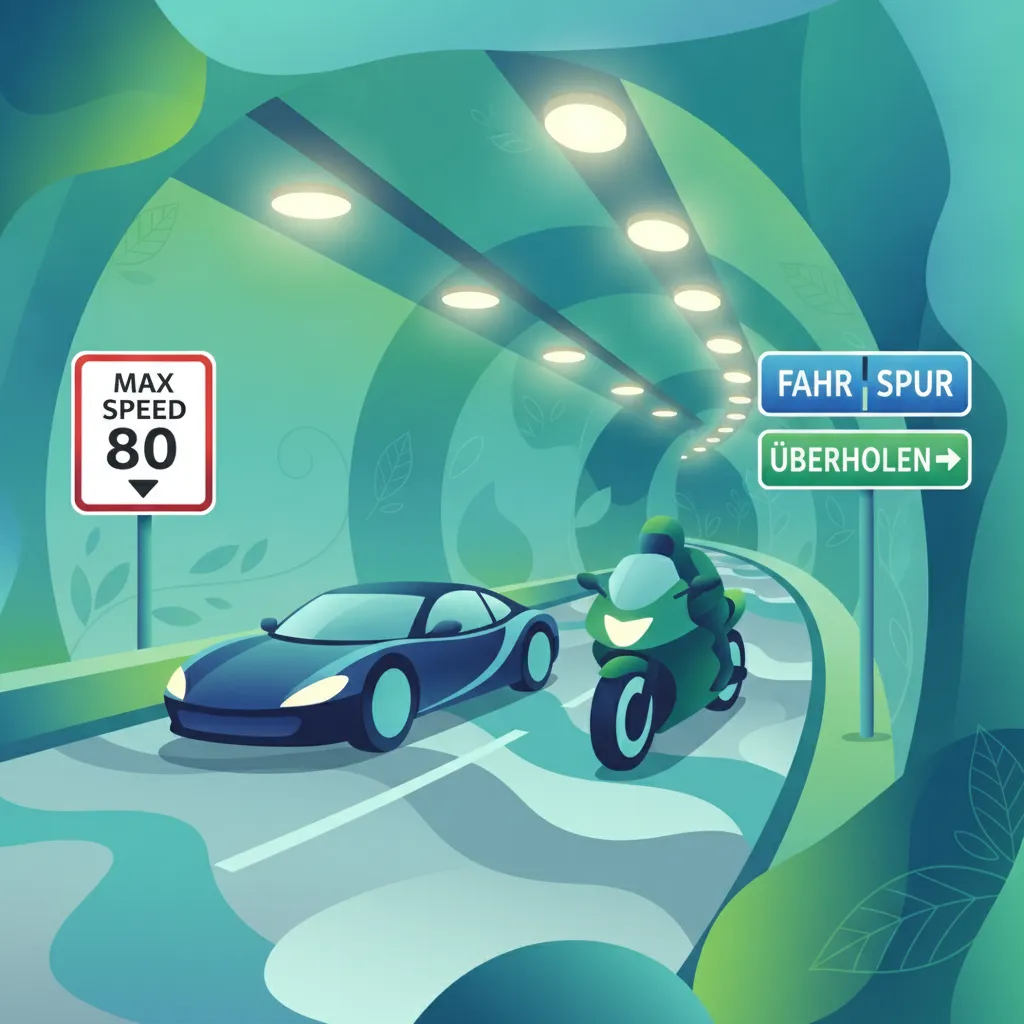
Tunnels are enclosed environments where incidents can quickly escalate. This lesson outlines the specific rules for tunnel driving: remove sunglasses, turn on dipped headlights, maintain a safe following distance, and tune the radio to the indicated frequency. It also covers the critical emergency procedures to follow in the event of a fire or breakdown inside a tunnel.
Tunnels are enclosed environments with unique risks. This lesson covers the mandatory pre-entry checks, such as removing sunglasses and turning on dipped headlights. It explains the importance of maintaining a greater following distance and outlines the critical emergency procedures in case of a breakdown or fire inside a tunnel.
Motorway driving requires constant concentration due to high speeds. This lesson emphasizes the importance of staying in the right-hand lane unless overtaking and the specific restrictions on lorry overtaking in Switzerland. It reinforces the need for a following distance of at least four seconds to compensate for the vehicle's long stopping distance and provides guidance on safely merging and exiting.
Motorway driving involves high speeds and requires constant concentration. This lesson covers correct lane discipline, safe procedures for joining and leaving the motorway, and techniques for overtaking other large vehicles. Maintaining appropriate speed and a safe following distance is emphasized throughout.
Bus lanes are a key tool for improving service reliability, but they come with specific rules. This lesson covers how to correctly interpret bus lane signs and markings. It also explains the regulations for entering and leaving the lane to make turns or avoid obstructions, and the priority rules associated with them.
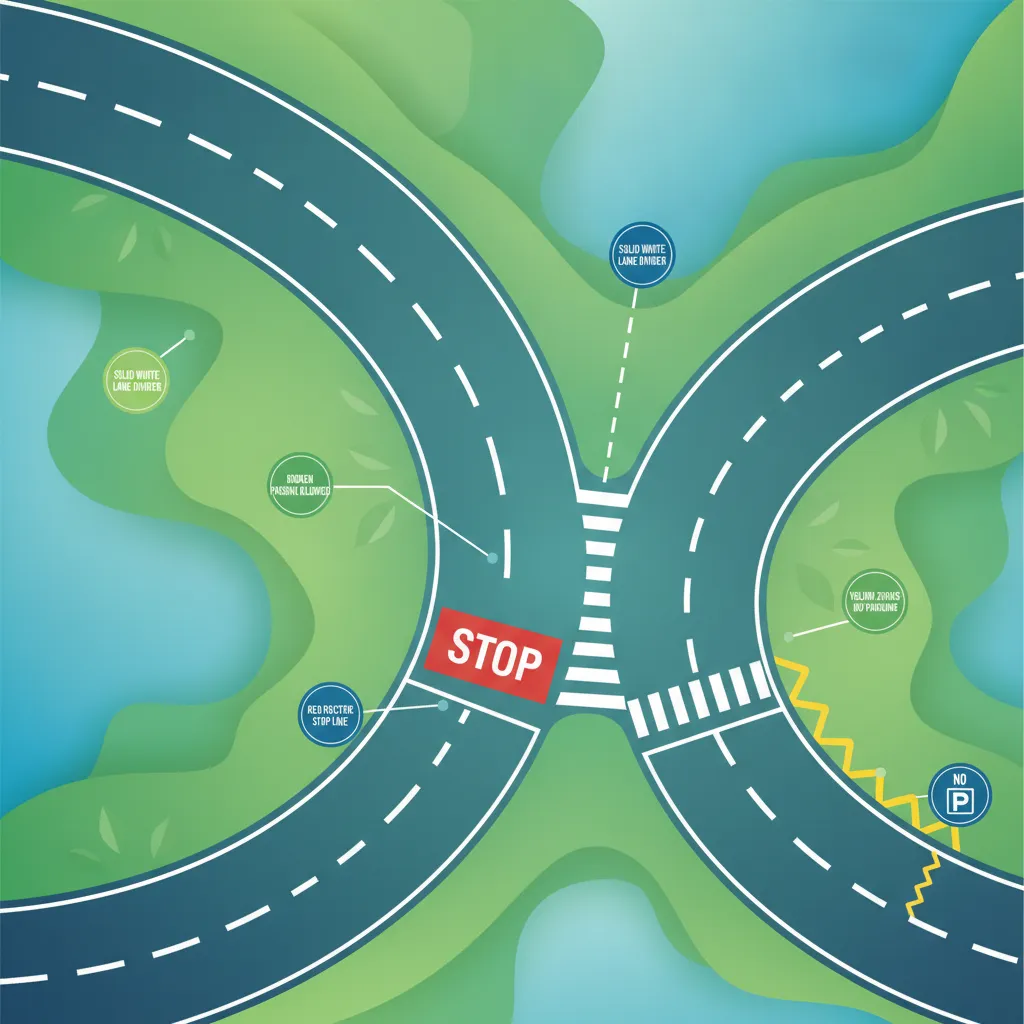
This lesson covers the various road surface markings that dictate lane usage, turning movements, and pedestrian zones. It explains the significance of solid versus broken lines, directional arrows, and specific markings for bike lanes. Understanding these markings is crucial for maintaining lane discipline and ensuring safe interactions in complex traffic environments.
This lesson explores the category of regulatory signs, which dictate permissible and prohibited actions for drivers. It covers speed limit signs, entry restrictions, and mandatory direction signs, explaining their legal significance. Emphasis is placed on recognizing the shapes and colours that distinguish these critical signs within the Swiss traffic system.
This lesson addresses the specific safety considerations for riding through tunnels and over bridges. It covers adapting to changes in light and temperature, being aware of tunnel emergency procedures, and anticipating the effects of crosswinds on bridges. Maintaining a steady speed and predictable path is emphasized for safety in these structures.
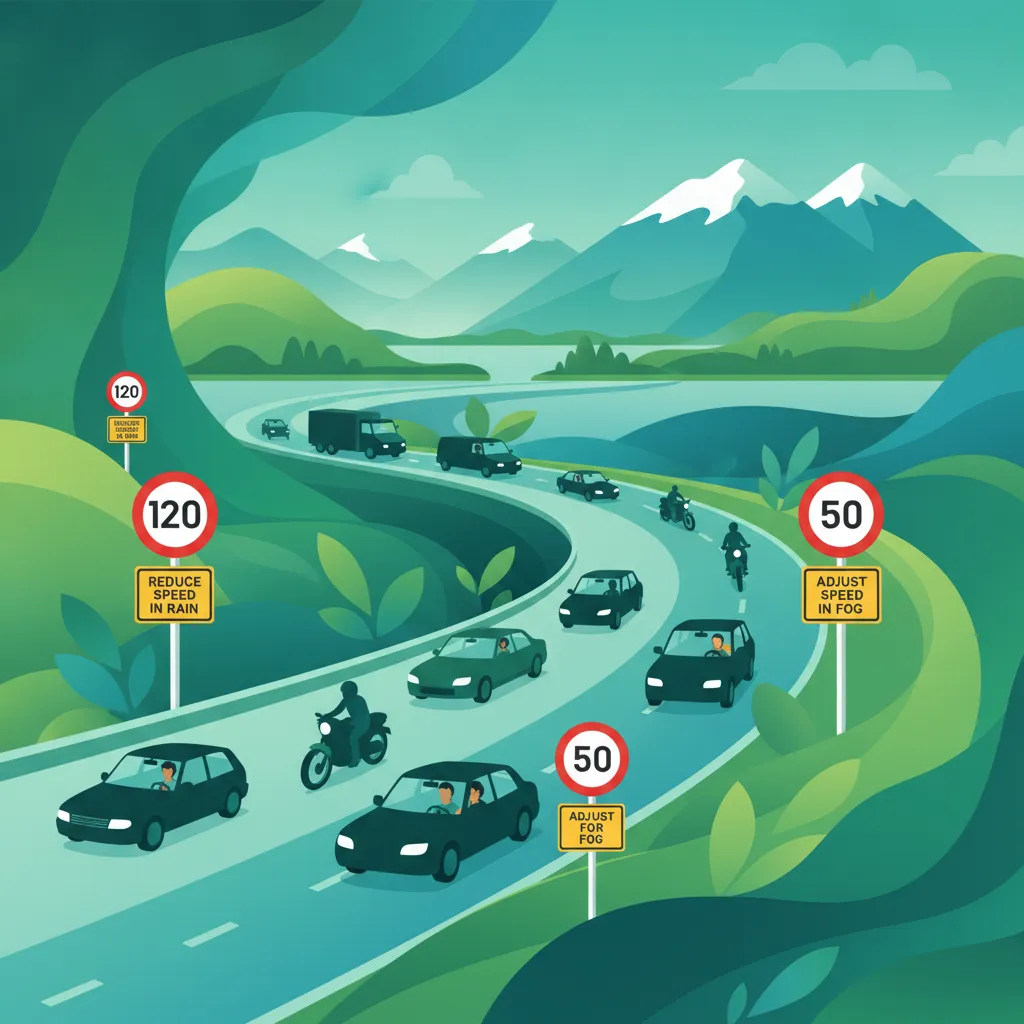
This lesson details the different speed limits applicable in urban, rural, and motorway environments across Switzerland. It explains speed limit signs, temporary restrictions, and how to adapt speed safely based on visibility and road conditions. Understanding these principles helps you comply with legal limits while ensuring an appropriate speed for the circumstances.
Learn critical emergency procedures for tunnels in Switzerland, including breakdown protocols, fire response, and safe evacuation routes. Essential knowledge for Category B drivers to ensure safety in confined road environments.
Tunnels are enclosed environments where incidents can quickly escalate. This lesson outlines the specific rules for tunnel driving: remove sunglasses, turn on dipped headlights, maintain a safe following distance, and tune the radio to the indicated frequency. It also covers the critical emergency procedures to follow in the event of a fire or breakdown inside a tunnel.
Tunnels are enclosed environments with unique risks. This lesson covers the mandatory pre-entry checks, such as removing sunglasses and turning on dipped headlights. It explains the importance of maintaining a greater following distance and outlines the critical emergency procedures in case of a breakdown or fire inside a tunnel.
This lesson explores the rules for driving on motorways and navigating tunnels. It covers entry and exit procedures, lane discipline, minimum speed requirements, and overtaking protocols on high-speed roads. For tunnels, the content explains speed limits, lighting, emergency exits, and ventilation requirements for safe travel.
In the event of a fire or other serious danger, a driver must be able to lead an evacuation. This lesson covers the decision-making process, how to use all available emergency exits, and the importance of clear, authoritative communication to guide passengers. The goal is to move everyone to a safe location away from the vehicle and any traffic.
After stopping for an emergency, making the scene safe is the top priority. This lesson details the procedure: activate hazard warning lights, put on high-visibility clothing before exiting the cab, and place the warning triangle at the correct distance behind the vehicle (at least 100m on motorways). This warns approaching traffic and creates a safer environment for the driver and emergency responders.
This lesson addresses the specific safety considerations for riding through tunnels and over bridges. It covers adapting to changes in light and temperature, being aware of tunnel emergency procedures, and anticipating the effects of crosswinds on bridges. Maintaining a steady speed and predictable path is emphasized for safety in these structures.
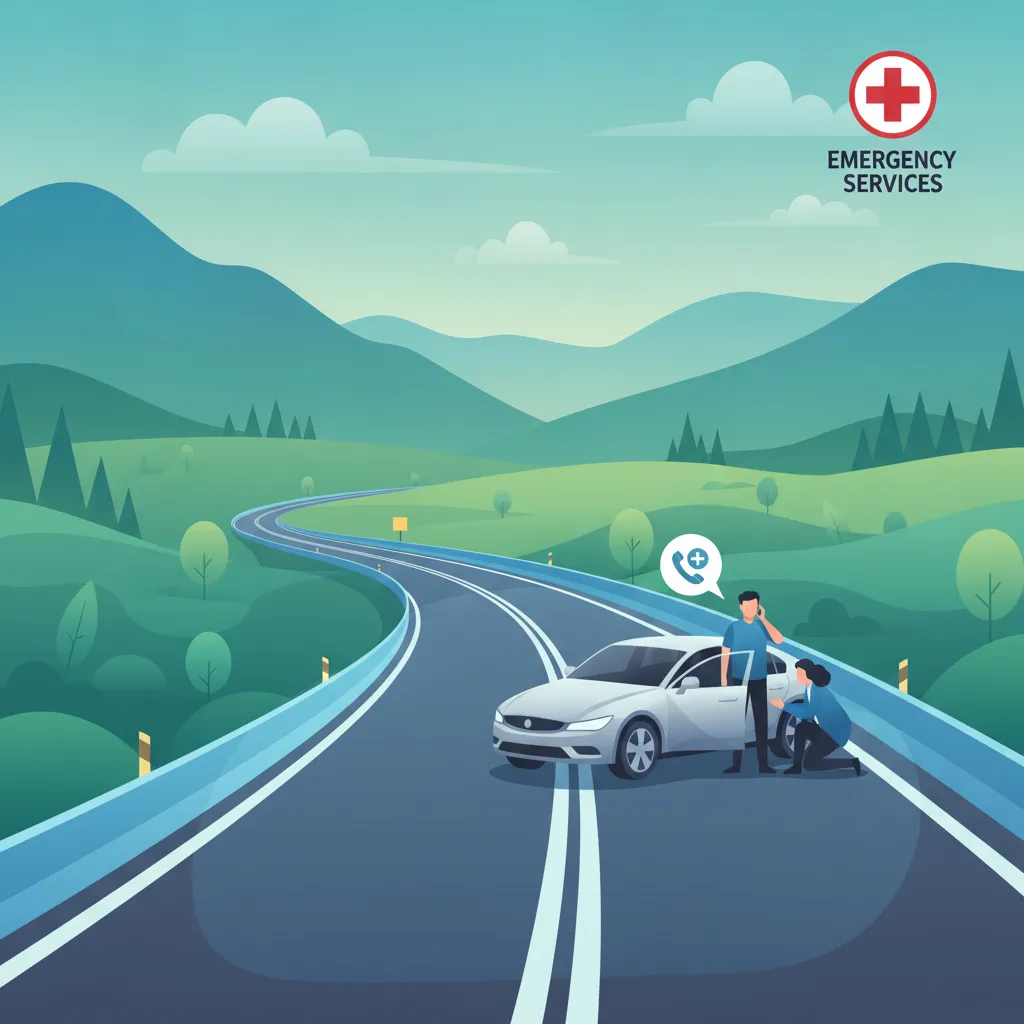
This lesson covers essential first aid skills and the procedures for reporting accidents in Switzerland. It details the use of emergency numbers 112 and 144, the correct placement of warning triangles, and the use of high-visibility vests. The content outlines the steps for securing an accident scene, providing assistance, and coordinating with emergency services.
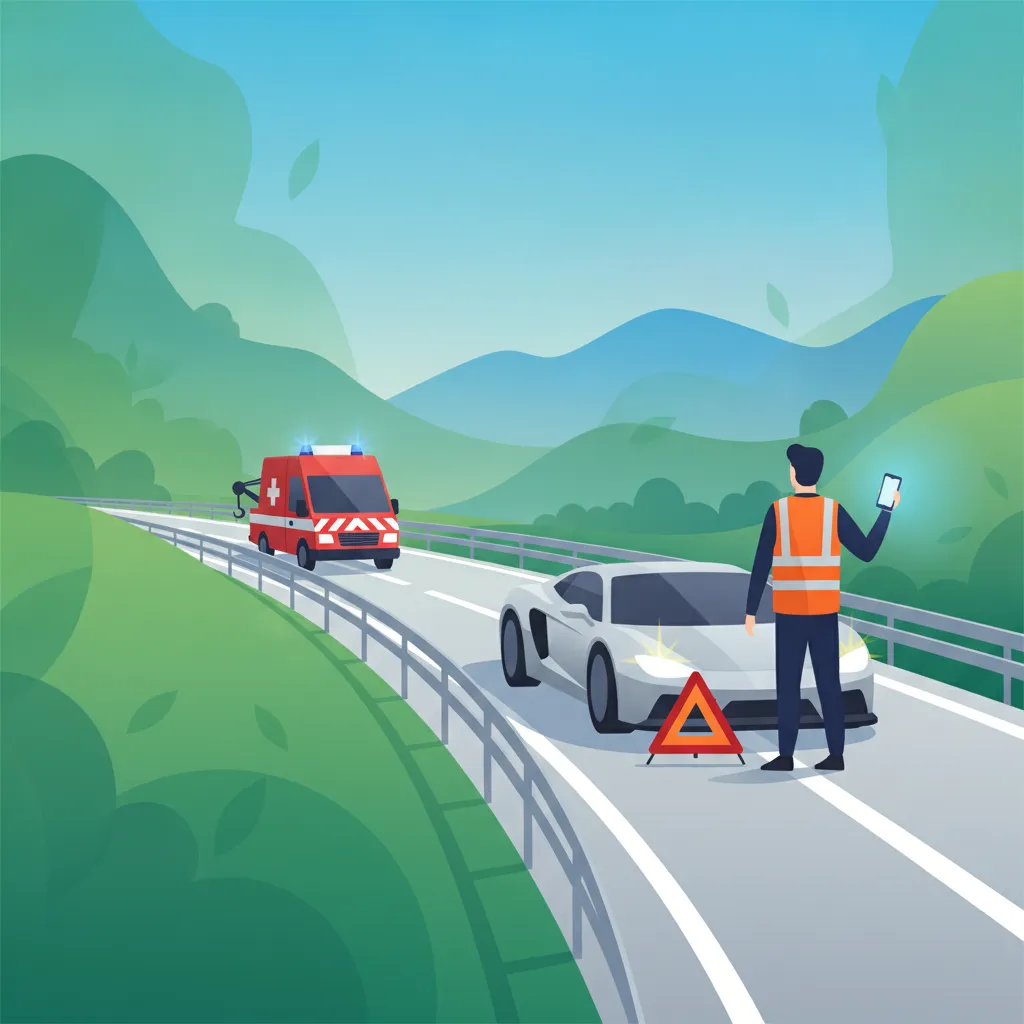
A breakdown can be a dangerous situation, especially on a busy road or motorway. This lesson provides a clear, sequential guide to follow. It includes pulling over to a safe location, activating hazard lights, placing the warning triangle, ensuring passenger safety, and contacting the appropriate services for assistance.
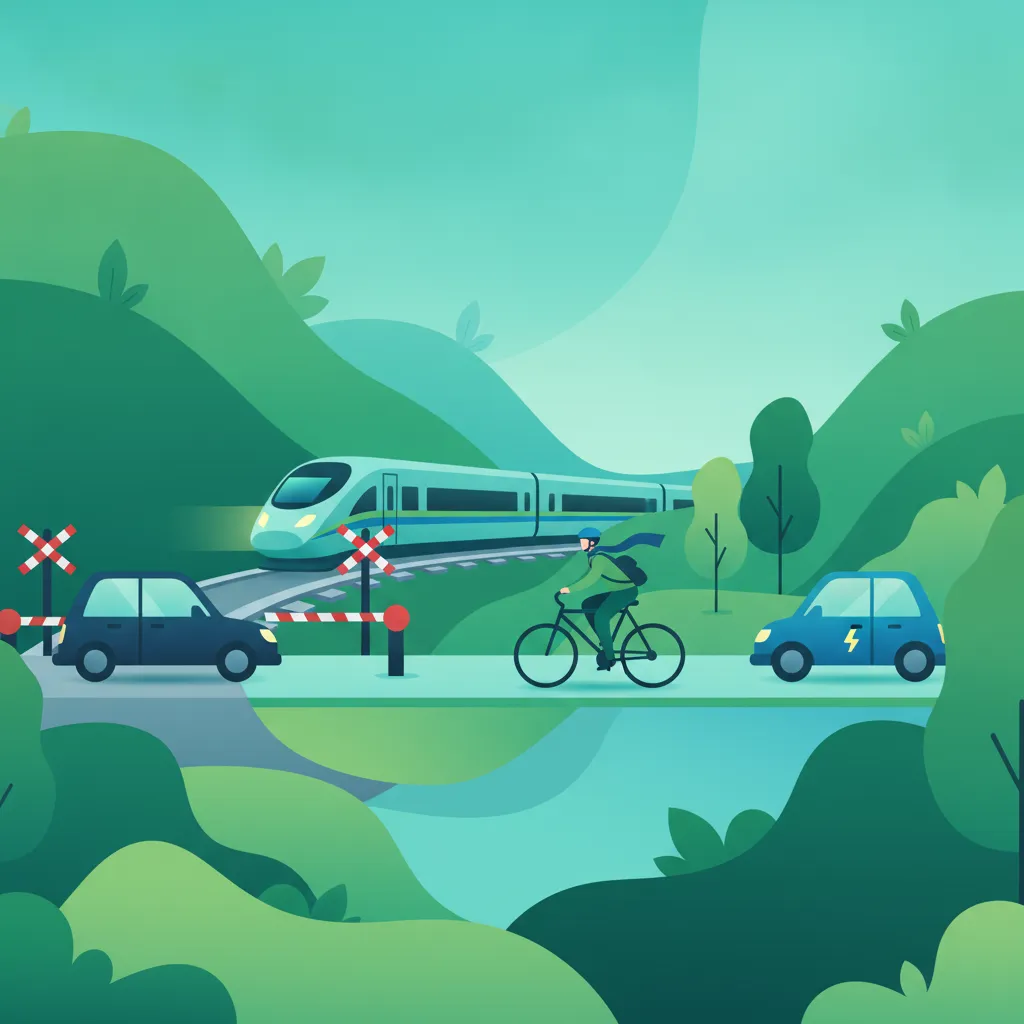
This lesson examines special traffic situations such as railway level crossings and shared zones where different road users coexist. It explains the specific safety procedures required at railway crossings and how to behave in shared zones with mixed traffic. The content also addresses the need to yield to oncoming trains and follow special signage in these unique zones.
Find clear answers to common questions learners have about Safety in Tunnels: Emergency Procedures and Equipment. Learn how the lesson is structured, which driving theory objectives it supports, and how it fits into the overall learning path of units and curriculum progression in Switzerland. These explanations help you understand key concepts, lesson flow, and exam focused study goals.
If traffic stops inside a tunnel, you must switch on your hazard warning lights to alert vehicles behind you. Keep a safe distance from the vehicle ahead and turn off your engine if the wait is likely to be long, while remaining ready to move if traffic clears.
You are legally required to switch on your dipped headlights before entering a tunnel. Daytime running lights are often insufficient because they do not always illuminate your rear lights, which are essential for visibility in low-light tunnel environments.
Emergency exits are marked by specific green signage often indicating the distance to the next safe area or exit. In the event of a fire or breakdown, follow these green signs and the floor-level lighting, which guide you toward safety tunnels or cross-passages.
No. You must remove your sunglasses immediately when entering a tunnel, even during the day, as the sudden transition to lower light levels significantly reduces your visibility and reaction time.
Pinpoint specific Swiss traffic rules, road signs, or driving situations you need to master. Use the practice search to start a focused revision session now and build confidence for your official driving theory exam.