
This lesson introduces the structural fundamentals of heavy goods vehicles, covering the chassis, cab designs, and cargo body types. Understanding these components is a vital prerequisite for safety and effective load management in your Swiss Category C or C1 professional training.

Lesson content overview
For professional drivers operating heavy goods vehicles (HGVs) in the Official Swiss Driving Theory Course for Category C & C1 Goods Vehicles, a fundamental understanding of a lorry's core structural components is paramount. This lesson delves into the chassis, the vehicle's sturdy foundation; the cab, the driver's operational and resting space; and various body types, which define the cargo-carrying capabilities. Mastering these elements is not only crucial for daily vehicle inspections and maintenance but also for ensuring optimal load planning, safe operation, and adherence to strict Swiss regulatory compliance.
Each component significantly influences vehicle dynamics, driver ergonomics, loading limits, and overall roadworthiness. The structural layout of a lorry directly dictates its operational capabilities, payload capacity, and integrated safety features. The chassis provides the load-bearing skeleton, the cab houses the driver and controls, and the body defines the type of cargo space and its specific handling requirements. From a safety and physics perspective, the precise distribution of mass across the chassis and body directly impacts stability, braking distances, and handling characteristics. The ergonomic design of the cab profoundly affects driver fatigue and concentration, which are critical factors for long-haul journeys. Furthermore, all components must comply with specific regulatory requirements regarding permissible dimensions, mounting points, and the integration of essential safety devices like underrun protection.
The chassis, also often referred to as the frame, is the absolute bedrock of any heavy goods vehicle. It is the rigid, load-bearing skeletal structure to which all other essential components—including the axles, suspension system, cab, engine, drivetrain, and cargo body—are securely attached. Its primary role is to provide structural strength, effectively distribute loads, and ensure overall vehicle safety under diverse dynamic stresses encountered during braking, acceleration, cornering, and traversing uneven terrain.
The most common chassis design for medium to heavy trucks is the ladder frame. This robust structure consists of two strong, parallel longitudinal beams (or rails) connected by several transverse cross members. These components are typically made from high-strength steel and are either bolted or welded together to create an exceptionally rigid and durable platform. Specialized vehicles or those used in extremely demanding construction environments might utilize a more complex space frame, which involves a three-dimensional truss structure.
The chassis provides crucial mounting points for every major system, bearing the entire weight of the cargo and vehicle while absorbing dynamic stresses. In Switzerland, the chassis must meet stringent federal vehicle safety standards (VTS) concerning its strength, welding quality, and resistance to corrosion. Regular inspection is vital; any damage, such as cracks or significant rust, especially at critical weld points, compromises vehicle stability and must be professionally evaluated and repaired.
The cab is the dedicated compartment within the lorry where the driver sits, operates the controls, and performs their duties. Its design is critical for ensuring driver comfort, maximizing visibility, and providing easy access to all necessary controls, all of which are essential for reducing fatigue and enhancing situational awareness. Lorry cabs are primarily categorized into two main types, each serving different operational needs.
A day cab is characterized by the absence of a dedicated sleeping compartment. These cabs are specifically designed for shorter trips, local distribution, and regional deliveries where the driver is not expected to rest overnight in the vehicle. They are typically more compact, lighter, and often have a lower aerodynamic profile compared to sleeper cabs, which can contribute to better fuel efficiency.
While smaller, a day cab must still provide adequate space and ergonomic design for the driver and any required co-driver, in compliance with occupational health standards. This includes comfortable seating, clear visibility, and an intuitive layout of controls. A common misunderstanding is assuming day cabs are suitable for extended long-haul operations without proper consideration for mandatory driver rest periods and the resulting fatigue. The lack of a sleeping facility means drivers must use external accommodation for overnight breaks, making them unsuitable for routes demanding onboard rest.
A sleeper cab is explicitly designed for long-haul freight operations, featuring a dedicated compartment, typically a bunk or bed, for the driver to rest during mandatory break periods. These cabs are essential for enabling compliance with stringent driver rest regulations, which are vital for mitigating driver fatigue and enhancing road safety.
Sleeper cabs come in various configurations, from standard designs with a fixed bunk of one to two meters in length to extended sleepers that offer additional storage, a larger sleeping area, or even living spaces. The inclusion of a sleeper compartment adds weight to the vehicle, which must be factored into the overall gross vehicle mass and axle load calculations. In Switzerland, sleeper cabs must adhere to occupational health regulations regarding sleeping arrangements, ensuring adequate ventilation, proper lighting, and readily accessible emergency exits. Drivers must never overlook the impact of the sleeper compartment's weight on the vehicle's total mass and axle loads, as this directly affects legal compliance and safe operation.
The lorry's body type defines its specific cargo-carrying capabilities and dictates how goods are loaded, transported, and unloaded. Selecting the correct body type is critical for ensuring safe loading, compliance with dimensional limits, and efficient cargo handling. An incorrect body-chassis pairing can lead to axle overloading, illegal dimensions, and unsafe cargo securing.
A curtain sider body is highly versatile, featuring sliding fabric or tarpaulin curtains on its sides. These curtains can be easily opened to allow quick and convenient access for loading and unloading goods, typically palletized freight, from the side using forklifts. When closed, the curtains provide protection for the cargo from weather elements and road debris.
While offering excellent accessibility, it is crucial to understand that the curtains themselves do not inherently secure the load. The cargo must still be properly restrained using internal straps, load bars, or other securing devices to prevent movement during transit. The curtains must be securely fastened and tensioned before departure to prevent them from flapping at speed, which can obscure side mirrors and create a hazard for other road users. Regular checks for wear and tear on the curtains and their fastening mechanisms are essential for maintaining safety and compliance.
A refrigerated unit, often called a "reefer," is an insulated cargo space specifically designed to transport temperature-sensitive goods, such as fresh produce, frozen foods, or pharmaceuticals. These bodies are equipped with a powerful refrigeration system that maintains a controlled temperature environment, crucial for preserving the quality and safety of the cargo.
Refrigeration systems can be self-contained, with the entire unit mounted on the vehicle, or utilize portable modules. They require a reliable power supply, usually from the vehicle's engine alternator or a separate auxiliary generator, and sufficient ventilation to operate efficiently. Drivers must regularly monitor the refrigeration system and ensure that ventilation openings are clear and unobstructed to prevent overheating of the compressor and maintain consistent cargo temperatures. Ignoring routine maintenance can lead to system failure, cargo spoilage, and significant financial losses.
A flatbed is an open-platform body characterized by a flat, unobstructed load-carrying surface, without permanent side walls or a roof. This design makes flatbeds ideal for transporting oversized, irregular, or heavy cargo such as construction machinery, industrial components, timber, or steel beams.
Due to its open nature, secure load fastening is paramount on a flatbed. Cargo must be rigorously secured using a combination of straps, chains, binders, and dunnage, often complemented by edge protection and specialized chocks to prevent any movement. Driver visibility can sometimes be obstructed by tall or wide loads, necessitating extra caution. Flatbeds must be equipped with appropriate edge protection frames and, where required, reflective markings to enhance safety and prevent cargo from shifting or falling off the platform, which could pose a severe hazard to other road users.
Modern lorry designs incorporate several vital safety features directly into the chassis and body structure to protect both vehicle occupants and vulnerable road users.
Underrun protection is a rigid frame or guard fitted beneath the rear overhang of a lorry. Its primary purpose is to prevent smaller vehicles, such as cars, from sliding underneath the lorry in a rear-end collision. This significantly reduces the risk of severe injuries or fatalities to the occupants of the smaller vehicle, as it ensures that the impact occurs with the lorry's main chassis structure rather than directly with the cab or passenger compartment of the car. It is mandatory for most lorries with a load-carrying platform extending beyond the rear axle.
Side guards, also known as side underrun protection, are protective structures affixed to the sides of the cargo area, typically between the front and rear axles. Their critical role is to reduce the risk of injury to pedestrians, cyclists, and motorcyclists by preventing them from falling or sliding under the lorry's wheels in a side-impact collision or during turning maneuvers. These guards minimize the gap between the wheels, making the side profile safer for vulnerable road users.
All doors and access panels on the cab and body must be designed to allow safe and unimpeded egress for the driver and any co-drivers, especially in emergency situations. Emergency exits must never be obstructed by cargo, equipment, or modifications. Proper sealing and secure fastening of all doors and panels are also essential to prevent them from opening accidentally during transit.
Compliance with Swiss federal regulations is non-negotiable for all heavy goods vehicles. These rules govern vehicle dimensions, maximum masses, axle loads, and the mandatory installation and condition of safety equipment. Adherence ensures safe operation on the Swiss road network, which includes challenging mountain passes and high-speed motorways.
All vehicle dimension, mass, and safety equipment regulations must be cross-checked with the Swiss Federal Roads Office (ASTRA) regulations and the Swiss Vehicle Technical Inspection (VTS) standards.
Understanding the construction of a lorry helps drivers identify and mitigate common violations and potential hazards:
A comprehensive understanding of the lorry's chassis, cab, and body is foundational for professional drivers in Switzerland. It directly informs various critical aspects of daily operation:
By diligently applying this knowledge, professional drivers enhance not only their own safety but also that of other road users, contributing to efficient and responsible heavy goods transportation across Switzerland.
This lesson covers the structural fundamentals of heavy goods vehicles essential for Swiss Category C theory: the chassis as the load-bearing ladder frame, the distinction between day cabs for local operations and sleeper cabs for long-haul rest compliance, and three main body types (curtain siders, refrigerated units, and flatbeds) each suited to specific cargo requirements. Safety features including underrun protection and side guards are mandatory for protecting vulnerable road users. Understanding these components informs pre-drive inspections, load planning, vehicle dynamics awareness, and compliance with Swiss federal dimensions and safety regulations.
A short set of high-value points that capture the most important learning from this lesson.
The chassis is the load-bearing frame to which all vehicle components attach, typically using a ladder frame design with longitudinal rails and cross members
Day cabs lack sleeping facilities and are designed for local operations, while sleeper cabs include a bunk for mandatory rest periods on long-haul routes
Curtain siders, refrigerated units, and flatbeds each serve specific cargo types and require different loading and securing approaches
Underrun protection and side guards are mandatory safety features that protect vulnerable road users from sliding underneath the vehicle
The vehicle's structural components directly influence axle loads, stability, braking distance, and driver fatigue management
Explore all units and lessons included in this driving theory course.
Ladder frame chassis uses two parallel longitudinal beams connected by transverse cross members made from high-strength steel
Sleeper cab weight must be factored into gross vehicle mass and axle load calculations for legal compliance
Side curtains on curtain siders protect cargo from weather but do not secure it; additional restraints are always required
Maximum overall length for Category CE combinations in Switzerland is 18.75 meters; width limit is typically 2.55 meters
Underrun protection must extend a specified minimum distance behind the rear axle and cannot be removed without professional reinstallation
Assuming a day cab is suitable for extended long-haul operations where mandatory rest periods require onboard sleeping facilities
Believing side curtains on a curtain sider secure the cargo when they only provide weather protection; cargo must be separately restrained
Overloading a specific axle even when total vehicle mass is within limits, causing unsafe handling and suspension wear
Removing underrun protection for maintenance without reinstalling it before the vehicle returns to service
Failing to verify total vehicle height when combining a tall body with a high cab, risking bridge strikes and regulatory penalties
Lesson content overview
A short set of high-value points that capture the most important learning from this lesson.
The chassis is the load-bearing frame to which all vehicle components attach, typically using a ladder frame design with longitudinal rails and cross members
Day cabs lack sleeping facilities and are designed for local operations, while sleeper cabs include a bunk for mandatory rest periods on long-haul routes
Curtain siders, refrigerated units, and flatbeds each serve specific cargo types and require different loading and securing approaches
Underrun protection and side guards are mandatory safety features that protect vulnerable road users from sliding underneath the vehicle
The vehicle's structural components directly influence axle loads, stability, braking distance, and driver fatigue management
Explore all units and lessons included in this driving theory course.
Ladder frame chassis uses two parallel longitudinal beams connected by transverse cross members made from high-strength steel
Sleeper cab weight must be factored into gross vehicle mass and axle load calculations for legal compliance
Side curtains on curtain siders protect cargo from weather but do not secure it; additional restraints are always required
Maximum overall length for Category CE combinations in Switzerland is 18.75 meters; width limit is typically 2.55 meters
Underrun protection must extend a specified minimum distance behind the rear axle and cannot be removed without professional reinstallation
Assuming a day cab is suitable for extended long-haul operations where mandatory rest periods require onboard sleeping facilities
Believing side curtains on a curtain sider secure the cargo when they only provide weather protection; cargo must be separately restrained
Overloading a specific axle even when total vehicle mass is within limits, causing unsafe handling and suspension wear
Removing underrun protection for maintenance without reinstalling it before the vehicle returns to service
Failing to verify total vehicle height when combining a tall body with a high cab, risking bridge strikes and regulatory penalties
Explore search topics learners often look for when studying Overview of the Lorry Chassis, Cab, and Body. These topics reflect common questions about road rules, driving situations, safety guidance, and lesson level theory preparation for learners in Switzerland.
Browse additional driving theory lessons that cover connected traffic rules, road signs, and common driving situations related to this topic. Improve your understanding of how different rules interact across everyday traffic scenarios.
Understand the fundamental structural components of lorries including chassis, cab designs, and common body types. Learn about integrated safety features like underrun protection and side guards vital for Swiss Category C drivers.

Heavy goods vehicles are fitted with specific safety structures to mitigate the severity of collisions with smaller vehicles and vulnerable road users. This lesson explains the function of the rear underrun bar, which prevents cars from going underneath the truck in a rear-end collision. It also covers side guards, which are designed to stop cyclists and pedestrians from falling under the vehicle's wheels during a side impact.

Pedestrians, cyclists, motorcyclists, and e-scooter riders are extremely vulnerable in any interaction with a heavy vehicle. This lesson instills a defensive mindset, teaching drivers to be hyper-aware of VRUs, especially near junctions, crossings, and cycle lanes. It focuses on anticipation and giving VRUs extra space, as they can be unpredictable and are often hidden in blind spots.

Swiss law strictly regulates the maximum dimensions of commercial vehicles to ensure they can safely navigate the infrastructure. This lesson specifies the standard limits for vehicle height (4.0m), width (2.55m), and length for various lorry and trailer combinations. Adhering to these dimensions is crucial for avoiding collisions with bridges, tunnels, and other structures, and for navigating narrow roads.

Overloading is a serious offence with severe safety and legal ramifications. This lesson details how excess weight drastically increases braking distances, puts extreme stress on tyres leading to blowouts, and negatively affects steering and overall stability. Furthermore, it discusses the substantial fines, potential license withdrawal, and driver liability that result from violating Swiss weight regulations.

Heavy vehicles, especially those with a high centre ofgravity, are susceptible to rolling over. This lesson examines the primary causes, including excessive speed on bends or roundabouts, sudden steering manoeuvres, and the 'sloshing' effect of liquid loads in tankers. It reinforces that maintaining a sensible speed and driving smoothly are the best ways to mitigate this serious risk.

Construction sites and industrial areas are non-public roads with their own set of rules and hazards. This lesson covers the need to follow site-specific safety instructions, be aware of moving plant machinery and personnel on the ground, and assess ground conditions. It highlights that reversing is often required and should be done with a signaller wherever possible.

Despite the complex mirror systems, large areas around a truck remain hidden from the driver's view. This lesson maps out these significant blind spots: directly in front, behind, and along both sides of the vehicle. It teaches drivers to be constantly aware of these 'no-zones' and to anticipate that smaller vehicles, cyclists, or pedestrians may be hidden within them, especially before changing lanes or turning.

Correct load distribution is essential for safe handling and braking. This lesson explains that loads should be placed as low as possible and distributed evenly to maintain a low centre of gravity and comply with axle weight limits. A high or poorly positioned centre of gravity dramatically increases the risk of rollover, especially when cornering or in an emergency manoeuvre.

This lesson explores the correct use of seat belts, the installation of child restraints, and the importance of securing loads. It covers weight distribution guidelines, maximum load limits, and conditions for towing a trailer. Guidance is also provided for safely transporting animals and ensuring all loads are properly secured to prevent movement.

Unlike cars, heavy vehicles cannot travel on every road. This lesson stresses the importance of using HGV-specific satellite navigation systems or carefully checking maps to plan routes that avoid low bridges, weak bridges, and roads with weight or width restrictions. Proper planning saves time, fuel, and prevents dangerous situations or costly damage.
Explore the various specialized body types for lorries such as curtain siders, refrigerated units, and flatbeds. Learn about their specific uses, loading procedures, and implications for safe cargo transport in Switzerland.
Despite the complex mirror systems, large areas around a truck remain hidden from the driver's view. This lesson maps out these significant blind spots: directly in front, behind, and along both sides of the vehicle. It teaches drivers to be constantly aware of these 'no-zones' and to anticipate that smaller vehicles, cyclists, or pedestrians may be hidden within them, especially before changing lanes or turning.

This lesson defines the common types of trailers used with heavy goods vehicles. It explains the difference between a drawbar trailer (Anhänger), which is towed behind a rigid lorry, and a semitrailer (Sattelanhänger), which is coupled to a tractor unit via a fifth wheel. Understanding these configurations is key to understanding the different handling characteristics of various vehicle combinations.
Heavy vehicles, especially those with a high centre ofgravity, are susceptible to rolling over. This lesson examines the primary causes, including excessive speed on bends or roundabouts, sudden steering manoeuvres, and the 'sloshing' effect of liquid loads in tankers. It reinforces that maintaining a sensible speed and driving smoothly are the best ways to mitigate this serious risk.

This lesson provides a clear definition of the Swiss heavy goods vehicle license categories. It details the weight limits and vehicle configurations for Category C (lorries over 3.5t) and C1 (lorries from 3.5t to 7.5t). Furthermore, it explains how categories CE and C1E grant the entitlement to tow heavy trailers, forming articulated vehicles or road trains, which is crucial for professional transport operations.

Proper visibility is paramount for the safety of large vehicles, especially at night or in poor weather. This lesson covers the full range of required lights, including headlights, indicators, brake lights, and side and rear marker lights. It also explains the function of reflectors and the mandatory high-visibility conspicuity markings that outline the vehicle's shape to other drivers.
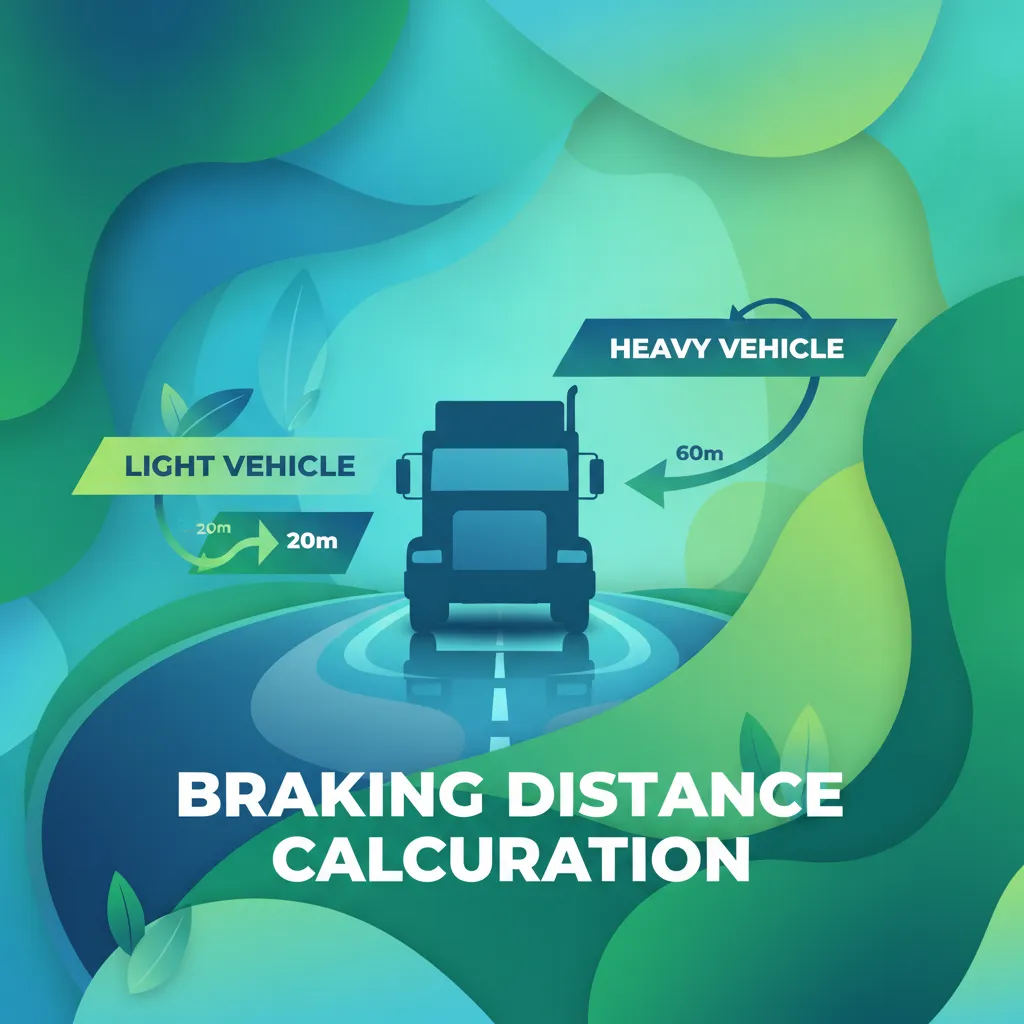
The immense mass of a loaded truck means its braking distance is far greater than that of a car. This lesson breaks down total stopping distance into reaction distance and braking distance, explaining how speed, weight, and road conditions have an exponential effect. It reinforces the necessity of maintaining a significantly larger following distance to ensure enough space to stop safely in an emergency.

A lorry is equipped with multiple mirrors (up to six) to cover different fields of view. This lesson explains the function of each type: the main mirrors, wide-angle mirrors, and close-proximity (kerb and front) mirrors. It stresses the importance of adjusting them properly before every journey and developing a routine of constantly scanning all mirrors to maintain situational awareness.
Swiss law strictly regulates the maximum dimensions of commercial vehicles to ensure they can safely navigate the infrastructure. This lesson specifies the standard limits for vehicle height (4.0m), width (2.55m), and length for various lorry and trailer combinations. Adhering to these dimensions is crucial for avoiding collisions with bridges, tunnels, and other structures, and for navigating narrow roads.
Heavy goods vehicles are fitted with specific safety structures to mitigate the severity of collisions with smaller vehicles and vulnerable road users. This lesson explains the function of the rear underrun bar, which prevents cars from going underneath the truck in a rear-end collision. It also covers side guards, which are designed to stop cyclists and pedestrians from falling under the vehicle's wheels during a side impact.

Rural roads present challenges like narrow lanes, poor surfaces, sharp bends, and limited visibility. This lesson teaches drivers how to position their large vehicle to maximize space and visibility, anticipate oncoming traffic at blind corners, and be aware of specific rural hazards. These hazards include slow-moving agricultural vehicles, animals on the road, and concealed farm entrances.
Find clear answers to common questions learners have about Overview of the Lorry Chassis, Cab, and Body. Learn how the lesson is structured, which driving theory objectives it supports, and how it fits into the overall learning path of units and curriculum progression in Switzerland. These explanations help you understand key concepts, lesson flow, and exam focused study goals.
Different body types like curtain siders, refrigerated units, and flatbeds have unique weight distributions and load-securing requirements. Knowing these is essential for legal compliance and safe operation on Swiss roads.
The chassis acts as the main support frame for the vehicle. It bears the weight of the engine, transmission, cabin, and the cargo, serving as the foundation for the vehicle's structural integrity.
Cab designs, such as sleeper cabs versus day cabs, dictate the driver's environment during long-haul transport. This impacts fatigue management and compliance with driving time regulations under Swiss law.
Yes, you may encounter questions regarding basic vehicle construction to ensure you understand your professional responsibilities and the technical limits of your vehicle.
Pinpoint specific Swiss traffic rules, road signs, or driving situations you need to master. Use the practice search to start a focused revision session now and build confidence for your official driving theory exam.