
This lesson addresses the critical safety topic of driver fatigue for heavy goods vehicle operators. You will learn to recognize the early warning signs of tiredness and understand your legal responsibilities for mandatory breaks to ensure safety on Swiss roads.

Lesson content overview
Operating a heavy goods vehicle, such as those in Category C or C1, demands sustained alertness, sharp perception, and quick decision-making. Fatigue and distraction are two of the most significant threats to road safety in the transport industry, contributing to a substantial percentage of accidents. This lesson, part of the Official Swiss Driving Theory Course for Category C & C1 Goods Vehicles, will equip you with the knowledge and strategies to identify, prevent, and manage these critical risks, ensuring your safety and that of other road users.
Driver fatigue is a state of reduced mental and physical performance resulting from prolonged wakefulness, monotony, or insufficient restorative sleep. It is a progressive condition that compromises a driver's ability to operate a vehicle safely, particularly a heavy one with its unique dynamics and extended stopping distances.
Fatigue does not appear suddenly; it builds up over time. This Principle of Fatigue Accumulation highlights its progressive nature. Factors contributing to fatigue include:
Recognizing the early warning signs of fatigue is paramount for proactive management. The Principle of Early Warning Signs states that physiological and behavioral cues indicate rising tiredness, mandating immediate corrective action. These signs can be subtle at first but become more pronounced as fatigue progresses:
Fatigue severely degrades all aspects of driving performance, making it particularly hazardous when operating a heavy vehicle.
A brief, involuntary episode of loss of consciousness, typically lasting 1 to 10 seconds, often occurring without warning. These moments can be extremely dangerous when driving, as the driver is completely unresponsive.
Distraction is any factor that diverts a driver's attention away from the primary task of operating a vehicle safely. For heavy goods vehicle drivers, managing a large, complex machine requires full attention, and any lapse can have severe consequences.
Distractions can be broadly categorised into internal and external sources, each with its own set of challenges.
These are stimuli outside the driver's immediate focus, often originating from the vehicle's environment or accessories.
These distractions originate within the driver's mind or body.
Effective distraction management is crucial for maintaining situational awareness and reducing accident risk. The Principle of Distraction Management highlights that minimizing distractions improves safety.
For professional Category C and C1 drivers, managing fatigue and distraction is not merely a matter of personal safety; it is a stringent legal requirement. Swiss transport law, including the Road Traffic Act (SVG) and the Ordinance on Road Traffic and Vehicle Safety (VRV), along with European Union rules for cross-border transport (EU Regulation 561/2006), mandates strict regulations regarding driving times, rest periods, and the use of mobile phones.
The Principle of Legal Obligation underscores that professional drivers must adhere to prescribed rest periods and are prohibited from operating a vehicle while fatigued. These regulations are designed to prevent fatigue-related accidents by ensuring drivers receive adequate recovery time.
Failing to comply with legal driving and rest periods is a serious offense. It can lead to substantial fines, penalty points, suspension of your driving license, and increased liability in the event of an accident. The Principle of Legal Obligation is not to be taken lightly.
Heavy goods vehicles over 3.5 tonnes must be equipped with a tachograph, a device that records driving time, speed, distance, and rest periods.
Swiss law strictly prohibits the use of handheld mobile phones while driving.
An electronic or mechanical device installed in commercial vehicles, used to record driving time, speed, distance, and rest periods to ensure compliance with driver hour regulations.
While legal compliance is essential, a professional driver must also actively manage their own well-being to prevent fatigue and distraction. The Principle of Countermeasure Prioritization states that sleep is the primary and most effective countermeasure for driver fatigue.
These measures can provide a temporary lift but should never replace adequate rest.
Plan your routes to include regular, legally mandated breaks. Identify suitable rest areas or service stations beforehand. If driving in a multi-crew scenario, rotate driving duties regularly to share the workload and allow for periods of rest.
Effective fatigue and distraction management also involves adapting to various external conditions.
Situation: You are driving a heavy goods vehicle for 5 hours on a Swiss motorway, carrying a substantial load. The weather is clear, and traffic is moderate. You notice you are yawning frequently and your eyelids feel heavy.
Correct Action: Immediately recognize these as early warning signs of fatigue. You should pull into the next available motorway service area, park your vehicle safely, and take your mandatory 30-45 minute break. Use this time to stretch, walk around, and perhaps take a short power nap. Do not attempt to push through the fatigue.
Why it matters: Ignoring these signs could lead to micro-sleeps, loss of control, and a high-speed collision, particularly dangerous with a heavy vehicle. Compliance with rest regulations is legally mandatory and crucial for safety.
Situation: You are making a delivery in a busy city centre. Your mobile phone rings (hands-free) with an important call from your dispatcher, while you are approaching a complex intersection with multiple traffic lights and pedestrian crossings.
Correct Action: While hands-free is legal, the cognitive load of a complex intersection combined with a demanding phone call is high. Politely ask the dispatcher if you can call them back in a few minutes. Focus entirely on navigating the intersection, scanning for pedestrians, cyclists, and other vehicles. Pull over at the next safe opportunity to return the call.
Why it matters: Even hands-free calls create cognitive distraction. In a high-risk environment like a city intersection, full mental focus is essential to prevent missing critical visual cues or reacting too slowly to unexpected events, especially involving vulnerable road users.
Situation: You are driving your Category C vehicle through a mountain pass at 03:00. The road is winding and narrow, requiring constant attention. You notice your concentration is waning, and you've missed a turn sign.
Correct Action: The combination of demanding terrain, night-time driving, and missed signals strongly indicates severe fatigue. Find the nearest safe lay-by or designated rest area, even if it's not a full service station. Stop immediately, turn off the engine, and rest. If possible, consider postponing the remainder of the journey until you've had sufficient sleep.
Why it matters: Night driving naturally coincides with low points in the circadian rhythm, exacerbating fatigue. Mountain passes demand peak vigilance for safe navigation. Continuing to drive in this state dramatically increases the risk of veering off the road or colliding with oncoming traffic.
Fatigue and distraction are silent but deadly threats on the road, particularly for professional Category C and C1 drivers operating heavy goods vehicles.
Driver fatigue and distraction are leading causes of accidents in the transport industry, particularly dangerous when operating heavy Category C and C1 vehicles with extended stopping distances. The lesson teaches recognition of early warning signs including yawning, heavy eyelids, lane drifting, and micro-sleeps, emphasizing that fatigue impairs reaction time, perception, and judgment progressively. Swiss regulations require mandatory breaks after 4.5-5.5 hours of driving, 11 consecutive hours of daily rest, and 45 hours of weekly rest, with strict prohibition on handheld mobile phone use. While temporary countermeasures like caffeine and fresh air provide short-term alertness, only adequate restorative sleep truly cures fatigue. Professional drivers must take personal responsibility for self-assessment, planning breaks strategically, and prioritizing safety over schedules when any warning signs of tiredness appear.
A short set of high-value points that capture the most important learning from this lesson.
Driver fatigue is a progressive condition that builds up over time and severely compromises reaction time, perception, vigilance, and decision-making
Warning signs of fatigue include frequent yawning, heavy eyelids, difficulty concentrating, lane drifting, and micro-sleeps lasting 1-10 seconds
Micro-sleeps are extremely dangerous as they cause complete loss of consciousness without warning, even with eyes open
Swiss law mandates breaks after approximately 4.5-5.5 hours of driving, with daily rest of at least 11 hours and weekly rest of 45 hours for professional drivers
Only sufficient restorative sleep can cure fatigue; caffeine, fresh air, and short naps are only temporary measures that mask true tiredness
Explore all units and lessons included in this driving theory course.
At 100 km/h, a one-second reaction delay means traveling an additional 27.8 metres before braking begins
Mandatory break after 4.5-5.5 hours of continuous driving must be at least 30 minutes (sometimes split into shorter intervals)
The tachograph is a legal record of driving time, speed, and rest periods; falsifying records carries severe penalties
Night driving (02:00-06:00) and mid-afternoon coincide with natural circadian low points when fatigue risk is highest
Hands-free phone calls still cause cognitive distraction and must be terminated if concentration is affected
Believing caffeine or energy drinks can replace actual sleep as a fatigue remedy
Continuing to drive when early warning signs appear, assuming they will pass
Assuming hands-free mobile phone use is completely safe and distraction-free
Not adjusting break frequency for demanding conditions such as mountain passes, night driving, or adverse weather
Failing to correctly operate the tachograph, leading to non-compliance with legal driving hour records
Lesson content overview
A short set of high-value points that capture the most important learning from this lesson.
Driver fatigue is a progressive condition that builds up over time and severely compromises reaction time, perception, vigilance, and decision-making
Warning signs of fatigue include frequent yawning, heavy eyelids, difficulty concentrating, lane drifting, and micro-sleeps lasting 1-10 seconds
Micro-sleeps are extremely dangerous as they cause complete loss of consciousness without warning, even with eyes open
Swiss law mandates breaks after approximately 4.5-5.5 hours of driving, with daily rest of at least 11 hours and weekly rest of 45 hours for professional drivers
Only sufficient restorative sleep can cure fatigue; caffeine, fresh air, and short naps are only temporary measures that mask true tiredness
Explore all units and lessons included in this driving theory course.
At 100 km/h, a one-second reaction delay means traveling an additional 27.8 metres before braking begins
Mandatory break after 4.5-5.5 hours of continuous driving must be at least 30 minutes (sometimes split into shorter intervals)
The tachograph is a legal record of driving time, speed, and rest periods; falsifying records carries severe penalties
Night driving (02:00-06:00) and mid-afternoon coincide with natural circadian low points when fatigue risk is highest
Hands-free phone calls still cause cognitive distraction and must be terminated if concentration is affected
Believing caffeine or energy drinks can replace actual sleep as a fatigue remedy
Continuing to drive when early warning signs appear, assuming they will pass
Assuming hands-free mobile phone use is completely safe and distraction-free
Not adjusting break frequency for demanding conditions such as mountain passes, night driving, or adverse weather
Failing to correctly operate the tachograph, leading to non-compliance with legal driving hour records
Explore search topics learners often look for when studying Recognizing and Managing Driver Fatigue and Distraction. These topics reflect common questions about road rules, driving situations, safety guidance, and lesson level theory preparation for learners in Switzerland.
Browse additional driving theory lessons that cover connected traffic rules, road signs, and common driving situations related to this topic. Improve your understanding of how different rules interact across everyday traffic scenarios.
Understand the specific Swiss legal requirements regarding driving times, mandatory rest periods, and the correct use of tachographs for Category C and C1 heavy goods vehicles. Essential for compliance and avoiding penalties.

The tachograph is a critical tool for ensuring road safety by enforcing regulations on driving hours and rest periods. This lesson explains the basic function of both analogue and digital tachographs and the use of the driver card. It provides a theoretical summary of the core principles of the Swiss Chauffeur Ordinance (ARV) regarding maximum driving times and minimum rest requirements to combat fatigue.

Fatigue is a major cause of serious accidents involving professional drivers. This lesson teaches you to recognize the early warning signs of tiredness in yourself. It covers the Swiss rules on driving hours and rest periods, and provides practical strategies for staying alert and avoiding distractions while driving.

Taking regular breaks is a legal requirement and essential for combating fatigue. This lesson covers how to safely enter and park within designated lorry parks at service areas. It emphasizes the importance of applying the parking brake securely, using wheel chocks if on a slope, and being mindful of vehicle and cargo security to prevent theft.

For professional drivers, traffic violations can have career-altering consequences beyond standard fines. This lesson details the heightened penalties for infringements such as speeding, overloading, insecure loads, and violations of driving time regulations. It outlines the process of warnings, license suspension or withdrawal, and potential criminal liability, emphasizing the importance of strict legal compliance in the transport industry.

Swiss law strictly regulates the maximum dimensions of commercial vehicles to ensure they can safely navigate the infrastructure. This lesson specifies the standard limits for vehicle height (4.0m), width (2.55m), and length for various lorry and trailer combinations. Adhering to these dimensions is crucial for avoiding collisions with bridges, tunnels, and other structures, and for navigating narrow roads.

This lesson outlines the mandatory documentation required during any professional transport journey in Switzerland. Drivers must be able to present the vehicle registration document ('Fahrzeugausweis'), their valid driving license, and the OACP qualification card upon request. It also touches upon transport-specific documents like consignment notes, which are crucial for legal compliance during roadside inspections by authorities.

For professional drivers, the rules regarding intoxicating substances are extremely strict. This lesson explains the severe effects of alcohol and illegal drugs on driving ability and the serious legal consequences of being caught under their influence. It also highlights the importance of checking with a doctor or pharmacist whether any prescribed or over-the-counter medication can cause drowsiness or otherwise impair driving.

This lesson details the specific documents that must be present in the vehicle and on the driver's person during service. It covers the driving license, OACP card, vehicle registration, and tachograph records. You will learn the importance of ensuring all paperwork is current and correct to ensure legal compliance at all times.
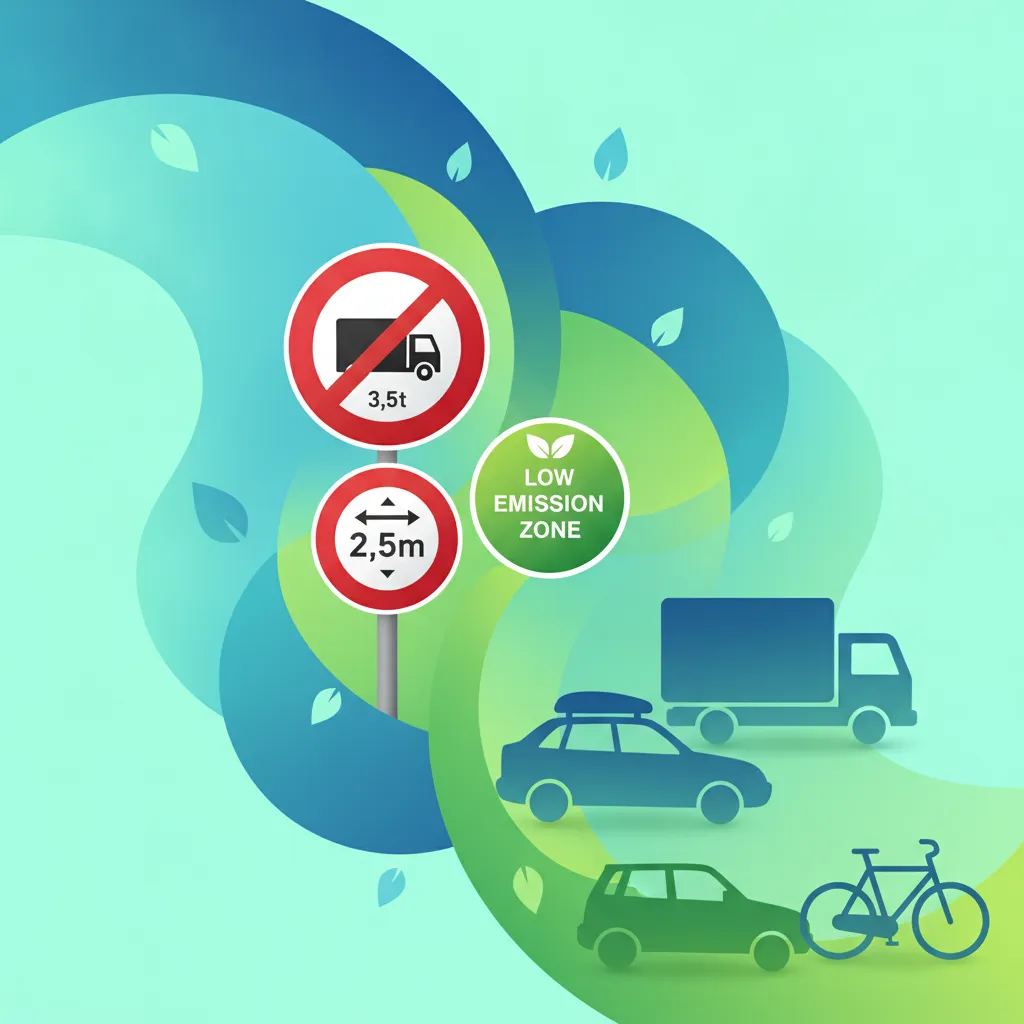
Many urban areas have restrictions to manage traffic and protect infrastructure. This lesson teaches drivers to identify and interpret traffic signs that prohibit access based on gross vehicle weight, axle load, height, or width. It also covers the growing prevalence of environmental or low-emission zones, which may restrict entry for older, more polluting vehicles.

Unlike cars, heavy vehicles cannot travel on every road. This lesson stresses the importance of using HGV-specific satellite navigation systems or carefully checking maps to plan routes that avoid low bridges, weak bridges, and roads with weight or width restrictions. Proper planning saves time, fuel, and prevents dangerous situations or costly damage.
Explore practical scenarios of driver fatigue and distraction faced by Category C and C1 drivers in Switzerland, from urban deliveries to mountain passes. Learn effective strategies to manage these risks in diverse traffic and environmental conditions.
Fatigue is a major cause of serious accidents involving professional drivers. This lesson teaches you to recognize the early warning signs of tiredness in yourself. It covers the Swiss rules on driving hours and rest periods, and provides practical strategies for staying alert and avoiding distractions while driving.

Rural roads present challenges like narrow lanes, poor surfaces, sharp bends, and limited visibility. This lesson teaches drivers how to position their large vehicle to maximize space and visibility, anticipate oncoming traffic at blind corners, and be aware of specific rural hazards. These hazards include slow-moving agricultural vehicles, animals on the road, and concealed farm entrances.

Driving in the Alps requires a high level of skill and vehicle sympathy. This lesson covers techniques for climbing steep gradients by selecting the correct gear to maintain momentum without straining the engine. It reiterates the critical importance of using low gears and auxiliary brakes for descending, to ensure the service brakes remain cool and effective for the entire descent.

This lesson explores the psychological and physiological factors that affect driving performance, such as distraction, fatigue, and stress. It explains how mobile phone use and in-vehicle systems can impair concentration and how fatigue impacts reaction times. Strategies for managing stress and maintaining alertness while driving are also discussed.

Urban driving requires heightened awareness and careful planning. This lesson covers the challenges of narrow streets, heavy traffic, and the need to identify designated loading and unloading zones. It emphasizes the importance of planning routes in advance to account for time-based access restrictions and to avoid unsuitable roads.

Rural driving requires a different mindset from urban driving. This lesson covers how to position your vehicle on narrow roads, how to use passing places effectively, and how to anticipate hazards like slow-moving farm machinery, animals, and concealed junctions. Managing vehicle width and height is a key focus.

Motorway driving requires constant concentration due to high speeds. This lesson emphasizes the importance of staying in the right-hand lane unless overtaking and the specific restrictions on lorry overtaking in Switzerland. It reinforces the need for a following distance of at least four seconds to compensate for the vehicle's long stopping distance and provides guidance on safely merging and exiting.

Driving a large vehicle on mountain passes is a demanding skill. This lesson covers selecting the correct gear for both ascents and descents to maintain control and avoid overheating the brakes. It also explains the specific priority rules that apply on mountain roads and the importance of being aware of sudden weather changes.
Taking regular breaks is a legal requirement and essential for combating fatigue. This lesson covers how to safely enter and park within designated lorry parks at service areas. It emphasizes the importance of applying the parking brake securely, using wheel chocks if on a slope, and being mindful of vehicle and cargo security to prevent theft.

Despite the complex mirror systems, large areas around a truck remain hidden from the driver's view. This lesson maps out these significant blind spots: directly in front, behind, and along both sides of the vehicle. It teaches drivers to be constantly aware of these 'no-zones' and to anticipate that smaller vehicles, cyclists, or pedestrians may be hidden within them, especially before changing lanes or turning.
Find clear answers to common questions learners have about Recognizing and Managing Driver Fatigue and Distraction. Learn how the lesson is structured, which driving theory objectives it supports, and how it fits into the overall learning path of units and curriculum progression in Switzerland. These explanations help you understand key concepts, lesson flow, and exam focused study goals.
The only effective and safe way to combat fatigue is to get sufficient, restorative sleep. Relying on stimulants like caffeine or opening windows provides only a temporary, unreliable mask for exhaustion.
Fatigue significantly slows your reaction time, impairs your ability to judge distances, and reduces your concentration. In a large vehicle like a C-category lorry, these impairments increase the risk of serious accidents exponentially.
Yes, common signs include frequent yawning, heavy or burning eyelids, difficulty maintaining lane position, and 'blank' moments where you cannot recall the last few minutes of your journey. You must stop as soon as these symptoms appear.
No, if you feel tired, you must stop regardless of whether your legal break time has arrived. Professional safety always takes precedence, and you are responsible for your fitness to drive at all times.
Pinpoint specific Swiss traffic rules, road signs, or driving situations you need to master. Use the practice search to start a focused revision session now and build confidence for your official driving theory exam.