
Buses and coaches have significant blind spots that require a dedicated and active approach to observation. This lesson helps you map out these 'no-zones' and establishes a consistent, professional scanning routine using your mirrors and direct vision to ensure passenger safety.

Lesson content overview
As a professional driver of a Category D bus or coach in Switzerland, mastering the management of blind spots, often referred to as "no-zones," is paramount for safety, legal compliance, and fulfilling your duty of care. Due to their significant size, length, width, and height, buses and coaches possess substantial areas around the vehicle that are not visible through direct vision or conventional mirrors. These unseen zones pose a heightened risk to other road users, especially vulnerable pedestrians and cyclists.
This comprehensive lesson details the precise locations and dimensions of these critical no-zones, providing you with a systematic and continuous scanning process. By integrating direct vision, all available mirrors, and advanced camera systems, you will learn to minimize the time any other road user spends undetected, ensuring a safer journey for everyone.
Blind spots are unavoidable areas around any vehicle where the driver's view is obstructed. For large passenger vehicles like buses and coaches, these areas are considerably larger and more hazardous than those found in passenger cars. The sheer size and structural design of Category D vehicles create extensive blind zones at the front, sides, and rear, which can easily conceal other vehicles, cyclists, or pedestrians.
A blind spot, or "no-zone," is any area surrounding your bus that cannot be seen directly through the windshield or by using the vehicle's standard mirrors. These zones are a function of the bus's physical dimensions, the driver's seating position, and the design limitations of mirrors. The risk posed by these no-zones is particularly acute for bus drivers because:
The design and operational characteristics of buses and coaches inherently contribute to larger blind spots compared to smaller vehicles.
Understanding these inherent challenges is the first step towards developing effective strategies to mitigate the risks associated with bus blind spots.
To effectively manage blind spots, a Category D driver must first be able to identify and understand the characteristics of each no-zone. These areas are consistently present around all buses and coaches.
The front blind zone is the area directly in front of the bus that is not visible through the windshield. This zone is particularly dangerous because it often conceals objects, children, or small animals that might be close to the front of the vehicle, especially when pulling away from a stop.
Always double-check the immediate front blind zone before moving forward. A slight lean forward in your seat can sometimes reveal hidden objects directly in front of the bus.
The side blind zones are the extensive lateral areas on both the left and right sides of your bus that are not fully covered by your direct peripheral vision or your exterior side mirrors. These zones are a frequent location for other vehicles, motorcycles, and cyclists, leading to many side-swipe collisions.
The rear blind zone is the area directly behind the bus that cannot be seen through the interior rear-view mirror or direct vision (as there is no rear window in many buses). This zone is especially perilous during reversing maneuvers, which are common in depots, terminals, or when pulling back from a tight spot.
Effective blind spot management relies on a combination of appropriately adjusted mirrors and, increasingly, advanced camera systems. These tools extend your visual reach beyond direct vision, allowing you to monitor the surrounding environment comprehensively.
Mirrors are fundamental to safe bus operation. Correct adjustment and diligent use are non-negotiable for Category D drivers.
Periodic Mirror Re-Adjustment is Mandatory: Mirrors must be re-adjusted after any significant change in passenger load (which alters vehicle height and rake), or if your seating position changes. Failure to do so can reintroduce critical blind spots.
Modern buses and coaches are increasingly equipped with Advanced Driver Assistance Systems (ADAS), including integrated camera systems that significantly enhance blind spot management.
A systematic and continuous scanning routine is the cornerstone of effective blind spot management. It's not enough to check mirrors occasionally; disciplined, repetitive observation is required throughout every journey.
Several core principles underpin a successful blind spot scanning routine for professional Category D drivers:
Pre-Maneuver Scan: Before initiating any lane change, turn, stop, or departure from a stop, perform a comprehensive check of all mirrors and camera displays relevant to the intended maneuver. This establishes a clear baseline.
During Maneuver Monitoring: As you execute the maneuver, continuously monitor the relevant side mirrors and camera displays. Road users can enter a blind spot very quickly, so ongoing vigilance is crucial.
Post-Maneuver Confirmation: After completing the maneuver, perform a final glance at the relevant blind zones to ensure they remain clear and that no new hazards have emerged. This confirms the safety of your new position.
Integrating blind spot checks into standard operating procedures is crucial for safety.
Before Moving from a Standstill (e.g., Bus Stop Departure):
Before a Lane Change:
Before Turning at an Intersection:
Before Reversing:
Different driving environments and maneuvers demand specific adaptations to your blind spot management strategy. Being aware of these conditional variations is key to maintaining safety.
Lane changes and merging onto fast-moving traffic, such as motorways or highways, are high-risk maneuvers for buses due to their length and the speed differentials with other vehicles.
Intersections, especially in urban areas, bring buses into close proximity with vulnerable road users and present complex blind spot challenges.
Bus stops and reversing maneuvers are common operations that carry inherent blind spot risks due to the bus being stationary or moving slowly in confined areas.
Environmental factors significantly impact visibility and thus require adjusted blind spot management strategies.
| Condition | Variation in Blind-Spot Management | Reasoning |
|---|---|---|
| Adverse Weather (rain, fog, snow) | Increase scanning frequency; use rear-view camera with anti-glare features; ensure mirrors are clean and properly angled. | Visibility is severely reduced; water droplets on mirrors can obscure view and reduce clarity. |
| Nighttime Driving | Utilize mirrors with night-vision enhancement; rely more on illuminated camera displays; actively avoid glare from headlights. | Darkness reduces depth perception and makes small objects harder to spot; cameras can provide clearer, brighter images. |
| Urban Environment | Emphasize near side blind-zone checks at intersections; shorter gaps and higher density of VRUs require more frequent, detailed scanning. | Higher density of pedestrians and cyclists, tighter spaces, more frequent stops and starts. |
| Motorway Driving | Focus on far side blind-zone checks during lane changes; monitor the rear blind zone for high-speed approaching vehicles. | Higher speeds decrease reaction time; blind zones must be cleared quickly and decisively. |
| Heavy Passenger Load | Re-adjust mirrors to account for altered vehicle height and rear overhang; be aware of increased vehicle inertia during lane changes. | Load shifts the vehicle’s center of gravity and potentially its rake, changing blind-spot geometry. |
| Vehicle Combination (D1E/DE) | Additional blind-spot zones are introduced by the trailer and its rear overhang; utilize extended rear-view cameras and additional mirrors specifically for the combination. | Trailers add their own complex blind spots, especially critical during reversing and turning. |
As a Category D driver in Switzerland, specific legal obligations govern your conduct regarding blind spots. Adhering to these regulations is not only a matter of compliance but also a core component of your professional duty of care.
Swiss traffic law mandates diligent blind spot management to ensure the safety of all road users. While exact article numbers can vary with amendments, the principles remain constant:
Understanding common mistakes helps in actively preventing them:
Effective blind spot management is rooted in understanding the underlying physics, human perception, and the critical importance of protecting vulnerable road users.
The professional duty of a Category D driver includes a heightened responsibility for the safety of vulnerable road users (VRUs), such as pedestrians and cyclists.
To excel as a professional Category D driver in Switzerland, a thorough understanding and consistent application of blind spot management techniques are essential.
This lesson teaches Category D bus and coach drivers how to identify and manage the substantial blind spots inherent to large passenger vehicles. It details specific no-zones (front extending 0–15m, side near 0–3m and far up to 12m, rear up to 20m), explains the roles of different mirror types and camera systems, and establishes a disciplined three-phase scanning routine for every maneuver. Swiss traffic regulations require mandatory blind zone verification before departing stops, changing lanes, turning, and reversing. The lesson emphasizes heightened vigilance for vulnerable road users and adapts scanning strategies for adverse weather, nighttime, urban, and motorway driving conditions.
A short set of high-value points that capture the most important learning from this lesson.
Buses have distinct front, side, and rear blind zones (no-zones) created by vehicle dimensions, high seating position, and structural pillars that require active management.
Effective blind spot management combines correctly adjusted mirrors (interior RVI, exterior side, exterior rear) with camera systems for cross-verification and redundancy.
A continuous scanning routine—pre-maneuver, during-maneuver, and post-maneuver checks—is essential for detecting road users entering blind spots early.
Vulnerable road users (cyclists, pedestrians) are at highest risk in blind zones, especially during turns, lane changes, and bus stop departures.
Swiss law mandates specific blind zone checks before departing from stops, changing lanes, turning, and reversing, with increased vigilance required in adverse conditions.
Explore all units and lessons included in this driving theory course.
The front blind zone extends roughly 0–15 metres ahead, requiring forward mirror/camera checks before moving from standstill.
Side blind zones have near (0–3m) and far (up to 12m) components; lane changes require checking both sides of the intended lane.
The rear blind zone extends up to 20 metres behind the bus; rear-view cameras must supplement mirrors, and a physical walk-around is required if visibility is uncertain.
Mirrors must be re-adjusted after any significant passenger load change, as this alters vehicle height and rake, affecting blind spot geometry.
Always cross-verify using multiple visual sources—direct vision, mirrors, and cameras—to compensate for individual tool limitations.
Relying solely on direct windshield vision or a single mirror check instead of using all available visual sources for redundancy.
Failing to check the immediate front blind zone before departing from a bus stop, risking collision with cyclists or pedestrians directly ahead.
Neglecting far-side blind zone checks during lane changes, focusing only on the near-side mirror and missing faster-approaching traffic.
Over-relying on blind spot cameras without also checking mirrors, as cameras lack the depth perception mirrors provide.
Forgetting to re-adjust mirrors after changes in passenger load, allowing new blind spots to form from altered vehicle geometry.
Lesson content overview
A short set of high-value points that capture the most important learning from this lesson.
Buses have distinct front, side, and rear blind zones (no-zones) created by vehicle dimensions, high seating position, and structural pillars that require active management.
Effective blind spot management combines correctly adjusted mirrors (interior RVI, exterior side, exterior rear) with camera systems for cross-verification and redundancy.
A continuous scanning routine—pre-maneuver, during-maneuver, and post-maneuver checks—is essential for detecting road users entering blind spots early.
Vulnerable road users (cyclists, pedestrians) are at highest risk in blind zones, especially during turns, lane changes, and bus stop departures.
Swiss law mandates specific blind zone checks before departing from stops, changing lanes, turning, and reversing, with increased vigilance required in adverse conditions.
Explore all units and lessons included in this driving theory course.
The front blind zone extends roughly 0–15 metres ahead, requiring forward mirror/camera checks before moving from standstill.
Side blind zones have near (0–3m) and far (up to 12m) components; lane changes require checking both sides of the intended lane.
The rear blind zone extends up to 20 metres behind the bus; rear-view cameras must supplement mirrors, and a physical walk-around is required if visibility is uncertain.
Mirrors must be re-adjusted after any significant passenger load change, as this alters vehicle height and rake, affecting blind spot geometry.
Always cross-verify using multiple visual sources—direct vision, mirrors, and cameras—to compensate for individual tool limitations.
Relying solely on direct windshield vision or a single mirror check instead of using all available visual sources for redundancy.
Failing to check the immediate front blind zone before departing from a bus stop, risking collision with cyclists or pedestrians directly ahead.
Neglecting far-side blind zone checks during lane changes, focusing only on the near-side mirror and missing faster-approaching traffic.
Over-relying on blind spot cameras without also checking mirrors, as cameras lack the depth perception mirrors provide.
Forgetting to re-adjust mirrors after changes in passenger load, allowing new blind spots to form from altered vehicle geometry.
Explore search topics learners often look for when studying A Systematic Approach to Managing Blind Spots. These topics reflect common questions about road rules, driving situations, safety guidance, and lesson level theory preparation for learners in Switzerland.
Browse additional driving theory lessons that cover connected traffic rules, road signs, and common driving situations related to this topic. Improve your understanding of how different rules interact across everyday traffic scenarios.
Explore complex real-world scenarios for Category D drivers focusing on managing large vehicle blind spots. Learn advanced strategies and decision-making for preventing incidents in challenging urban and motorway environments.
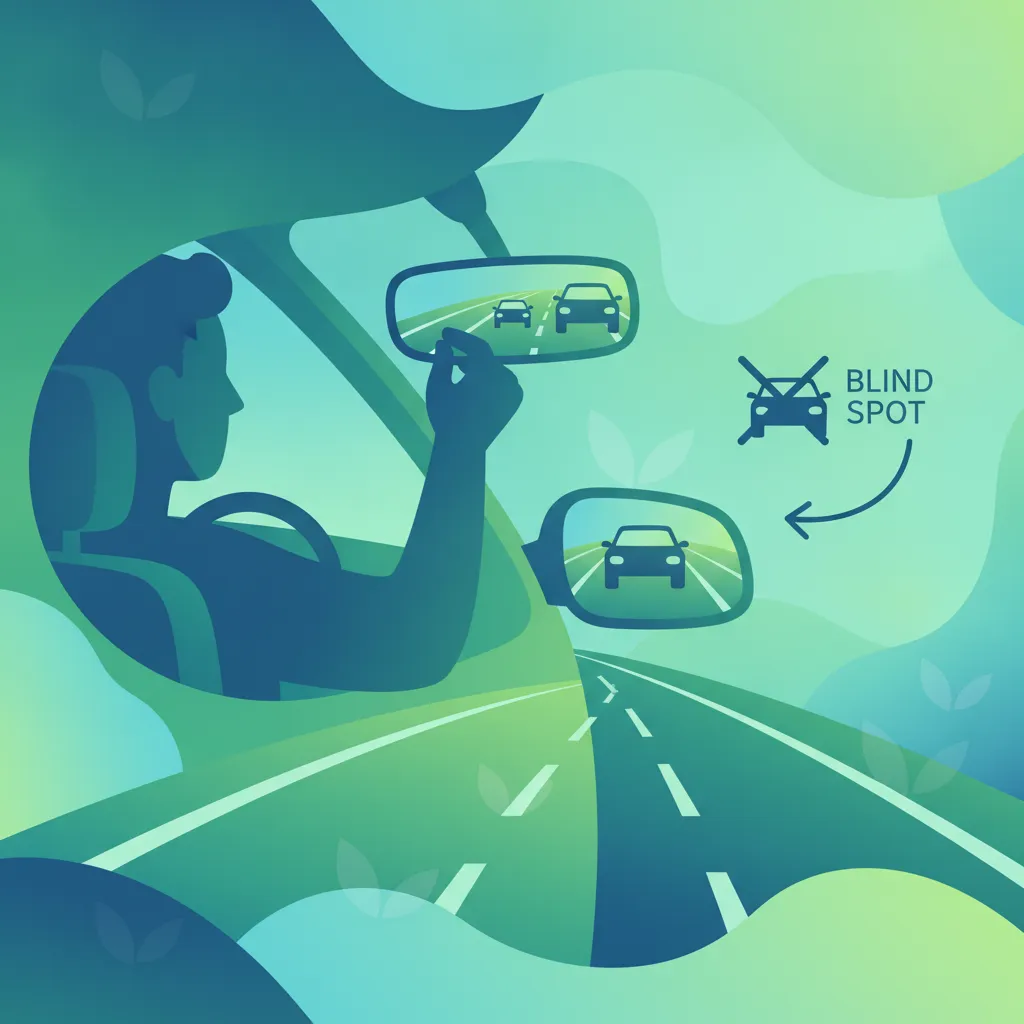
Despite the complex mirror systems, large areas around a truck remain hidden from the driver's view. This lesson maps out these significant blind spots: directly in front, behind, and along both sides of the vehicle. It teaches drivers to be constantly aware of these 'no-zones' and to anticipate that smaller vehicles, cyclists, or pedestrians may be hidden within them, especially before changing lanes or turning.

This lesson trains drivers to look beyond other vehicles and actively search for pedestrians, cyclists, and motorcyclists, especially those who may be distracted or unaware. It covers common behavioral patterns of different VRU groups. The goal is to see potential hazards developing early and create time and space to react safely.
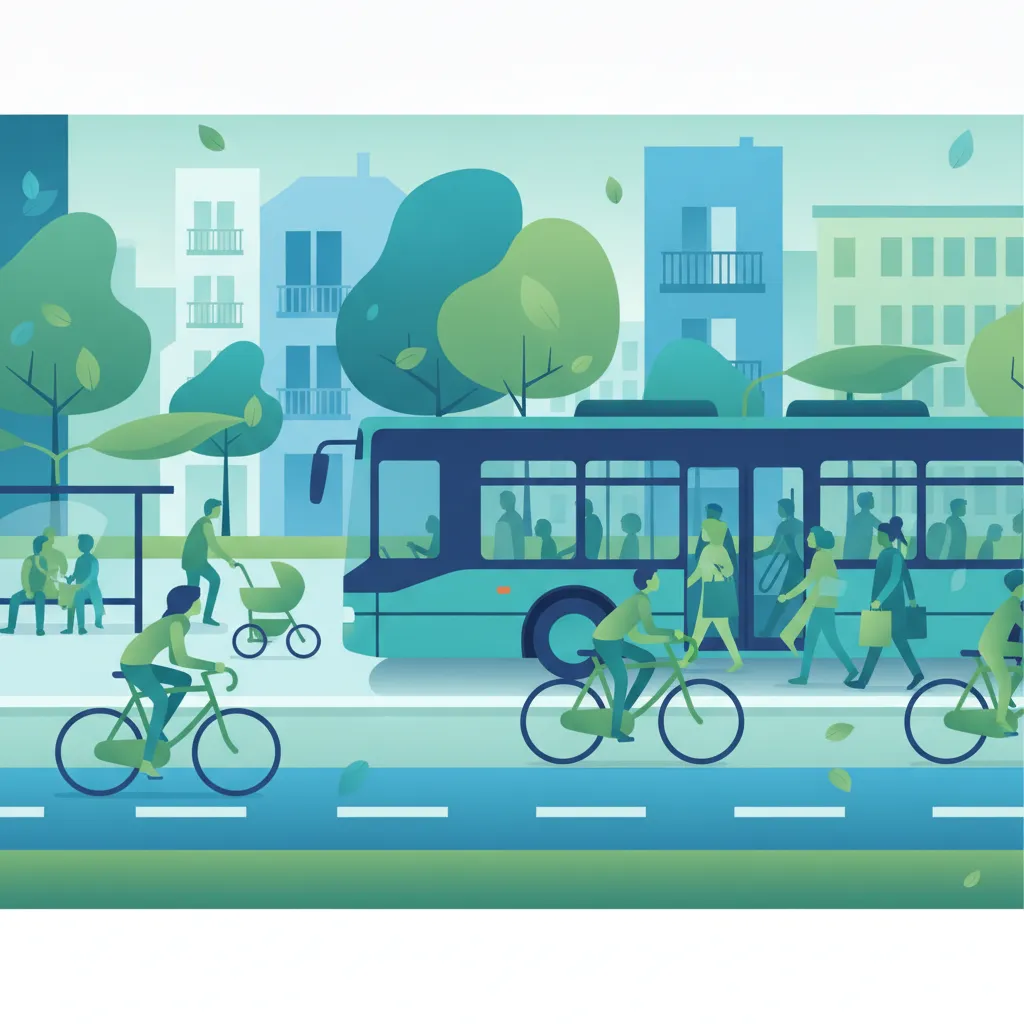
A stopped bus creates a significant visual obstruction for other road users. This lesson focuses on the risk of pedestrians stepping out from in front of the bus and cyclists passing unexpectedly on either side. It reinforces the need for exhaustive mirror and blind spot checks before moving off to prevent tragic 'pull-away' accidents.

Driving a bus in older parts of a city requires exceptional spatial awareness and precise control. This lesson focuses on assessing clearances, managing front and rear overhang, and negotiating tight turns around parked cars and buildings. A key theme is slow, careful, and deliberate manoeuvring to avoid contact.

This lesson focuses on general driving safety in areas with a high concentration of children. It stresses the importance of significantly reducing speed, being prepared for unexpected events, and scanning for children between parked cars. The driver must exhibit maximum vigilance in these high-risk environments at all times.

Rural driving requires a different mindset from urban driving. This lesson covers how to position your vehicle on narrow roads, how to use passing places effectively, and how to anticipate hazards like slow-moving farm machinery, animals, and concealed junctions. Managing vehicle width and height is a key focus.

Tourists are often unfamiliar with local traffic rules and may be distracted by sightseeing, leading to unpredictable behavior. This lesson teaches drivers to be extra cautious in these zones. It focuses on anticipating sudden crossings, being aware of other tour vehicles, and maintaining a large safety bubble around the bus.

This lesson covers the systematic use of rearview and side mirrors, combined with head checks, to maintain full awareness of surrounding traffic. It emphasizes frequent observation to detect vehicles in blind spots, especially during lane changes and turns. The content also details the proper timing for head checks and the role of scanning techniques in preventing collisions.

This lesson moves beyond simply staying within the lines, teaching how to actively position your vehicle within the lane to manage risk. You will learn to create a 'safety cushion' of space around your bus. This proactive approach improves your reaction time and gives other road users more space, reducing the likelihood of conflicts.

Departing from a bus stop is a high-risk manoeuvre. This lesson details the critical sequence of actions: checking all passengers are clear of the doors, performing a comprehensive mirror and blind spot check, signalling, and waiting for a safe gap in traffic. This systematic approach is essential for preventing collisions with overtaking vehicles, cyclists, or pedestrians.
Understand the correct adjustment and effective use of interior mirrors, exterior mirrors, and modern camera systems for buses and coaches. Learn how these tools are critical for comprehensive blind spot management in Swiss Category D theory.
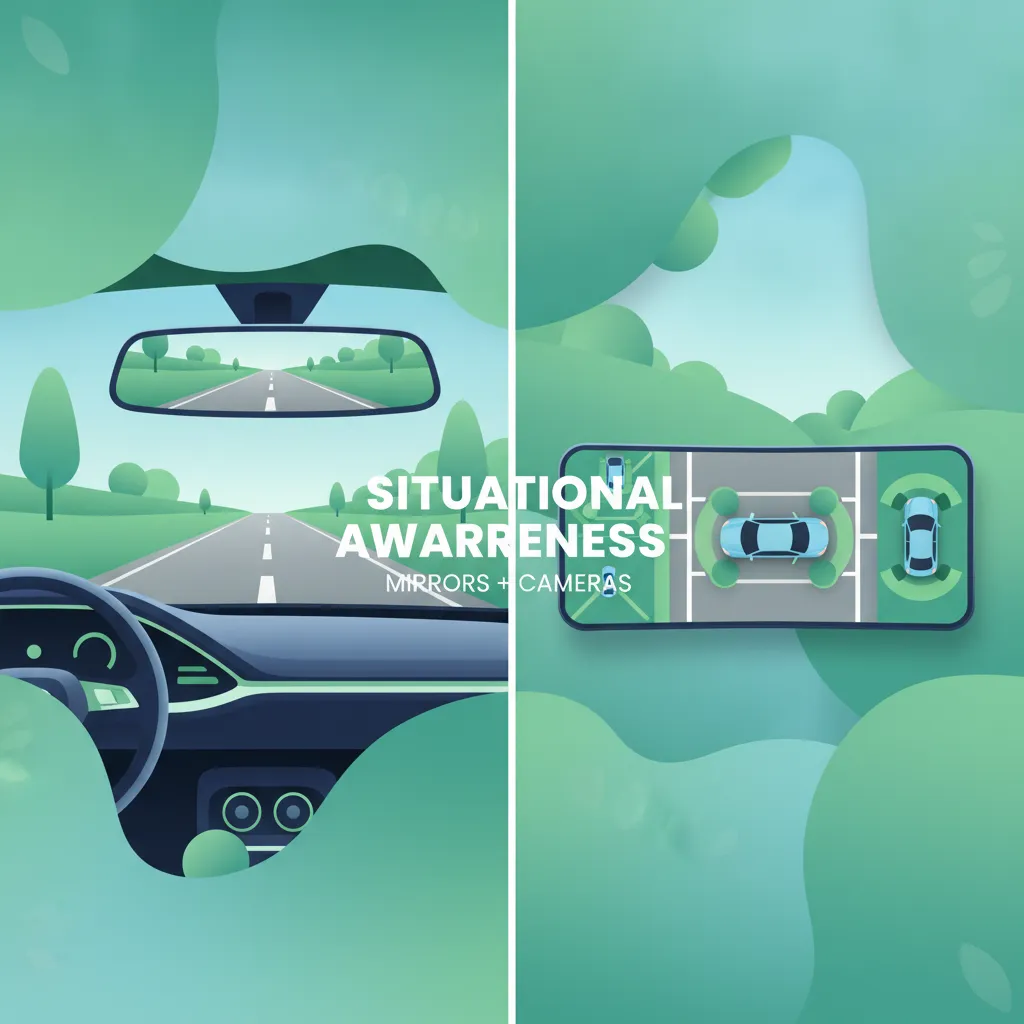
Passenger vehicles are equipped with multiple mirrors, each designed for a specific purpose. This lesson explains how to correctly use standard, wide-angle, and kerb-side mirrors to build a complete picture of the surroundings. It also covers how modern camera systems supplement, but do not replace, the fundamental skill of effective mirror use.

A lorry is equipped with multiple mirrors (up to six) to cover different fields of view. This lesson explains the function of each type: the main mirrors, wide-angle mirrors, and close-proximity (kerb and front) mirrors. It stresses the importance of adjusting them properly before every journey and developing a routine of constantly scanning all mirrors to maintain situational awareness.

Being seen and being able to see are critical for safety. This lesson covers the systematic check of all exterior lights, including headlights, brake lights, and indicators. It also emphasizes the importance of ensuring all mirrors and camera lenses are clean, undamaged, and properly adjusted for maximum visibility.
Despite the complex mirror systems, large areas around a truck remain hidden from the driver's view. This lesson maps out these significant blind spots: directly in front, behind, and along both sides of the vehicle. It teaches drivers to be constantly aware of these 'no-zones' and to anticipate that smaller vehicles, cyclists, or pedestrians may be hidden within them, especially before changing lanes or turning.
Driving a bus in older parts of a city requires exceptional spatial awareness and precise control. This lesson focuses on assessing clearances, managing front and rear overhang, and negotiating tight turns around parked cars and buildings. A key theme is slow, careful, and deliberate manoeuvring to avoid contact.
This lesson covers the systematic use of rearview and side mirrors, combined with head checks, to maintain full awareness of surrounding traffic. It emphasizes frequent observation to detect vehicles in blind spots, especially during lane changes and turns. The content also details the proper timing for head checks and the role of scanning techniques in preventing collisions.
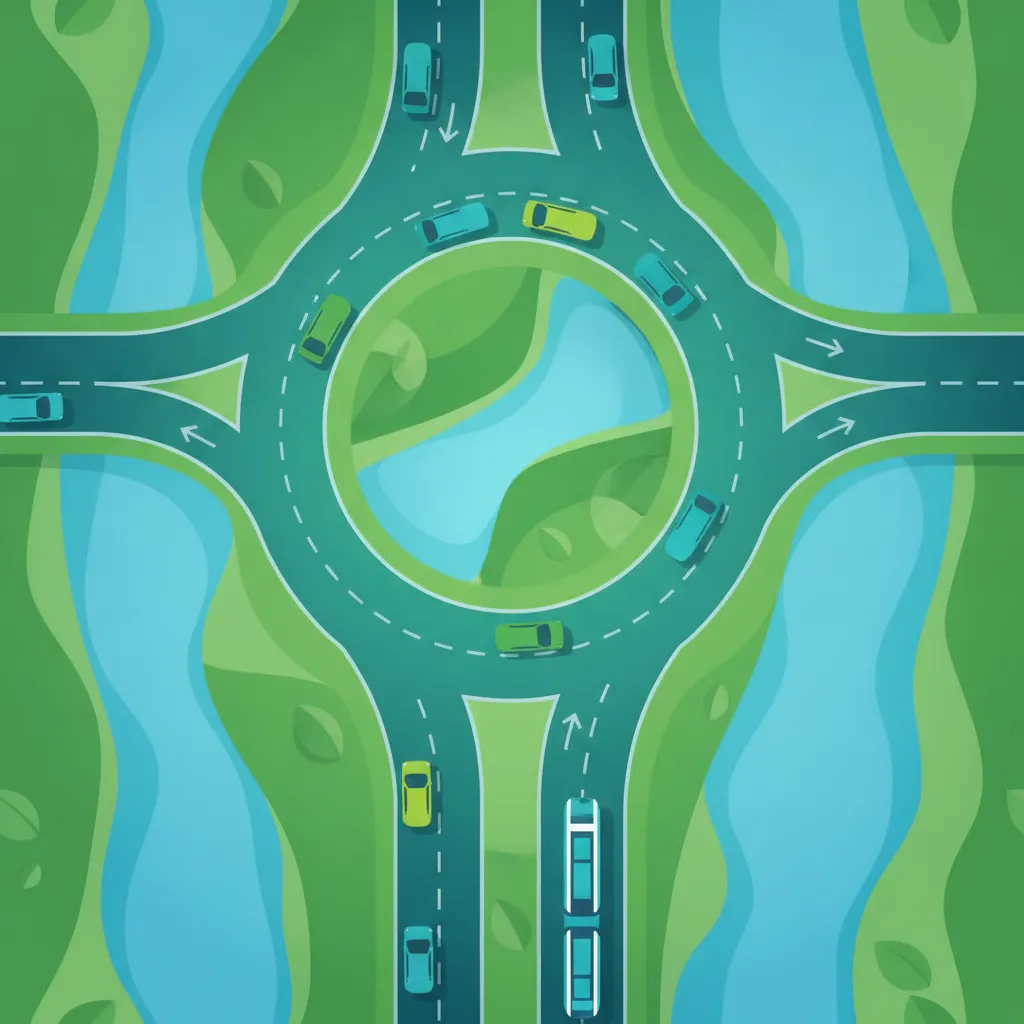
The size of a bus requires careful planning when negotiating complex intersections. This lesson teaches the importance of early lane selection, clear signalling, and comprehensive observation. It provides specific techniques for managing the vehicle's swept path through multi-lane roundabouts and other challenging urban junctions.
A stopped bus creates a significant visual obstruction for other road users. This lesson focuses on the risk of pedestrians stepping out from in front of the bus and cyclists passing unexpectedly on either side. It reinforces the need for exhaustive mirror and blind spot checks before moving off to prevent tragic 'pull-away' accidents.

This lesson provides a detailed tour of the driver's area in a typical bus or coach. You will learn the function of every switch, lever, and button, from the main driving controls to secondary systems like heating and door operation. Interpreting the instrument panel and responding correctly to warning lights is a key focus.

Even after checking exterior mirrors, a late-running passenger may approach the bus. This lesson emphasizes the final, critical glance in the interior mirror to check the passenger cabin and stop area just before the vehicle begins to move. This simple, final habit can prevent serious incidents involving passengers who are late or have fallen.
Find clear answers to common questions learners have about A Systematic Approach to Managing Blind Spots. Learn how the lesson is structured, which driving theory objectives it supports, and how it fits into the overall learning path of units and curriculum progression in Switzerland. These explanations help you understand key concepts, lesson flow, and exam focused study goals.
Due to the size of a bus or coach, there are large areas around the vehicle that cannot be seen via internal or external mirrors alone. You must combine precise mirror adjustments, the use of wide-angle lenses, and, where equipped, camera systems to cover these gaps.
When turning, the rear of a long vehicle swings outwards, creating a dynamic blind spot. You must anticipate this movement by checking your side mirrors not just during the turn, but continuously throughout the manoeuvre to ensure no road user enters this swept path.
Many learners fail to account for the speed at which a cyclist or pedestrian can enter a blind spot near the front or side of a bus. The exam expects you to demonstrate a proactive 'look-last' technique before every movement.
No, camera systems are advanced driver assistance tools. You must treat them as a secondary observation aid to complement your mirrors, which provide a more accurate perception of speed and distance.
Pinpoint specific Swiss traffic rules, road signs, or driving situations you need to master. Use the practice search to start a focused revision session now and build confidence for your official driving theory exam.