
This lesson explores the specific traffic regulations and speed limits enforced in Tempo-30 zones, school areas, and residential neighbourhoods. Mastering these rules is a critical requirement for any Category M rider to ensure the safety of vulnerable road users and pass the official Swiss theory test.
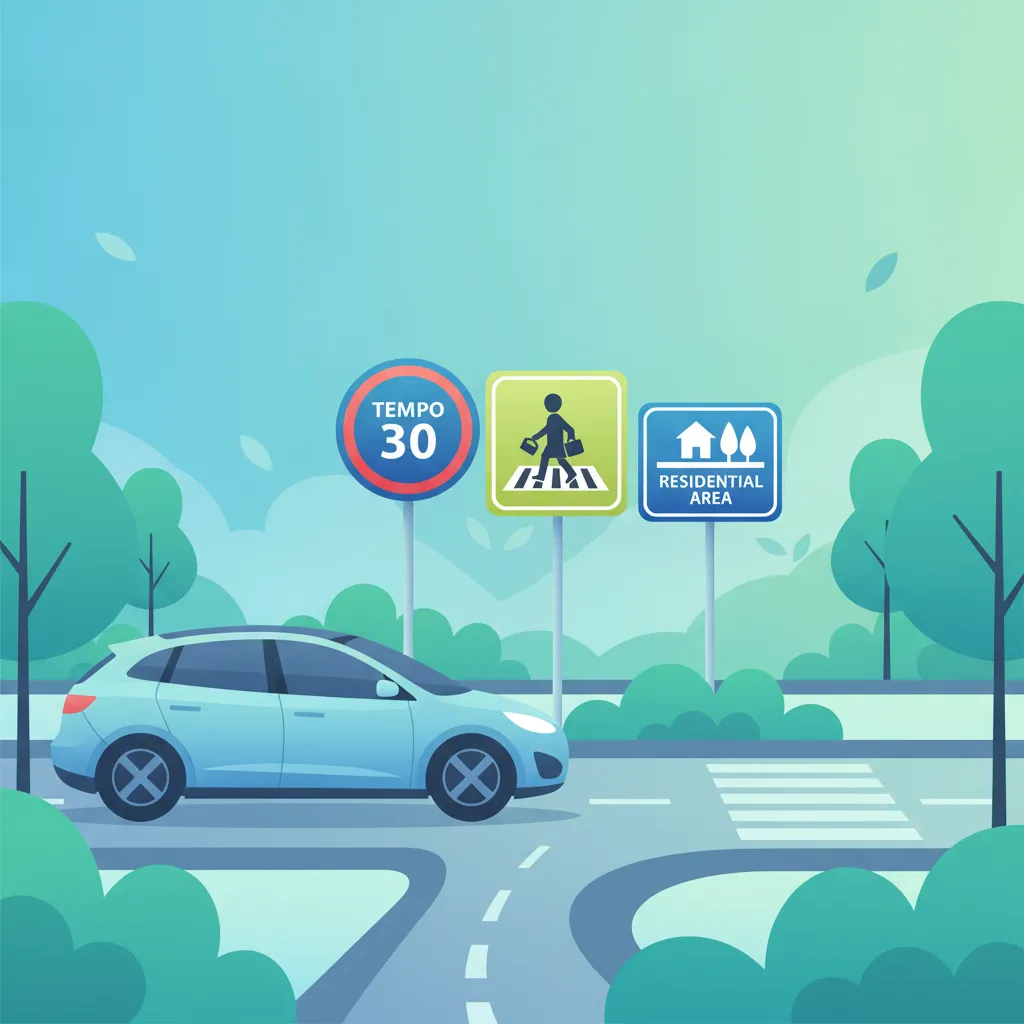
Lesson content overview
For riders of Category M vehicles in Switzerland, understanding special traffic zones is crucial for safety and legal compliance. These zones, including Tempo-30 zones, school zones, and residential areas, are specifically designed to protect vulnerable road users such as pedestrians, children, and cyclists. This lesson delves into the unique regulations, reduced speed limits, and heightened vigilance required when riding through these designated areas as part of your Swiss Category M driving license theory course.
Special traffic zones are a fundamental part of Swiss traffic management, reflecting a strong legislative commitment to enhancing safety where road users are most at risk. By imposing specific regulations, these zones create safer environments, particularly in areas with high pedestrian activity or unpredictable road user behavior. For moped and e-bike riders, understanding and adhering to these rules is not just a legal obligation but a key aspect of responsible and defensive riding.
The designation of special zones is rooted in several core safety principles:
This lesson builds upon your existing knowledge of general speed limits, basic traffic signs, and priority rules, connecting these concepts to specific contextual applications within special zones.
Understanding the foundational principles behind special zone regulations helps Category M riders apply the rules correctly and consistently.
The primary characteristic of a special zone is its legal designation, which assigns a street segment to a specific regulatory regime. This designation, clearly indicated by signage, requires all drivers, including moped and e-bike riders, to immediately adjust their speed and behavior upon entry. The most common speed limit in these zones is 30 km/h, significantly lower than the default urban speed limit. This reduced speed limits kinetic energy, improves reaction time, and allows for safer interaction in mixed traffic environments.
Within special zones, riders are expected to demonstrate heightened vigilance. This means increased awareness of surroundings, frequent scanning for potential hazards, and being prepared for unpredictable actions from pedestrians or children. A critical rule in these zones, especially near schools and residential areas, is the mandatory yielding to pedestrians at zebra crossings. Riders must stop for pedestrians even if traffic lights are green, unless specific signs indicate otherwise, guaranteeing safe passage for those on foot.
Special zones are always clearly marked with specific traffic signs and sometimes supplemented by road markings. These visual cues serve as explicit instructions for riders, informing them of zone entry, exit, and any additional rules that apply. Recognizing and correctly interpreting these signs is paramount for compliance and safety.
Tempo-30 zones are a prevalent feature in Swiss towns and cities, and occasionally in rural settings. They are areas where the maximum permissible speed for all vehicles, including mopeds and e-bikes, is strictly limited to 30 km/h, regardless of the default speed limit for the road type.
A Tempo-30 zone is a designated area, typically encompassing residential districts, commercial centers, or mixed-use areas, where the legislative aim is to significantly calm traffic. The reduced speed improves safety for all road users, reduces noise pollution, and enhances residential quality of life. Upon entering such a zone, Category M riders must immediately reduce their speed to 30 km/h or less.
The beginning of a Tempo-30 zone is marked by a distinctive rectangular white sign featuring a black "30" on it. This sign clearly informs you that the 30 km/h limit is now in effect. The zone typically ends with a similar sign crossed out by a diagonal line, indicating that the general speed limits for the type of road resume.
A frequent misunderstanding among new riders is that Tempo-30 limits might apply primarily to cars and not to mopeds or e-bikes. This is incorrect; the 30 km/h limit applies to all vehicle types, without exception, unless higher limits are explicitly posted within the zone (which is rare). It is also common for riders to forget the limit applies until they exit the zone, leading to inadvertent speeding.
School zones are critical areas where traffic regulations are heightened to provide maximum protection for children. These zones often overlap with Tempo-30 limits but may include additional rules or warnings.
A school zone is a designated area surrounding a school building or playground, specifically managed to ensure the safety of children traveling to and from school. The presence of children, who can be unpredictable and may not fully understand traffic dangers, necessitates extreme caution from all drivers.
School zones can be either active or permanent. Active school zones operate only during specific hours, typically school opening and closing times, which are often indicated on supplementary signs. Permanent school zones, however, maintain their stricter regulations around the clock, regardless of whether school is in session.
Beyond a reduced speed limit (which might be 20 km/h or 30 km/h, depending on local regulations), riders in school zones must be prepared for sudden stops. Children might run onto the road, cross outside designated crossings, or be distracted. Some school zones are equipped with flashing lights or other audible warnings, especially during active periods. When these lights are flashing, they serve as a clear indication that vigilance must be at its peak.
Always assume a child might step into the road unexpectedly in a school zone. Maintain a safe distance from parked cars and scan continuously for movement.
A crucial rule in school zones is the absolute priority given to children. You must be prepared to stop for children crossing the road, even if they are not at a designated zebra crossing, especially if they are clearly attempting to cross. Yielding is not just about stopping at zebra crossings; it's about anticipating and reacting defensively to any potential interaction with children.
A common error is believing that the reduced speed limit in a school zone automatically ends when school is out of session. This is only true for explicitly "active" school zones with time restrictions. If no specific times are indicated, assume the zone is permanent and the reduced speed limit applies continuously.
Residential areas are designed to prioritize the safety and quality of life for residents. These zones require Category M riders to adopt a particularly cautious and considerate riding style.
A residential area, or "Wohngebiet" in Swiss German, is predominantly composed of homes. Traffic speed is significantly reduced, commonly to 30 km/h (often part of a Tempo-30 zone), and specific driving behaviors are expected to minimize disruption and enhance safety for residents, including children playing outdoors and pedestrians.
While often integrated into Tempo-30 zones, residential areas emphasize not just speed compliance but also an overall cautious approach. Riders must anticipate sudden stops, be highly aware of parked vehicles, driveways, and pedestrians, and generally operate their moped or e-bike in a manner that respects the residential environment. This includes avoiding excessive noise or sudden acceleration.
Some residential areas may include "Quiet Streets" (Ruhezone), which can have even lower speed limits (e.g., 20 km/h) or additional restrictions, such as prohibiting through traffic. These are often clearly marked with specific local signage. Always look for these supplementary signs.
In many residential areas, especially on narrower streets, overtaking may be prohibited, even if not explicitly indicated by continuous lines. If continuous lines are present, overtaking is strictly forbidden. The general principle is to avoid maneuvers that could endanger pedestrians or create unnecessary risk.
Riders sometimes assume that all residential areas have the same blanket speed limit or rules. However, local ordinances can introduce subtle variations, such as different speed limits for quiet streets or specific parking restrictions. Always pay close attention to all signage upon entering any residential zone.
Effective communication of special zone rules relies heavily on clear and consistent signage and road markings. Recognizing these cues promptly is a fundamental skill for Category M riders.
While signs provide primary instruction, road markings offer complementary guidance. Continuous lines, for example, strictly prohibit overtaking and crossing. In special zones, these markings reinforce the need for careful lane discipline and reduced risk-taking. Specific school zone markings, such as painted school symbols on the road, may also serve as an additional visual warning.
Operating a Category M vehicle in Swiss special zones comes with distinct legal obligations that, if violated, can lead to serious consequences.
Within any designated Tempo-30 zone, school zone, or residential area, Category M riders must not exceed the posted speed limit (typically 30 km/h, but potentially lower) and must adapt their riding behavior to actively prioritize and protect vulnerable road users.
These rules apply universally to all vehicle categories unless a specific exemption is explicitly posted. For mopeds and e-bikes, there are generally no exceptions. The rules commence precisely at the location of the start sign and remain in effect until the end sign is passed. Violations are taken seriously under the Swiss Road Traffic Act (SVG) and can result in significant fines and the accumulation of penalty points on your license.
Always assume the strictest interpretation of the rules in special zones, especially when children or pedestrians are present.
At zebra crossings (pedestrian crossings marked with white stripes), drivers and riders must stop to allow pedestrians to cross, regardless of whether a traffic light is present or what its color is. This rule is absolute and applies even if pedestrians have only indicated an intention to cross. Stopping before the crossing line is mandatory to ensure clear visibility for both the pedestrian and other road users.
If a school zone is equipped with flashing lights, these signals indicate that the zone is actively operating, and a period of heightened vigilance is required. Even if no specific speed limit sign is immediately apparent, the flashing lights are a direct instruction to exercise extreme caution and be prepared to stop.
Being aware of frequent errors in special zones can help you prevent violations and enhance safety.
Traffic conditions are rarely static. Riders must adapt their behavior in special zones to various factors.
The rationale behind reduced speed limits in special zones is deeply rooted in physics and human behavior.
To solidify your understanding, consider these common situations in Swiss special zones:
A moped rider is traveling at 50 km/h on a main road. Ahead, a rectangular white sign with a black "30" indicates the start of a residential Tempo-30 zone. There are children playing on a sidewalk just inside the zone.
It's 8:15 AM, and a moped rider approaches a school zone. A "Schulzone" sign with a supplementary panel indicates active hours from 7:30 to 8:30 AM and 15:00 to 16:00 PM. Flashing yellow lights are active, and a few children are waiting at a zebra crossing ahead.
A rider has been carefully navigating a Tempo-30 zone and sees a sign indicating "End of Tempo-30 Zone." The road ahead appears clear, and the default speed limit for this type of road outside special zones is 50 km/h.
Mastering the rules of special traffic zones is fundamental for safe and responsible riding in Switzerland. As you prepare for your Swiss Category M driving license, remember these key takeaways:
By integrating the concepts of general speed limits, priority rules, and traffic sign recognition with the specific requirements of special zones, you will become a more confident, safer, and legally compliant Category M rider on Swiss roads.
Special traffic zones in Switzerland—Tempo-30 zones, school zones, and residential areas—mandate reduced speeds and heightened vigilance to protect vulnerable road users. The Tempo-30 limit applies universally to all vehicles including mopeds and e-bikes, with start and end signs clearly marking zone boundaries. School zones require special attention to whether they are time-restricted or permanent, and riders must yield absolute priority to pedestrians at zebra crossings regardless of traffic signals. Understanding zone boundaries, speed compliance, and defensive riding principles is essential for both passing the Swiss Category M theory exam and safe practical riding.
A short set of high-value points that capture the most important learning from this lesson.
Tempo-30 limits apply to ALL vehicles without exception, including mopeds and e-bikes, unless explicitly posted otherwise
School zones can be either active (time-restricted with specific hours) or permanent—always check supplementary signs to know which applies
Zebra crossings grant absolute priority to pedestrians; you must stop even if traffic lights show green
Reducing speed from 50 to 30 km/h more than halves your kinetic energy, dramatically lowering collision severity
End signs indicate when special zone rules terminate and normal speed limits resume—don't continue at reduced speed unnecessarily
Explore all units and lessons included in this driving theory course.
Tempo-30 zones start with a white rectangular sign featuring a black '30' and end with the same sign crossed out by a diagonal line
In school zones with flashing lights, the lights indicate heightened vigilance is required, especially during active school hours
Continuous road markings strictly prohibit overtaking in residential areas and special zones
Children in school zones may cross outside designated crossings—yielding is not limited to zebra crossings
In adverse weather within special zones, further reduce speed to compensate for longer braking distances and reduced visibility
Failing to reduce speed immediately upon entering a special zone, instead slowing only after seeing hazards or other users
Assuming Tempo-30 limits don't apply to mopeds or e-bikes—they apply universally to all vehicle categories
Believing school zone restrictions end when school is out for the day without checking if the zone is active or permanent
Neglecting to stop for pedestrians at zebra crossings who are halfway across or have just stepped onto the crossing
Continuing to ride at reduced speeds after passing an end sign, unnecessarily impeding traffic flow behind you
Lesson content overview
A short set of high-value points that capture the most important learning from this lesson.
Tempo-30 limits apply to ALL vehicles without exception, including mopeds and e-bikes, unless explicitly posted otherwise
School zones can be either active (time-restricted with specific hours) or permanent—always check supplementary signs to know which applies
Zebra crossings grant absolute priority to pedestrians; you must stop even if traffic lights show green
Reducing speed from 50 to 30 km/h more than halves your kinetic energy, dramatically lowering collision severity
End signs indicate when special zone rules terminate and normal speed limits resume—don't continue at reduced speed unnecessarily
Explore all units and lessons included in this driving theory course.
Tempo-30 zones start with a white rectangular sign featuring a black '30' and end with the same sign crossed out by a diagonal line
In school zones with flashing lights, the lights indicate heightened vigilance is required, especially during active school hours
Continuous road markings strictly prohibit overtaking in residential areas and special zones
Children in school zones may cross outside designated crossings—yielding is not limited to zebra crossings
In adverse weather within special zones, further reduce speed to compensate for longer braking distances and reduced visibility
Failing to reduce speed immediately upon entering a special zone, instead slowing only after seeing hazards or other users
Assuming Tempo-30 limits don't apply to mopeds or e-bikes—they apply universally to all vehicle categories
Believing school zone restrictions end when school is out for the day without checking if the zone is active or permanent
Neglecting to stop for pedestrians at zebra crossings who are halfway across or have just stepped onto the crossing
Continuing to ride at reduced speeds after passing an end sign, unnecessarily impeding traffic flow behind you
Explore search topics learners often look for when studying Special Zones: Tempo-30, School Zones, and Residential Areas. These topics reflect common questions about road rules, driving situations, safety guidance, and lesson level theory preparation for learners in Switzerland.
Browse additional driving theory lessons that cover connected traffic rules, road signs, and common driving situations related to this topic. Improve your understanding of how different rules interact across everyday traffic scenarios.
Understand the precise legal requirements and specific nuances of Tempo-30 zones, school zones, and residential areas in Switzerland. Essential theory for safe category M riding and passing the official exam.
This lesson focuses on school zones, where special speed limits and cautionary measures are required. You will learn to recognize school zone signs, understand reduced speed limits, and be aware of designated child crossing zones. The content also emphasizes the need for heightened vigilance when school buses stop for students to ensure child safety.
This lesson details the operation of traffic light systems in Switzerland. It explains the sequence and meaning of red, amber, and green lights, including flashing amber signals. The content also covers specific signals for pedestrians and the priority rules associated with tram signals to ensure safe interaction at controlled intersections.

This lesson focuses on general driving safety in areas with a high concentration of children. It stresses the importance of significantly reducing speed, being prepared for unexpected events, and scanning for children between parked cars. The driver must exhibit maximum vigilance in these high-risk environments at all times.
This lesson details the maximum legal speed limits applicable to Category M vehicles in Switzerland. It explains how to identify speed limits through signage and differentiates between built-up areas, rural roads, and motorways where permitted. The content stresses that the legal limit is a maximum, and riders must always adapt their speed to traffic, weather, and road conditions.
This lesson focuses on the variety of painted markings on Swiss roads and their legal significance. Learners will understand the difference between solid and broken lines, the rules for stop lines, and their obligations at a zebra crossing (Fußgängerstreifen). Correct interpretation of these markings is essential for proper lane positioning and safe interaction with all road users.
This lesson focuses specifically on the rules and techniques for navigating roundabouts. It clarifies that traffic already in the roundabout has priority and explains how to choose the correct lane on approach based on your intended exit. Proper signaling procedure for entering and, most importantly, exiting the roundabout is also detailed.
This lesson outlines the legal repercussions for breaking traffic laws in Switzerland. It details the system of fines and administrative measures, including the potential for license withdrawal for serious offenses. The content also explains a rider's legal duties after being involved in an accident, including reporting and insurance obligations.
This lesson outlines the specific rules and skills required for riding on high-speed Swiss motorways. It covers the correct procedures for entering and exiting, merging with traffic, maintaining appropriate speed, and conducting safe overtaking maneuvers. Emphasis is placed on using mirrors and signals effectively to integrate safely into the flow of traffic.
This lesson explores pedestrian right-of-way at various crossings, including zebra crossings and pedestrian islands. It emphasizes the need for drivers to reduce speed, anticipate pedestrian movement, and stop safely when required. The content also covers special regulations that apply in school zones, such as reduced speed limits and heightened vigilance.
This lesson examines special traffic situations such as railway level crossings and shared zones where different road users coexist. It explains the specific safety procedures required at railway crossings and how to behave in shared zones with mixed traffic. The content also addresses the need to yield to oncoming trains and follow special signage in these unique zones.
Learn about the practical safety challenges and common errors riders make in Swiss Tempo-30, school, and residential zones. Focuses on defensive riding and risk avoidance for category M.
This lesson focuses on general driving safety in areas with a high concentration of children. It stresses the importance of significantly reducing speed, being prepared for unexpected events, and scanning for children between parked cars. The driver must exhibit maximum vigilance in these high-risk environments at all times.

This lesson identifies and analyzes high-risk behaviors that contribute to a majority of accidents involving small vehicles. It explains the severe consequences of riding while distracted, fatigued, or under the influence of alcohol or drugs. The content aims to build a rider's awareness of these dangers and reinforce a responsible and defensive mindset.
This lesson focuses on school zones, where special speed limits and cautionary measures are required. You will learn to recognize school zone signs, understand reduced speed limits, and be aware of designated child crossing zones. The content also emphasizes the need for heightened vigilance when school buses stop for students to ensure child safety.
This lesson teaches riders how to establish and maintain a safe following distance from the vehicle ahead. It introduces the 'two-second rule' as a simple and effective method for gauging a safe gap in ideal conditions. The content also explains why this distance must be increased in wet weather, at night, or when visibility is poor.
This lesson details the fundamental responsibilities and safe habits every new rider must adopt. It covers legal obligations such as wearing a helmet and using lights, as well as the importance of developing a defensive mindset. The content emphasizes anticipating potential hazards and making responsible decisions to ensure safety for oneself and other road users.
This lesson outlines the legal repercussions for breaking traffic laws in Switzerland. It details the system of fines and administrative measures, including the potential for license withdrawal for serious offenses. The content also explains a rider's legal duties after being involved in an accident, including reporting and insurance obligations.
This lesson details the maximum legal speed limits applicable to Category M vehicles in Switzerland. It explains how to identify speed limits through signage and differentiates between built-up areas, rural roads, and motorways where permitted. The content stresses that the legal limit is a maximum, and riders must always adapt their speed to traffic, weather, and road conditions.
This lesson focuses on the variety of painted markings on Swiss roads and their legal significance. Learners will understand the difference between solid and broken lines, the rules for stop lines, and their obligations at a zebra crossing (Fußgängerstreifen). Correct interpretation of these markings is essential for proper lane positioning and safe interaction with all road users.
This lesson focuses on safe interaction with large vehicles. It highlights the significant blind spots (or 'no-zones') around trucks and buses and teaches riders how to position themselves to remain visible. The content also provides guidance on overtaking large vehicles safely and anticipating their wide turning radius at intersections.
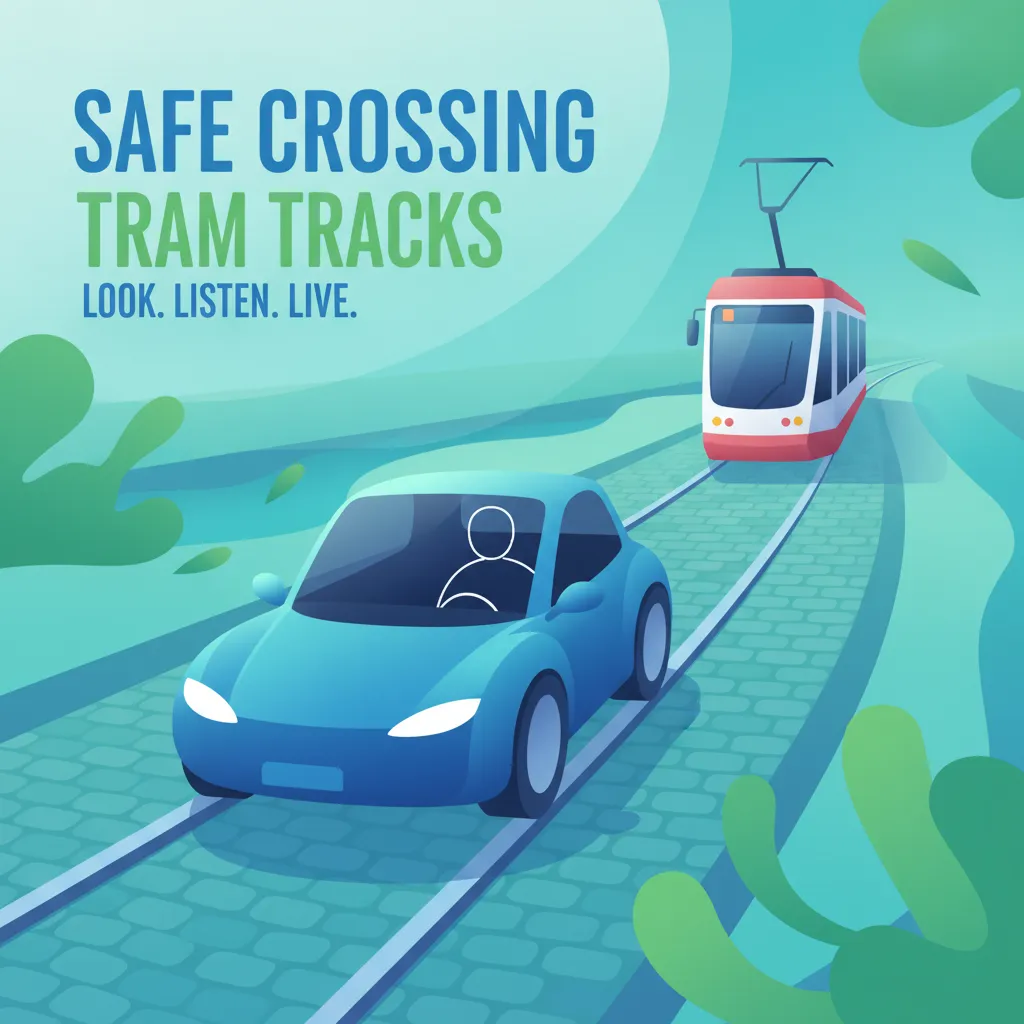
This lesson addresses the unique challenges posed by tram tracks, especially for two-wheeled vehicles. It explains the importance of crossing tracks at as close to a right angle as possible to avoid tyres getting caught, particularly in wet conditions. The lesson also covers the priority rules that often favor trams and how to interpret tram-specific signals.
Find clear answers to common questions learners have about Special Zones: Tempo-30, School Zones, and Residential Areas. Learn how the lesson is structured, which driving theory objectives it supports, and how it fits into the overall learning path of units and curriculum progression in Switzerland. These explanations help you understand key concepts, lesson flow, and exam focused study goals.
In a Tempo-30 zone, the maximum speed for all vehicles, including mopeds and e-bikes, is 30 km/h. Always look for the corresponding road sign to confirm you have entered or left these zones.
Generally, the principle of 'right before left' (Rechtsvortritt) applies in Tempo-30 zones unless otherwise indicated by signs or markings. However, you must always be ready to stop to ensure safety.
School zones require heightened awareness and defensive riding. Always expect children to be nearby, even if they are not immediately visible, and be prepared to brake instantly if a student steps onto the road.
Residential zones are marked by specific signs indicating a 'Wohnzone' or similar residential area markers. These zones often have traffic calming measures and stricter speed regulations to protect residents.
Pinpoint specific Swiss traffic rules, road signs, or driving situations you need to master. Use the practice search to start a focused revision session now and build confidence for your official driving theory exam.