
This lesson provides an in-depth look at the road surface markings used across the Swiss transport network. Mastering these markings is essential for maintaining proper lane discipline and interpreting traffic flow, ensuring you are fully prepared for both your Category B theoretical exam and real-world driving.
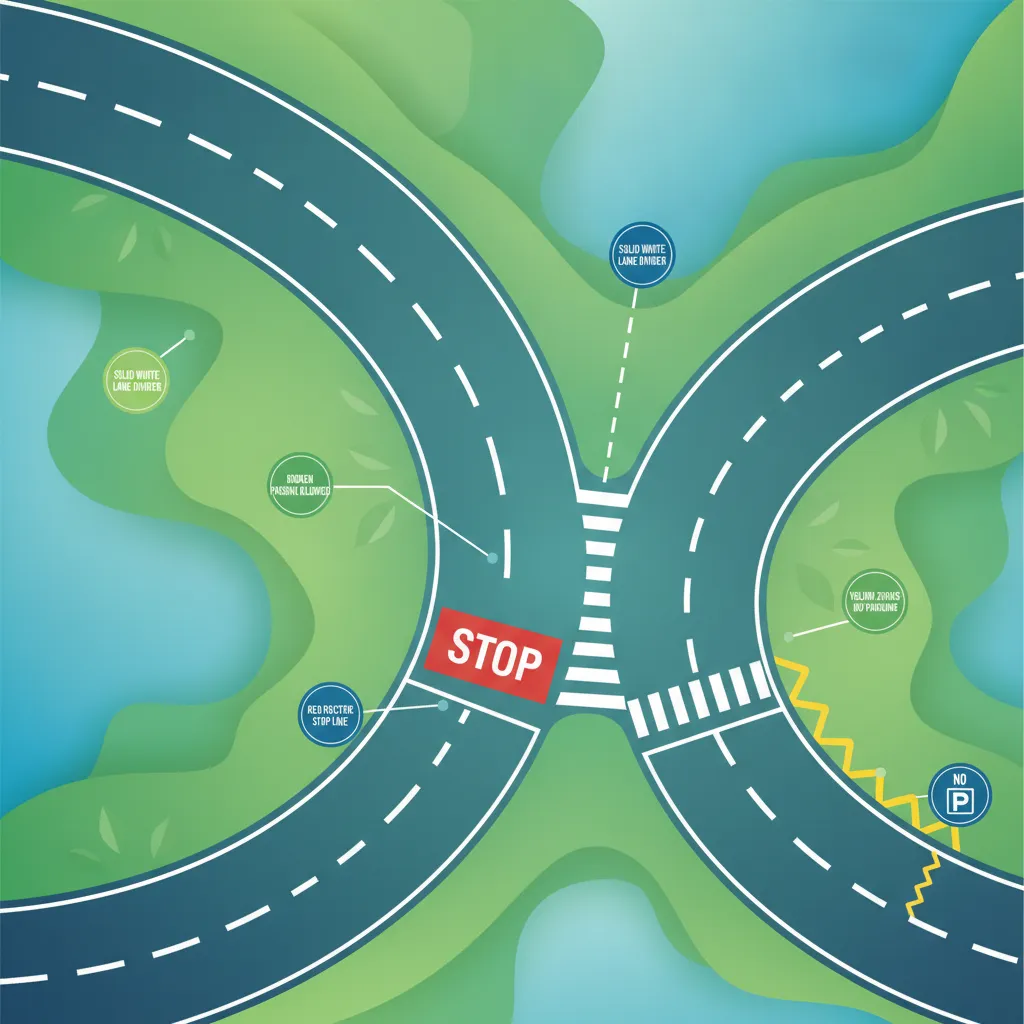
Lesson content overview
Road surface markings are an indispensable part of the traffic system, acting as a direct visual guide for drivers, cyclists, and pedestrians. These markings provide real-time instructions and warnings directly on the road surface, complementing the information conveyed by traffic signs. Understanding them is fundamental for safe navigation and adherence to traffic laws in Switzerland, especially for those preparing for the Comprehensive Swiss Driving Theory Course for Category B License.
This lesson will delve into the various types of road surface markings found on Swiss roads. We will explore their specific meanings, the rules associated with them, and their implications for lane discipline, turning movements, and the designation of exclusive zones for different road users. Mastering these visual cues is vital for predicting the actions of others, maintaining an orderly traffic flow, and preventing accidents in complex driving environments.
Road surface markings are not merely suggestions; they are legally binding directives that drivers must obey. They contribute significantly to road safety by providing clear visual instructions where vehicles travel, reducing ambiguity, and ensuring predictable behavior among all road users. In the Swiss traffic system, these markings are crucial for maintaining lane discipline, guiding turning movements, and protecting vulnerable road users.
Understanding the logic behind road markings helps in anticipating potential hazards and making informed decisions, particularly at intersections, during lane changes, or when encountering cyclists and pedestrians. Non-compliance with these markings can lead to fines, points on your driving license, and, more importantly, dangerous situations that could result in collisions.
Road surface markings operate on several core principles designed to enhance safety and efficiency on the road. These principles dictate how lanes are used, how turns are made, and how different road users interact within shared spaces.
The practice of maintaining a vehicle within its designated lane and only changing lanes when legally permitted by road markings and safe to do so.
Lane delineation markings are among the most fundamental types of road markings. They define the boundaries of traffic lanes and indicate when it is permissible or prohibited to cross these lines.
A solid white line (durchgehende Linie) is a continuous line painted on the road surface. This marking universally indicates that crossing it is prohibited for lane changes or overtaking maneuvers within the marked section. It acts as a clear warning that crossing this line could lead to a dangerous situation.
Drivers must remain within their lane and should not cross a solid line unless specific road markings explicitly indicate a permissible transition, such as at the end of a lane or in specific construction zones. A common misunderstanding is that a solid line can be crossed in emergencies; however, the law generally only permits crossing if the lane terminates or a broken line appears.
In contrast to a solid line, a broken white line (unterbrochene Linie), characterized by a series of short dashes, indicates that lane changes and overtaking are generally permitted. This flexibility is granted under the crucial condition that it is safe to do so.
When encountering a broken line, drivers may cross it after thoroughly checking mirrors, blind spots, and signaling their intention. It is imperative to ensure there is no oncoming traffic or other vehicles that would be affected by the maneuver. A common misconception is that a broken line automatically grants permission to cross; however, drivers must still prioritize safety and yield to existing traffic.
A double solid white line (doppelte durchgehende Linie) consists of two parallel continuous white lines painted closely together. This marking signifies an absolute prohibition of crossing for any vehicle traveling in either direction.
Double solid lines are typically found in areas where overtaking or lane changes would be exceptionally dangerous, such as approaching sharp bends, crests of hills, or at the beginning of dedicated climbing or heavy vehicle lanes. Drivers must under no circumstances cross a double solid line, except in very specific situations where a lane ends and clear termination markings are present.
The edge line (Randlinie) is a solid white line painted along the outer boundary of the carriageway, delineating the drivable area from the shoulder or roadside. Its primary purpose is to clearly mark the legal and safe limits of the road.
Crossing the edge line is generally prohibited during normal driving conditions. It is only permitted when required for specific maneuvers, such as merging into traffic at an intersection where a lane terminates, or when explicitly allowed by other signs or markings for specific purposes like emergency stopping on a hard shoulder (where legally permitted and safe). Drivers should not drive on or over the edge line for overtaking or convenience, as this can be dangerous and is illegal.
Road markings play a vital role in directing traffic flow, especially at complex intersections, by indicating permissible movements within specific lanes.
Lane arrow markings (Fahrstreifenpfeile) are white arrows painted directly on the road surface within a lane, guiding drivers on the permissible directions of travel from that particular lane. These arrows are critical for anticipating traffic movements and positioning your vehicle correctly.
Drivers must position their vehicles in the lane that corresponds to their intended maneuver. Turning from a lane that does not have a matching arrow is strictly prohibited and can lead to collisions with other traffic moving according to the markings.
Turn lane markings (Abbiegespuren) designate specific lanes dedicated solely for turning movements, often clearly indicated by lane arrows and defined by solid or broken lines. These lanes are designed to separate turning traffic from through traffic, improving flow and safety at intersections.
There are typically left-turn lanes, right-turn lanes, and, less commonly, dedicated U-turn lanes. Vehicles must enter these lanes early enough to avoid abrupt maneuvers and must use them only for their intended purpose. Using a turn lane for general travel, overtaking, or entering it late by crossing a solid line is a violation of lane discipline.
Certain road markings are dedicated to protecting vulnerable road users such as cyclists and pedestrians, providing them with safe, exclusive spaces.
Bike lane markings (Radweg Markierungen) typically consist of a solid white line separating a dedicated bicycle path from motor vehicle lanes. These lanes are often accompanied by a bicycle symbol painted on the road surface or a green sign indicating their purpose.
The purpose of these markings is to create an exclusive zone for bicycles, enhancing cyclist safety by physically separating them from motor vehicle traffic. Motor vehicles are strictly prohibited from occupying a marked bike lane, even for temporary stopping or overtaking. The only exception is when the bike lane explicitly ends, and the markings indicate that vehicles may cross the solid line to merge or turn.
Pedestrian zone markings define areas primarily reserved for pedestrians, with the most common example being the pedestrian crossing or zebra crossing (Fussgängerstreifen). These areas are usually marked by thick white stripes across the road, often accompanied by a solid white stop line.
Within pedestrian zones or at crossings, pedestrians generally have the right of way. At a zebra crossing, vehicles must stop at the marked stop line (Halte Linie) before the crossing and yield to any pedestrians who have entered or are about to enter the crossing. It is a common misunderstanding to assume pedestrians must wait; they have priority once they step onto the crossing. Other pedestrian zone markings might indicate shared spaces in city centers where vehicles must proceed with extreme caution and at very low speeds, giving way to pedestrians as a matter of courtesy and safety.
Critical for managing traffic flow and priority at intersections and crossings are stop and yield lines. These markings instruct drivers when and where to give way or stop.
A stop line (Halte Linie) is a solid white line painted across the carriageway, typically positioned before intersections, pedestrian crossings, or traffic signals. This line indicates the precise point where vehicles must come to a complete stop when required.
Drivers must stop before the stop line when a red traffic light is displayed, when a stop sign is present, or when yielding to pedestrians at a marked crossing. Failing to stop at the designated line can result in traffic violations, obstructing pedestrian pathways, or entering an intersection prematurely, increasing the risk of collision.
A yield line (Vorfahrtlinie) is a broken white line, often a series of white triangles or dashes, placed at an intersection. This marking signals to drivers that they must yield (give way) to traffic on the main road before proceeding.
When approaching a yield line, drivers must slow down and be prepared to stop. They must only proceed when the path is clear and there is no traffic with priority approaching from the main road. The yield line ensures that traffic on the primary route can continue uninterrupted, promoting smoother flow and preventing collisions at junctions. It is a common misunderstanding to assume a yield line automatically grants permission to proceed; it mandates giving way.
Beyond basic lane and turning directives, specific markings exist to manage lane transitions and areas with mixed traffic.
Lane termination markings (Fahrstreifenende Markierungen) are specialized road markings that indicate where a designated lane, such as a bike lane or an additional traffic lane, is coming to an end. These markings are crucial for guiding drivers to merge safely into an adjacent lane.
Often, a solid line marking a lane's boundary will transition into a broken line pattern or a series of diagonal dashes, signaling that vehicles may now cross the line to merge. This is a permissible exception to the general rule against crossing solid lines. Drivers must observe these markings carefully and merge with caution, ensuring there is a safe gap in the adjacent traffic stream.
In some urban areas, shared space markings are employed to create environments where vehicles, cyclists, and pedestrians share the same space with minimal traditional road markings. These areas are designed to encourage lower speeds and heightened awareness among all users.
In shared spaces, priority is generally determined by existing right-of-way rules and mutual courtesy, rather than explicit lane lines or signals. Drivers must reduce their speed significantly and be highly vigilant for pedestrians and cyclists, who may cross the space at any point. It is a misconception to assume that the absence of strict markings grants motor vehicles automatic right-of-way; instead, it demands greater caution and a yielding attitude.
Adhering to road surface markings is a cornerstone of safe driving and legal compliance in Switzerland. Here are the key rules and their implications:
Incorrect interpretation or disregard of road markings leads to frequent traffic violations and dangerous situations.
The interpretation and adherence to road markings can be influenced by various external factors, requiring drivers to adapt their behavior.
The consequences of adhering to or violating road markings are direct and significant for road safety and traffic flow.
Understanding road surface markings does not stand in isolation; it integrates with several other core concepts of the Swiss Category B Driving Theory Course.
Road markings are carefully designed based on extensive safety research and human factors psychology. Their consistent application creates a predictable environment, which is crucial for reducing cognitive load on drivers. Reflective properties enhance visibility, especially in challenging conditions, and their presence mitigates risk by prohibiting dangerous maneuvers in critical areas. Understanding the underlying "why" behind each marking empowers drivers to make safer, more informed decisions on the road.
Mastering road surface markings is a non-negotiable aspect of safe and legal driving in Switzerland. This lesson has highlighted the critical distinction between solid, broken, and double solid lines, dictating when and where lane changes are permitted or prohibited. We've explored the precise guidance offered by lane arrows and dedicated turn lanes, ensuring smooth movements at intersections. The importance of respecting exclusive zones for vulnerable road users, such as bike lanes and pedestrian crossings, has been emphasized, along with the mandatory actions required at stop and yield lines.
Remember to always adjust your driving behavior based on prevailing conditions like weather and visibility, and to consider the specific context of different road types and vehicle states. Compliance with road markings, combined with situational awareness and adherence to priority rules, is key to maintaining a safe, efficient, and harmonious traffic environment. Failure to do so not only risks legal penalties but, more importantly, endangers lives.
This lesson covers all major Swiss road surface markings including solid, broken, and double solid lines that dictate when lane changes and overtaking are permitted or prohibited. Lane arrows provide legally binding directional guidance at intersections, while dedicated markings create exclusive zones for cyclists and pedestrians that drivers must respect. The lesson emphasizes that road markings are not suggestions but mandatory directives under Swiss traffic law, with specific rules for stop lines, yield lines, and lane termination zones. Drivers must also adapt their behavior based on weather conditions and road type, as markings may be obscured in rain, snow, fog, or darkness.
A short set of high-value points that capture the most important learning from this lesson.
Solid white lines prohibit lane changes and overtaking; only cross them where lanes terminate or specific markings permit.
Broken white lines allow lane changes and overtaking only when it is completely safe to do so after checking mirrors and blind spots.
Double solid lines mean absolute prohibition of crossing in either direction, found near hazards like bends and hill crests.
Lane arrows are legally binding directional instructions; you must position in the correct lane before reaching the intersection.
Bike lanes and pedestrian crossings create exclusive zones where motor vehicles are prohibited from driving or stopping.
Explore all units and lessons included in this driving theory course.
The Swiss German terms: Durchgehende Linie (solid), Unterbrochene Linie (broken), Doppelte durchgehende Linie (double solid), Randlinie (edge line), Halte Linie (stop line), Vorfahrtlinie (yield line).
You may cross a solid line only at lane termination points where lane-end markings transition from solid to broken pattern.
Pedestrians have priority once they step onto a zebra crossing; you must stop at the stop line before the crossing.
At a yield line (broken line of triangles), you must slow down and give way to traffic on the main road; it does not grant automatic right to proceed.
Shared space zones (Begegnungszonen) have minimal markings and require reduced speed, heightened awareness, and a yielding attitude toward all road users.
Assuming a solid line can be crossed when no immediate danger is perceived; it is always illegal unless the lane terminates.
Attempting to turn from a 'straight only' lane by ignoring the lane arrow marking, causing side-swipe collisions.
Using a dedicated bike lane to bypass traffic or for temporary parking, which endangers cyclists and is prohibited.
Creeping past a stop line at pedestrian crossings, obstructing pedestrians who have priority once on the crossing.
Failing to adjust speed and increase following distance in rain or snow when road markings become obscured.
Lesson content overview
A short set of high-value points that capture the most important learning from this lesson.
Solid white lines prohibit lane changes and overtaking; only cross them where lanes terminate or specific markings permit.
Broken white lines allow lane changes and overtaking only when it is completely safe to do so after checking mirrors and blind spots.
Double solid lines mean absolute prohibition of crossing in either direction, found near hazards like bends and hill crests.
Lane arrows are legally binding directional instructions; you must position in the correct lane before reaching the intersection.
Bike lanes and pedestrian crossings create exclusive zones where motor vehicles are prohibited from driving or stopping.
Explore all units and lessons included in this driving theory course.
The Swiss German terms: Durchgehende Linie (solid), Unterbrochene Linie (broken), Doppelte durchgehende Linie (double solid), Randlinie (edge line), Halte Linie (stop line), Vorfahrtlinie (yield line).
You may cross a solid line only at lane termination points where lane-end markings transition from solid to broken pattern.
Pedestrians have priority once they step onto a zebra crossing; you must stop at the stop line before the crossing.
At a yield line (broken line of triangles), you must slow down and give way to traffic on the main road; it does not grant automatic right to proceed.
Shared space zones (Begegnungszonen) have minimal markings and require reduced speed, heightened awareness, and a yielding attitude toward all road users.
Assuming a solid line can be crossed when no immediate danger is perceived; it is always illegal unless the lane terminates.
Attempting to turn from a 'straight only' lane by ignoring the lane arrow marking, causing side-swipe collisions.
Using a dedicated bike lane to bypass traffic or for temporary parking, which endangers cyclists and is prohibited.
Creeping past a stop line at pedestrian crossings, obstructing pedestrians who have priority once on the crossing.
Failing to adjust speed and increase following distance in rain or snow when road markings become obscured.
Explore search topics learners often look for when studying Road Surface Markings and Their Meanings. These topics reflect common questions about road rules, driving situations, safety guidance, and lesson level theory preparation for learners in Switzerland.
Browse additional driving theory lessons that cover connected traffic rules, road signs, and common driving situations related to this topic. Improve your understanding of how different rules interact across everyday traffic scenarios.
Learn the specific meanings of Swiss road markings that define bike lanes, pedestrian zones, and shared spaces. Understand how these markings ensure safety for vulnerable road users and impact vehicle interactions in complex traffic environments.

This lesson focuses on the variety of painted markings on Swiss roads and their legal significance. Learners will understand the difference between solid and broken lines, the rules for stop lines, and their obligations at a zebra crossing (Fußgängerstreifen). Correct interpretation of these markings is essential for proper lane positioning and safe interaction with all road users.

This lesson explores pedestrian right-of-way at various crossings, including zebra crossings and pedestrian islands. It emphasizes the need for drivers to reduce speed, anticipate pedestrian movement, and stop safely when required. The content also covers special regulations that apply in school zones, such as reduced speed limits and heightened vigilance.
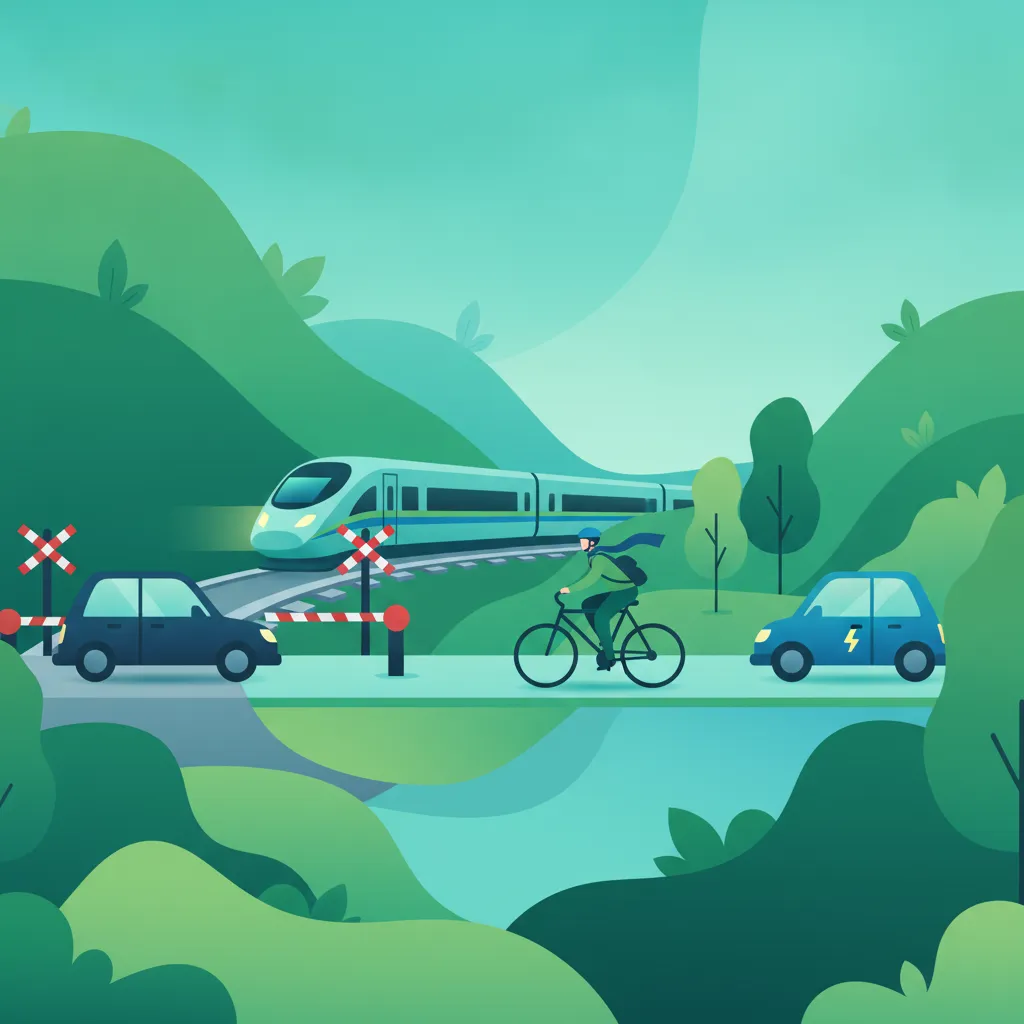
This lesson examines special traffic situations such as railway level crossings and shared zones where different road users coexist. It explains the specific safety procedures required at railway crossings and how to behave in shared zones with mixed traffic. The content also addresses the need to yield to oncoming trains and follow special signage in these unique zones.
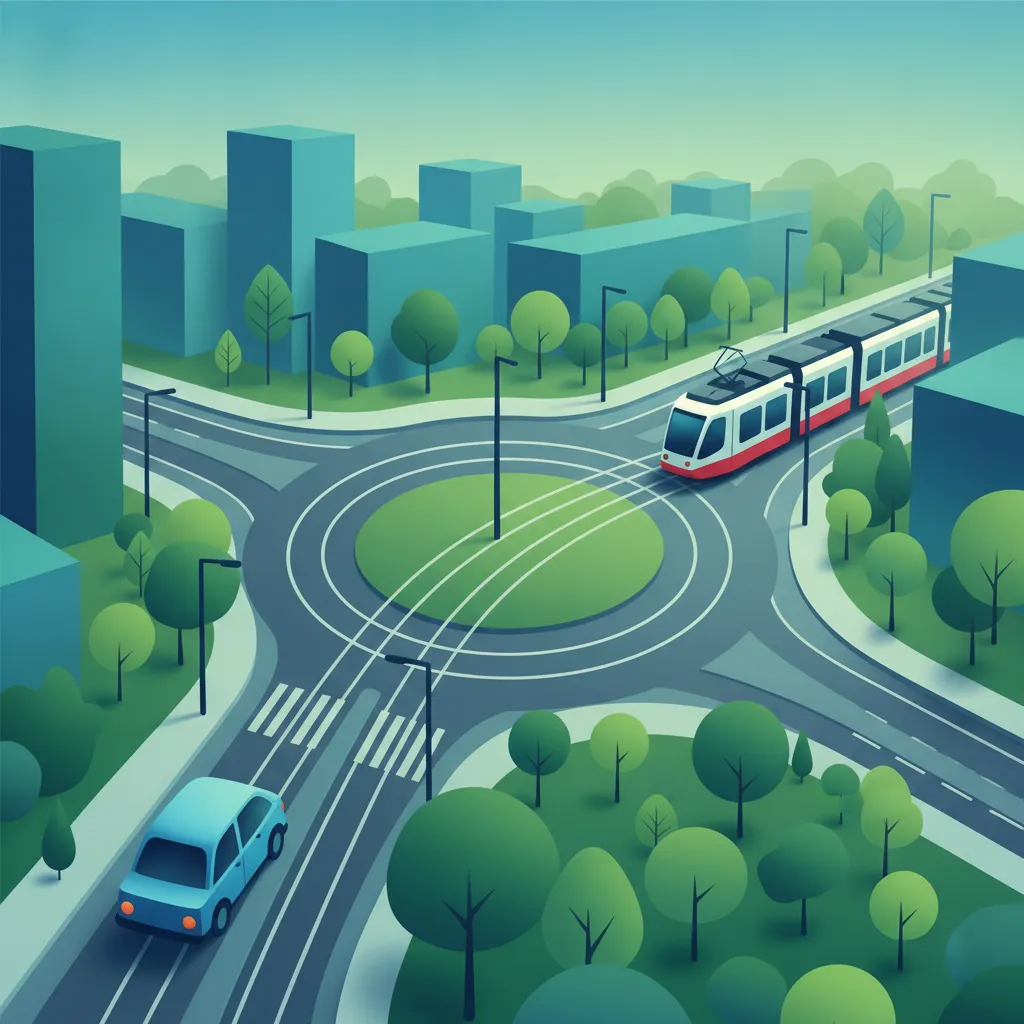
This lesson provides guidance on safely navigating roundabouts and tram lanes, common features in Swiss cities. It covers the rules for yielding, lane positioning within the roundabout, and signaling intentions upon exiting. Special attention is given to the hazards of crossing slippery tram tracks and sharing the road with public transport.
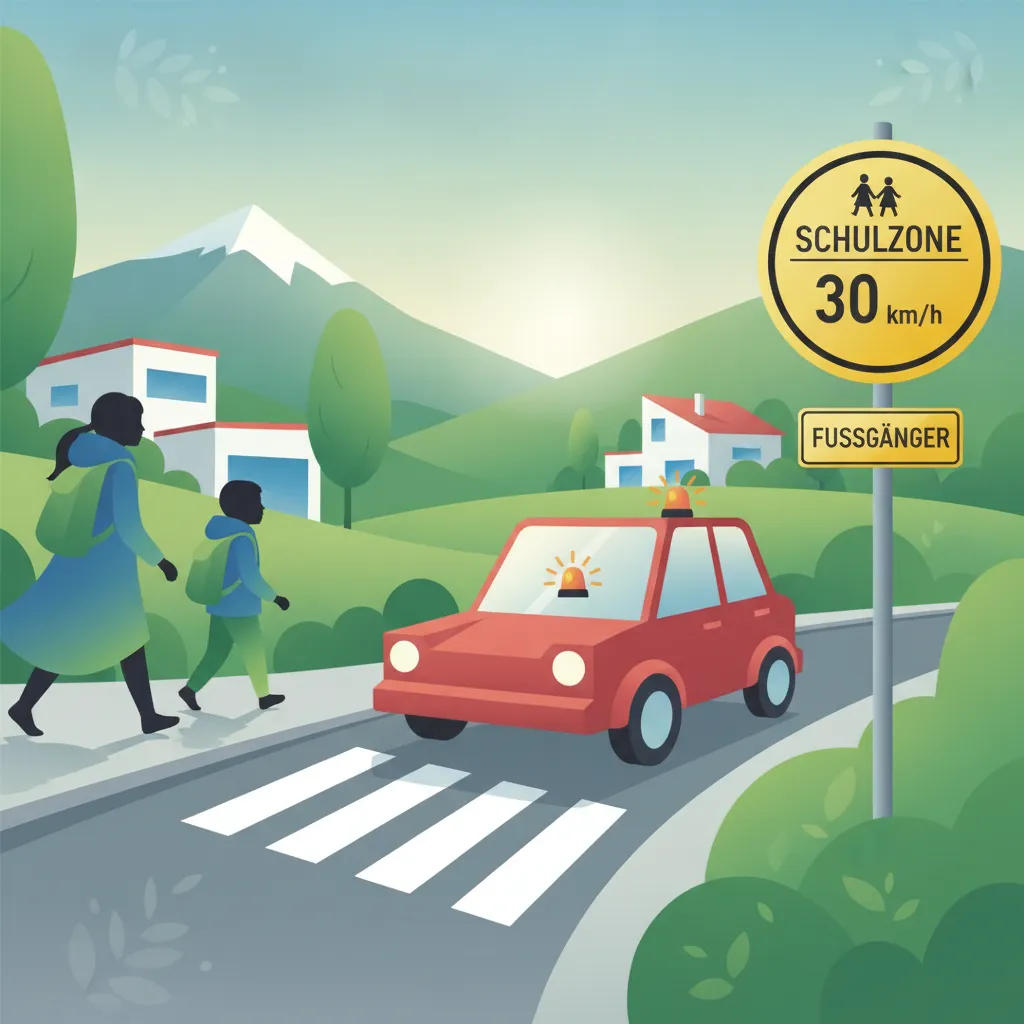
This lesson focuses on school zones, where special speed limits and cautionary measures are required. You will learn to recognize school zone signs, understand reduced speed limits, and be aware of designated child crossing zones. The content also emphasizes the need for heightened vigilance when school buses stop for students to ensure child safety.
This lesson details the operation of traffic light systems in Switzerland. It explains the sequence and meaning of red, amber, and green lights, including flashing amber signals. The content also covers specific signals for pedestrians and the priority rules associated with tram signals to ensure safe interaction at controlled intersections.
This lesson covers areas with special traffic regulations designed to protect vulnerable road users. Learners will understand the rules and reduced speed limits applicable in Tempo-30 zones, residential areas, and around schools. The content emphasizes the need for heightened awareness and a defensive riding style in these designated zones.

This lesson focuses on identifying and managing specific road surface hazards that can compromise traction. It provides techniques for safely crossing slippery tram rails and painted markings, navigating uneven cobblestones, and maintaining control on loose gravel. The core skill is learning to scan the road ahead and adjust riding style proactively.

This lesson focuses on general driving safety in areas with a high concentration of children. It stresses the importance of significantly reducing speed, being prepared for unexpected events, and scanning for children between parked cars. The driver must exhibit maximum vigilance in these high-risk environments at all times.
This lesson examines informational signs that provide route guidance, destination distances, and tourist information. It explains how direction signs, distance markers, and service area signs assist drivers in planning routes and making informed decisions. Understanding the logic of informational signage ensures efficient and safe navigation through the Swiss road network.
Explore common mistakes drivers make with Swiss road surface markings and how weather, road type, and specific vehicle situations alter their interpretation. Gain insights into advanced reasoning and adherence for safe driving.
This lesson focuses on the variety of painted markings on Swiss roads and their legal significance. Learners will understand the difference between solid and broken lines, the rules for stop lines, and their obligations at a zebra crossing (Fußgängerstreifen). Correct interpretation of these markings is essential for proper lane positioning and safe interaction with all road users.
This lesson focuses on warning signs that alert drivers to potential hazards ahead, such as curves, steep descents, and roadwork zones. You will understand how these signs prompt anticipatory driving behavior, allowing for adjustments in speed and position. The content also discusses the typical placement of warning signs to help you react safely to changing conditions.
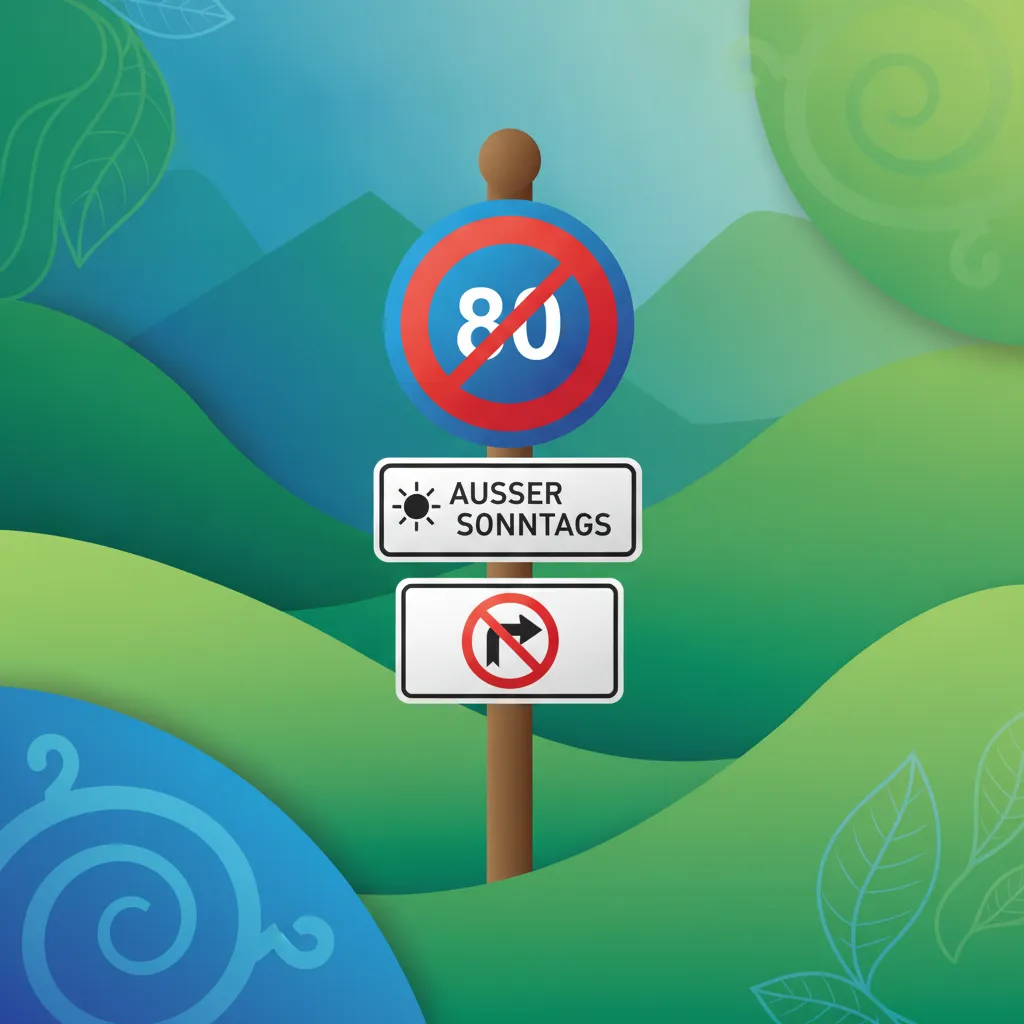
This lesson delves into supplementary signs that modify or clarify the meaning of primary traffic signs. You will learn to interpret signs indicating time restrictions, vehicle-specific limitations, and lane-specific instructions. The content also highlights how these signs interact with main regulatory signs to convey precise, context-sensitive traffic rules.
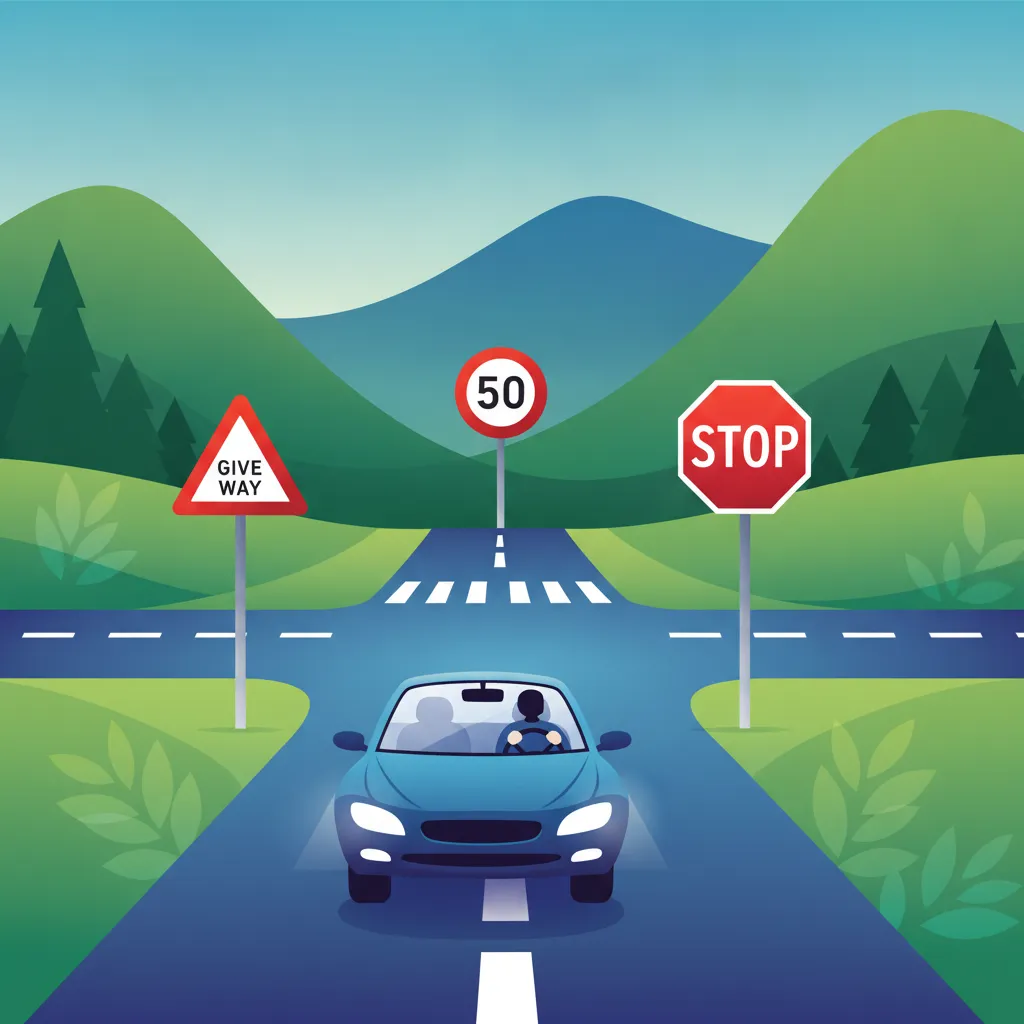
This lesson explores the category of regulatory signs, which dictate permissible and prohibited actions for drivers. It covers speed limit signs, entry restrictions, and mandatory direction signs, explaining their legal significance. Emphasis is placed on recognizing the shapes and colours that distinguish these critical signs within the Swiss traffic system.

This lesson examines the different lighting systems on a vehicle, including headlamps, fog lights, and turn signals. It explains the appropriate use of low-beam and high-beam headlights and the conditions for activating fog lights. Understanding proper lighting usage improves visibility and safety, especially in low-light or adverse weather conditions.

This lesson introduces the core behaviour rules governing safe communication, focusing on the use of signals, mirrors, and eye contact. It emphasizes the importance of timely indicator usage and the correct procedure for checking mirrors and blind spots. The content also covers non-verbal communication cues that help convey intent and foster predictable traffic flow.
This lesson focuses on identifying and managing specific road surface hazards that can compromise traction. It provides techniques for safely crossing slippery tram rails and painted markings, navigating uneven cobblestones, and maintaining control on loose gravel. The core skill is learning to scan the road ahead and adjust riding style proactively.

This lesson examines the impact of various weather conditions on driving safety. It explains how to adjust speed in low visibility and the risks of aquaplaning in heavy rain. The content also covers using snow chains in snowy conditions, handling icy surfaces, and dealing with strong winds, particularly on bridges and open roads.
This lesson examines informational signs that provide route guidance, destination distances, and tourist information. It explains how direction signs, distance markers, and service area signs assist drivers in planning routes and making informed decisions. Understanding the logic of informational signage ensures efficient and safe navigation through the Swiss road network.
This lesson examines the impact of weather and visibility on driving safety and speed selection. It covers how fog, rain, snow, and darkness affect visibility and reaction times, providing guidelines on adjusting speed. It also includes strategies for improving visibility, such as proper headlamp use, to ensure you can adapt to varying weather conditions.
Find clear answers to common questions learners have about Road Surface Markings and Their Meanings. Learn how the lesson is structured, which driving theory objectives it supports, and how it fits into the overall learning path of units and curriculum progression in Switzerland. These explanations help you understand key concepts, lesson flow, and exam focused study goals.
No, a solid white line must not be crossed or driven upon under normal circumstances. It is used to mark the edge of the carriageway or to separate lanes where changing lanes is prohibited for safety reasons.
These arrows indicate the mandatory direction you must take for that specific lane. If you are in a lane with a turn arrow, you must follow that direction, even if you intended to go straight.
Yes, markings delineating bike lanes create a space reserved for cyclists. Drivers must not drive or park in these areas unless specifically indicated by signage that allows temporary use for turns.
In Swiss traffic law, regulatory traffic signs (vertical) generally take precedence over road surface markings. If you see a contradiction, always follow the explicit instruction provided by the regulatory road sign.
Pinpoint specific Swiss traffic rules, road signs, or driving situations you need to master. Use the practice search to start a focused revision session now and build confidence for your official driving theory exam.