
This lesson focuses on the critical skill of interpreting supplementary signs that modify primary road rules. By understanding how these smaller signs add context regarding time, vehicle type, and location, you will gain the precision needed to navigate complex Swiss traffic scenarios safely and pass your Category B theory exam.
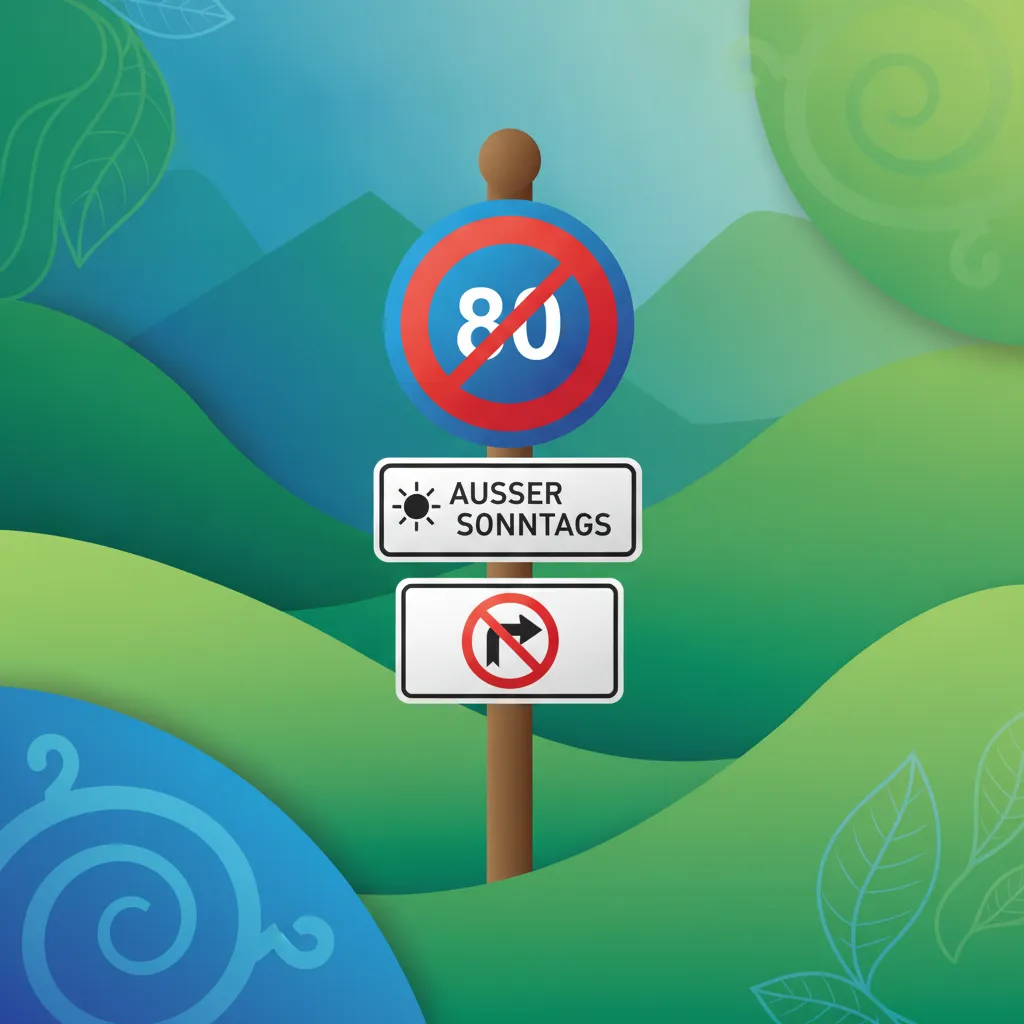
Lesson content overview
Navigating the roads safely and compliantly in Switzerland requires more than just recognizing primary traffic signs. Often, these main signs are accompanied by supplementary signs (often called auxiliary signs or addendum signs) that refine, restrict, or expand their meaning. These seemingly small additions are crucial for precise interpretation of traffic rules and ensure safe driving for all road users.
This comprehensive lesson will equip you with the knowledge to accurately interpret various supplementary signs, covering time restrictions, vehicle-specific limitations, and lane-specific instructions. Understanding their interplay with main regulatory, warning, and informational signs is fundamental to mastering Swiss traffic law.
Supplementary signs are additional panels typically placed directly below a main traffic sign. Their primary function is to provide extra information or specify conditions under which the main sign's rule applies. Without these critical additions, many traffic regulations would be overly broad or impossible to enforce accurately in diverse situations. They allow for highly specific rules without cluttering the road with an excessive number of primary signs.
The significance of supplementary signs cannot be overstated. They are integral to the precision of Swiss traffic regulations, transforming general prohibitions or permissions into context-sensitive directives. Misreading or overlooking these signs can lead to severe consequences, including traffic violations, fines, and even dangerous situations on the road. For drivers pursuing a Category B license in Switzerland, a thorough understanding of these signs is essential for both passing the theoretical exam and ensuring responsible driving practices. They contribute significantly to preventing accidents by clarifying specific conditions that might not be immediately obvious.
At its core, a supplementary sign always modifies the primary sign it accompanies. The primary sign establishes the core rule, such as "No Parking," "Speed Limit," or "No Overtaking." The supplementary sign then adds conditions like "between 8 a.m. and 6 p.m.," "for heavy vehicles only," or "for the next 200 meters." This modular approach to signage is a cornerstone of efficient road management, allowing for flexibility and clarity without overwhelming drivers with complex, multi-symbol main signs.
This relationship ensures that the road environment remains clear and understandable. Drivers are trained to first identify the main rule and then immediately check for any supplementary information that might alter its applicability.
To correctly interpret supplementary signs, it's helpful to understand the foundational principles guiding their design and application. These principles ensure consistency and predictability in traffic signage.
The modularity principle dictates that supplementary signs are added to primary signs to detail conditions without altering the primary sign's inherent shape or baseline meaning. This system enables highly efficient signage, significantly reducing visual clutter on the roads. By keeping main signs distinct and using smaller, standardized panels for conditions, authorities can convey precise rules without creating overly complex or confusing main signs. Drivers must therefore learn to synthesize information from both signs to grasp the complete regulation.
The hierarchy principle establishes that the primary sign conveys the core traffic rule, while supplementary signs serve to refine, restrict, or expand upon that fundamental rule. For example, a "No Parking" sign (primary) always means parking is prohibited. A supplementary sign might then add "except for loading" or "between 8 a.m. and 6 p.m.," which refines when or for whom that prohibition applies. This clear hierarchical structure prevents ambiguity and ensures the core rule remains immediately recognizable, even with additional conditions. Incorrectly interpreting this hierarchy can lead to unintended rule violations.
The specificity principle states that supplementary signs apply only to the primary sign they accompany, and not to other signs in the vicinity, unless explicitly indicated otherwise (e.g., through a zone sign). This guarantees precise applicability of each rule, preventing drivers from incorrectly extrapolating conditions from one sign to an unrelated one. Drivers must always pay close attention to which main sign a supplementary sign is physically attached to, as this determines its scope.
The temporal principle applies when time-related supplementary signs are present, indicating that the restriction or permission is valid only during the specified period. For example, a "No Stopping" sign accompanied by "5 a.m.–10 p.m." means the restriction applies only within those hours. Outside the specified period, the restriction generally no longer applies, unless another permanent sign dictates otherwise. This flexibility allows traffic rules to align with varying conditions such as peak hours, school times, or night-time restrictions, optimizing traffic flow and safety.
The vehicle class principle signifies that vehicle-specific supplementary signs indicate a restriction or permission that applies solely to certain categories of vehicles. These categories might include motorcycles, heavy goods vehicles, bicycles, or cars. This principle is crucial for accommodating the diverse capabilities, dimensions, and safety considerations of different vehicle types. For instance, a "No Overtaking" sign with a truck symbol indicates that only trucks are prohibited from overtaking, while other vehicles may proceed if safe and legal. Drivers of non-restricted vehicles are not subject to such limitations.
The lane and direction principle means that lane-specific supplementary signs, often using arrows or lane numbers, indicate that a rule applies only to particular lanes or directions of travel. This is vital for managing complex traffic flows, especially on multi-lane roads, at intersections, or near exits. For instance, a "No Stopping" sign combined with a straight-ahead arrow would prohibit stopping only for vehicles intending to go straight, allowing those turning right to stop if other rules permit. Drivers must position their vehicles correctly and adhere to the rules designated for their intended lane and direction.
Supplementary signs come in various forms, each conveying a specific type of additional information. Understanding these categories is key to accurate interpretation.
These signs are used to specify the exact hours or days during which a primary sign's restriction or permission is active. They are frequently seen with parking, stopping, or speed limit signs.
Practical Meaning: If you see a "No Stopping" sign (meaning you cannot stop even momentarily to pick up or drop off passengers) with a supplementary sign showing "08:00 – 18:00," then stopping is prohibited only within these hours. Outside of them, you may stop, provided no other rules are violated.
These signs specify that a rule applies only to certain categories of vehicles, often identified by a pictogram.
Practical Meaning: If you encounter a "No Overtaking" sign with a supplementary sign depicting a truck, it means only heavy goods vehicles are prohibited from overtaking. Other vehicles, such as passenger cars, may overtake if it is otherwise safe and permissible.
These signs indicate the precise distance over which a restriction or regulation applies from the location of the primary sign.
Practical Meaning: A "No Overtaking" sign coupled with a "200 m" supplementary sign indicates that overtaking is prohibited for the next 200 meters from where the sign is posted. Once you have traveled 200 meters, the restriction is lifted, assuming no other signs impose a ban.
These signs indicate that a rule applies only to particular lanes or a specific direction of travel, commonly seen on multi-lane roads, at junctions, or near motorway exits.
Practical Meaning: If a "No Stopping" sign has a supplementary sign with a left-turn arrow, it means stopping is prohibited only for vehicles making a left turn. Vehicles going straight or turning right might be permitted to stop if no other restrictions apply. These signs are crucial for efficient traffic management and preventing bottlenecks.
Similar to lane-specific signs, these indicate that a rule applies only to traffic moving in a particular direction, guiding compliance based on a driver’s intended movement.
Practical Meaning: A "No Stopping" sign with a supplementary sign showing a right-turn arrow means that vehicles must not stop while preparing to make a right turn. This is often used at busy intersections to maintain traffic flow.
These signs are less common but are vital when they appear, as they alter the typical priority relationships of a primary sign. An example might be a sign indicating "Priority over oncoming traffic" for a specific lane or situation.
Practical Meaning: In narrow passages or where one lane must yield, these signs adjust the default right-of-way rules, ensuring that one direction of traffic has precedence. This is often seen on temporary roadworks or single-lane bridges where two-way traffic is managed sequentially.
Beyond the common categories, there are other supplementary signs that impose restrictions based on vehicle technology, environmental standards, or specific conditions.
Implications: These signs often reflect evolving regulations related to environmental protection and urban planning. Non-compliance can result in fines and contributes to environmental pollution.
The interpretation of supplementary signs in Switzerland is governed by the Road Traffic Regulations (VRV). Understanding these official rules is paramount for all drivers.
When a supplementary sign is attached to a primary sign, its content modifies the meaning of the primary sign according to the hierarchy principle. This means you must consider both signs together to understand the full regulation.
Time-related supplementary signs impact the restriction exclusively during the periods indicated. Outside those specific times, the restriction no longer applies, unless another unrelated sign is in force.
Vehicle-class specific supplementary signs narrow the application of the primary rule to the indicated vehicle type only.
Distance-related supplementary signs precisely define the length over which a restriction or permission is valid, starting from the point of the sign.
Lane-specific and direction-specific supplementary signs restrict the primary rule to a designated lane or direction of travel.
In situations where multiple supplementary signs are attached to a single primary sign, all constraints detailed by these supplementary signs must be simultaneously met for the primary rule to apply.
Even experienced drivers can sometimes misinterpret supplementary signs. Being aware of common pitfalls can help new drivers avoid these errors.
A frequent mistake is to assume a restriction applies at all times, even when a supplementary sign clearly indicates specific hours or days. For instance, parking during specified "No Parking" hours when a supplementary sign limits the restriction.
Drivers sometimes generalize restrictions, applying them to all vehicles when a supplementary sign clearly targets only a specific class (e.g., heavy vehicles, motorcycles, or bicycles).
It is common to underestimate or overestimate the distance over which a rule applies. Forgetting that a "No Overtaking" sign with a "200 m" supplement means the ban continues for the entire 200 meters.
Drivers may fail to recognize that a rule, often indicated by an arrow, applies only to a specific lane or intended direction of travel, leading to incorrect maneuvers.
When multiple supplementary signs are present, a common error is to satisfy only one condition while overlooking others. For example, a "No Parking" sign with both time and vehicle class restrictions.
Assuming a directional arrow on a supplementary sign applies to all directions rather than the specific one indicated can lead to incorrect actions, such as stopping when turning right is permitted, but stopping straight ahead is prohibited.
The impact and interpretation of supplementary signs can also vary depending on the prevailing conditions and the road environment.
In adverse weather conditions like heavy fog, torrential rain, or snowfall, lane-specific or overtaking restrictions might become even more critical. While not always explicit on supplementary signs, the general principles of defensive driving dictate heightened caution. Some rare supplementary signs might explicitly indicate conditions like "Only in fog" to reinforce a specific primary rule. Similarly, certain time-related restrictions, especially related to parking or access, might be relevant only during daylight or nighttime hours. For instance, a "No Parking 8 p.m.–6 a.m." sign focuses on nighttime restrictions, possibly to ensure clear passage for emergency services or street cleaning.
The type of road significantly influences the application of supplementary signs. On motorways, lane-specific supplements (e.g., "No overtaking for heavy vehicles in the fast lane") are vital for maintaining smooth and safe high-speed traffic flow. In residential areas, time-based parking restrictions are prevalent to manage limited space and reduce noise during specific hours.
The state of your vehicle can also be relevant. For instance, if you are towing a trailer or have an exceptionally heavy load, specific vehicle-class supplements might apply to you, such as "No overtaking for vehicles with trailers" or "Weight Limit for bridge." Failure to acknowledge these can lead to unsafe situations or legal infractions.
Many supplementary signs are designed with the safety of vulnerable road users in mind. When a supplementary sign restricts overtaking, for example, it may be specifically placed in areas where cyclists or pedestrians are frequently present. Ignoring such restrictions, particularly around schools, residential zones, or designated bike lanes, can endanger pedestrians and cyclists. For instance, a "No Overtaking" sign with a "Bicycles" supplement near a bike path explicitly protects cyclists by prohibiting specific vehicles from overtaking them at that point.
Let's explore some common driving scenarios where accurate interpretation of supplementary signs is crucial.
Supplementary signs are indispensable elements of Swiss traffic regulations, transforming general rules into precise, context-sensitive directives. By providing additional information on time restrictions, vehicle-specific limitations, distances, lane allocations, and directions, they ensure that traffic rules are applied accurately and efficiently.
Mastering the interpretation of these signs, alongside primary regulatory, warning, and informational signs, is fundamental for all drivers. Understanding the core principles of modularity, hierarchy, specificity, and how these signs interact under various conditions—such as weather or specific road types—is key to safe and compliant driving. Failure to correctly interpret supplementary signs can lead to violations, fines, and hazardous situations. Therefore, paying close attention to every detail of road signage is not merely about passing a theory exam, but about fostering a safe and predictable driving environment for everyone.
Swiss supplementary signs refine primary traffic rules by adding conditions related to time, vehicle type, distance, lane, or direction. The key to interpretation lies in understanding the hierarchy between primary and supplementary signs: always read the primary rule first, then apply all supplementary conditions simultaneously. Time restrictions limit rules to specific hours or days; vehicle-class supplements target only the indicated vehicle type; distance supplements specify the length of application; and directional supplements restrict rules to specific lanes or turning movements. Misinterpreting these signs—whether by ignoring time windows, misapplying vehicle restrictions, or misjudging distances—is a leading cause of traffic violations and exam errors. Mastery of these sign combinations is essential for passing the Category B theory exam and driving safely in Swiss traffic.
A short set of high-value points that capture the most important learning from this lesson.
Supplementary signs always modify the primary sign they accompany, adding conditions such as time windows, vehicle types, distances, or directional limitations.
The hierarchy principle establishes that the primary sign states the core rule while the supplementary sign refines or restricts when and to whom it applies.
Time-related supplements mean the rule is active only during specified hours or days; outside those periods, the primary restriction generally does not apply.
Vehicle-class supplements (truck, motorcycle, bicycle symbols) make a rule apply exclusively to that vehicle category, not to all vehicles.
Distance supplements define the exact length over which a rule is valid, starting from the sign's location.
Explore all units and lessons included in this driving theory course.
Supplementary signs are rectangular panels placed directly below a primary sign and use standardized colors, shapes, and symbols consistent with Swiss VRV regulations.
The temporal principle means a restriction like 'No Parking 08:00-18:00' allows parking outside those hours unless other signs impose additional restrictions.
A vehicle-class supplement (e.g., truck symbol) means only that vehicle type is restricted; other vehicles are not bound by that specific rule.
Distance supplements always start from the sign location and specify exactly how far the rule extends (e.g., '200 m' means the next 200 meters only).
When multiple supplementary signs are attached to one primary sign, all conditions must be satisfied simultaneously.
Assuming a restriction applies 24/7 when a supplementary sign clearly specifies hours or days, leading to illegal parking or stopping outside those times.
Applying a vehicle-specific restriction to all vehicles—for example, believing a 'No Overtaking' sign with a truck symbol also prohibits cars from overtaking.
Underestimating the distance a rule covers by accelerating before reaching the end of a distance-based restriction like '200 m' on a 'No Overtaking' sign.
Stopping in a lane where a 'No Stopping' sign with a directional arrow applies only to traffic going straight, when the driver's intended direction is different.
Satisfying only one condition when multiple supplements are present (e.g., parking outside restricted hours but for the wrong vehicle class).
Lesson content overview
A short set of high-value points that capture the most important learning from this lesson.
Supplementary signs always modify the primary sign they accompany, adding conditions such as time windows, vehicle types, distances, or directional limitations.
The hierarchy principle establishes that the primary sign states the core rule while the supplementary sign refines or restricts when and to whom it applies.
Time-related supplements mean the rule is active only during specified hours or days; outside those periods, the primary restriction generally does not apply.
Vehicle-class supplements (truck, motorcycle, bicycle symbols) make a rule apply exclusively to that vehicle category, not to all vehicles.
Distance supplements define the exact length over which a rule is valid, starting from the sign's location.
Explore all units and lessons included in this driving theory course.
Supplementary signs are rectangular panels placed directly below a primary sign and use standardized colors, shapes, and symbols consistent with Swiss VRV regulations.
The temporal principle means a restriction like 'No Parking 08:00-18:00' allows parking outside those hours unless other signs impose additional restrictions.
A vehicle-class supplement (e.g., truck symbol) means only that vehicle type is restricted; other vehicles are not bound by that specific rule.
Distance supplements always start from the sign location and specify exactly how far the rule extends (e.g., '200 m' means the next 200 meters only).
When multiple supplementary signs are attached to one primary sign, all conditions must be satisfied simultaneously.
Assuming a restriction applies 24/7 when a supplementary sign clearly specifies hours or days, leading to illegal parking or stopping outside those times.
Applying a vehicle-specific restriction to all vehicles—for example, believing a 'No Overtaking' sign with a truck symbol also prohibits cars from overtaking.
Underestimating the distance a rule covers by accelerating before reaching the end of a distance-based restriction like '200 m' on a 'No Overtaking' sign.
Stopping in a lane where a 'No Stopping' sign with a directional arrow applies only to traffic going straight, when the driver's intended direction is different.
Satisfying only one condition when multiple supplements are present (e.g., parking outside restricted hours but for the wrong vehicle class).
Explore search topics learners often look for when studying Supplementary Signs and Sign Interpretations. These topics reflect common questions about road rules, driving situations, safety guidance, and lesson level theory preparation for learners in Switzerland.
Browse additional driving theory lessons that cover connected traffic rules, road signs, and common driving situations related to this topic. Improve your understanding of how different rules interact across everyday traffic scenarios.
Learn the specific meanings of supplementary signs that restrict traffic rules by vehicle type or time of day in Switzerland. Understand how these rules apply to different vehicles and during specific hours for safe and compliant driving.

This lesson focuses on warning signs that alert drivers to potential hazards ahead, such as curves, steep descents, and roadwork zones. You will understand how these signs prompt anticipatory driving behavior, allowing for adjustments in speed and position. The content also discusses the typical placement of warning signs to help you react safely to changing conditions.

This lesson explores the category of regulatory signs, which dictate permissible and prohibited actions for drivers. It covers speed limit signs, entry restrictions, and mandatory direction signs, explaining their legal significance. Emphasis is placed on recognizing the shapes and colours that distinguish these critical signs within the Swiss traffic system.
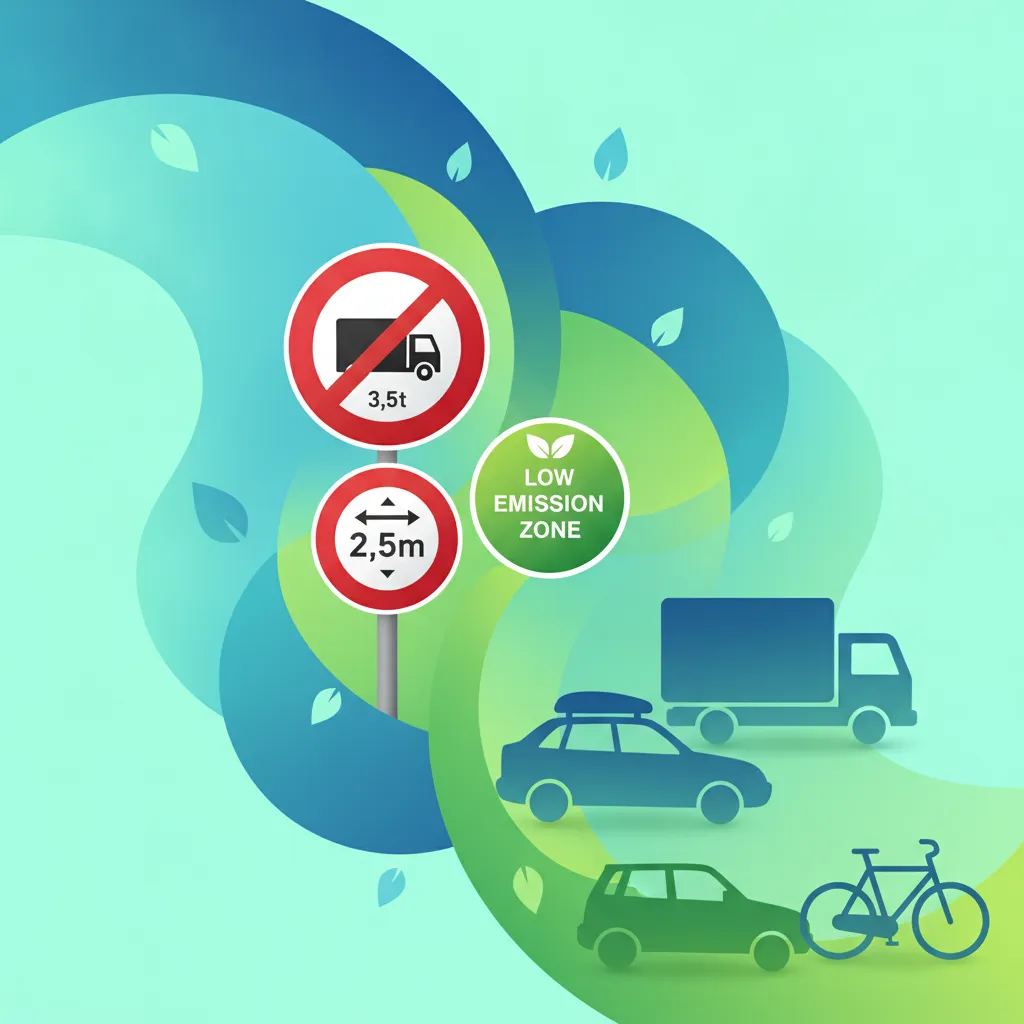
Many urban areas have restrictions to manage traffic and protect infrastructure. This lesson teaches drivers to identify and interpret traffic signs that prohibit access based on gross vehicle weight, axle load, height, or width. It also covers the growing prevalence of environmental or low-emission zones, which may restrict entry for older, more polluting vehicles.

This lesson details the operation of traffic light systems in Switzerland. It explains the sequence and meaning of red, amber, and green lights, including flashing amber signals. The content also covers specific signals for pedestrians and the priority rules associated with tram signals to ensure safe interaction at controlled intersections.
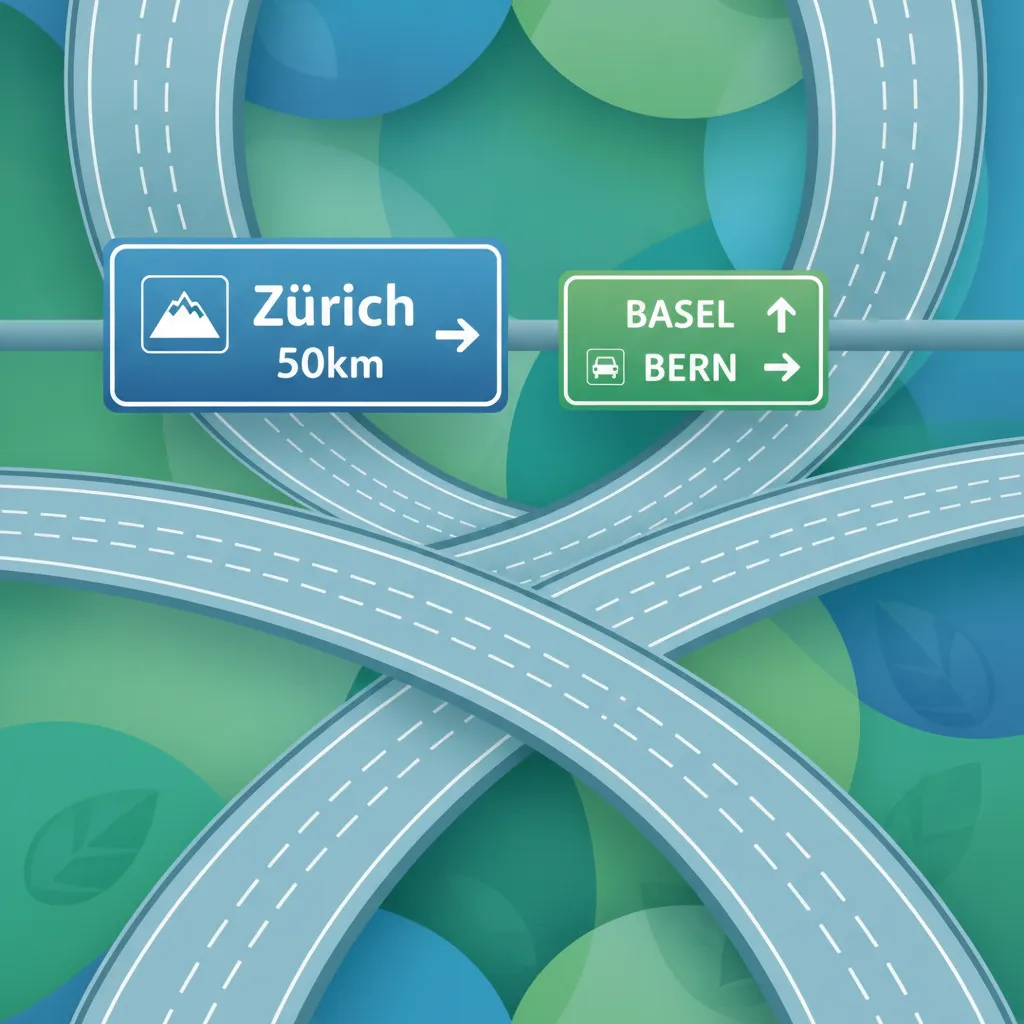
This lesson examines informational signs that provide route guidance, destination distances, and tourist information. It explains how direction signs, distance markers, and service area signs assist drivers in planning routes and making informed decisions. Understanding the logic of informational signage ensures efficient and safe navigation through the Swiss road network.

This lesson covers areas with special traffic regulations designed to protect vulnerable road users. Learners will understand the rules and reduced speed limits applicable in Tempo-30 zones, residential areas, and around schools. The content emphasizes the need for heightened awareness and a defensive riding style in these designated zones.
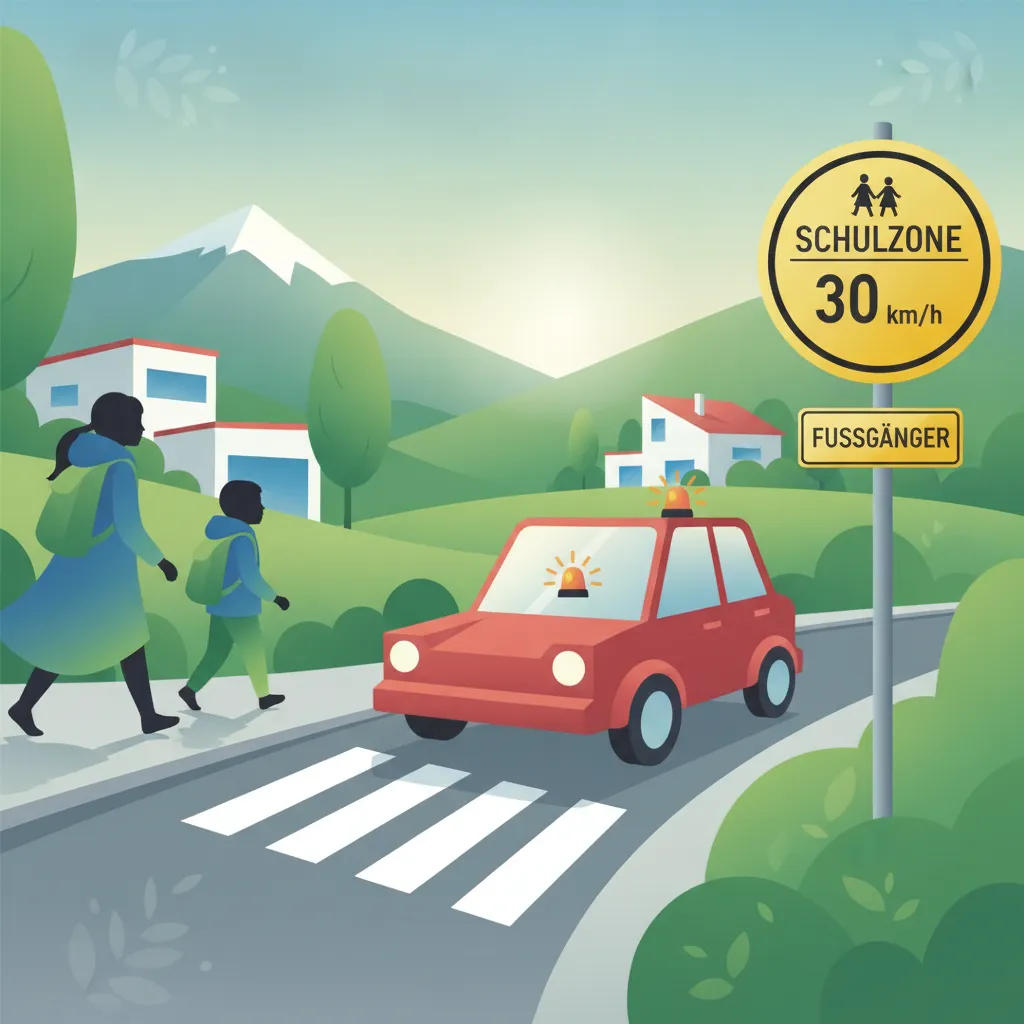
This lesson focuses on school zones, where special speed limits and cautionary measures are required. You will learn to recognize school zone signs, understand reduced speed limits, and be aware of designated child crossing zones. The content also emphasizes the need for heightened vigilance when school buses stop for students to ensure child safety.

This lesson explores how traffic lights dictate priority at intersections, superseding general priority rules. It explains the meanings of red, amber, and green signals and the required actions for each. Emphasis is placed on understanding green light right-of-way and the cautionary role of the amber phase for navigating signal-controlled junctions safely.
Many Swiss cities use systems that give buses priority at traffic lights to improve punctuality. This lesson explains how these systems detect an approaching bus and alter the signal phasing. You will learn to recognize and correctly respond to the special white light signals that grant this priority.
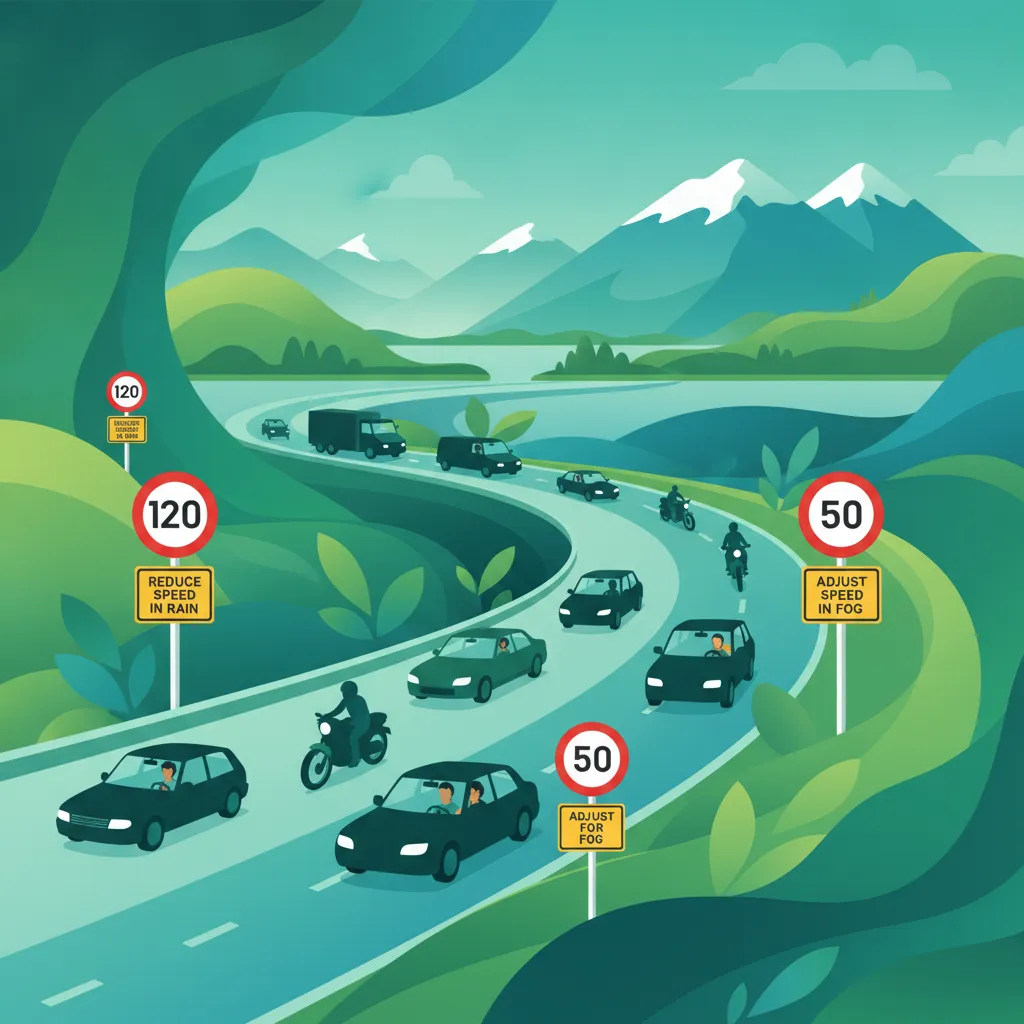
This lesson details the different speed limits applicable in urban, rural, and motorway environments across Switzerland. It explains speed limit signs, temporary restrictions, and how to adapt speed safely based on visibility and road conditions. Understanding these principles helps you comply with legal limits while ensuring an appropriate speed for the circumstances.
Master how distance, lane, and directional supplementary signs modify primary traffic rules in Switzerland. This lesson covers how to understand rules applying over specific distances or to particular lanes and directions.
This lesson examines informational signs that provide route guidance, destination distances, and tourist information. It explains how direction signs, distance markers, and service area signs assist drivers in planning routes and making informed decisions. Understanding the logic of informational signage ensures efficient and safe navigation through the Swiss road network.
This lesson focuses on maintaining proper vehicle positioning within the lane, aligning correctly, and respecting road markings. You will understand how correct positioning contributes to safe overtaking and smooth turning. The content also discusses adjustments required in different scenarios, such as narrow roads and multi-lane highways, to maintain optimal lane discipline.

Motorway driving requires constant concentration due to high speeds. This lesson emphasizes the importance of staying in the right-hand lane unless overtaking and the specific restrictions on lorry overtaking in Switzerland. It reinforces the need for a following distance of at least four seconds to compensate for the vehicle's long stopping distance and provides guidance on safely merging and exiting.
This lesson focuses on warning signs that alert drivers to potential hazards ahead, such as curves, steep descents, and roadwork zones. You will understand how these signs prompt anticipatory driving behavior, allowing for adjustments in speed and position. The content also discusses the typical placement of warning signs to help you react safely to changing conditions.

This lesson delves into the protocol for executing safe lane changes, including signaling, observation, and timing. You will learn to assess gaps in traffic, match speed with surrounding vehicles, and perform lane changes only when it is safe. The content also discusses the importance of maintaining speed and position to avoid abrupt lane changes that could cause a collision.
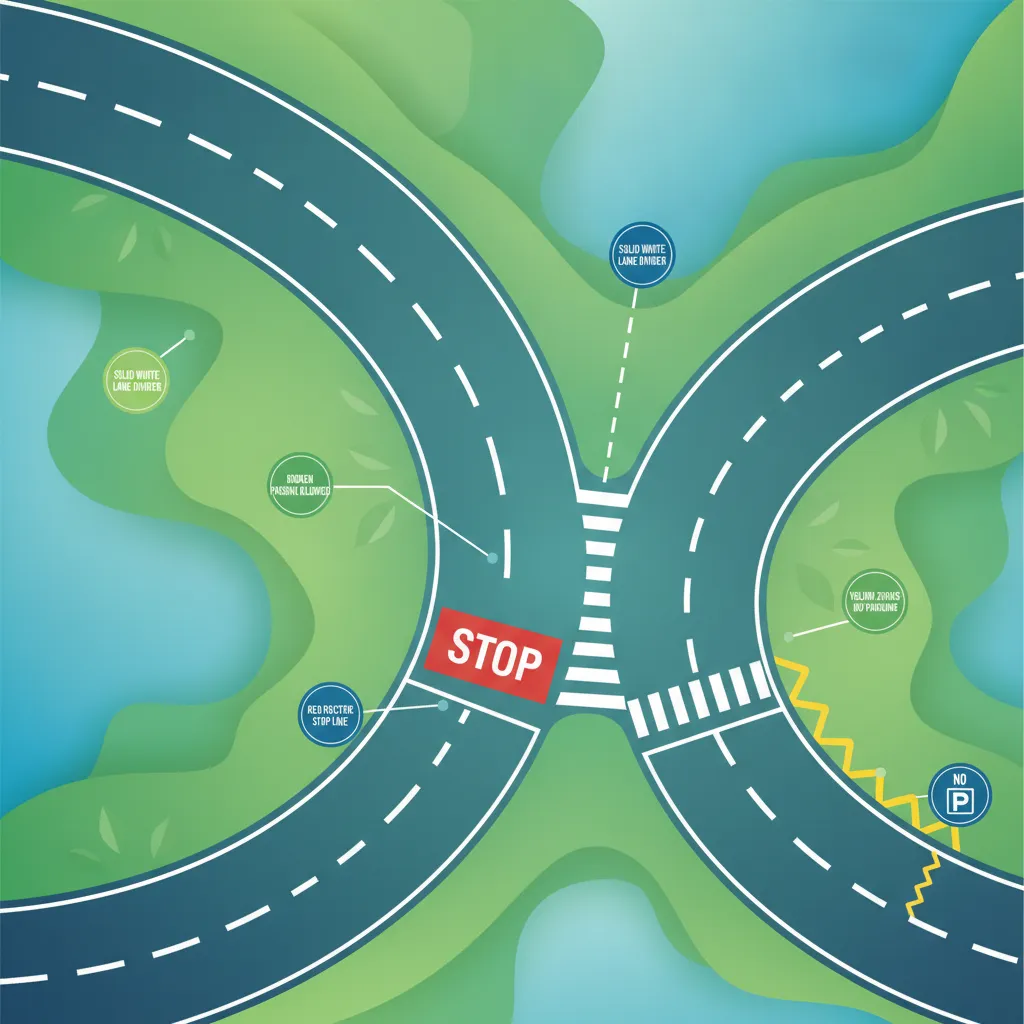
This lesson covers the various road surface markings that dictate lane usage, turning movements, and pedestrian zones. It explains the significance of solid versus broken lines, directional arrows, and specific markings for bike lanes. Understanding these markings is crucial for maintaining lane discipline and ensuring safe interactions in complex traffic environments.

This lesson focuses on the variety of painted markings on Swiss roads and their legal significance. Learners will understand the difference between solid and broken lines, the rules for stop lines, and their obligations at a zebra crossing (Fußgängerstreifen). Correct interpretation of these markings is essential for proper lane positioning and safe interaction with all road users.

Motorway driving involves high speeds and requires constant concentration. This lesson covers correct lane discipline, safe procedures for joining and leaving the motorway, and techniques for overtaking other large vehicles. Maintaining appropriate speed and a safe following distance is emphasized throughout.

This lesson explains strategic lane positioning to enhance visibility and safety in traffic. It covers how to choose a lane position that helps you see and be seen by other drivers, avoiding their blind spots. The content emphasizes maintaining a space cushion around the motorcycle to allow for reaction time and potential escape routes.
This lesson explores the category of regulatory signs, which dictate permissible and prohibited actions for drivers. It covers speed limit signs, entry restrictions, and mandatory direction signs, explaining their legal significance. Emphasis is placed on recognizing the shapes and colours that distinguish these critical signs within the Swiss traffic system.
Find clear answers to common questions learners have about Supplementary Signs and Sign Interpretations. Learn how the lesson is structured, which driving theory objectives it supports, and how it fits into the overall learning path of units and curriculum progression in Switzerland. These explanations help you understand key concepts, lesson flow, and exam focused study goals.
No, they do not override them; they clarify or restrict them. A supplementary sign often adds a specific context, such as a time window, a distance range, or a vehicle category, which effectively shapes the application of the primary sign above it.
Check if the time applies to the restriction or creates an exemption. In the Swiss theory exam, ensure you read whether the sign indicates 'during' these hours or 'except' during these hours, as this is a common point of confusion.
Exam questions often present a standard sign paired with a supplementary one to test if you notice the exception. Ignoring the supplementary sign usually leads to choosing the wrong answer in priority or parking scenarios.
Yes, they range from distance markers to vehicle categories (like 'except residents' or 'cyclists allowed') and specific time periods. Learning to categorize these helps you process information faster during the theory exam.
Pinpoint specific Swiss traffic rules, road signs, or driving situations you need to master. Use the practice search to start a focused revision session now and build confidence for your official driving theory exam.