
This lesson guides you through the complexities of navigating roundabouts on Swiss roads. You will learn the mandatory yielding rules, correct lane positioning, and how to signal your intent to ensure safe and compliant driving for your Category B exam.
Lesson content overview
Welcome to this comprehensive lesson on navigating roundabouts, a critical skill for any driver in Switzerland. As part of your Comprehensive Swiss Driving Theory Course for Category B License, mastering roundabouts is vital for maintaining smooth traffic flow, minimizing collision risks, and ensuring safety at intersections where multiple streams of traffic converge. This lesson will provide a detailed guide to understanding the unique rules, logic, and best practices for successfully traversing these circular junctions.
Roundabouts are a modern traffic control device designed to improve safety and efficiency compared to traditional intersections. Instead of stopping and waiting for traffic lights, vehicles circulate in one direction (counter-clockwise in Switzerland) around a central island, yielding to traffic already present in the circle. This design reduces severe collision points and allows for a more continuous flow of vehicles.
The foundational rule of roundabout navigation in Switzerland is the Priority Principle: vehicles already within the roundabout have precedence over vehicles approaching it. This rule is crucial for preventing collisions and ensuring that traffic flows smoothly without disruption. Drivers must always be prepared to stop and yield at the roundabout entry until a safe gap in the circulating traffic appears, allowing them to merge.
This principle is distinct from the general "right-hand rule" (Rechtsvortritt) that applies at unmarked intersections. At roundabouts, the priority is explicitly given to those already in the circle.
Effective lane discipline involves selecting and staying in the appropriate lane based on your intended exit. Correct lane choice is essential, especially in multi-lane roundabouts, as it reduces conflict points and ensures a predictable path for all road users. Incorrect lane selection can lead to dangerous last-minute lane changes within the roundabout, significantly increasing the risk of collisions.
The Yield-at-Entry Rule mandates that vehicles must yield at the roundabout entry point. This means adjusting your speed to match the circulating traffic, preparing to stop if necessary, and only proceeding when there is a safe and sufficient gap to merge without forcing other vehicles to brake or swerve. Failure to yield correctly is a common cause of accidents at roundabouts.
Vehicles within the roundabout should ideally maintain a continuous flow, meaning they should keep moving at a steady, safe speed without stopping unless absolutely necessary (e.g., to avoid a hazard or yield to an emergency vehicle). Unnecessary stopping inside a roundabout can disrupt the flow, cause congestion, and increase the risk of rear-end collisions.
Properly interpreting traffic signs and road markings is key to navigating roundabouts effectively. These visual cues guide your approach, lane selection, and exit strategy.
Before approaching a roundabout, you will encounter signs that prepare you for the junction.
The number of lanes significantly impacts how you approach and navigate a roundabout.
In a single-lane roundabout, all vehicles share the same path around the central island.
Multi-lane roundabouts have two or more lanes, each often designated for distinct exit routes.
A common mistake is switching lanes inside a multi-lane roundabout to correct an incorrect lane choice. This is prohibited and extremely dangerous. If you miss your exit due to being in the wrong lane, you must continue around the roundabout again or find a safe alternative route.
Effective roundabout navigation involves more than just understanding priority; it also requires precise speed management and clear communication of your intentions.
When approaching a roundabout, you must regulate your entry speed. This means slowing down significantly to a speed that allows you to:
Communicating your intentions clearly is paramount when exiting a roundabout. This is achieved through proper signaling.
For the first exit: Signal right on approach, just as you would for a normal right turn.
For the second or later exits: Do not signal on entry. Signal right as you pass the exit immediately preceding your intended exit.
For a U-turn (going back the way you came): Use the innermost lane (if multi-lane). Signal right as you pass the exit immediately before your intended U-turn exit.
Interactions with vulnerable road users and handling unique situations are crucial aspects of safe roundabout navigation.
Around roundabouts, pedestrians and cyclists require extra vigilance and respect for their right-of-way.
When exiting a roundabout, always scan for pedestrians and cyclists, especially those on your right, who might be crossing your path.
Certain situations demand adjusted behavior:
Adhering to specific regulations is not just about avoiding fines; it's about ensuring safety for everyone on the road.
Failing to follow roundabout rules can lead to serious consequences, from fines to accidents.
Failing to Yield at Entry:
Changing Lanes Inside the Roundabout without Markings:
Not Signaling Before Exiting:
Stopping Unnecessarily Inside the Roundabout:
Incorrect Lane Choice for Intended Exit:
Entering Roundabout at Excessive Speed:
Driving conditions can significantly impact how you navigate roundabouts. Always adjust your approach, speed, and awareness based on the environment.
Roundabouts are not merely traffic impediments; they are engineered solutions designed to enhance road safety and efficiency.
Roundabouts significantly reduce the number of potential conflict points where vehicles can collide. A traditional four-way intersection has 32 potential conflict points, whereas a roundabout typically reduces this to 8. This design practically eliminates high-severity head-on and right-angle collisions, which are common at conventional intersections. The lower entry and circulating speeds inherently enforced by roundabouts also mean that any collisions that do occur are generally less severe.
By allowing for a continuous flow of traffic, roundabouts reduce the need for complete stops and waiting at traffic lights. This leads to:
Studies in Europe have consistently shown a substantial reduction in fatal and injury-causing crashes after converting traditional intersections to roundabouts, highlighting their effectiveness in creating safer road environments.
Understanding the specific terminology associated with roundabouts is crucial for both theoretical knowledge and practical application.
Let's look at a few practical examples to solidify your understanding of roundabout rules.
Successfully navigating roundabouts is a cornerstone of safe and efficient driving in Switzerland. By internalizing these key principles, you will be well-prepared for your Category B driving theory exam and, more importantly, for safe driving on Swiss roads:
By consistently applying these principles, you contribute to a safer and more efficient road network for everyone in Switzerland.
Roundabouts in Switzerland require drivers to yield to circulating traffic before entering and maintain continuous flow once inside. Lane discipline is critical—choose your lane before entering based on your intended exit and avoid changing lanes unless explicitly marked. Signaling your exit with the right indicator is mandatory: signal on approach for the first exit, or as you pass the exit immediately before your intended exit for all other exits. Special attention must be given to pedestrians at zebra crossings and cyclists in bike lanes, who retain their right-of-way. Emergency vehicles always take priority, and drivers must adapt their speed and observation for adverse weather or low-visibility conditions.
A short set of high-value points that capture the most important learning from this lesson.
Vehicles already circulating within a roundabout have absolute priority over entering traffic, overriding the general right-hand rule.
Lane selection must be made before entering a multi-lane roundabout based on your intended exit—outer lane for early exits, inner lane for later exits.
Activate your right turn signal as you pass the exit immediately before your intended exit (or on approach for the first exit) to signal your exit.
Changing lanes inside a multi-lane roundabout is prohibited unless specific lane-change arrows explicitly permit it.
Maintain continuous flow within a roundabout by keeping steady speed; only stop when forced by safety reasons like pedestrians or emergency vehicles.
Explore all units and lessons included in this driving theory course.
The triangular 'Give Way' sign (Signal 2.04) with roundabout pictogram indicates mandatory yield to circulating traffic before entering.
For multi-lane roundabouts: right-hand lane for first/second exits, left-hand lane for third exit or beyond (U-turn).
Pedestrians on zebra crossings near roundabout entries or exits have absolute right-of-way—always stop for them.
Emergency vehicles with active sirens and flashing lights override all other roundabout rules; yield and clear the path immediately.
In poor weather conditions (rain, ice, fog), reduce approach speed significantly and increase observation time to assess gaps.
Failing to yield at entry by entering without checking for a safe gap in circulating traffic, forcing other vehicles to brake.
Changing lanes inside a multi-lane roundabout to correct an incorrect lane choice—this is prohibited and creates collision risks.
Not signaling before exiting, which confuses other drivers waiting to enter and those behind you who cannot anticipate your exit.
Stopping unnecessarily inside the roundabout, disrupting continuous flow and potentially causing rear-end collisions.
Entering the roundabout at excessive speed, reducing reaction time and increasing both the likelihood and severity of collisions.
Lesson content overview
A short set of high-value points that capture the most important learning from this lesson.
Vehicles already circulating within a roundabout have absolute priority over entering traffic, overriding the general right-hand rule.
Lane selection must be made before entering a multi-lane roundabout based on your intended exit—outer lane for early exits, inner lane for later exits.
Activate your right turn signal as you pass the exit immediately before your intended exit (or on approach for the first exit) to signal your exit.
Changing lanes inside a multi-lane roundabout is prohibited unless specific lane-change arrows explicitly permit it.
Maintain continuous flow within a roundabout by keeping steady speed; only stop when forced by safety reasons like pedestrians or emergency vehicles.
Explore all units and lessons included in this driving theory course.
The triangular 'Give Way' sign (Signal 2.04) with roundabout pictogram indicates mandatory yield to circulating traffic before entering.
For multi-lane roundabouts: right-hand lane for first/second exits, left-hand lane for third exit or beyond (U-turn).
Pedestrians on zebra crossings near roundabout entries or exits have absolute right-of-way—always stop for them.
Emergency vehicles with active sirens and flashing lights override all other roundabout rules; yield and clear the path immediately.
In poor weather conditions (rain, ice, fog), reduce approach speed significantly and increase observation time to assess gaps.
Failing to yield at entry by entering without checking for a safe gap in circulating traffic, forcing other vehicles to brake.
Changing lanes inside a multi-lane roundabout to correct an incorrect lane choice—this is prohibited and creates collision risks.
Not signaling before exiting, which confuses other drivers waiting to enter and those behind you who cannot anticipate your exit.
Stopping unnecessarily inside the roundabout, disrupting continuous flow and potentially causing rear-end collisions.
Entering the roundabout at excessive speed, reducing reaction time and increasing both the likelihood and severity of collisions.
Explore search topics learners often look for when studying Roundabouts: Navigation and Yielding Rules. These topics reflect common questions about road rules, driving situations, safety guidance, and lesson level theory preparation for learners in Switzerland.
Browse additional driving theory lessons that cover connected traffic rules, road signs, and common driving situations related to this topic. Improve your understanding of how different rules interact across everyday traffic scenarios.
Learn advanced strategies for navigating multi-lane roundabouts in Switzerland. This lesson details correct lane selection, avoiding common errors, and understanding complex yielding situations to ensure safe and efficient traversal of busier junctions.
This lesson explores the correct procedures for turning at intersections and navigating roundabouts, focusing on lane selection and signaling. It covers the right-of-way rules for right and left turns and the importance of positioning the vehicle correctly before the turn. In roundabouts, the content emphasizes yielding to circulating traffic and selecting the correct exit lane.
This lesson focuses specifically on the rules and techniques for navigating roundabouts. It clarifies that traffic already in the roundabout has priority and explains how to choose the correct lane on approach based on your intended exit. Proper signaling procedure for entering and, most importantly, exiting the roundabout is also detailed.
This lesson focuses on maintaining proper vehicle positioning within the lane, aligning correctly, and respecting road markings. You will understand how correct positioning contributes to safe overtaking and smooth turning. The content also discusses adjustments required in different scenarios, such as narrow roads and multi-lane highways, to maintain optimal lane discipline.

This lesson provides guidance on safely navigating roundabouts and tram lanes, common features in Swiss cities. It covers the rules for yielding, lane positioning within the roundabout, and signaling intentions upon exiting. Special attention is given to the hazards of crossing slippery tram tracks and sharing the road with public transport.

This lesson delves into the protocol for executing safe lane changes, including signaling, observation, and timing. You will learn to assess gaps in traffic, match speed with surrounding vehicles, and perform lane changes only when it is safe. The content also discusses the importance of maintaining speed and position to avoid abrupt lane changes that could cause a collision.
Motorway driving requires constant concentration due to high speeds. This lesson emphasizes the importance of staying in the right-hand lane unless overtaking and the specific restrictions on lorry overtaking in Switzerland. It reinforces the need for a following distance of at least four seconds to compensate for the vehicle's long stopping distance and provides guidance on safely merging and exiting.
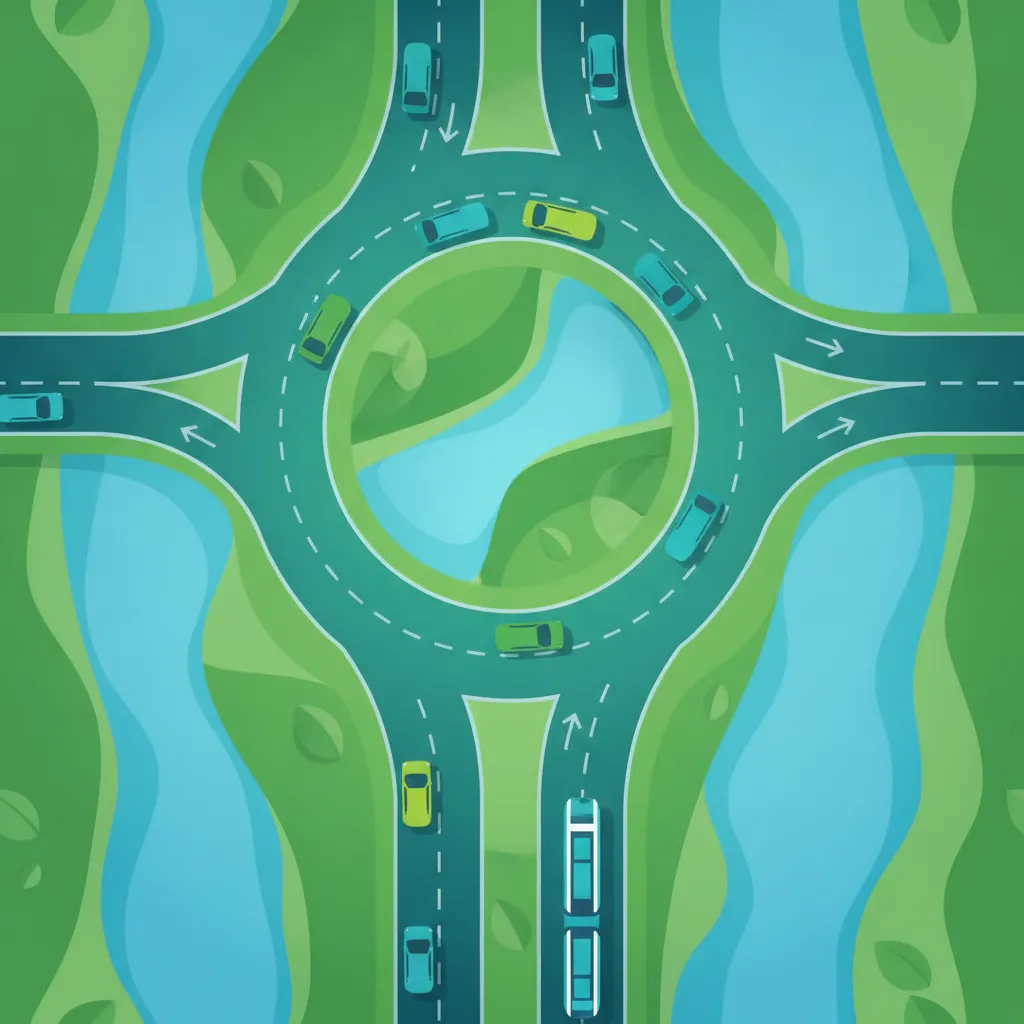
The size of a bus requires careful planning when negotiating complex intersections. This lesson teaches the importance of early lane selection, clear signalling, and comprehensive observation. It provides specific techniques for managing the vehicle's swept path through multi-lane roundabouts and other challenging urban junctions.
Motorway driving involves high speeds and requires constant concentration. This lesson covers correct lane discipline, safe procedures for joining and leaving the motorway, and techniques for overtaking other large vehicles. Maintaining appropriate speed and a safe following distance is emphasized throughout.
This lesson provides guidance on safely negotiating intersections and roundabouts on a motorcycle. It details the correct procedures for approach, lane selection, and yielding according to Swiss traffic regulations. Emphasis is placed on heightened awareness of other vehicles, cyclists, and pedestrians in these complex traffic environments.

This lesson covers complex manoeuvres such as three-point turns, U-turns, and parking in tight spaces. You will learn the step-by-step process for performing a three-point turn and the legal requirements for a U-turn. The content also provides guidance for parking in confined areas, ensuring proper lane usage and positioning during these manoeuvres.
Explore real-world scenarios at Swiss roundabouts focusing on interactions with vulnerable road users. Understand how to correctly yield to pedestrians at crossings and cyclists sharing the road for safer navigation.
This lesson provides guidance on safely navigating roundabouts and tram lanes, common features in Swiss cities. It covers the rules for yielding, lane positioning within the roundabout, and signaling intentions upon exiting. Special attention is given to the hazards of crossing slippery tram tracks and sharing the road with public transport.

This lesson focuses on general driving safety in areas with a high concentration of children. It stresses the importance of significantly reducing speed, being prepared for unexpected events, and scanning for children between parked cars. The driver must exhibit maximum vigilance in these high-risk environments at all times.

Pedestrians, cyclists, motorcyclists, and e-scooter riders are extremely vulnerable in any interaction with a heavy vehicle. This lesson instills a defensive mindset, teaching drivers to be hyper-aware of VRUs, especially near junctions, crossings, and cycle lanes. It focuses on anticipation and giving VRUs extra space, as they can be unpredictable and are often hidden in blind spots.

This lesson explores pedestrian right-of-way at various crossings, including zebra crossings and pedestrian islands. It emphasizes the need for drivers to reduce speed, anticipate pedestrian movement, and stop safely when required. The content also covers special regulations that apply in school zones, such as reduced speed limits and heightened vigilance.
This lesson provides guidance on safely negotiating intersections and roundabouts on a motorcycle. It details the correct procedures for approach, lane selection, and yielding according to Swiss traffic regulations. Emphasis is placed on heightened awareness of other vehicles, cyclists, and pedestrians in these complex traffic environments.
This lesson focuses specifically on the rules and techniques for navigating roundabouts. It clarifies that traffic already in the roundabout has priority and explains how to choose the correct lane on approach based on your intended exit. Proper signaling procedure for entering and, most importantly, exiting the roundabout is also detailed.
This lesson explores the correct procedures for turning at intersections and navigating roundabouts, focusing on lane selection and signaling. It covers the right-of-way rules for right and left turns and the importance of positioning the vehicle correctly before the turn. In roundabouts, the content emphasizes yielding to circulating traffic and selecting the correct exit lane.

This lesson explores the specific considerations for cyclists and pedestrians, who are among the most vulnerable road users. It covers the proper use of bicycle lanes, the minimum safe overtaking distance for cyclists, and the legal requirements for yielding at pedestrian crossings. The content reinforces the need for heightened vigilance around these users.

This lesson explores the complexities of riding in busy urban areas with a mix of traffic types. It covers strategies for safely navigating alongside buses, trams, cyclists, and pedestrians. Key topics include respecting designated lanes, anticipating the movements of vulnerable road users, and maintaining heightened situational awareness.

This lesson trains drivers to look beyond other vehicles and actively search for pedestrians, cyclists, and motorcyclists, especially those who may be distracted or unaware. It covers common behavioral patterns of different VRU groups. The goal is to see potential hazards developing early and create time and space to react safely.
Find clear answers to common questions learners have about Roundabouts: Navigation and Yielding Rules. Learn how the lesson is structured, which driving theory objectives it supports, and how it fits into the overall learning path of units and curriculum progression in Switzerland. These explanations help you understand key concepts, lesson flow, and exam focused study goals.
No, you do not signal when entering a roundabout in Switzerland. You must only signal when exiting, provided you are leaving at the next exit.
Vehicles inside the roundabout always have priority (Vortritt). You must yield to them before entering the circle, ensuring you do not force them to brake.
Generally, use the right lane for the first or second exit. Use the left lane if you are turning left or completing a U-turn, unless road markings indicate otherwise.
Yes, always give cyclists extra space. They have the same right of way rules as motor vehicles, but they are more vulnerable, so you must observe their positioning carefully before exiting.
Pinpoint specific Swiss traffic rules, road signs, or driving situations you need to master. Use the practice search to start a focused revision session now and build confidence for your official driving theory exam.