
This lesson explores the fundamental rules of priority, or Vortritt, at uncontrolled junctions on Swiss roads. You will learn to identify when the Rechtsvortritt (right-hand rule) applies and how it dictates safe vehicle movement, providing a critical foundation for your Category B theoretical exam and real-world driving.
Lesson content overview
Navigating Swiss roads safely and efficiently requires a deep understanding of priority rules, collectively known as Vortritt. These rules dictate which vehicle has the right-of-way at intersections and other conflict points, preventing collisions and ensuring smooth traffic flow. Among the most fundamental principles is Rechtsvortritt, the right-hand rule, which applies specifically at uncontrolled intersections.
This comprehensive lesson, part of your journey through the Comprehensive Swiss Driving Theory Course for Category B License, will equip you with the essential knowledge to correctly interpret and apply these critical rules in various driving scenarios. Mastery of Vortritt and Rechtsvortritt is not merely about avoiding fines; it is paramount for your safety and the safety of all other road users.
The concept of Vortritt (Priority) in Switzerland establishes a clear hierarchy for road users, determining who must yield and who has the right to proceed. This hierarchy is communicated primarily through traffic signs, but in their absence, general rules like Rechtsvortritt come into play. Understanding these layers of priority is vital for anticipating the actions of others and making timely, safe decisions.
We will explore the specific signs that designate priority, delve into the default rules that govern intersections without explicit signage, and examine how these rules interact in complex situations. This foundational knowledge is indispensable for any driver aspiring to safely navigate the intricate network of Swiss roads.
Failure to correctly apply Vortritt and Rechtsvortritt is a leading cause of accidents at intersections. By providing clear guidelines, these rules aim to eliminate uncertainty and ensure predictable behavior from all drivers. When every driver understands and adheres to the same set of rules, the risk of misjudgment and collision is significantly reduced.
Beyond preventing accidents, correct application of priority rules contributes to efficient traffic flow, particularly in urban areas with numerous intersections. Adhering to these principles also carries legal weight in Switzerland, where violations can lead to fines, penalty points, and significant liability in the event of a collision. Mastering these rules is therefore a cornerstone of responsible and legal driving.
Vortritt is the overarching principle that dictates the right-of-way in Swiss traffic. It encompasses all rules, signs, and road markings that determine which vehicle or road user has precedence at any given point on the road, particularly at intersections. This system is designed to create a predictable environment, minimizing conflict and enhancing safety for everyone.
Understanding Vortritt means recognizing when you have priority, when you must yield, and how to act safely in both situations. It involves not just identifying signs but also comprehending the implied priority based on road design and the presence of other road users.
Vortritt refers to the legal right of a specific road user to proceed before others in a given situation. This right-of-way is not absolute and always comes with the responsibility to ensure safety and avoid causing danger. Even when you have priority, you must still be prepared to react to unforeseen circumstances or to the incorrect behavior of other drivers.
The core principle behind Vortritt is to establish a clear order of movement where roads intersect or merge, thereby reducing the need for drivers to make complex, on-the-spot negotiations. This system is crucial for managing diverse traffic flows and protecting vulnerable road users.
Traffic signs are the primary means by which Vortritt is communicated on Swiss roads. These signs unequivocally assign priority, overriding general rules like Rechtsvortritt when present. It is essential for every driver to instantly recognize and correctly interpret these signs.
Understanding the function of each priority sign is critical for safe driving and passing the theoretical driving exam.
The "Priority Road" sign, a yellow diamond with a white border, indicates that traffic on this road has priority at all subsequent intersections until the sign is cancelled or another priority sign takes precedence. Drivers on a priority road generally do not need to yield to traffic entering from side roads, unless specific yield or stop signs are placed on the priority road itself for particular conflict points. This sign helps maintain the flow of traffic on main arteries.
The "Yield" sign, a white triangle with a red border pointing downwards, instructs drivers to give way to traffic on the intersecting road. This means you must slow down and be prepared to stop if necessary, allowing vehicles on the priority road or those with right-of-way to pass before you proceed. You may only enter the intersection when it is safe to do so, without impeding the flow of intersecting traffic.
The "Stop" sign, an octagonal red sign with a white border and the word "STOP" in white, is the most stringent priority sign. It demands that you bring your vehicle to a complete standstill at the marked stop line or, if no line is present, at a point where you have a clear view of the intersecting traffic. After stopping, you must yield to all traffic on the intersecting road, proceeding only when the way is absolutely clear and safe. This full stop ensures maximum caution before entering a potentially hazardous intersection.
When you encounter an intersection that lacks explicit traffic signs (like Stop or Yield signs) or traffic lights, the general principle of Rechtsvortritt (Right-Hand Rule) comes into effect. This rule is a fundamental aspect of Swiss traffic law and serves as the default mechanism for determining priority in the absence of other directives. Understanding its application is crucial for safe navigation, especially in residential areas or rural roads.
Rechtsvortritt, or the right-hand rule, dictates that at an uncontrolled intersection, the vehicle approaching from the right has the right-of-way. This rule applies when no traffic lights, stop signs, yield signs, or priority road signs are present to assign priority. It ensures that there is always a clear rule to prevent deadlocks and potential collisions, promoting predictable behavior among drivers.
The rule typically applies when two or more vehicles arrive at an uncontrolled intersection at approximately the same time, or when their trajectories would otherwise conflict. It is a universal principle designed for simplicity and clarity in situations where specific guidance is absent.
When approaching an uncontrolled intersection, drivers must actively scan for traffic from both the left and the right. If another vehicle is approaching from your right, you are obligated to yield to them. Conversely, if no vehicle is approaching from your right, or if any vehicle approaching from your left has yielded to you, then you have the right-of-way. This requires careful observation and a clear understanding of the rule's implications.
For example, at a typical four-way uncontrolled intersection, if four vehicles arrive simultaneously, the driver on the far right proceeds first. Once that vehicle has passed, the next vehicle to its right (which now becomes the new "right-hand" vehicle) would then proceed, and so on. This succession ensures an orderly flow.
Many drivers make errors when applying the Rechtsvortritt rule. A common misunderstanding is confusing it with merging onto a main road or highway, where specific yield rules always apply, regardless of whether traffic is coming from the right. Another mistake is assuming that turning vehicles always yield to straight-ahead traffic; while often true in other contexts, at an uncontrolled intersection governed solely by Rechtsvortritt, a turning vehicle from the right would still have priority over a straight-ahead vehicle from the left.
It is also crucial to remember that Rechtsvortritt only applies where no other priority signs or signals are present. If there's even a "Priority Road" sign (yellow diamond) or a "Yield" sign (inverted triangle), those signs override the Rechtsvortritt rule. Always prioritize visible signage over the general right-hand rule.
In situations where multiple types of priority indications might seem to apply, a clear hierarchy determines which rule or sign takes precedence. Understanding this hierarchy is vital to avoid confusion and make correct decisions, especially in complex intersection layouts. Traffic signals, for instance, generally override all signs. However, when only signs are present, their specific order of importance must be understood.
The hierarchy of priority signs ensures that there is never ambiguity about right-of-way. Generally, traffic signals (green, yellow, red lights) take the highest precedence. If traffic lights are present and operational, they dictate priority, overriding any signs. When traffic lights are out of order or flashing amber, drivers should then refer to traffic signs.
If no traffic lights are active, then static traffic signs govern priority. The "Stop" sign (octagonal red) imposes the most absolute yielding obligation, followed by the "Yield" sign (inverted triangle). The "Priority Road" sign (yellow diamond) designates priority for traffic on that specific road, meaning intersecting traffic must yield. Finally, in the complete absence of any of these, the Rechtsvortritt (right-hand rule) applies by default.
Each priority sign carries a specific directive that explicitly dictates the right-of-way. A "Priority Road" sign indicates that you have precedence, while a "Yield" or "Stop" sign tells you that you must give way to others. It is critical to note that even when on a priority road, a subsequent "Yield" or "Stop" sign encountered directly on that road still requires you to yield or stop. These specific signs always override the general priority road status for that particular point of conflict.
For example, if you are driving on a road marked as a priority road, but then encounter a yield sign before a pedestrian crossing or a specific junction, you must still yield as indicated by that sign. Always look for the most immediate and specific instruction.
The act of yielding is a core component of safe driving and is central to all priority rules. It involves actively giving way to another vehicle or road user that has the right-of-way, preventing potential collisions and maintaining orderly traffic flow. Your yielding obligation is not merely about slowing down; it often requires a complete stop and waiting until the path is entirely clear.
You are obligated to yield in several key situations: when a "Yield" sign is present, when entering a priority road from a side road, at an uncontrolled intersection where another vehicle is approaching from your right (Rechtsvortritt), and often when turning left across oncoming traffic. To yield effectively, you must reduce your speed significantly, be prepared to stop, and allow the traffic with priority to pass without any interference from your vehicle. This involves checking mirrors, signaling your intentions, and making eye contact with other drivers if possible.
When yielding, always ensure you have enough space and time to safely enter the traffic flow without forcing other drivers to brake or swerve. Hesitation can be as dangerous as rushing.
A "Stop" sign demands the most stringent yielding obligation: a complete halt of your vehicle. This means all wheels must cease rotation at the marked stop line. If no stop line is present, you must stop at a point where you have the best possible view of the intersecting road, without obstructing pedestrians or crossing traffic. After stopping, you must then yield to all traffic on the intersecting road, including pedestrians and cyclists, before cautiously proceeding only when the way is entirely clear.
"Rolling through" a stop sign, even at a very slow speed, is a serious traffic violation and a significant safety risk. It compromises your ability to properly observe cross-traffic and greatly increases the chance of a collision.
Priority is not always static; it can shift and evolve as vehicles interact at an intersection. This concept, known as "Succession of Priority," describes how a vehicle that initially yielded can then gain priority once the immediate conflict is resolved and it becomes the vehicle with the next right-of-way. Understanding this dynamic ensures continuous traffic flow even in complex multi-vehicle scenarios.
Consider a four-way uncontrolled intersection where four vehicles arrive simultaneously. Based on Rechtsvortritt, the vehicle on the far right has initial priority. Once that vehicle has proceeded, the vehicle that was previously to its right (and therefore had yielded) now has no vehicle to its immediate right and can then proceed. This sequential application of the right-hand rule illustrates succession of priority.
Similarly, after yielding at a stop sign to traffic on a priority road, you wait for the main road to clear. Once clear, you proceed, and if you then encounter another conflict point after your initial yielding, your new position in the traffic flow may grant you priority over other vehicles that are yet to enter the main flow. This dynamic requires drivers to constantly reassess the situation and not just focus on the initial yielding point.
The rules of Vortritt and Rechtsvortritt are firmly anchored in Swiss law, specifically within the Swiss Road Traffic Regulation (VRV). Adherence to these regulations is mandatory, and ignorance of the law is not a valid defense in the event of a traffic infraction or accident. The VRV provides the legal framework that underpins all aspects of right-of-way.
Several articles within the VRV address priority rules. Article 18-2 broadly covers right-of-way at intersections, including the explicit mention of the right-hand rule for uncontrolled intersections. Article 19 details the significance and implications of priority road signs, while Article 20 outlines the obligations associated with yield and stop signs. These articles form the backbone of legal liability and enforcement concerning priority violations.
Additionally, Article 35 of the VRV emphasizes the general duty of care, particularly towards vulnerable road users like pedestrians and cyclists, reinforcing that even with priority, drivers must exercise caution and adapt their speed and behavior to prevent accidents. These legal provisions ensure that all road users operate under a clear and enforceable set of rules, promoting safety and order on Swiss roads.
Failing to correctly apply Vortritt and Rechtsvortritt is a common cause of road incidents and legal repercussions. Understanding these typical violations can help you recognize potential dangers and adjust your driving behavior accordingly, significantly reducing your risk profile.
One frequent violation is entering a priority road from a side road without yielding. This direct disregard for the Vortritt hierarchy often forces traffic on the main road to brake suddenly or swerve, leading to potential rear-end or side-impact collisions. Similarly, ignoring the right-hand rule at an uncontrolled intersection is a prevalent mistake that directly leads to T-bone collisions, as drivers fail to anticipate traffic coming from their right.
Another critical error is rolling through a stop sign without coming to a complete halt. This reduces the driver's observation time and significantly increases the risk of not seeing cross-traffic or pedestrians. Performing a right turn onto a priority road without yielding to oncoming traffic is also a common misjudgment, where drivers incorrectly assume they have priority, cutting off the main flow of traffic. All these violations carry legal penalties, including fines and penalty points, in addition to the inherent danger they create.
Always assume other drivers might make a mistake. Even when you have priority, drive defensively and be prepared to react if another driver fails to yield.
Priority rules are not applied in a vacuum; various environmental and operational factors can influence how drivers should interpret and apply them. Adjusting your behavior based on prevailing conditions is a hallmark of defensive driving.
Adverse weather conditions, such as heavy rain, fog, or snow, significantly reduce visibility and increase stopping distances. In such conditions, drivers must approach intersections with even greater caution, reducing speed further than usual and assuming that other road users might not clearly see priority signs or signals. Rechtsvortritt situations become particularly challenging as drivers may struggle to identify approaching vehicles from the right in low visibility. At night, ensure your headlights are properly adjusted to illuminate signs and potential hazards.
Road conditions themselves can also influence priority behavior. On gravel roads or unpaved tracks merging onto paved roads, drivers typically have an inherent obligation to yield to traffic on the paved road, even if formal signs are absent. This informal priority aligns with the principle of ensuring safe entry from less stable surfaces onto main thoroughfares.
While priority signs and rules like Rechtsvortritt primarily govern vehicle-to-vehicle interactions, drivers must always exercise extreme caution and prioritize vulnerable road users such as pedestrians and cyclists. At intersections, even if you have Vortritt over other vehicles, you are legally and morally obligated to yield to pedestrians crossing at designated crosswalks or cyclists in shared lanes. Many urban intersections combine vehicle priority rules with specific provisions for pedestrian safety, requiring drivers to constantly scan for and yield to those on foot or bicycle.
In essence, while priority rules provide a structured framework, the overarching principle of protecting the most vulnerable dictates that drivers must always be prepared to yield to pedestrians and cyclists, regardless of vehicle-specific priority.
Let's look at some practical scenarios to solidify your understanding of Vortritt and Rechtsvortritt.
Scenario: Imagine you are Car B at a four-way intersection with no traffic lights, stop signs, or yield signs. Car A is to your right.
Rule: Rechtsvortritt applies. The vehicle approaching from the right has priority.
Correct Action: As Car B, you must yield to Car A. Car A proceeds first. Once Car A has passed, you then assess if the path is clear for you to proceed, potentially having priority over Car C (which is to your left).
Incorrect Action: Car B proceeds before Car A, leading to a direct conflict or collision with Car A.
Scenario: You are driving Car B on a side road approaching a main road (Car A) that is marked with a priority road sign. Your side road has a "Yield" sign.
Rule: Vehicles on the priority road have Vortritt; vehicles on the side road with a "Yield" sign must give way.
Correct Action: As Car B, you must slow down, be prepared to stop, and yield to Car A on the priority road. You proceed only when the main road is clear and safe to enter without impeding Car A.
Incorrect Action: Car B enters the intersection without yielding, forcing Car A to brake sharply or swerve.
Scenario: You are driving Car B on a side road with a "Yield" sign, merging onto a main priority road where Car A is traveling.
Rule: The "Yield" sign obligates you to give way to all traffic on the priority road, regardless of their direction.
Correct Action: As Car B, you check traffic from both directions on the priority road, yield to Car A and any other vehicles, and merge only when there is a safe gap.
Incorrect Action: Car B attempts to merge without sufficient space, forcing Car A to brake or change lanes.
Scenario: You are driving Car A, approaching an intersection with a "Stop" sign just before a marked pedestrian crossing. A pedestrian is waiting to cross.
Rule: You must come to a complete stop at the stop line, and you must yield to pedestrians at the crossing.
Correct Action: As Car A, you stop completely at the stop line, allow the pedestrian to cross safely, and then check for cross-traffic before proceeding cautiously when the way is clear.
Incorrect Action: Car A slows down but does not stop, or proceeds before the pedestrian has fully crossed, endangering the pedestrian.
Scenario: You are driving Car A on a side road, intending to make a right turn onto a priority road. Car B is an oncoming vehicle on the priority road. There is no yield sign specifically for your turn.
Rule: When turning right onto a priority road from a side road, you must generally yield to all traffic already on the priority road, including oncoming vehicles that will be directly in your path.
Correct Action: As Car A, you yield, allowing Car B and any other traffic on the priority road to proceed before making your turn safely.
Incorrect Action: Car A turns right directly into the path of Car B, causing Car B to brake or swerve.
Every rule in the Swiss Road Traffic Regulation, especially those concerning priority, is designed with a fundamental goal: enhancing road safety and efficiency. These rules are not arbitrary but are based on extensive research into human behavior, vehicle dynamics, and accident prevention.
The primary safety benefit of a structured priority system like Vortritt is the creation of predictability. When drivers know exactly what to expect from others at an intersection, their decision-making process becomes faster and more accurate. This reduces the cognitive load on drivers, allowing them more time to react to unexpected events. Clear rules minimize ambiguity and negotiation, which are often sources of confusion and lead to collisions. For instance, the Rechtsvortritt provides a simple, universal default that avoids deadlock where specific signs are absent, ensuring that every driver knows their turn to proceed.
The legal framework further reinforces this by establishing clear liability, encouraging adherence, and deterring dangerous behavior. Ultimately, predictable traffic flow, facilitated by consistent priority rules, is the cornerstone of a safe road network, especially in a country with dense traffic and diverse road users like Switzerland.
To solidify your understanding of Vortritt and Rechtsvortritt, it is highly recommended to review related topics and practice applying these rules.
This lesson covers the fundamental Swiss priority rules known as Vortritt, which establish right-of-way through traffic signs or default principles. The Rechtsvortritt (right-hand rule) applies at uncontrolled intersections, giving priority to vehicles approaching from the right when no signs or signals are present. The hierarchy places traffic signals highest, followed by Stop signs (most stringent), Yield signs, Priority Road signs, and finally the right-hand rule as the default. Understanding this hierarchy is essential for safely navigating Swiss intersections, avoiding common violations like rolling stops or incorrectly assuming priority at uncontrolled junctions, and passing the Category B theory exam.
A short set of high-value points that capture the most important learning from this lesson.
Vortritt (priority) in Swiss traffic establishes a clear hierarchy determining which vehicle has right-of-way at intersections and conflict points.
At uncontrolled intersections without signs or signals, Rechtsvortritt (right-hand rule) applies, giving priority to vehicles approaching from your right.
Traffic signs override the right-hand rule: Stop signs demand a complete halt, Yield signs require giving way, and Priority Road signs grant precedence on designated roads.
Priority is not static; after yielding, a vehicle gains priority once the immediate conflict clears through succession of priority.
Even with legal priority, drivers must yield to pedestrians and cyclists and exercise defensive driving when other road users may not follow rules.
Explore all units and lessons included in this driving theory course.
Yellow diamond = Priority Road (Vorfahrtstraße), giving precedence on that road until cancelled.
White triangle with red border pointing down = Yield (Vorbeifahrt gewähren), must slow and give way.
Octagonal red sign = Stop (Halt), must bring vehicle to complete standstill before proceeding.
When no signs are present at an intersection, always check for traffic approaching from your right.
Traffic signals override all signs; if lights are working, signs are irrelevant for that intersection.
Confusing merging onto a main road with uncontrolled intersection right-hand rule; yield rules always apply when entering main roads regardless of direction.
Rolling through stop signs instead of making a complete halt with all wheels stopped, reducing observation time and risking collisions.
Assuming turning vehicles always yield to straight-ahead traffic; at uncontrolled intersections, a turning vehicle from the right still has priority over straight-ahead traffic from the left.
Forgetting that specific yield or stop signs encountered on a priority road override the general priority road status for that conflict point.
Failing to yield to pedestrians and cyclists at crossings even when holding vehicle priority over other cars.
Lesson content overview
A short set of high-value points that capture the most important learning from this lesson.
Vortritt (priority) in Swiss traffic establishes a clear hierarchy determining which vehicle has right-of-way at intersections and conflict points.
At uncontrolled intersections without signs or signals, Rechtsvortritt (right-hand rule) applies, giving priority to vehicles approaching from your right.
Traffic signs override the right-hand rule: Stop signs demand a complete halt, Yield signs require giving way, and Priority Road signs grant precedence on designated roads.
Priority is not static; after yielding, a vehicle gains priority once the immediate conflict clears through succession of priority.
Even with legal priority, drivers must yield to pedestrians and cyclists and exercise defensive driving when other road users may not follow rules.
Explore all units and lessons included in this driving theory course.
Yellow diamond = Priority Road (Vorfahrtstraße), giving precedence on that road until cancelled.
White triangle with red border pointing down = Yield (Vorbeifahrt gewähren), must slow and give way.
Octagonal red sign = Stop (Halt), must bring vehicle to complete standstill before proceeding.
When no signs are present at an intersection, always check for traffic approaching from your right.
Traffic signals override all signs; if lights are working, signs are irrelevant for that intersection.
Confusing merging onto a main road with uncontrolled intersection right-hand rule; yield rules always apply when entering main roads regardless of direction.
Rolling through stop signs instead of making a complete halt with all wheels stopped, reducing observation time and risking collisions.
Assuming turning vehicles always yield to straight-ahead traffic; at uncontrolled intersections, a turning vehicle from the right still has priority over straight-ahead traffic from the left.
Forgetting that specific yield or stop signs encountered on a priority road override the general priority road status for that conflict point.
Failing to yield to pedestrians and cyclists at crossings even when holding vehicle priority over other cars.
Explore search topics learners often look for when studying Vortritt (Priority) and Rechtsvortritt (Right-Hand Rule). These topics reflect common questions about road rules, driving situations, safety guidance, and lesson level theory preparation for learners in Switzerland.
Browse additional driving theory lessons that cover connected traffic rules, road signs, and common driving situations related to this topic. Improve your understanding of how different rules interact across everyday traffic scenarios.
Learn to navigate complex intersections and challenging priority situations beyond the basic right-hand rule. Understand how multiple signs, road layouts, and traffic flows interact to determine right-of-way in advanced scenarios.
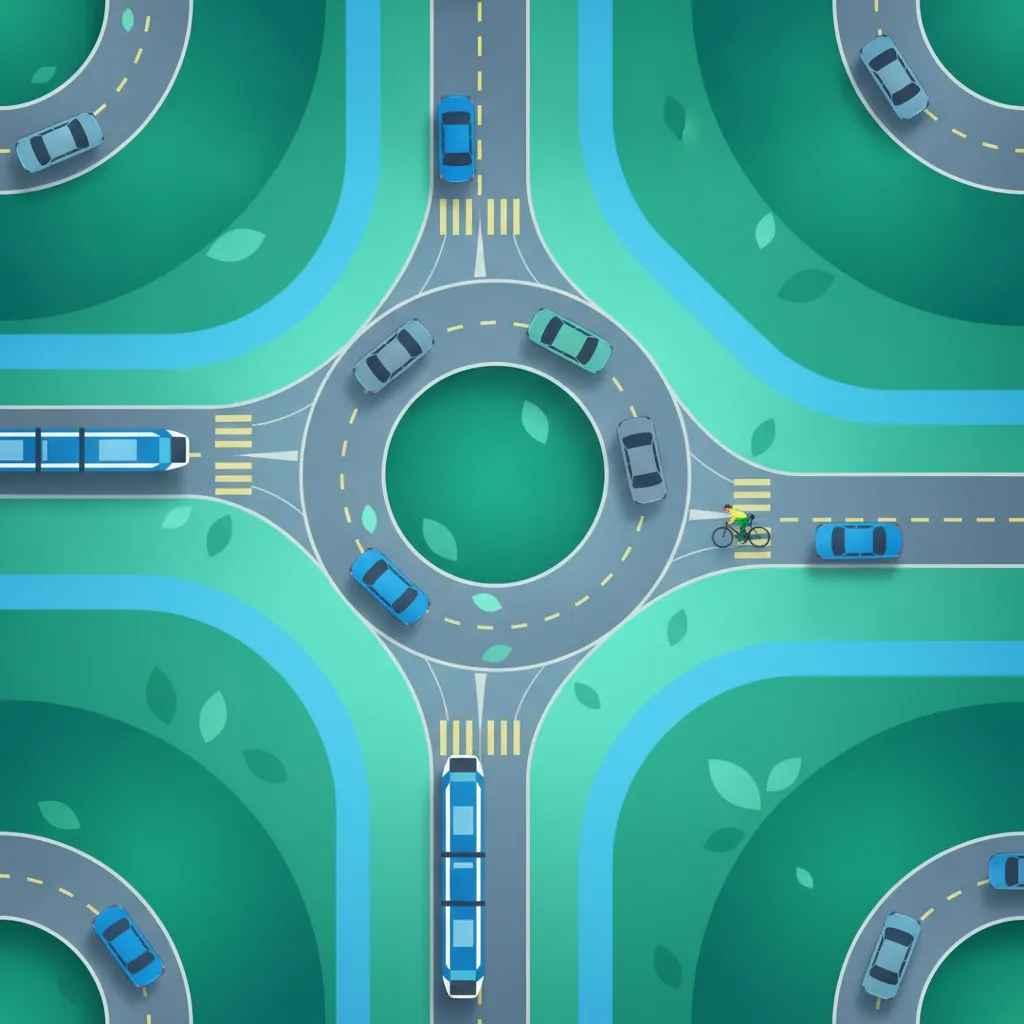
This lesson explains the fundamental rules of priority that govern traffic flow at Swiss intersections. It details the concept of 'Rechtsvortritt' at unmarked junctions and how priority signs alter this default rule. The specific procedures for entering, navigating, and exiting roundabouts are also covered to ensure predictable and safe maneuvers.
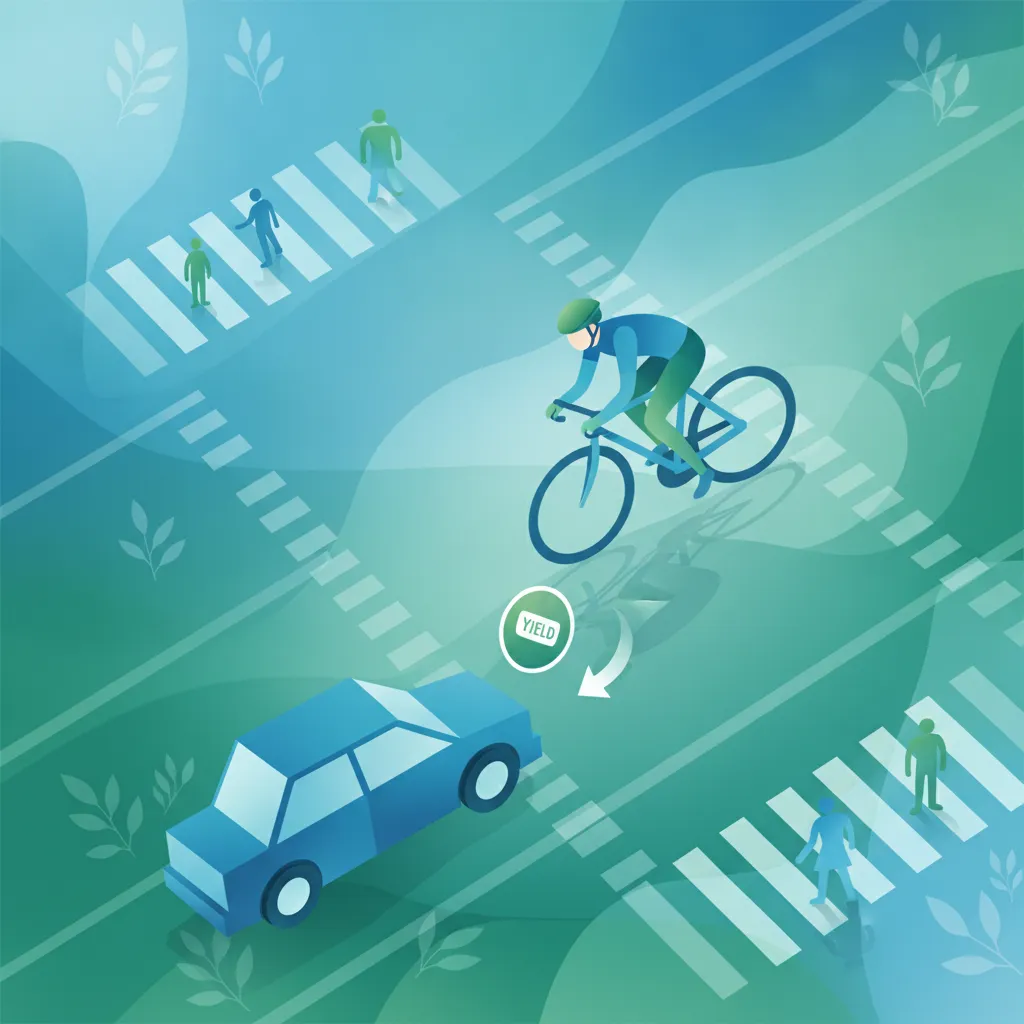
This lesson provides a step-by-step guide to navigating intersections. It reinforces the priority rules, such as 'Rechtsvortritt', and the meaning of yield and stop signs. The content emphasizes the importance of a thorough visual scan on approach and correct positioning to ensure visibility and a safe passage.
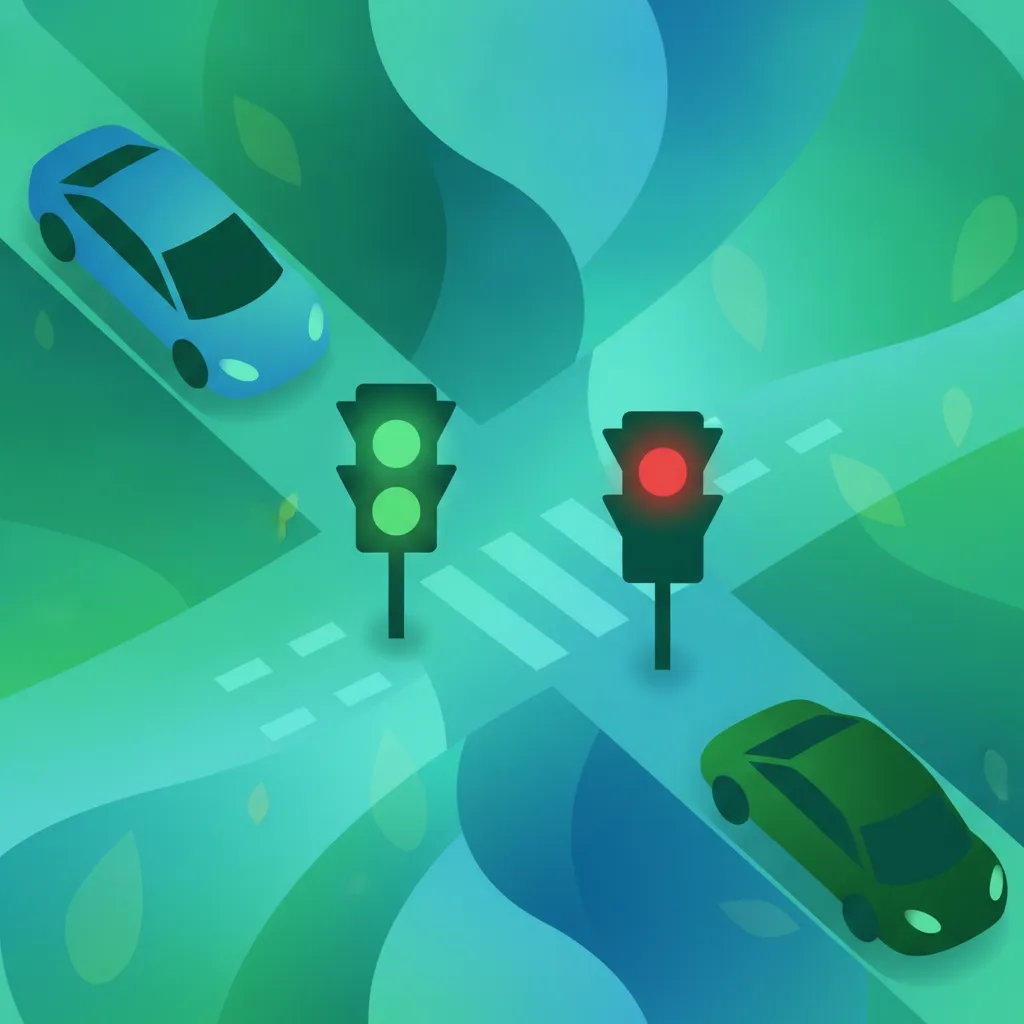
This lesson explores how traffic lights dictate priority at intersections, superseding general priority rules. It explains the meanings of red, amber, and green signals and the required actions for each. Emphasis is placed on understanding green light right-of-way and the cautionary role of the amber phase for navigating signal-controlled junctions safely.

This lesson details the specific priority rules governing Swiss intersections, including the concepts of 'Vortritt' and 'Rechtsvortritt'. It explains how to interpret road signs and markings to determine right-of-way in different situations. A clear understanding of these rules is essential for safe and legal navigation of intersections.
This lesson provides guidance on safely negotiating intersections and roundabouts on a motorcycle. It details the correct procedures for approach, lane selection, and yielding according to Swiss traffic regulations. Emphasis is placed on heightened awareness of other vehicles, cyclists, and pedestrians in these complex traffic environments.
This lesson provides a detailed guide to navigating roundabouts, focusing on yielding to circulating traffic and correct lane usage. You will learn the priority principle that vehicles already in the roundabout have precedence over entering traffic. The content also covers multi-lane roundabout navigation and proper exit strategies for smooth, safe traversal.
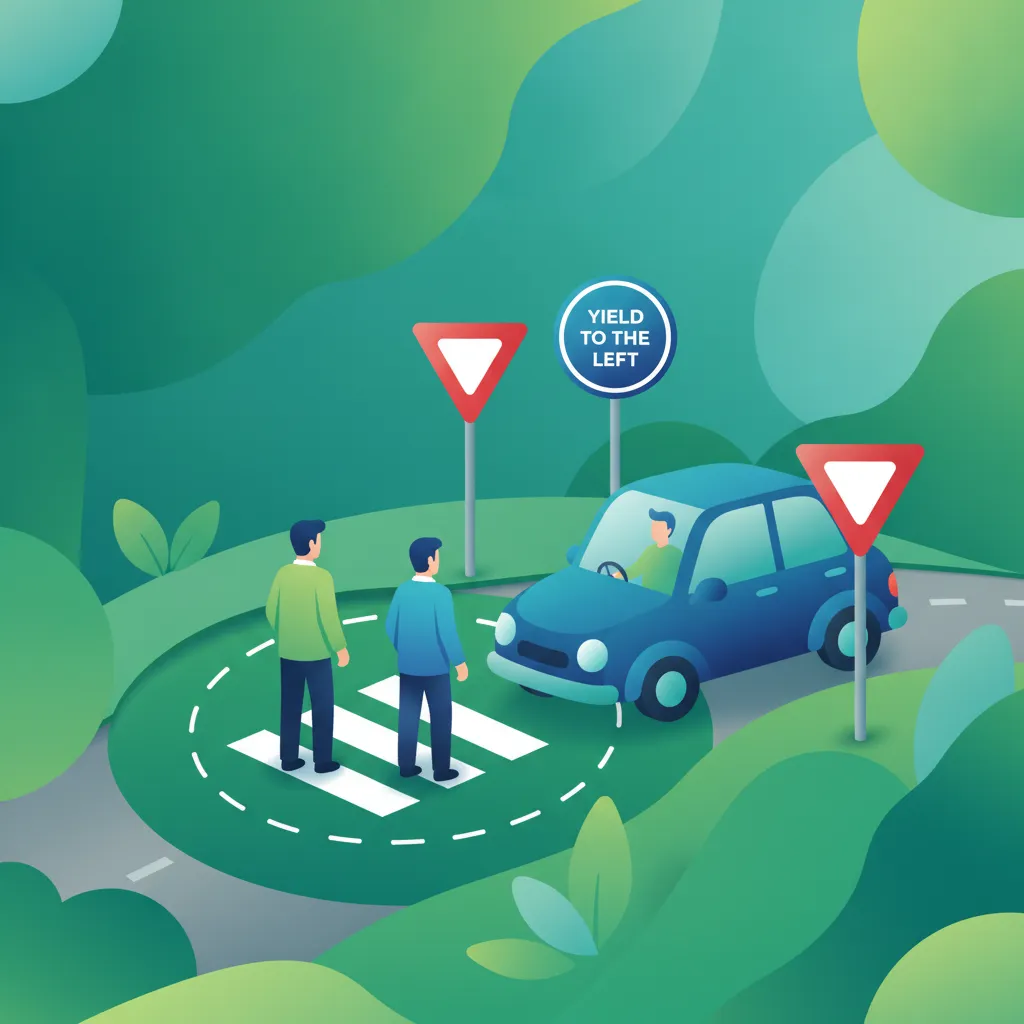
This lesson focuses specifically on the rules and techniques for navigating roundabouts. It clarifies that traffic already in the roundabout has priority and explains how to choose the correct lane on approach based on your intended exit. Proper signaling procedure for entering and, most importantly, exiting the roundabout is also detailed.
This lesson focuses on the Kein Vortritt rule, which applies when a vehicle must yield to all other traffic. You will learn to recognize scenarios where this rule is in effect, such as at minor roads or when entering a main road. The content also discusses how priority signs and traffic signals override the default right-hand rule, clarifying when you must yield.
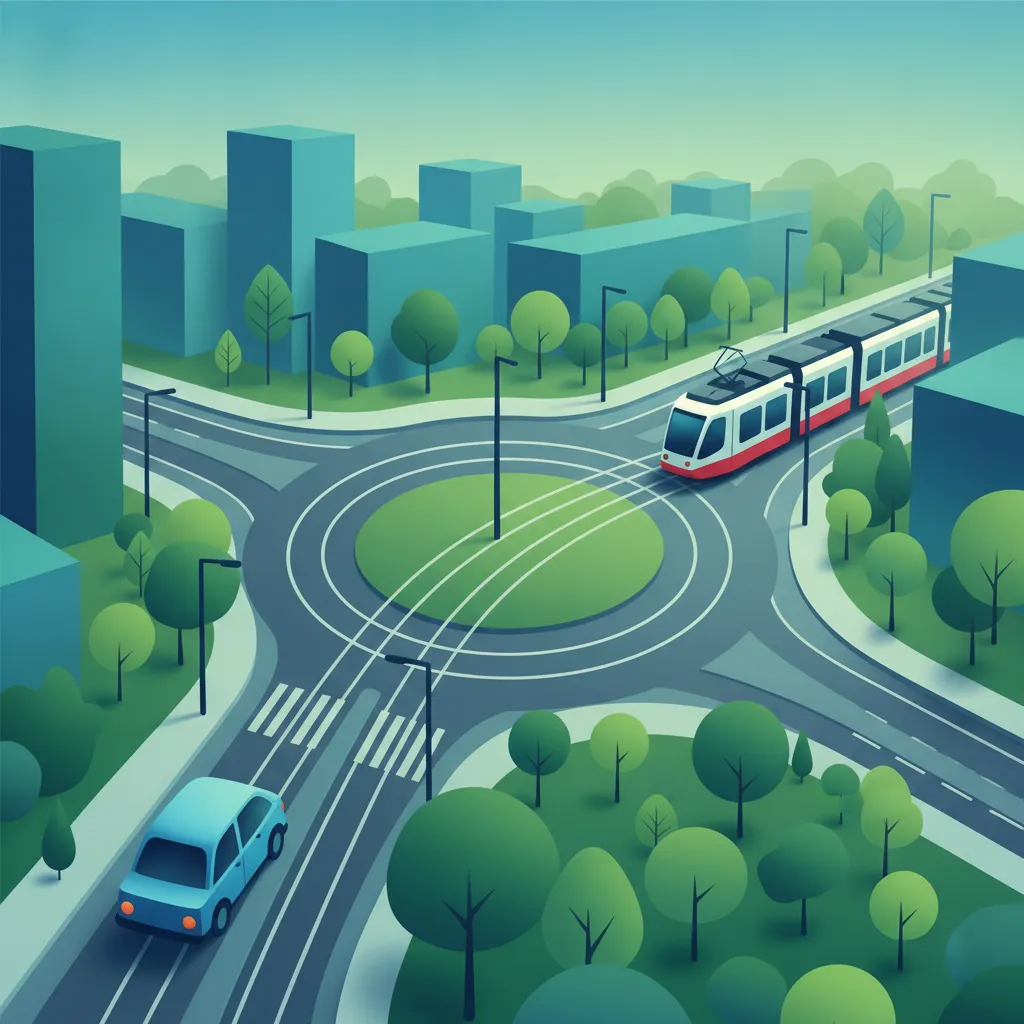
This lesson provides guidance on safely navigating roundabouts and tram lanes, common features in Swiss cities. It covers the rules for yielding, lane positioning within the roundabout, and signaling intentions upon exiting. Special attention is given to the hazards of crossing slippery tram tracks and sharing the road with public transport.
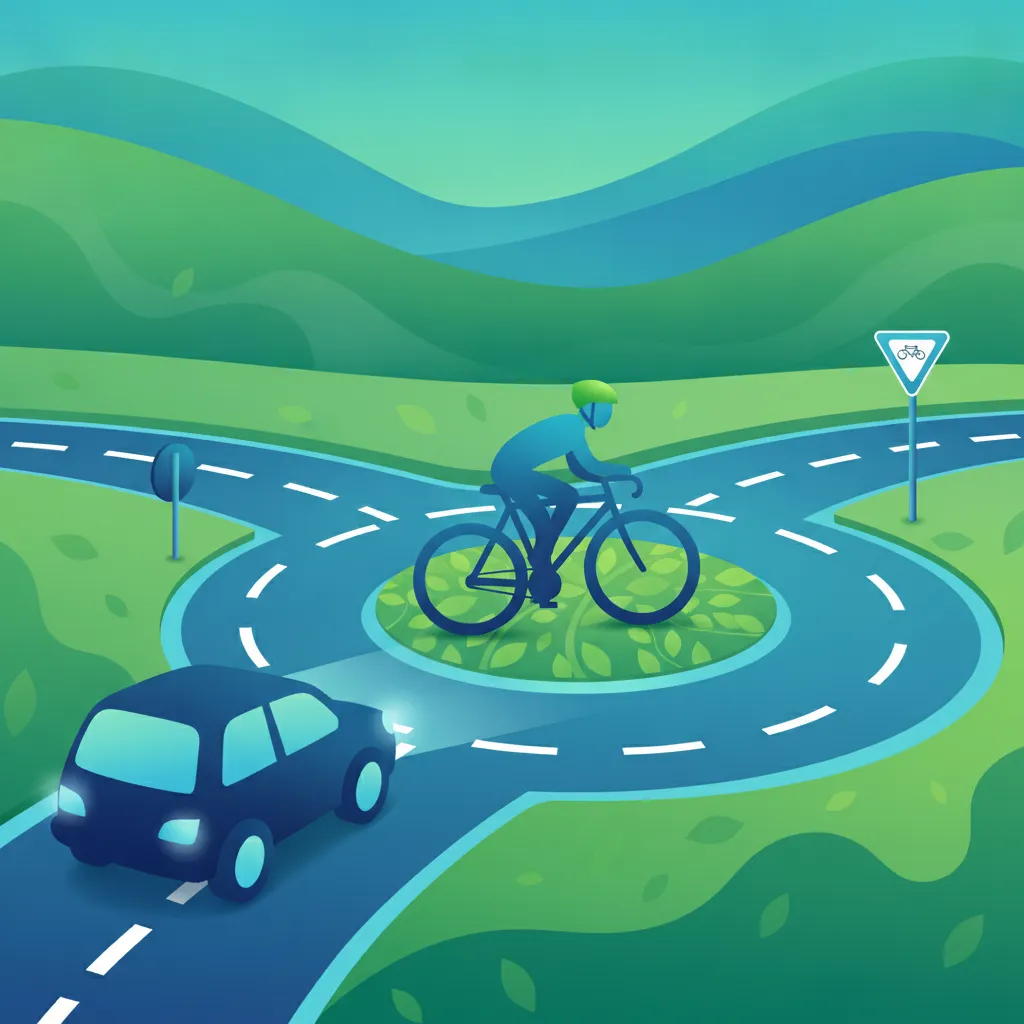
This lesson explores the correct procedures for turning at intersections and navigating roundabouts, focusing on lane selection and signaling. It covers the right-of-way rules for right and left turns and the importance of positioning the vehicle correctly before the turn. In roundabouts, the content emphasizes yielding to circulating traffic and selecting the correct exit lane.
Identify and understand common errors drivers make regarding priority rules and the Rechtsvortritt (right-hand rule) in Switzerland. Learn how to avoid these frequent mistakes to improve safety and compliance.
This lesson explains the fundamental rules of priority that govern traffic flow at Swiss intersections. It details the concept of 'Rechtsvortritt' at unmarked junctions and how priority signs alter this default rule. The specific procedures for entering, navigating, and exiting roundabouts are also covered to ensure predictable and safe maneuvers.
This lesson focuses on the Kein Vortritt rule, which applies when a vehicle must yield to all other traffic. You will learn to recognize scenarios where this rule is in effect, such as at minor roads or when entering a main road. The content also discusses how priority signs and traffic signals override the default right-hand rule, clarifying when you must yield.
This lesson details the specific priority rules governing Swiss intersections, including the concepts of 'Vortritt' and 'Rechtsvortritt'. It explains how to interpret road signs and markings to determine right-of-way in different situations. A clear understanding of these rules is essential for safe and legal navigation of intersections.
This lesson explores how traffic lights dictate priority at intersections, superseding general priority rules. It explains the meanings of red, amber, and green signals and the required actions for each. Emphasis is placed on understanding green light right-of-way and the cautionary role of the amber phase for navigating signal-controlled junctions safely.
This lesson focuses specifically on the rules and techniques for navigating roundabouts. It clarifies that traffic already in the roundabout has priority and explains how to choose the correct lane on approach based on your intended exit. Proper signaling procedure for entering and, most importantly, exiting the roundabout is also detailed.
This lesson provides a detailed guide to navigating roundabouts, focusing on yielding to circulating traffic and correct lane usage. You will learn the priority principle that vehicles already in the roundabout have precedence over entering traffic. The content also covers multi-lane roundabout navigation and proper exit strategies for smooth, safe traversal.
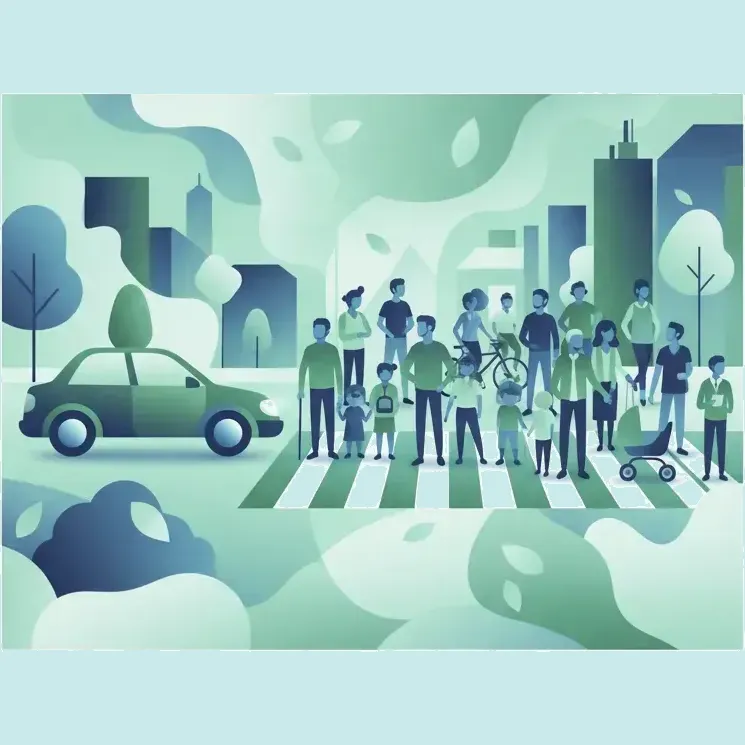
This lesson explores pedestrian right-of-way at various crossings, including zebra crossings and pedestrian islands. It emphasizes the need for drivers to reduce speed, anticipate pedestrian movement, and stop safely when required. The content also covers special regulations that apply in school zones, such as reduced speed limits and heightened vigilance.
This lesson provides guidance on safely negotiating intersections and roundabouts on a motorcycle. It details the correct procedures for approach, lane selection, and yielding according to Swiss traffic regulations. Emphasis is placed on heightened awareness of other vehicles, cyclists, and pedestrians in these complex traffic environments.

Bus lanes are a key tool for improving service reliability, but they come with specific rules. This lesson covers how to correctly interpret bus lane signs and markings. It also explains the regulations for entering and leaving the lane to make turns or avoid obstructions, and the priority rules associated with them.
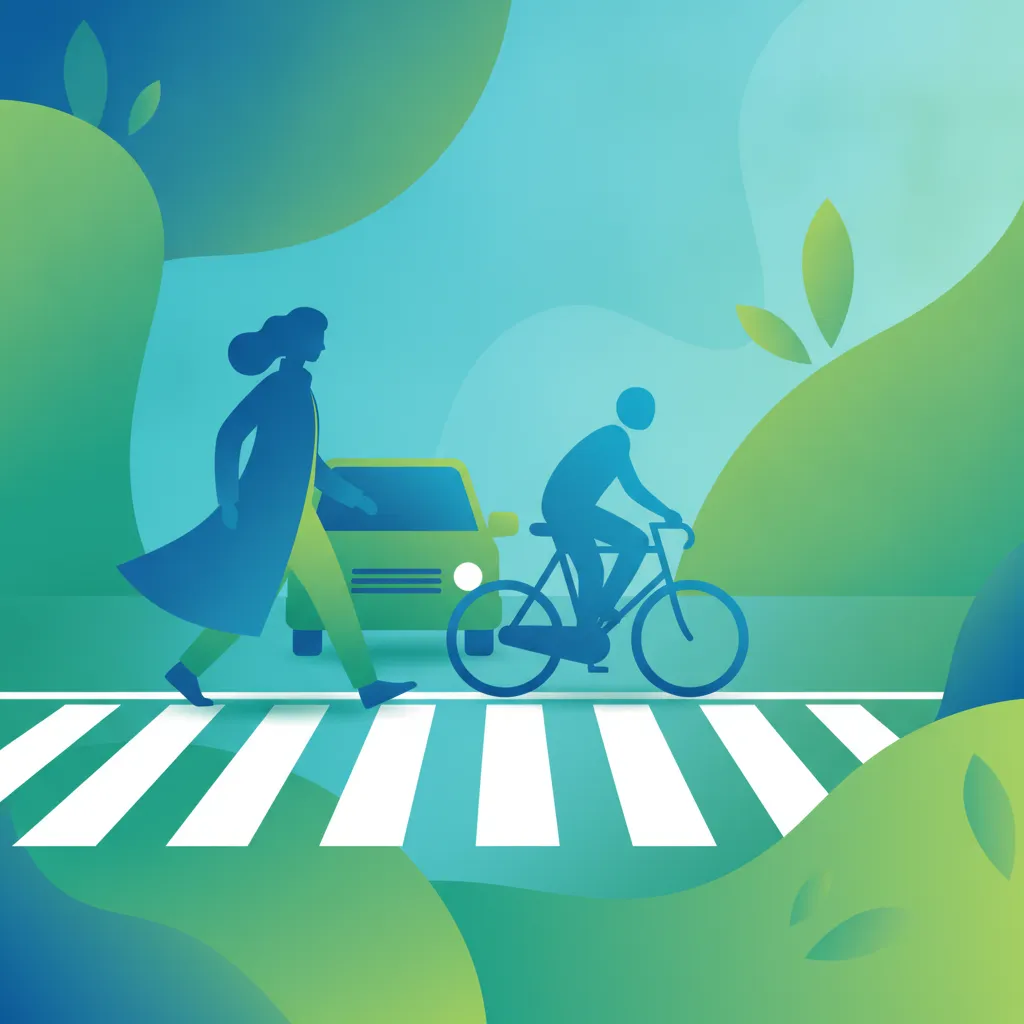
This lesson delineates the various categories of road users on Swiss roads, highlighting their specific rights and responsibilities. It explains the legal hierarchy that determines priority at intersections and in shared spaces. The content also discusses the unique considerations for vulnerable users, such as children, emphasizing the need for heightened caution.
Find clear answers to common questions learners have about Vortritt (Priority) and Rechtsvortritt (Right-Hand Rule). Learn how the lesson is structured, which driving theory objectives it supports, and how it fits into the overall learning path of units and curriculum progression in Switzerland. These explanations help you understand key concepts, lesson flow, and exam focused study goals.
No, the right-hand rule (Rechtsvortritt) only applies at intersections where there are no traffic lights, stop signs, or other priority signs indicating otherwise. Always check for road signs before assuming the right-hand rule is in effect.
Unless there is a specific sign, road marking, or traffic light system directing you otherwise, you must yield to the vehicle coming from your right. This is the fundamental rule of Rechtsvortritt in Switzerland.
Yes, common exceptions include priority roads marked with signs, intersections controlled by traffic lights, or scenarios involving specific types of road users like trams, which may have different priority rules regardless of their direction.
Learners often fail these questions by missing subtle visual cues like small supplementary signs or road markings. During the exam, look closely at the entire scene rather than just the intersection center to identify signs that override the standard right-hand rule.
Pinpoint specific Swiss traffic rules, road signs, or driving situations you need to master. Use the practice search to start a focused revision session now and build confidence for your official driving theory exam.