
This lesson clarifies how traffic lights dictate priority, superseding standard intersection rules at signal-controlled junctions in Switzerland. You will learn to interpret light sequences correctly and apply these rules to ensure safety when navigating busy urban intersections.
Lesson content overview
Intersections are complex points on the road network where different traffic streams converge. To manage these junctions safely and efficiently, traffic lights (or traffic signals) are employed. This lesson will explore how these vital signals dictate priority at intersections within the Swiss road system, superseding general priority rules and ensuring an orderly flow of vehicles, cyclists, and pedestrians. Understanding the precise meaning of each signal phase – red, amber, and green – and the required actions for each is fundamental for all drivers seeking a Swiss Category B license.
At any intersection equipped with operational traffic lights, these signals are the ultimate authority regarding right-of-way. They establish a clear, time-based hierarchy that eliminates ambiguity, reduces conflict points, and significantly enhances safety and traffic flow at busy junctions.
The principle of signal supremacy dictates that traffic signals have legal precedence over all other traffic regulations at the intersection where they are installed. This means that if you are at a signalized intersection, you must obey the traffic lights regardless of any other road signs (such as "Give Way" or "Stop" signs, or even priority road signs) or road markings that might otherwise apply. The traffic light is the definitive command.
Traffic lights are designed to prevent simultaneous conflicting movements, thereby reducing the risk of collisions. They achieve this by allocating exclusive or shared time phases for different directions and road users. This systematic approach is particularly crucial in urban areas with high traffic volumes, multiple lanes, and significant pedestrian activity. Without signal supremacy, drivers would face conflicting instructions, leading to confusion and increased accident potential. By centralizing control, traffic lights provide a predictable and unequivocal framework for navigating complex junctions.
Traffic lights communicate essential instructions through a standardized system of colors and patterns. Each signal demands a specific action from the driver.
A steady red light is the clearest and most absolute command: you must stop.
The amber light serves as a crucial transition phase, warning drivers of an impending change. Its meaning depends on whether it appears after green or after red, and whether it is steady or flashing.
A steady green light grants permission to proceed, signifying you have the right-of-way for the indicated movement(s).
Many intersections feature more advanced signal configurations to manage multiple lanes and turning movements efficiently.
Modern intersections often incorporate dedicated arrow signals for specific movements (e.g., left turns, right turns). These arrows supersede the general signal for that lane and provide protected or conditional right-of-way for that specific movement.
In some cases, traffic lights may allow multiple, non-conflicting movements to proceed simultaneously, referred to as concurrent green phases. This is common for turns that do not intersect with oncoming traffic, or when pedestrians are crossing a road that vehicles are not turning into.
Pedestrians and cyclists are vulnerable road users who often have their own dedicated signals at intersections, which vehicles must respect.
Pedestrian signals typically consist of a "walking man" (green) and a "standing man" (red) icon.
Cyclists may also have their own dedicated signals, often resembling miniature vehicle signals or a bicycle icon. Where these exist, cyclists must obey them. If there is no dedicated cyclist signal, cyclists generally follow the vehicle signals for their lane. However, drivers must always be particularly attentive to cyclists, especially when turning, as they may be less visible. In Switzerland, specific rules regarding bicycle priority at crossings are crucial, and drivers must yield to cyclists where indicated by signs or signals.
Adhering to traffic light signals is not just a matter of safety; it is a legal obligation under Swiss Road Traffic Act (SVG) and its associated ordinances, such as the Road Traffic Regulations (VRV 1990). Violating traffic light rules constitutes a serious traffic offense.
Understanding the rules is the first step; applying them correctly in dynamic traffic situations is crucial. Here are common errors and how to prevent them:
This is perhaps the most dangerous and commonly punished violation.
Driving conditions can significantly impact how you react to traffic lights. Adapting your behavior is key to safety.
Traffic light design and implementation are rooted in fundamental safety and psychological principles:
Mastering traffic light interactions is crucial for safe and confident driving in Switzerland. Keep these core principles in mind:
This lesson explains how traffic lights establish signal supremacy over all other priority rules at Swiss intersections. Each signal phase demands specific actions: red requires a complete stop at the stop line, steady amber means prepare to stop (only proceed if already committed or stopping safely is impossible), and flashing amber signals caution where you must yield and apply general priority rules. Green grants right-of-way but only if the intersection is clear and you must still yield to pedestrians with a walking signal. Dedicated arrow signals provide protected turns and override general signals, while signal failure requires reverting to standard uncontrolled intersection rules including Rechtsvortritt.
A short set of high-value points that capture the most important learning from this lesson.
Signal supremacy means traffic lights override all other road signs and markings at the intersection where they are installed
Red light requires a complete stop before the stop line or intersection; amber after green means prepare to stop
Steady amber: stop only if safe braking is possible; flashing amber: yield and proceed with extreme caution
Pedestrians with a green walking signal have priority even when vehicle lights are green for turning
If signals fail completely, revert to standard priority rules including Rechtsvortritt if no signs are present
Explore all units and lessons included in this driving theory course.
A green light grants right-of-way only if the intersection is clear; never enter if you cannot clear it
Dedicated arrow signals override the general signal for their specific lane
Flashing amber means other priority rules come into effect; treat it as a yield situation
Vehicles with heavy loads or trailers need significantly longer stopping distances on amber
Rotlichtmissachtung (running a red light) carries substantial penalties under Swiss SVG/VRV
Entering the intersection on steady amber when you could have stopped safely, or speeding up to 'beat' the red
Turning across pedestrian crossings without yielding to pedestrians who have a green walking signal
Treating a flashing amber light as a 'go' signal rather than yielding to all other traffic
Blocking the intersection by entering when traffic is backed up on the other side
Ignoring dedicated lane-specific arrow signals and attempting movements against a red arrow
Lesson content overview
A short set of high-value points that capture the most important learning from this lesson.
Signal supremacy means traffic lights override all other road signs and markings at the intersection where they are installed
Red light requires a complete stop before the stop line or intersection; amber after green means prepare to stop
Steady amber: stop only if safe braking is possible; flashing amber: yield and proceed with extreme caution
Pedestrians with a green walking signal have priority even when vehicle lights are green for turning
If signals fail completely, revert to standard priority rules including Rechtsvortritt if no signs are present
Explore all units and lessons included in this driving theory course.
A green light grants right-of-way only if the intersection is clear; never enter if you cannot clear it
Dedicated arrow signals override the general signal for their specific lane
Flashing amber means other priority rules come into effect; treat it as a yield situation
Vehicles with heavy loads or trailers need significantly longer stopping distances on amber
Rotlichtmissachtung (running a red light) carries substantial penalties under Swiss SVG/VRV
Entering the intersection on steady amber when you could have stopped safely, or speeding up to 'beat' the red
Turning across pedestrian crossings without yielding to pedestrians who have a green walking signal
Treating a flashing amber light as a 'go' signal rather than yielding to all other traffic
Blocking the intersection by entering when traffic is backed up on the other side
Ignoring dedicated lane-specific arrow signals and attempting movements against a red arrow
Explore search topics learners often look for when studying Priority at Intersections with Traffic Lights. These topics reflect common questions about road rules, driving situations, safety guidance, and lesson level theory preparation for learners in Switzerland.
Browse additional driving theory lessons that cover connected traffic rules, road signs, and common driving situations related to this topic. Improve your understanding of how different rules interact across everyday traffic scenarios.
Explore complex scenarios at signal-controlled intersections, including concurrent green phases, arrow signals, and common driver errors. Understand how to navigate these situations safely according to Swiss traffic law.
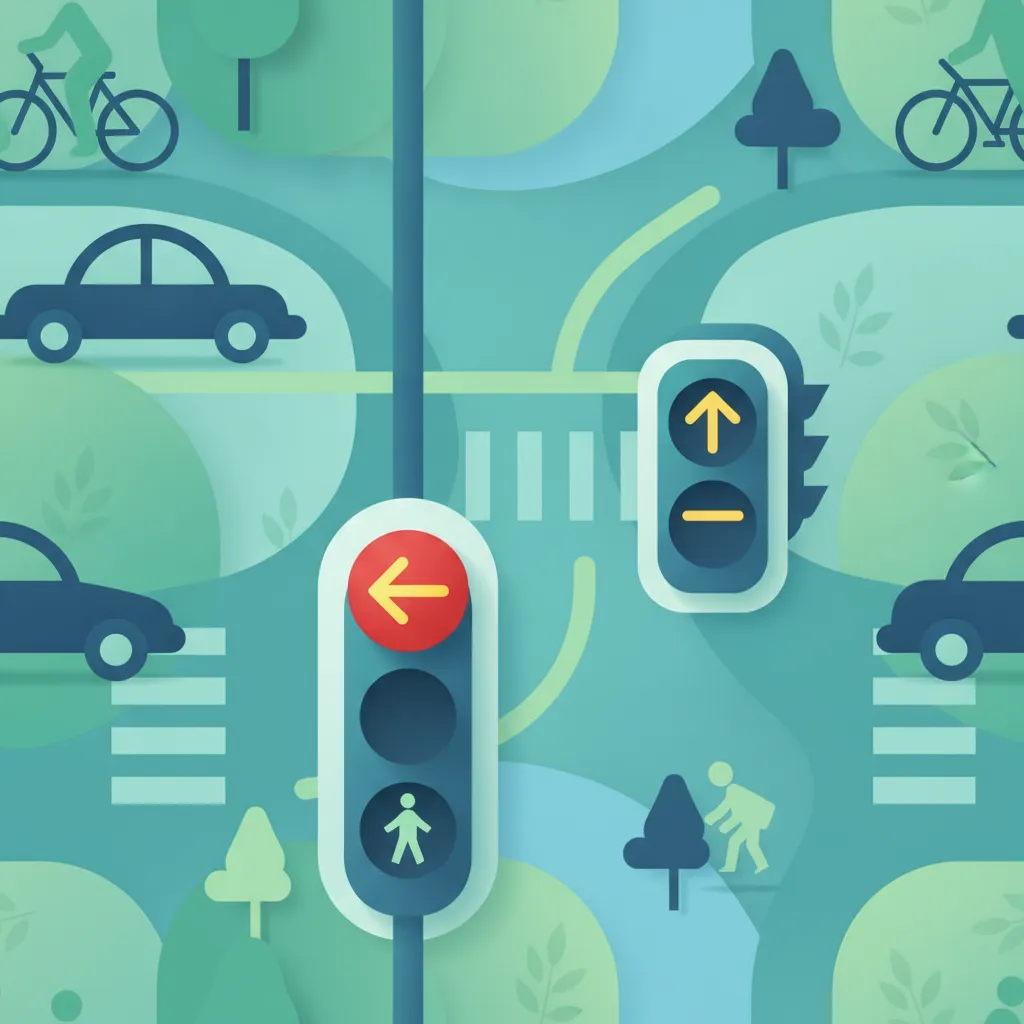
This lesson details the operation of traffic light systems in Switzerland. It explains the sequence and meaning of red, amber, and green lights, including flashing amber signals. The content also covers specific signals for pedestrians and the priority rules associated with tram signals to ensure safe interaction at controlled intersections.
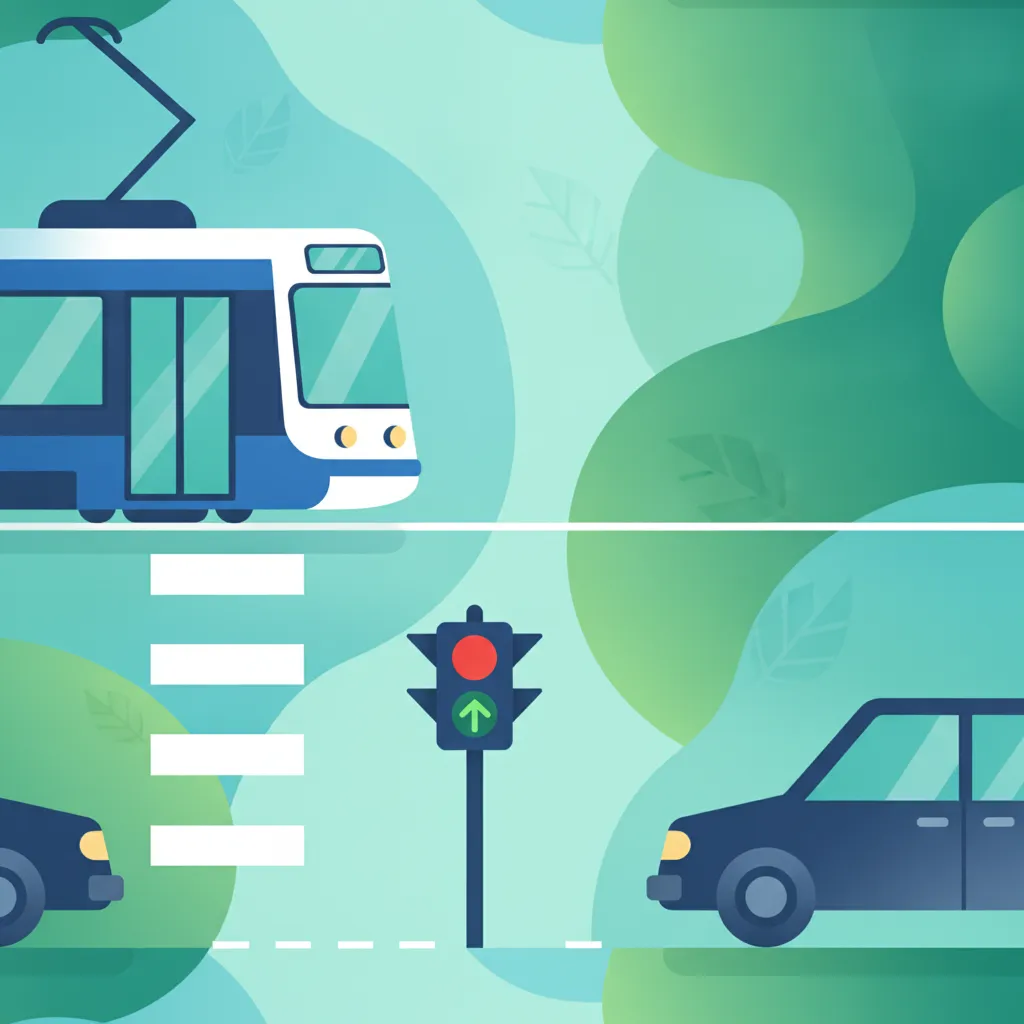
Many Swiss cities use systems that give buses priority at traffic lights to improve punctuality. This lesson explains how these systems detect an approaching bus and alter the signal phasing. You will learn to recognize and correctly respond to the special white light signals that grant this priority.
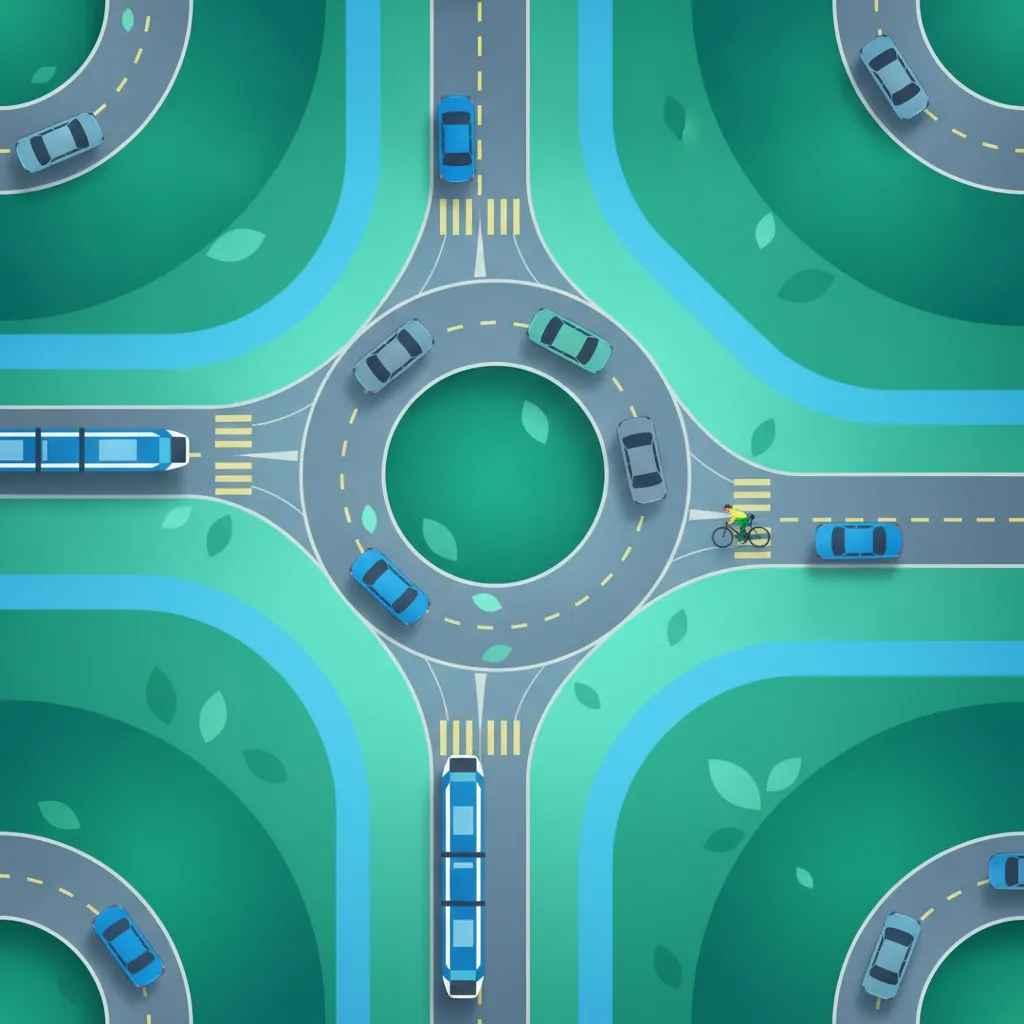
This lesson explains the fundamental rules of priority that govern traffic flow at Swiss intersections. It details the concept of 'Rechtsvortritt' at unmarked junctions and how priority signs alter this default rule. The specific procedures for entering, navigating, and exiting roundabouts are also covered to ensure predictable and safe maneuvers.
This lesson provides a step-by-step guide to navigating intersections. It reinforces the priority rules, such as 'Rechtsvortritt', and the meaning of yield and stop signs. The content emphasizes the importance of a thorough visual scan on approach and correct positioning to ensure visibility and a safe passage.
This lesson examines the concept of Vortritt (priority) and Rechtsvortritt, the right-hand rule used at uncontrolled intersections. It explains how these rules determine which vehicle has the right-of-way and the hierarchy of priority signs. You will learn to apply these rules in typical scenarios like four-way stops and T-intersections without traffic signals.

This lesson details the specific priority rules governing Swiss intersections, including the concepts of 'Vortritt' and 'Rechtsvortritt'. It explains how to interpret road signs and markings to determine right-of-way in different situations. A clear understanding of these rules is essential for safe and legal navigation of intersections.
This lesson focuses specifically on the rules and techniques for navigating roundabouts. It clarifies that traffic already in the roundabout has priority and explains how to choose the correct lane on approach based on your intended exit. Proper signaling procedure for entering and, most importantly, exiting the roundabout is also detailed.
This lesson focuses on the Kein Vortritt rule, which applies when a vehicle must yield to all other traffic. You will learn to recognize scenarios where this rule is in effect, such as at minor roads or when entering a main road. The content also discusses how priority signs and traffic signals override the default right-hand rule, clarifying when you must yield.
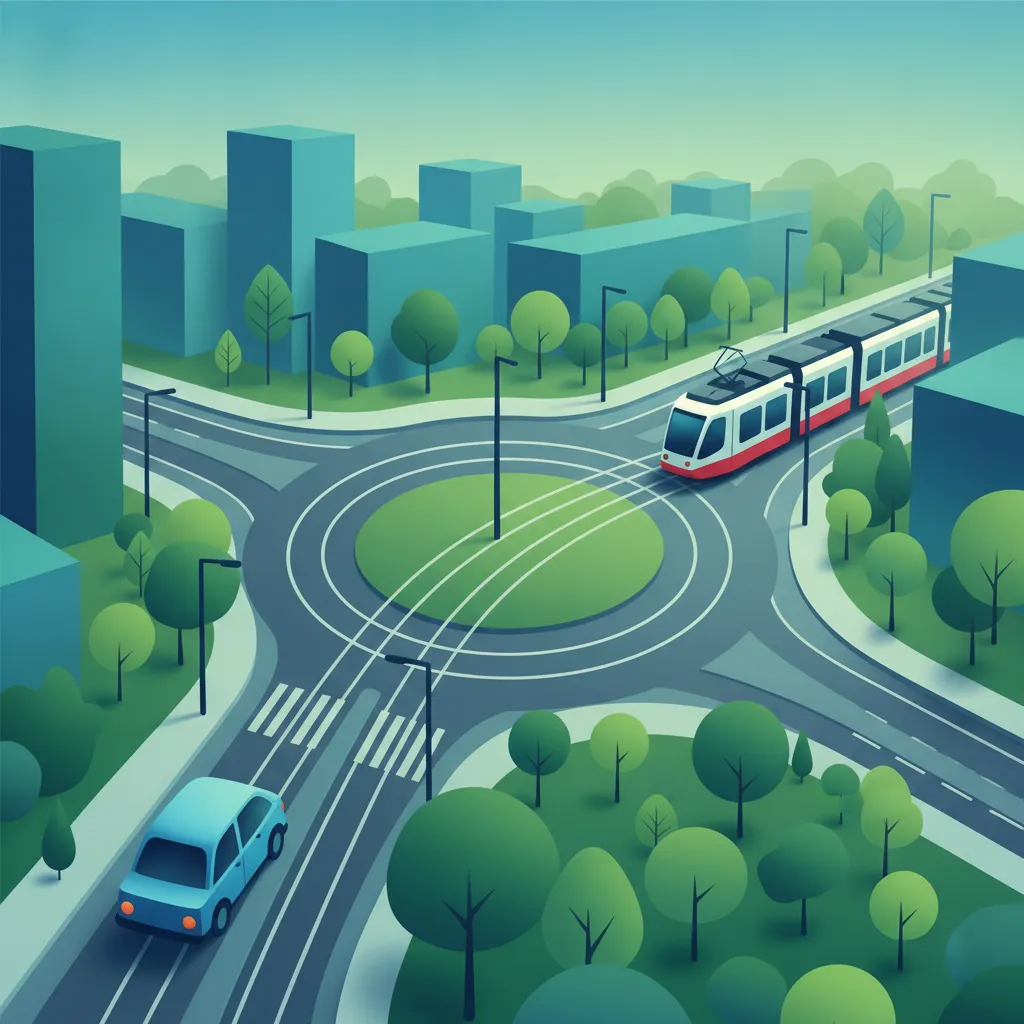
This lesson provides guidance on safely navigating roundabouts and tram lanes, common features in Swiss cities. It covers the rules for yielding, lane positioning within the roundabout, and signaling intentions upon exiting. Special attention is given to the hazards of crossing slippery tram tracks and sharing the road with public transport.
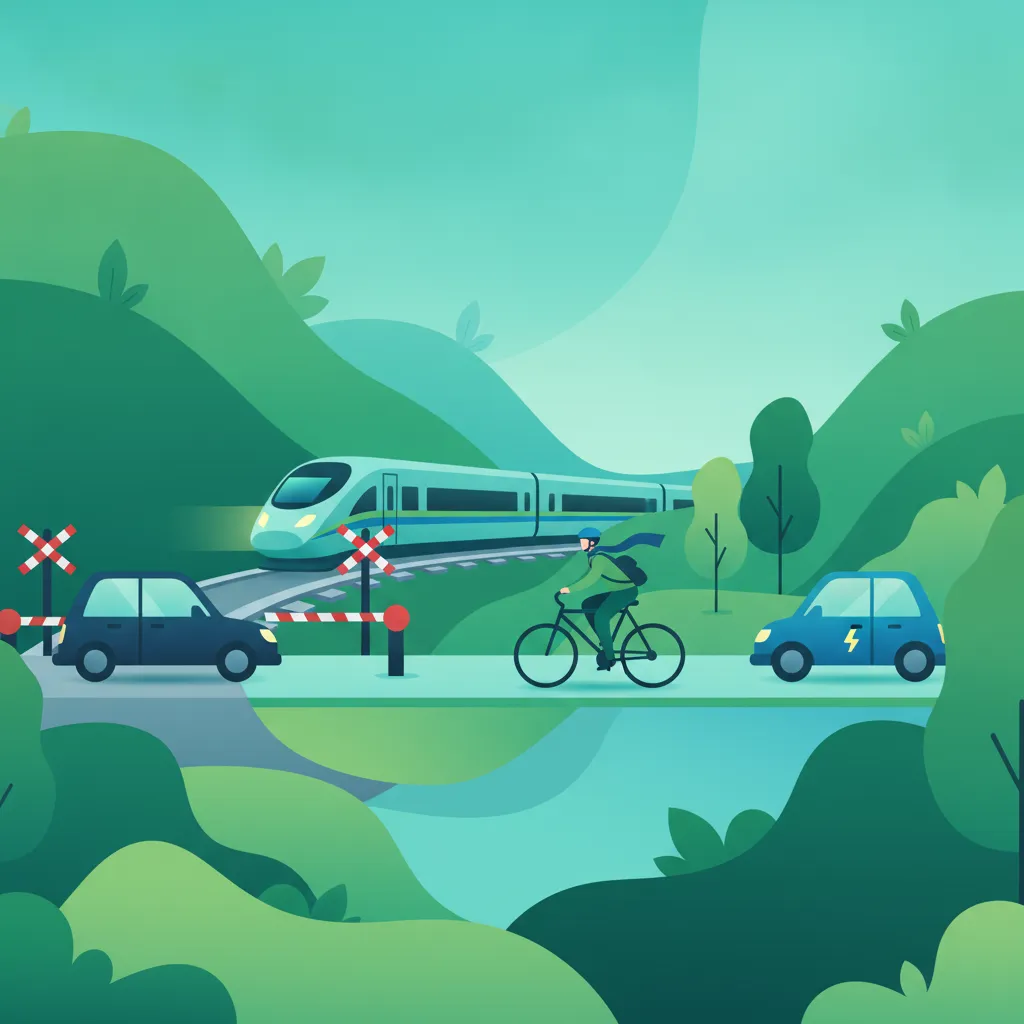
This lesson examines special traffic situations such as railway level crossings and shared zones where different road users coexist. It explains the specific safety procedures required at railway crossings and how to behave in shared zones with mixed traffic. The content also addresses the need to yield to oncoming trains and follow special signage in these unique zones.
Learn how traffic light signals prioritize pedestrians and cyclists in Switzerland. Understand the specific rules for green walking signals and cyclist priority, ensuring safe interactions at signal-controlled junctions.
This lesson details the operation of traffic light systems in Switzerland. It explains the sequence and meaning of red, amber, and green lights, including flashing amber signals. The content also covers specific signals for pedestrians and the priority rules associated with tram signals to ensure safe interaction at controlled intersections.
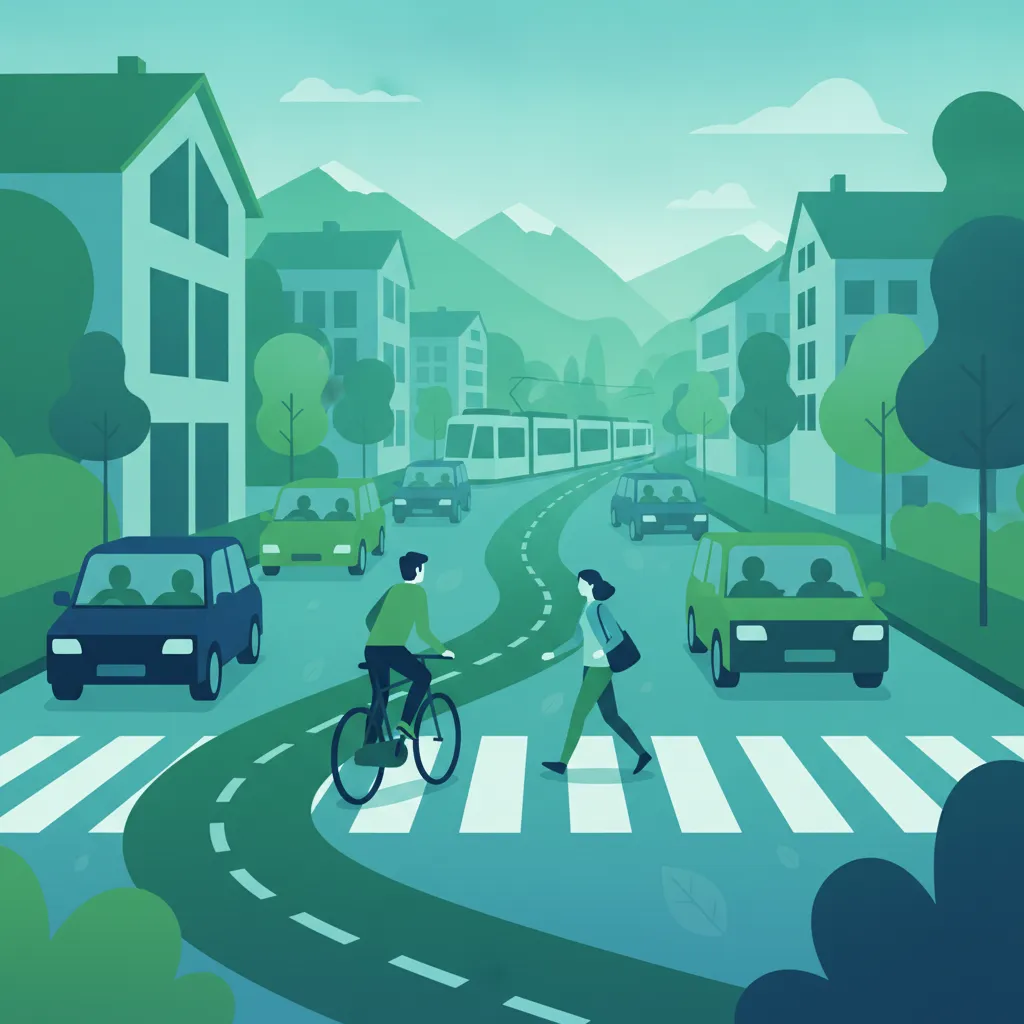
This lesson explores the specific considerations for cyclists and pedestrians, who are among the most vulnerable road users. It covers the proper use of bicycle lanes, the minimum safe overtaking distance for cyclists, and the legal requirements for yielding at pedestrian crossings. The content reinforces the need for heightened vigilance around these users.
Many Swiss cities use systems that give buses priority at traffic lights to improve punctuality. This lesson explains how these systems detect an approaching bus and alter the signal phasing. You will learn to recognize and correctly respond to the special white light signals that grant this priority.

This lesson explores pedestrian right-of-way at various crossings, including zebra crossings and pedestrian islands. It emphasizes the need for drivers to reduce speed, anticipate pedestrian movement, and stop safely when required. The content also covers special regulations that apply in school zones, such as reduced speed limits and heightened vigilance.

This lesson trains drivers to look beyond other vehicles and actively search for pedestrians, cyclists, and motorcyclists, especially those who may be distracted or unaware. It covers common behavioral patterns of different VRU groups. The goal is to see potential hazards developing early and create time and space to react safely.
This lesson explains the fundamental rules of priority that govern traffic flow at Swiss intersections. It details the concept of 'Rechtsvortritt' at unmarked junctions and how priority signs alter this default rule. The specific procedures for entering, navigating, and exiting roundabouts are also covered to ensure predictable and safe maneuvers.
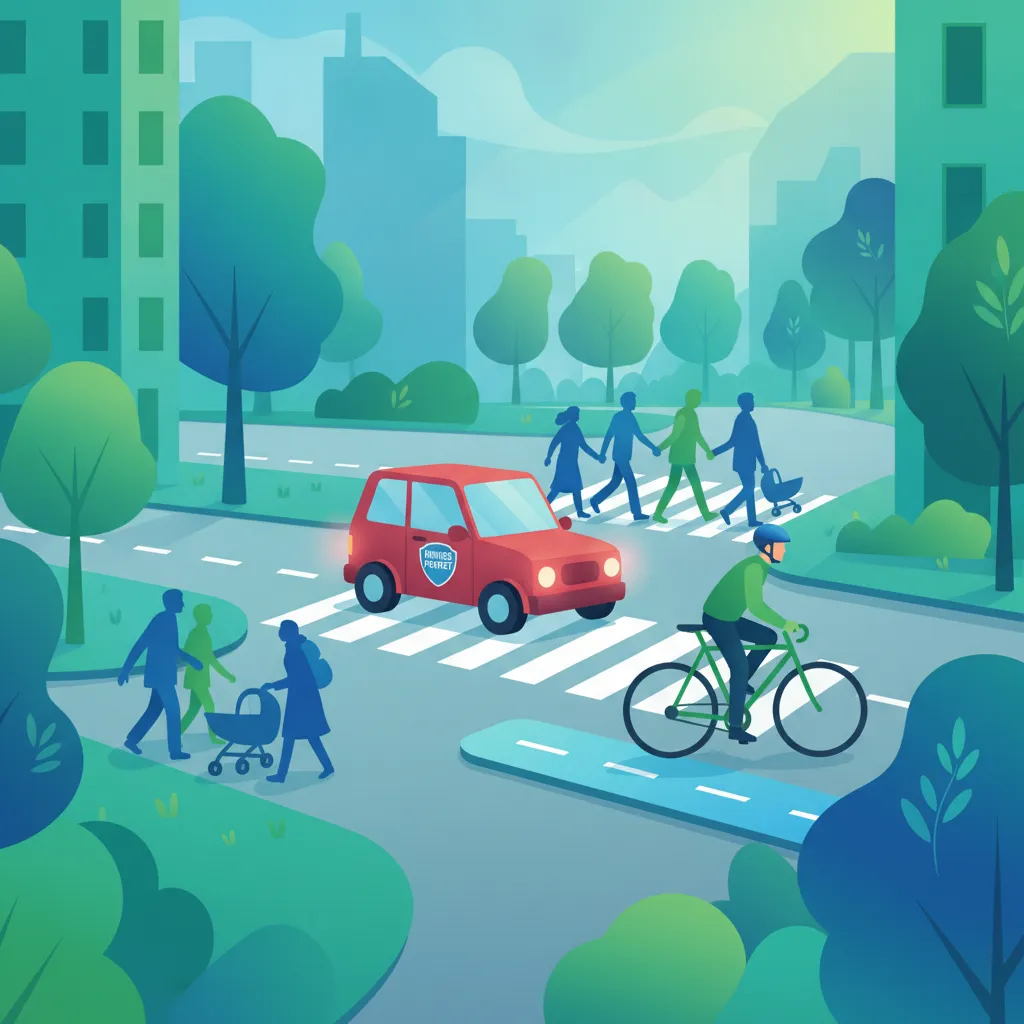
Pedestrians, cyclists, motorcyclists, and e-scooter riders are extremely vulnerable in any interaction with a heavy vehicle. This lesson instills a defensive mindset, teaching drivers to be hyper-aware of VRUs, especially near junctions, crossings, and cycle lanes. It focuses on anticipation and giving VRUs extra space, as they can be unpredictable and are often hidden in blind spots.
This lesson provides a step-by-step guide to navigating intersections. It reinforces the priority rules, such as 'Rechtsvortritt', and the meaning of yield and stop signs. The content emphasizes the importance of a thorough visual scan on approach and correct positioning to ensure visibility and a safe passage.
This lesson delineates the various categories of road users on Swiss roads, highlighting their specific rights and responsibilities. It explains the legal hierarchy that determines priority at intersections and in shared spaces. The content also discusses the unique considerations for vulnerable users, such as children, emphasizing the need for heightened caution.
This lesson details the specific priority rules governing Swiss intersections, including the concepts of 'Vortritt' and 'Rechtsvortritt'. It explains how to interpret road signs and markings to determine right-of-way in different situations. A clear understanding of these rules is essential for safe and legal navigation of intersections.
Find clear answers to common questions learners have about Priority at Intersections with Traffic Lights. Learn how the lesson is structured, which driving theory objectives it supports, and how it fits into the overall learning path of units and curriculum progression in Switzerland. These explanations help you understand key concepts, lesson flow, and exam focused study goals.
Yes, in the Swiss traffic hierarchy, signalised traffic lights take precedence over road signs and standard priority rules like the right-hand rule.
A flashing yellow light means the lights are not in full operation. You must follow the priority road signs at the intersection, or if no signs are present, apply the standard right-hand rule.
You must stop at a yellow light unless you are so close to the stop line that stopping safely is impossible. Entering an intersection on yellow when you could have stopped is a traffic violation.
A green arrow signal grants you specific priority for that direction. However, you must still be cautious of pedestrians or cyclists who may have their own green signal.
Pinpoint specific Swiss traffic rules, road signs, or driving situations you need to master. Use the practice search to start a focused revision session now and build confidence for your official driving theory exam.