
This lesson guides you through the essential Kein Vortritt rules, helping you understand when you must yield to other road users. Building on your knowledge of basic intersections, you will learn to identify no-priority situations to ensure safe navigation on Swiss roads.
Lesson content overview
Navigating Swiss roads safely requires a deep understanding of priority rules. Among the most critical is the concept of "Kein Vortritt" (No Priority), which dictates when a driver must yield to all other traffic. This rule is fundamental for preventing accidents, particularly at intersections and when entering main roads. This lesson, part of your Comprehensive Swiss Driving Theory Course for Category B License, will thoroughly explain "Kein Vortritt" scenarios, its relationship with other priority rules, and how to apply it correctly.
"Kein Vortritt" literally translates to "no priority." It signifies a traffic situation where a driver is legally obliged to yield, or give way, to all other traffic. This means that you must allow other vehicles to proceed first, regardless of their direction or whether they are coming from your left or right. The primary purpose of this rule is to ensure a predictable and safe flow of traffic, especially at points where roads merge or cross, thereby reducing conflict points and potential collisions.
This concept is crucial for road safety because it establishes a clear hierarchy. When a driver encounters a "Kein Vortritt" situation, they must reduce speed, prepare to stop, and only proceed when it is safe to do so without hindering or endangering other road users. Failure to observe the "Kein Vortritt" rule is a common cause of accidents and carries significant legal consequences under Swiss Road Traffic Regulations.
Before delving deeper into "Kein Vortritt," it is essential to revisit the basic "Rechtsvortritt" (right-hand rule), which serves as the default priority rule in Switzerland.
Definition: Rechtsvortritt (Right-Hand Rule) At uncontrolled intersections, where no traffic signs or signals are present, traffic approaching from the right has priority. This rule provides a basic order for traffic flow when no other indicators exist.
The "Kein Vortritt" principle often comes into play precisely where the right-hand rule is superseded. While "Rechtsvortritt" is the default, it is overridden by specific traffic signs, signals, and road classifications. When you are in a "Kein Vortritt" situation, it means you do not have the right of way, even if another vehicle is approaching from your left. The existence of a priority road, a yield sign, a stop sign, or traffic lights all create "Kein Vortritt" scenarios for drivers on the intersecting or minor roads. Understanding this hierarchy is paramount for safe navigation.
One of the most common scenarios where "Kein Vortritt" applies is when a minor road intersects with a designated "Vorrangstraße" (priority road). These roads are clearly marked and dictate that traffic on them has priority.
A "Vorrangstraße" is identified by a specific traffic sign.
When you see this sign, it means that your road has uninterrupted priority over any roads joining it. Conversely, if you are approaching a road marked with this sign from an intersecting street, you are in a "Kein Vortritt" situation and must yield.
Drivers approaching a "Vorrangstraße" from a side road, a parking lot, or any property must always yield to traffic on the priority road. This means you must:
It is equally important to recognize when a priority road's status ends.
Upon seeing this sign, drivers should be aware that at the next intersection, the special priority status of their road will cease. From that point, other priority rules, such as the right-hand rule, will once again apply unless other signs or signals dictate otherwise. Failing to recognize the end of a priority road can lead to dangerous assumptions about right-of-way.
While a "Vorrangstraße" sign indicates a general road hierarchy, specific signs are placed directly at intersections to mandate yielding. These signs explicitly create "Kein Vortritt" situations for drivers facing them.
The "Yield" sign is a direct instruction to give way to traffic on the intersecting road.
When you encounter a "Yield" sign, you must:
The "Stop" sign is the most stringent yielding indicator, demanding a complete halt before proceeding.
At a "Stop" sign, you must:
Traffic lights provide the clearest and most direct control over priority at intersections. When traffic lights are present and operational, they override all other priority rules, including "Kein Vortritt" signs, "Vorrangstraße" designations, and the right-hand rule.
The color of the traffic light dictates your right-of-way:
Important: Never assume the right-hand rule or other priority signs apply if a traffic light is active, even if it appears to contradict what a sign might indicate. The traffic light always takes precedence. Only if traffic lights are flashing yellow, or are completely out of order, do other priority rules (signs, then right-hand rule) come back into effect.
When a yellow light appears, it serves as a warning. If you can stop safely, you must do so. If you are turning at a green light, especially left turns against oncoming traffic, you often have a conditional "Kein Vortritt" situation. In many cases, you must yield to oncoming straight-through traffic even if you have a green light, unless a dedicated turning arrow indicates otherwise. Always be prepared to yield to pedestrians and cyclists when turning, even on a green light, as they often have priority when crossing your path.
The rules governing "Kein Vortritt" situations are enshrined in the Swiss Road Traffic Regulations (RVF). Understanding these articles provides a legal basis for your driving actions.
This article generally states that drivers approaching a priority road (Vorrangstraße) must give way to traffic on that road. It forms the legal backbone of the "Kein Vortritt" principle at designated priority intersections. It mandates drivers to yield without impeding or endangering vehicles already on the priority road. This applies equally when entering a priority road from a side street, a private exit, or a parking area.
Article 28 outlines the right-hand rule, stipulating that at uncontrolled intersections (those without signs or signals), traffic from the right has priority. It reinforces that this rule applies only in the absence of other priority indicators, thereby confirming that signs and signals override "Rechtsvortritt" and create "Kein Vortritt" situations. The rule is designed to provide a default order, but it is secondary to explicit instructions.
This article details the strict requirements for obeying a "Stop" sign. It clearly states that drivers must come to a complete halt at the stop line, or at a point offering good visibility if no line is present, and yield to all intersecting traffic before proceeding. There is no negotiation with a stop sign; a full stop is mandatory.
Misunderstanding or misapplying "Kein Vortritt" rules is a frequent cause of road incidents. Recognizing these common errors is the first step toward avoiding them.
A common mistake is assuming the right-hand rule applies universally, even when there's a priority road sign. Always look for signs first. If a "Vorrangstraße" sign is present, or you are facing a "Yield" or "Stop" sign, you have "Kein Vortritt" regardless of traffic coming from your left or right.
Another error is applying the right-hand rule when a traffic light is active, or when exiting a private property onto a public road. The right-hand rule only applies at truly uncontrolled intersections without any other priority indicators. When exiting private property (like a driveway or a car park), you always have "Kein Vortritt" and must yield to all traffic on the public road.
Failing to come to a complete stop at a "Stop" sign (rolling stop) or proceeding through a red light due to misjudgment are severe violations. These actions demonstrate a blatant disregard for "Kein Vortritt" and significantly increase the risk of collision, leading to heavy fines, license points, and potential license suspension. Always remember that traffic lights are the supreme authority, overriding all other priority rules.
Applying "Kein Vortritt" rules effectively requires adapting your behavior to various environmental and situational factors.
Poor weather conditions like heavy rain, fog, snow, or ice severely reduce visibility and braking efficiency. In such conditions, you must increase your caution significantly when approaching any "Kein Vortritt" situation. Slow down even more, increase your scanning time, and ensure you have an absolutely clear view before entering an intersection, even if you technically have the right of way. Remember, even if you have priority, it's safer to yield if another driver clearly isn't seeing you or is proceeding unsafely.
Urban environments typically feature more intersections with clear priority signage and traffic lights. Drivers must remain highly vigilant for these indicators, as a "Kein Vortritt" situation can appear frequently. In rural areas, intersections may be less clearly marked, making the right-hand rule (Rechtsvortritt) more prevalent. However, rural roads also often feature "Vorrangstraße" signs on main routes, meaning drivers on minor roads must be extra cautious to identify these and yield accordingly, as speeds can be higher.
The "Kein Vortritt" rule extends to all road users. When yielding, always consider:
Modern vehicles are equipped with Advanced Driver-Assistance Systems (ADAS), such as lane-keeping assist, adaptive cruise control, and automatic emergency braking. While these systems enhance safety, they may not always fully comprehend complex priority rules like "Kein Vortritt." For instance, a system might not recognize a specific "Vorrangstraße" sign or correctly interpret the nuances of yielding when turning across traffic. Drivers must remain fully attentive, understand priority rules, and be prepared to take manual control and override ADAS functions to ensure correct yielding behavior. Over-reliance on ADAS can lead to violations and dangerous situations.
Let's illustrate "Kein Vortritt" with practical examples you might encounter.
You are driving a yellow car on a residential street. At the end of the street, you encounter a "Yield" sign and wish to turn right onto a busy main road. The main road is clearly marked with a "Vorrangstraße" sign, indicating it is a priority road.
You are driving on a rural road that intersects with another rural road. There are no traffic signs, signals, or road markings indicating priority at this crossroads.
You are on a side road approaching a T-junction, and your road has a "Yield" sign. The main road does not have a "Vorrangstraße" sign, nor does it have traffic lights.
You are approaching a large urban intersection that is controlled by traffic lights. Your light is currently red.
You are driving on what was a priority road, but you have just passed a "Priority Road End" sign. The next intersection is a simple crossroad with no other signs or signals.
By mastering the principles of "Kein Vortritt" and its interplay with other priority rules, you will be well-equipped to navigate Swiss roads safely and confidently, contributing to a smoother and more secure traffic flow for everyone.
Kein Vortritt (No Priority) is a fundamental Swiss driving rule requiring drivers to yield to all other traffic in specific situations, such as when entering a Vorrangstraße (priority road) or facing Yield or Stop signs. The rule operates within a clear hierarchy where traffic lights take precedence over all signs, which in turn override the default Rechtsvortritt (right-hand rule). Understanding this hierarchy is essential for safe intersection navigation, as misapplying priority rules is a common cause of accidents. Beyond vehicles, drivers must also yield to pedestrians at crossings, cyclists in their path, and emergency vehicles with sirens, regardless of their own priority status. The Swiss Road Traffic Regulations (RVF), particularly Articles 23, 28, and 19, provide the legal framework for these obligations.
A short set of high-value points that capture the most important learning from this lesson.
Kein Vortritt means you must yield to all other traffic regardless of their direction or position
Traffic lights override all other priority rules when they are active, including the right-hand rule
Vorrangstraße (priority road) signs create mandatory Kein Vortritt situations for drivers entering from side roads
Yield and Stop signs explicitly override the Rechtsvortritt (right-hand rule) at any intersection
When exiting private property onto a public road, you always have Kein Vortritt and must yield to all traffic
Explore all units and lessons included in this driving theory course.
Traffic lights are the supreme authority: green means go, yellow means prepare to stop, red means full stop and yield in all directions
The right-hand rule (Rechtsvortritt) only applies at truly uncontrolled intersections with no signs, signals, or road markings
A Priority Road End sign means priority ceases at the next intersection, where other rules like Rechtsvortritt resume
When turning on a green light, you often still have Kein Vortritt relative to oncoming traffic and pedestrians
Emergency vehicles with flashing blue lights and sirens always have absolute priority regardless of your status
Assuming the right-hand rule applies when a Yield or Stop sign is present, or when on a private exit
Misapplying the right-hand rule at traffic light intersections where signals should be followed instead
Making a rolling stop at Stop signs instead of coming to a complete halt before the stop line
Failing to recognize when a Vorrangstraße status ends after passing a Priority Road End sign
Forgetting to yield to pedestrians and cyclists when turning, even with a green light
Lesson content overview
A short set of high-value points that capture the most important learning from this lesson.
Kein Vortritt means you must yield to all other traffic regardless of their direction or position
Traffic lights override all other priority rules when they are active, including the right-hand rule
Vorrangstraße (priority road) signs create mandatory Kein Vortritt situations for drivers entering from side roads
Yield and Stop signs explicitly override the Rechtsvortritt (right-hand rule) at any intersection
When exiting private property onto a public road, you always have Kein Vortritt and must yield to all traffic
Explore all units and lessons included in this driving theory course.
Traffic lights are the supreme authority: green means go, yellow means prepare to stop, red means full stop and yield in all directions
The right-hand rule (Rechtsvortritt) only applies at truly uncontrolled intersections with no signs, signals, or road markings
A Priority Road End sign means priority ceases at the next intersection, where other rules like Rechtsvortritt resume
When turning on a green light, you often still have Kein Vortritt relative to oncoming traffic and pedestrians
Emergency vehicles with flashing blue lights and sirens always have absolute priority regardless of your status
Assuming the right-hand rule applies when a Yield or Stop sign is present, or when on a private exit
Misapplying the right-hand rule at traffic light intersections where signals should be followed instead
Making a rolling stop at Stop signs instead of coming to a complete halt before the stop line
Failing to recognize when a Vorrangstraße status ends after passing a Priority Road End sign
Forgetting to yield to pedestrians and cyclists when turning, even with a green light
Explore search topics learners often look for when studying Kein Vortritt (No Priority) Situations. These topics reflect common questions about road rules, driving situations, safety guidance, and lesson level theory preparation for learners in Switzerland.
Browse additional driving theory lessons that cover connected traffic rules, road signs, and common driving situations related to this topic. Improve your understanding of how different rules interact across everyday traffic scenarios.
Explore practical real-world scenarios of 'Kein Vortritt' (no priority) situations. Learn how priority rules apply in complex intersections, with varying road types, and understand common mistakes drivers make when yielding.
This lesson examines the concept of Vortritt (priority) and Rechtsvortritt, the right-hand rule used at uncontrolled intersections. It explains how these rules determine which vehicle has the right-of-way and the hierarchy of priority signs. You will learn to apply these rules in typical scenarios like four-way stops and T-intersections without traffic signals.
This lesson explains the fundamental rules of priority that govern traffic flow at Swiss intersections. It details the concept of 'Rechtsvortritt' at unmarked junctions and how priority signs alter this default rule. The specific procedures for entering, navigating, and exiting roundabouts are also covered to ensure predictable and safe maneuvers.

This lesson details the specific priority rules governing Swiss intersections, including the concepts of 'Vortritt' and 'Rechtsvortritt'. It explains how to interpret road signs and markings to determine right-of-way in different situations. A clear understanding of these rules is essential for safe and legal navigation of intersections.
This lesson explores how traffic lights dictate priority at intersections, superseding general priority rules. It explains the meanings of red, amber, and green signals and the required actions for each. Emphasis is placed on understanding green light right-of-way and the cautionary role of the amber phase for navigating signal-controlled junctions safely.
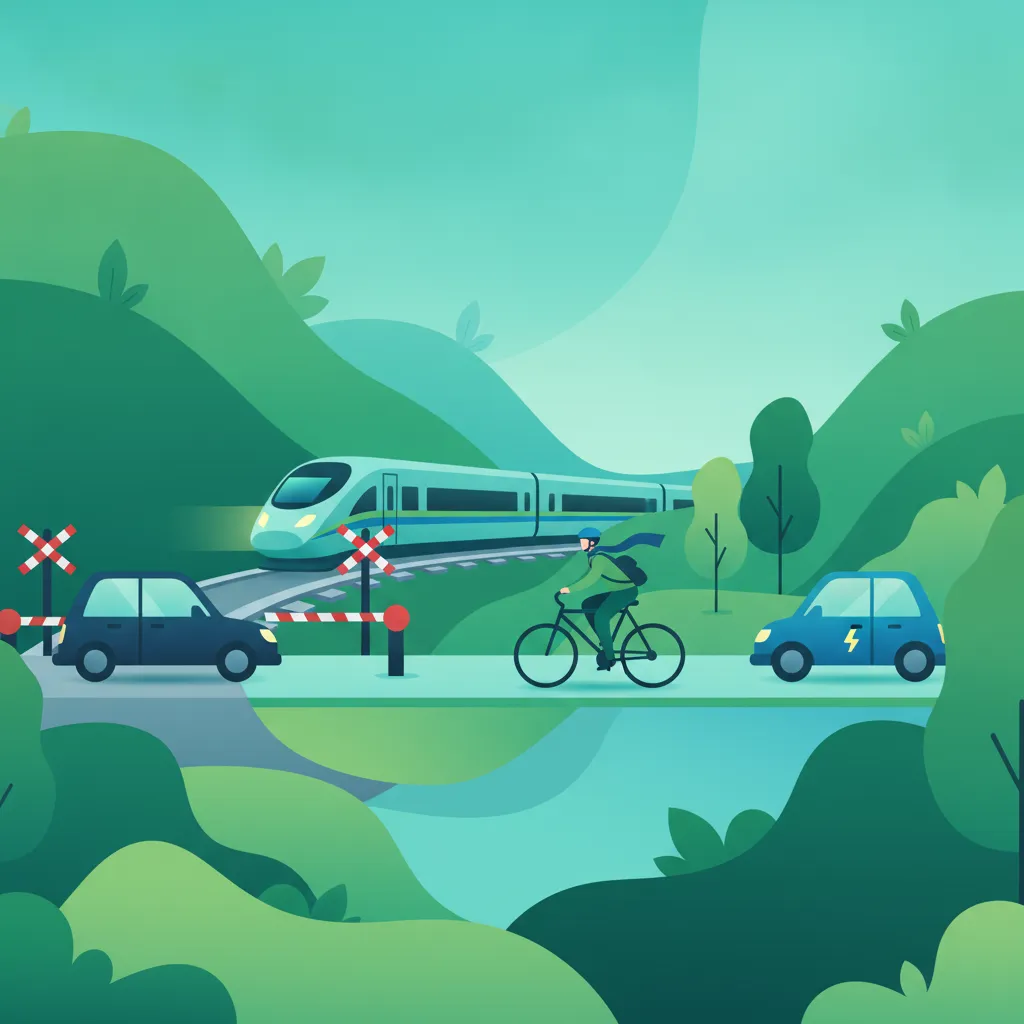
This lesson examines special traffic situations such as railway level crossings and shared zones where different road users coexist. It explains the specific safety procedures required at railway crossings and how to behave in shared zones with mixed traffic. The content also addresses the need to yield to oncoming trains and follow special signage in these unique zones.
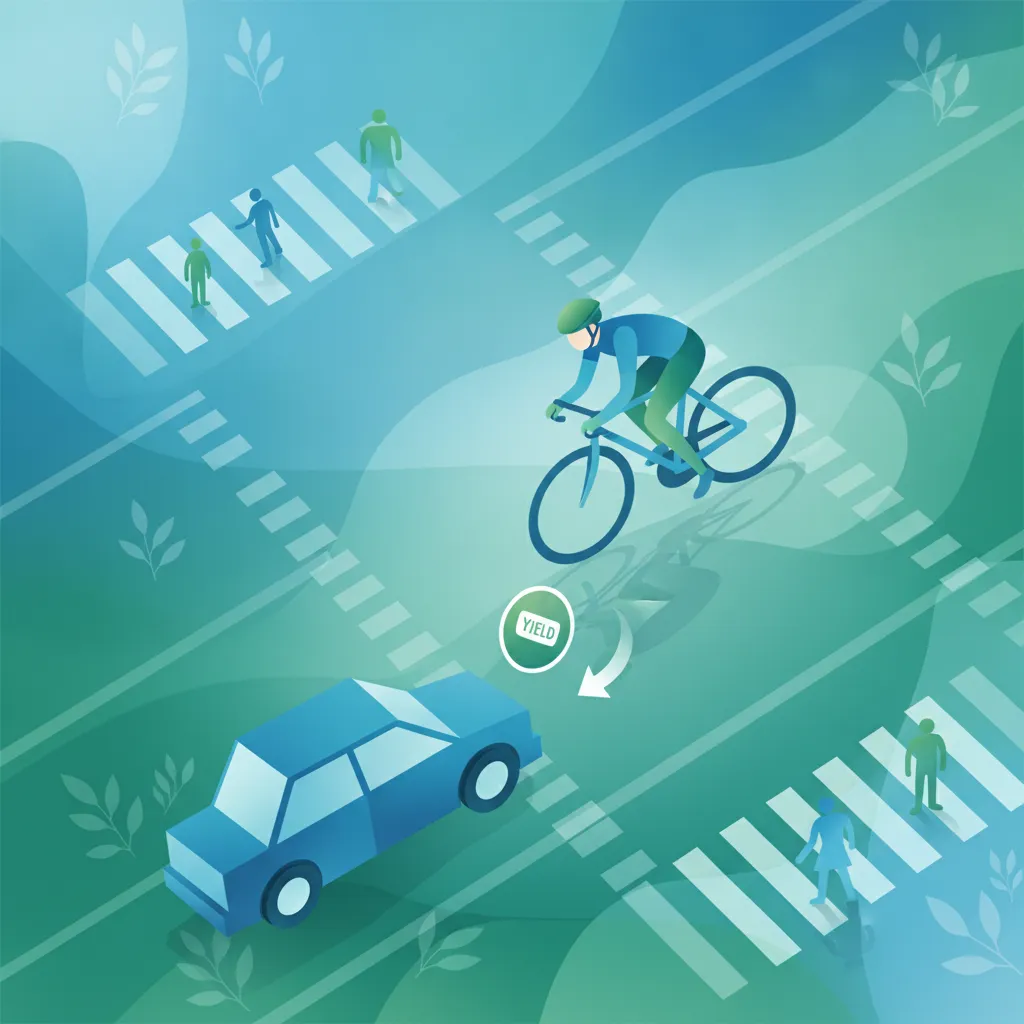
This lesson provides a step-by-step guide to navigating intersections. It reinforces the priority rules, such as 'Rechtsvortritt', and the meaning of yield and stop signs. The content emphasizes the importance of a thorough visual scan on approach and correct positioning to ensure visibility and a safe passage.
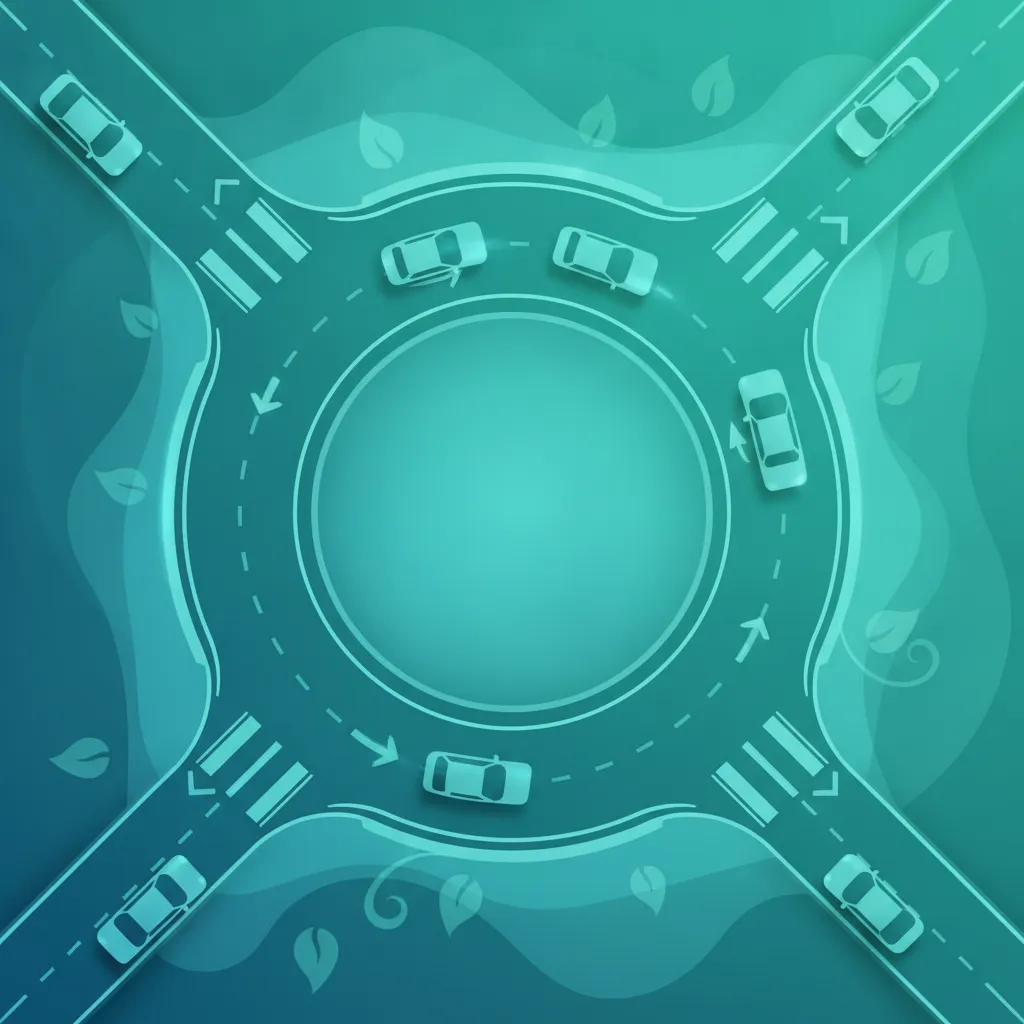
This lesson provides a detailed guide to navigating roundabouts, focusing on yielding to circulating traffic and correct lane usage. You will learn the priority principle that vehicles already in the roundabout have precedence over entering traffic. The content also covers multi-lane roundabout navigation and proper exit strategies for smooth, safe traversal.

Bus lanes are a key tool for improving service reliability, but they come with specific rules. This lesson covers how to correctly interpret bus lane signs and markings. It also explains the regulations for entering and leaving the lane to make turns or avoid obstructions, and the priority rules associated with them.
This lesson provides guidance on safely negotiating intersections and roundabouts on a motorcycle. It details the correct procedures for approach, lane selection, and yielding according to Swiss traffic regulations. Emphasis is placed on heightened awareness of other vehicles, cyclists, and pedestrians in these complex traffic environments.
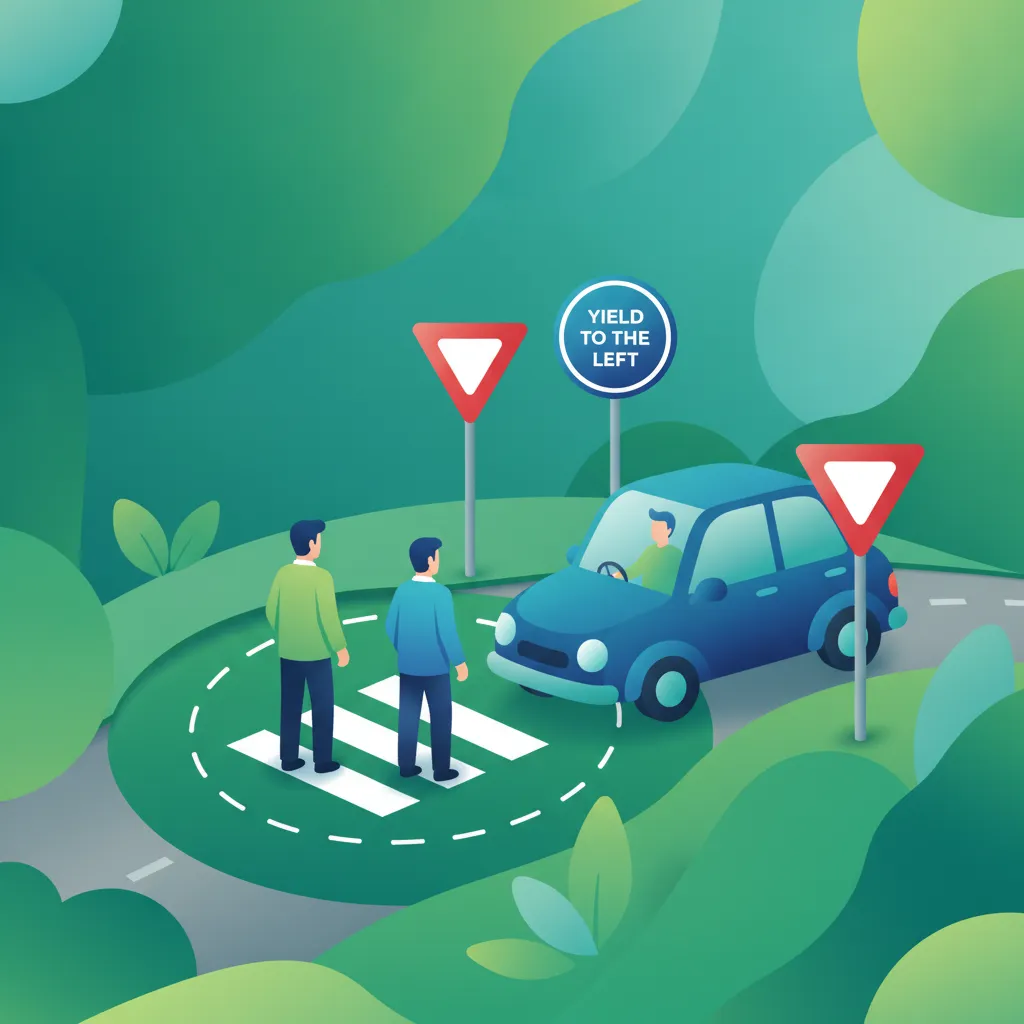
This lesson focuses specifically on the rules and techniques for navigating roundabouts. It clarifies that traffic already in the roundabout has priority and explains how to choose the correct lane on approach based on your intended exit. Proper signaling procedure for entering and, most importantly, exiting the roundabout is also detailed.
Understand the clear hierarchy of traffic control in Switzerland. Learn how traffic lights, regulatory signs like 'Vorrangstraße' and 'Yield', and the default right-hand rule interact to determine priority.
This lesson explores how traffic lights dictate priority at intersections, superseding general priority rules. It explains the meanings of red, amber, and green signals and the required actions for each. Emphasis is placed on understanding green light right-of-way and the cautionary role of the amber phase for navigating signal-controlled junctions safely.
This lesson examines the concept of Vortritt (priority) and Rechtsvortritt, the right-hand rule used at uncontrolled intersections. It explains how these rules determine which vehicle has the right-of-way and the hierarchy of priority signs. You will learn to apply these rules in typical scenarios like four-way stops and T-intersections without traffic signals.
This lesson explains the fundamental rules of priority that govern traffic flow at Swiss intersections. It details the concept of 'Rechtsvortritt' at unmarked junctions and how priority signs alter this default rule. The specific procedures for entering, navigating, and exiting roundabouts are also covered to ensure predictable and safe maneuvers.
This lesson details the specific priority rules governing Swiss intersections, including the concepts of 'Vortritt' and 'Rechtsvortritt'. It explains how to interpret road signs and markings to determine right-of-way in different situations. A clear understanding of these rules is essential for safe and legal navigation of intersections.
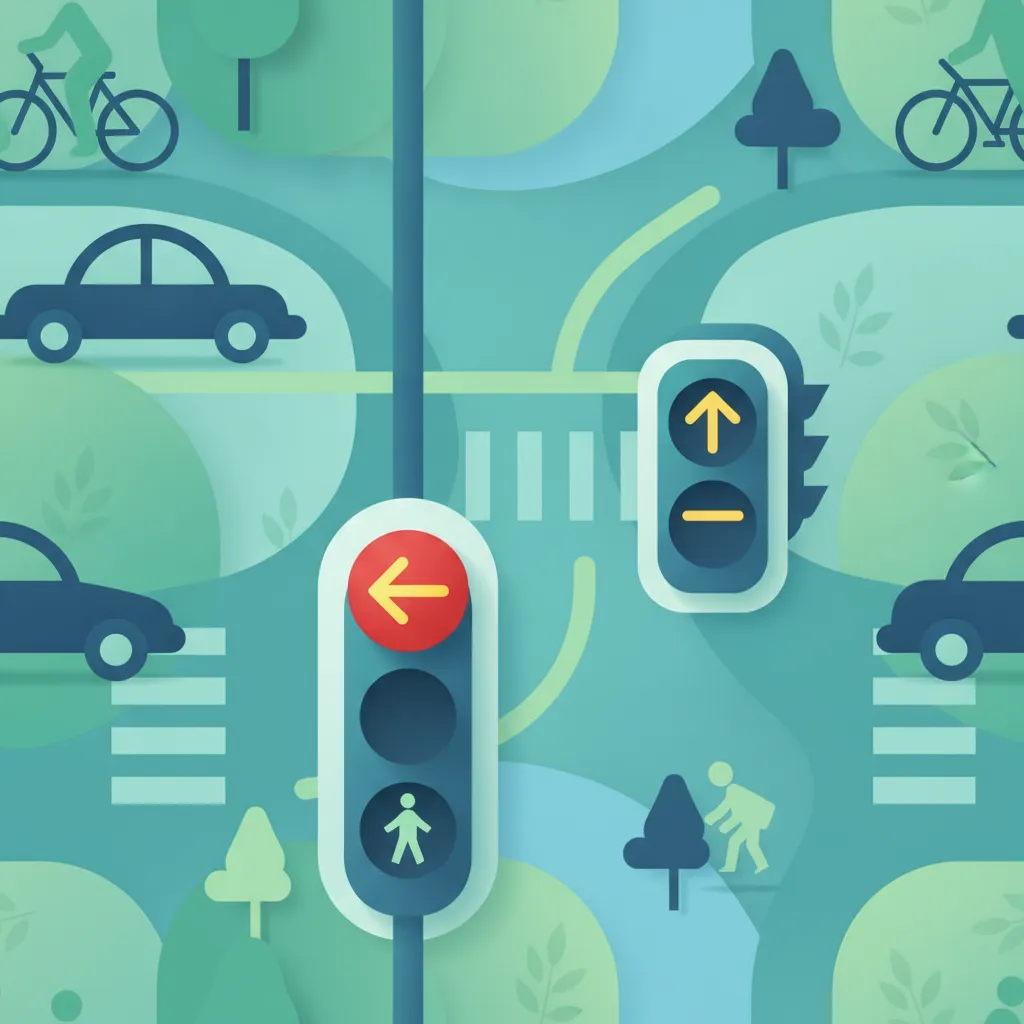
This lesson details the operation of traffic light systems in Switzerland. It explains the sequence and meaning of red, amber, and green lights, including flashing amber signals. The content also covers specific signals for pedestrians and the priority rules associated with tram signals to ensure safe interaction at controlled intersections.
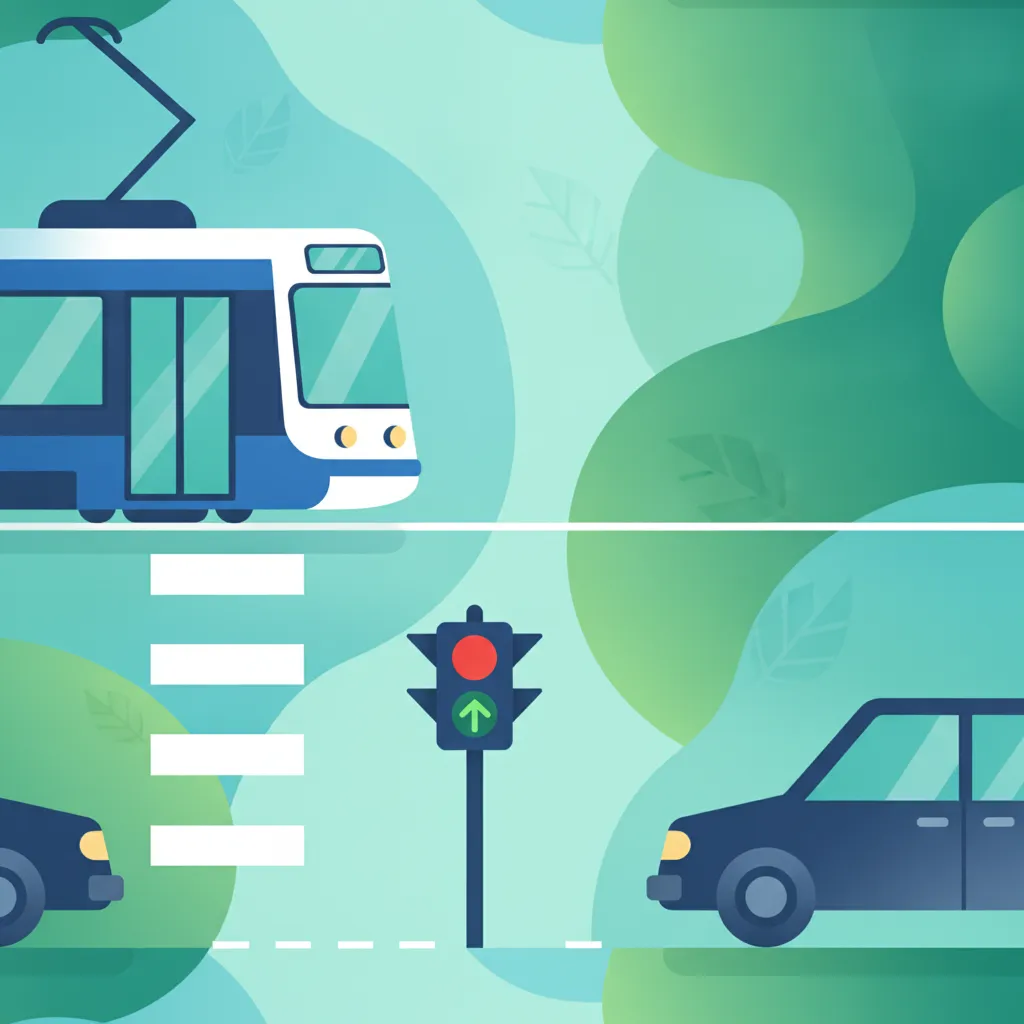
Many Swiss cities use systems that give buses priority at traffic lights to improve punctuality. This lesson explains how these systems detect an approaching bus and alter the signal phasing. You will learn to recognize and correctly respond to the special white light signals that grant this priority.
Bus lanes are a key tool for improving service reliability, but they come with specific rules. This lesson covers how to correctly interpret bus lane signs and markings. It also explains the regulations for entering and leaving the lane to make turns or avoid obstructions, and the priority rules associated with them.

This lesson delineates the various categories of road users on Swiss roads, highlighting their specific rights and responsibilities. It explains the legal hierarchy that determines priority at intersections and in shared spaces. The content also discusses the unique considerations for vulnerable users, such as children, emphasizing the need for heightened caution.
This lesson focuses specifically on the rules and techniques for navigating roundabouts. It clarifies that traffic already in the roundabout has priority and explains how to choose the correct lane on approach based on your intended exit. Proper signaling procedure for entering and, most importantly, exiting the roundabout is also detailed.

This lesson explores the priority given to public transport vehicles, especially trams and buses, in Swiss traffic. It explains how to recognize dedicated public transport lanes and the requirement to yield to trams at intersections. The content also covers procedures when a bus is stopping for passengers and how to ensure safe interactions.
Find clear answers to common questions learners have about Kein Vortritt (No Priority) Situations. Learn how the lesson is structured, which driving theory objectives it supports, and how it fits into the overall learning path of units and curriculum progression in Switzerland. These explanations help you understand key concepts, lesson flow, and exam focused study goals.
Rechtsvortritt is the default right-hand rule that applies at unmarked junctions. Kein Vortritt indicates that you must yield to traffic on the main road, overriding the default right-hand rule.
Not always. A 'Stop' sign requires a full halt, while a 'Yield' (Kein Vortritt) sign only requires you to stop if other road users are approaching or crossing and have the right of way.
Yes. Traffic signals and police signals always take precedence over priority road signs. If a light is green, you follow the light; if it is out or flashing yellow, you revert to the priority signs.
Priority mistakes are a common cause of accidents and exam failures. Knowing exactly when you must yield is a fundamental skill for demonstrating you can operate a vehicle safely in mixed traffic.
Pinpoint specific Swiss traffic rules, road signs, or driving situations you need to master. Use the practice search to start a focused revision session now and build confidence for your official driving theory exam.