
This lesson provides a deep dive into the technicalities of turning at intersections and navigating roundabouts on Swiss roads. It builds on your foundational understanding of priority rules to ensure you can perform these maneuvers safely and pass the relevant sections of your Category B theory exam.
Lesson content overview
Turning at intersections and navigating roundabouts are fundamental driving skills crucial for safety and maintaining smooth traffic flow. This comprehensive lesson, part of your Comprehensive Swiss Driving Theory Course for Category B License, details the correct procedures, legal obligations, and best practices for these common maneuvers. Understanding these techniques is vital for preventing collisions and successfully passing your Swiss driving examination.
Every turn and roundabout negotiation involves careful observation, precise vehicle control, and clear communication with other road users. Misjudgments or errors in these situations are frequent causes of accidents. This chapter will equip you with the knowledge to execute turns and navigate roundabouts safely and confidently, building upon your understanding of basic road markings, signaling, and priority rules.
Safe and lawful execution of turns at intersections and roundabouts relies on several interconnected principles. These principles ensure predictability, minimize conflict points, and protect all road users.
Right-of-way (often referred to as 'priority' in Swiss regulations) is the legal privilege that determines which vehicle proceeds first at an intersection. Correctly identifying and adhering to right-of-way rules is fundamental to preventing collisions.
Traffic on a priority road has precedence over traffic entering from side roads. Priority roads are typically marked by specific signs, ensuring a smoother flow of traffic. Drivers on a priority road do not need to stop or yield unless indicated by a traffic light or a stop sign.
A yield sign (Geben Sie Acht / Cédez le passage) requires drivers to give way to traffic on the intersecting road, which is typically a priority road. This means you must slow down and be prepared to stop if necessary, allowing vehicles on the priority road to pass before you proceed.
A stop sign (Stopp / Stop) is the highest form of yield requirement. It mandates that drivers must come to a complete stop before the stop line, even if there is no immediate traffic. Only after ensuring the intersection is clear can you proceed safely.
In Switzerland, if an intersection is not controlled by traffic lights, signs, or road markings, the default rule of right-hand priority applies. This means you must yield to any vehicle approaching from your right. This rule is crucial in residential areas or smaller roads where signs may be absent.
Always double-check for signs and road markings first. Only when none are present does right-hand priority apply. Never assume priority; always be prepared to yield.
When approaching any intersection, your first step is to identify the priority rules in effect. This might involve:
Once priority is established, you can plan your turn, ensuring you yield to any traffic that has the right-of-way before proceeding. For example, when turning left across the path of oncoming traffic, you generally must yield to those vehicles unless a specific left-turn signal gives you priority.
Signaling is a fundamental aspect of safe driving, informing other road users of your intended actions. Proper use of turn indicators is a legal requirement and a critical safety measure.
Vehicle lights used to clearly communicate an intended left or right turn to other road users, including drivers, cyclists, and pedestrians.
Never use hazard lights to signal a turn. Hazard lights are for indicating a stationary hazard or emergency, not for turning.
Lane discipline is crucial for orderly traffic flow and preventing conflicts, especially at intersections. Selecting the correct lane for your intended turn is a key step in safe maneuver execution.
Many intersections feature dedicated lanes specifically marked for turning left or right. These lanes are typically indicated by arrows painted on the road surface and often separated by solid or dashed lines.
Some lanes may be used for both straight-through traffic and turning traffic (e.g., a lane marked with a straight arrow and a right-turn arrow).
Always check road signs and markings overhead or on the road surface well in advance to ensure you are in the correct lane for your intended direction. Changing lanes at the last minute or after crossing the stop line is dangerous and often illegal.
Beyond choosing the correct lane, precise vehicle positioning within that lane is essential for executing a turn safely and smoothly. This ensures you have enough room for the turn's trajectory without encroaching on other lanes or road users.
When preparing for a right turn, especially from a lane that also continues straight, position your vehicle closer to the right edge of your lane.
For a left turn, your positioning depends on whether you are in a dedicated left-turn lane or a mixed lane.
Speed adaptation is a critical skill for navigating turns safely. Entering a turn at an inappropriate speed can lead to loss of control, skidding, or an inability to stop for hazards.
A common mistake is assuming that a turn can be made at the posted speed limit. The speed limit is the maximum allowed under ideal conditions, not the recommended speed for all maneuvers, especially turns. Always adjust your speed to what is safe for the specific turn and conditions.
Roundabouts are designed to improve traffic flow and reduce the severity of collisions compared to traditional intersections. However, they require specific navigation skills, particularly regarding yielding and lane discipline.
The most fundamental rule for entering a roundabout in Switzerland is to yield to vehicles already circulating inside it.
In multi-lane roundabouts, selecting the correct lane before entry and maintaining lane discipline inside is crucial for safe and efficient navigation.
Signaling your exit from a roundabout is mandatory and vital for communicating your intentions to following drivers and pedestrians waiting to cross.
Failing to signal your exit from a roundabout can confuse other drivers, especially those waiting to enter, and can lead to unnecessary braking or collisions.
Adhering to the specific articles of the Swiss Traffic Regulations (Verkehrsregelverordnung, RVV) is not just good practice but a legal obligation for all drivers.
According to relevant RVV regulations, drivers must give a clear indication with the vehicle’s turn signals before commencing a turn. This applies to all road types and is crucial for allowing other road users to anticipate your actions. Failure to signal or signaling prematurely can result in legal penalties.
The RVV mandates that vehicles on a priority road always have the right-of-way. Approaching vehicles without priority must yield, stopping if necessary, to prevent collisions. This rule underpins the safe operation of countless intersections across Switzerland.
A specific RVV article governs conduct at roundabouts, stating that vehicles entering a roundabout must give way to traffic already circulating inside it, unless otherwise indicated by specific markings or signals. This regulation is fundamental to the smooth and safe operation of roundabouts.
For multi-lane roundabouts, the RVV stipulates that drivers must stay within their chosen lane while traveling inside the roundabout and generally must not change lanes before exiting. This rule promotes predictable vehicle paths and prevents side-swipe accidents.
When making a turn at an intersection, the RVV requires vehicles to begin the turn from the lane designated for that specific direction, unless lane markings permit a shared lane. This prevents cutting across lanes and ensures correct alignment.
Even if the posted speed limit is higher, the RVV requires drivers to reduce speed to a level that allows for the safe execution of a turn. This legal requirement accounts for the dynamic forces acting on a vehicle during a turn, which can lead to loss of control if speed is not adequately managed.
Even experienced drivers can sometimes make errors when turning or navigating roundabouts. Being aware of these common pitfalls can help you avoid them.
Late Signaling:
Turning from the Wrong Lane:
Failure to Yield at a Roundabout Entry:
Lane Change Inside a Multi-Lane Roundabout:
Overspeeding Before a Turn:
Not Signaling When Leaving a Roundabout:
Safe turning requires flexibility. You must adapt your approach based on environmental factors, traffic density, and the presence of vulnerable road users.
Reduced Visibility (Fog, Heavy Rain, Snow):
Nighttime Driving:
Wet or Slippery Roads (Rain, Ice, Snow):
Heavy Traffic:
Vulnerable Road Users Present (Pedestrians, Cyclists):
Vehicle Load (Heavy Trailer or Load):
Let's look at a few common driving situations to reinforce the application of these rules.
You are at an urban intersection, signaling a left turn. The traffic light is green, but there is oncoming traffic approaching and a pedestrian waiting to cross the road you intend to enter.
You are approaching a double-lane roundabout and intend to take the third exit. There's a car already circulating in the inner lane of the roundabout.
You are at a rural T-junction without any signs or traffic lights, intending to turn right onto the main road. A vehicle is approaching from your right on the main road.
Mastering turns and roundabout navigation is a cornerstone of safe driving. Here’s a concise summary of the key takeaways:
This lesson covers the essential procedures for turning at intersections and navigating roundabouts under Swiss traffic law. Learners must understand that right-of-way is determined by signs, markings, lights, or right-hand priority as a default. Correct signaling (early activation and exit signaling for roundabouts) and proper lane selection before reaching the intersection are critical for safety and exam success. Roundabout navigation requires yielding to circulating traffic, selecting the correct entry lane based on your intended exit, maintaining lane discipline throughout, and signaling your exit. Speed adaptation is mandatory regardless of posted limits, with additional caution required in adverse weather or heavy-load conditions.
A short set of high-value points that capture the most important learning from this lesson.
Right-of-way at Swiss intersections is determined by traffic signs, road markings, traffic lights, or default right-hand priority when nothing else applies.
Turn indicators must be activated early (30m urban, 50-100m high-speed), remain on throughout the maneuver, and signal right before your roundabout exit.
Lane selection must be made well before the intersection; turning from the wrong lane or changing lanes inside a roundabout creates serious collision risks.
Approaching vehicles must always yield to circulating traffic already inside a roundabout, and lane discipline must be maintained until after exiting.
Speed must be reduced before any turn regardless of posted limits, with further reduction needed for wet, icy, or heavy-load conditions.
Explore all units and lessons included in this driving theory course.
In uncontrolled intersections without signs or lights, right-hand priority applies: yield to vehicles approaching from your right.
For multi-lane roundabouts: use outer lane for first or second exit, inner lane for third exit or beyond.
Position right turns closer to the right edge of the lane; position left turns toward the center line or center of a dedicated left-turn lane.
Never change lanes inside a roundabout; once you enter in your chosen lane, stay in it until your exit.
The speed limit is the maximum under ideal conditions, not the safe speed for executing turns or navigating roundabouts.
Late signaling: activating turn indicators too close to the intersection leaves other road users insufficient time to react.
Turning from the wrong lane: attempting turns from lanes marked only for straight-through traffic causes conflicts and is illegal.
Failing to yield to circulating traffic: entering a roundabout without checking for vehicles already inside creates high-risk collision situations.
Lane changing inside roundabouts: switching between inner and outer lanes while circulating is prohibited and extremely dangerous.
Not signaling the exit: forgetting to activate the right indicator before your exit from a roundabout confuses following drivers and pedestrians.
Lesson content overview
A short set of high-value points that capture the most important learning from this lesson.
Right-of-way at Swiss intersections is determined by traffic signs, road markings, traffic lights, or default right-hand priority when nothing else applies.
Turn indicators must be activated early (30m urban, 50-100m high-speed), remain on throughout the maneuver, and signal right before your roundabout exit.
Lane selection must be made well before the intersection; turning from the wrong lane or changing lanes inside a roundabout creates serious collision risks.
Approaching vehicles must always yield to circulating traffic already inside a roundabout, and lane discipline must be maintained until after exiting.
Speed must be reduced before any turn regardless of posted limits, with further reduction needed for wet, icy, or heavy-load conditions.
Explore all units and lessons included in this driving theory course.
In uncontrolled intersections without signs or lights, right-hand priority applies: yield to vehicles approaching from your right.
For multi-lane roundabouts: use outer lane for first or second exit, inner lane for third exit or beyond.
Position right turns closer to the right edge of the lane; position left turns toward the center line or center of a dedicated left-turn lane.
Never change lanes inside a roundabout; once you enter in your chosen lane, stay in it until your exit.
The speed limit is the maximum under ideal conditions, not the safe speed for executing turns or navigating roundabouts.
Late signaling: activating turn indicators too close to the intersection leaves other road users insufficient time to react.
Turning from the wrong lane: attempting turns from lanes marked only for straight-through traffic causes conflicts and is illegal.
Failing to yield to circulating traffic: entering a roundabout without checking for vehicles already inside creates high-risk collision situations.
Lane changing inside roundabouts: switching between inner and outer lanes while circulating is prohibited and extremely dangerous.
Not signaling the exit: forgetting to activate the right indicator before your exit from a roundabout confuses following drivers and pedestrians.
Explore search topics learners often look for when studying Turning at Intersections and Roundabouts. These topics reflect common questions about road rules, driving situations, safety guidance, and lesson level theory preparation for learners in Switzerland.
Browse additional driving theory lessons that cover connected traffic rules, road signs, and common driving situations related to this topic. Improve your understanding of how different rules interact across everyday traffic scenarios.
Explore advanced scenarios and specific rules for navigating complex intersections and multi-lane roundabouts in Switzerland. Learn advanced lane selection, priority adjustments, and safe maneuvering techniques for challenging traffic situations beyond basic principles.
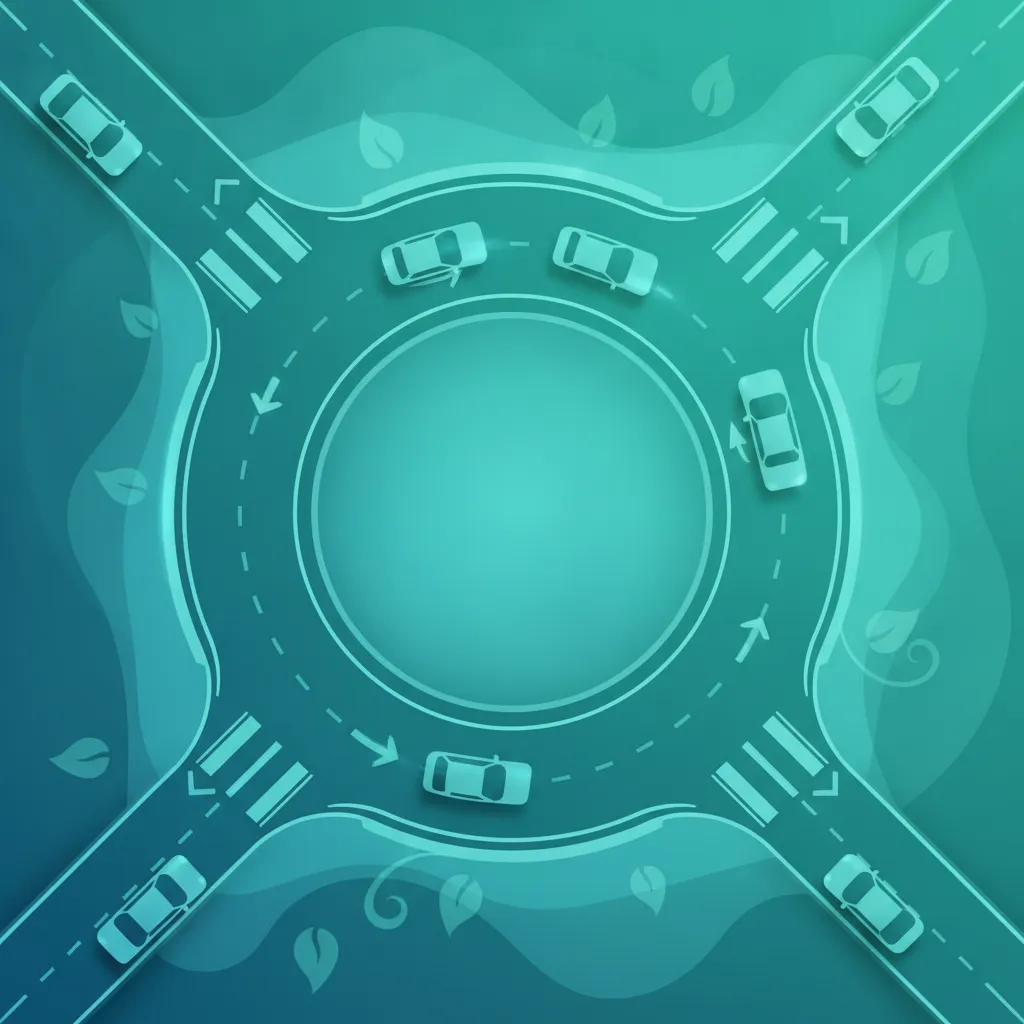
This lesson provides a detailed guide to navigating roundabouts, focusing on yielding to circulating traffic and correct lane usage. You will learn the priority principle that vehicles already in the roundabout have precedence over entering traffic. The content also covers multi-lane roundabout navigation and proper exit strategies for smooth, safe traversal.
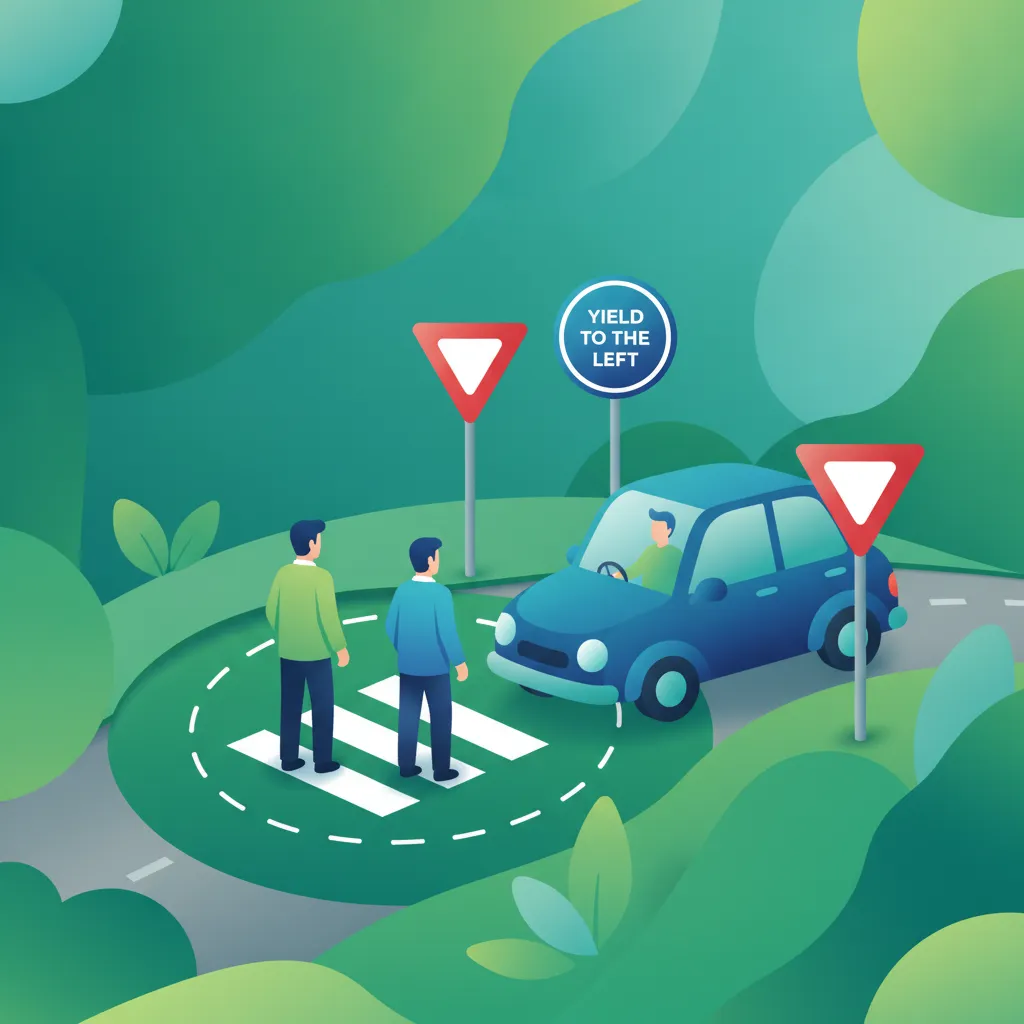
This lesson focuses specifically on the rules and techniques for navigating roundabouts. It clarifies that traffic already in the roundabout has priority and explains how to choose the correct lane on approach based on your intended exit. Proper signaling procedure for entering and, most importantly, exiting the roundabout is also detailed.
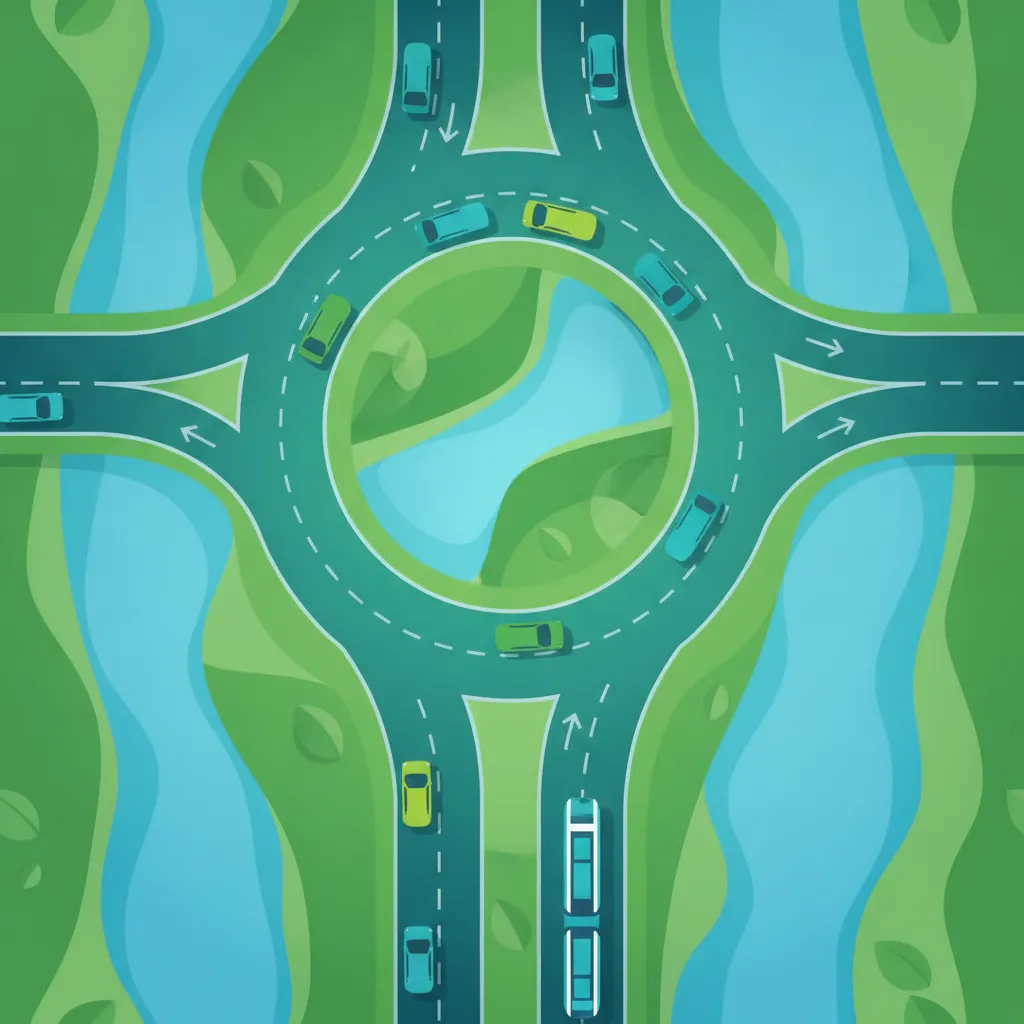
The size of a bus requires careful planning when negotiating complex intersections. This lesson teaches the importance of early lane selection, clear signalling, and comprehensive observation. It provides specific techniques for managing the vehicle's swept path through multi-lane roundabouts and other challenging urban junctions.
This lesson provides guidance on safely negotiating intersections and roundabouts on a motorcycle. It details the correct procedures for approach, lane selection, and yielding according to Swiss traffic regulations. Emphasis is placed on heightened awareness of other vehicles, cyclists, and pedestrians in these complex traffic environments.
This lesson provides guidance on safely navigating roundabouts and tram lanes, common features in Swiss cities. It covers the rules for yielding, lane positioning within the roundabout, and signaling intentions upon exiting. Special attention is given to the hazards of crossing slippery tram tracks and sharing the road with public transport.
This lesson provides a step-by-step guide to navigating intersections. It reinforces the priority rules, such as 'Rechtsvortritt', and the meaning of yield and stop signs. The content emphasizes the importance of a thorough visual scan on approach and correct positioning to ensure visibility and a safe passage.
This lesson explains the fundamental rules of priority that govern traffic flow at Swiss intersections. It details the concept of 'Rechtsvortritt' at unmarked junctions and how priority signs alter this default rule. The specific procedures for entering, navigating, and exiting roundabouts are also covered to ensure predictable and safe maneuvers.

Motorway driving requires constant concentration due to high speeds. This lesson emphasizes the importance of staying in the right-hand lane unless overtaking and the specific restrictions on lorry overtaking in Switzerland. It reinforces the need for a following distance of at least four seconds to compensate for the vehicle's long stopping distance and provides guidance on safely merging and exiting.

This lesson covers complex manoeuvres such as three-point turns, U-turns, and parking in tight spaces. You will learn the step-by-step process for performing a three-point turn and the legal requirements for a U-turn. The content also provides guidance for parking in confined areas, ensuring proper lane usage and positioning during these manoeuvres.
This lesson examines special traffic situations such as railway level crossings and shared zones where different road users coexist. It explains the specific safety procedures required at railway crossings and how to behave in shared zones with mixed traffic. The content also addresses the need to yield to oncoming trains and follow special signage in these unique zones.
Understand common errors drivers make when turning at intersections and navigating roundabouts. This lesson provides clear explanations to help you avoid typical pitfalls, enhance safety, and ensure adherence to Swiss traffic regulations.
This lesson provides a detailed guide to navigating roundabouts, focusing on yielding to circulating traffic and correct lane usage. You will learn the priority principle that vehicles already in the roundabout have precedence over entering traffic. The content also covers multi-lane roundabout navigation and proper exit strategies for smooth, safe traversal.
This lesson focuses specifically on the rules and techniques for navigating roundabouts. It clarifies that traffic already in the roundabout has priority and explains how to choose the correct lane on approach based on your intended exit. Proper signaling procedure for entering and, most importantly, exiting the roundabout is also detailed.
This lesson provides guidance on safely navigating roundabouts and tram lanes, common features in Swiss cities. It covers the rules for yielding, lane positioning within the roundabout, and signaling intentions upon exiting. Special attention is given to the hazards of crossing slippery tram tracks and sharing the road with public transport.
This lesson provides guidance on safely negotiating intersections and roundabouts on a motorcycle. It details the correct procedures for approach, lane selection, and yielding according to Swiss traffic regulations. Emphasis is placed on heightened awareness of other vehicles, cyclists, and pedestrians in these complex traffic environments.
This lesson provides a step-by-step guide to navigating intersections. It reinforces the priority rules, such as 'Rechtsvortritt', and the meaning of yield and stop signs. The content emphasizes the importance of a thorough visual scan on approach and correct positioning to ensure visibility and a safe passage.

Turning a long vehicle requires careful planning and execution. This lesson covers the correct procedure: approach, observation, signalling, and positioning the vehicle correctly to allow for the trailer's off-tracking without mounting the kerb. It also highlights the need for constant mirror checks throughout the turn to monitor for cyclists or other vulnerable road users who may enter the danger zone.

This lesson focuses on mitigating the risk of collisions at intersections, particularly from vehicles turning across the rider's path. It teaches defensive strategies such as positioning for visibility, anticipating driver actions, and using head checks to be aware of surrounding traffic. Managing your own and others' blind spots is presented as a crucial survival skill.
This lesson covers complex manoeuvres such as three-point turns, U-turns, and parking in tight spaces. You will learn the step-by-step process for performing a three-point turn and the legal requirements for a U-turn. The content also provides guidance for parking in confined areas, ensuring proper lane usage and positioning during these manoeuvres.
This lesson explains the fundamental rules of priority that govern traffic flow at Swiss intersections. It details the concept of 'Rechtsvortritt' at unmarked junctions and how priority signs alter this default rule. The specific procedures for entering, navigating, and exiting roundabouts are also covered to ensure predictable and safe maneuvers.
This lesson focuses on maintaining proper vehicle positioning within the lane, aligning correctly, and respecting road markings. You will understand how correct positioning contributes to safe overtaking and smooth turning. The content also discusses adjustments required in different scenarios, such as narrow roads and multi-lane highways, to maintain optimal lane discipline.
Find clear answers to common questions learners have about Turning at Intersections and Roundabouts. Learn how the lesson is structured, which driving theory objectives it supports, and how it fits into the overall learning path of units and curriculum progression in Switzerland. These explanations help you understand key concepts, lesson flow, and exam focused study goals.
No, you only signal when exiting the roundabout. Signaling when entering is not required unless you are changing lanes within the roundabout, though you must signal as you approach your intended exit.
Choose the lane based on your exit. If you are taking the first exit (right), stay in the right lane. If going straight or left, you may use the inner lane, but always check for traffic already circulating before changing lanes to exit.
Many candidates fail to look for vulnerable road users like cyclists who might be passing on the right side of the vehicle when they are turning right. Always perform your blind spot check.
No. Traffic already circulating in the roundabout has priority over those entering. You must yield to all traffic coming from your left before you enter the roundabout.
Pinpoint specific Swiss traffic rules, road signs, or driving situations you need to master. Use the practice search to start a focused revision session now and build confidence for your official driving theory exam.