
This lesson focuses on the professional driver's essential role in providing inclusive and safe transport for all passengers. You will learn the correct procedures for assisting individuals with reduced mobility and disabilities, ensuring their comfort, safety, and dignity during every journey as a Category D professional.
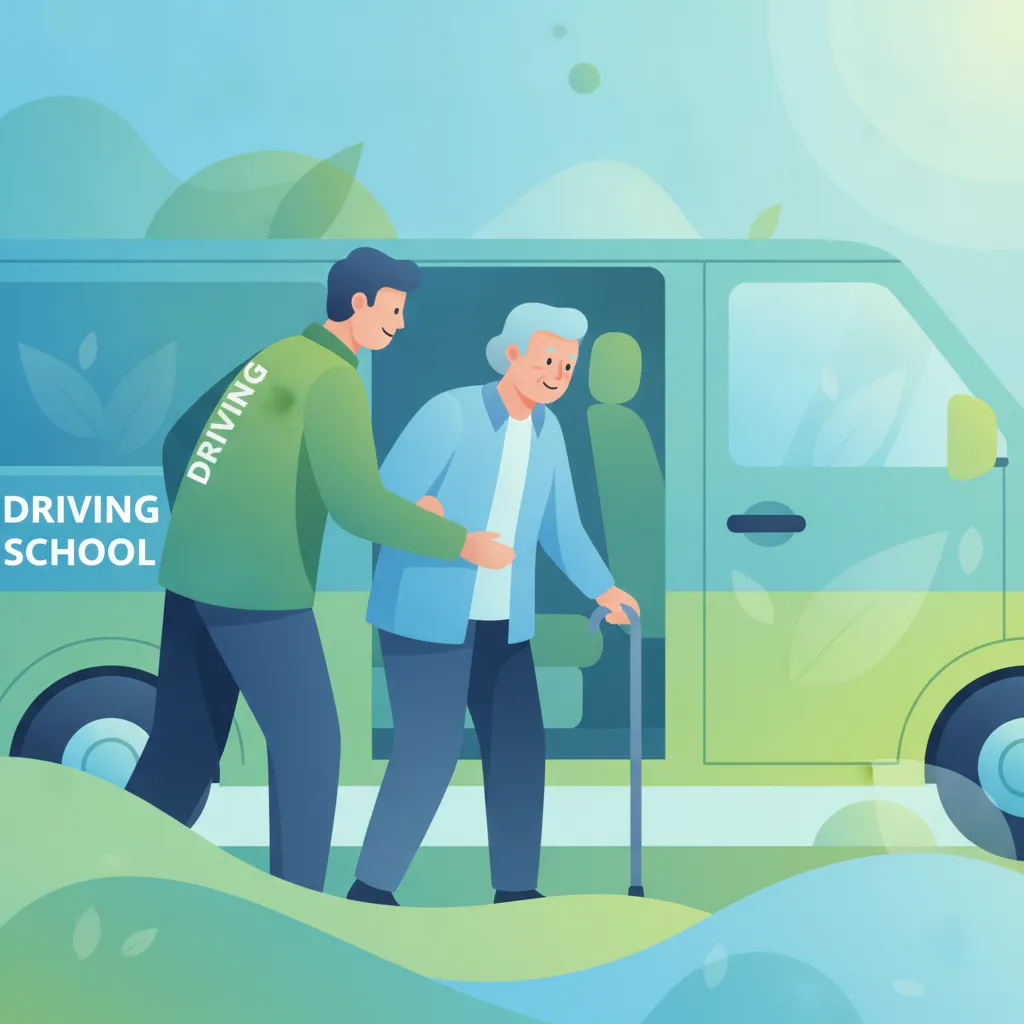
Lesson content overview
Professional bus and coach drivers in Switzerland play an indispensable role in ensuring public transport is accessible and safe for everyone. This lesson provides essential guidance for interacting with and assisting passengers who have reduced mobility or disabilities. By understanding specific needs and applying best practices, drivers can uphold their duty of care, enhance passenger dignity, and contribute to an inclusive transport system.
The accessibility of public transport is a cornerstone of modern society, reflecting legal requirements and a commitment to social inclusion. As a professional driver in the Swiss Category D driving license theory course, your understanding and application of accessibility best practices are paramount. This involves not only operating sophisticated vehicle equipment but also demonstrating empathy, clear communication, and adherence to specific legal obligations.
Proper assistance is critical for reducing the risk of accidents during boarding and alighting, which can be particularly challenging for passengers with mobility limitations or sensory impairments. It directly contributes to passenger dignity, ensuring that individuals can travel independently and comfortably, fostering trust in public services. This lesson is built upon foundational knowledge from earlier sections, including general vehicle operation, basic understanding of accessibility equipment (covered in depth in Lesson 3.4), and core professional responsibilities.
Effective assistance for passengers with reduced mobility or disabilities is guided by several core principles that ensure safety, respect, and equality. Adhering to these principles is not just good practice; it is a fundamental aspect of your professional duty.
Your primary responsibility as a driver is the safety of all passengers. This duty of care extends particularly to those who may be more vulnerable during transit, such as individuals with reduced mobility. It requires proactive measures to mitigate risks of injury during boarding, alighting, and while the vehicle is in motion. This principle mandates adherence to accessibility equipment protocols, careful driving, and respectful, clear communication at all times. Failing to provide assistance when requested or operating equipment improperly can lead to serious accidents and legal consequences.
Treating every passenger with respect and dignity is fundamental. This means acknowledging their autonomy, preserving their privacy, and avoiding any patronizing behaviour. Always remember to ask before offering physical assistance, as many passengers prefer to manage independently or have specific methods of assistance they prefer. Respecting their preferences is crucial for their psychological well-being and fosters a positive, trusting interaction. Unnecessary physical contact should always be avoided.
Equality of access dictates that transportation services must be usable by all individuals, regardless of their disability. This principle aligns with national anti-discrimination laws, such as the Swiss Disability Equality Act, and public transport policy. For drivers, this means ensuring that accessible boarding options are always available, that appropriate equipment is functional and ready for use, and that staff are adequately trained to provide support. It's about breaking down barriers to travel and providing the same opportunity to everyone.
Performing assistance in a manner that does not compromise vehicle stability or passenger safety is paramount. This involves precise execution of procedures, such as correctly positioning ramps or lifts, ensuring stable footing for passengers, and maintaining clear communication throughout the process. The goal is to reduce the risk of falls, equipment failure, and driver distraction, which could endanger both the passenger and other road users. Always prioritize safety over speed.
Professionalism encompasses consistent, courteous, and lawful conduct in all interactions with passengers. It upholds public trust in the transport system and reflects positively on you as a driver and the transport operator. This includes following all standard operating procedures (SOPs) for passenger assistance, maintaining a calm and helpful demeanor, and addressing any challenges with competence and patience.
Passengers with reduced mobility or disabilities present a spectrum of needs. Recognizing these diverse requirements is the first step toward providing effective and respectful assistance.
Reduced mobility encompasses various conditions that can affect a person's ability to navigate public spaces safely and independently. These passengers may need additional time, physical support, or the use of accessibility equipment.
Many elderly passengers experience age-related reduced mobility, such as arthritis, decreased balance, or general frailty. They may use walking frames or canes for support. It's important not to assume all elderly passengers require assistance but always to offer help respectfully. They might need more time to board or alight, and a smooth, steady ride (as covered in Lesson 3.1) is particularly important for their comfort and safety.
Passengers who use wheelchairs, walkers, or canes will typically require the use of ramps or lifts for boarding and alighting. Their mobility aids must be securely stowed or locked into designated spaces once on board to prevent movement during travel. Always ask these passengers how you can best assist them, as they are often the most knowledgeable about their specific needs and preferences.
Passengers with temporary conditions, such as a broken leg in a cast, recent surgery, or a sprained ankle, may also have reduced mobility. While their condition is not permanent, they will require similar consideration and assistance as those with chronic reduced mobility. They might need support for balance or extra time to maneuver.
Passengers with visual impairments, ranging from low vision to complete blindness, rely heavily on verbal cues and consistent environments. They cannot read signs or anticipate obstacles.
They may also have a guide dog, which should be allowed to board with them and occupy a space near their owner, provided it does not obstruct the aisle or other passengers. Drivers must act as their "eyes," guiding them to doors, stairs, or ramps, and helping them maintain orientation throughout the boarding process.
Passengers with hearing impairments may have difficulty perceiving verbal instructions or vehicle announcements. This requires drivers to adapt their communication methods.
Before boarding, it is good practice to try and confirm their preferred mode of communication. In some cases, written notes or gesturing towards accessibility equipment might be necessary. Avoid shouting, as this can be ineffective and disrespectful.
Modern buses and coaches are equipped with various devices to facilitate boarding and alighting for passengers with reduced mobility. As a professional driver, you must be proficient in operating and maintaining these systems.
Ramps provide an inclined surface for wheelchairs and passengers with walking aids to board the vehicle. They come in several forms:
Regardless of the type, it is crucial to ensure the ramp is fully extended and securely locked in place before any passenger attempts to use it. This prevents the ramp from collapsing or shifting under weight.
Passenger lifts are vertical platforms designed to raise or lower a wheelchair user and their mobility aid into or out of the vehicle.
Positioning: Ensure the bus is fully stopped, level, and the lift area is clear of obstructions.
Deployment: Activate the lift mechanism according to manufacturer instructions.
Boarding: Guide the passenger onto the lift platform, ensuring their wheelchair brakes are engaged.
Securement: Ensure the passenger is seated or securely held during the lift's operation. Standing on a moving lift is highly dangerous.
Elevation/Lowering: Operate the lift smoothly and carefully.
Disembarkation: Once the platform is level with the bus floor or ground, guide the passenger off, then retract the lift.
Before commencing your shift, and certainly before using any accessibility equipment, you must perform pre-use checks. This involves visually inspecting the ramps and lifts for any signs of damage, ensuring all safety locks and mechanisms are functional, and checking that the equipment operates smoothly. Any malfunction must be reported immediately and the equipment taken out of service to prevent accidents. Regular maintenance (as covered in Lesson 2) is vital to ensure these systems remain reliable.
Effective communication is the cornerstone of providing respectful and safe assistance to passengers with disabilities. It builds trust, preserves dignity, and minimizes misunderstandings.
Always initiate interaction by asking if a passenger requires assistance and, if so, how you can best help them. Phrases like, "May I assist you with the ramp?" or "Would you prefer to board independently, or would you like some help?" empower the passenger to guide the interaction. Never assume a passenger's needs or attempt to provide physical assistance without explicit consent, whether verbal or through a clear non-verbal signal.
When providing verbal instructions, especially to visually impaired passengers or those needing specific directions, use simple, direct language. Avoid jargon or overly complex sentences. For example, instead of "Just go over there," say "The door is directly to your left, about three steps forward." Describe steps or changes in surface clearly.
Body language, facial expressions, and hand gestures are powerful communication tools. Maintain an open and approachable posture. For hearing-impaired passengers, clear hand signals can be essential. Make eye contact if appropriate, and be patient, allowing extra time for passengers to process information or respond. Remember that a calm and reassuring presence can significantly reduce anxiety.
Standardized and safe procedures for boarding and alighting are essential to prevent accidents, especially for passengers needing assistance. These procedures integrate the use of accessibility equipment with careful vehicle handling.
When approaching a bus stop, position your vehicle correctly, ensuring it is as close and parallel to the curb as possible. This minimizes the gap for passengers to cross and provides a stable platform for deploying ramps or lifts. If using an accessible boarding point (e.g., a low-floor entrance), ensure it is aligned perfectly with the intended boarding area. Always come to a complete stop before opening any doors or deploying equipment.
Allow sufficient dwell time at stops, particularly when assisting passengers with reduced mobility. Rushing the process increases the risk of falls and errors. Manage the flow of other passengers to ensure the boarding or alighting area for those needing assistance remains clear and unobstructed. Once a passenger has boarded via a ramp or lift, ensure they are safely inside and clear of the door before retracting the equipment and closing the doors.
Once a passenger using a wheelchair, walker, or pram has boarded, it is your responsibility to ensure their mobility aid is securely stowed or fastened. Wheelchairs must be locked into designated areas using the vehicle's securing straps or clamps. Prams should be folded and placed in luggage areas if possible, or if not, positioned where they won't become a tripping hazard or move during travel. Always verify that the passenger’s footrests are secured and that they are comfortable and safe before departure.
Swiss law provides a clear framework for ensuring accessible public transport. As a professional driver, you must be aware of these regulations to fulfill your legal obligations.
Several articles within the Swiss Road Traffic Act (Strassenverkehrsgesetz, SVG) directly impact your duty regarding passenger assistance:
The Swiss Disability Equality Act (Behindertengleichstellungsgesetz, BehiG) aims to eliminate discrimination against people with disabilities. For public transport operators and their drivers, this means:
This act reinforces the principle of equality of access and is a cornerstone of inclusive public transport policy in Switzerland.
While federal laws set the baseline, specific cantons may implement additional regulations or require specialized training for drivers assisting disabled passengers. These cantonal provisions often address regional accessibility needs or specific operational requirements. It is essential to be aware of and complete any mandatory training stipulated by your local transport authority.
Being aware of common mistakes and challenging situations can help you prevent incidents and ensure smooth, safe operations.
When deploying ramps or operating lifts at a bus stop, your vehicle may temporarily occupy more road space or create new hazards for other road users.
Ensuring accessible public transport is a multi-faceted responsibility that integrates legal obligations, compassionate communication, and technical proficiency. As a professional driver in Switzerland, your commitment to these principles guarantees a safer, more respectful, and inclusive travel experience for all passengers.
This lesson covers the professional driver's responsibility to provide inclusive, safe transport for passengers with reduced mobility or disabilities, aligning with Swiss legal requirements under the SVG and BehiG. Key procedures include correct operation of ramps and lifts, proper securing of mobility aids, and adherence to safe boarding and alighting protocols. Drivers must always obtain consent before physical assistance, adapt communication methods for passengers with visual or hearing impairments, and manage dwell time appropriately. The lesson also addresses environmental adaptations and interactions with other road users during accessibility equipment deployment, emphasizing that passenger safety and dignity are paramount legal and professional obligations.
A short set of high-value points that capture the most important learning from this lesson.
Drivers must provide assistance upon request and ensure accessible boarding options are always functional and ready for use.
Always ask for consent before offering physical assistance and adapt communication to each passenger's specific needs.
Ramps and lifts must be fully extended, locked, and checked before any passenger uses them to prevent collapse or accidents.
Mobility aids must be secured in designated areas using proper restraints before departure to prevent movement during travel.
Swiss law (SVG Art. 90) mandates assistance to disabled passengers, while BehiG prohibits discrimination and requires accessible services.
Explore all units and lessons included in this driving theory course.
Duty of care requires drivers to proactively mitigate injury risks for vulnerable passengers during boarding, alighting, and transit.
Wheelchair users should be asked how they prefer to be assisted as they are most knowledgeable about their specific needs.
For visually impaired passengers, provide clear verbal descriptions of the path, steps, and boarding cues; avoid sudden movements.
All vehicle doors must be fully closed before moving (SVG Art. 118), especially after deploying ramps or lifts.
In adverse weather, take extra precautions on ramps; ensure surfaces are dry or use anti-slip mats and provide additional physical support.
Starting vehicle movement while a passenger is still boarding or alighting, especially when using ramps or lifts.
Assuming passenger needs without asking first or providing physical assistance without explicit consent.
Failing to properly secure wheelchairs or mobility aids, allowing them to shift or tip during acceleration, braking, or turns.
Using ramps or lifts that show signs of damage or malfunction instead of reporting and seeking alternatives.
Rushing passengers with reduced mobility, increasing anxiety and the risk of falls during boarding or alighting.
Lesson content overview
A short set of high-value points that capture the most important learning from this lesson.
Drivers must provide assistance upon request and ensure accessible boarding options are always functional and ready for use.
Always ask for consent before offering physical assistance and adapt communication to each passenger's specific needs.
Ramps and lifts must be fully extended, locked, and checked before any passenger uses them to prevent collapse or accidents.
Mobility aids must be secured in designated areas using proper restraints before departure to prevent movement during travel.
Swiss law (SVG Art. 90) mandates assistance to disabled passengers, while BehiG prohibits discrimination and requires accessible services.
Explore all units and lessons included in this driving theory course.
Duty of care requires drivers to proactively mitigate injury risks for vulnerable passengers during boarding, alighting, and transit.
Wheelchair users should be asked how they prefer to be assisted as they are most knowledgeable about their specific needs.
For visually impaired passengers, provide clear verbal descriptions of the path, steps, and boarding cues; avoid sudden movements.
All vehicle doors must be fully closed before moving (SVG Art. 118), especially after deploying ramps or lifts.
In adverse weather, take extra precautions on ramps; ensure surfaces are dry or use anti-slip mats and provide additional physical support.
Starting vehicle movement while a passenger is still boarding or alighting, especially when using ramps or lifts.
Assuming passenger needs without asking first or providing physical assistance without explicit consent.
Failing to properly secure wheelchairs or mobility aids, allowing them to shift or tip during acceleration, braking, or turns.
Using ramps or lifts that show signs of damage or malfunction instead of reporting and seeking alternatives.
Rushing passengers with reduced mobility, increasing anxiety and the risk of falls during boarding or alighting.
Explore search topics learners often look for when studying Assisting Passengers with Reduced Mobility and Disabilities. These topics reflect common questions about road rules, driving situations, safety guidance, and lesson level theory preparation for learners in Switzerland.
Browse additional driving theory lessons that cover connected traffic rules, road signs, and common driving situations related to this topic. Improve your understanding of how different rules interact across everyday traffic scenarios.
Understand your legal and ethical responsibilities in Switzerland for assisting passengers with reduced mobility. Learn professional conduct, safe techniques, and communication strategies to ensure accessibility and dignity for all travelers.
This lesson provides step-by-step instructions on how to safely deploy, operate, and stow wheelchair ramps and lifts. It covers pre-operation checks, correct positioning of the vehicle, and the procedures for safely securing a wheelchair inside the bus. Proper use of this equipment is vital for the safety of both the passenger and the driver.

Unsecured items can become dangerous projectiles in the event of a sudden stop or collision. This lesson covers the driver's responsibility for overseeing the secure stowage of passenger belongings. It includes rules for using luggage compartments on coaches and designated spaces for prams and mobility aids on city buses.

Standing passengers are particularly vulnerable to sudden vehicle movements. This lesson covers the driver's responsibility to adapt their driving style when people are standing. It emphasizes even smoother control, heightened awareness, and clear communication to minimize the risk of falls and injuries.

This lesson focuses on general driving safety in areas with a high concentration of children. It stresses the importance of significantly reducing speed, being prepared for unexpected events, and scanning for children between parked cars. The driver must exhibit maximum vigilance in these high-risk environments at all times.
The driver must ensure all boarding passengers are safely on board and stable before moving off. This lesson covers managing the flow of passengers, dealing with fares or tickets efficiently, and encouraging people to move away from the doorway. The primary goal is to prevent falls that can occur if the vehicle moves prematurely.
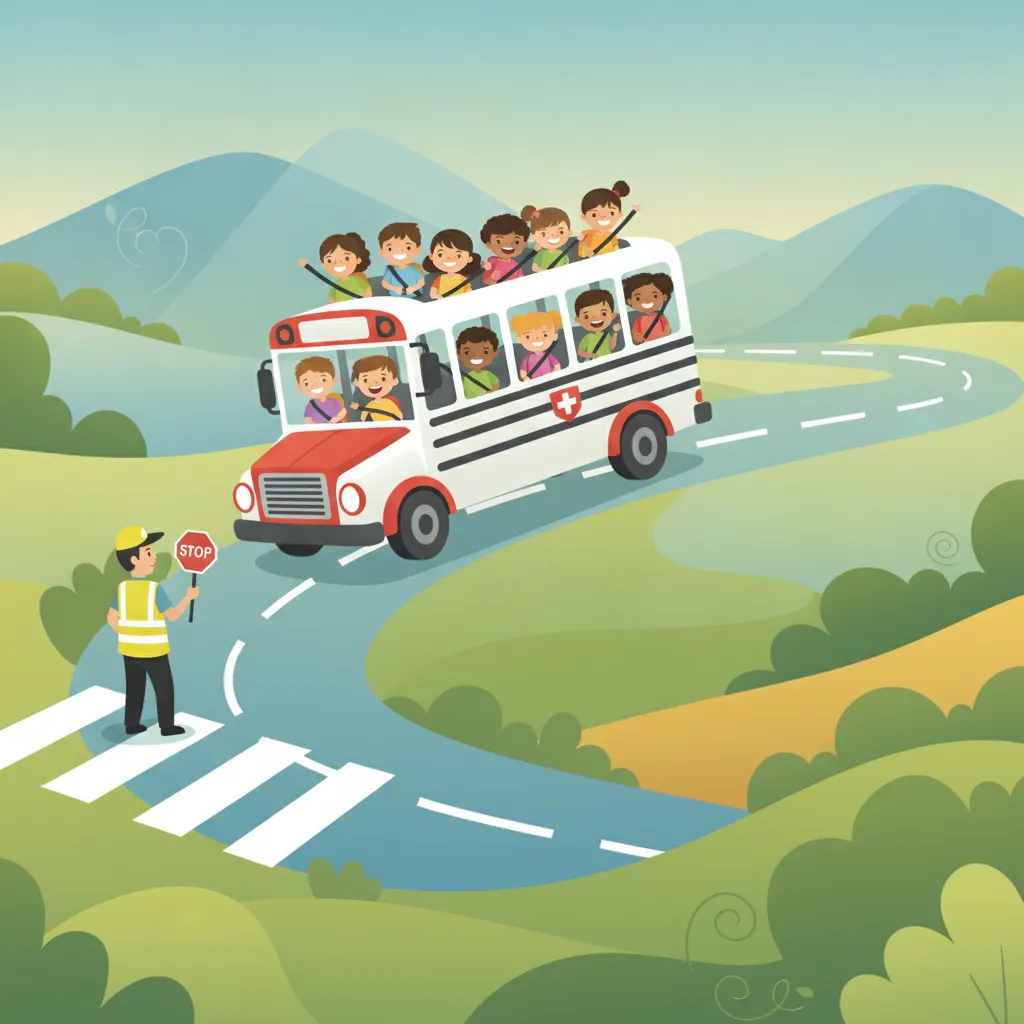
Transporting children carries the highest level of responsibility. This lesson covers the specific legal requirements for school buses in Switzerland, including the use of special signs and warning lights. It details the safe procedures for stopping, boarding, and alighting, and the driver's role in supervising children.
This lesson outlines the steps a driver should take when a passenger becomes ill or requires medical attention. It covers safely stopping the vehicle, making an emergency call to the correct number (144/112), and providing basic assistance until professional help arrives. The focus is on a calm, systematic response to a stressful situation.

This lesson focuses on the legally required safety equipment that must be on board every passenger vehicle. You will learn how to locate and check the fire extinguisher, first aid kit, and emergency hammers. It also covers the inspection of emergency exits to ensure they are unobstructed and functional.

Motorway driving involves high speeds and requires constant concentration. This lesson covers correct lane discipline, safe procedures for joining and leaving the motorway, and techniques for overtaking other large vehicles. Maintaining appropriate speed and a safe following distance is emphasized throughout.

Departing from a bus stop is a high-risk manoeuvre. This lesson details the critical sequence of actions: checking all passengers are clear of the doors, performing a comprehensive mirror and blind spot check, signalling, and waiting for a safe gap in traffic. This systematic approach is essential for preventing collisions with overtaking vehicles, cyclists, or pedestrians.
Master the theory behind operating ramps and lifts on Swiss Category D vehicles. This lesson covers pre-use checks, safe deployment, and securement procedures essential for providing accessible public transport.
This lesson provides step-by-step instructions on how to safely deploy, operate, and stow wheelchair ramps and lifts. It covers pre-operation checks, correct positioning of the vehicle, and the procedures for safely securing a wheelchair inside the bus. Proper use of this equipment is vital for the safety of both the passenger and the driver.
Unsecured items can become dangerous projectiles in the event of a sudden stop or collision. This lesson covers the driver's responsibility for overseeing the secure stowage of passenger belongings. It includes rules for using luggage compartments on coaches and designated spaces for prams and mobility aids on city buses.
The driver must ensure all boarding passengers are safely on board and stable before moving off. This lesson covers managing the flow of passengers, dealing with fares or tickets efficiently, and encouraging people to move away from the doorway. The primary goal is to prevent falls that can occur if the vehicle moves prematurely.
Standing passengers are particularly vulnerable to sudden vehicle movements. This lesson covers the driver's responsibility to adapt their driving style when people are standing. It emphasizes even smoother control, heightened awareness, and clear communication to minimize the risk of falls and injuries.

Large passenger vehicles rely on powerful air brake systems. This lesson explains how these systems work, including the importance of monitoring air pressure. It also details the function and proper use of auxiliary braking systems (retarders) to control speed on long descents and reduce wear on the service brakes.
This lesson focuses on the legally required safety equipment that must be on board every passenger vehicle. You will learn how to locate and check the fire extinguisher, first aid kit, and emergency hammers. It also covers the inspection of emergency exits to ensure they are unobstructed and functional.

This lesson provides a clear breakdown of the different vehicle categories within the Swiss Category D license framework. You will learn to distinguish between a minibus (D1), a standard bus (D), and combinations with trailers (D1E, DE). The content covers the specific rules regarding passenger numbers, vehicle mass, and the legal requirements for operating each class of vehicle.

Terminals and depots are busy environments with other large vehicles, maintenance staff, and cleaning crews. This lesson focuses on the specific hazards present in these off-road locations. It emphasizes adherence to site-specific rules, maintaining low speeds, and being highly aware of people working around vehicles.
Transporting children carries the highest level of responsibility. This lesson covers the specific legal requirements for school buses in Switzerland, including the use of special signs and warning lights. It details the safe procedures for stopping, boarding, and alighting, and the driver's role in supervising children.
Departing from a bus stop is a high-risk manoeuvre. This lesson details the critical sequence of actions: checking all passengers are clear of the doors, performing a comprehensive mirror and blind spot check, signalling, and waiting for a safe gap in traffic. This systematic approach is essential for preventing collisions with overtaking vehicles, cyclists, or pedestrians.
Find clear answers to common questions learners have about Assisting Passengers with Reduced Mobility and Disabilities. Learn how the lesson is structured, which driving theory objectives it supports, and how it fits into the overall learning path of units and curriculum progression in Switzerland. These explanations help you understand key concepts, lesson flow, and exam focused study goals.
The priority is always safety and then dignity. You must ensure the bus is appropriately positioned at the curb, apply the parking brake, and secure the wheelchair using the vehicle's integrated restraint systems before allowing the bus to move.
Yes, professional drivers are expected to provide verbal guidance or physical assistance where appropriate. Always ask how the passenger prefers to be helped, maintain clear communication, and ensure they are safely seated before departing.
The exam tests your knowledge of the driver's duty of care and the specific safety requirements for accessibility. You may face situational questions regarding your responsibility to act during passenger boarding or emergency scenarios involving vulnerable travelers.
As a professional driver, your priority is safety. You must politely explain the necessity of the safety measures for their protection and the protection of others, maintaining a calm and helpful demeanor while ensuring the rules of the transport authority are met.
Pinpoint specific Swiss traffic rules, road signs, or driving situations you need to master. Use the practice search to start a focused revision session now and build confidence for your official driving theory exam.