
This lesson guides you through the complexities of motorway driving for professional passenger transport vehicles in Switzerland. You will learn the critical rules for lane selection, maintaining safety buffers, and managing the unique handling characteristics of buses at high speeds, ensuring you are fully prepared for both the theory exam and real-world motorway operations.

Lesson content overview
Motorway driving presents a unique set of challenges and responsibilities for professional drivers operating Category D vehicles, such as buses and coaches, within Switzerland. These high-speed environments demand heightened concentration, precise vehicle control, and strict adherence to specific rules to ensure the safety of passengers and other road users. This lesson, designed for the Swiss Category D Driving License Theory Course, will equip you with the essential knowledge regarding lane discipline, speed management, and safe entry and exit procedures crucial for navigating Swiss motorways (Autobahn/Autoroute).
Swiss motorways are engineered for efficiency and high-speed travel, typically with a maximum speed limit of 120 km/h for passenger cars. However, for Category D vehicles, specific regulations apply due to their increased length, weight, and passenger load. These characteristics significantly affect vehicle dynamics, including braking distances and maneuverability. Consequently, maintaining appropriate speed and ample following distance becomes paramount to preventing incidents and ensuring smooth traffic flow.
The principles of safe motorway operation build upon fundamental concepts learned previously, such as vehicle dynamics, advanced maneuvering techniques, and general road safety principles. A solid understanding of these foundational areas is crucial before tackling the complexities of high-speed motorway environments.
Lane discipline is the practice of consistently using the designated lane for your vehicle's intended direction and speed, avoiding unnecessary weaving or prolonged occupation of overtaking lanes. For Category D vehicles, strict lane discipline is a cornerstone of safe motorway driving, contributing significantly to predictable traffic flow and reducing potential conflict points.
The rightmost lane is the primary cruising lane for normal travel on multi-lane motorways. As a bus or coach driver, you should primarily occupy this lane when not actively overtaking. This practice ensures that faster-moving traffic can utilize the left lanes, maintaining the hierarchy of speed lanes and preventing congestion. Always return to the rightmost lane after completing an overtaking maneuver, provided it is safe and practical to do so.
The left lane (or lanes, on motorways with more than two lanes in one direction) is designated as the overtaking lane. It is to be used solely for passing slower vehicles. It is a common mistake for drivers of all vehicle types, including heavy vehicles, to remain in the overtaking lane longer than necessary. This practice, often referred to as "lane hogging," can impede traffic flow, increase frustration among other drivers, and lead to unnecessary risks. After successfully overtaking, always signal and return to the cruising lane once you have sufficient clearance from the vehicle you have passed.
Any lane change must be executed with extreme caution. Before initiating a lane change, always check your mirrors thoroughly, perform a quick over-the-shoulder blind spot check, and signal your intention well in advance. Merge smoothly into the new lane, ensuring you do not force other vehicles to brake or swerve. Abrupt or unsignaled lane changes are highly dangerous, especially at motorway speeds, and are a common cause of collisions.
Check Mirrors: Use your rear-view and side mirrors to assess traffic in the target lane and behind you.
Blind Spot Check: Briefly glance over your shoulder in the direction of the desired lane to ensure no vehicle is hidden in your blind spot. This is particularly crucial for large vehicles.
Signal Intention: Activate your indicator lights well in advance to signal your intention to other drivers.
Identify Safe Gap: Wait for a sufficiently large and safe gap in the target lane, ensuring you will not disrupt the flow of traffic.
Execute Smoothly: Steer gently and smoothly into the new lane, maintaining your speed where appropriate.
Cancel Signal: Once fully in the new lane, cancel your indicator.
Maintaining an appropriate speed is fundamental to safe motorway driving, particularly for Category D vehicles. Speed management involves not only adhering to posted speed limits but also adjusting your speed proactively based on traffic conditions, vehicle load, and prevailing weather.
For Category D vehicles on Swiss motorways, the maximum posted speed limit is generally 80 km/h, unless specific signage indicates otherwise. It is imperative to continuously monitor your speedometer and ensure you remain within this legal limit. Exceeding the speed limit not only carries significant legal penalties, including fines and potential license points, but also dramatically increases stopping distances and collision severity.
Motorways often feature variable speed limits displayed on electronic signs, particularly in construction zones, tunnels, or areas prone to adverse weather. These limits are mandatory and must be obeyed. Additionally, advisory speed limits may be suggested to enhance safety, especially during challenging conditions. While advisory limits are not always legally binding, professional drivers should always adapt their speed accordingly to changing road conditions. Ignoring these recommendations can compromise safety and indicate a lack of professional judgment.
The fixed speed limit of 80 km/h represents the maximum under ideal conditions. You must reduce your speed:
Using cruise control can be beneficial on long stretches of motorway under stable conditions, but it should be disengaged or actively managed when conditions are variable or demanding.
Entering a motorway safely requires a precise procedure to seamlessly integrate your vehicle into high-speed traffic. The goal is to match the speed of motorway traffic on the acceleration lane and merge without forcing other drivers to brake or swerve.
Upon entering a motorway, you will typically encounter an acceleration lane (Ein- bzw. Beschleunigungsstreifen). This dedicated lane provides space to build up speed. As a Category D driver, you must accelerate purposefully on this lane to reach a speed that is as close as possible to the flow of traffic already on the motorway, usually around 80 km/h.
Before the acceleration lane ends, check your mirrors (especially your right-side mirror for the rightmost motorway lane) and perform a quick blind spot check. Signal your intention to merge left. Look for a safe merging gap in the traffic flow – a space large enough to accommodate your coach without requiring the driver behind you to slow down significantly. Vehicles already on the motorway have the right-of-way, meaning you must merge without disrupting their speed or path. If necessary, adjust your speed (either by accelerating more or momentarily reducing speed) to find a suitable gap. Once a gap is secured, steer smoothly into the rightmost lane.
Never stop at the end of an acceleration lane unless absolutely necessary to avoid a collision. Stopping at the end of the ramp means you will have to accelerate from a standstill into high-speed traffic, which is extremely dangerous for heavy vehicles.
Leaving a motorway safely is just as critical as entering it. Proper preparation, early signaling, and smooth deceleration are key to preventing hazards for both your vehicle and others on the road.
You should begin preparing for your exit well in advance, typically 1 kilometer (1000 meters) before the actual exit ramp. Look for overhead signs and roadside signs indicating upcoming exits. As you approach, gradually move into the rightmost lane if you are not already there. This minimizes last-minute lane changes and reduces stress.
Signal your intention to exit at least 300 meters before the deceleration lane (Ausfahrstreifen) begins. This provides ample warning to drivers behind you. Once you enter the deceleration lane, smoothly reduce your speed. Do not begin to brake on the main motorway lanes. The deceleration lane is specifically designed to allow you to slow down safely without affecting the speed of through-traffic.
Exit ramps are often curved and may have significantly lower speed limits than the motorway. Adjust your speed accordingly to navigate the curve safely, especially with a heavy passenger load. Be mindful of vehicles around you and maintain a safe following distance. Use your auxiliary brakes (retarders) where appropriate, especially on longer or steeper exit ramps, to manage your speed without over-relying on your service brakes.
One of the most critical safety measures on motorways, particularly for Category D vehicles, is maintaining an adequate following distance. This gap provides crucial reaction time and sufficient braking distance to avoid a collision with the vehicle ahead, especially given the extended stopping distances of buses and coaches.
While the "two-second rule" is often cited for passenger cars, professional drivers of heavy vehicles like buses and coaches should adhere to a more conservative four-second rule under normal conditions. This means there should be at least a four-second gap between the back of the vehicle in front of you and the front of your bus.
To measure your following distance, choose a fixed object by the roadside (e.g., a sign, a bridge). When the vehicle in front passes that object, begin counting "one thousand one, one thousand two, one thousand three, one thousand four." If your vehicle reaches the object before you finish counting, you are too close.
The four-second rule is a minimum for ideal conditions. You must increase your following distance significantly when:
Insufficient following distance, or "tailgating," is a major contributor to rear-end collisions and is heavily penalized under Swiss traffic law (StVO §3).
Overtaking on a motorway requires careful planning and execution, especially when operating a long and heavy Category D vehicle. The primary rule is that overtaking must always be performed on the left lane. Overtaking on the right is strictly prohibited, except in specific traffic jam situations or where explicitly permitted by signage, as it can surprise other drivers and lead to dangerous situations.
Before you begin to overtake a slower vehicle in the right lane:
Maintain a safe lateral distance from the vehicle you are overtaking. Do not "cut off" the overtaken vehicle by moving back to the right too soon. Only signal right and return to the cruising lane when you can see the entire front of the overtaken vehicle in your right-side mirror. This ensures you have ample clearance.
Understanding common violations and tricky situations helps you avoid them. Professional drivers are held to a higher standard of care, and even minor infractions can have significant consequences.
Speeding in Heavy Rain: Maintaining 80 km/h in a downpour when an advisory speed limit of 60 km/h is displayed.
Late Merging on Entry: Entering the acceleration lane at a low speed (e.g., 40 km/h) and then abruptly forcing your way into high-speed motorway traffic.
Remaining in Overtaking Lane: After overtaking a single vehicle, staying in the left overtaking lane for an extended period, even when the right lane is clear.
Insufficient Following Distance: Following a car at a two-second gap while traveling at 80 km/h.
Late Exit Signaling: Signaling an exit only 100 meters before the deceleration lane begins.
Motorway conditions are rarely static. A professional driver must constantly adapt their driving strategy to ensure safety and compliance.
The rules governing motorway driving are not arbitrary; they are rooted in the physics of vehicle dynamics and human reaction capabilities, especially concerning heavy vehicles.
By understanding these underlying principles, drivers can appreciate the critical importance of adhering to motorway safety regulations, not just as legal obligations, but as fundamental safeguards against potentially catastrophic incidents.
Mastering motorway driving as a Category D professional driver involves a combination of technical skill, adherence to regulations, and continuous situational awareness. By meticulously applying correct lane discipline, managing speed proactively, executing safe merging and exiting procedures, and maintaining appropriate following distances, you contribute significantly to road safety for yourself, your passengers, and all other road users. These practices are not merely legal requirements but essential strategies for safe and efficient operation of buses and coaches on Swiss motorways.
This lesson covers essential motorway driving procedures specifically for Category D vehicles in Switzerland, where buses and coaches face an 80 km/h speed limit due to their greater mass and braking requirements. Key procedures include maintaining right-lane discipline as the cruising lane, adhering to a four-second following distance minimum, and executing proper merge and exit maneuvers using acceleration and deceleration lanes respectively. The content also addresses adapting speed to weather, visibility, and load conditions, while explaining the physics behind safety rules such as stopping distance and kinetic energy. Understanding these principles and avoiding common violations like lane hogging, insufficient following distance, and improper signaling prepares drivers for both the theory exam and real-world motorway operations.
A short set of high-value points that capture the most important learning from this lesson.
Swiss motorways impose an 80 km/h speed limit on Category D vehicles, compared to 120 km/h for passenger cars, due to their longer braking distances and reduced maneuverability
Lane discipline requires staying in the rightmost cruising lane when not overtaking; the left lane is reserved exclusively for passing and must be vacated after completing an overtake
The four-second following distance rule applies to heavy vehicles (versus two seconds for cars) to accommodate extended stopping distances
Safe motorway entry requires accelerating on the acceleration lane to match traffic speed before merging; vehicles already on the motorway have right-of-way
Exit preparation must begin 1 kilometer ahead with signaling at least 300 meters before the deceleration lane, with braking only permitted once on the exit ramp
Explore all units and lessons included in this driving theory course.
Category D speed limit on Swiss motorways is 80 km/h unless otherwise posted on variable speed signs
Always return to the rightmost lane after overtaking; lingering in the left lane constitutes lane hogging and impedes faster traffic
The acceleration lane is for building speed to match traffic flow; never stop at its end when merging into high-speed traffic
Variable and advisory speed limits are mandatory and recommended respectively; professional drivers should always comply with advisory limits
Insufficient following distance (tailgating) is penalized under Swiss traffic law (StVO §3) and is a major cause of rear-end collisions
Maintaining 80 km/h in poor weather conditions when advisory or variable speed limits require lower speeds, increasing hydroplaning and collision risk
Entering acceleration lanes at low speeds (e.g., 40 km/h) and forcing merges, forcing other drivers to brake abruptly
Staying in the overtaking lane after passing a single vehicle, blocking faster traffic and violating lane discipline principles
Following vehicles too closely with only a two-second gap instead of the required four-second minimum for heavy vehicles
Signaling exits too late (e.g., 100 meters instead of 300 meters), giving following traffic insufficient warning to react safely
Lesson content overview
A short set of high-value points that capture the most important learning from this lesson.
Swiss motorways impose an 80 km/h speed limit on Category D vehicles, compared to 120 km/h for passenger cars, due to their longer braking distances and reduced maneuverability
Lane discipline requires staying in the rightmost cruising lane when not overtaking; the left lane is reserved exclusively for passing and must be vacated after completing an overtake
The four-second following distance rule applies to heavy vehicles (versus two seconds for cars) to accommodate extended stopping distances
Safe motorway entry requires accelerating on the acceleration lane to match traffic speed before merging; vehicles already on the motorway have right-of-way
Exit preparation must begin 1 kilometer ahead with signaling at least 300 meters before the deceleration lane, with braking only permitted once on the exit ramp
Explore all units and lessons included in this driving theory course.
Category D speed limit on Swiss motorways is 80 km/h unless otherwise posted on variable speed signs
Always return to the rightmost lane after overtaking; lingering in the left lane constitutes lane hogging and impedes faster traffic
The acceleration lane is for building speed to match traffic flow; never stop at its end when merging into high-speed traffic
Variable and advisory speed limits are mandatory and recommended respectively; professional drivers should always comply with advisory limits
Insufficient following distance (tailgating) is penalized under Swiss traffic law (StVO §3) and is a major cause of rear-end collisions
Maintaining 80 km/h in poor weather conditions when advisory or variable speed limits require lower speeds, increasing hydroplaning and collision risk
Entering acceleration lanes at low speeds (e.g., 40 km/h) and forcing merges, forcing other drivers to brake abruptly
Staying in the overtaking lane after passing a single vehicle, blocking faster traffic and violating lane discipline principles
Following vehicles too closely with only a two-second gap instead of the required four-second minimum for heavy vehicles
Signaling exits too late (e.g., 100 meters instead of 300 meters), giving following traffic insufficient warning to react safely
Explore search topics learners often look for when studying Motorway Driving: Lane Discipline, Speed, and Exits. These topics reflect common questions about road rules, driving situations, safety guidance, and lesson level theory preparation for learners in Switzerland.
Browse additional driving theory lessons that cover connected traffic rules, road signs, and common driving situations related to this topic. Improve your understanding of how different rules interact across everyday traffic scenarios.
Understand typical difficulties faced when driving buses on Swiss motorways, including speed management, lane discipline, and merging/exiting. Learn how to identify and mitigate risks associated with these situations for Category D drivers.

Rural driving requires a different mindset from urban driving. This lesson covers how to position your vehicle on narrow roads, how to use passing places effectively, and how to anticipate hazards like slow-moving farm machinery, animals, and concealed junctions. Managing vehicle width and height is a key focus.

Driving a large vehicle on mountain passes is a demanding skill. This lesson covers selecting the correct gear for both ascents and descents to maintain control and avoid overheating the brakes. It also explains the specific priority rules that apply on mountain roads and the importance of being aware of sudden weather changes.

Motorway driving requires constant concentration due to high speeds. This lesson emphasizes the importance of staying in the right-hand lane unless overtaking and the specific restrictions on lorry overtaking in Switzerland. It reinforces the need for a following distance of at least four seconds to compensate for the vehicle's long stopping distance and provides guidance on safely merging and exiting.

This lesson focuses on general driving safety in areas with a high concentration of children. It stresses the importance of significantly reducing speed, being prepared for unexpected events, and scanning for children between parked cars. The driver must exhibit maximum vigilance in these high-risk environments at all times.
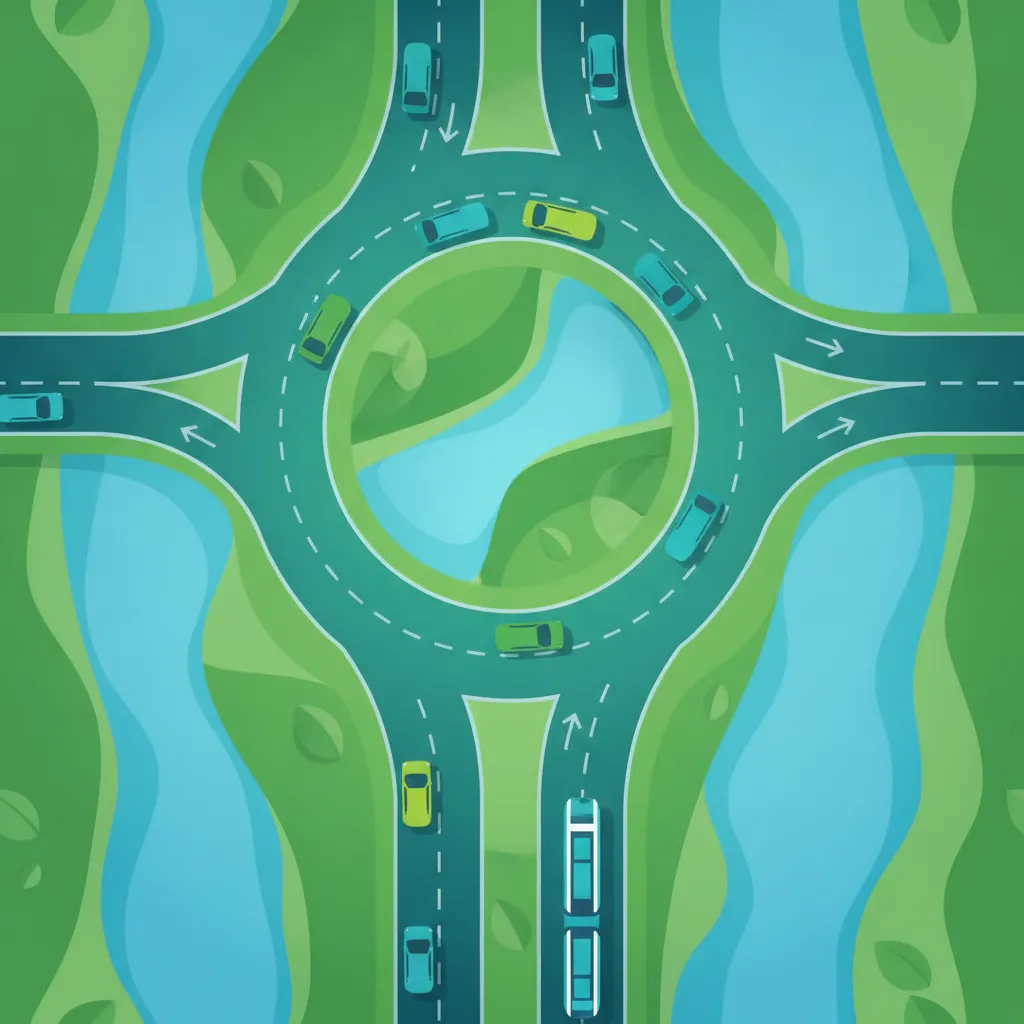
The size of a bus requires careful planning when negotiating complex intersections. This lesson teaches the importance of early lane selection, clear signalling, and comprehensive observation. It provides specific techniques for managing the vehicle's swept path through multi-lane roundabouts and other challenging urban junctions.

Departing from a bus stop is a high-risk manoeuvre. This lesson details the critical sequence of actions: checking all passengers are clear of the doors, performing a comprehensive mirror and blind spot check, signalling, and waiting for a safe gap in traffic. This systematic approach is essential for preventing collisions with overtaking vehicles, cyclists, or pedestrians.

This lesson moves beyond simply staying within the lines, teaching how to actively position your vehicle within the lane to manage risk. You will learn to create a 'safety cushion' of space around your bus. This proactive approach improves your reaction time and gives other road users more space, reducing the likelihood of conflicts.

Driving a bus in older parts of a city requires exceptional spatial awareness and precise control. This lesson focuses on assessing clearances, managing front and rear overhang, and negotiating tight turns around parked cars and buildings. A key theme is slow, careful, and deliberate manoeuvring to avoid contact.

A stopped bus creates a significant visual obstruction for other road users. This lesson focuses on the risk of pedestrians stepping out from in front of the bus and cyclists passing unexpectedly on either side. It reinforces the need for exhaustive mirror and blind spot checks before moving off to prevent tragic 'pull-away' accidents.

Buses and coaches require significantly more distance to stop than cars. This lesson explains why the 'two-second rule' is insufficient and teaches the appropriate methods for calculating a safe gap in various conditions. Maintaining an adequate safety cushion is one of the most important defensive driving skills.
Detailed explanation of correct procedures for entering and exiting Swiss motorways with a bus or coach. Covers essential lane discipline, speed adaptation, and safe merging into traffic flow according to Swiss regulations.
Motorway driving requires constant concentration due to high speeds. This lesson emphasizes the importance of staying in the right-hand lane unless overtaking and the specific restrictions on lorry overtaking in Switzerland. It reinforces the need for a following distance of at least four seconds to compensate for the vehicle's long stopping distance and provides guidance on safely merging and exiting.

Bus lanes are a key tool for improving service reliability, but they come with specific rules. This lesson covers how to correctly interpret bus lane signs and markings. It also explains the regulations for entering and leaving the lane to make turns or avoid obstructions, and the priority rules associated with them.
Departing from a bus stop is a high-risk manoeuvre. This lesson details the critical sequence of actions: checking all passengers are clear of the doors, performing a comprehensive mirror and blind spot check, signalling, and waiting for a safe gap in traffic. This systematic approach is essential for preventing collisions with overtaking vehicles, cyclists, or pedestrians.
Driving a large vehicle on mountain passes is a demanding skill. This lesson covers selecting the correct gear for both ascents and descents to maintain control and avoid overheating the brakes. It also explains the specific priority rules that apply on mountain roads and the importance of being aware of sudden weather changes.
This lesson focuses on general driving safety in areas with a high concentration of children. It stresses the importance of significantly reducing speed, being prepared for unexpected events, and scanning for children between parked cars. The driver must exhibit maximum vigilance in these high-risk environments at all times.
The size of a bus requires careful planning when negotiating complex intersections. This lesson teaches the importance of early lane selection, clear signalling, and comprehensive observation. It provides specific techniques for managing the vehicle's swept path through multi-lane roundabouts and other challenging urban junctions.

Transporting children carries the highest level of responsibility. This lesson covers the specific legal requirements for school buses in Switzerland, including the use of special signs and warning lights. It details the safe procedures for stopping, boarding, and alighting, and the driver's role in supervising children.
This lesson outlines the specific rules and skills required for riding on high-speed Swiss motorways. It covers the correct procedures for entering and exiting, merging with traffic, maintaining appropriate speed, and conducting safe overtaking maneuvers. Emphasis is placed on using mirrors and signals effectively to integrate safely into the flow of traffic.
Buses and coaches require significantly more distance to stop than cars. This lesson explains why the 'two-second rule' is insufficient and teaches the appropriate methods for calculating a safe gap in various conditions. Maintaining an adequate safety cushion is one of the most important defensive driving skills.
This lesson moves beyond simply staying within the lines, teaching how to actively position your vehicle within the lane to manage risk. You will learn to create a 'safety cushion' of space around your bus. This proactive approach improves your reaction time and gives other road users more space, reducing the likelihood of conflicts.
Find clear answers to common questions learners have about Motorway Driving: Lane Discipline, Speed, and Exits. Learn how the lesson is structured, which driving theory objectives it supports, and how it fits into the overall learning path of units and curriculum progression in Switzerland. These explanations help you understand key concepts, lesson flow, and exam focused study goals.
Yes, heavy motor vehicles have specific speed limits in Switzerland, which are often lower than those for passenger cars. You must strictly adhere to the speed limits indicated for your vehicle category on motorway signs.
Generally, you must use the rightmost lane. The middle and left lanes are typically restricted for heavy vehicles unless you are overtaking, provided this is not prohibited by specific road signs.
Use the acceleration lane to match the speed of the traffic flow. Ensure you have sufficient visibility and space before merging, and always check your mirrors and blind spots carefully as your vehicle's length requires more space.
Overtaking is permitted only when it is safe and allowed by traffic signs. As a professional driver, you must ensure your vehicle has enough power to overtake efficiently and return to the correct lane without impeding faster traffic.
Pinpoint specific Swiss traffic rules, road signs, or driving situations you need to master. Use the practice search to start a focused revision session now and build confidence for your official driving theory exam.