
The W-7 road sign is a vital informational sign indicating the maximum permissible height for military vehicles to pass under a bridge or through a tunnel. This sign is specifically designed to alert military drivers to clearance restrictions, ensuring that large military equipment, such as radar trucks or tanks, can pass safely without striking overhead obstructions. Drivers must strictly adhere to the indicated height limit to prevent damage and ensure mission continuity.
This explanation card focuses on the W-7 sign, detailing the specific height limit for military vehicles to safely pass under structures. Essential for understanding Polish traffic rules, this sign's interpretation is key for theory test revision.
The W-7 sign provides the height limit in meters. It is used specifically for military logistics, often accounting for the unique heights of radar trucks, engineering equipment, or tanks being transported on flatbed trailers. It ensures that these high-value military assets do not strike overhead obstructions which could cause mission failure and massive damage.
Indicates the maximum height for military vehicles to pass under a bridge or in a tunnel.
Get clear, practical answers to the most common questions about the W-7 - Vertical Clearance (Military) road sign. Learn how the sign works, what rules it represents, and how it affects real driving situations. This FAQ strengthens your understanding and supports accurate decision making for the Polish driving theory exam in Poland.
The W-7 sign's primary purpose is to inform military vehicle operators about the maximum vertical clearance available under a bridge or within a tunnel. It helps prevent collisions by clearly stating the height limit in meters.
No, the W-7 sign is specifically intended for military vehicles. While civilian drivers should always be aware of height restrictions, this particular sign's context and typical placement relate to military logistics and transport planning.
If a military vehicle, including its load or any raised components like antennas, exceeds the height indicated by the W-7 sign, the driver must not attempt to pass. They should follow a designated military bypass route or seek alternative passage.
Yes, before passing, military drivers should ensure all antennas and turrets are in their stowed (travel) position. If transporting a load on a trailer, they must confirm the total height of the vehicle plus the trailer, not just the vehicle itself.
A common trap is confusing general height restriction signs with military-specific ones like W-7, or failing to consider the total height of the vehicle and its load combined. For the theory exam, remember that any part of the vehicle or its cargo must fit within the stated height.
A clear reference image of the W-7 - Vertical Clearance (Military) road sign used in Poland.
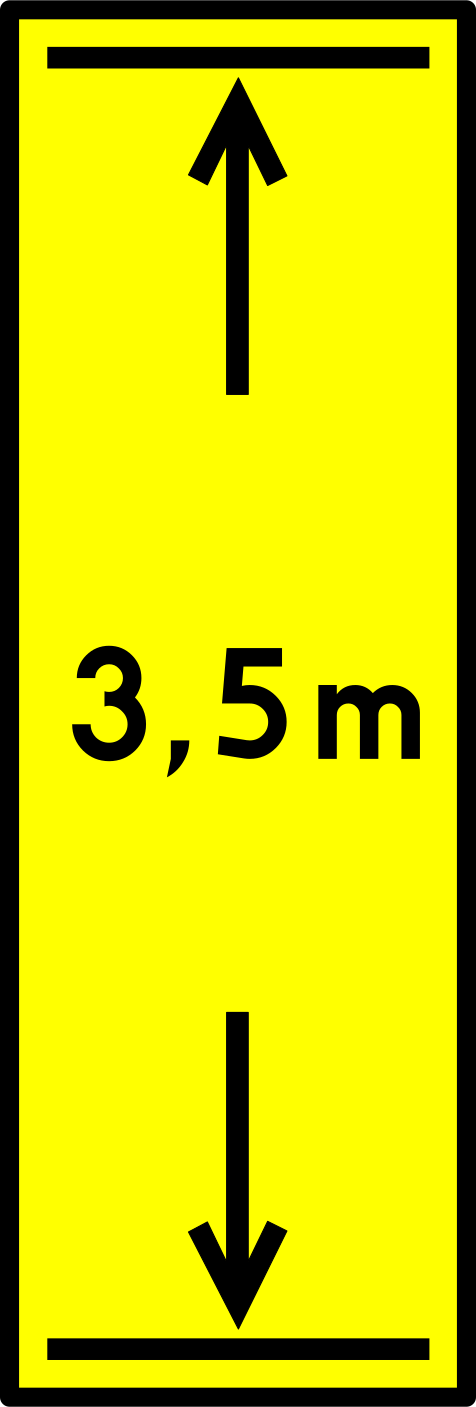
The W-7 - Vertical Clearance (Military) road sign may also be known by these alternative names or terms.
The W-7 - Vertical Clearance (Military) road sign is part of the Additional Railway Crossing Signs (G) category, which groups together signs with similar rules and functions.
Mastering Polish road signs means understanding their distinctions. Comparing similar road signs and practicing traffic sign comparison will enhance your sign recognition and improve your theory test revision for fewer errors.

Prepare for tram signals ahead with the AT-1 warning sign.

Understand the AT-2 Tram-Activated Signal: Know when trams are coming!
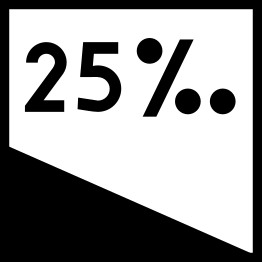
Understand the AT-3 Dangerous Tram Descent warning sign for trams.
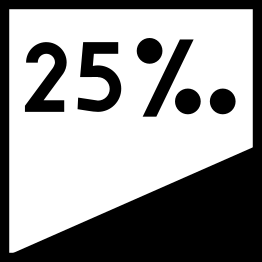
Warning: Steep Tram Ascent Ahead (AT-4)

Understand the AT-5 sign: Tram Collision Movement Warning for Turning Trams
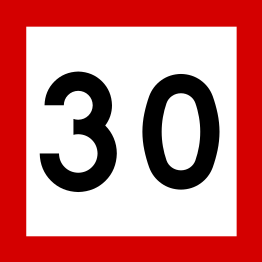
What the BT-1 Tram Speed Limit sign means and how to obey it.

BT-2: Tram Speed Limit Restriction Ends Here

BT-3 Tram Switch Lock: Don't Enter Until Clear!
Deepen your understanding of specific road signs by reviewing official Polish traffic rules and associated real-world driving scenarios. These expert-led resources help you bridge the gap between visual recognition and practical exam application.
Learning how to interact with law enforcement is a crucial part of your driver training in Poland, as it helps you understand the legal procedures governing roadside controls. This guide clarifies how officers identify themselves, what behaviors are expected of you as a driver, and how traffic enforcement impacts your penalty points and record. Mastery of these rules ensures you remain compliant with the law and prepared for any roadside situation you may encounter.
Being involved in a car accident in Poland requires immediate, specific actions to ensure safety and legal compliance. This guide clarifies your obligations, from securing the accident scene and rendering aid to reporting the incident correctly. Mastering these post-accident procedures is vital for safe driving and is a common focus area in the Polish driving theory exam.
Don't Be a Road Block: Master Minimum Speeds and Smooth Traffic Flow for Your Polish Exam!
Master Your Rights and Obligations During a Polish Roadside Inspection
The B-18 sign protects roads and bridges that are not strong enough to support very heavy loads. Unlike other signs that look at 'allowed weight' on paper, this sign looks at the 'actual weight' (masa rzeczywista) of the vehicle at that moment. Overweight vehicles can cause permanent structural damage or even cause a bridge to collapse.
The P-25 marking consists of white squares or triangles painted directly on the sloping part of a speed bump (progu zwalniającego). This increases the visibility of the hump, preventing drivers from hitting it at high speeds, which could damage the vehicle or cause loss of control. If the speed bump is made of pre-fabricated black and yellow segments, the P-25 white paint is not required.
After reviewing the full list of Polish road signs, explore specific sign categories for in-depth understanding. Challenge your knowledge with practice questions focused on sign recognition and interpretation to solidify your preparation for the driving theory exam.
Browse All Polish Road Signs