
This lesson delves into the art of effective passenger communication for professional bus and coach drivers (D/D1) in Spain. You'll learn essential strategies for clear verbal announcements, correct use of hand signals, and delivering crucial route and safety information. Mastering these protocols is vital for ensuring passenger safety, fostering confidence, and preparing you for relevant DGT exam questions on interaction and procedure.

Lesson content overview
Operating a professional bus or coach under a Spanish driving license (Category D & D1) extends beyond mastering vehicle controls and road regulations. A critical component of professional conduct and passenger safety is effective communication. This lesson defines the essential knowledge and procedural elements required for drivers to communicate clearly and confidently with passengers, ensuring a safe, comfortable, and efficient journey.
Clear communication is not merely a courtesy; it is a fundamental aspect of operational safety, regulatory compliance, and service quality in public transport. It significantly reduces passenger anxiety, prevents errors during boarding and alighting, and contributes to a positive travel experience. For professional drivers in Spain, adherence to specific communication protocols is mandated by national transport law, making it an indispensable part of their daily responsibilities.
Effective communication between the driver and passengers is paramount in professional bus and coach operations. It serves multiple critical functions that directly impact safety, efficiency, and passenger satisfaction. When information is conveyed clearly, concisely, and at the right moment, it reduces uncertainty and empowers passengers to act appropriately, whether preparing for a stop or responding to an unforeseen event.
Accurate and timely communication prevents unsafe situations, such as passengers standing up prematurely or attempting to alight at the wrong location. It also plays a vital role in adhering to Spanish transport law, which specifies certain mandatory announcements. Beyond legal requirements, excellent communication enhances the overall quality of service, building passenger confidence and contributing to a smooth, harmonious journey for everyone on board.
Effective passenger communication is built upon several core principles that guide drivers in their interactions and announcements. These principles ensure that information is conveyed reliably, comprehensively, and in a manner accessible to all passengers, ultimately contributing to a safer and more efficient transport service.
The message conveyed by the driver must be concise, audible, and easily understood by all passengers. This principle is crucial to prevent misinterpretation, confusion, and potential panic, especially during unexpected events. Achieving clarity requires drivers to use simple, straightforward language, avoid technical jargon, and speak at a moderate pace. Regular checks of the public address (PA) system and potential voice training can further enhance message delivery, ensuring that every passenger comprehends the instructions or information provided.
Timeliness in communication refers to making announcements with sufficient lead time before an event occurs, such as an upcoming stop or a route change. Delays in announcements can cause passengers to miss their stop, experience unnecessary stress, or attempt hurried movements, leading to unsafe situations. For instance, announcing a stop well in advance allows passengers ample time to gather their belongings and prepare for alighting safely, coordinating their actions with the vehicle's speed and distance to the stop.
Standardization dictates the use of prescribed phrasing, a specific order of information, and universally recognized hand signals. This consistency is vital for legal compliance and ensures that passengers receive uniform information regardless of the driver or the route. Drivers are expected to memorize standard scripts for routine announcements and be proficient in official hand signal charts. This approach minimizes ambiguity and ensures that critical information is always conveyed in a predictable and reliable manner.
In today's diverse society, providing critical information in the primary language(s) of the passenger demographic is often essential. Multilingual support guarantees accessibility for non-native speakers, who might otherwise miss vital safety instructions or route updates. This may involve knowledge of key phrases in multiple languages, the use of pre-recorded messages available on the vehicle's audio system, or live translation capabilities, particularly on tourist routes or those serving areas with significant international populations.
Every communication should implicitly or explicitly reinforce safety, especially when providing instructions like "Please hold the handrail," "Stay seated while the vehicle is moving," or "Keep your seatbelt fastened." This principle aims to reduce the risk of injuries inside the vehicle by consistently reminding passengers of safe practices. Safety messages should be reinforced at each stop and whenever special situations arise, such as sharp turns, sudden braking, or turbulent road conditions.
Audibility management involves actively controlling background noise, adjusting microphone volume, and considering speaker placement to maintain intelligibility of announcements. This is critical to prevent messages from being drowned out by ambient sounds, such as traffic, open windows, rain, or passenger conversations. Drivers must routinely check their PA system equipment and make situational adjustments to volume and tone to ensure that announcements are clearly heard across the entire vehicle, meeting specific decibel requirements.
Professional bus and coach drivers rely on two primary methods for communicating with passengers: verbal announcements through the public address (PA) system and standardized hand signals. Both methods are critical for conveying essential information, whether routine updates or urgent safety instructions, and complement each other to ensure comprehensive communication.
Verbal announcements are oral messages transmitted by the driver using a microphone connected to the bus's public address (PA) system, broadcasting sound throughout the passenger cabin. This is the most common and effective way to communicate detailed information to all passengers simultaneously.
Verbal announcements can be categorized into:
Before each scheduled stop, Spanish DGT Regulation 2.6.12 mandates that the driver announces the upcoming stop name at least 150 meters prior to arrival. This gives passengers adequate time to prepare. Drivers must avoid using overly technical jargon, speaking too quickly, or omitting essential phrases like "Next stop." For example, a driver might announce: "Next stop: Plaza Mayor. Please prepare to alight. Keep your belongings with you and remember to hold the handrail."
Hand signals are visual gestures standardized by Spanish transport authorities to communicate the driver's intent. They are particularly crucial when the PA system is unavailable due to technical failure, as a supplement to verbal announcements, or for communicating with hearing-impaired passengers.
Key types of hand signals include:
Compliance with the RNPA (Reglamento de Seña de Conductores) is mandatory, defining the exact posture and timing of each signal. Common mistakes include ambiguous gestures, inconsistent use, or giving signals after the vehicle has already performed the action. For example, a driver might lower their left arm at a 45° angle while simultaneously announcing an upcoming stop to provide a dual cue.
Providing multilingual support is a key aspect of modern passenger communication, particularly in areas with diverse demographics or high tourist traffic. It ensures that essential information, especially safety-critical messages, is accessible to all passengers, regardless of their native language.
Multilingual support can be delivered through:
For example, on a tourist route in Spain, a driver might deliver a Spanish announcement followed by an English translation: "We are approaching the central station. Próxima parada: Estación Central. Next stop: Central Station." DGT Resolution 289/2022 explicitly requires that essential safety information be communicated in at least the two most common languages spoken by passengers on a given route. Drivers must avoid switching languages mid-sentence or, critically, failing to provide translation for vital safety messages, which could jeopardize passenger safety during emergencies.
The effectiveness of passenger communication is heavily reliant on precise timing and logical sequencing of announcements. Delivering information at the correct moment, relative to the vehicle's speed, distance to the stop, and expected passenger actions, is crucial for efficiency and safety.
The general sequence of announcements typically involves:
Proper timing ensures passengers have sufficient time to react, minimizing abrupt movements and reducing dwell time (the time spent stationary at a stop for boarding/alighting). DGT Article 12, for instance, establishes a minimum 20-second window for passengers to disembark after a stop announcement. A common misunderstanding is announcing after the doors have opened or failing to provide the crucial pre-stop cue, which can lead to confusion and operational delays.
The specific informational elements included in each announcement are standardized to ensure passengers receive consistent, useful, and legally compliant information. Drivers must adhere to these content requirements for all routine and special communications.
Essential elements typically include:
Guaranteeing that passengers receive this consistent information helps them navigate their journey with confidence. Common mistakes include truncating stop names, which can lead to confusion, or omitting safety reminders, especially in high-risk zones or during busy periods.
Maintaining clear audio communication is paramount for professional drivers, particularly given the varying ambient noise levels inside and outside a bus or coach. Audibility management encompasses a range of strategies to ensure that announcements are always heard and understood by all passengers.
Effective strategies include:
Ministerial Order 18/2020 specifies that the PA system must be audible at a minimum of 65 dB at all passenger seats, regardless of where they are seated in the vehicle. This legal requirement underscores the importance of proper audibility management. Common errors include over-amplifying the sound, leading to distortion and discomfort, or under-amplifying, which results in announcements being inaudible and ineffective.
Always perform a quick PA system check before starting your shift. A brief test announcement will confirm functionality and allow for initial volume adjustments.
Professional bus and coach drivers in Spain must adhere to a strict framework of national and regional regulations concerning passenger communication. These rules are designed to enhance safety, ensure service quality, and standardize operational procedures across all public transport.
Pre-stop Announcement (DGT Regulation 2.6.12): This regulation mandates that drivers announce the name of the next stop at least 150 meters before arriving at any scheduled stop, applicable to all urban and interurban routes. This provides passengers sufficient time to prepare for alighting.
Incorrect Example: The driver announces "Next stop: Gran Vía" only after the bus has already come to a complete halt and the doors are opening. This does not comply with the required lead time.
Mandatory Safety Reminders (DGT Resolution 289/2022): Before each stop and while the vehicle is moving, a safety reminder must be given. This ensures passengers are consistently aware of safe practices, such as "Please hold the handrail while the bus is moving" or "Keep your seatbelt fastened."
Incorrect Example: The driver consistently omits any safety reminders, especially during busy periods or on routes with frequent stops.
Multilingual Safety Information (Regional Transport Authority Directive 2022/04): Essential safety messages (e.g., emergency exit instructions) must be provided in at least two languages if more than 20% of passengers on a given route are non-Spanish speakers. This is particularly relevant for tourist lines or routes serving multicultural areas.
Incorrect Example: On a bus tour through a major city, emergency exit instructions are only provided in Spanish, despite a significant number of foreign tourists on board.
Hand-Signal Use (RNPA §5): In the event of a PA system malfunction or power loss, drivers are legally required to use standardized hand signals to convey information about stops and door operations. This ensures continuity of critical communication even during technical failures.
Incorrect Example: The PA system fails, but the driver continues to operate the route without using any visual cues, leaving passengers uninformed about upcoming stops.
PA System Audibility (Ministerial Order 18/2020): This order specifies that the vehicle's PA system must be capable of delivering announcements at a minimum of 65 dB (decibels) at every passenger seat. This ensures that messages are clearly audible and comprehensible across the entire cabin.
Incorrect Example: The PA system is set too low, or has a fault, making announcements barely audible over engine noise or passenger chatter, particularly for those at the rear of the bus.
Despite clear regulations and best practices, common communication errors can occur, leading to significant consequences for both passengers and the transport service. Understanding these pitfalls is crucial for professional drivers to avoid them.
Effective passenger communication is not static; it requires professional drivers to adapt their approach based on prevailing conditions and the specific needs of their passengers. This conditional logic ensures that messages remain clear, timely, and relevant in varied operational contexts.
The communication protocols implemented by professional drivers have direct and measurable cause-and-effect relationships on both the safety of passengers and the operational efficiency of the transport service.
To illustrate the application of passenger communication protocols, consider the following real-world scenarios that professional bus and coach drivers might encounter.
Effective passenger communication protocols are a cornerstone of professional bus and coach driving, especially for those holding Spanish Category D & D1 licenses. These protocols are not merely guidelines but mandatory requirements that underpin passenger safety, operational efficiency, and legal compliance within the transport sector.
Drivers are obligated to provide clear, timely verbal announcements, reinforce messages with standardized hand signals, and offer multilingual support where necessary. Adherence to specific Spanish regulations regarding pre-stop distances, safety reminders, and PA system audibility is paramount. By mastering these communication strategies, professional drivers enhance passenger confidence, mitigate risks, and contribute significantly to the smooth and safe operation of public and commercial passenger transport services. The integration of these communication skills with safe driving techniques ensures a superior level of professionalism and service quality.
This lesson covers essential passenger communication protocols for professional bus and coach drivers holding Spanish Category D/D1 licenses. It establishes mandatory requirements including pre-stop announcements at 150 meters (DGT Regulation 2.6.12), standardized RNPA hand signals for PA failures, multilingual support when non-Spanish speakers exceed 20% of passengers, and minimum 65 dB audibility throughout the vehicle. Key principles include clarity through simple language, timely announcements giving passengers preparation time, and consistent safety reminders at every stop. Common errors to avoid include late announcements, omitted safety cues, inadequate volume, mistimed hand signals, and failing to adapt communication for adverse weather or vulnerable passengers.
A short set of high-value points that capture the most important learning from this lesson.
Drivers must announce the upcoming stop name at least 150 meters before arrival on all urban and interurban routes per DGT Regulation 2.6.12
Standardized hand signals defined by RNPA are mandatory when the PA system fails, including stop-signal (arm at 45°), door-open signal (raised hand), and hold-on signal (palm outward)
Essential safety information must be provided in at least two languages when more than 20% of passengers on a route are non-Spanish speakers
The PA system must deliver announcements at a minimum of 65 dB at every passenger seat as specified in Ministerial Order 18/2020
Announcements must follow a consistent sequence: pre-stop (150-200m), arrival confirmation, and safety reminder while doors are open
Explore all units and lessons included in this driving theory course.
Pre-stop announcements must be made 150 meters before arrival, not after the vehicle has stopped
RNPA hand signals must precede the action they communicate; using them after the doors open creates confusion
Safety reminders are mandatory at every stop and whenever special situations arise like sharp turns or sudden braking
When the PA system fails, immediately switch to hand signals and written placards near doors
Volume must increase by 3-5 dB in adverse weather conditions (rain, wind) to overcome increased ambient noise
Announcing the stop only after the bus has already stopped with doors opening, denying passengers preparation time
Omitting safety reminders during busy periods or high-frequency urban routes, increasing injury risk
Setting PA volume too low, making announcements inaudible over engine noise or passenger chatter, especially at the rear of the vehicle
Using hand signals that contradict simultaneous verbal announcements, causing immediate passenger confusion
Providing safety instructions only in Spanish on tourist routes despite significant foreign passenger demographics
Lesson content overview
A short set of high-value points that capture the most important learning from this lesson.
Drivers must announce the upcoming stop name at least 150 meters before arrival on all urban and interurban routes per DGT Regulation 2.6.12
Standardized hand signals defined by RNPA are mandatory when the PA system fails, including stop-signal (arm at 45°), door-open signal (raised hand), and hold-on signal (palm outward)
Essential safety information must be provided in at least two languages when more than 20% of passengers on a route are non-Spanish speakers
The PA system must deliver announcements at a minimum of 65 dB at every passenger seat as specified in Ministerial Order 18/2020
Announcements must follow a consistent sequence: pre-stop (150-200m), arrival confirmation, and safety reminder while doors are open
Explore all units and lessons included in this driving theory course.
Pre-stop announcements must be made 150 meters before arrival, not after the vehicle has stopped
RNPA hand signals must precede the action they communicate; using them after the doors open creates confusion
Safety reminders are mandatory at every stop and whenever special situations arise like sharp turns or sudden braking
When the PA system fails, immediately switch to hand signals and written placards near doors
Volume must increase by 3-5 dB in adverse weather conditions (rain, wind) to overcome increased ambient noise
Announcing the stop only after the bus has already stopped with doors opening, denying passengers preparation time
Omitting safety reminders during busy periods or high-frequency urban routes, increasing injury risk
Setting PA volume too low, making announcements inaudible over engine noise or passenger chatter, especially at the rear of the vehicle
Using hand signals that contradict simultaneous verbal announcements, causing immediate passenger confusion
Providing safety instructions only in Spanish on tourist routes despite significant foreign passenger demographics
Explore search topics learners often look for when studying Passenger Communication Protocols. These topics reflect common questions about road rules, driving situations, safety guidance, and lesson level theory preparation for learners in Spain.
Browse additional driving theory lessons that cover connected traffic rules, road signs, and common driving situations related to this topic. Improve your understanding of how different rules interact across everyday traffic scenarios.
Learn essential protocols for multilingual passenger announcements and safety messages on Spanish buses and coaches. Understand DGT regulations for diverse passenger needs and ensure clear communication for all travelers.

This lesson focuses on safe and efficient methods for passenger boarding and alighting at designated stops and stations, highlighting correct stop positioning and controlled door operation. It covers the proper deployment of wheelchair ramps, the use of safety signage, and the delivery of clear announcements to manage passenger movement effectively. Learners will develop techniques for controlling speed and performing safety checks to minimize stop times while maximizing safety.

This lesson provides detailed guidance on accommodating passengers with disabilities, covering the correct operation of wheelchair ramps, allocation of priority seating, and use of communication aids. Learners will understand the legal accessibility standards set by the DGT, the training required for staff, and techniques for preserving passenger dignity during boarding and travel. Emphasis is placed on safety, respect, and full compliance with all accessibility regulations.

This lesson examines the locations and proper use of all emergency exits on buses and coaches, as well as the development and execution of clear evacuation plans. Learners will explore the designation of passenger assembly points, the interpretation of emergency signage, and procedures for assisting passengers with reduced mobility. The content emphasizes the value of conducting regular evacuation drills and delivering pre-trip safety briefings.

This lesson provides a comprehensive overview of the legal and practical requirements for making public transport accessible to all passengers, including those with disabilities. It covers the correct use of designated wheelchair spaces, ramp operation, priority seating, and the function of tactile and auditory alerts. Learners will understand their obligations to assist passengers safely and respectfully, ensuring full compliance with accessibility legislation.
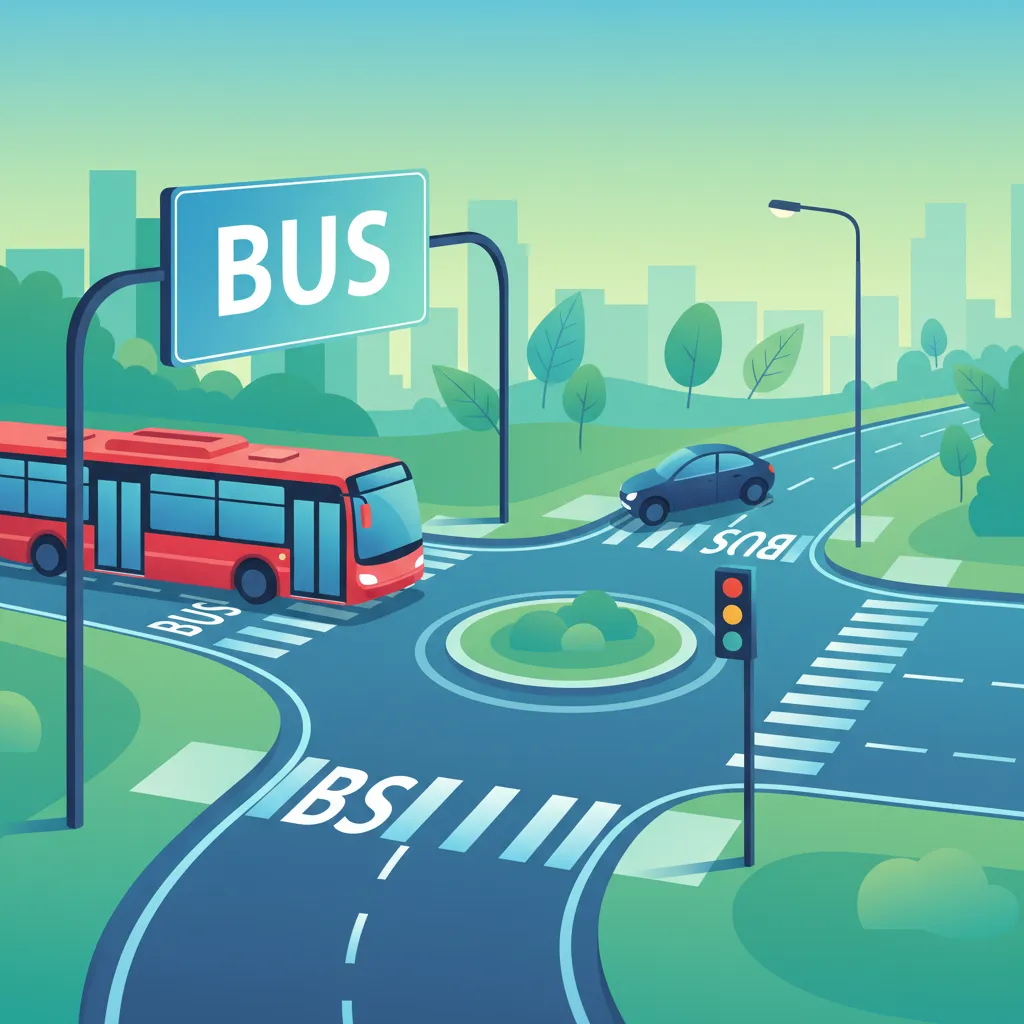
This lesson explores the regulations for dedicated bus lanes in urban environments, detailing the correct interpretation of associated lane markings and traffic signage. Learners will understand the specified times of operation, rules for sharing lanes with other vehicles, and the legal consequences of unauthorized entry. The module also provides clear guidelines for entering and exiting bus lanes at designated points to maintain traffic flow.
This lesson focuses on the legal duty of care that professional bus drivers owe to their passengers, emphasizing the obligation to ensure safe transport. It examines the specific traffic laws applicable to heavy vehicles and the consequences of violations, such as fines and license sanctions. The content also details the mandatory procedures for reporting incidents and the essential insurance coverage required by the DGT.

This lesson details the legal requirements for the use of seatbelts and child restraint systems in buses and coaches, as stipulated by DGT regulations. It specifies the age and size limits for various restraint devices and explains the verification checks drivers must perform. Learners will also review safety statistics that highlight the importance of correct usage and understand the legal penalties associated with non-compliance.

This lesson focuses on the high standards of professional behavior expected from drivers in the passenger transport sector, covering customer interaction skills and service quality benchmarks. Learners will explore effective communication techniques, methods for resolving conflicts calmly, and the importance of maintaining a professional demeanor, including appropriate dress and punctuality. The content emphasizes how courteous conduct directly enhances passenger satisfaction and promotes a positive company image.

This lesson outlines the best practices for precise vehicle positioning at urban bus stops and ensuring safe interaction with passengers. It covers the management of approach speed, correct alignment with the curb, and effective communication during boarding and alighting processes. Learners will also study how stopping maneuvers impact surrounding traffic flow and the importance of maintaining safety distances for efficient service.
Master the use of public address systems and standardized hand signals for professional bus and coach drivers in Spain. Focus on clear, timely announcements for stops and safety reminders according to DGT rules.
This lesson focuses on safe and efficient methods for passenger boarding and alighting at designated stops and stations, highlighting correct stop positioning and controlled door operation. It covers the proper deployment of wheelchair ramps, the use of safety signage, and the delivery of clear announcements to manage passenger movement effectively. Learners will develop techniques for controlling speed and performing safety checks to minimize stop times while maximizing safety.
This lesson explores the regulations for dedicated bus lanes in urban environments, detailing the correct interpretation of associated lane markings and traffic signage. Learners will understand the specified times of operation, rules for sharing lanes with other vehicles, and the legal consequences of unauthorized entry. The module also provides clear guidelines for entering and exiting bus lanes at designated points to maintain traffic flow.
This lesson provides detailed guidance on accommodating passengers with disabilities, covering the correct operation of wheelchair ramps, allocation of priority seating, and use of communication aids. Learners will understand the legal accessibility standards set by the DGT, the training required for staff, and techniques for preserving passenger dignity during boarding and travel. Emphasis is placed on safety, respect, and full compliance with all accessibility regulations.
This lesson examines the locations and proper use of all emergency exits on buses and coaches, as well as the development and execution of clear evacuation plans. Learners will explore the designation of passenger assembly points, the interpretation of emergency signage, and procedures for assisting passengers with reduced mobility. The content emphasizes the value of conducting regular evacuation drills and delivering pre-trip safety briefings.
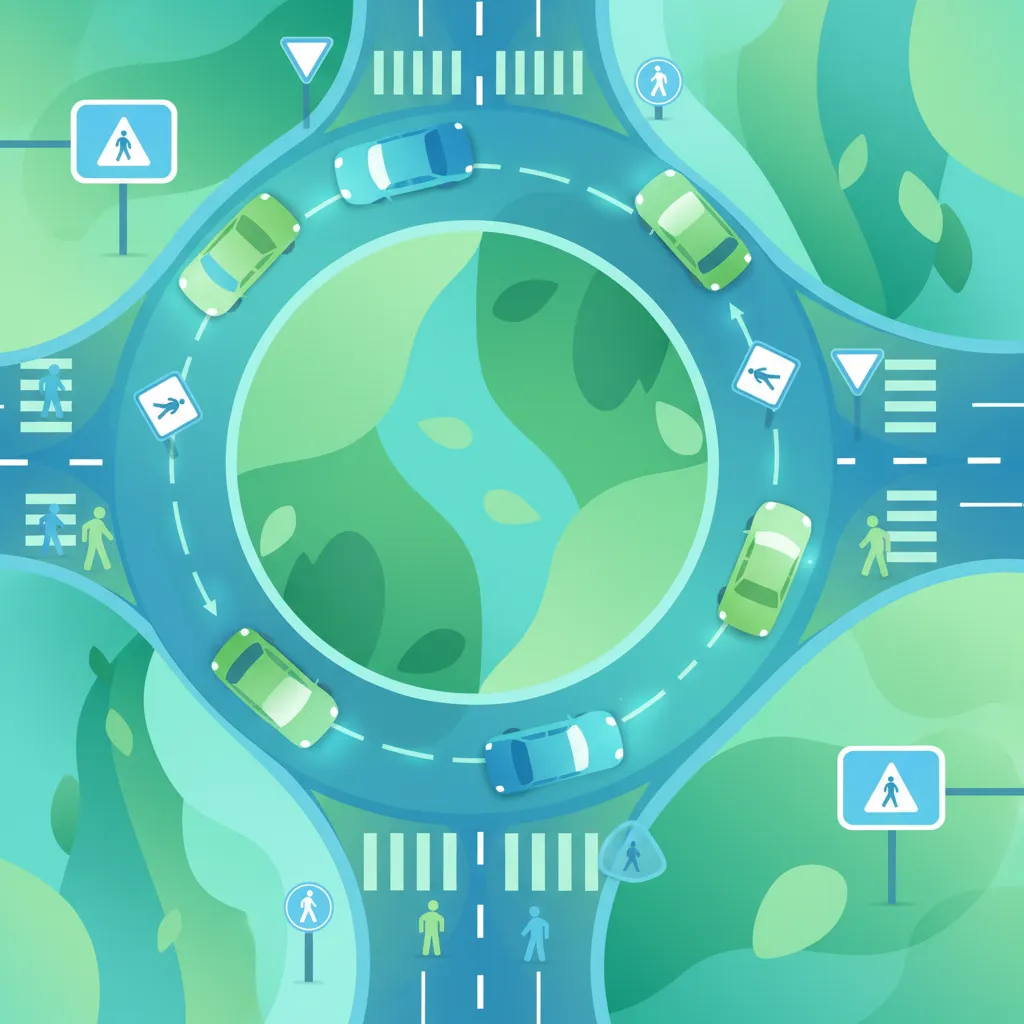
This lesson offers a comprehensive guide to navigating roundabouts in urban settings, explaining the correct protocols for entry, yielding, and circulation. Learners will be taught how to interpret lane markings and signage on multi-lane roundabouts and determine the correct vehicle positioning for safe entry and exit. The content emphasizes full compliance with Spanish city regulations that govern priority and right-of-way at these intersections.
This lesson outlines the best practices for precise vehicle positioning at urban bus stops and ensuring safe interaction with passengers. It covers the management of approach speed, correct alignment with the curb, and effective communication during boarding and alighting processes. Learners will also study how stopping maneuvers impact surrounding traffic flow and the importance of maintaining safety distances for efficient service.
This lesson provides a comprehensive overview of the legal and practical requirements for making public transport accessible to all passengers, including those with disabilities. It covers the correct use of designated wheelchair spaces, ramp operation, priority seating, and the function of tactile and auditory alerts. Learners will understand their obligations to assist passengers safely and respectfully, ensuring full compliance with accessibility legislation.
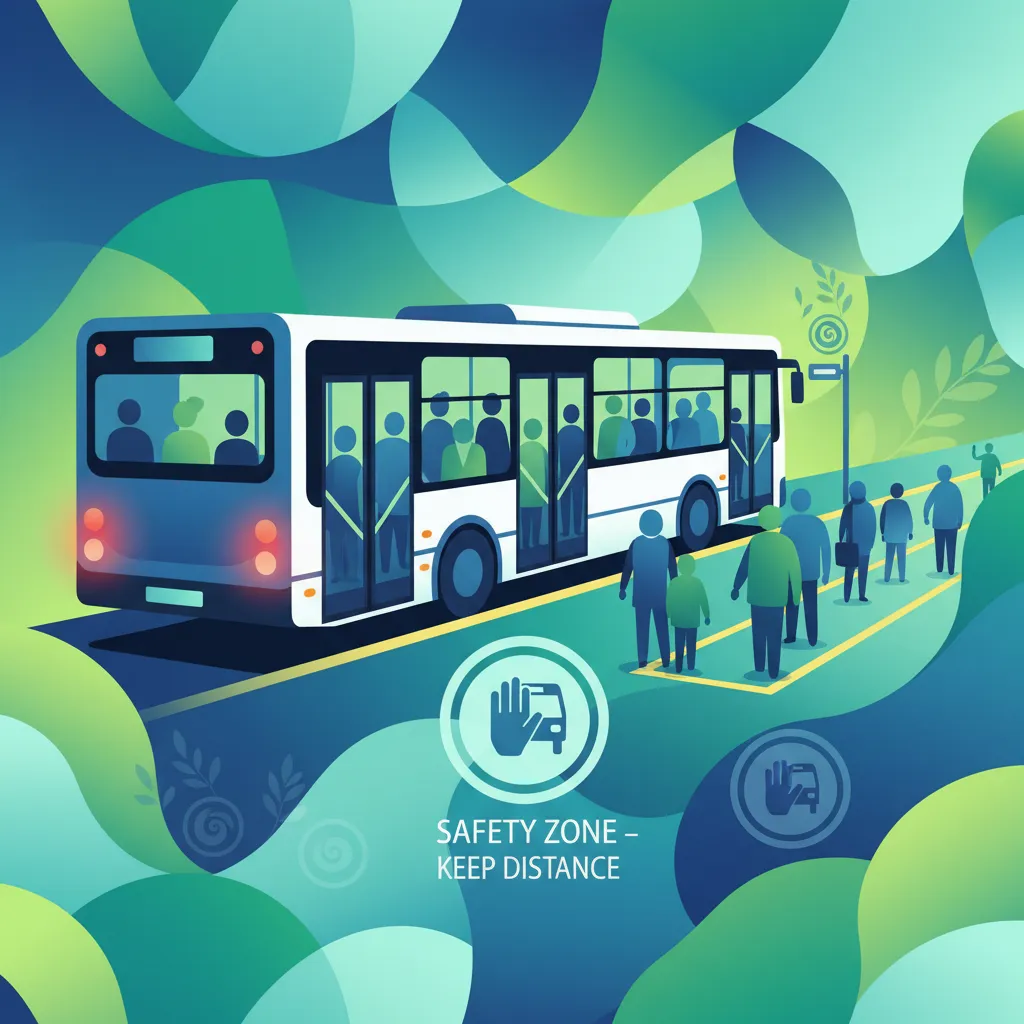
This lesson outlines the techniques for executing safe and precise stops at bus stops and transport stations, focusing on controlled deceleration and correct alignment with the stop line. Learners will understand the importance of maintaining clear passenger visibility, applying the parking brake correctly, and minimizing dwell time without compromising safety. The module also emphasizes the need for consistency in stop positioning to improve service predictability.

This lesson addresses overtaking procedures and lane discipline specifically for large coaches, emphasizing correct lane positioning and safe passing practices on multi-lane highways. It covers the legal rules for overtaking, the critical need for comprehensive blind spot checks before changing lanes, and the importance of signaling intentions early. Learners will also be taught how to maintain appropriate safety gaps when maneuvering around slower-moving traffic.
This lesson focuses on the high standards of professional behavior expected from drivers in the passenger transport sector, covering customer interaction skills and service quality benchmarks. Learners will explore effective communication techniques, methods for resolving conflicts calmly, and the importance of maintaining a professional demeanor, including appropriate dress and punctuality. The content emphasizes how courteous conduct directly enhances passenger satisfaction and promotes a positive company image.
Find clear answers to common questions learners have about Passenger Communication Protocols. Learn how the lesson is structured, which driving theory objectives it supports, and how it fits into the overall learning path of units and curriculum progression in Spain. These explanations help you understand key concepts, lesson flow, and exam focused study goals.
Clarity, conciseness, and timing are paramount. Announcements should be easily understood by all passengers, avoid jargon, and be delivered just before the relevant action (e.g., approaching a stop) to give passengers sufficient time to prepare, thereby preventing confusion and ensuring safety for Category D/D1 drivers.
While the DGT emphasizes clear communication, specific hand signals are not universally mandated in the same way road signs are. However, standard, universally understood gestures for 'wait', 'come forward', or 'thank you' are highly recommended to complement verbal instructions, especially when noise levels are high or with passengers who may have hearing impairments on a bus or coach.
If feasible, drivers should use basic multilingual phrases for essential information like 'next stop' or 'please sit down'. If a language barrier persists, visual aids, clear hand gestures, and a patient, reassuring demeanour become even more important to convey messages effectively and ensure the passenger's safety and comfort, complying with DGT principles for professional drivers.
Initial safety briefings, especially on longer journeys, should be made shortly after departure. Announcements about upcoming stops or changes should be made well in advance. For emergency exits, visual signage is key, but drivers should briefly remind passengers of their location and proper use during pre-trip announcements or if an unusual situation arises, as per DGT safety guidelines for bus and coach operations.
When assisting passengers with reduced mobility, clear and respectful verbal communication is crucial, combined with appropriate physical assistance. Always ask how you can help, explain your actions before you perform them (e.g., 'I will now deploy the ramp'), and confirm they are comfortable and secure before moving the vehicle. This ensures their dignity and safety, a key aspect for DGT professional conduct.
Use our powerful search functionality to pinpoint specific Spanish DGT driving theory practice sets. Filter by road sign categories, traffic law topics, or question difficulty to build custom study sessions and reinforce your knowledge precisely where it matters for your official exam.