
As a professional bus driver in Spain, understanding your legal responsibilities is paramount. This lesson, part of the Licensing & Responsibilities unit, delves into your duty of care towards passengers and the specific traffic laws governing large passenger vehicles. It's a crucial step in preparing for the DGT theory exam and ensuring safe, compliant operation of your vehicle.
Lesson content overview
Operating a bus or coach in Spain as a professional driver (Category D & D1 license holder) entails significant legal duties and responsibilities. These obligations are not merely bureaucratic hurdles but are foundational to ensuring public safety, maintaining order on the roads, and upholding the integrity of public transport services. This lesson outlines the critical legal framework governing professional bus drivers, preparing you for both the DGT theoretical exam and the practical demands of the profession.
At the heart of a professional bus driver's legal obligations is the Duty of Care. This fundamental principle dictates that every driver must exercise a level of caution and skill that a reasonable and prudent professional bus driver would demonstrate under similar circumstances. Its primary purpose is to prevent accidents, protect passengers, and safeguard other road users and property.
The Duty of Care is a legal obligation that requires bus drivers to act with foresight and diligence to avoid causing harm. It goes beyond merely following traffic laws; it demands proactive measures to mitigate risks. For example, while there might be a maximum speed limit, a driver's duty of care would necessitate reducing speed significantly below that limit in adverse weather conditions like heavy rain or fog to maintain a safe stopping distance. This principle influences every driving decision, from accelerating and braking to overtaking and passenger interaction. Article 2 of the Reglamento General de Circulación (General Road Users Code) underpins this overarching responsibility, emphasizing that drivers must always be in control of their vehicle and adapt their driving to prevailing conditions.
The general duty of care branches into several specific areas:
Remember that adhering to the maximum speed limit does not automatically fulfill your duty of care. Conditions often require a much lower, safer speed.
Professional bus drivers hold a unique position of trust, responsible for the safety of many individuals. This responsibility translates into Passenger Liability, meaning the driver and the transport company share legal accountability for injuries or fatalities sustained by passengers due to driver negligence. This joint liability underscores the critical importance of ensuring a safe environment for all on board.
Under Spanish law, specifically Ley 6/1989, Article 3 (Compensation for victims), the driver can be held directly liable for injuries or damages caused by their actions or omissions. For instance, if a driver makes a sudden, unnecessary maneuver that causes a standing passenger to fall and get injured, the driver's direct negligence could be established. Additionally, the transport company might face vicarious liability, meaning they are responsible for the actions of their employees while on duty, and for ensuring safe operating policies. This dual accountability ensures comprehensive protection for passengers and acts as a strong incentive for both drivers and operators to prioritize safety.
A crucial aspect of managing passenger liability involves actively enforcing safety protocols. The driver is legally obliged to ensure that passengers use available seat belts, especially on interurban routes or whenever the vehicle is equipped with them. Regulation 6/2015 explicitly mandates seat belt use where provided. Failure to enforce this can lead to severe penalties for the driver and increased liability in the event of an accident.
Furthermore, drivers must ensure safe boarding and alighting procedures. This means waiting until the bus has come to a complete stop at a designated location before opening doors, and not moving off until all passengers have safely boarded or disembarked. Negligence in these areas can directly lead to passenger injuries and subsequent liability.
Never assume that passenger liability rests solely with the transport company. As a driver, your actions and omissions can lead to direct legal consequences.
In the event of any traffic incident, regardless of its apparent severity, professional bus drivers in Spain are under a strict legal obligation to report it to the appropriate authorities. This Mandatory Reporting protocol ensures accurate record-keeping, facilitates insurance claims, and contributes to overall road safety analysis.
Spanish regulations, including Reglamento de Tráfico DGT Order 300/2010 and Articles 11–12 of the Road Accident Compensation Law, specify the requirements for reporting accidents. This typically involves immediate notification to the police (Guardia Civil or Policía Local) if there are injuries, significant damage, or if the accident impedes traffic. Even minor collisions without apparent injuries or significant damage must be formally reported. The primary document for this is the Parte de Accidente (Accident Report Form), which gathers crucial details about the incident.
Upon involvement in an accident, a professional bus driver must follow a structured procedure:
Ensure Safety: First, secure the scene. If possible and safe, move the vehicle to a safe location to avoid further incidents. Activate hazard warning lights and place warning triangles.
Check for Injuries: Assess if anyone is injured. If so, immediately call emergency services (112).
Notify Authorities: Contact the relevant police force (Guardia Civil or Policía Local) if required.
Gather Information: Collect details from all parties involved, including names, contact information, vehicle registration numbers, insurance details, and witness contacts. Take photographs of the scene, vehicle damage, and any relevant road conditions.
Complete Parte de Accidente: Fill out the official accident report form accurately and completely. This document must be submitted to the DGT and your insurance company within a legally stipulated timeframe, generally 24-48 hours. Verbal reports are not sufficient; a formal written or digital report is required.
Notify Employer: Inform your transport company as soon as safely possible.
Delaying reporting beyond the deadline can lead to fines and complications with insurance claims, potentially denying coverage for damages.
Operating any motor vehicle on public roads in Spain, especially a bus carrying passengers, necessitates Mandatory Insurance. This legal requirement is in place to protect victims of accidents financially and to ensure that all statutory obligations are met.
For buses, it is compulsory to have Seguro de Responsabilidad Civil (Civil Liability Insurance). This insurance covers damages caused to third parties, including other road users, their property, and crucially, your own passengers, in the event of an accident for which the bus is deemed responsible. The minimum coverage amounts are set by law (Ley 50/1980 on civil liability) and are periodically updated to ensure adequate protection. Without this insurance, a driver cannot legally operate a bus on public roads.
As a professional driver, it is your responsibility to verify that the bus you are operating has valid insurance coverage. This typically involves carrying the tarjeta de seguro (insurance card) or a digital equivalent in the vehicle at all times. Police or DGT officials may request proof of insurance during routine checks or after an incident. Operating a bus without valid insurance is a severe offense, leading to substantial fines, vehicle impoundment, and potential legal ramifications. Drivers must also be aware of policy renewal dates and any specific conditions related to the vehicle or route. DGT Circular 115/2013 outlines procedures for insurance verification.
While general traffic laws apply to all vehicles, buses and coaches, due to their size, weight, and passenger capacity, are subject to a specific set of regulations. These Heavy-Vehicle Traffic Laws are designed to account for their different dynamics, such as longer stopping distances and reduced maneuverability, thereby enhancing safety for everyone.
One of the most critical specific regulations concerns speed limits. Buses generally have lower maximum speed limits compared to passenger cars to compensate for their increased mass and braking distances.
The legal speed limit specifically applicable to buses on various road types in Spain, typically lower than for passenger cars.
According to Article 116 of the Reglamento General de Circulación and DGT Order 100/2017 on speed regulations:
Always be aware of specific signage, which may override general limits, especially in construction zones or areas with particular hazards.
Other specific regulations for heavy vehicles include:
Compliance with all legal responsibilities is enforced through a robust Sanction Framework in Spain. This system includes fines, point deductions from the driver's license, and in severe cases, license suspension or even impoundment of the vehicle. Understanding this framework is crucial for all professional drivers to avoid penalties and maintain their ability to work.
The Puntos del Carnet system is designed to encourage safe driving by assigning a set number of points to a driver's license. New drivers start with 8 points, while experienced drivers typically have 12 points. Professional drivers, after a certain period of good conduct, can accumulate up to 15 points. Specific traffic infractions, ranging from minor to very serious, result in the deduction of points. Accumulating too many point deductions within a certain timeframe (e.g., losing all points) leads to the suspension of the driving license, requiring the driver to undergo re-education courses and retake the DGT exam. Ley Sobre Sanciones Administrativas (Ley 39/2015) and the DGT's points table for Category D licenses detail these allocations.
Professional drivers must be particularly vigilant about point deductions, as losing your license directly impacts your livelihood. Many infractions carry higher point penalties for professional drivers due to the increased risk associated with their vehicles.
The consequences for violations can vary widely based on severity:
A key aspect of a professional bus driver's duty of care involves adapting driving behavior to various conditions. Conditional Driving ensures safety by modifying speed, following distance, and maneuver techniques based on external factors like weather, light, and road type, as well as the internal state of the vehicle.
To deepen your understanding of these critical legal responsibilities and prepare effectively for the Professional Bus and Coach Theory for Spanish Driving License – Category D & D1 exam, explore related topics and practice questions.
This lesson covers the comprehensive legal responsibilities of professional bus drivers in Spain under DGT regulations. Key topics include the duty of care principle that requires proactive safety measures beyond legal compliance, joint passenger liability between driver and operator under Ley 6/1989, mandatory accident reporting procedures using the Parte de Accidente form, and compulsory civil liability insurance requirements. The lesson also details specific traffic laws for heavy vehicles including speed limits, lane restrictions, and overtaking rules, as well as the puntos del carnet sanction system where professional drivers face heightened penalties. Understanding these obligations is essential for both passing the DGT Category D theory exam and ensuring safe, lawful passenger transport operations.
A short set of high-value points that capture the most important learning from this lesson.
Bus drivers have a legal duty of care that requires proactive risk mitigation beyond simply obeying traffic laws, adapting driving to all conditions including weather and vehicle state.
Drivers and transport companies share joint liability for passenger injuries caused by driver negligence under Spanish law.
All traffic incidents must be formally reported using the Parte de Accidente form within 24-48 hours, regardless of apparent severity.
Buses have specific lower speed limits than cars: 90 km/h on motorways, 80 km/h on conventional roads, and 70 km/h on urban roads for buses without trailers.
Professional drivers face enhanced penalties under the puntos del carnet system, with many infractions carrying higher point deductions due to the increased risk of their vehicles.
Explore all units and lessons included in this driving theory course.
The duty of care under Article 2 of the Reglamento General de Circulación requires drivers to always be in control and adapt to prevailing conditions, not just follow maximum speed limits.
The Parte de Accidente must be submitted in writing or digitally; verbal reports are legally insufficient.
Seguro de Responsabilidad Civil is mandatory for all buses, and drivers must carry proof of valid insurance at all times.
Speed limits for buses are lower than for cars and can be further reduced by specific signage or conditions.
Professional drivers start with 8 points and can accumulate up to 15 points, with infractions often carrying higher penalties for Category D license holders.
Assuming that driving at the maximum speed limit automatically fulfills the duty of care; conditions often require significantly lower speeds.
Believing that passenger liability rests solely with the transport company, when drivers can face direct legal consequences for their own actions or omissions.
Delaying accident reporting or assuming minor collisions without injuries don't require formal documentation.
Thinking that point deductions are the only consequence of violations; serious infractions can result in license suspension, fines, vehicle impoundment, and criminal charges.
Failing to verify insurance validity or operating a bus with a known mechanical defect, which constitutes a serious breach of duty.
Lesson content overview
A short set of high-value points that capture the most important learning from this lesson.
Bus drivers have a legal duty of care that requires proactive risk mitigation beyond simply obeying traffic laws, adapting driving to all conditions including weather and vehicle state.
Drivers and transport companies share joint liability for passenger injuries caused by driver negligence under Spanish law.
All traffic incidents must be formally reported using the Parte de Accidente form within 24-48 hours, regardless of apparent severity.
Buses have specific lower speed limits than cars: 90 km/h on motorways, 80 km/h on conventional roads, and 70 km/h on urban roads for buses without trailers.
Professional drivers face enhanced penalties under the puntos del carnet system, with many infractions carrying higher point deductions due to the increased risk of their vehicles.
Explore all units and lessons included in this driving theory course.
The duty of care under Article 2 of the Reglamento General de Circulación requires drivers to always be in control and adapt to prevailing conditions, not just follow maximum speed limits.
The Parte de Accidente must be submitted in writing or digitally; verbal reports are legally insufficient.
Seguro de Responsabilidad Civil is mandatory for all buses, and drivers must carry proof of valid insurance at all times.
Speed limits for buses are lower than for cars and can be further reduced by specific signage or conditions.
Professional drivers start with 8 points and can accumulate up to 15 points, with infractions often carrying higher penalties for Category D license holders.
Assuming that driving at the maximum speed limit automatically fulfills the duty of care; conditions often require significantly lower speeds.
Believing that passenger liability rests solely with the transport company, when drivers can face direct legal consequences for their own actions or omissions.
Delaying accident reporting or assuming minor collisions without injuries don't require formal documentation.
Thinking that point deductions are the only consequence of violations; serious infractions can result in license suspension, fines, vehicle impoundment, and criminal charges.
Failing to verify insurance validity or operating a bus with a known mechanical defect, which constitutes a serious breach of duty.
Explore search topics learners often look for when studying Legal Responsibilities of Bus Drivers. These topics reflect common questions about road rules, driving situations, safety guidance, and lesson level theory preparation for learners in Spain.
Browse additional driving theory lessons that cover connected traffic rules, road signs, and common driving situations related to this topic. Improve your understanding of how different rules interact across everyday traffic scenarios.
Understand the detailed traffic laws for buses and coaches in Spain, covering speed limits, lane discipline, overtaking rules, and capacity regulations. Essential knowledge for Category D and D1 drivers.
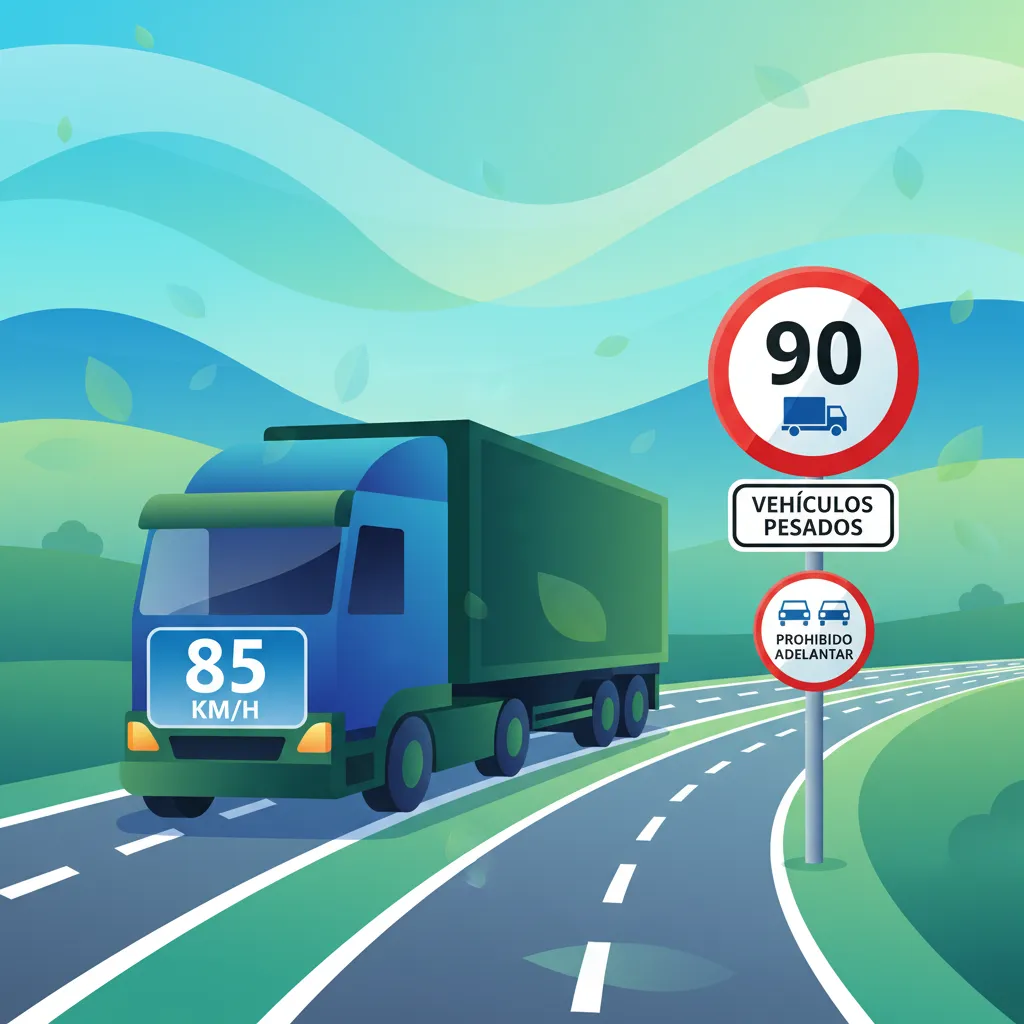
This lesson details the specific legal speed limits that apply to heavy passenger vehicles on Spanish highways, including variable speed zones that adjust based on traffic and weather conditions. Learners will understand the methods for speed monitoring, the function of speed control devices, and the legal consequences of non-compliance. The content also provides guidance on calculating a safe operating speed based on vehicle load and road conditions.

This lesson explains the specific legal framework governing truck operations on Spain's high-speed road network. It details the different speed limits for trucks on autovías versus autopistas and the regulations regarding which lanes heavy vehicles are permitted to use. Learners will also understand how to interpret specific highway signage relevant to commercial vehicles and any applicable toll regulations.
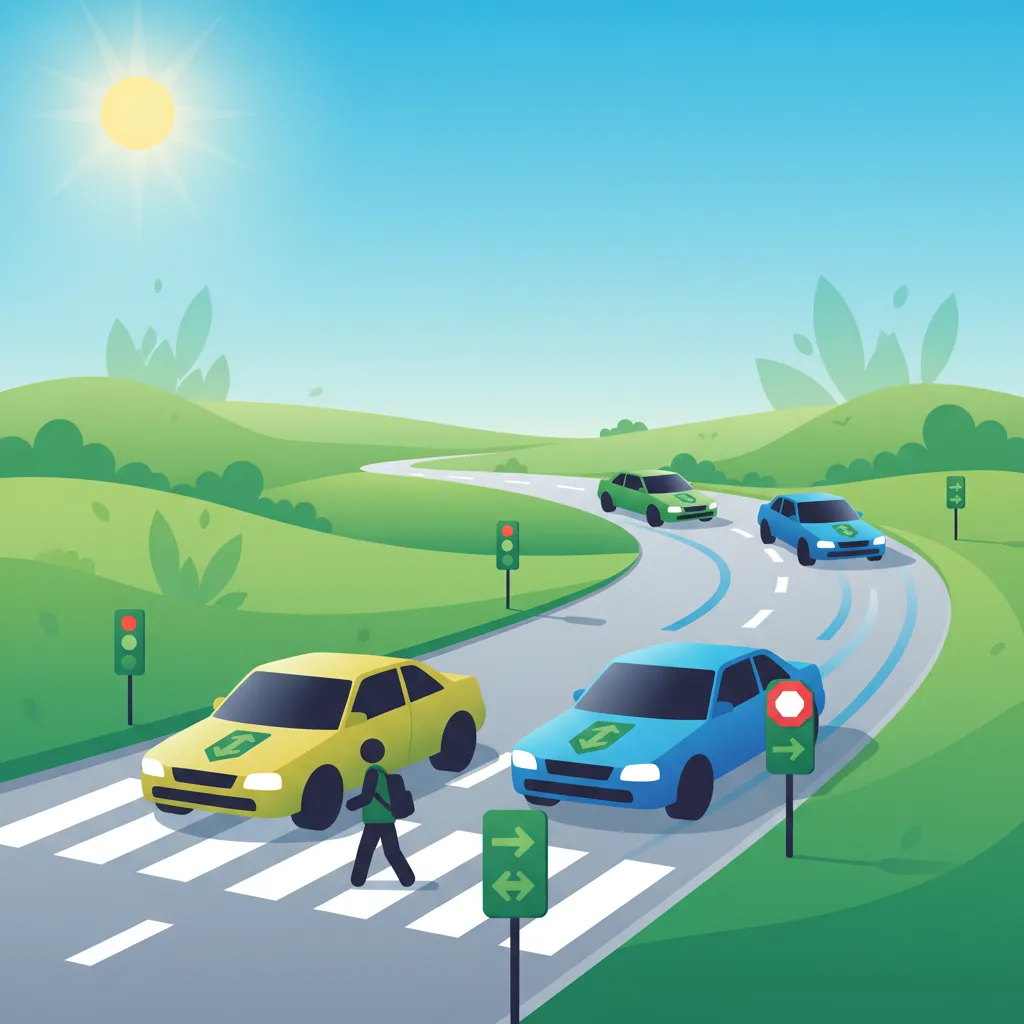
This lesson provides a broad overview of the key traffic regulations in Spain that directly impact professional truck drivers. It details the rules of priority at intersections, the interpretation of different road markings, and the principles of correct lane discipline. Furthermore, it explains the specific speed limits applicable to heavy vehicles and the legal protocols for safe overtaking and signaling.
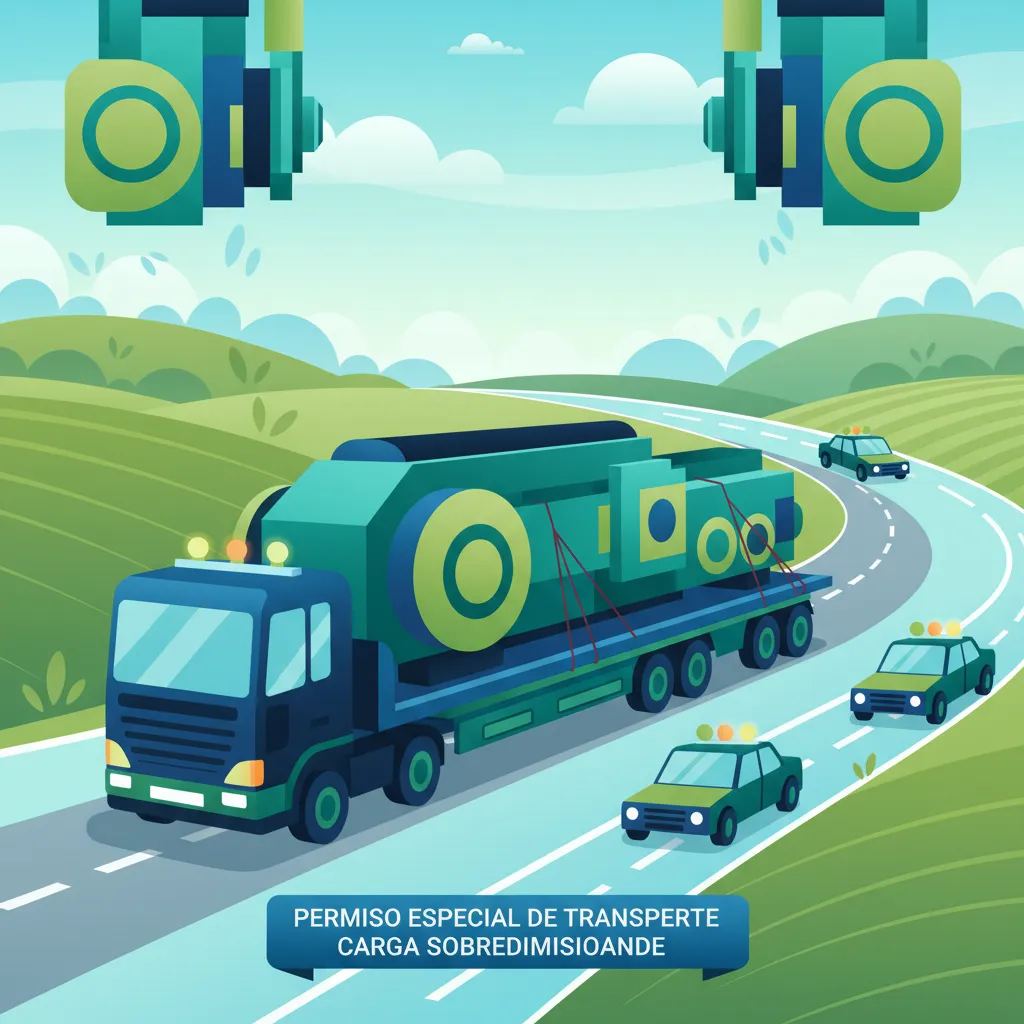
This lesson addresses the special regulations that apply to transporting loads that exceed standard legal dimensions or weight. It explains the process for obtaining the necessary special permits from the DGT and other authorities. The content also covers the requirements for route planning, the use of escort vehicles (pilot cars), and the mandatory signage and lighting for the vehicle.
Learn about passenger liability, the essential process for reporting traffic incidents using the Parte de Accidente, and understanding mandatory civil liability insurance for bus drivers in Spain.
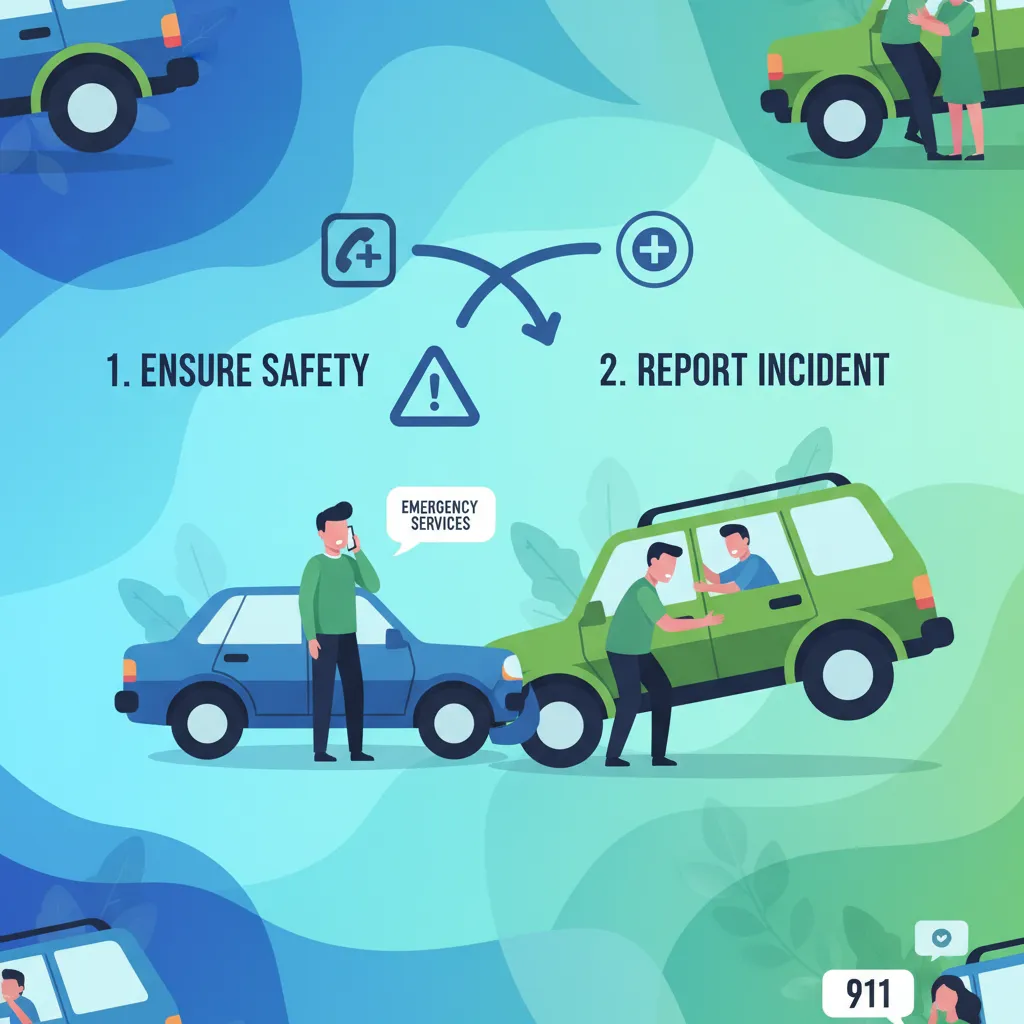
This lesson outlines the comprehensive steps required to safely manage an accident scene, including securing the area and providing immediate aid to any injured parties. Learners will be taught the legal reporting requirements, how to properly notify the DGT, and the specific documentation needed for insurance claims. The module also covers the process for collecting witness statements and interacting effectively with responding police authorities.

This lesson examines the overarching legal framework that governs professional drivers in Spain, focusing on the Reglamento General de Circulación. It details the statutory obligations of a driver, such as maintaining mandatory insurance, ensuring vehicle roadworthiness, and carrying all required documentation. Learners will understand their legal responsibilities and the importance of compliance with DGT regulations to operate lawfully.
This lesson details the legal requirements for the use of seatbelts and child restraint systems in buses and coaches, as stipulated by DGT regulations. It specifies the age and size limits for various restraint devices and explains the verification checks drivers must perform. Learners will also review safety statistics that highlight the importance of correct usage and understand the legal penalties associated with non-compliance.

This lesson provides a detailed outline of the legal framework that governs driver duty hours in Spain, specifying the maximum continuous driving time and mandatory rest periods defined by the DGT. Learners will understand the limits on cumulative work hours, the necessity of meticulous record-keeping, and methods for monitoring compliance with these regulations. The module also discusses the penalties for violations and reinforces the safety imperative of adherence.

This lesson details the critical documents necessary for the legal operation of a passenger transport vehicle, such as the vehicle registration, driver's license, and insurance policy. It explains the function of the technical inspection certificate (ITV) and the necessity of maintaining accurate driver logbooks and records. Understanding these documentation requirements is essential for passing compliance audits and ensuring lawful operation.

This lesson details the formal and legal obligations for reporting a traffic accident to the authorities. It clarifies the circumstances under which police must be called to the scene and the procedures for completing the official European Accident Statement form ('parte amistoso'). Understanding these responsibilities ensures that the rider complies with Spanish law and that the incident is properly documented for insurance and liability purposes.
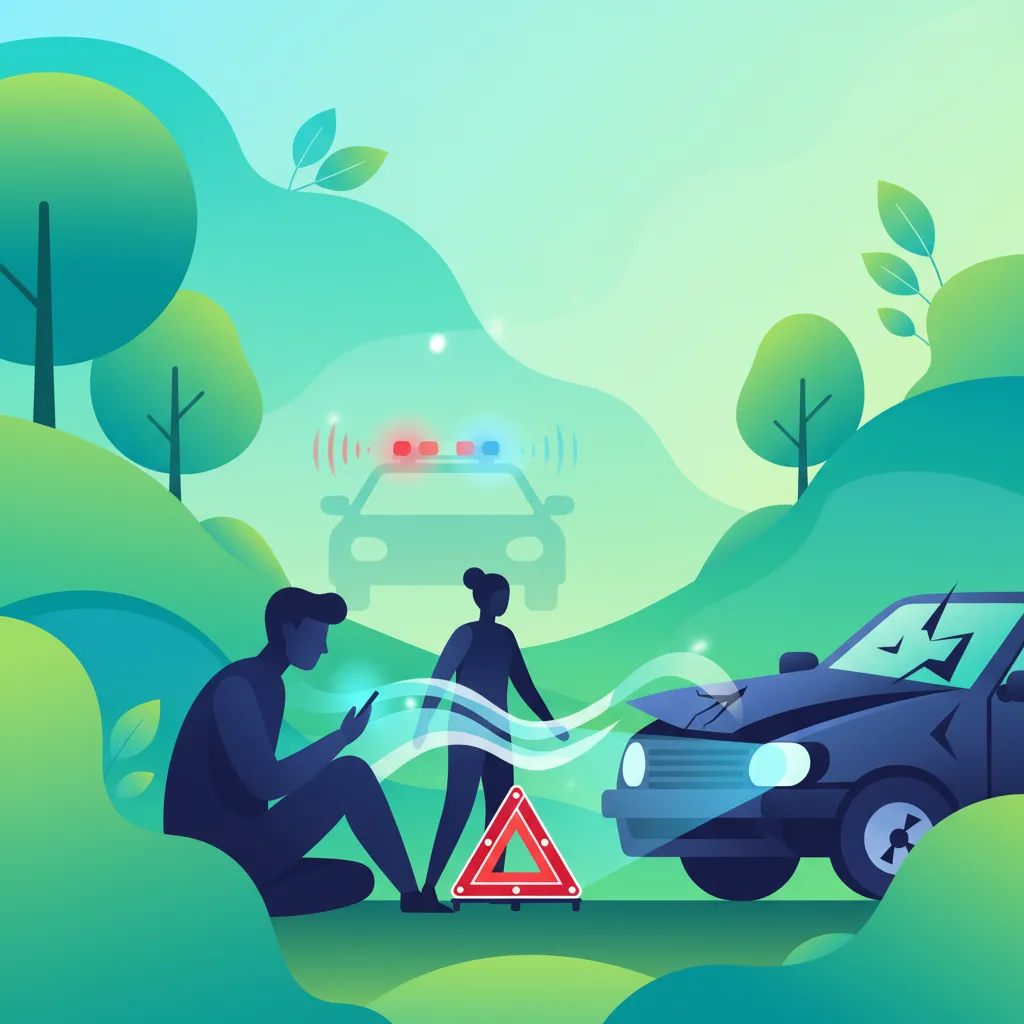
This lesson outlines the correct and legally required procedures to follow in the event of a traffic incident or accident. It covers the driver's immediate responsibilities at the scene, including securing the area and contacting emergency services. The content details the process for documenting the incident and formally reporting it to the DGT and insurance companies as required by law.

This lesson provides a comprehensive overview of the legal and practical requirements for making public transport accessible to all passengers, including those with disabilities. It covers the correct use of designated wheelchair spaces, ramp operation, priority seating, and the function of tactile and auditory alerts. Learners will understand their obligations to assist passengers safely and respectfully, ensuring full compliance with accessibility legislation.
This lesson details the specific legal speed limits that apply to heavy passenger vehicles on Spanish highways, including variable speed zones that adjust based on traffic and weather conditions. Learners will understand the methods for speed monitoring, the function of speed control devices, and the legal consequences of non-compliance. The content also provides guidance on calculating a safe operating speed based on vehicle load and road conditions.
Find clear answers to common questions learners have about Legal Responsibilities of Bus Drivers. Learn how the lesson is structured, which driving theory objectives it supports, and how it fits into the overall learning path of units and curriculum progression in Spain. These explanations help you understand key concepts, lesson flow, and exam focused study goals.
The primary legal duty of a bus driver in Spain is the duty of care towards passengers. This means taking all necessary precautions to ensure their safety and well-being throughout the journey. It encompasses adherence to traffic laws, safe driving practices, and proper vehicle operation.
Common violations include speeding, ignoring priority rules, incorrect use of bus lanes, and driving under the influence of alcohol or drugs. Penalties can range from significant fines and demerit points on your licence to temporary or permanent suspension of your driving privileges, depending on the severity and frequency of the offenses.
When reporting a traffic incident, you must provide details such as the date, time, and exact location of the event. Include information about the vehicles involved, any injuries sustained by passengers or others, a description of the incident, and contact details for witnesses. This information is crucial for insurance claims and DGT reporting.
Yes, besides the mandatory third-party liability insurance (seguro de responsabilidad civil), public transport vehicles like buses typically require additional specific coverage. This often includes enhanced passenger liability insurance and potentially coverage for damage to the vehicle and cargo, as mandated by Spanish transport regulations.
Bus drivers have a heightened legal responsibility due to carrying multiple passengers. Their duty of care is more extensive, and they must comply with stricter regulations regarding vehicle maintenance, passenger safety protocols, driving hours, and emergency procedures compared to private car drivers.
Use our powerful search functionality to pinpoint specific Spanish DGT driving theory practice sets. Filter by road sign categories, traffic law topics, or question difficulty to build custom study sessions and reinforce your knowledge precisely where it matters for your official exam.