
This lesson is essential for mastering optimal road positioning and ensuring maximum visibility as a motorcyclist in Spain. Part of Unit 7, 'Road Positioning & Traffic Interaction', it builds on understanding how to interact safely with other road users and prepares you for complex DGT exam scenarios. You'll learn how strategic lane selection, effective line of sight, and peripheral vision are critical for anticipating hazards and maintaining safety, adhering to Spanish DGT regulations for A, A1, A2 licence holders.
Lesson content overview
Navigating the roads safely and efficiently as a motorcyclist requires more than just mastering your bike's controls. A crucial aspect of defensive riding, particularly for the Spanish Motorcycle Theory Exam: A, A1, A2 Licence Prep Course, involves strategic lane positioning and maintaining optimal visibility. This lesson will delve into how to correctly position your motorcycle within a traffic lane, select the most advantageous lane for maximum visibility, and understand the legal framework governing these actions according to the Dirección General de Tráfico (DGT), Spain's traffic authority.
Proper lane positioning is not merely a suggestion; it is a fundamental safety practice that significantly reduces the risk of collisions, improves your control, and allows you to anticipate hazards earlier. By consciously choosing your path, you can make yourself more visible to other road users, enhance your line of sight, and effectively manage potential threats in various riding environments.
Effective lane positioning is the cornerstone of safe motorcycling. It dictates how you interact with other vehicles, how well you can see potential hazards, and how visible you are to others. In Spain, traffic laws, as stipulated in the Reglamento General de Circulación (RGC), explicitly govern how all vehicles, including motorcycles, must occupy road lanes.
Strategic lane selection is paramount for motorcyclists due to their smaller profile and increased vulnerability compared to larger vehicles. Choosing the right lane and position within it can offer several advantages:
Center-lane positioning refers to riding your motorcycle in the central portion of a traffic lane, typically the middle two-thirds, rather than hugging the edges. This practice is vital for several reasons:
While "standard positional riding" involves maintaining the center on straightaways and gentle curves, "dynamic positioning" refers to slight lateral adjustments within your lane. These subtle shifts might be used to improve your view around a vehicle ahead, prepare for a turn, or create a larger buffer from a potential hazard, all while remaining fully within your designated lane boundaries.
A common misunderstanding among some riders is that riding at the very edge of the road or 'between cars' in traffic is a faster way to travel. This is incorrect and highly dangerous. Spanish traffic law strictly prohibits such behavior, and it significantly compromises your safety and visibility.
Effective lane positioning is not static; it requires continuous adjustment based on the surrounding environment and traffic conditions.
In urban environments with narrow streets, maintaining a central position is crucial. This provides a necessary buffer from parked cars, opening doors, and potential pedestrians stepping out. It also leaves sufficient space for oncoming traffic, reducing the risk of lateral collisions. Gentle, deliberate lane changes are preferred to avoid unexpected maneuvers.
On motorways, where speeds are higher, maintaining a stable central position within your lane helps reduce the impact of aerodynamic disturbances from other vehicles and strong winds. Avoid frequent or unnecessary lane changes, and always ensure a safe following distance. Stability is paramount at higher speeds, and a consistent lane position aids in predictable handling.
Construction zones present unique challenges with temporary lane markings, uneven surfaces, and potential obstacles. It is essential to follow all temporary signs and markings, adapting your lane position as lanes shift or narrow. Your visibility zone must remain clear, even if it means slowing down considerably to navigate the altered road layout.
Beyond where you place your motorcycle, how you use your vision is equally critical for safety. Two primary visual techniques, line-of-sight and peripheral awareness, form the foundation of strong situational awareness.
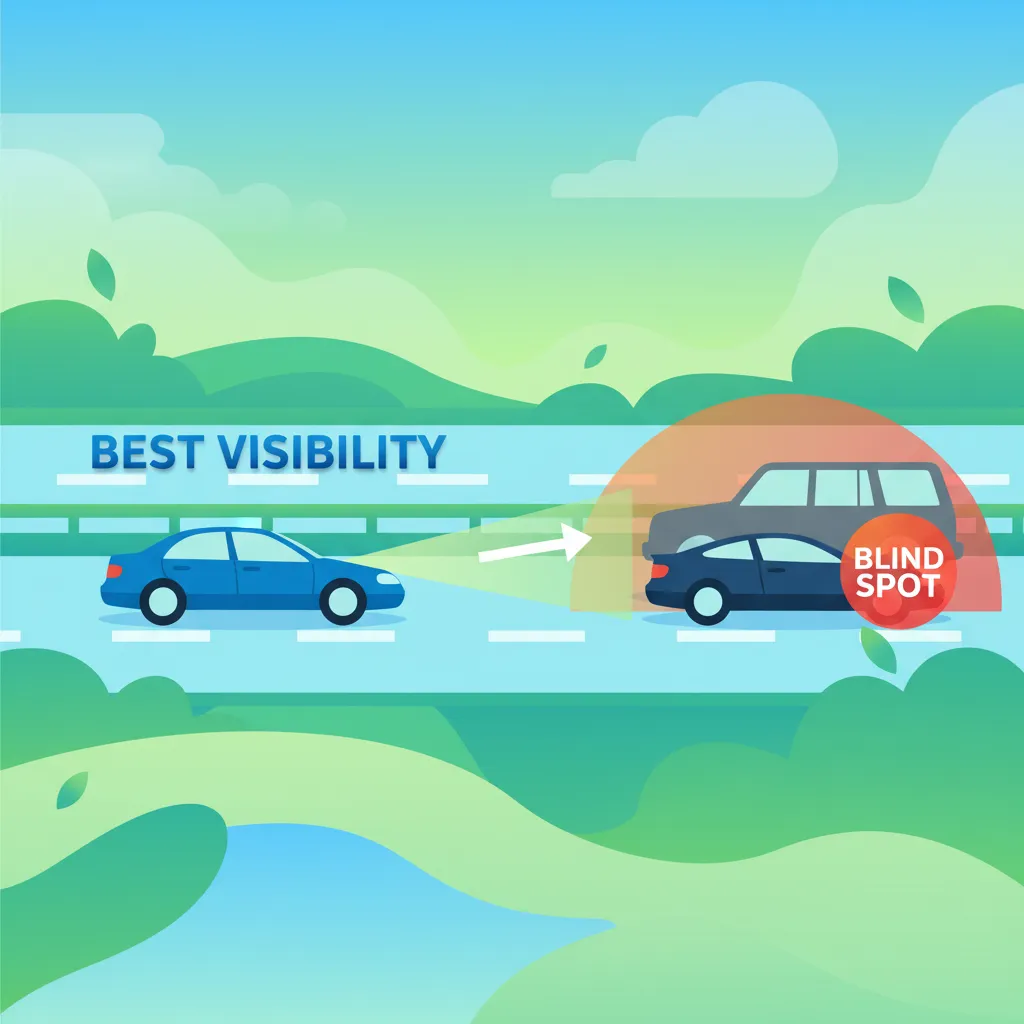
Your "visibility zone," or rider's line-of-sight, is the forward visual corridor you can clearly see without moving your head. It's often described as a cone extending 15-20 meters ahead, widening as your speed increases. The goal is to always have a clear view of where you are going and what might be ahead.
Never assume that a fast approach will compensate for poor positioning. Late detection of hazards due to an obstructed line-of-sight significantly increases the risk of an accident. Always prioritize seeing the road ahead clearly.
While your line-of-sight focuses on what's directly ahead, "peripheral awareness" involves detecting movement and objects outside your central vision, using your side and rear vision. This broader situational picture is crucial for monitoring adjacent traffic and lateral hazards.
The DGT sets clear regulations on how motorcycles must use road lanes, emphasizing safety and predictable behavior for all road users. Adherence to these rules is mandatory and directly impacts your ability to pass the theory exam and ride safely.
In Spain, "lane splitting" (also known as filtering or riding between lanes of traffic) is strictly prohibited. This means a motorcycle must occupy a full lane and cannot ride between lanes of moving or stationary traffic, or on sidewalks.
The practice of riding a motorcycle between lanes of traffic, typically in congested conditions. This maneuver is illegal in Spain according to the Reglamento General de Circulación (RGC).
The "road shoulder" (arcén in Spanish) is the lateral strip of road adjacent to the travel lane. Its primary purpose is for emergencies, not for regular travel.
The paved or unpaved area at the side of a roadway, intended for emergency stops, breakdown refuge, or as an emergency lane, and generally not for continuous travel by vehicles under power in Spain.
Overtaking a vehicle on the shoulder is illegal and extremely dangerous, as it can lead to severe side-impact collisions. Always overtake safely within the designated travel lanes.
The optimal lane position is dynamic and must be adjusted according to various external factors. Being adaptable is a hallmark of a skilled and safe motorcyclist.
Heavy vehicles like trucks and buses pose unique challenges due to their size, limited maneuverability, and extensive blind spots.
Understanding proper lane positioning also involves recognizing common mistakes and their inherent dangers:
This lesson covers essential motorcycle lane positioning and visibility strategies required for the Spanish DGT theory exam. It emphasizes center-lane positioning for stability and visibility, mandated by RGC Article 77, and clarifies that lane splitting is illegal under Articles 74.2 and 78. The lesson explains proper use of the road shoulder (arcén) per Article 85—only for genuine emergencies—and teaches visibility techniques including maintaining a clear 15-20 meter visibility zone and using active peripheral scanning with head-turns. Strategies for diverse conditions (urban streets, motorways, construction zones, adverse weather, and heavy vehicle proximity) are provided, along with recognition of the dangerous 'death stripe' adjacent to large vehicles. These principles are critical for both passing the DGT A, A1, A2 exam and developing safe, proactive riding practices on Spanish roads.
A short set of high-value points that capture the most important learning from this lesson.
Center-lane positioning (riding in the middle two-thirds of your lane) maximizes stability, ensures full lane occupancy as required by RGC Article 77, and optimizes your visibility to other drivers.
Lane splitting is strictly prohibited in Spain under RGC Articles 74.2 and 78; motorcycles must occupy a full lane and cannot ride between lanes of traffic.
Your visibility zone extends approximately 15-20 meters ahead, widening with speed; maintaining a clear line-of-sight allows earlier hazard detection and increased reaction time.
The road shoulder (arcén) is reserved for emergencies only per RGC Article 85; using it to bypass traffic or as a regular travel path is illegal.
Heavy vehicles have extensive blind spots; if you cannot see the driver's face in their mirror, assume they cannot see you and position accordingly.
Explore all units and lessons included in this driving theory course.
RGC Article 77: Motorcycles must occupy a full lane entirely within lane markings; edge-riding or lane-splitting violates this rule.
RGC Article 85 prohibits vehicles traveling under power from using the road shoulder except in genuine emergencies like breakdown or medical situations.
The 'death stripe' is the dangerous zone adjacent to large vehicles, especially on the right side in Spain, where limited driver visibility creates severe risks during turns.
Active scanning with head-turns (shoulder checks) is required before lane changes or overtaking; mirrors alone are insufficient to detect blind spots.
Dynamic positioning involves subtle lateral adjustments within your lane boundaries to improve view or create buffer zones without leaving the lane.
Riding on the road shoulder to bypass congested traffic, which is illegal under RGC Article 85 and creates collision risks with stopped vehicles or debris.
Positioning too close to lane edges, which reduces visibility to drivers at intersections and exposes riders to drainage grates, potholes, and wind turbulence from passing vehicles.
Assuming mirrors cover all blind spots; failing to perform shoulder checks before changing lanes or overtaking, especially near large trucks, leads to collisions.
Attempting lane splitting in heavy traffic, which is prohibited in Spain and places motorcyclists in unpredictable positions between vehicles where they can be crushed.
Lurking alongside large vehicles for extended periods; riders should overtake decisively and avoid lingering in the 'death stripe' adjacent to trucks and buses.
Lesson content overview
A short set of high-value points that capture the most important learning from this lesson.
Center-lane positioning (riding in the middle two-thirds of your lane) maximizes stability, ensures full lane occupancy as required by RGC Article 77, and optimizes your visibility to other drivers.
Lane splitting is strictly prohibited in Spain under RGC Articles 74.2 and 78; motorcycles must occupy a full lane and cannot ride between lanes of traffic.
Your visibility zone extends approximately 15-20 meters ahead, widening with speed; maintaining a clear line-of-sight allows earlier hazard detection and increased reaction time.
The road shoulder (arcén) is reserved for emergencies only per RGC Article 85; using it to bypass traffic or as a regular travel path is illegal.
Heavy vehicles have extensive blind spots; if you cannot see the driver's face in their mirror, assume they cannot see you and position accordingly.
Explore all units and lessons included in this driving theory course.
RGC Article 77: Motorcycles must occupy a full lane entirely within lane markings; edge-riding or lane-splitting violates this rule.
RGC Article 85 prohibits vehicles traveling under power from using the road shoulder except in genuine emergencies like breakdown or medical situations.
The 'death stripe' is the dangerous zone adjacent to large vehicles, especially on the right side in Spain, where limited driver visibility creates severe risks during turns.
Active scanning with head-turns (shoulder checks) is required before lane changes or overtaking; mirrors alone are insufficient to detect blind spots.
Dynamic positioning involves subtle lateral adjustments within your lane boundaries to improve view or create buffer zones without leaving the lane.
Riding on the road shoulder to bypass congested traffic, which is illegal under RGC Article 85 and creates collision risks with stopped vehicles or debris.
Positioning too close to lane edges, which reduces visibility to drivers at intersections and exposes riders to drainage grates, potholes, and wind turbulence from passing vehicles.
Assuming mirrors cover all blind spots; failing to perform shoulder checks before changing lanes or overtaking, especially near large trucks, leads to collisions.
Attempting lane splitting in heavy traffic, which is prohibited in Spain and places motorcyclists in unpredictable positions between vehicles where they can be crushed.
Lurking alongside large vehicles for extended periods; riders should overtake decisively and avoid lingering in the 'death stripe' adjacent to trucks and buses.
Explore search topics learners often look for when studying Lane Positioning and Visibility Strategies. These topics reflect common questions about road rules, driving situations, safety guidance, and lesson level theory preparation for learners in Spain.
Browse additional driving theory lessons that cover connected traffic rules, road signs, and common driving situations related to this topic. Improve your understanding of how different rules interact across everyday traffic scenarios.
Explore advanced strategies for lane positioning on Spanish motorways and in complex traffic scenarios. Learn to adapt your position for visibility, stability, and interaction with heavy vehicles according to DGT regulations.

This lesson focuses on defensive maneuvers in mixed traffic environments where various vehicles share the road. It outlines lane discipline, appropriate overtaking safety measures, and strategies for maintaining a safety corridor. The content incorporates DGT defensive guidelines, teaching riders to manage space and anticipate unpredictable driver behavior.
This lesson outlines the proper techniques for negotiating roundabouts and signal-controlled intersections in Spain. It explains priority rules at entry, lane selection based on the intended exit, and yielding to circulating traffic. The content also covers compliance with traffic signals and DGT regulations, including handling cyclist crossings.

This lesson presents advanced cornering scenarios common on Spanish roads, such as mountain hairpins and high-speed autovía exits. It outlines specific techniques for descent control, ascent maneuvers, and safely merging into traffic after cornering. Interaction with cyclists and emergency cornering strategies are also covered in accordance with DGT regulations.

This lesson focuses on low-speed manoeuvres within congested urban traffic, detailing techniques for navigating tight corners and weaving through traffic. Learners analyze urban traffic flow, pedestrian zones, and cyclist interactions to anticipate hazards. The lesson also explains DGT regulations regarding slow-speed movement and lane positioning.

This lesson focuses on interaction dynamics with larger vehicles like cars, trucks, and buses, detailing their specific blind spot zones. Strategies for safely sharing lanes, overtaking etiquette, and proper approach when a bus stops are covered. The lesson also includes guidance on merging onto acceleration lanes following DGT policies.

This lesson focuses on the optimal position for a moped within a traffic lane to maximize visibility and safety. It discusses the importance of maintaining a safety buffer from other vehicles and hazards, particularly the risk posed by the doors of parked cars. The content explains how to use lane positioning strategically to discourage unsafe overtaking and to be clearly seen by drivers in front and behind, especially when approaching intersections.
This lesson defines proper lane discipline on highways, emphasizing correct lane positioning and the rule to drive in the right-hand lane except when overtaking. It details safe merging onto main carriageways from an acceleration lane and effective exit strategies using deceleration lanes. Learners will understand DGT merge rules and the importance of signaling lane changes early.

This lesson introduces the visual language of road markings, focusing on the distinction between solid and broken lines and what they permit regarding lane changes and overtaking. It explains the meaning of directional arrows painted on the road surface, which guide drivers into the correct lane for their intended maneuver. Understanding these markings is crucial for maintaining proper lane discipline and navigating complex intersections and multi-lane roads.
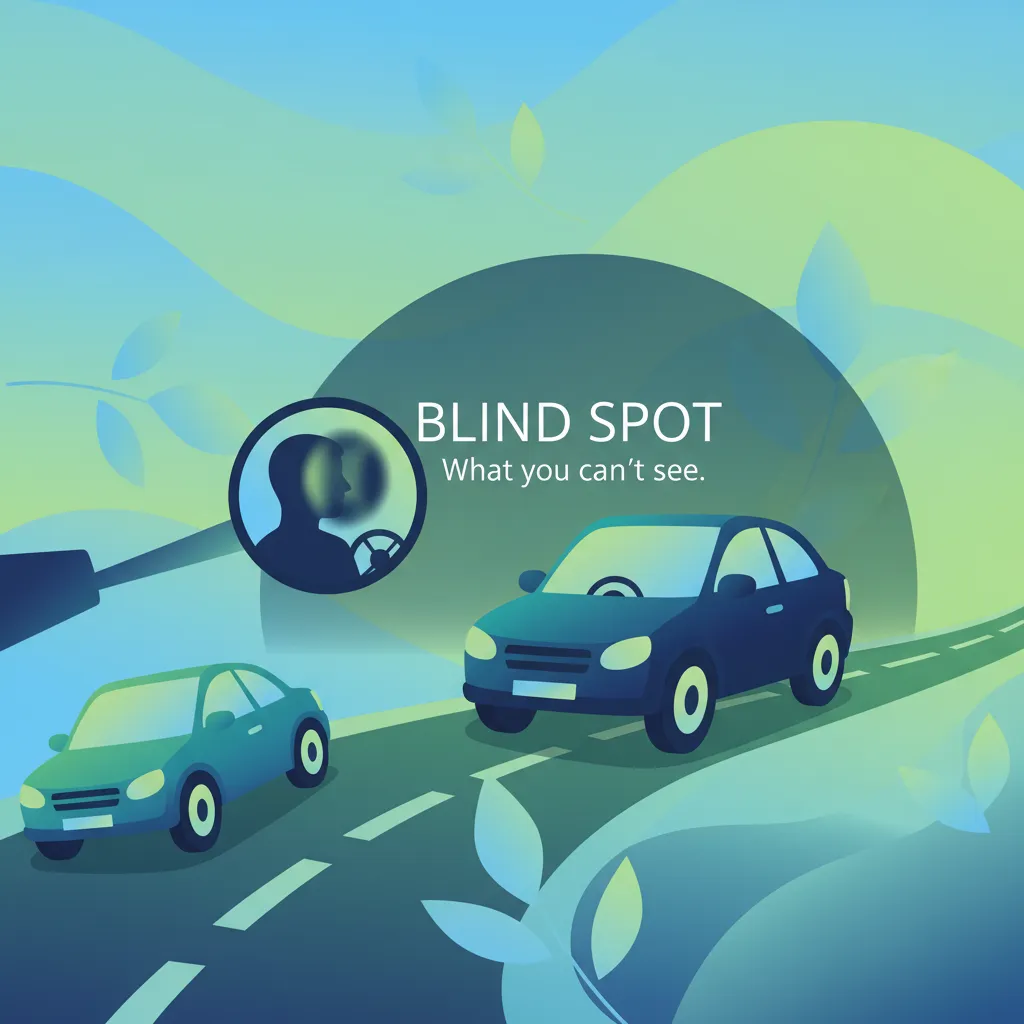
This lesson focuses on identifying blind spot zones created by larger vehicles and the rider’s own positioning. It covers effective mirror usage, lateral awareness techniques, and the importance of head checks before lane changes. DGT blind spot guidelines are referenced, emphasizing situational scanning to maintain safety in traffic.
Master crucial rider visibility techniques, including peripheral awareness and blind spot checks. Understand defensive maneuvers and how proper lane positioning enhances situational awareness to avoid hazards in Spain.
This lesson focuses on identifying blind spot zones created by larger vehicles and the rider’s own positioning. It covers effective mirror usage, lateral awareness techniques, and the importance of head checks before lane changes. DGT blind spot guidelines are referenced, emphasizing situational scanning to maintain safety in traffic.

This lesson focuses on strategies for maximizing rider visibility in daylight and nighttime conditions, covering high-visibility apparel, reflective vests, and LED accessories. It delves into rider posture and lane positioning that improve sightlines and reduce collision risk. The content aligns with DGT regulations for illumination levels on motorcycles.
This lesson focuses on defensive maneuvers in mixed traffic environments where various vehicles share the road. It outlines lane discipline, appropriate overtaking safety measures, and strategies for maintaining a safety corridor. The content incorporates DGT defensive guidelines, teaching riders to manage space and anticipate unpredictable driver behavior.
This lesson focuses on interaction dynamics with larger vehicles like cars, trucks, and buses, detailing their specific blind spot zones. Strategies for safely sharing lanes, overtaking etiquette, and proper approach when a bus stops are covered. The lesson also includes guidance on merging onto acceleration lanes following DGT policies.

This lesson examines the principles of maintaining a safe following distance, including the 'two-second rule' and its adjustments for speed and weather. It focuses on effective blind-spot management, teaching drivers how to use mirrors and head checks. The content integrates DGT guidelines on creating a safety buffer around the vehicle to allow time to react to unexpected events.

This lesson introduces anticipation techniques that improve a rider’s ability to predict potential hazards before they manifest. It covers scanning ahead, evaluating traffic patterns, and applying DGT risk assessment criteria. Emphasis is placed on developing a defensive riding mindset and maintaining safety margins to reduce accident likelihood.

This lesson outlines the proper use and legal requirements of vehicle lighting and mirror systems. It covers headlamps, fog lights, turn signals, and brake lights, clarifying when each must be used according to DGT regulations. The lesson also explains the correct adjustment of rearview and side mirrors and strategies for effective blind-spot monitoring.

This lesson focuses on safe nighttime riding, covering headlight alignment, rear-light visibility, and the use of reflective gear to enhance conspicuity. It explains DGT night riding requirements, including mandatory lighting standards. Topics also include managing glare from oncoming vehicles and mitigating rider fatigue during low-light conditions.
This lesson focuses on low-speed manoeuvres within congested urban traffic, detailing techniques for navigating tight corners and weaving through traffic. Learners analyze urban traffic flow, pedestrian zones, and cyclist interactions to anticipate hazards. The lesson also explains DGT regulations regarding slow-speed movement and lane positioning.
This lesson presents advanced cornering scenarios common on Spanish roads, such as mountain hairpins and high-speed autovía exits. It outlines specific techniques for descent control, ascent maneuvers, and safely merging into traffic after cornering. Interaction with cyclists and emergency cornering strategies are also covered in accordance with DGT regulations.
Find clear answers to common questions learners have about Lane Positioning and Visibility Strategies. Learn how the lesson is structured, which driving theory objectives it supports, and how it fits into the overall learning path of units and curriculum progression in Spain. These explanations help you understand key concepts, lesson flow, and exam focused study goals.
In urban traffic, the optimal lane position often involves riding in a spot that offers the best visibility for you and makes you most visible to others, usually towards the left or right third of the lane, depending on the situation. This allows for an escape route and avoids oil slicks or debris often found in the center, which is crucial for A, A1, A2 riders.
The DGT generally discourages lane splitting, especially at high speeds or in heavy traffic where it can be hazardous. While not explicitly forbidden in all low-speed, stationary traffic scenarios, riders must exercise extreme caution. It's strictly prohibited on motorways and never when it endangers other road users or exceeds safe speeds.
Peripheral vision is crucial for detecting hazards outside your direct line of sight, such as vehicles in adjacent lanes or pedestrians. Developing strong peripheral vision helps you maintain situational awareness, react quicker to unexpected events, and answer DGT exam questions that often test your understanding of hazard perception and defensive riding for A, A1, A2 licences.
Motorcyclists are generally not permitted to use the hard shoulder (arcén) for regular riding. It is reserved for emergencies, breakdowns, or specific situations where indicated by signs (e.g., in heavy congestion if allowed for two-wheelers, which is rare). Using it otherwise can result in fines from Spanish authorities, applicable to all A, A1, A2 licence holders.
Maintaining an effective line of sight ensures you can see far enough ahead to react to road conditions, traffic flow, and potential hazards. Your lane positioning should always allow for an unobstructed view through turns and over crests, providing ample time for decision-making and safer maneuvering, a key aspect tested in DGT scenarios for A, A1, A2 riders.
Use our powerful search functionality to pinpoint specific Spanish DGT driving theory practice sets. Filter by road sign categories, traffic law topics, or question difficulty to build custom study sessions and reinforce your knowledge precisely where it matters for your official exam.