
Mastering roundabouts and intersections is crucial for safe urban motorcycle riding and passing your Spanish DGT theory exam. This lesson covers the essential priority rules, correct lane selection for your intended exit, and how to safely yield to circulating traffic and other road users. We'll prepare you for common exam scenarios and real-world situations on Spanish roads.
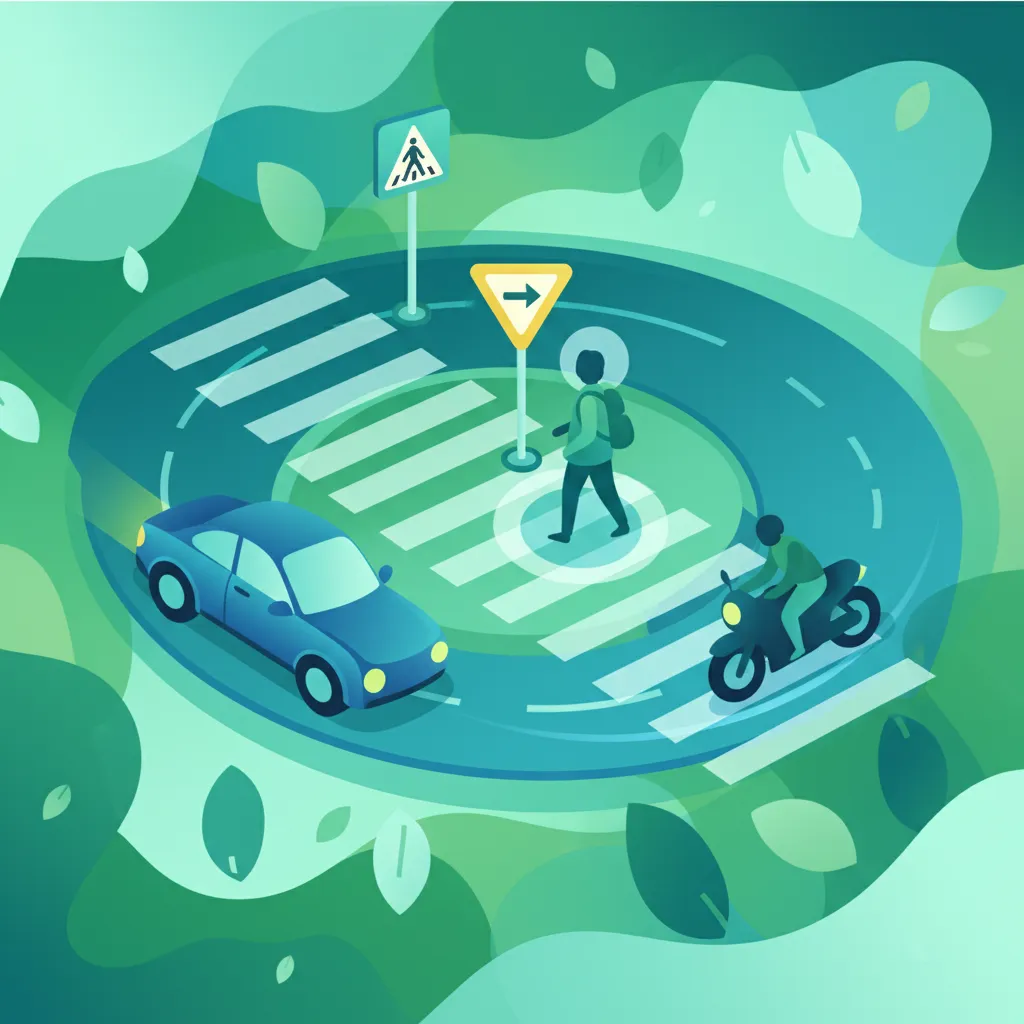
Lesson content overview
Navigating complex road junctions such as roundabouts and signal-controlled intersections is a critical skill for all riders, particularly for those preparing for the Spanish DGT motorcycle theory exam (licences A, A1, A2). These points on the road are where multiple traffic streams converge, presenting a higher risk of collision if not approached with precision and a clear understanding of Spanish traffic regulations.
This lesson provides a comprehensive guide to safely and efficiently negotiating these common conflict points, focusing on Spanish traffic law (Reglamento General de Circulación) and best practices. Mastery of these concepts is essential not only for passing your exam but, more importantly, for ensuring your safety and the smooth flow of traffic on the road.
Roundabouts are circular intersections designed to improve traffic flow and reduce the severity of collisions compared to traditional cross-intersections. In Spain, traffic within a roundabout circulates clockwise around a central island. Understanding the priority rules at entry is fundamental for safe negotiation.
The core principle governing roundabouts in Spain is that vehicles already circulating within the roundabout have priority over those wishing to enter. This is a mandatory rule under DGT Article 103 of the Reglamento General de Circulación. As a motorcyclist, you must always yield to traffic approaching from your left that is already inside the roundabout.
When approaching a roundabout, your first action should be to assess the traffic conditions, identify your intended exit, and adjust your speed accordingly. Slow down significantly to allow sufficient time to observe circulating traffic and pedestrians. Look to your left for oncoming vehicles within the roundabout, anticipating their speed and trajectory.
You will typically encounter a yield sign or road markings (white dotted lines) at the entry point, confirming your obligation to give way. Only proceed when there is a safe and clear gap in the circulating traffic, ensuring you do not force any vehicle already inside the roundabout to brake or alter its course.
Signaling your intentions is crucial for predictability. If you intend to take an exit that requires you to enter the inner lane or cross significant paths within the roundabout (e.g., the second or third exit), you should generally signal your left turn before entering. This communicates your intention to other drivers, though the primary signal for exiting is a right turn signal.
Reduce Speed: Slow down well in advance to give yourself time to assess the situation.
Observe Traffic: Look to your left for vehicles already circulating within the roundabout.
Signal Intent (Optional/Conditional): Signal left if taking an exit beyond the first or second, especially if moving to an inner lane. Signal right before your intended exit.
Yield: Wait for a safe gap in circulating traffic. Do not enter if it causes another vehicle to brake or swerve.
Enter: Proceed smoothly into the chosen lane, maintaining awareness of other vehicles.
Proper lane selection and discipline within a roundabout are vital for safety and compliance with DGT regulations, specifically DGT Circular 106/2019 which emphasizes respecting lane markings and avoiding unnecessary lane changes. Once inside, you must maintain your lane and only change lanes if absolutely necessary and safe, which should ideally be avoided.
The general rule for lane choice depends on your intended exit:
It is a common misunderstanding to switch lanes rapidly or without signaling inside the roundabout. This creates unpredictable movements for other drivers and significantly increases the risk of side-swipe collisions, especially for less visible motorcycles. Plan your lane choice before entry and execute it smoothly. Always signal right well in advance of your desired exit to inform other road users of your intention to leave the roundabout.
Signal-controlled intersections, regulated by traffic lights, manage traffic flow through phased signals, assigning specific times for different directions of travel. Compliance with these signals is mandatory under DGT Article 74 of the Reglamento General de Circulación.
Never enter an intersection on an amber light if you can safely stop. This is a common violation that can lead to collisions as opposing traffic may be preparing to move.
A green arrow displayed alongside a main green light allows specific turning movements (e.g., a left turn arrow) without yielding to oncoming traffic, which would normally have priority. However, a green arrow does not negate the need to check for vulnerable road users. Even with a green arrow, you must still check for pedestrians crossing the path of your turn and cyclists who may be using a dedicated bike lane that intersects your turning path.
Always ensure the path is clear before proceeding on a green arrow. Failing to check for vulnerable users is a significant cause of accidents at these junctions. Position your motorcycle correctly in the turning lane, and use your indicators to signal your turn clearly.
Uncontrolled intersections are junctions that lack traffic signs (like stop or yield signs) or traffic lights to regulate priority. In Spain, as in many European countries, these intersections are governed by a default rule: right-hand priority.
According to DGT Article 91 of the Reglamento General de Circulación, at an uncontrolled intersection, vehicles must yield to traffic approaching from the right. This means if another vehicle is coming from your right, you must stop or slow down to allow them to proceed before you.
When approaching an uncontrolled intersection, reduce your speed significantly and observe carefully in all directions: left, right, and then left again. Be prepared to stop. Even if you don't see another vehicle, always assume someone might approach from your right and be ready to yield. This rule applies even if the road from the right appears less important or is a dirt track.
Motorcyclists have a particular responsibility to protect vulnerable road users, especially pedestrians and cyclists, who are at higher risk in collisions. This responsibility is reinforced by specific DGT regulations.
At marked pedestrian crossings (pasos de peatones), whether adjacent to roundabouts or at signal-controlled intersections, pedestrians always have priority if they are crossing or are clearly intending to cross. DGT Article 43 states that vehicles must stop if a pedestrian is on or stepping onto a marked crosswalk. Always be vigilant for pedestrians, especially in urban areas and near public transport stops.
Cyclists, like motorcyclists, are more vulnerable than cars or trucks. DGT Article 40 stipulates that cyclists have the same rights and duties as other vehicles, and motorcyclists must not impede them, especially when cyclists are using designated bike lanes.
Many roundabouts and intersections have integrated bike lanes (carril bici) that may run parallel to the road or merge onto the roundabout approaches. When a bike lane intersects your path, you must yield to the cyclist, even if it appears you have the right of way. For example, if a cyclist in a bike lane is merging onto a roundabout at the same time you are entering, you must allow them to complete their merge safely before proceeding. Always check your mirrors and blind spots carefully for cyclists, as they can be difficult to see.
When approaching any intersection or roundabout, adopt a "look twice" strategy for cyclists and pedestrians. Their smaller size and sometimes unpredictable movements require extra vigilance.
Understanding the rules is one thing; applying them consistently and correctly is another. Here are common errors motorcyclists make at roundabouts and intersections, and how to avoid them:
By actively anticipating these scenarios and consciously applying the correct procedures, you significantly reduce your risk.
Riding conditions are not always ideal. It is crucial to adapt your approach to roundabouts and intersections based on various environmental and vehicle-specific factors.
Understanding the specific articles of the Reglamento General de Circulación (General Traffic Regulations) is mandatory for the Spanish Motorcycle Theory Exam.
| Regulation | Rule Statement | Applicability | Legal Status | Rationale |
|---|---|---|---|---|
| DGT Article 103 | Vehicles already circulating in a roundabout have priority over those entering. | All roundabouts, all vehicle types. | Mandatory | Prevents collisions by giving priority to established traffic flow. |
| DGT Article 74 | Vehicles must stop at a red traffic light and may only proceed on a green. Green arrows allow specific turns. | All signal-controlled intersections. | Mandatory | Ensures orderly flow and prevents side-impacts. |
| DGT Article 91 | At uncontrolled intersections, vehicles must yield to traffic approaching from the right. | Intersections without signs or signals. | Mandatory | Aligns with European right-hand priority convention. |
| DGT Circular 106/2019 | Lane markings on roundabouts must be respected; lane changes inside the roundabout are prohibited unless indicated. | All roundabout maneuvers. | Mandatory | Keeps traffic predictable and reduces conflicts within the roundabout. |
| DGT Article 43 | Pedestrians have priority on marked crosswalks; vehicles must stop if a pedestrian is crossing. | All crosswalks, including those near junctions. | Mandatory | Protects the most vulnerable road users. |
| DGT Article 40 | Cyclists have the same rights and duties; motorcyclists must not impede cyclists using bike lanes joining roundabouts. | Bike lanes intersecting roundabouts; any approach where cyclists may merge. | Mandatory | Ensures cyclists’ safety and maintains traffic flow for all users. |
To reinforce your understanding of traffic interaction and prepare thoroughly for your Spanish Motorcycle Theory Exam, consider exploring these related topics and practice questions.
This lesson covers the essential rules for navigating roundabouts and intersections under Spanish DGT regulations. At roundabouts, circulating traffic has priority and you must choose your lane based on your intended exit before entering, signaling right before departure. Signal-controlled intersections require compliance with traffic light phases, and green arrows grant vehicle priority while still obligating checks for vulnerable road users. Uncontrolled intersections follow right-hand priority under Article 91. Motorcyclists must actively protect pedestrians on crosswalks and cyclists in bike lanes, who retain their rights even when you have vehicle priority. DGT regulations including Articles 103, 74, 91, 43, 40, and Circular 106/2019 form the legal framework for these mandatory rules.
A short set of high-value points that capture the most important learning from this lesson.
Traffic already circulating inside a Spanish roundabout has priority over vehicles entering; you must yield to traffic from your left
Choose your lane based on your intended exit before entering: outermost lane for first/second exit, inner lane for third exit or further
Signal right well before your intended exit to inform other road users of your departure from the roundabout
At uncontrolled intersections without signs or signals, always yield to traffic approaching from your right
Green arrows give priority over vehicles but do not exempt you from checking for pedestrians and cyclists crossing your path
Explore all units and lessons included in this driving theory course.
DGT Article 103: Circulating vehicles always have priority over those entering a roundabout
DGT Article 91: At uncontrolled intersections, yield to traffic coming from your right regardless of road importance
DGT Circular 106/2019 prohibits changing lanes inside roundabouts unless road markings indicate it is safe to do so
Even with a green arrow, cyclists in bike lanes and pedestrians on marked crosswalks have priority or must be yielded to
Signal left before entering only if taking an exit beyond the second and needing the inner lane; always signal right before your exit
Entering a roundabout without yielding to circulating traffic, forcing other drivers to brake unexpectedly
Changing lanes inside the roundabout, which creates unpredictable movements and increases collision risk
Failing to signal right before exiting, leaving other road users unable to anticipate your departure
Assuming a green arrow means the path is clear; cyclists and pedestrians must still be actively checked for
Ignoring right-hand priority at uncontrolled intersections because the road from the right appears smaller or less important
Lesson content overview
A short set of high-value points that capture the most important learning from this lesson.
Traffic already circulating inside a Spanish roundabout has priority over vehicles entering; you must yield to traffic from your left
Choose your lane based on your intended exit before entering: outermost lane for first/second exit, inner lane for third exit or further
Signal right well before your intended exit to inform other road users of your departure from the roundabout
At uncontrolled intersections without signs or signals, always yield to traffic approaching from your right
Green arrows give priority over vehicles but do not exempt you from checking for pedestrians and cyclists crossing your path
Explore all units and lessons included in this driving theory course.
DGT Article 103: Circulating vehicles always have priority over those entering a roundabout
DGT Article 91: At uncontrolled intersections, yield to traffic coming from your right regardless of road importance
DGT Circular 106/2019 prohibits changing lanes inside roundabouts unless road markings indicate it is safe to do so
Even with a green arrow, cyclists in bike lanes and pedestrians on marked crosswalks have priority or must be yielded to
Signal left before entering only if taking an exit beyond the second and needing the inner lane; always signal right before your exit
Entering a roundabout without yielding to circulating traffic, forcing other drivers to brake unexpectedly
Changing lanes inside the roundabout, which creates unpredictable movements and increases collision risk
Failing to signal right before exiting, leaving other road users unable to anticipate your departure
Assuming a green arrow means the path is clear; cyclists and pedestrians must still be actively checked for
Ignoring right-hand priority at uncontrolled intersections because the road from the right appears smaller or less important
Explore search topics learners often look for when studying Negotiating Roundabouts and Intersections. These topics reflect common questions about road rules, driving situations, safety guidance, and lesson level theory preparation for learners in Spain.
Browse additional driving theory lessons that cover connected traffic rules, road signs, and common driving situations related to this topic. Improve your understanding of how different rules interact across everyday traffic scenarios.
Explore complex roundabout scenarios including multi-lane usage, advanced lane discipline, and common DGT-cited mistakes. Deepen your understanding of priority and safe maneuvering for Spanish theory exams.

This lesson clarifies the primary rule for roundabouts: all vehicles entering must yield to traffic already on the circular roadway. It explains how to approach a roundabout, select the appropriate lane based on the intended exit, and merge safely into the flow of traffic. Proper signaling before exiting is also covered, ensuring other drivers can anticipate the rider's movements for a smooth and safe negotiation of the junction.

This lesson presents advanced cornering scenarios common on Spanish roads, such as mountain hairpins and high-speed autovía exits. It outlines specific techniques for descent control, ascent maneuvers, and safely merging into traffic after cornering. Interaction with cyclists and emergency cornering strategies are also covered in accordance with DGT regulations.
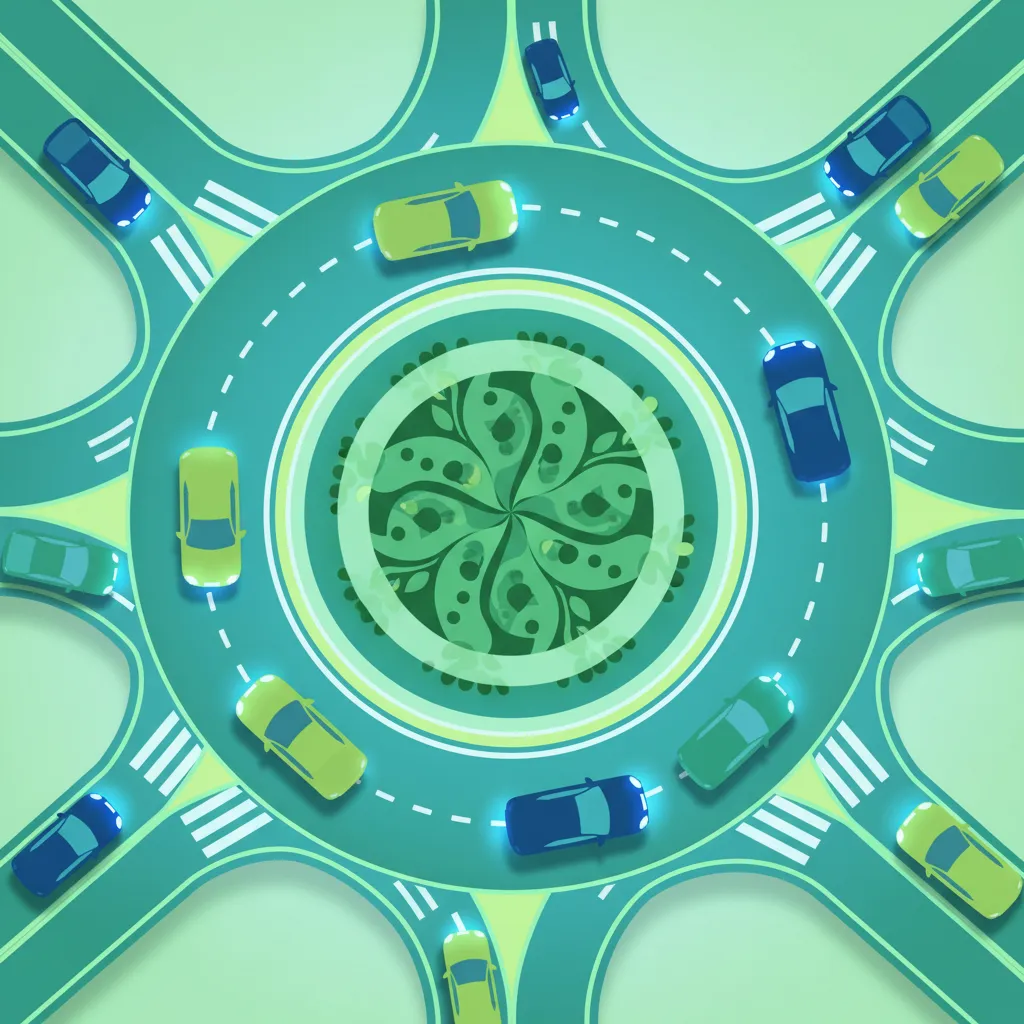
This lesson examines the structural components of a typical Spanish roundabout, describing the central island, entry and circulating lanes, and the placement of yield signs. It outlines how DGT standards dictate the geometric design and entry/exit points to ensure smooth traffic flow. Understanding these design elements enables drivers to anticipate vehicle movements and navigate safely.

This lesson examines the interaction between large vehicles, such as trucks, and vulnerable road users within roundabouts. It addresses the wide turning radius of heavy vehicles, the importance of checking blind spots, and the correct yielding behavior toward pedestrians and cyclists. Learners will understand how to maintain safe distances and anticipate the movements of different road users.
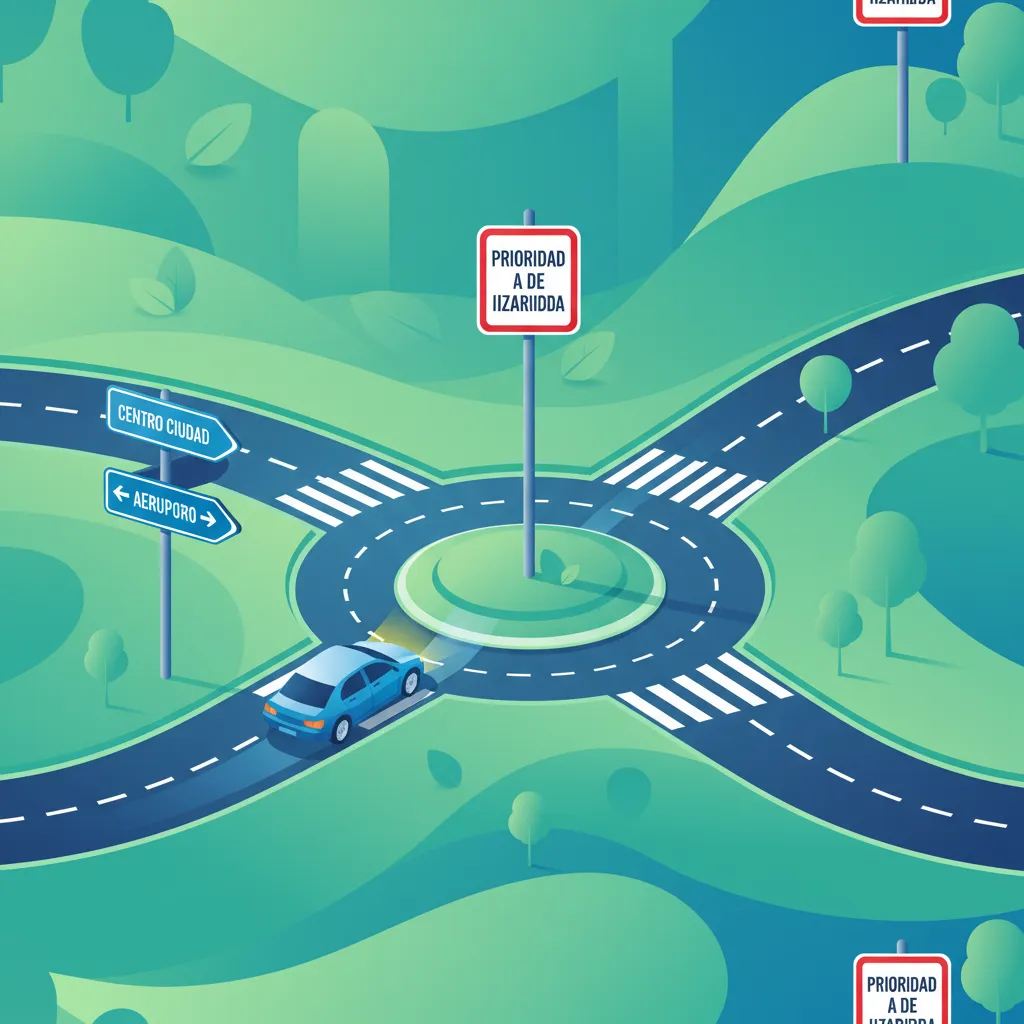
This lesson presents the variety of signs that guide drivers through roundabout navigation. It explains the significance of the roundabout warning symbol, priority signs, lane arrows, and directional signs placed before and within the roundabout. Mastery of roundabout signage ensures that drivers follow legal requirements and maintain safe traffic flow.

This lesson details overtaking rules specific to motorcyclists, covering safe zones, required visibility distance, and assessment of oncoming traffic. It emphasizes the importance of speed matching and correct timing of lane changes. The module references DGT regulations, including conditions for passing on the left or right in various environments.

This lesson focuses on the yielding hierarchy that governs roundabout usage in Spain. It clarifies that vehicles already circulating have priority over those entering and explains the proper lane positioning based on the intended exit. The content includes the correct use of signals for changing lanes and exiting, and safe merging techniques.

This lesson addresses common errors made by drivers when using roundabouts and presents corrective strategies. It covers issues such as entering from the wrong lane, failing to yield to circulating traffic, exceeding the recommended speed, and not signaling an exit correctly. By understanding these mistakes, drivers can improve their roundabout proficiency and reduce accident risk.
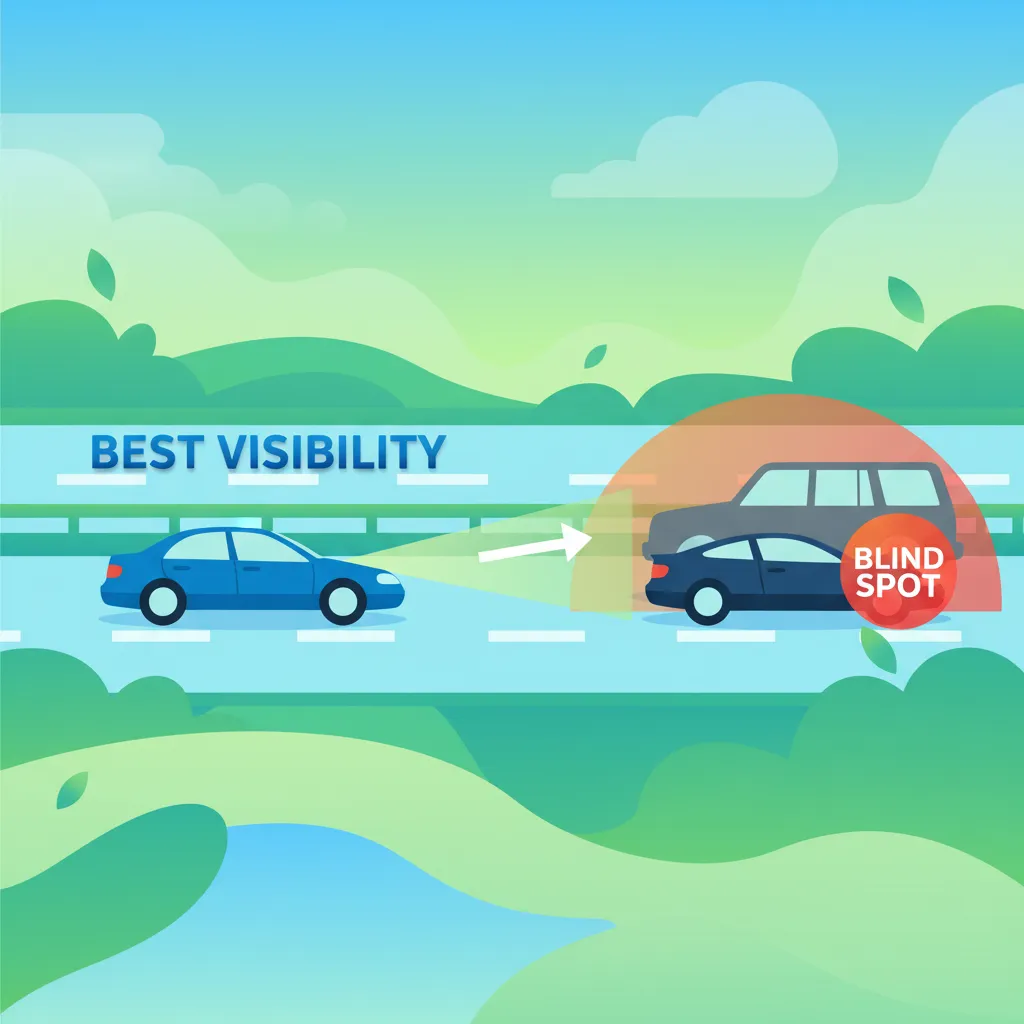
This lesson explores proper lane positioning, emphasizing strategic selection of traffic lanes for optimal visibility. It explains the importance of rider line of sight and peripheral vision in maintaining situational awareness. The content also covers legal aspects of lane splitting and correct usage of road shoulders, abiding by DGT regulations.

This lesson focuses on interaction dynamics with larger vehicles like cars, trucks, and buses, detailing their specific blind spot zones. Strategies for safely sharing lanes, overtaking etiquette, and proper approach when a bus stops are covered. The lesson also includes guidance on merging onto acceleration lanes following DGT policies.
Understand critical priority rules at intersections and roundabouts in Spain, focusing on the safe interaction with pedestrians and cyclists as per DGT regulations. Learn to protect vulnerable road users.

This lesson focuses on the absolute priority of pedestrians at marked crosswalks, often known as zebra crossings. It explains that riders must always be prepared to stop and yield the right-of-way to any pedestrian waiting to cross or already crossing. The content also covers signaled pedestrian crossings and general awareness in urban areas where pedestrians may cross unexpectedly, reinforcing safety and legal compliance.

This lesson addresses the crucial 'priority to the right' rule that governs traffic at intersections without signs or signals. It explains that drivers must yield to any vehicle approaching from their right-hand side. The content provides practical examples of how to assess traffic, determine the correct order of passage, and proceed with caution to safely navigate these common but potentially confusing intersections.
This lesson clarifies the primary rule for roundabouts: all vehicles entering must yield to traffic already on the circular roadway. It explains how to approach a roundabout, select the appropriate lane based on the intended exit, and merge safely into the flow of traffic. Proper signaling before exiting is also covered, ensuring other drivers can anticipate the rider's movements for a smooth and safe negotiation of the junction.

This lesson explores the design and legal requirements of pedestrian crossings in Spanish urban areas. It clarifies the rules at zebra crossings, signal-controlled crossings, and areas where cyclists or other vulnerable users share space. The content explains the required safety distances and signage indicating crossing zones to ensure drivers respect all road users.

This lesson addresses the critical skill of safely sharing the road with other vulnerable users like pedestrians, cyclists, and other motorcyclists. It emphasizes the need for increased awareness, speed adaptation, and providing ample space when passing. The content covers DGT regulations regarding minimum passing distances and highlights the importance of making eye contact to ensure mutual awareness and prevent common urban accidents.

This lesson analyzes the various intersection configurations found in Spanish cities, such as controlled and uncontrolled junctions. It explains the hierarchy of right-of-way, detailing when vehicles must yield, when pedestrians have priority, and how traffic signs dictate movement. Learners are guided through DGT signage conventions that determine priority at each intersection type.
This lesson focuses on interaction dynamics with larger vehicles like cars, trucks, and buses, detailing their specific blind spot zones. Strategies for safely sharing lanes, overtaking etiquette, and proper approach when a bus stops are covered. The lesson also includes guidance on merging onto acceleration lanes following DGT policies.

This lesson discusses the infrastructure dedicated to cyclists, covering dedicated bike lanes and the rules governing interaction and overtaking. It explains DGT regulations on safe passing distances and how to navigate mixed-traffic scenarios where vehicles and bicycles share the road. The content emphasizes driver responsibilities to maintain a safe corridor and respect cyclist priority.
Find clear answers to common questions learners have about Negotiating Roundabouts and Intersections. Learn how the lesson is structured, which driving theory objectives it supports, and how it fits into the overall learning path of units and curriculum progression in Spain. These explanations help you understand key concepts, lesson flow, and exam focused study goals.
In Spain, vehicles circulating within the roundabout always have priority. As a motorcyclist approaching a roundabout, you must yield to any traffic already inside the circle before entering. Look for gaps and enter only when it is safe to do so.
For smaller roundabouts or if exiting at the first or second exit, use the right lane. For exits further around, or if indicated by signs or road markings, you may use the left lane but must signal your intention to exit in good time and ensure you yield to traffic from the right if necessary when changing lanes.
Motorcyclists must obey all traffic signals (lights and signs) at intersections. This includes stopping at red lights, proceeding with caution on green, and being aware of the specific meaning of flashing amber or directional arrows. Always anticipate potential hazards, such as vehicles turning across your path.
Yes, motorcyclists must always exercise caution and yield to cyclists, especially at intersections and when they are crossing designated cycle paths. Be aware of their presence, anticipate their movements, and give them adequate space and priority, as per DGT regulations.
If you miss your intended exit on a roundabout, do not stop suddenly or attempt to reverse. Continue circulating around the roundabout and prepare to take the correct exit on the next pass. Ensure you are in the appropriate lane and signal correctly.
Use our powerful search functionality to pinpoint specific Spanish DGT driving theory practice sets. Filter by road sign categories, traffic law topics, or question difficulty to build custom study sessions and reinforce your knowledge precisely where it matters for your official exam.