
This lesson is crucial for safe motorcycle riding in Spain, focusing on defensive maneuvers within mixed traffic environments. Building upon previous lessons on road positioning and interaction, we will dive into advanced techniques for navigating complex traffic scenarios and enhancing your safety margin, directly preparing you for questions on the DGT motorcycle theory exam.

Lesson content overview
Riding a motorcycle in mixed traffic environments presents unique challenges due to the diverse range of vehicles and road users sharing the same space. From cars and trucks to buses, bicycles, and pedestrians, each interaction requires a rider to adopt a proactive and defensive mindset. This lesson will equip you with the knowledge and strategies essential for managing space, anticipating unpredictable behavior, and significantly reducing collision risks, aligning with the stringent safety requirements of the Spanish DGT (Dirección General de Tráfico) for A, A1, and A2 motorcycle licences.
Defensive riding is not merely about reacting to hazards but about actively preventing them. It’s a proactive approach that prioritizes predictable, safe behavior and minimizes your exposure to sudden dangers. Mastering these techniques is fundamental for both your safety and for successfully passing your Spanish Motorcycle Theory Exam.
Motorcyclists are among the most vulnerable road users. Unlike drivers in enclosed vehicles, riders have less physical protection and are more susceptible to the consequences of a collision. Proactive defensive maneuvers directly address this vulnerability by creating buffer zones, improving visibility, and enhancing reaction time. By consistently employing these strategies, you can reduce the likelihood of accidents, protect yourself and others, and demonstrate compliance with Spanish traffic laws, which consistently emphasize a driver's duty to avoid endangering others.
Effective defensive riding is built upon several foundational principles. These principles guide your decisions and actions, helping you navigate complex traffic scenarios with greater safety and confidence.
| Principle | Definition | Purpose / Rationale | Implications |
|---|---|---|---|
| Safety Corridor | A buffer zone of at least 1.5 metres laterally around the motorcycle, free of other road users, wherever possible. | Provides reaction time and space for emergency manoeuvres. | Influences lane choice, overtaking distance, and positioning when following. |
| Lane Discipline | Consistent placement within the correct lane, respecting lane markings and keeping a predictable path. | Reduces surprise for other users and improves traffic flow. | Determines overtaking strategies and merging behaviour. |
| Overtaking Safety | The set of criteria that must be satisfied before a rider initiates an overtaking manoeuvre (visibility, distance). | Prevents collisions during overtaking, especially with larger vehicles. | Requires assessment of safe distance, acceleration capability, and road conditions. |
| Anticipatory Awareness | Continuous scanning of the environment to predict potential hazards before they materialise. | Allows early decision-making, reducing abrupt actions. | Leads to earlier braking or lane adjustments, better positioning for the next manoeuvre. |
| Graceful Alignment | The practice of smoothly returning to the lane centre after avoidance manoeuvres, without abrupt lateral movements. | Minimises destabilisation and preserves control, reducing the risk of further hazards. | Affects rider comfort, vehicle stability, and risk of side collisions, ensuring controlled recovery from unexpected events. |
A fundamental aspect of defensive riding is the concept of a "safety corridor." This is a protective space you actively maintain around your motorcycle, shielding you from potential hazards and giving you vital reaction time.
The safety corridor isn't just one static space; it has two crucial dimensions:
In practice, maintaining a safety corridor means constantly assessing your position relative to other road users and potential hazards. For example, on a two-lane road, a rider might track slightly towards the left side of their lane to create a 1.5-meter buffer from any vehicle in the adjacent lane. While a full 1.5-meter corridor might not always be achievable in very narrow lanes or heavy traffic, the principle is to maximize the space available and remain highly vigilant. The Spanish Reglamento General de Circulación (RGC) Article 9 reinforces this by mandating that drivers keep a safe distance to avoid endangering others, which directly supports the safety corridor concept. It is a common misunderstanding to believe the corridor is mandatory on all roads; while the ideal is 1.5 meters, in confined spaces, maintaining maximum available space with heightened caution is key.
Lane discipline involves consistently positioning your motorcycle within the correct lane boundaries and maintaining a predictable path. This seemingly simple practice is vital for your safety and for smooth traffic flow, as it helps other drivers anticipate your movements.
Staying within your designated lane and respecting all road markings is fundamental. This prevents unintended weaving, which can surprise other drivers and lead to dangerous situations. Your motorcycle's path should be smooth and consistent, not erratic.
The RGC Article 7 requires drivers to keep within their lane unless overtaking, turning, or navigating an obstruction. Deviating from your lane without proper signaling or justification can lead to confusion and increase the risk of collisions. For example, on a residential street with clearly painted lane markers, the rider should keep the motorcycle centered between these markers.
Lane discipline isn't just about staying in the lane; it's about choosing the best position within the lane.
Overtaking is one of the most hazardous maneuvers a rider performs. Executing it safely requires careful assessment, precise control, and strict adherence to established criteria.
Before initiating any overtaking maneuver, a rider must satisfy several critical conditions:
Overtaking in blind spots, especially on curves, at junctions, or when your view of oncoming traffic is obstructed, is strictly prohibited and extremely dangerous. Always ensure you have a clear view of the road ahead.
Road conditions significantly impact overtaking safety:
The RGC Article 14 outlines general overtaking procedures in Spain. The DGT guidelines emphasize minimum visibility distances, particularly on motorways and two-lane roads. For example, on a two-lane highway, the rider should signal, check rear-view mirrors, confirm a minimum of 150 metres of clear road ahead, and then initiate the overtake smoothly.
Anticipatory awareness is the ability to continuously scan your environment and predict potential hazards before they become imminent. This proactive skill is a cornerstone of defensive riding, allowing you to make early decisions and avoid abrupt, last-minute reactions.
To effectively anticipate, riders divide their visual attention into several scanning zones:
Beyond these zones, temporal anticipation involves estimating how long it will take to reach a potential hazard based on your current speed. This helps you decide if you have enough time to react or if you need to adjust your speed or position.
Anticipatory awareness enables proactive decision-making. Instead of sudden braking or swerving, you can make gradual adjustments to your speed, lane position, or gear. For instance, when approaching a roundabout, a rider with strong anticipatory awareness will scan for right-hand side traffic, assess gaps, and position their bike for a smooth, controlled entry, rather than braking sharply at the last moment. The RGC Article 11 imposes a general duty of care to avoid danger by anticipating it, underscoring the legal importance of this skill. Over-reliance on peripheral vision without direct scanning, or failing to check mirrors before making a move, are common pitfalls to avoid.
Even the most defensive rider may encounter an unexpected hazard requiring an evasive maneuver. Once the immediate danger is averted, "graceful alignment" is the technique of smoothly returning to your original or preferred lane position without abrupt or sudden movements.
After swerving to avoid a pothole, a suddenly opening car door, or a pedestrian, the natural instinct might be to yank the handlebars back to the center. However, such abrupt lateral movements can destabilize the motorcycle, potentially leading to loss of control, a slide, or a subsequent collision.
Graceful alignment means:
While there is no explicit legal rule for graceful alignment, it is implied by the driver's duty to avoid dangerous maneuvers (RGC Article 9). Assuming a sudden correction is harmless is a common misunderstanding; it can easily cause loss of traction or throw the rider off balance. For example, after evading an unexpected pedestrian crossing by gently steering right, the rider smoothly returns to the lane center, maintaining stable speed and posture, preparing for the next interaction with traffic.
Defensive maneuvers are not just best practices; many are enshrined in Spanish traffic law, primarily the Reglamento General de Circulación (RGC), and further elaborated by DGT guidelines. Compliance with these rules is mandatory for all road users, including motorcyclists.
The primary legal document outlining general traffic regulations in Spain, enforced by the DGT.
Understanding common mistakes is just as important as knowing the correct procedures. Recognizing these violations helps you avoid them, contributing to safer riding and compliance with Spanish traffic laws.
Defensive riding principles remain constant, but their practical application must adapt to the ever-changing environment. External factors like weather, lighting, road type, and the presence of vulnerable users demand adjustments to your strategy.
Applying these principles in real-world situations is key to becoming a safe and confident rider. Let's explore a few common scenarios.
Defensive maneuvers in mixed traffic are not just a collection of rules; they form a comprehensive philosophy of proactive safety. By consistently applying principles like maintaining a robust safety corridor, demonstrating impeccable lane discipline, executing safe overtakes, cultivating keen anticipatory awareness, and recovering with graceful alignment, you fundamentally transform your riding experience. These actions don't just reduce the probability of collisions and ensure legal compliance with DGT regulations; they also enhance your confidence, making you a more skilled and responsible rider on Spain's roads.
Remember that human perception has an average reaction time of 1.5 seconds. All defensive distance calculations, especially following distance, factor in this latency plus your vehicle's actual braking distance. This is why increasing your following distance on wet roads is crucial; reduced friction means a significantly longer braking distance.
This lesson builds upon your foundational knowledge of road positioning, traffic interaction, and hazard perception, providing practical applications that are vital for advanced riding and for preparing you for the challenges covered in later modules on riding under special conditions.
This lesson covers essential defensive riding techniques for motorcycles in Spain's mixed traffic environments, aligned with DGT guidelines and the Reglamento General de Circulación. Key principles include maintaining a 1.5-metre safety corridor laterally, practicing strategic lane positioning, and executing safe overtaking only when visibility exceeds 200 metres with sufficient speed differential. The lesson emphasizes anticipatory awareness through near, mid, and far-field scanning zones, and graceful alignment to smoothly recover after evasive maneuvers. Practical scenarios illustrate correct behaviors at urban intersections, on motorways in rain, and on rural nighttime curves, while common violations like tailgating, blind-spot overtaking, and unindicated lane changes highlight critical mistakes to avoid.
A short set of high-value points that capture the most important learning from this lesson.
The safety corridor principle requires maintaining at least 1.5 metres of lateral buffer around your motorcycle wherever possible to provide reaction time for emergency maneuvers.
Lane discipline means consistent lane placement and choosing strategic positions within the lane to maximize visibility and maintain your safety corridor.
Safe overtaking requires at least 200 metres of clear visibility ahead, sufficient speed differential to complete the maneuver quickly, and enough space to return safely to lane.
Anticipatory awareness divides scanning into near-field (0-10m), mid-field (10-30m), and far-field (30m+) zones to predict hazards before they become imminent.
Graceful alignment after evasive maneuvers involves smoothly returning to lane center without abrupt inputs to maintain motorcycle stability and avoid secondary hazards.
Explore all units and lessons included in this driving theory course.
RGC Article 9 mandates maintaining safe distances to avoid endangering others; on wet roads extend following gap from 2 to 3-4 seconds.
In Spain, overtaking is generally done on the left; passing on the right is only legal in specific multi-lane urban situations with designated lanes.
Signal your intentions at least 50 metres before changing lanes or merging, as required by RGC Article 17.
When riding near parked cars, maintain at least 0.5 metres lateral distance to avoid door zone hazards and pedestrians stepping out.
Human reaction time averages 1.5 seconds; all defensive distance calculations must account for this latency plus actual braking distance.
Tailgating large vehicles severely limits forward visibility and reaction time, dramatically increasing rear-end collision risk.
Attempting to overtake when visibility is obstructed (blind spots, curves, junctions) is a leading cause of head-on collisions.
Making sudden lane changes without signaling, even when avoiding a hazard, confuses other drivers and can cause secondary collisions.
Cutting back into lane too abruptly after overtaking, without thoroughly checking mirrors, forces vehicles to brake sharply.
Riding too close to the curb reduces your visibility to turning traffic and exposes you to drainage grates, debris, and pedestrians.
Lesson content overview
A short set of high-value points that capture the most important learning from this lesson.
The safety corridor principle requires maintaining at least 1.5 metres of lateral buffer around your motorcycle wherever possible to provide reaction time for emergency maneuvers.
Lane discipline means consistent lane placement and choosing strategic positions within the lane to maximize visibility and maintain your safety corridor.
Safe overtaking requires at least 200 metres of clear visibility ahead, sufficient speed differential to complete the maneuver quickly, and enough space to return safely to lane.
Anticipatory awareness divides scanning into near-field (0-10m), mid-field (10-30m), and far-field (30m+) zones to predict hazards before they become imminent.
Graceful alignment after evasive maneuvers involves smoothly returning to lane center without abrupt inputs to maintain motorcycle stability and avoid secondary hazards.
Explore all units and lessons included in this driving theory course.
RGC Article 9 mandates maintaining safe distances to avoid endangering others; on wet roads extend following gap from 2 to 3-4 seconds.
In Spain, overtaking is generally done on the left; passing on the right is only legal in specific multi-lane urban situations with designated lanes.
Signal your intentions at least 50 metres before changing lanes or merging, as required by RGC Article 17.
When riding near parked cars, maintain at least 0.5 metres lateral distance to avoid door zone hazards and pedestrians stepping out.
Human reaction time averages 1.5 seconds; all defensive distance calculations must account for this latency plus actual braking distance.
Tailgating large vehicles severely limits forward visibility and reaction time, dramatically increasing rear-end collision risk.
Attempting to overtake when visibility is obstructed (blind spots, curves, junctions) is a leading cause of head-on collisions.
Making sudden lane changes without signaling, even when avoiding a hazard, confuses other drivers and can cause secondary collisions.
Cutting back into lane too abruptly after overtaking, without thoroughly checking mirrors, forces vehicles to brake sharply.
Riding too close to the curb reduces your visibility to turning traffic and exposes you to drainage grates, debris, and pedestrians.
Explore search topics learners often look for when studying Defensive Maneuvers in Mixed Traffic. These topics reflect common questions about road rules, driving situations, safety guidance, and lesson level theory preparation for learners in Spain.
Browse additional driving theory lessons that cover connected traffic rules, road signs, and common driving situations related to this topic. Improve your understanding of how different rules interact across everyday traffic scenarios.
Explore complex real-world driving scenarios requiring advanced defensive maneuvers. This lesson focuses on applying principles like safety corridors and hazard anticipation in challenging urban and rural Spanish traffic conditions, aligning with DGT guidelines.

This lesson introduces anticipation techniques that improve a rider’s ability to predict potential hazards before they manifest. It covers scanning ahead, evaluating traffic patterns, and applying DGT risk assessment criteria. Emphasis is placed on developing a defensive riding mindset and maintaining safety margins to reduce accident likelihood.

This lesson presents advanced cornering scenarios common on Spanish roads, such as mountain hairpins and high-speed autovía exits. It outlines specific techniques for descent control, ascent maneuvers, and safely merging into traffic after cornering. Interaction with cyclists and emergency cornering strategies are also covered in accordance with DGT regulations.

This lesson outlines procedures for handling emergency situations and accidents. It covers emergency braking techniques, hazard avoidance strategies, and the DGT emergency protocol for accident reporting. Emphasis is placed on rider protective actions, post-crash first aid, roadside safety, and legal obligations after an incident.

This lesson focuses on interaction dynamics with larger vehicles like cars, trucks, and buses, detailing their specific blind spot zones. Strategies for safely sharing lanes, overtaking etiquette, and proper approach when a bus stops are covered. The lesson also includes guidance on merging onto acceleration lanes following DGT policies.
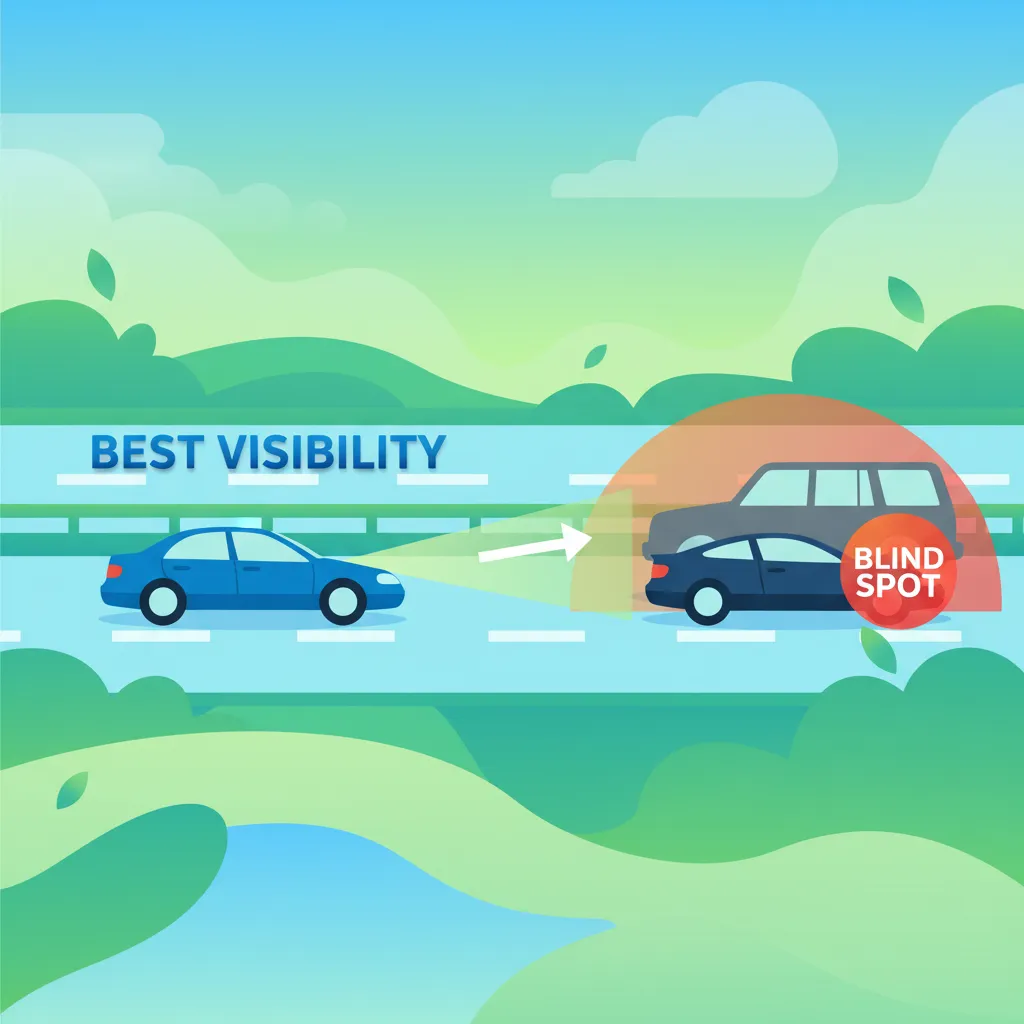
This lesson explores proper lane positioning, emphasizing strategic selection of traffic lanes for optimal visibility. It explains the importance of rider line of sight and peripheral vision in maintaining situational awareness. The content also covers legal aspects of lane splitting and correct usage of road shoulders, abiding by DGT regulations.

This lesson focuses on low-speed manoeuvres within congested urban traffic, detailing techniques for navigating tight corners and weaving through traffic. Learners analyze urban traffic flow, pedestrian zones, and cyclist interactions to anticipate hazards. The lesson also explains DGT regulations regarding slow-speed movement and lane positioning.
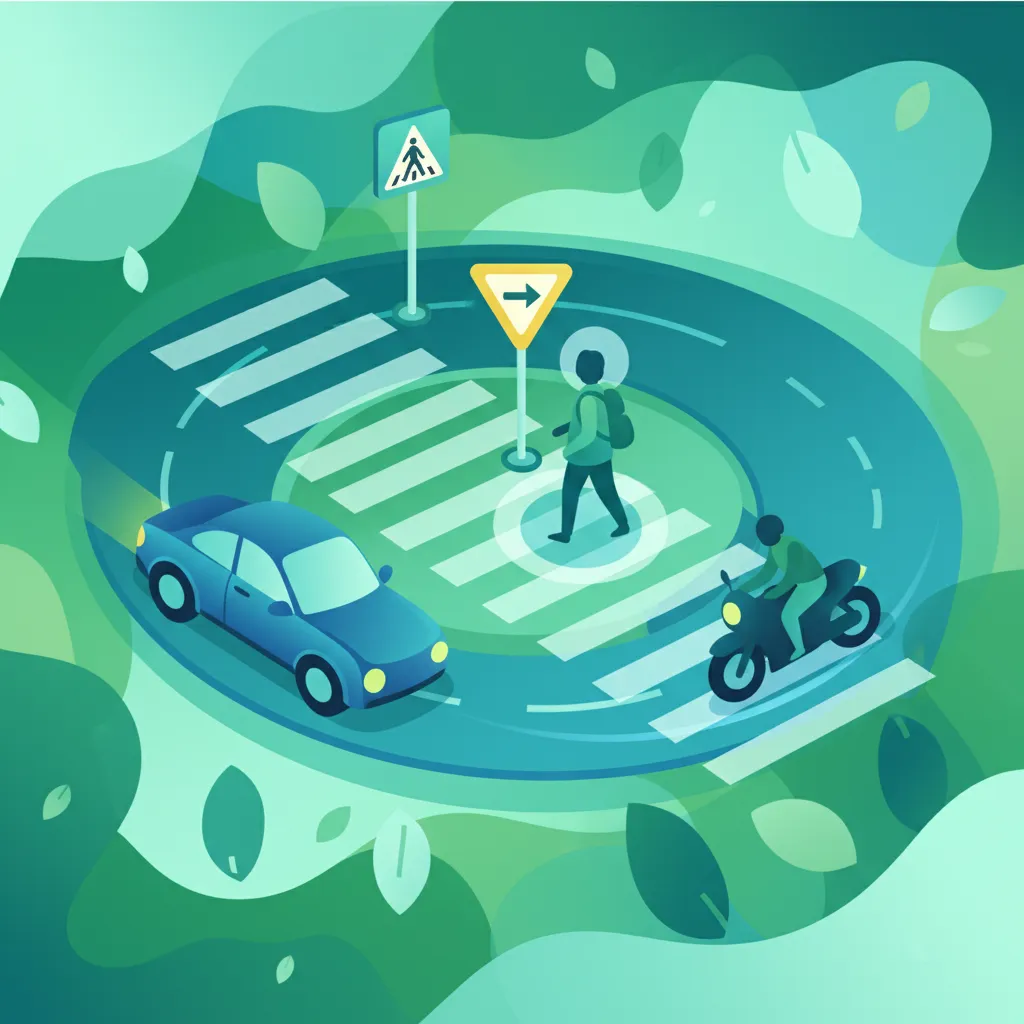
This lesson outlines the proper techniques for negotiating roundabouts and signal-controlled intersections in Spain. It explains priority rules at entry, lane selection based on the intended exit, and yielding to circulating traffic. The content also covers compliance with traffic signals and DGT regulations, including handling cyclist crossings.

This lesson focuses on identifying blind spot zones created by larger vehicles and the rider’s own positioning. It covers effective mirror usage, lateral awareness techniques, and the importance of head checks before lane changes. DGT blind spot guidelines are referenced, emphasizing situational scanning to maintain safety in traffic.

This lesson details the protocol for performing an emergency stop, emphasizing full-force application of both front and rear brakes while maintaining optimal rider posture. It covers the importance of visual fixation and the role of ABS in stabilizing the bike under panic conditions. Learners also study the calculation of stopping distances based on speed and road conditions.

This lesson examines the principles of maintaining a safe following distance, including the 'two-second rule' and its adjustments for speed and weather. It focuses on effective blind-spot management, teaching drivers how to use mirrors and head checks. The content integrates DGT guidelines on creating a safety buffer around the vehicle to allow time to react to unexpected events.
Understand frequent errors riders make in mixed traffic. This lesson details common defensive riding violations and misconceptions according to Spanish DGT rules, helping you avoid dangerous situations and improve overall road safety.
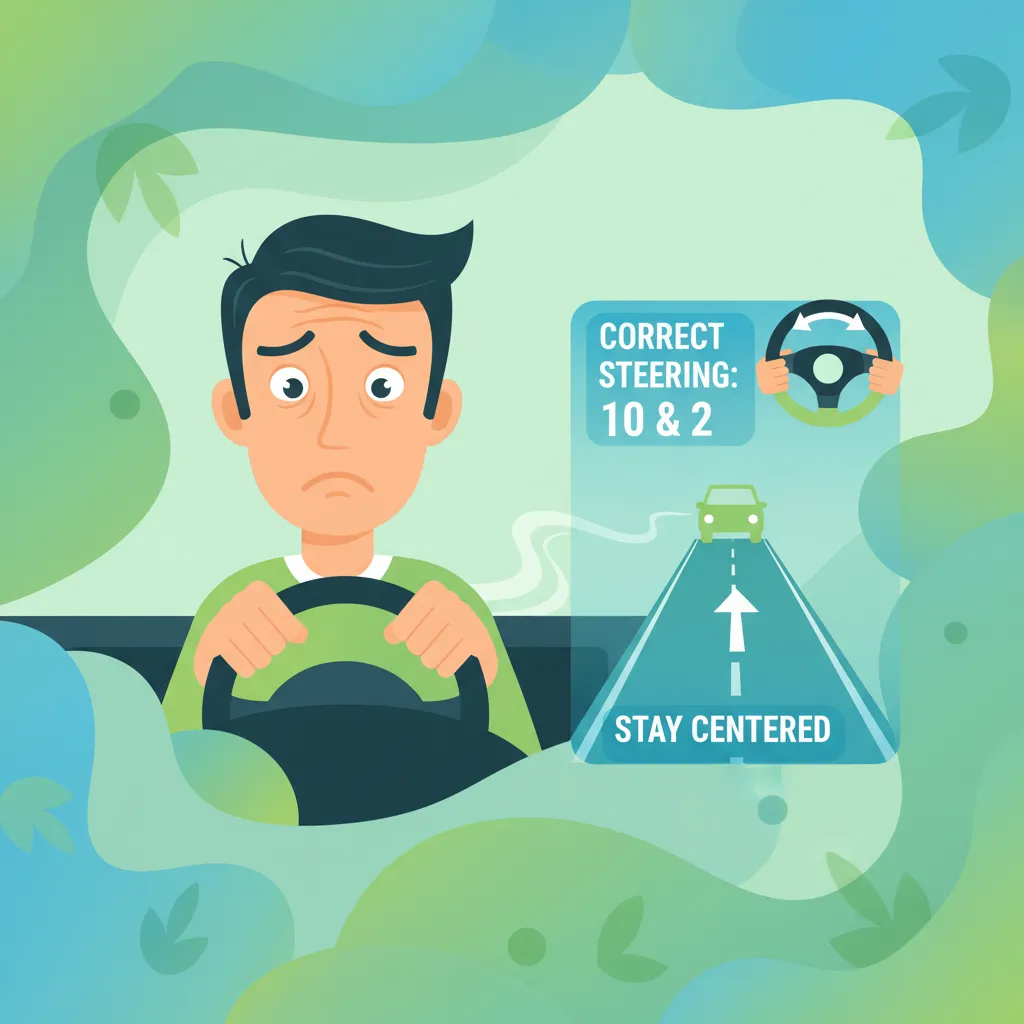
This lesson identifies frequent beginner errors such as over-application of throttle, misuse of the clutch, and improper braking timing. It analyzes the underlying causes of these mistakes and offers corrective techniques to develop safe riding habits. By referencing DGT exam examples, learners gain insight into how to avoid these common pitfalls.
This lesson introduces anticipation techniques that improve a rider’s ability to predict potential hazards before they manifest. It covers scanning ahead, evaluating traffic patterns, and applying DGT risk assessment criteria. Emphasis is placed on developing a defensive riding mindset and maintaining safety margins to reduce accident likelihood.
This lesson outlines procedures for handling emergency situations and accidents. It covers emergency braking techniques, hazard avoidance strategies, and the DGT emergency protocol for accident reporting. Emphasis is placed on rider protective actions, post-crash first aid, roadside safety, and legal obligations after an incident.
This lesson explores proper lane positioning, emphasizing strategic selection of traffic lanes for optimal visibility. It explains the importance of rider line of sight and peripheral vision in maintaining situational awareness. The content also covers legal aspects of lane splitting and correct usage of road shoulders, abiding by DGT regulations.
This lesson focuses on identifying blind spot zones created by larger vehicles and the rider’s own positioning. It covers effective mirror usage, lateral awareness techniques, and the importance of head checks before lane changes. DGT blind spot guidelines are referenced, emphasizing situational scanning to maintain safety in traffic.

This lesson focuses on strategies for maximizing rider visibility in daylight and nighttime conditions, covering high-visibility apparel, reflective vests, and LED accessories. It delves into rider posture and lane positioning that improve sightlines and reduce collision risk. The content aligns with DGT regulations for illumination levels on motorcycles.

This lesson presents a systematic pre-ride safety checklist covering tire pressure, brake fluid levels, lighting operation, and chain tension to ensure the motorcycle is road-ready. It also emphasizes personal checks such as helmet strap security and appropriate gear for weather conditions. Integrating DGT-recommended inspection procedures helps minimize equipment-related failures.
This lesson details the protocol for performing an emergency stop, emphasizing full-force application of both front and rear brakes while maintaining optimal rider posture. It covers the importance of visual fixation and the role of ABS in stabilizing the bike under panic conditions. Learners also study the calculation of stopping distances based on speed and road conditions.
This lesson presents advanced cornering scenarios common on Spanish roads, such as mountain hairpins and high-speed autovía exits. It outlines specific techniques for descent control, ascent maneuvers, and safely merging into traffic after cornering. Interaction with cyclists and emergency cornering strategies are also covered in accordance with DGT regulations.
This lesson focuses on interaction dynamics with larger vehicles like cars, trucks, and buses, detailing their specific blind spot zones. Strategies for safely sharing lanes, overtaking etiquette, and proper approach when a bus stops are covered. The lesson also includes guidance on merging onto acceleration lanes following DGT policies.
Find clear answers to common questions learners have about Defensive Maneuvers in Mixed Traffic. Learn how the lesson is structured, which driving theory objectives it supports, and how it fits into the overall learning path of units and curriculum progression in Spain. These explanations help you understand key concepts, lesson flow, and exam focused study goals.
A safety corridor, or 'espacio de seguridad', refers to the buffer zone you maintain around your motorcycle. In mixed traffic, it means ensuring you have enough space ahead, behind, and to your sides to maneuver safely if another vehicle's behavior becomes unpredictable. For motorcyclists, this often involves positioning within your lane to maximize visibility and prevent vehicles from trying to squeeze past unsafely.
Overtaking safely in Spain requires assessing multiple factors. Check your mirrors and blind spots for approaching vehicles, ensure you have sufficient clear road ahead to complete the maneuver without forcing other traffic to brake, and consider your motorcycle's acceleration capabilities. Always follow DGT guidelines, which emphasize avoiding overtaking if there is any doubt about safety, especially in complex traffic.
The Dirección General de Tráfico (DGT) recommends positioning your motorcycle within your lane to maximize your visibility to other road users and to create a buffer zone. You should typically ride in a position that allows others to see you clearly, often slightly towards the center or one side of the lane depending on traffic flow and potential hazards. Avoid riding too close to parked cars or in blind spots.
Anticipation is key to defensive riding. Observe the behavior of other vehicles and drivers: look for signs of distraction (e.g., phones), check if they are signalling intentions, and be aware of their speed relative to yours. Assume other drivers may not see you and be prepared to react if they change lanes suddenly, brake unexpectedly, or turn without warning. Maintaining a safety corridor is your primary tool for managing this unpredictability.
While 'filtering' (or lane splitting) between stationary or slow-moving traffic is common for motorcyclists in Spain, it's not explicitly regulated by a separate law but falls under general safety and cautious conduct. It should only be performed when safe, at low speed, and without endangering other road users. The DGT emphasizes extreme caution and adherence to general traffic rules when filtering, ensuring a safety corridor is maintained.
Use our powerful search functionality to pinpoint specific Spanish DGT driving theory practice sets. Filter by road sign categories, traffic law topics, or question difficulty to build custom study sessions and reinforce your knowledge precisely where it matters for your official exam.