
Logo
First Aid PLS

First Aid for Unconscious Victims: Breathing & PLS for the Spanish DGT Exam

Practice essential first aid steps for unconscious victims in traffic accidents. This set covers how to check for consciousness, open airways using the 'Maniobra Frente-Mentón' (head-tilt/chin-lift), and correctly apply the 'Posición Lateral de Seguridad' (PLS or Recovery Position) for the Spanish driving theory exam. Learn to prevent life-threatening situations while awaiting emergency services in Spain, as per DGT guidelines.

First AidAccidentsPLSUnconscious VictimAirwaysDGTEmergency Response
First Aid for Unconscious Victims: Breathing & PLS for the Spanish DGT Exam

Mastering Emergency First Aid: Unconscious Victims in Spain

This practice set is crucial for your DGT theory test revision on emergency first aid. You will specifically review how to assess and manage unconscious victims who are still breathing, focusing on critical Spanish traffic rules and the correct application of the Recovery Position. This detailed driving theory practice helps you confidently prepare for accident scenarios and official exam questions.

Navigate life-threatening scenarios by learning how to react when encountering an unconscious but breathing victim. This set covers the vital steps from checking for consciousness to securing airways and correctly placing a victim in the Recovery Position, preparing you for complex DGT exam questions on emergency first aid.

Example Questions in Unconscious Victims & PLS

Preview sample questions from the Unconscious Victims & PLS practice set to see how they help you prepare for the driving theory exam in Spain.

Consciousness Assessment StepsSuspected Spinal Injury: No MovementBreathing Check DurationInitial Consciousness CheckSpinal Injury: Always Move?Airway Obstruction ReliefSpinal Injury Movement ExceptionWhen to Use PLSFirst Aid Sequence (PAS)Checking Breathing DurationConsciousness: Verbal OnlyFrente-Mentón for AirwayManiobra Frente-Mentón PurposePLS for Non-BreathingPLS and Airway Protection

Why Learners Search for Unconscious Victims & PLS When Preparing for the Theory Exam

Learners choose Unconscious Victims & PLS to improve accuracy and understanding of key exam themes in Spain. It offers realistic driving theory questions and targeted revision for effective preparation.

first aid unconscious victim breathing DGT examhow to apply PLS driving theory questions SpainManiobra Frente-Mentón Spanish driving test practicewhen not to move accident victim spinal injury DGTrecovery position driving theory quiz Spainunconscious driver first aid DGT rules

Questions Learners Have About Unconscious Victims & PLS

Find answers to the most common queries learners have when practising Unconscious Victims & PLS, including how questions match the official theory exam in Spain, how scoring works, and how this practice improves exam readiness.

When should an unconscious accident victim be placed in the 'Posición Lateral de Seguridad' (PLS)?

You should place an unconscious victim in the PLS if they are breathing normally and there is no suspicion of a spinal injury. This position helps prevent choking from their tongue or vomit.

What is the 'Maniobra Frente-Mentón' and why is it important?

The 'Maniobra Frente-Mentón' (head-tilt/chin-lift) is a technique used to open an unconscious victim's airway by gently tilting the head back and lifting the chin. This is crucial to prevent the tongue from blocking the airway.

Is it always safe to move an unconscious accident victim?

No, it is crucial not to move an unconscious victim if a spinal injury is suspected, unless their life is in immediate danger (e.g., from fire, drowning, or an unsafe location). Moving them unnecessarily could worsen their injury.

How do I check if an accident victim is conscious according to Spanish DGT guidelines?

To check consciousness, you should speak to the victim loudly and clearly. If they don't respond, you can apply a gentle, painful stimulus, such as a small pinch, to see if they react with movement or sound.

What is the primary purpose of the 'Posición Lateral de Seguridad' (PLS)?

The primary purpose of the PLS is to maintain an open airway for an unconscious victim who is still breathing normally. This position ensures that their tongue doesn't block the airway and prevents aspiration if they vomit.

Skills You Will Build for the Driving Theory Exam

By completing Unconscious Victims & PLS, you will gain stronger rule knowledge, faster recognition of signs and situations, better decision making in traffic scenarios, and increased accuracy on exam style questions used in Spain. These outcomes directly support higher scoring exam performance.

Understand how to assess consciousness in an accident victim following DGT protocols.
Recognise the steps for opening an unconscious victim's airway using the 'Maniobra Frente-Mentón'.
Know when and how to correctly place a breathing, unconscious victim in the 'Posición Lateral de Seguridad' (PLS).
Identify critical situations where moving an injured person should be avoided due to suspected spinal injuries.
Apply primary first aid principles for accident victims as required by the Spanish driving theory exam.

Reinforce Critical First Aid Skills for DGT Exam Success

Exploring additional practice questions on first aid for drivers helps reinforce your understanding of essential DGT emergency procedures. These related theory test practice sets offer varied scenarios to ensure robust exam preparation and proficiency in Spanish traffic rules concerning accidents.
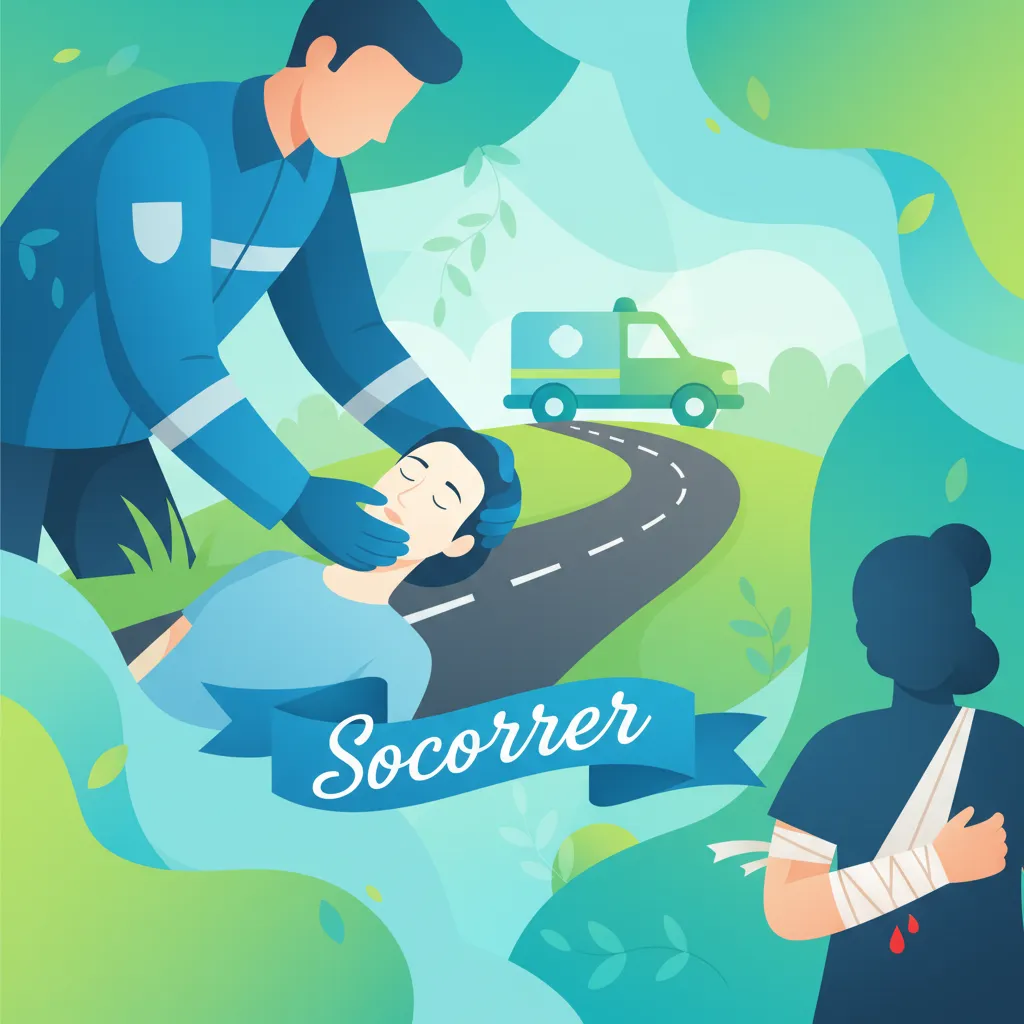
First Aid in Traffic Accidents: The Socorrer Phase in Spain

First Aid (Socorrer)

Master Life-Saving First Aid Steps for Your Spanish Driving Exam

First AidAccidentsSocorrer
15 questionsView details
First Aid No-Go's: Critical Mistakes in Spanish Driving Accidents

First Aid No-Go's

Master Essential First Aid 'Don'ts' to Avoid Harm and Pass Your DGT Exam.

first aidaccident responseemergency
15 questionsView details
The PAS Protocol: Alert, Assist, and Legal Duty in Spain

PAS: Alert & Assist

Master the A and S of PAS: Your crucial role in accident response and legal obligations for the Spanish DGT exam.

PAS protocolAccident responseEmergency services
15 questionsView details
First Aid for Hemorrhages and Burns in Spanish Driving Theory

Hemorrhages & Burns

Master Emergency First Aid: Crucial for Your DGT Exam and Road Safety.

first aidemergencieshemorrhage
12 questionsView details
Spanish PAS Protocol: Securing the Scene and Notification

PAS Protocol & 112 Calls

Master the crucial first steps after a traffic accident according to Spanish DGT rules.

Accident protocolPAS protocolEmergency calls
20 questionsView details
Scene Safety: The 'Proteger' Phase of the PAS Protocol in Spain

PAS: Scene Protection

Your first priority in an accident: Protect yourself and the scene according to DGT rules.

AccidentsEmergencySafety
15 questionsView details

Questions in Unconscious Victims & PLS

Exam focused questionss

0

Difficulty Level

How This Driving Theory Practice Helps You Pass Faster

Unconscious Victims & PLS offers quick, focused exam style practice to boost your Spanish knowledge for the driving theory exam in Spain.

Confidently assess accident victims for consciousness and normal breathing.
Know the precise procedure for opening airways using the 'Maniobra Frente-Mentón'.
Master the application of the 'Posición Lateral de Seguridad' (PLS) for breathing, unconscious victims.
Avoid critical mistakes regarding spinal injury management in emergency situations on the exam.
Improve your score on DGT exam questions related to first aid and immediate accident response.

Who Should Practise Unconscious Victims & PLS?

Unconscious Victims & PLS helps learners in Spain with clear explanations and targeted Spanish practice to improve essential driving theory topics.

This practice set is designed for advanced learners and those aiming for a high score on the Spanish DGT driving theory exam, particularly in first aid scenarios. It targets common pitfalls related to emergency response for unconscious victims, emphasizing critical decision-making when dealing with breathing and airway management, ensuring you are fully prepared for the exam.

Start Practice

Ready to Start Practicing? Choose Your Theory Category

Dive deeper into your Spanish DGT driving theory preparation by selecting a specific practice category. Whether you need to review road signs, master traffic priority rules, or understand vehicle safety, pick a topic to begin targeted exercises and reinforce your knowledge for the official exam.

Explore Practice Categories

CTA Decorative Squares

Practice Spanish driving theory questions

Spanish road signsSpanish article topicsSearch Spanish road signsSpanish driving theory homeSpanish road sign categoriesSpanish driving theory topicsSpanish Moped Theory AM courseSearch Spanish theory articlesSpanish driving theory coursesSpanish driving theory articlesSpanish driving theory practiceSpanish driving licence proceduresSpanish Driving Theory D & D1 courseSpanish Driving Theory B & BE courseLane Signs Spanish road sign categoryOther Signs Spanish road sign categorySpanish Truck Driving Theory C/C1 courseService Signs Spanish road sign categoryPriority Signs Spanish road sign categoryLocation Signs Spanish road sign categoryMandatory Signs Spanish road sign categoryDirection Signs Spanish road sign categorySpanish Motorcycle Theory (A, A1, A2) courseRestriction Signs Spanish road sign categoryAdditional Panels Spanish road sign categoryRoute Number Signs Spanish road sign categoryConfirmation Signs Spanish road sign categoryPre-signaling Signs Spanish road sign categoryGeneral Danger Signs Spanish road sign categoryDe-restriction Signs Spanish road sign categoryEntry Prohibition Signs Spanish road sign categoryGeneral Indication Signs Spanish road sign categoryConstruction Warning Signs Spanish road sign categoryConstruction Indication Signs Spanish road sign categoryConstruction Speed Limit Signs Spanish road sign categoryConstruction De-restriction Signs Spanish road sign categoryConstruction Reflective Marking Signs Spanish road sign categoryOther Prohibition or Restriction Signs Spanish road sign categorySigns for Specific Use in Built-up Areas Spanish road sign categoryConstruction Regulation and Priority Signs Spanish road sign category