
This lesson guides you through the complex dynamics of sharing road space with trams in Switzerland, a critical skill for professional Category D drivers. You will learn the specific priority rules at junctions and stops, ensuring you can manage these shared environments safely and professionally. This topic builds on your knowledge of urban traffic navigation, helping you prepare for key hazard perception questions in your theory exam.
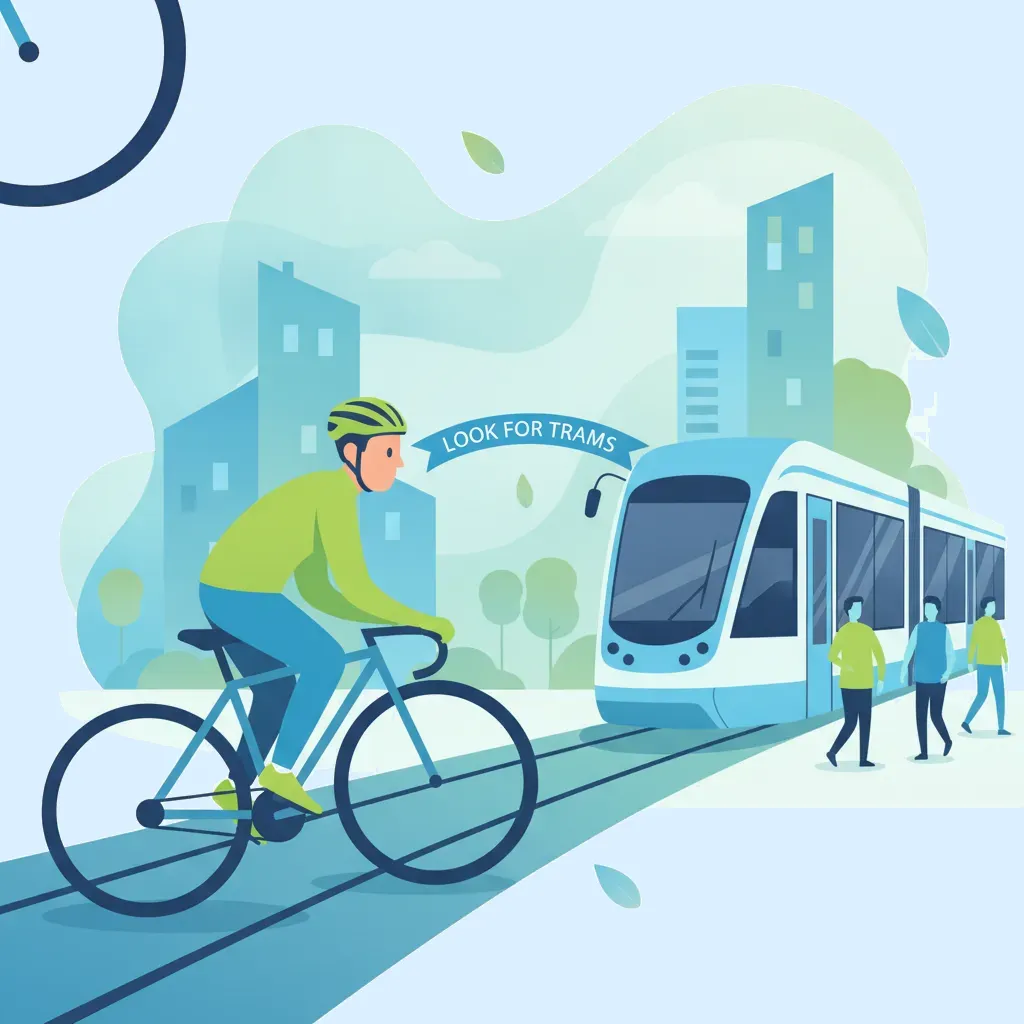
Lesson content overview
Operating a Category D passenger vehicle in Switzerland often means navigating dynamic urban environments where roads are shared with public transport trams. Trams, with their fixed routes and unique operating characteristics, present distinct challenges and require specific driving strategies. This lesson provides essential knowledge and practical advice for professional bus and coach drivers to ensure safe, compliant, and efficient interaction with trams and their infrastructure. Understanding tram priority, mastering safe track crossing techniques, and maintaining awareness around tram stops are crucial skills that contribute significantly to road safety, smooth traffic flow, and passenger protection in the Swiss public transport system.
Trams operate on fixed rails, which fundamentally limits their ability to swerve or change direction suddenly. To compensate for this constraint and ensure the efficient movement of public transport, Swiss traffic law grants trams specific priority rights at many intersections. As a professional Category D driver, it is imperative to understand and consistently apply these rules.
Tram priority can manifest in two primary ways:
Always be aware that a tram's flashing green light overrides a standard green traffic light for other road users. Failing to yield can lead to severe consequences.
The legal basis for tram priority is primarily found within the Swiss Highway Code (SVG) and its associated ordinances.
Misunderstandings often arise when drivers assume their standard green light grants them unconditional priority, overlooking tram-specific signals. Always double-check for tram movements and signals before proceeding through an intersection.
The physical presence of tram tracks on the road surface introduces unique hazards that require careful attention from all drivers, especially those operating large Category D vehicles. Improper track crossing can lead to loss of control, vehicle damage, or even collisions.
The most critical aspect of safe track crossing is the crossing angle.
Approach Perpendicularly: Always aim to cross tram tracks at an angle as close to 90 degrees (perpendicular) as possible. This minimizes the chance of your tires slipping into the rail grooves.
Reduce Speed: Before reaching the tracks, reduce your speed significantly. Crossing at a controlled, low speed (e.g., around 10-15 km/h, depending on conditions) allows your tires to maintain better grip and prevents sudden jolts.
Maintain Straight Wheel Alignment: As your wheels engage the tracks, keep the steering wheel straight. Avoid turning while directly on the rails, as this dramatically increases the risk of a wheel becoming trapped in the groove, leading to a skid or loss of control.
Avoid Stopping on Tracks: Never stop your vehicle directly on tram tracks unless absolutely unavoidable (e.g., extreme traffic gridlock or an emergency). If you must stop, ensure your vehicle is entirely clear of the tracks.
Swiss Road Rules (SVV § 33b) mandate that vehicles cross tracks appropriately to maintain control. This typically means crossing at a right angle and reducing speed. Ignoring these guidelines puts both the bus and its passengers at risk.
Tram stops are specific areas where trams halt for passenger boarding and alighting. These zones require heightened awareness and adherence to specific rules to protect vulnerable passengers and ensure uninterrupted tram service.
When operating near tram stops, bus drivers must:
A designated area, often demarcated by platform markings, signs, or a raised curb, where trams halt for passengers to board and alight.
Section 27 of the Swiss Highway Code (SVG) stipulates that "Vehicles shall not stop on tram tracks unless needed for boarding and without obstructing tram movement." This rule primarily applies to the tram itself but implies that other vehicles must keep clear.
Tram stops are often busy hubs with pedestrians, cyclists, and other road users. Passengers boarding or alighting trams may be momentarily distracted or have limited visibility. As a bus driver, you must be extra vigilant:
Trams, particularly modern electric ones, can be surprisingly quiet, making their presence less obvious than other large vehicles. Effective detection relies on a combination of visual and auditory cues.
In noisy urban environments, do not rely solely on auditory cues. Always use your eyes to scan for trams, especially at intersections and before crossing tracks.
Section 6 of the Swiss Highway Code (SVG) reminds drivers to maintain a "reasonable distance" from trams, which implicitly requires early detection to manage that distance effectively.
Beyond the operational characteristics of trams, the physical layout of tram tracks themselves can create visual obstructions, known as "blind spots," for other road users.
The metal rails, especially when they are slightly raised or when viewed from certain angles, can obscure small objects or even parts of larger vehicles. This phenomenon is particularly dangerous when:
Section 4 of the Swiss Highway Code (SVG) emphasizes the "Rule of Anticipatory Driving," which perfectly applies here. Drivers must anticipate hidden hazards and adjust their speed and attention accordingly. An additional safety margin of approximately 2 seconds may be needed to react to a tram or other object emerging from a blind spot near the rails.
Adherence to Swiss traffic laws is paramount for Category D drivers. Here’s a summary of key regulations concerning trams:
Even experienced drivers can make errors when interacting with trams. Being aware of these common pitfalls can help Category D drivers enhance their safety and compliance.
Safe interaction with trams also demands dynamic adjustments based on prevailing driving conditions. As a professional Category D driver, you must constantly assess the environment and modify your driving behavior.
By understanding these conditional variations, Category D drivers can proactively adjust their driving, mitigating risks and ensuring a safer environment for everyone sharing the road with trams.
Safe interaction with trams is a cornerstone of professional driving for Category D license holders in Switzerland. It demands a deep understanding of specific road rules, keen observational skills, and a commitment to defensive driving. By consistently applying the principles outlined in this lesson—respecting tram priority, executing safe track crossings, operating cautiously around tram stops, and maintaining heightened awareness of tram presence and track-related blind spots—bus and coach drivers contribute significantly to road safety. This proactive approach not only prevents accidents and ensures compliance with Swiss traffic law but also supports the efficient and reliable operation of both bus and tram public transport networks, ensuring the safety and comfort of all passengers and road users.
This lesson covers the essential rules and techniques for Swiss Category D drivers sharing road space with trams. Trams receive priority at most intersections unless explicitly overridden by signals or markings, and a flashing green tram signal always takes precedence over your green light. Safe track crossing requires approaching at near-perpendicular angles at reduced speeds (10–15 km/h) with straight wheel alignment to prevent wheel entrapment, while never stopping on the rails. Drivers must actively scan for trams using visual and auditory cues, anticipate blind spots behind rails, and adjust speed and positioning based on weather, visibility, vehicle load, and vehicle type. Understanding and applying these principles ensures exam success and safe professional operation in Swiss urban environments.
A short set of high-value points that capture the most important learning from this lesson.
Trams have priority over all other traffic at intersections unless traffic lights or road markings explicitly state otherwise, due to their fixed rail path.
A flashing green tram signal overrides your standard green traffic light—you must yield to the tram even when your light is green.
Always cross tram tracks at an angle close to 90 degrees (perpendicular) at reduced speed with wheels straight to prevent wheel entrapment.
Never stop any part of your vehicle on tram tracks; ensure complete clearance before stopping at junctions or in traffic.
Tram tracks create blind spots where approaching trams or vulnerable road users may be hidden until you are very close—slow down and scan actively.
Explore all units and lessons included in this driving theory course.
Static priority: fixed signs grant tram right-of-way; Dynamic priority: traffic light phases with flashing green grant tram priority.
When crossing tracks, aim for 90-degree perpendicular crossing at 10–15 km/h with straight wheel alignment and never turn while on the rails.
Steel rails have significantly reduced friction compared to asphalt, especially when wet, icy, or covered with leaves.
Never overtake a tram on its right side; only pass on the left with ample space and clear visibility.
Fully loaded or articulated Category D vehicles require longer braking distances when approaching tram tracks and intersections.
Assuming a standard green traffic light gives unconditional priority, disregarding a tram's flashing green signal that overrides it.
Stopping or hesitating directly on tram tracks at junctions or near stops, blocking tram movement and creating collision hazards.
Crossing tram tracks at a sharp angle rather than perpendicularly, risking tires becoming trapped in rail grooves and causing loss of control.
Failing to slow down sufficiently before crossing tracks, not accounting for reduced rail friction or blind spots created by the rails.
Overtaking trams on the right side, which is prohibited and extremely dangerous due to fixed rail paths and passenger movements.
Lesson content overview
A short set of high-value points that capture the most important learning from this lesson.
Trams have priority over all other traffic at intersections unless traffic lights or road markings explicitly state otherwise, due to their fixed rail path.
A flashing green tram signal overrides your standard green traffic light—you must yield to the tram even when your light is green.
Always cross tram tracks at an angle close to 90 degrees (perpendicular) at reduced speed with wheels straight to prevent wheel entrapment.
Never stop any part of your vehicle on tram tracks; ensure complete clearance before stopping at junctions or in traffic.
Tram tracks create blind spots where approaching trams or vulnerable road users may be hidden until you are very close—slow down and scan actively.
Explore all units and lessons included in this driving theory course.
Static priority: fixed signs grant tram right-of-way; Dynamic priority: traffic light phases with flashing green grant tram priority.
When crossing tracks, aim for 90-degree perpendicular crossing at 10–15 km/h with straight wheel alignment and never turn while on the rails.
Steel rails have significantly reduced friction compared to asphalt, especially when wet, icy, or covered with leaves.
Never overtake a tram on its right side; only pass on the left with ample space and clear visibility.
Fully loaded or articulated Category D vehicles require longer braking distances when approaching tram tracks and intersections.
Assuming a standard green traffic light gives unconditional priority, disregarding a tram's flashing green signal that overrides it.
Stopping or hesitating directly on tram tracks at junctions or near stops, blocking tram movement and creating collision hazards.
Crossing tram tracks at a sharp angle rather than perpendicularly, risking tires becoming trapped in rail grooves and causing loss of control.
Failing to slow down sufficiently before crossing tracks, not accounting for reduced rail friction or blind spots created by the rails.
Overtaking trams on the right side, which is prohibited and extremely dangerous due to fixed rail paths and passenger movements.
Explore search topics learners often look for when studying Safe Interaction with Trams and Shared Road Spaces. These topics reflect common questions about road rules, driving situations, safety guidance, and lesson level theory preparation for learners in Switzerland.
Browse additional driving theory lessons that cover connected traffic rules, road signs, and common driving situations related to this topic. Improve your understanding of how different rules interact across everyday traffic scenarios.
Deepen your understanding of complex tram priority scenarios in Swiss urban traffic. Learn to navigate special signals, intersections, and situations where trams have precedence, ensuring safe and compliant Category D driving.

This lesson explores the priority given to public transport vehicles, especially trams and buses, in Swiss traffic. It explains how to recognize dedicated public transport lanes and the requirement to yield to trams at intersections. The content also covers procedures when a bus is stopping for passengers and how to ensure safe interactions.

This lesson focuses on the rules governing interactions with public transport vehicles like buses and trams. It explains the priority given to these vehicles at stops and the use of dedicated lanes. Additionally, the content covers tram track crossing procedures and correct vehicle positioning near public transport stops to ensure safety.
Many Swiss cities use systems that give buses priority at traffic lights to improve punctuality. This lesson explains how these systems detect an approaching bus and alter the signal phasing. You will learn to recognize and correctly respond to the special white light signals that grant this priority.

Bus lanes are a key tool for improving service reliability, but they come with specific rules. This lesson covers how to correctly interpret bus lane signs and markings. It also explains the regulations for entering and leaving the lane to make turns or avoid obstructions, and the priority rules associated with them.
This lesson details the operation of traffic light systems in Switzerland. It explains the sequence and meaning of red, amber, and green lights, including flashing amber signals. The content also covers specific signals for pedestrians and the priority rules associated with tram signals to ensure safe interaction at controlled intersections.
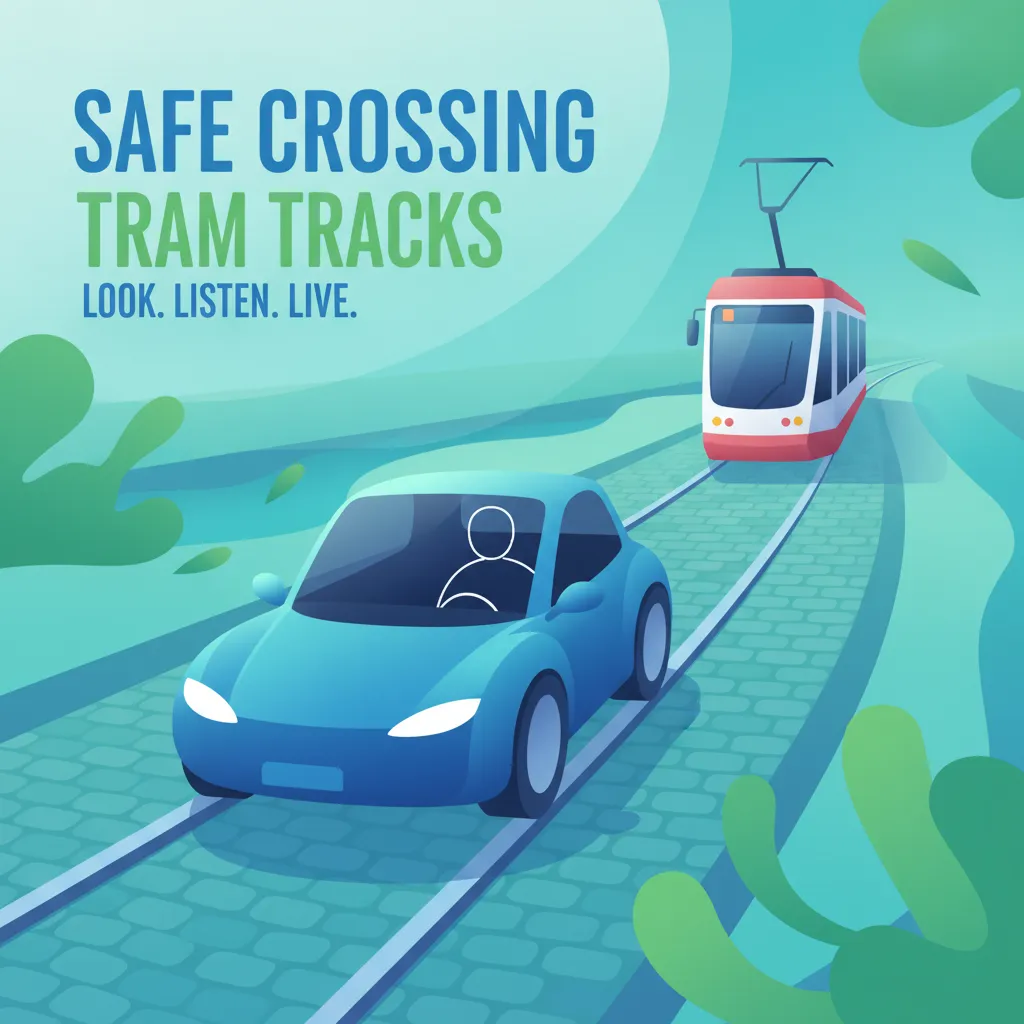
This lesson addresses the unique challenges posed by tram tracks, especially for two-wheeled vehicles. It explains the importance of crossing tracks at as close to a right angle as possible to avoid tyres getting caught, particularly in wet conditions. The lesson also covers the priority rules that often favor trams and how to interpret tram-specific signals.

This lesson explores how traffic lights dictate priority at intersections, superseding general priority rules. It explains the meanings of red, amber, and green signals and the required actions for each. Emphasis is placed on understanding green light right-of-way and the cautionary role of the amber phase for navigating signal-controlled junctions safely.
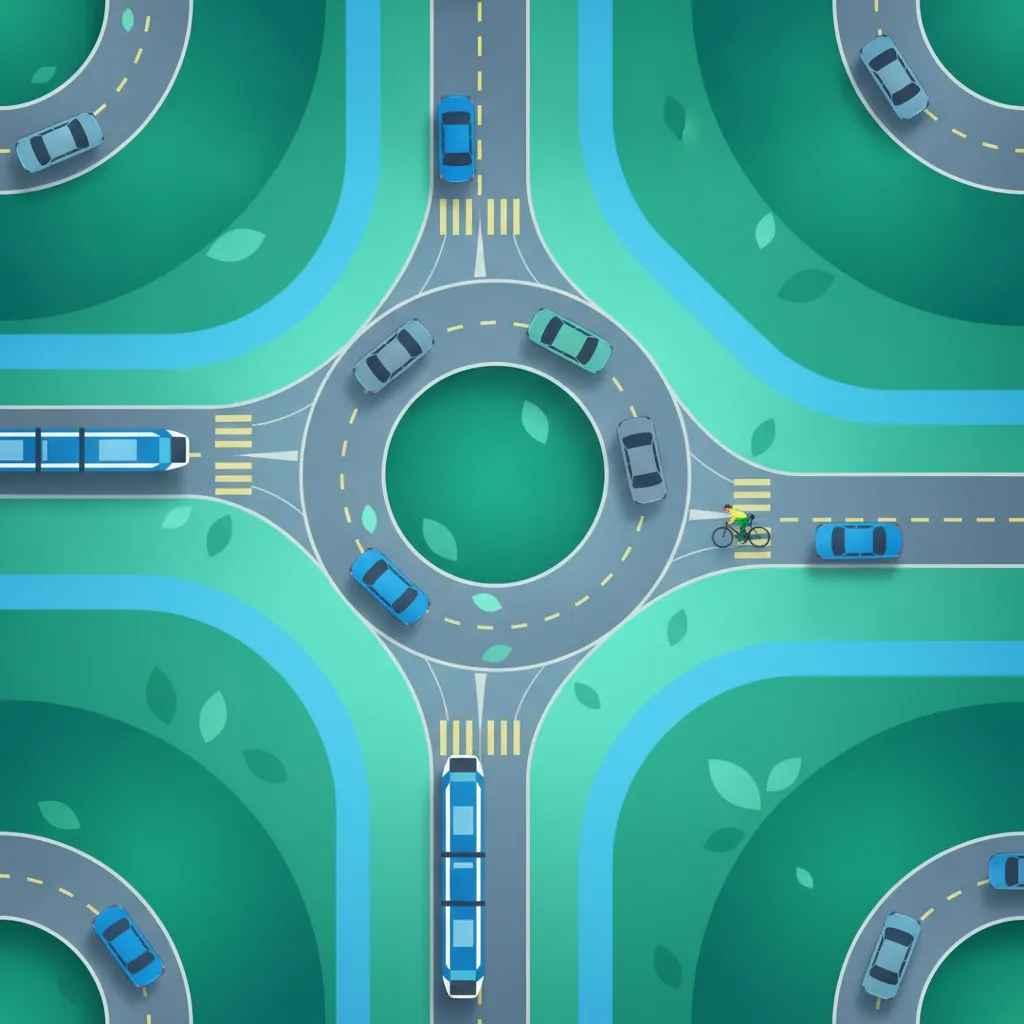
This lesson explains the fundamental rules of priority that govern traffic flow at Swiss intersections. It details the concept of 'Rechtsvortritt' at unmarked junctions and how priority signs alter this default rule. The specific procedures for entering, navigating, and exiting roundabouts are also covered to ensure predictable and safe maneuvers.
This lesson examines the concept of Vortritt (priority) and Rechtsvortritt, the right-hand rule used at uncontrolled intersections. It explains how these rules determine which vehicle has the right-of-way and the hierarchy of priority signs. You will learn to apply these rules in typical scenarios like four-way stops and T-intersections without traffic signals.
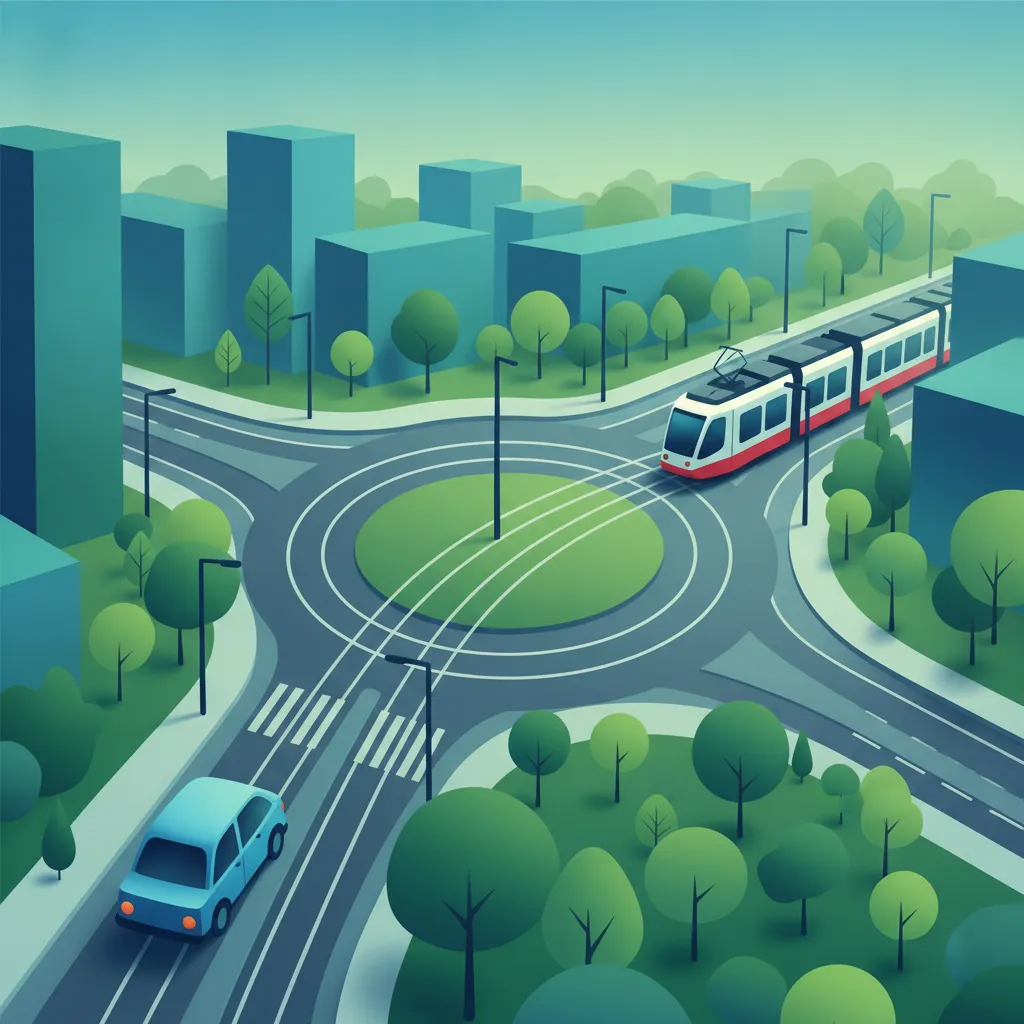
This lesson provides guidance on safely navigating roundabouts and tram lanes, common features in Swiss cities. It covers the rules for yielding, lane positioning within the roundabout, and signaling intentions upon exiting. Special attention is given to the hazards of crossing slippery tram tracks and sharing the road with public transport.
Master the techniques for safely crossing tram tracks and identifying unique hazards like blind spots and reduced friction in Swiss urban environments. Essential theory for Category D drivers navigating shared road spaces with trams.
This lesson addresses the unique challenges posed by tram tracks, especially for two-wheeled vehicles. It explains the importance of crossing tracks at as close to a right angle as possible to avoid tyres getting caught, particularly in wet conditions. The lesson also covers the priority rules that often favor trams and how to interpret tram-specific signals.
This lesson focuses on safe interaction with large vehicles. It highlights the significant blind spots (or 'no-zones') around trucks and buses and teaches riders how to position themselves to remain visible. The content also provides guidance on overtaking large vehicles safely and anticipating their wide turning radius at intersections.
This lesson focuses on the rules governing interactions with public transport vehicles like buses and trams. It explains the priority given to these vehicles at stops and the use of dedicated lanes. Additionally, the content covers tram track crossing procedures and correct vehicle positioning near public transport stops to ensure safety.
This lesson provides guidance on safely navigating roundabouts and tram lanes, common features in Swiss cities. It covers the rules for yielding, lane positioning within the roundabout, and signaling intentions upon exiting. Special attention is given to the hazards of crossing slippery tram tracks and sharing the road with public transport.
This lesson explores the priority given to public transport vehicles, especially trams and buses, in Swiss traffic. It explains how to recognize dedicated public transport lanes and the requirement to yield to trams at intersections. The content also covers procedures when a bus is stopping for passengers and how to ensure safe interactions.

This lesson focuses on identifying and managing specific road surface hazards that can compromise traction. It provides techniques for safely crossing slippery tram rails and painted markings, navigating uneven cobblestones, and maintaining control on loose gravel. The core skill is learning to scan the road ahead and adjust riding style proactively.
This lesson details the operation of traffic light systems in Switzerland. It explains the sequence and meaning of red, amber, and green lights, including flashing amber signals. The content also covers specific signals for pedestrians and the priority rules associated with tram signals to ensure safe interaction at controlled intersections.

This lesson focuses on general driving safety in areas with a high concentration of children. It stresses the importance of significantly reducing speed, being prepared for unexpected events, and scanning for children between parked cars. The driver must exhibit maximum vigilance in these high-risk environments at all times.

This lesson trains drivers to look beyond other vehicles and actively search for pedestrians, cyclists, and motorcyclists, especially those who may be distracted or unaware. It covers common behavioral patterns of different VRU groups. The goal is to see potential hazards developing early and create time and space to react safely.
This lesson examines railway crossings, focusing on the signals, barriers, and safety procedures required for safe passage. It explains the different types of level crossings, the meaning of flashing lights and audible warnings, and the required driver actions. You will learn to interpret warning signs and integrate these safety measures into your driving behavior.
Find clear answers to common questions learners have about Safe Interaction with Trams and Shared Road Spaces. Learn how the lesson is structured, which driving theory objectives it supports, and how it fits into the overall learning path of units and curriculum progression in Switzerland. These explanations help you understand key concepts, lesson flow, and exam focused study goals.
Not always. While trams are large and require significant stopping distance, priority is determined by road signs, markings, and traffic lights. However, as a Category D driver, you must exercise extra caution around them due to their inability to deviate from tracks and their heavy mass.
The primary risks include poor traction, especially in wet or icy conditions, and the potential for the vehicle's wheels to become caught in the tracks. Always aim to cross tracks at an angle as close to 90 degrees as possible to minimize these risks.
Ensure you are completely clear of the tram envelope. Never stop where a tram might be blocked, and always check your mirrors for tram movements behind you before opening doors or pulling away from the kerb.
Yes, trams often have their own light signals that differ from standard circular traffic lights. You must be able to recognize these to avoid confusion at junctions where bus and tram paths intersect.
Pinpoint specific Swiss traffic rules, road signs, or driving situations you need to master. Use the practice search to start a focused revision session now and build confidence for your official driving theory exam.