
This lesson details the specific rules for using bus lanes and navigating public transport priority systems in Switzerland. As part of our Category D curriculum, you will learn how to balance timetable pressures with safe, legal road usage to master professional driving standards.
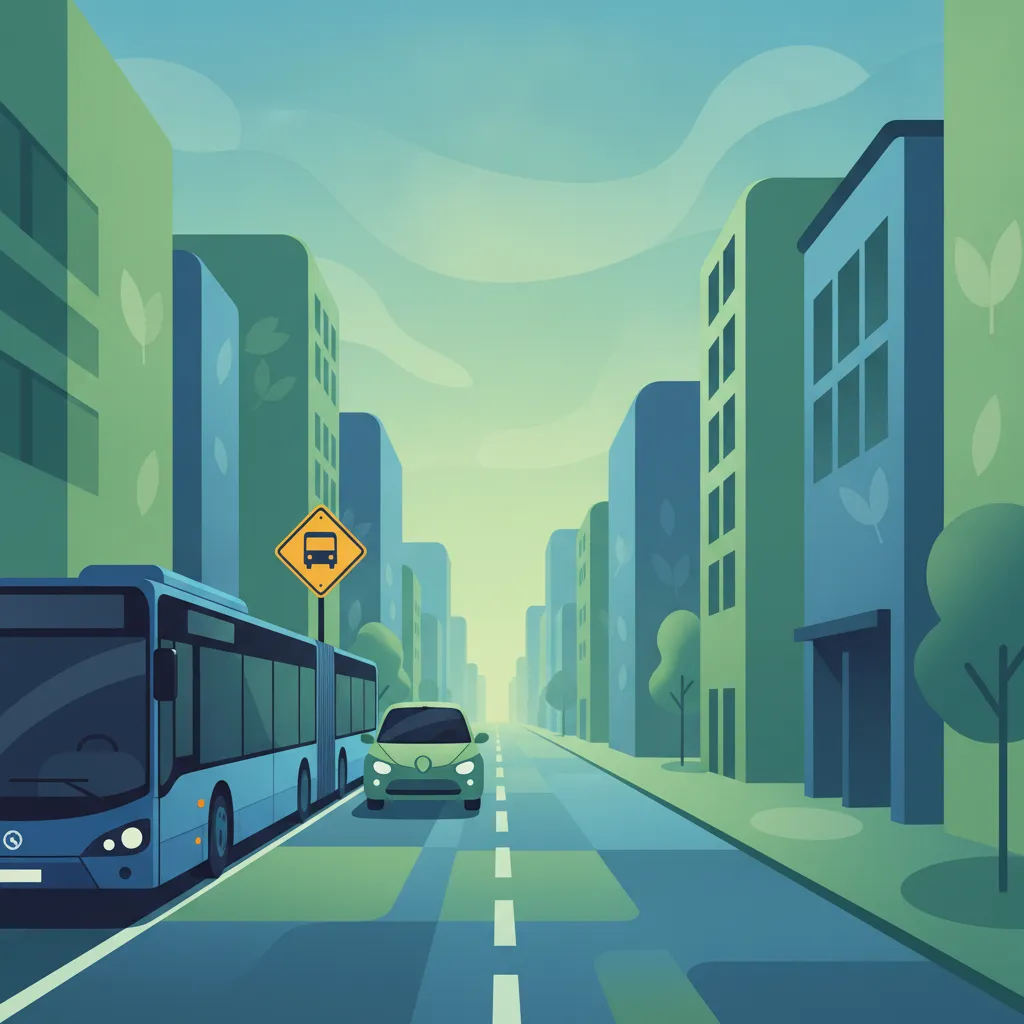
Lesson content overview
Bus lanes are a fundamental feature of urban traffic management in Switzerland, designed to significantly improve the efficiency and reliability of public transport. For professional drivers undertaking the Swiss Category D Driving License Theory Course, a comprehensive understanding of these dedicated lanes is not just beneficial, but essential for safety, legal compliance, and contributing to smooth traffic flow. This lesson provides an exhaustive overview of bus lane regulations, including how to interpret signage and markings, permissible uses, and the crucial priority rules that govern interactions with other road users.
Bus lanes serve as designated sections of the roadway, primarily reserved for buses, trolleybuses, and sometimes other specific vehicles. Their main objective is to grant priority to public transport, thereby reducing travel times, improving punctuality, and enhancing the overall attractiveness of public transit. By separating buses from general traffic, these lanes minimize delays caused by congestion, contribute to lower emissions, and foster sustainable urban mobility.
For professional bus and coach drivers, mastering bus lane usage is paramount. It ensures adherence to timetables, reduces stress, and prevents dangerous conflicts with other vehicles. Understanding the nuances of these lanes is a critical skill for navigating complex urban environments effectively and safely.
The regulations governing bus lanes in Switzerland are primarily defined within the Swiss Road Traffic Act (SVG) and its associated ordinances, particularly the Ordinance on Road Traffic Signs and Signals (VRV) and other specific decrees related to public transport priority. These laws establish the legal basis for bus lane designation, usage, and the enforcement of associated rules.
The underlying logic is to create a predictable and efficient environment for public transport. By clearly defining who can use these lanes, when, and under what conditions, the legal framework aims to prevent misuse, enhance safety, and uphold the priority afforded to public transport.
Traffic signs are the primary means by which bus lanes are communicated to drivers. These signs provide critical information about the presence, start, end, and specific rules governing a bus lane. Correctly interpreting these signs is crucial for legal compliance and safe operation.
Dedicated signs are used to indicate where a bus lane begins and where it concludes.
This sign marks the definite beginning of a bus lane. Once you pass this sign, the lane becomes subject to bus lane rules. Conversely, a similar sign with a diagonal red line through it indicates the end of the bus lane, signifying that general traffic rules resume for that section of the road.
Always pay close attention to any additional text or symbols on these signs, as they may include crucial time restrictions or specify other permitted vehicles.
Many bus lanes are not exclusively for buses at all times. Additional signs often specify when other vehicle categories, such as motorcycles, taxis, or sometimes even bicycles, are permitted to use the lane.
For example, a sign might indicate "06:00-19:00 Motorcycles Allowed." This means that outside these hours, the lane is strictly for buses. Entering such a lane as a motorcyclist after 19:00 would be a violation. As a bus driver, you must be aware that other vehicles may legally be present in the bus lane during these specified times.
A regulation allowing certain vehicle types, like motorcycles, to use a bus lane only during specified hours, which are typically indicated by supplementary signage.
A frequent misunderstanding is assuming a bus lane is always exclusive to buses, regardless of time restriction signs. Conversely, some drivers mistakenly believe that if any other vehicle is allowed at certain times, then all vehicles are allowed. It is imperative to precisely read and adhere to all information presented on the signage. Failure to do so can lead to fines, collisions, and disruption of public transport schedules.
In addition to signs, road markings provide continuous visual cues that define bus lanes and regulate their use. These markings clearly delineate the boundaries of the lane and indicate where crossing is permitted or prohibited.
The type of line separating a bus lane from other traffic lanes is critical:
Some bus lanes in Switzerland, particularly in urban areas, may feature a distinct green band or green markings on the road surface. This green coloring serves as an additional visual identifier, reinforcing that the lane is a dedicated bus lane. The presence of a green band does not alter the rules regarding continuous or broken lines; rather, it highlights the lane's special status.
Do not assume that a green band allows crossing at any point. The underlying white line markings (continuous or broken) still dictate where entry and exit are permitted.
Accurate perception of road markings is essential. Misinterpreting a continuous line as a broken one can lead to illegal lane changes, which are dangerous and carry legal penalties. As a professional bus driver, you must always be aware of the type of line separating your bus lane from other traffic, especially when preparing to exit or when general traffic needs to cross your lane.
While primarily for buses, Swiss bus lanes can be used by other vehicles under specific conditions, as indicated by signage. Understanding these eligibility criteria is crucial for all road users, but especially for professional bus drivers who must anticipate the presence of other authorized vehicles.
As a bus driver, always assume that only buses are legally allowed in the bus lane unless specific signage indicates otherwise. Be vigilant for unauthorized vehicles, especially those that might attempt to enter or exit illegally.
Any unauthorized use of a bus lane can result in significant fines and, in some cases, penalty points on a driver's license. This underscores the importance of verifying eligibility based on signs and time restrictions.
Priority rules are paramount in ensuring safe and efficient interactions between vehicles within or adjacent to bus lanes. These rules dictate which vehicle has the right-of-way in various conflict situations.
A core principle is that buses generally have priority over general traffic, especially when their paths intersect with bus lanes.
The right-of-way granted to certain vehicles or road users over others, particularly at conflict points such as intersections or when merging.
If motorcycles are permitted to use a bus lane during specified hours, they generally share the same priority status as buses while they are legally within that lane. This means other traffic must yield to a motorcycle in the bus lane, just as they would to a bus. However, motorcycles still need to respect bus priority, especially if a bus is maneuvering.
As a bus driver, while you often have priority, it is crucial not to assume other drivers will always yield. Maintain defensive driving practices, anticipate potential conflicts, and be prepared to react to the unexpected. Always ensure a clear path before proceeding, even when you have the legal right-of-way.
Proper procedures for entering and exiting bus lanes are critical to prevent accidents and maintain traffic flow. These procedures are dictated by lane markings and signage.
Never attempt to cut across a continuous white line to enter or exit a bus lane, as this is illegal and extremely dangerous, especially given the speed and size of buses.
At some intersections, specific lane signals or signs might mandate that vehicles in the bus lane (other than buses continuing straight) must exit to make a turn. Always observe overhead gantry signs or specific lane-use signals that apply at complex junctions.
In many Swiss urban areas, bus lanes are integrated with advanced traffic light priority systems to further enhance public transport efficiency. These systems ensure that buses experience minimal delays at intersections.
Some intersections feature separate signal heads specifically for buses. These signals, often small white lights or symbols, indicate to the bus driver when they have a green light, even if the general traffic signal is red.
Many bus priority systems use preemption technology. As a bus approaches an intersection, a transmitter on the bus communicates with the traffic signal controller, requesting a green light. This can either extend a current green phase or shorten a red phase for the bus, allowing it to pass through with minimal stopping.
A system where a bus can trigger a traffic signal change (e.g., extend a green light or shorten a red light) to ensure its uninterrupted progression through an intersection.
Other road users must be aware that general traffic signals may not always apply to buses. If a bus has a dedicated green signal, non-bus vehicles must not impede its path or attempt to proceed. Attempting to cross a bus lane at an intersection when a bus has a priority green signal is highly dangerous and illegal.
Familiarity with these systems helps professional bus drivers anticipate signal changes and contributes to smoother, more punctual service. For other drivers, it means understanding that buses may have different signal timings.
Misuse of bus lanes can lead to significant penalties, including fines and penalty points on your driving license, in addition to increasing accident risk and disrupting public transport.
| Violation | Description | Correct Behavior | Consequence |
|---|---|---|---|
| Crossing Continuous White Line | Merging into or out of a bus lane across a solid white line. | Merge only at designated broken lines or where arrows permit. | Fine and possible penalty points. |
| Using Bus Lane Outside Permitted Hours | A motorcyclist or other permitted vehicle uses the lane after the allowed time window. | Always respect time restriction signs; exit the lane before the restricted period begins. | Fine; possible point on license. |
| Blocking Bus Lane at Intersection | Stopping a vehicle in the bus lane at a red light, preventing a bus from entering or proceeding. | Stop behind the lane markings, allowing sufficient space for a bus to enter its dedicated lane. | Fine; increased liability for collisions. |
| Incorrect Exit from Bus Lane | Exiting a bus lane prematurely or beyond the designated exit point. | Exit only where signage or broken lines clearly indicate. | Fine; potential accident risk. |
| Ignoring Bus Priority at Signal | Proceeding through an intersection when a bus has a dedicated green priority light, but your signal is red. | Wait until your own signal permits movement; never assume the right to cross if a bus has priority. | Fine; higher penalty in case of collision. |
| Parking in a Bus Lane | Stopping or parking a vehicle within an active bus lane. | Parking is strictly prohibited unless specific signs explicitly allow it (e.g., temporary loading zones). | Significant fine; vehicle may be towed. |
The application of bus lane rules can vary depending on external factors and specific road environments. Professional drivers must adapt their behavior accordingly.
The strict rules governing bus lanes are rooted in well-established traffic safety principles and efficiency goals.
Explore all units and lessons included in this driving theory course.
Lesson content overview
Explore all units and lessons included in this driving theory course.
Explore search topics learners often look for when studying Using Bus Lanes and Understanding Priority Rules. These topics reflect common questions about road rules, driving situations, safety guidance, and lesson level theory preparation for learners in Switzerland.
Browse additional driving theory lessons that cover connected traffic rules, road signs, and common driving situations related to this topic. Improve your understanding of how different rules interact across everyday traffic scenarios.
Explore complex scenarios and edge cases for using bus lanes in Switzerland, including interactions with trams, emergency vehicles, and specific road types. Understand advanced priority situations for Category D drivers.
This lesson explores the priority given to public transport vehicles, especially trams and buses, in Swiss traffic. It explains how to recognize dedicated public transport lanes and the requirement to yield to trams at intersections. The content also covers procedures when a bus is stopping for passengers and how to ensure safe interactions.
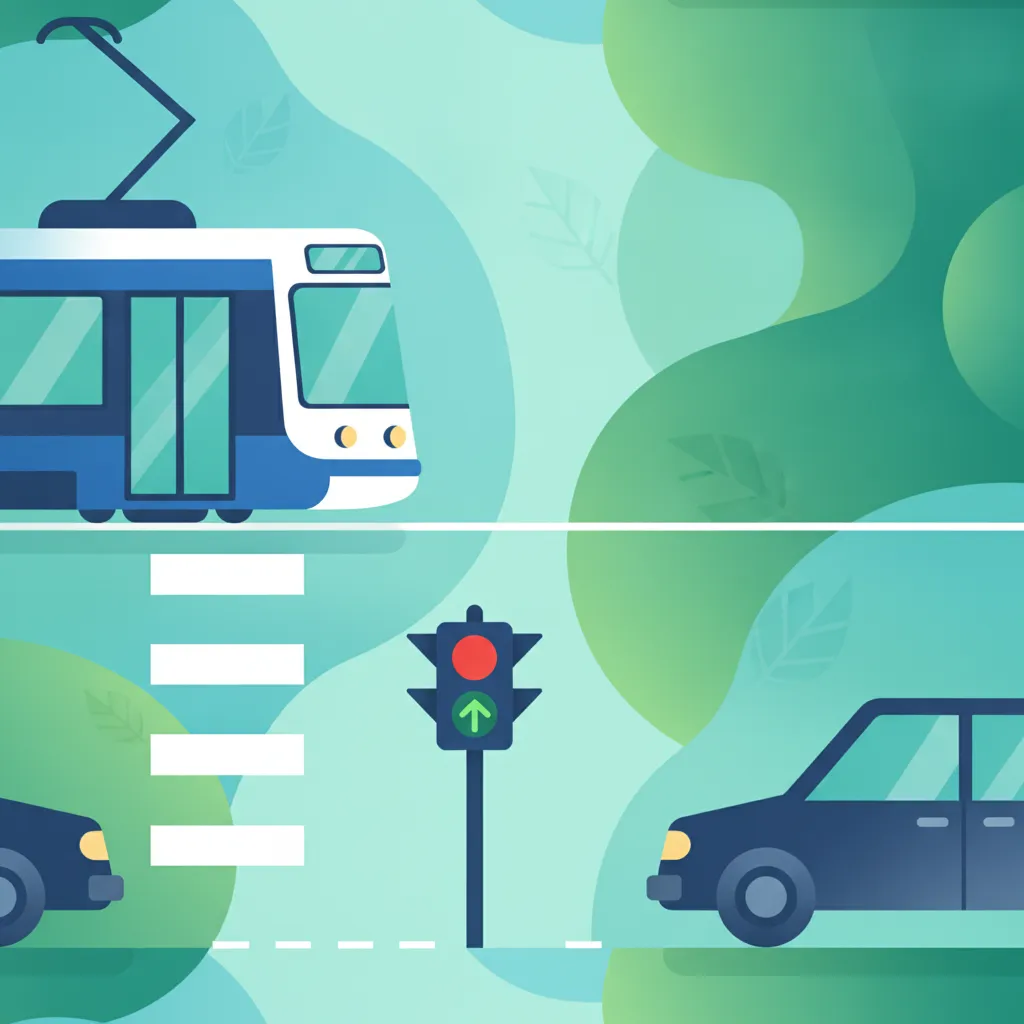
Many Swiss cities use systems that give buses priority at traffic lights to improve punctuality. This lesson explains how these systems detect an approaching bus and alter the signal phasing. You will learn to recognize and correctly respond to the special white light signals that grant this priority.

This lesson focuses on the rules governing interactions with public transport vehicles like buses and trams. It explains the priority given to these vehicles at stops and the use of dedicated lanes. Additionally, the content covers tram track crossing procedures and correct vehicle positioning near public transport stops to ensure safety.
The size of a bus requires careful planning when negotiating complex intersections. This lesson teaches the importance of early lane selection, clear signalling, and comprehensive observation. It provides specific techniques for managing the vehicle's swept path through multi-lane roundabouts and other challenging urban junctions.
This lesson examines the concept of Vortritt (priority) and Rechtsvortritt, the right-hand rule used at uncontrolled intersections. It explains how these rules determine which vehicle has the right-of-way and the hierarchy of priority signs. You will learn to apply these rules in typical scenarios like four-way stops and T-intersections without traffic signals.
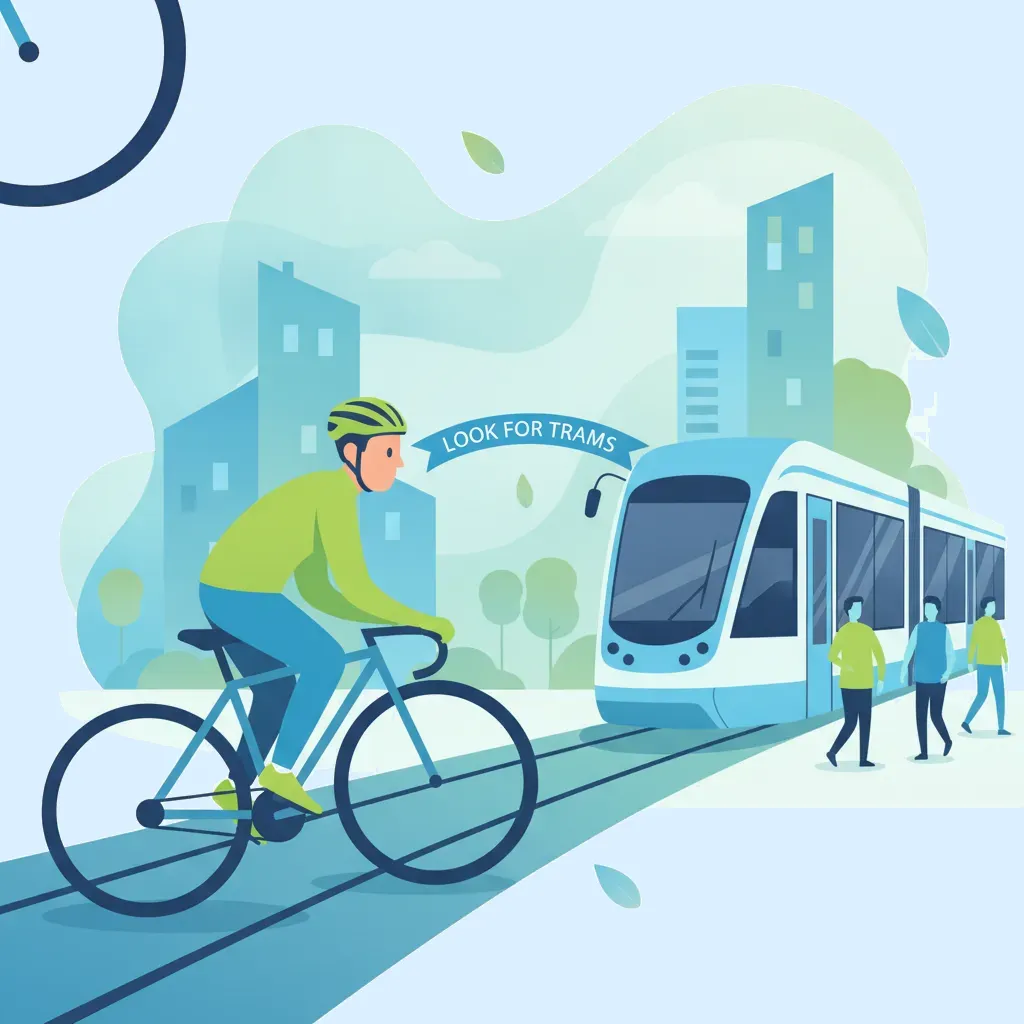
Sharing road space with trams presents unique challenges, including different priority rules and physical hazards like tracks. This lesson covers the Swiss regulations regarding tram priority at junctions and stops. It also provides practical advice on crossing tram tracks safely and maintaining awareness of tram movements.

This lesson explores how traffic lights dictate priority at intersections, superseding general priority rules. It explains the meanings of red, amber, and green signals and the required actions for each. Emphasis is placed on understanding green light right-of-way and the cautionary role of the amber phase for navigating signal-controlled junctions safely.
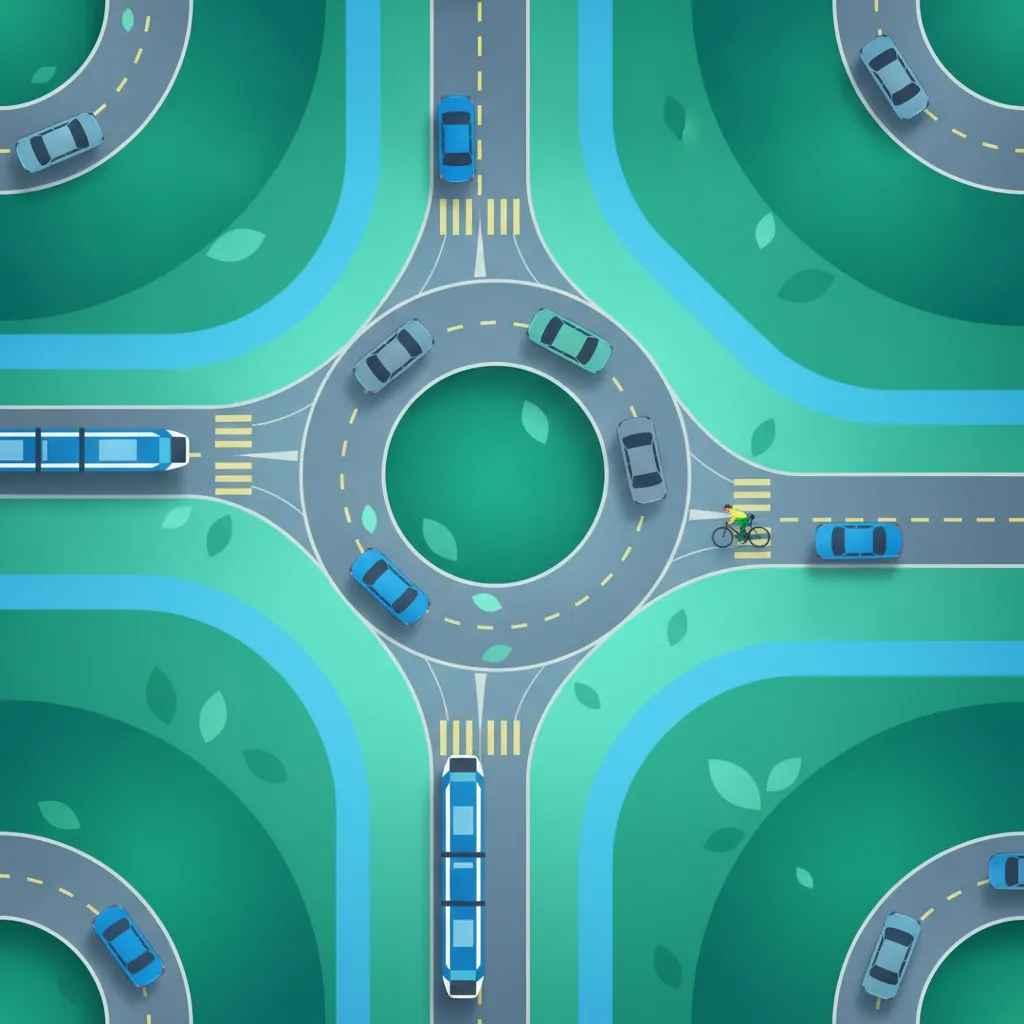
This lesson explains the fundamental rules of priority that govern traffic flow at Swiss intersections. It details the concept of 'Rechtsvortritt' at unmarked junctions and how priority signs alter this default rule. The specific procedures for entering, navigating, and exiting roundabouts are also covered to ensure predictable and safe maneuvers.
Driving a bus in older parts of a city requires exceptional spatial awareness and precise control. This lesson focuses on assessing clearances, managing front and rear overhang, and negotiating tight turns around parked cars and buildings. A key theme is slow, careful, and deliberate manoeuvring to avoid contact.

This lesson moves beyond simply staying within the lines, teaching how to actively position your vehicle within the lane to manage risk. You will learn to create a 'safety cushion' of space around your bus. This proactive approach improves your reaction time and gives other road users more space, reducing the likelihood of conflicts.
Understand how Swiss bus lanes are integrated with traffic light priority systems for public transport. Learn about bus signals, preemption technology, and how these affect urban driving for Category D drivers.
Many Swiss cities use systems that give buses priority at traffic lights to improve punctuality. This lesson explains how these systems detect an approaching bus and alter the signal phasing. You will learn to recognize and correctly respond to the special white light signals that grant this priority.
This lesson explores the priority given to public transport vehicles, especially trams and buses, in Swiss traffic. It explains how to recognize dedicated public transport lanes and the requirement to yield to trams at intersections. The content also covers procedures when a bus is stopping for passengers and how to ensure safe interactions.
This lesson explores how traffic lights dictate priority at intersections, superseding general priority rules. It explains the meanings of red, amber, and green signals and the required actions for each. Emphasis is placed on understanding green light right-of-way and the cautionary role of the amber phase for navigating signal-controlled junctions safely.
This lesson focuses on the rules governing interactions with public transport vehicles like buses and trams. It explains the priority given to these vehicles at stops and the use of dedicated lanes. Additionally, the content covers tram track crossing procedures and correct vehicle positioning near public transport stops to ensure safety.
The size of a bus requires careful planning when negotiating complex intersections. This lesson teaches the importance of early lane selection, clear signalling, and comprehensive observation. It provides specific techniques for managing the vehicle's swept path through multi-lane roundabouts and other challenging urban junctions.
This lesson moves beyond simply staying within the lines, teaching how to actively position your vehicle within the lane to manage risk. You will learn to create a 'safety cushion' of space around your bus. This proactive approach improves your reaction time and gives other road users more space, reducing the likelihood of conflicts.
This lesson details the operation of traffic light systems in Switzerland. It explains the sequence and meaning of red, amber, and green lights, including flashing amber signals. The content also covers specific signals for pedestrians and the priority rules associated with tram signals to ensure safe interaction at controlled intersections.
Sharing road space with trams presents unique challenges, including different priority rules and physical hazards like tracks. This lesson covers the Swiss regulations regarding tram priority at junctions and stops. It also provides practical advice on crossing tram tracks safely and maintaining awareness of tram movements.
This lesson focuses on the Kein Vortritt rule, which applies when a vehicle must yield to all other traffic. You will learn to recognize scenarios where this rule is in effect, such as at minor roads or when entering a main road. The content also discusses how priority signs and traffic signals override the default right-hand rule, clarifying when you must yield.
This lesson examines the concept of Vortritt (priority) and Rechtsvortritt, the right-hand rule used at uncontrolled intersections. It explains how these rules determine which vehicle has the right-of-way and the hierarchy of priority signs. You will learn to apply these rules in typical scenarios like four-way stops and T-intersections without traffic signals.
Find clear answers to common questions learners have about Using Bus Lanes and Understanding Priority Rules. Learn how the lesson is structured, which driving theory objectives it supports, and how it fits into the overall learning path of units and curriculum progression in Switzerland. These explanations help you understand key concepts, lesson flow, and exam focused study goals.
Not necessarily. While bus lanes are designed for public transport, you must check specific road signs. Some lanes are restricted to specific types of vehicles or times, and you must ensure you are not creating a hazard by entering a lane that may be reserved for trams or taxis only.
You generally should not cross a solid white line. However, you may enter a bus lane if it is necessary to perform a turn at a junction or to bypass an obstruction, provided that it is safe to do so and permitted by the specific markings and local regulations.
The exam uses visual scenarios showing various road signs and traffic light configurations. You will be asked to identify who has priority and whether your vehicle is positioned correctly in the lane based on the signage provided.
Yes, trams operate on their own distinct priority systems and are often located on tracks that are physically separated or strictly marked. Always prioritize trams in shared spaces, as they have fixed paths and cannot deviate to avoid potential collisions.
Pinpoint specific Swiss traffic rules, road signs, or driving situations you need to master. Use the practice search to start a focused revision session now and build confidence for your official driving theory exam.