Navigating Spain's roads requires absolute sobriety. This lesson delves into the critical regulations surrounding alcohol and drug consumption for moped riders, ensuring you understand the strict legal limits and severe consequences of impairment. It's a vital part of preparing for your AM category theory exam and riding safely.
Lesson content overview
Operating a moped on Spanish roads requires not only skill and adherence to traffic rules but also a profound commitment to personal and public safety. A critical aspect of this responsibility is understanding and complying with the stringent regulations concerning driving under the influence of alcohol or drugs. This lesson, designed for those pursuing a Spanish Category AM driving license, provides a comprehensive overview of these laws, emphasizing the severe consequences of impairment and the absolute necessity of riding sober.
Impairment, whether from alcohol, illicit substances, or even certain prescription medications, significantly degrades a rider's ability to operate a moped safely. It affects perception, reaction time, judgment, and motor coordination, drastically increasing the risk of accidents, particularly for vulnerable moped riders. Adhering to these regulations is paramount for legal compliance, passing your theoretical exam, and, most importantly, ensuring your safety and the safety of all road users.
Blood Alcohol Concentration (BAC) refers to the amount of alcohol present in a driver’s bloodstream. It is typically measured in milligrams of alcohol per milliliter of blood (mg/ml) or as a percentage (‰). Spanish law establishes clear and strict BAC limits for all drivers, including those operating mopeds with a Category AM license. Exceeding these limits is a serious offense with significant legal repercussions.
For most experienced moped riders in Spain, the legal BAC limit is 0.5 mg/ml (which corresponds to 0.05%). This threshold is set to prevent alcohol-related impairment from compromising driving ability. Even at this seemingly low level, alcohol can begin to affect judgment and reflexes. Therefore, riders must be acutely aware of their alcohol intake before getting on their moped.
It is a common misunderstanding to believe that "one drink" is always safe. The actual impact of alcohol on an individual's BAC depends on several factors, including body weight, metabolism, gender, food intake, and the specific type and strength of the alcoholic beverage consumed. What might be a safe amount for one person could put another over the legal limit. Waiting an adequate amount of time after consuming alcohol is essential to allow the body to process it.
Spanish traffic law applies even stricter limits to novice drivers, recognizing their higher accident risk due to less experience. For those within the first 12 months of obtaining any driving license, including the Category AM moped license, the BAC limit is reduced to 0.3 mg/ml (or 0.03%). This probationary limit provides an additional layer of protection for new riders and encourages complete abstinence from alcohol when driving.
This stricter limit means that even a small amount of alcohol could put a new rider over the legal threshold. For instance, a rider in their probationary period who consumes a single standard alcoholic drink might easily exceed the 0.3 mg/ml limit. The safest and most responsible approach for novice riders is to avoid alcohol entirely before riding.
Beyond alcohol, Spanish law enforces a strict zero-tolerance policy regarding driving under the influence of illicit substances. This means that any detectable amount of prohibited narcotics or psychotropic substances in a driver’s system is considered a serious violation, regardless of whether the driver feels impaired.
The zero-tolerance policy applies to all illegal drugs, such as cannabis, cocaine, amphetamines, opiates, and benzodiazepines without a valid prescription. If a roadside drug test detects the presence of any of these substances in a moped rider's system, it constitutes an offense. Unlike alcohol, there is no permissible concentration limit for illicit drugs.
This policy reflects the unpredictable and often severe effects that illicit drugs can have on a driver's perception, coordination, and reaction time. The law prioritizes public safety by eliminating any gray areas regarding drug use and driving. Riders must understand that even if the effects of a substance from a previous day's use are no longer consciously felt, residual traces can still lead to a positive test and legal penalties.
The zero-tolerance policy primarily targets illicit drugs, but it is also crucial for riders to be aware of the potential effects of prescription medications. Many legal drugs, such as certain antihistamines, painkillers, antidepressants, or sleep aids, can cause drowsiness, dizziness, blurred vision, or impaired judgment.
Before riding, individuals taking prescription medication should always:
Always check the warning labels on any medication, prescribed or over-the-counter, before riding a moped. If in doubt, consult a medical professional. Your ability to react safely on the road is paramount.
The human body's ability to operate complex machinery like a moped relies on a precise interplay of sensory input, cognitive processing, and motor control. Alcohol and drugs disrupt this delicate balance, leading to a range of impairments that significantly compromise road safety.
Alcohol is a depressant that slows down the central nervous system. Even at low BAC levels, it can:
Illicit drugs have diverse and often more unpredictable effects. For example:
Mopeds, by their nature, offer less protection than cars and are inherently less stable. Any level of impairment dramatically amplifies the already present risks associated with moped riding. Moped riders are vulnerable road users, and their safety relies heavily on quick reactions, precise control, and sound judgment.
When impaired, a moped rider is far more likely to:
Statistical evidence consistently shows that accidents involving impaired moped riders have a significantly higher fatality rate compared to those involving sober riders, underscoring the critical importance of riding sober at all times.
Driving under the influence of alcohol or drugs carries severe legal consequences in Spain, designed to deter such dangerous behavior and protect public safety. These penalties can range from substantial administrative fines to loss of driving privileges and even criminal charges.
For less severe offenses, such as exceeding the BAC limit but remaining below the threshold for criminal charges, drivers face significant administrative fines and points deduction from their driving license.
Important Note: The maximum fine for severe cases of driving under the influence, especially repeat offenses, can be substantial.
More serious offenses, particularly those involving high BAC levels or repeat infractions, lead to immediate license suspension and can result in criminal proceedings.
To enforce alcohol and drug regulations, Spanish law grants traffic authorities the power to conduct roadside tests. Moped riders, like all drivers, are legally obliged to submit to these tests when requested by a police officer with reasonable suspicion or at routine checkpoints.
A breathalyzer is a device used by police to estimate a driver's BAC from a breath sample. The process typically involves:
Drug testing typically involves collecting a sample for analysis to detect the presence of psychoactive substances.
Refusal to Test: Refusing to submit to a legally requested breathalyzer or drug test is a serious offense in itself. The law treats refusal as severely as, or even more severely than, testing positive. Penalties for refusal can include:
A police officer may stop you and request your documentation (license, vehicle registration).
If there is reasonable suspicion of impairment or it's a routine checkpoint, you will be asked to undergo a breathalyzer test for alcohol.
If alcohol is detected above the legal limit, you will be asked for a second, more accurate test.
If drug impairment is suspected, an oral fluid (saliva) test may be administered.
Refusal to submit to any legally requested test will result in immediate and severe penalties, potentially including criminal charges.
Beyond immediate alcohol and drug testing, Spanish law also addresses a driver's long-term medical fitness to operate a moped. This involves evaluations to ensure that a driver's overall health status allows them to safely control a vehicle.
Drivers, particularly those with a history of severe impairment offenses or recurrent issues, may be required to undergo specific medical evaluations. These assessments, conducted by authorized medical professionals, determine if there are any underlying health conditions, including substance abuse problems, that could pose a risk to road safety. The goal is to ensure that drivers maintain the physical and mental capabilities necessary for safe driving.
A general health exam might assess vision, hearing, motor skills, and cognitive function. If there is a history of drug or alcohol offenses, a more specific substance-abuse assessment might be mandatory. This evaluation helps identify whether a driver has developed a dependency that could lead to future impaired driving incidents.
A history of repeated driving under the influence (DUI) offenses signals a higher risk to public safety. In such cases, the traffic authorities and legal system may impose more stringent requirements, including:
The ultimate aim of these medical fitness assessments and stricter measures for repeat offenders is to ensure that all drivers on Spanish roads, including moped riders, are consistently capable of safe operation, thereby upholding the highest standards of road safety for everyone.
Preventing impaired moped riding is a matter of personal responsibility and informed decision-making. The consequences of driving under the influence are too severe to ignore, affecting not only your legal status but potentially costing lives.
Riding a moped offers freedom and convenience, but it comes with a significant responsibility to yourself and others. Making the choice to ride sober is not just about avoiding fines or points; it's about making a conscious decision to protect lives. Your ability to react quickly, judge situations accurately, and maintain control is paramount for safe moped operation. Any substance that compromises these abilities poses an unacceptable risk. By understanding and adhering to Spain's alcohol and drug regulations, you contribute to safer roads for everyone and ensure a long and responsible driving career.
This lesson covers Spain's strict regulations on driving mopeds under the influence of alcohol or drugs, which is essential for passing the AM category theory exam. Key limits include 0.5 mg/ml BAC for experienced riders and 0.3 mg/ml for those in their first-year probationary period, with criminal charges applying at 0.6 mg/ml. Spain enforces absolute zero tolerance for illicit drugs, meaning any detectable amount is an offense. Penalties are severe and include substantial fines, points deduction, license suspension, and potential imprisonment. Riders must submit to mandatory roadside testing upon police request, and refusal to test carries equivalent or harsher consequences than failing the test.
A short set of high-value points that capture the most important learning from this lesson.
For Category AM moped riders in Spain, the standard BAC limit is 0.5 mg/ml, but probationary drivers in their first year face a stricter limit of 0.3 mg/ml.
Spain enforces zero tolerance for illicit drugs—any detectable amount in a driver's system constitutes an offense with no permissible threshold.
Driving with a BAC exceeding 0.6 mg/ml or testing positive for drugs can result in criminal charges including imprisonment of 3 to 6 months.
Moped riders are legally obligated to submit to breathalyzer and drug tests when requested by police; refusal carries equally severe or worse penalties than testing positive.
Alcohol and drugs impair critical riding abilities including reaction time (potentially 30% slower at 0.5 mg/ml), coordination, judgment, and vision.
Explore all units and lessons included in this driving theory course.
Probationary BAC limit is 0.3 mg/ml (first 12 months); standard limit is 0.5 mg/ml; criminal threshold starts at 0.6 mg/ml.
Zero tolerance means NO detectable amount of illegal drugs—unlike alcohol, there is no permissible limit.
Refusing a roadside test is treated as severely as or worse than failing one, and can include criminal charges.
Points system: DUI offenses deduct 4-6 points; starting points are 8 (new drivers), rising to 12 after three years clean.
Prescription medications can also impair riding—always check warning labels and consult a medical professional if unsure.
Assuming one standard drink is always safe—individual factors like body weight, metabolism, and food intake mean BAC varies significantly between people.
Believing coffee, cold showers, or waiting a short time eliminates impairment—alcohol is processed slowly by the liver and only time can lower BAC.
Thinking drug effects have worn off if you no longer feel impaired—residual traces can still result in a positive test under Spain's zero-tolerance policy.
Confusing the administrative fine range with criminal penalties—exceeding 0.6 mg/ml or testing positive for drugs triggers criminal proceedings, not just fines.
Underestimating the probationary limit—new riders can easily exceed 0.3 mg/ml with a single alcoholic drink.
Lesson content overview
A short set of high-value points that capture the most important learning from this lesson.
For Category AM moped riders in Spain, the standard BAC limit is 0.5 mg/ml, but probationary drivers in their first year face a stricter limit of 0.3 mg/ml.
Spain enforces zero tolerance for illicit drugs—any detectable amount in a driver's system constitutes an offense with no permissible threshold.
Driving with a BAC exceeding 0.6 mg/ml or testing positive for drugs can result in criminal charges including imprisonment of 3 to 6 months.
Moped riders are legally obligated to submit to breathalyzer and drug tests when requested by police; refusal carries equally severe or worse penalties than testing positive.
Alcohol and drugs impair critical riding abilities including reaction time (potentially 30% slower at 0.5 mg/ml), coordination, judgment, and vision.
Explore all units and lessons included in this driving theory course.
Probationary BAC limit is 0.3 mg/ml (first 12 months); standard limit is 0.5 mg/ml; criminal threshold starts at 0.6 mg/ml.
Zero tolerance means NO detectable amount of illegal drugs—unlike alcohol, there is no permissible limit.
Refusing a roadside test is treated as severely as or worse than failing one, and can include criminal charges.
Points system: DUI offenses deduct 4-6 points; starting points are 8 (new drivers), rising to 12 after three years clean.
Prescription medications can also impair riding—always check warning labels and consult a medical professional if unsure.
Assuming one standard drink is always safe—individual factors like body weight, metabolism, and food intake mean BAC varies significantly between people.
Believing coffee, cold showers, or waiting a short time eliminates impairment—alcohol is processed slowly by the liver and only time can lower BAC.
Thinking drug effects have worn off if you no longer feel impaired—residual traces can still result in a positive test under Spain's zero-tolerance policy.
Confusing the administrative fine range with criminal penalties—exceeding 0.6 mg/ml or testing positive for drugs triggers criminal proceedings, not just fines.
Underestimating the probationary limit—new riders can easily exceed 0.3 mg/ml with a single alcoholic drink.
Explore search topics learners often look for when studying Alcohol, Drugs, and Impairment Regulations. These topics reflect common questions about road rules, driving situations, safety guidance, and lesson level theory preparation for learners in Spain.
Browse additional driving theory lessons that cover connected traffic rules, road signs, and common driving situations related to this topic. Improve your understanding of how different rules interact across everyday traffic scenarios.
Understand the severe penalties in Spain for moped riders caught driving under the influence of alcohol or drugs. This lesson details fines, license suspension, and criminal charges according to DGT regulations.
This lesson focuses on the strict limits for alcohol consumption while driving, expressed as blood alcohol concentration (BAC) thresholds specific to Spain. It explains how breathalyzer tests are administered, the legal consequences of exceeding the limits, and associated penalties like fines and licence suspension. The lesson also addresses drug-impaired driving, describing detection methods and the legal ramifications for both recreational and prescription substances.

This lesson explains the Spanish traffic penalty system, which combines fines with a demerit points system linked to the driving license. It outlines the different categories of infractions (minor, serious, very serious) and their corresponding penalties in terms of fines and points lost. Understanding this system is essential for riders to appreciate the long-term consequences of traffic violations, which can ultimately lead to the suspension of their license.
This lesson details the specific prerequisites for obtaining an AM licence, starting with the minimum age of fifteen and the mandatory medical fitness certificate. It guides learners through the administrative process at the DGT, including required identification, proof of residence, and parental consent for minors. The content explains the role of driving schools and the necessary steps for exam registration, ensuring a clear understanding of the entire application procedure.
This lesson examines the Spanish points system, detailing how traffic infractions are classified and the corresponding points assigned for each violation. It explains the progressive nature of point accumulation, the thresholds that can lead to licence revocation, and the mechanisms for point recovery. Learners will understand the importance of maintaining a clean driving record to avoid severe legal consequences.
Learn about the procedures for roadside alcohol breath tests and drug detection in Spain. This lesson covers rider obligations, test types, and the serious consequences of refusing a test, as per DGT rules.
This lesson focuses on the strict limits for alcohol consumption while driving, expressed as blood alcohol concentration (BAC) thresholds specific to Spain. It explains how breathalyzer tests are administered, the legal consequences of exceeding the limits, and associated penalties like fines and licence suspension. The lesson also addresses drug-impaired driving, describing detection methods and the legal ramifications for both recreational and prescription substances.

This lesson provides a detailed outline of the legal framework that governs driver duty hours in Spain, specifying the maximum continuous driving time and mandatory rest periods defined by the DGT. Learners will understand the limits on cumulative work hours, the necessity of meticulous record-keeping, and methods for monitoring compliance with these regulations. The module also discusses the penalties for violations and reinforces the safety imperative of adherence.
This lesson focuses on the driver's mindset and ethical responsibilities. It discusses the importance of courtesy, patience, and consideration for all road users to create a safer driving environment. The content also covers the dangers of distractions, fatigue, and aggressive driving, emphasizing the need to remain calm and focused at all times.

This lesson examines the overarching legal framework that governs professional drivers in Spain, focusing on the Reglamento General de Circulación. It details the statutory obligations of a driver, such as maintaining mandatory insurance, ensuring vehicle roadworthiness, and carrying all required documentation. Learners will understand their legal responsibilities and the importance of compliance with DGT regulations to operate lawfully.
This lesson details the legal requirements for the use of seatbelts and child restraint systems in buses and coaches, as stipulated by DGT regulations. It specifies the age and size limits for various restraint devices and explains the verification checks drivers must perform. Learners will also review safety statistics that highlight the importance of correct usage and understand the legal penalties associated with non-compliance.
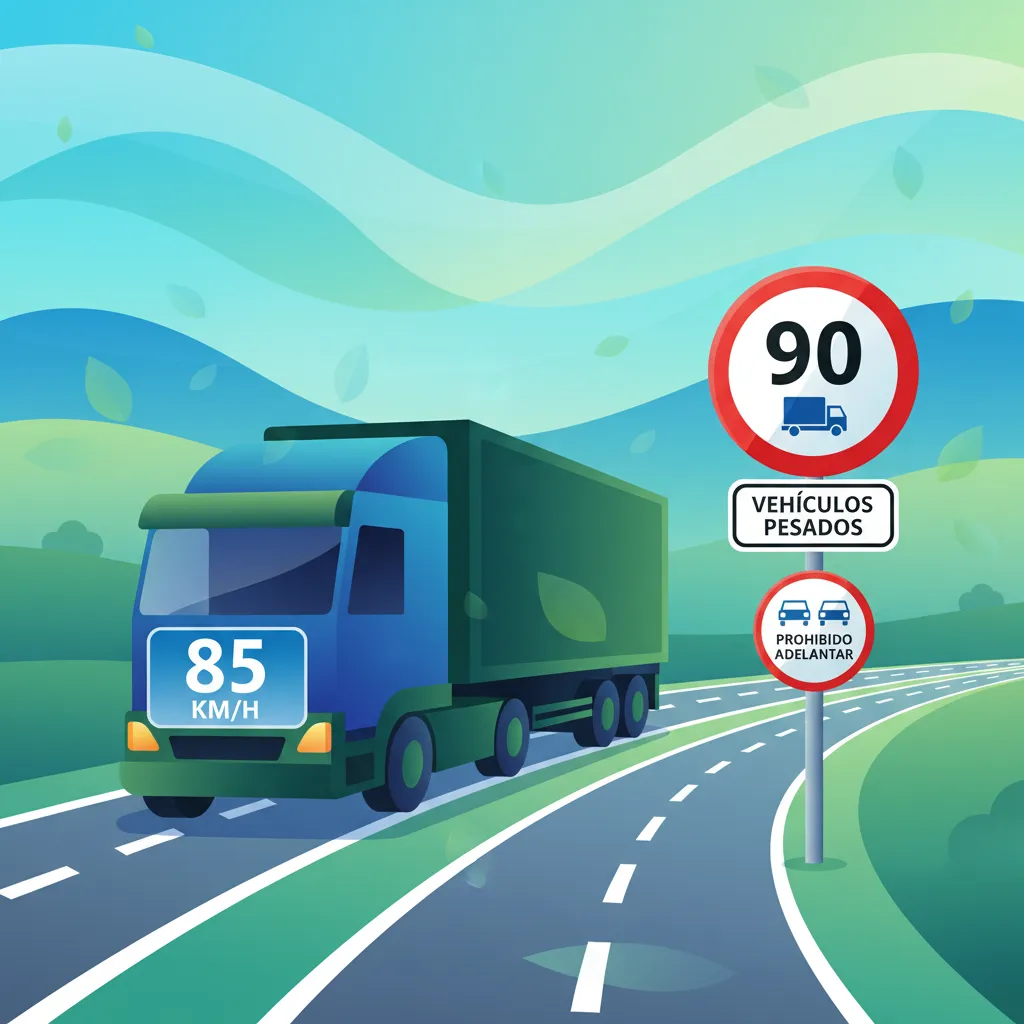
This lesson details the specific legal speed limits that apply to heavy passenger vehicles on Spanish highways, including variable speed zones that adjust based on traffic and weather conditions. Learners will understand the methods for speed monitoring, the function of speed control devices, and the legal consequences of non-compliance. The content also provides guidance on calculating a safe operating speed based on vehicle load and road conditions.
Find clear answers to common questions learners have about Alcohol, Drugs, and Impairment Regulations. Learn how the lesson is structured, which driving theory objectives it supports, and how it fits into the overall learning path of units and curriculum progression in Spain. These explanations help you understand key concepts, lesson flow, and exam focused study goals.
For moped riders and drivers with less than two years of experience, the general legal blood alcohol limit in Spain is 0.25 milligrams per litre of expired air, which is equivalent to 0.5 grams per litre of blood. However, for novice drivers, the limit is stricter, set at 0.15 milligrams per litre of expired air or 0.3 grams per litre of blood. It is always safest to aim for zero alcohol.
Yes, Spain has a strict zero-tolerance policy for driving under the influence of illicit drugs. This also applies to the presence of medicinal drugs in your system that could impair your ability to ride safely. If detected, even if prescribed, you could face severe penalties.
Penalties for riding under the influence of alcohol or drugs in Spain are severe and can include significant fines, suspension of your moped licence (and potentially other licences), and in serious cases, criminal charges. Repeated offenses or accidents caused by impairment will result in much harsher sanctions.
You should exercise extreme caution. Many medications, including some cold and allergy medicines, can cause drowsiness or affect reaction times. If a medication has side effects that could impair your ability to ride safely, you should not ride your moped. Check the medication's warnings and consult a doctor if unsure.
Spanish authorities, including traffic agents, can perform breathalyser tests for alcohol and saliva tests for drugs. These tests are mandatory if requested by an agent. Refusing a test is a serious offense, equivalent to failing it, and carries similar penalties.
Use our powerful search functionality to pinpoint specific Spanish DGT driving theory practice sets. Filter by road sign categories, traffic law topics, or question difficulty to build custom study sessions and reinforce your knowledge precisely where it matters for your official exam.