
This lesson delves into the environmental regulations for mopeds in Spain, focusing on emissions, noise, and access to Low Emission Zones (ZBE). Understanding these rules is crucial for responsible riding and passing your AM category theory exam, ensuring you know how to navigate urban areas legally and with minimal environmental impact.
Lesson content overview
Driving a moped (Category AM) in Spain comes with significant environmental responsibilities. As a rider, you must adhere to strict regulations concerning exhaust emissions, noise levels, and access restrictions in designated low-emission zones. Understanding these rules is not only crucial for legal compliance and avoiding penalties but also contributes to better air quality and a quieter urban environment for everyone. This lesson will explore the details of these regulations, the importance of environmental stickers, and how to adopt eco-driving principles.
Exhaust emissions from vehicles, including mopeds, are a major contributor to air pollution in urban areas. To mitigate this, the Spanish traffic authority (DGT) implements European Union standards, specifically Euro-V regulations, which set strict limits on the pollutants released by Category AM vehicles.
The primary harmful components regulated in moped exhaust include:
These limits ensure that new mopeds entering the market are designed to be as clean as possible. Older mopeds may have different historical standards, but the Euro-V applies to all newly registered vehicles, ensuring a gradual improvement in the overall moped fleet's environmental performance.
Before a new moped can be legally registered and used on public roads in Spain, it must undergo rigorous emission testing to confirm its compliance with Euro-V standards. This certification is a mandatory part of the vehicle's initial approval process. The results are recorded in the moped's technical documentation, serving as proof of its environmental conformity.
Modifying your moped's engine or exhaust system with non-approved aftermarket parts can significantly alter its emission levels. Such modifications can void your vehicle's compliance certificate, making it illegal to use and potentially leading to fines or the vehicle being impounded. Always ensure any parts used are approved and meet DGT standards.
Beyond air pollution, excessive noise from vehicles contributes to urban noise pollution, which can negatively impact residents' quality of life and health. To address this, mopeds are also subject to specific noise emission limits.
In Spain, Category AM mopeds must not exceed a maximum permissible sound pressure level, typically 73 dB(A). This measurement is usually taken under standardized conditions, such as with the vehicle stationary and the engine running at its maximum speed, from a set distance (e.g., 7 meters). This limit applies to the overall vehicle noise, which includes both the exhaust system and engine sounds.
Electric mopeds naturally have a significant advantage in this area, as their electric motors produce far less noise than combustion engines. Most electric mopeds easily comply, often producing less than 70 dB(A).
The exhaust system plays a critical role in controlling noise levels. Mopeds are equipped with approved mufflers designed to keep noise within legal limits. Replacing an original muffler with an unapproved aftermarket exhaust that amplifies sound is illegal. Even if an engine meets emission standards, exceeding the noise limit can lead to penalties.
Police officers can conduct roadside checks using specialized equipment to measure noise levels. If your moped is found to be excessively noisy, you could face fines, and your vehicle might even be prohibited from continuing its journey until the issue is rectified.
Many Spanish cities, particularly larger ones, have implemented Low-Emission Zones (Zonas de Bajas Emisiones, or ZBE), also known by their English equivalent, LEZ (Low-Emission Zones). These zones are designated areas where access for certain vehicles is restricted based on their emission performance. The primary goal is to improve urban air quality, especially in densely populated city centers.
ZBEs are a direct response to the need for cleaner air in urban environments and the European Union's directives on air quality. By restricting the entry of the most polluting vehicles, cities aim to reduce concentrations of harmful pollutants like NOx and particulate matter, which are linked to respiratory and cardiovascular diseases. These zones encourage the use of cleaner transport options, such as electric vehicles, public transport, cycling, or lower-emission conventional vehicles.
It's important to be aware that ZBEs can operate in different ways:
ZBEs are clearly marked with specific traffic signs that indicate the boundaries of the zone and the types of vehicles allowed or prohibited. These signs typically feature a red circle with a vehicle symbol crossed out, or specifically mention "ZBE" and often indicate which environmental stickers (Etiquetas Ambientales) are permitted.
Before entering any unfamiliar city in Spain, it's highly advisable to check for ZBEs and their specific rules, especially if you are using a moped with an older emission standard. Municipal websites and DGT resources provide up-to-date information.
The Environmental Sticker (Etiqueta Ambiental), issued by the DGT, is a crucial visual identifier that indicates a vehicle's emission class. It is essential for gaining access to ZBEs. These color-coded labels allow law enforcement and automated monitoring systems to quickly verify compliance.
For mopeds (Category AM), the relevant stickers are primarily:
You can check your vehicle's emission classification and obtain your sticker through various channels, including DGT offices, post offices (Correos), and authorized vehicle workshops. You will need your vehicle's registration certificate (Permiso de Circulación).
Once obtained, the environmental sticker must be displayed visibly on the vehicle. For mopeds, it is typically affixed to the rear windshield or a clearly visible part of the vehicle where it can be easily scanned or seen by authorities. Incorrect placement can be considered non-compliant.
Attempting to enter a ZBE without the required environmental sticker, or with an incorrect sticker, is a violation of local municipal ordinances and DGT regulations. This can result in:
Beyond strict compliance with emission and noise limits, adopting eco-driving principles is a proactive way for moped riders to minimize their environmental impact. These techniques not only reduce pollution but also improve fuel efficiency and can extend the life of your moped.
Abrupt acceleration and hard braking waste fuel and increase emissions. For mopeds, smooth and gradual throttle control is key.
For geared mopeds, using the appropriate gear is crucial for fuel efficiency and emission reduction.
An idling engine consumes fuel and emits pollutants unnecessarily. This is particularly relevant in urban traffic where stops can be frequent.
Adopting eco-driving techniques offers multiple advantages:
Practicing eco-driving is not just about environmental responsibility; it also improves your riding smoothness, comfort, and safety by promoting anticipation and controlled maneuvers.
Moped riders in Spain are bound by several mandatory environmental regulations:
All mopeds (Category AM) operating on public roads must comply with the current Euro-V emission standards (or previous Euro-4 if applicable) and the maximum noise emission limit of 73 dB(A). This compliance is verified at registration and can be checked during roadside inspections. Modifications that violate these standards are illegal.
Entry into designated Zonas de Bajas Emisiones (ZBEs) is strictly controlled. Your moped must display the correct DGT environmental sticker (Etiqueta Ambiental) corresponding to its emission class. Ignoring ZBE signage or entering a restricted zone without the proper sticker will result in fines and potential vehicle impoundment. Always be aware of local municipal ordinances and potential temporary ZBE activations during high pollution alerts.
Being aware of common pitfalls can help you avoid unintentional violations:
Environmental compliance for mopeds is not a static concept; it can be influenced by various contextual factors:
Environmental responsibility in moped riding is a critical aspect of modern driving theory. It intertwines legal compliance with ethical considerations for public health and environmental sustainability. By understanding and adhering to emission and noise regulations, displaying the correct environmental sticker, and practicing eco-driving, moped riders contribute significantly to:
Being an environmentally conscious moped rider means more than just passing an exam; it means actively participating in creating a healthier and more pleasant environment for everyone.
Spanish mopeds (Category AM) must comply with Euro-V emission limits for CO, hydrocarbons, and nitrogen oxides, and must not exceed 73 dB(A) of noise. Low-Emission Zones (ZBEs) in Spanish cities restrict access based on environmental stickers: Green 'C' for Euro-5 mopeds, Blue 'B' for Euro-4 mopeds, and no sticker for older vehicles. Entering a ZBE without the correct sticker can result in fines up to €200 and vehicle impoundment. Eco-driving practices—smooth acceleration, anticipating traffic, early gear shifts, and turning off after 30 seconds of idling—help riders reduce fuel consumption, emissions, and wear while contributing to cleaner urban air quality.
A short set of high-value points that capture the most important learning from this lesson.
Mopeds must meet Euro-V emission standards with specific limits for CO (≤20 g/kWh), HC (≤1 g/kWh), and NOx (≤2 g/kWh) to be registered in Spain.
The maximum permitted noise level for Category AM vehicles is 73 dB(A), enforced through roadside checks with specialized equipment.
Environmental stickers (Etiqueta Ambiental) classify mopeds: Green 'C' for Euro-5 compliant, Blue 'B' for Euro-4 compliant, and no sticker for pre-Euro-4 vehicles.
ZBEs (Zonas de Bajas Emisiones) restrict access based on environmental sticker class, with fines up to €200 and possible vehicle impoundment for violations.
Eco-driving techniques—smooth acceleration, early gear shifting, and turning off after 30 seconds of idling—reduce emissions, save fuel, and extend moped lifespan.
Explore all units and lessons included in this driving theory course.
Emission limits for mopeds are CO ≤20 g/kWh, HC ≤1 g/kWh, NOx ≤2 g/kWh; noise ceiling is 73 dB(A); modifications that void compliance are illegal.
Green 'C' sticker means Euro-5 (newest), Blue 'B' sticker means Euro-4, no sticker means pre-Euro-4—check yours before entering any ZBE.
Missing or incorrect environmental sticker when entering a ZBE can result in fines up to €200 and vehicle impoundment.
Temporary ZBEs can be activated during high pollution episodes and may extend restrictions beyond permanent zone boundaries.
Aftermarket exhaust modifications can make a moped exceed the 73 dB(A) noise limit even if it passes emissions standards.
Assuming a moped can enter any ZBE without checking its specific sticker category requirements.
Using an aftermarket exhaust that increases noise beyond 73 dB(A) without realizing it violates Spanish regulations.
Entering a temporary ZBE during a pollution alert without monitoring local news for activation announcements.
Leaving the engine idling for extended periods instead of turning it off after 30 seconds of being stationary.
Modifying the engine or exhaust with non-approved parts, which voids the vehicle's compliance certificate.
Lesson content overview
A short set of high-value points that capture the most important learning from this lesson.
Mopeds must meet Euro-V emission standards with specific limits for CO (≤20 g/kWh), HC (≤1 g/kWh), and NOx (≤2 g/kWh) to be registered in Spain.
The maximum permitted noise level for Category AM vehicles is 73 dB(A), enforced through roadside checks with specialized equipment.
Environmental stickers (Etiqueta Ambiental) classify mopeds: Green 'C' for Euro-5 compliant, Blue 'B' for Euro-4 compliant, and no sticker for pre-Euro-4 vehicles.
ZBEs (Zonas de Bajas Emisiones) restrict access based on environmental sticker class, with fines up to €200 and possible vehicle impoundment for violations.
Eco-driving techniques—smooth acceleration, early gear shifting, and turning off after 30 seconds of idling—reduce emissions, save fuel, and extend moped lifespan.
Explore all units and lessons included in this driving theory course.
Emission limits for mopeds are CO ≤20 g/kWh, HC ≤1 g/kWh, NOx ≤2 g/kWh; noise ceiling is 73 dB(A); modifications that void compliance are illegal.
Green 'C' sticker means Euro-5 (newest), Blue 'B' sticker means Euro-4, no sticker means pre-Euro-4—check yours before entering any ZBE.
Missing or incorrect environmental sticker when entering a ZBE can result in fines up to €200 and vehicle impoundment.
Temporary ZBEs can be activated during high pollution episodes and may extend restrictions beyond permanent zone boundaries.
Aftermarket exhaust modifications can make a moped exceed the 73 dB(A) noise limit even if it passes emissions standards.
Assuming a moped can enter any ZBE without checking its specific sticker category requirements.
Using an aftermarket exhaust that increases noise beyond 73 dB(A) without realizing it violates Spanish regulations.
Entering a temporary ZBE during a pollution alert without monitoring local news for activation announcements.
Leaving the engine idling for extended periods instead of turning it off after 30 seconds of being stationary.
Modifying the engine or exhaust with non-approved parts, which voids the vehicle's compliance certificate.
Explore search topics learners often look for when studying Emissions, Noise, and Environmental Zones. These topics reflect common questions about road rules, driving situations, safety guidance, and lesson level theory preparation for learners in Spain.
Browse additional driving theory lessons that cover connected traffic rules, road signs, and common driving situations related to this topic. Improve your understanding of how different rules interact across everyday traffic scenarios.
Understand Spanish DGT regulations for Category AM mopeds concerning exhaust emissions, noise levels, and access to low-emission zones (ZBE). Learn about environmental stickers and eco-driving principles for cleaner urban air.

This lesson introduces the different fuel types available and their environmental implications, including gasoline, diesel, and hybrid systems. It explains the specific emissions standards (Euro) applicable in Spain and the concept of low-emission zones (ZBE). Learners will understand the regulatory requirements for vehicles in these areas and strategies for reducing fuel consumption through eco-driving.
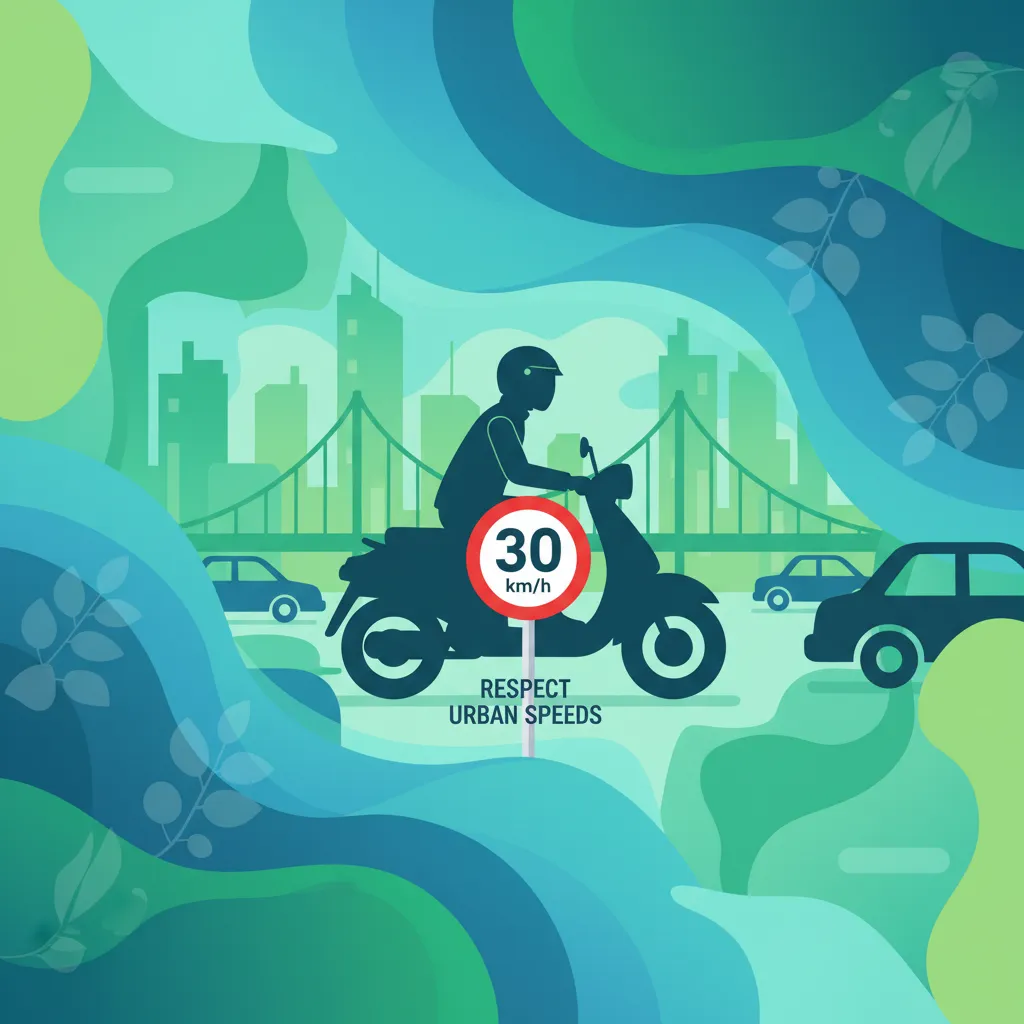
This lesson details the specific speed limits applicable to mopeds within Spanish urban areas, such as the 30 km/h limit on single-lane roads and the 50 km/h limit on roads with two or more lanes per direction. It teaches learners to identify speed zone signage and understand the legal rationale behind these restrictions. Adhering to these DGT-mandated limits is crucial for safety and avoiding penalties.
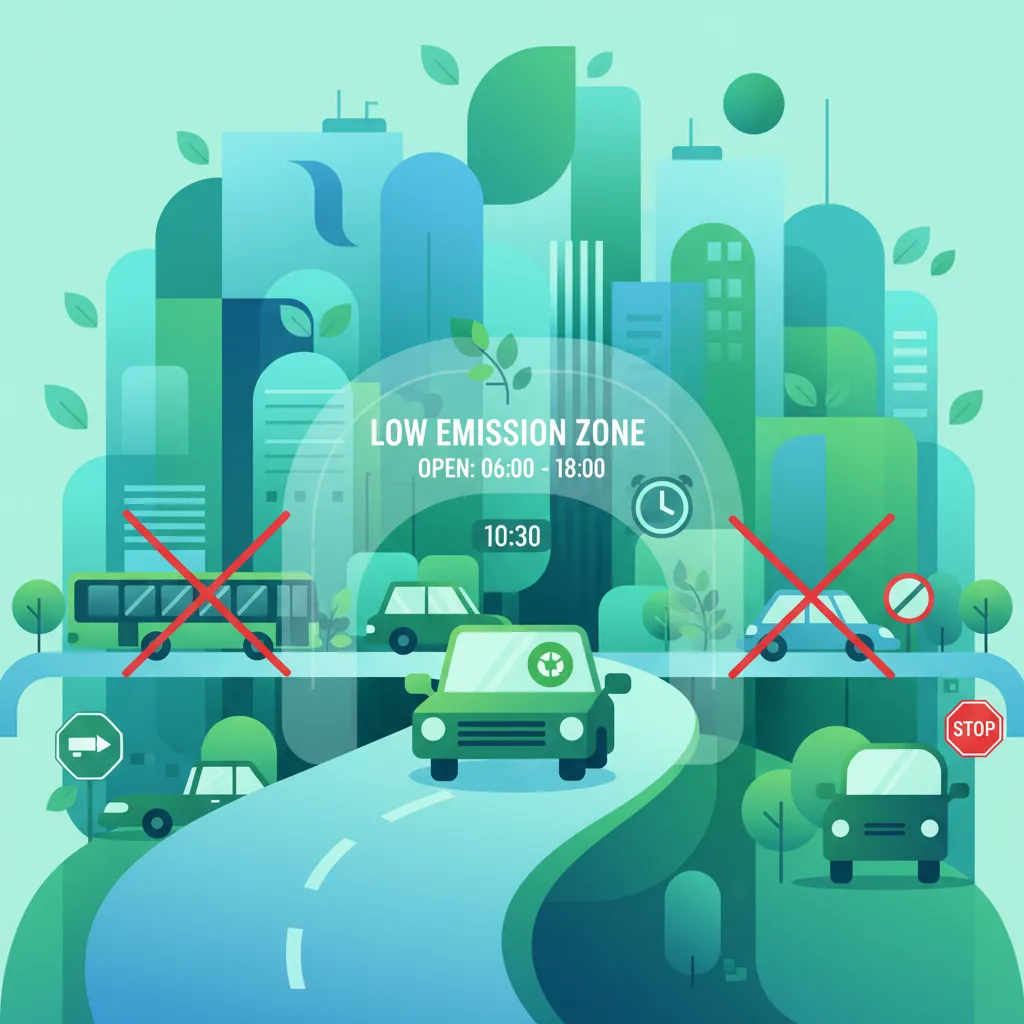
This lesson explains the various access restrictions that trucks face in modern cities. It covers the rules and requirements for entering low-emission zones (LEZ), including necessary vehicle standards and permits. The content also details time-window restrictions, where deliveries are only permitted during specific hours of the day to reduce congestion, requiring careful logistical planning.
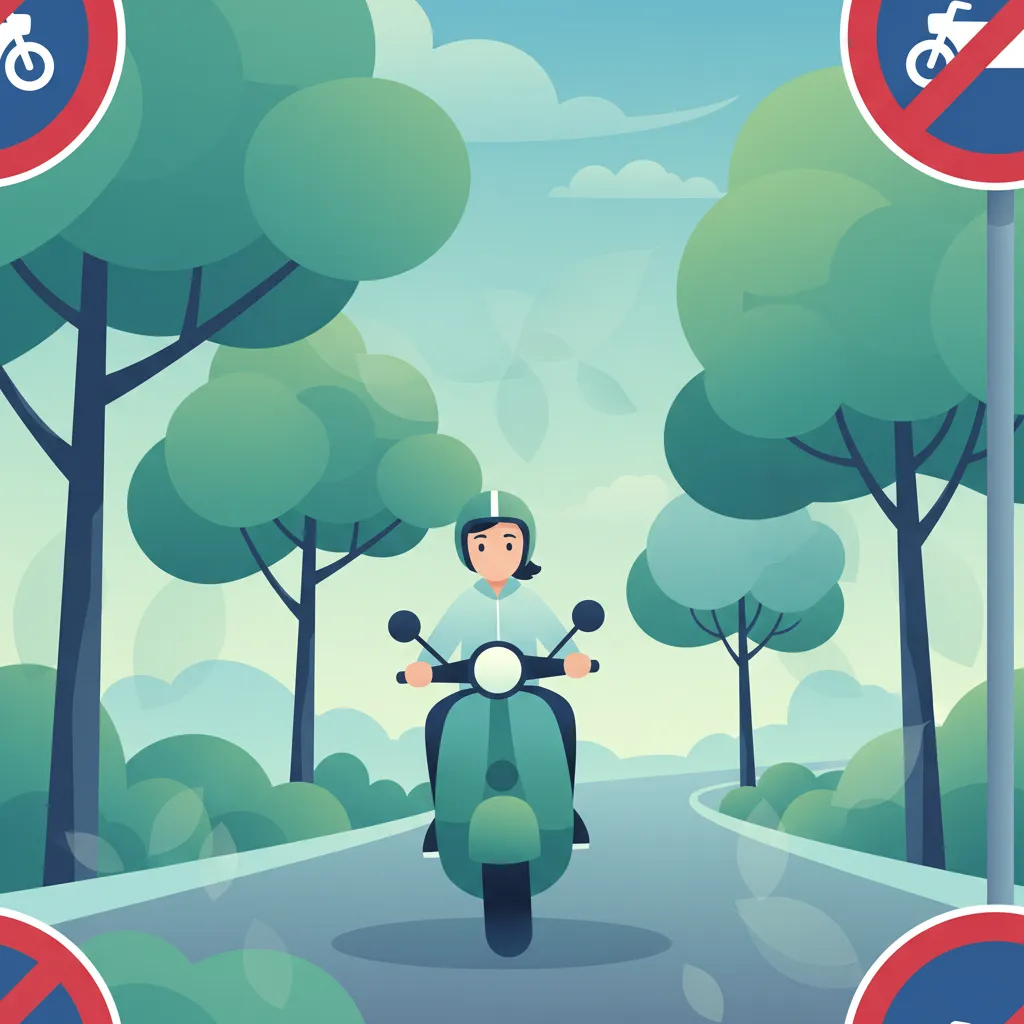
This lesson introduces the regulatory signs that impose obligations or prohibitions on road users, with a focus on those pertinent to mopeds. It covers common signs such as speed limits, 'no entry', and mandatory turn directions, explaining how their shape and color indicate their function. Learners will be able to identify and correctly interpret these signs to navigate urban road networks legally and safely, avoiding potential fines.

This lesson provides a detailed guide to safely starting a moped, from the ignition sequence to the coordinated use of the throttle and brakes. It explains the importance of a pre-ride checklist to verify lights and controls are functional. The content also covers techniques for achieving smooth acceleration from a standstill and performing controlled stops, which is crucial for managing stop-and-go urban traffic conditions.
This lesson outlines the mandatory lighting and visibility equipment as per DGT regulations. It covers the correct use of headlights (low and high beams), taillights, and turn signals, ensuring the moped is visible to others, especially at night or in poor weather. The importance of wearing high-visibility or reflective clothing is also emphasized as a critical measure to enhance personal safety by making the rider more conspicuous.

This lesson clarifies the technical classification of mopeds under Spanish law, differentiating them from motorcycles based on engine displacement not exceeding 50cc and specific power limits. It explains how these specifications impact vehicle categorization, registration, and permissible road speed. The content also covers how electric mopeds fit within the same legal framework and the implications for their use on public roads.

This lesson focuses on eco-driving practices that reduce fuel consumption and lower vehicle emissions. It explains techniques such as maintaining a steady speed, smooth acceleration and braking, and selecting the optimal gear. The content also covers how factors like proper tire pressure and reduced use of air conditioning contribute to better fuel efficiency and a smaller environmental footprint.
This lesson focuses on the optimal position for a moped within a traffic lane to maximize visibility and safety. It discusses the importance of maintaining a safety buffer from other vehicles and hazards, particularly the risk posed by the doors of parked cars. The content explains how to use lane positioning strategically to discourage unsafe overtaking and to be clearly seen by drivers in front and behind, especially when approaching intersections.
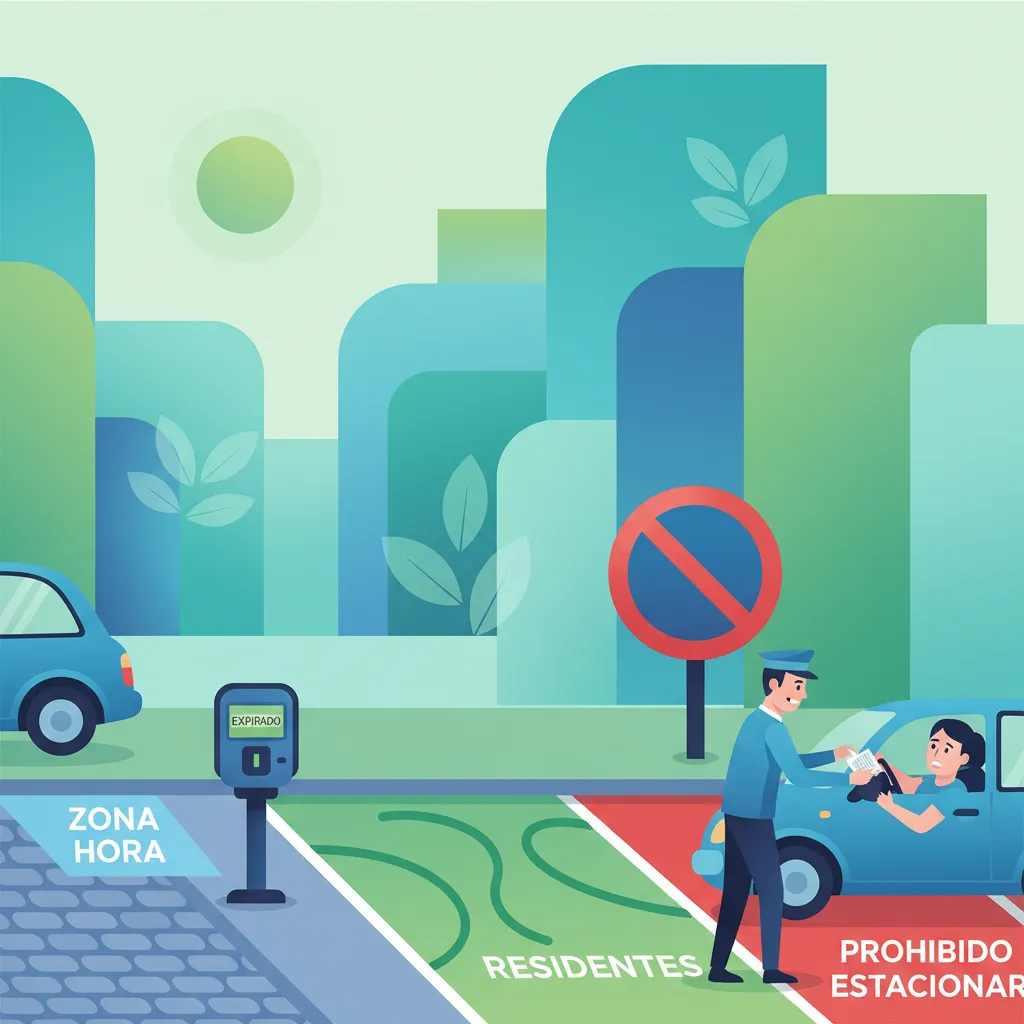
This lesson outlines the legal framework surrounding parking regulations in Spain, including the identification of regulated zones (e.g., ORA/SER), no-parking areas, and disabled parking spaces. It explains DGT signage interpretation and how improper parking can affect traffic flow and result in penalties. Learners will understand the regulatory environment to comply with parking laws and avoid fines.
Learn how to obtain and display the DGT environmental sticker for your moped in Spain. This lesson explains the requirements for entering Low-Emission Zones (ZBE) and the consequences of non-compliance.
This lesson introduces the different fuel types available and their environmental implications, including gasoline, diesel, and hybrid systems. It explains the specific emissions standards (Euro) applicable in Spain and the concept of low-emission zones (ZBE). Learners will understand the regulatory requirements for vehicles in these areas and strategies for reducing fuel consumption through eco-driving.
This lesson introduces the regulatory signs that impose obligations or prohibitions on road users, with a focus on those pertinent to mopeds. It covers common signs such as speed limits, 'no entry', and mandatory turn directions, explaining how their shape and color indicate their function. Learners will be able to identify and correctly interpret these signs to navigate urban road networks legally and safely, avoiding potential fines.
This lesson outlines the mandatory lighting and visibility equipment as per DGT regulations. It covers the correct use of headlights (low and high beams), taillights, and turn signals, ensuring the moped is visible to others, especially at night or in poor weather. The importance of wearing high-visibility or reflective clothing is also emphasized as a critical measure to enhance personal safety by making the rider more conspicuous.
This lesson explains the various access restrictions that trucks face in modern cities. It covers the rules and requirements for entering low-emission zones (LEZ), including necessary vehicle standards and permits. The content also details time-window restrictions, where deliveries are only permitted during specific hours of the day to reduce congestion, requiring careful logistical planning.
This lesson details the specific speed limits applicable to mopeds within Spanish urban areas, such as the 30 km/h limit on single-lane roads and the 50 km/h limit on roads with two or more lanes per direction. It teaches learners to identify speed zone signage and understand the legal rationale behind these restrictions. Adhering to these DGT-mandated limits is crucial for safety and avoiding penalties.
This lesson outlines the compulsory equipment and documentation required for an AM-class vehicle. It emphasizes the legal mandate for an approved helmet, a valid insurance policy, and a vehicle registration plate. Learners will also understand the requirements for the roadworthiness certificate (ITV) and other essential documents needed to prove compliance with DGT safety and legal standards during a traffic stop.

This lesson details the specific prerequisites for obtaining an AM licence, starting with the minimum age of fifteen and the mandatory medical fitness certificate. It guides learners through the administrative process at the DGT, including required identification, proof of residence, and parental consent for minors. The content explains the role of driving schools and the necessary steps for exam registration, ensuring a clear understanding of the entire application procedure.
This lesson outlines the legal framework surrounding parking regulations in Spain, including the identification of regulated zones (e.g., ORA/SER), no-parking areas, and disabled parking spaces. It explains DGT signage interpretation and how improper parking can affect traffic flow and result in penalties. Learners will understand the regulatory environment to comply with parking laws and avoid fines.
This lesson clarifies the technical classification of mopeds under Spanish law, differentiating them from motorcycles based on engine displacement not exceeding 50cc and specific power limits. It explains how these specifications impact vehicle categorization, registration, and permissible road speed. The content also covers how electric mopeds fit within the same legal framework and the implications for their use on public roads.
Find clear answers to common questions learners have about Emissions, Noise, and Environmental Zones. Learn how the lesson is structured, which driving theory objectives it supports, and how it fits into the overall learning path of units and curriculum progression in Spain. These explanations help you understand key concepts, lesson flow, and exam focused study goals.
A Low Emission Zone (Zona de Bajas Emisiones - ZBE) is a restricted area within a Spanish city where access and circulation are limited to vehicles that meet specific environmental standards. For mopeds, this typically means they need the correct environmental sticker (pegatina ambiental) to enter these zones, particularly during certain hours or on specific days.
The required environmental sticker depends on the moped's age and its Euro emission standard. Generally, newer mopeds with more advanced emission controls will receive a better sticker (e.g., 'C' or 'ECO'). You can usually check your moped's registration documents or consult the DGT's official resources to determine its category and the corresponding sticker needed for ZBE access.
Entering a Low Emission Zone in Spain without the appropriate environmental sticker or in violation of the zone's rules can result in fines. These fines are enforced by local authorities and can vary. It's essential to ensure your moped is properly registered with the correct environmental classification before attempting to ride in a ZBE.
Eco-driving involves adopting smoother riding habits that minimize fuel consumption and therefore reduce harmful emissions. For mopeds, this means avoiding rapid acceleration and hard braking, maintaining a steady speed, and minimizing idling time when stopped. These practices not only benefit the environment but can also save you money on fuel.
Yes, Spanish traffic regulations specify maximum noise levels for all vehicles, including mopeds, to reduce noise pollution in urban areas. Riders are responsible for ensuring their moped's exhaust system is in good condition and complies with these legal noise limits.
Use our powerful search functionality to pinpoint specific Spanish DGT driving theory practice sets. Filter by road sign categories, traffic law topics, or question difficulty to build custom study sessions and reinforce your knowledge precisely where it matters for your official exam.