Embarking on your journey to a Spanish driving license for categories B or BE begins with understanding the essential administrative steps. This lesson clarifies the specific documentation, age requirements, and official procedures you'll need to follow according to DGT regulations, setting a solid foundation for your application process.

Lesson content overview
Navigating the process of obtaining a Spanish driving license for categories B and BE requires meticulous attention to documentation and adherence to official DGT (Dirección General de Tráfico) protocols. This lesson provides a comprehensive guide to all mandatory requirements, ensuring a smooth application journey from initial registration to exam eligibility. Understanding these steps is paramount, as any oversight can lead to significant delays, additional costs, or even outright rejection of your application.
The foundation of the Spanish driving license acquisition process rests heavily on verified documentation. The DGT, as the governing body, mandates specific identity, residency, and health checks to uphold public safety and administrative integrity. These requirements are not mere formalities; they are critical safeguards designed to prevent fraud, ensure all drivers meet minimum fitness standards, and maintain accurate records within the national traffic system. This section outlines the core principles behind these stringent requirements.
The first and most fundamental step is to confirm your legal identity. This ensures that the driving license is linked to a unique and verifiable individual, preventing impersonation and ensuring accountability.
For Spanish citizens, the primary document is the Documento Nacional de Identidad (DNI). Foreign residents in Spain must present their Número de Identificación de Extranjero (NIE) along with a valid, non-expired passport. These documents serve as definitive proof of identity and are crucial for age verification. For category B, applicants must be at least 18 years old, and for category BE, the minimum age is 21, or 18 if a provisional B license is already held and a specific trailer theory module completed. Ensuring your identification document is current and matches all names on the DGT application form is critical.
Using an expired DNI, NIE, or passport will result in immediate rejection of your application. Always verify the expiry date of your identification documents before initiating the application process.
Beyond identity, establishing your legal residence in Spain is a mandatory requirement, particularly for non-Spanish nationals seeking a Spanish driving license. This ensures that you are subject to Spanish traffic laws and can be contacted for official communications, such as notifications regarding fines or license renewals.
Commonly accepted documents include an Empadronamiento certificate (municipal registration), which formally registers your presence in a Spanish municipality. Alternatively, recent utility bills (water, electricity, or gas) in your name, or a signed and dated rental contract, can serve as proof. The DGT typically requires these documents to be dated within the last three months to ensure the information is current.
An Empadronamiento certificate is often the most straightforward and universally accepted proof of residence. Ensure it is recent; a certificate older than three months may be considered outdated.
A cornerstone of road safety in Spain is the mandatory psicotécnico, or psychotechnical medical certificate. This comprehensive health assessment ensures that all drivers meet the minimum physical and psychological standards required to safely operate a vehicle.
During a psicotécnico examination, a DGT-authorised medical centre will evaluate various aspects of your health, including:
This certificate is a prerequisite for enrolling in any driver training program and for the final license application. For categories B and BE, it is typically valid for up to five years, though this period can be shorter for older drivers (e.g., those over 65 years old) or individuals with specific medical conditions. It is crucial to obtain this certificate from a centre explicitly authorised by the DGT; a generic doctor's note will not be accepted.
The Modelo 1-101 is the official DGT application form, serving as your formal request for a driving license. This document synthesises all your personal data, the specific license category you are applying for, and declarations of residency and medical fitness.
The form must be completed accurately in Spanish and signed, either physically or digitally if submitting online. Errors or omissions can lead to processing delays or rejection. Applicants have the option of electronic submission via the DGT’s online portal, which often includes a small discount on fees, or paper submission at a local Traffic Authority office. When submitting online, scanned copies of all supporting documents (DNI/NIE, proof of residence, medical certificate) must be uploaded.
Document Collection: Gather all mandatory documents, including identification, proof of residence, and the medical certificate.
Form Completion: Accurately fill out the DGT Modelo 1-101 application form.
Fee Payment: Pay all required administrative and examination fees.
Submission: Submit the complete application package (either online or in person).
Registration Number Receipt: Receive an official registration number from the DGT.
Exam Scheduling: Use your registration number to schedule your theory exam.
Acquiring a Spanish driving license involves several administrative fees. These charges cover the DGT's processing costs, the medical examination, and other related services. Understanding the fee structure is vital for budgeting and ensuring your application is fully paid.
The main components of the fee structure typically include:
Payments can generally be made via bank transfer, credit card, or directly at a DGT Traffic Office. It's worth noting that online payments for the DGT application fee often qualify for a small discount, typically around 3%. Crucially, the application will not be processed until all required fees have been paid in full. Partial payments will lead to a halt in the process.
Age thresholds are strict statutory requirements for obtaining a driving license in Spain, aligning with safety research and international standards regarding driver maturity and risk perception.
For Category B – the standard license for passenger cars with a maximum authorised mass (MAM) not exceeding 3,500 kg and designed for the transport of no more than eight passengers in addition to the driver – the minimum age is 18 years. Your identity document will be used to verify this requirement. Applying before this age will result in an automatic denial.
The Category BE license is an extension of Category B, allowing drivers to tow heavier trailers. Specifically, it permits driving vehicle combinations where the towing vehicle is a Category B vehicle and the maximum authorised mass of the trailer exceeds 750 kg, provided the combined MAM of the vehicle and trailer does not exceed 7,000 kg.
The minimum age for obtaining a Category BE license is 21 years. However, there is an exception: you can apply for a BE license at 18 years old if you already hold a provisional B license and have successfully completed a specific theory module for trailer handling. This pathway allows younger drivers who demonstrate competence and undertake additional training to qualify earlier.
Attempting to apply for a Category BE license at 19 years old without having completed the provisional B license requirements and the specific trailer theory module will lead to the rejection of your application.
Obtaining your driving license is not a one-time event; it requires periodic renewal to ensure drivers continue to meet health and administrative standards. The DGT sets specific renewal intervals and requirements.
For drivers under 65 years of age, a Spanish driving license for categories B and BE must be renewed every 10 years. This standard interval provides a regular checkpoint for the DGT to update records and verify ongoing fitness to drive.
Drivers who are 65 years of age or older face accelerated renewal intervals. For this age group, the license must be renewed every 5 years. This shorter period reflects a greater emphasis on periodic medical reassessment, acknowledging that health conditions can change more rapidly with age.
Each renewal, regardless of age, necessitates a new psicotécnico medical certificate. This ensures that any changes in visual, auditory, motor, or cognitive functions are assessed, and that the driver remains fit to operate a vehicle safely. The renewal process often mirrors the initial application, requiring updated identity verification, the medical certificate, and payment of the applicable renewal fee. It is advisable to initiate the renewal process at least 30 days before your license's expiry date to avoid any penalties for driving with an expired license.
Awareness of common errors can significantly streamline your application process and prevent unnecessary frustrations. Here are some frequent issues and how to circumvent them:
Every requirement in the Spanish driving license application process serves a crucial safety purpose, designed to protect all road users.
These regulations collectively create a robust framework that supports responsible driving and contributes significantly to reducing road accidents and fatalities across Spain.
Successfully obtaining or renewing your Spanish driving license for categories B and BE hinges on fulfilling specific documentation and procedural requirements mandated by the DGT.
This lesson covers the essential documents and procedures required to apply for a Spanish Category B or BE driving licence through the DGT. Key requirements include a valid identity document (DNI or NIE plus passport), recent proof of residence such as an Empadronamiento certificate, and a psicotécnico medical certificate from an authorised centre confirming physical and psychological fitness to drive. Age thresholds are strict (18 for Category B, 21 for Category BE with some exceptions), and renewal intervals depend on age, ranging from 10 years for drivers under 65 to 5 years for those 65 and older. Understanding these administrative requirements and avoiding common pitfalls such as expired documents or incomplete forms is essential for a smooth application process.
A short set of high-value points that capture the most important learning from this lesson.
Valid identification (DNI for Spanish citizens, NIE plus passport for foreign residents) is mandatory and must not be expired when applying for a Spanish driving license.
The psicotécnico medical certificate from a DGT-authorised centre is a prerequisite for both enrolling in driver training and submitting your final license application.
Category B requires a minimum age of 18 years; Category BE requires 21 years, except for 18-year-olds who hold a provisional B license and have completed specific trailer training.
Proof of residence must be recent, typically within the last three months, with Empadronamiento being the most universally accepted document.
Licenses must be renewed every 10 years for drivers under 65, and every 5 years for drivers aged 65 and older, each renewal requiring a new psicotécnico.
Explore all units and lessons included in this driving theory course.
Use only DGT-authorised medical centres for the psicotécnico; a standard doctor's note will not be accepted.
Empadronamiento certificates older than three months may be considered outdated and rejected by the DGT.
Online fee payments for the DGT application often qualify for a small discount (around 3%).
The Modelo 1-101 must be completed accurately in Spanish; errors or omissions can lead to processing delays or rejection.
Initiate license renewal at least 30 days before expiry to avoid penalties for driving with an expired license.
Submitting the application with expired identification documents (DNI, NIE, or passport) will cause immediate rejection.
Assuming any medical certificate is sufficient; only certificates from DGT-authorised centres are accepted.
Applying for a Category BE license at age 19 without meeting the provisional B and trailer training requirements will result in rejection.
Submitting incomplete or unsigned application forms on the Modelo 1-101, causing processing delays.
Paying only partial fees instead of the full amount, which halts the entire application process until the balance is cleared.
Lesson content overview
A short set of high-value points that capture the most important learning from this lesson.
Valid identification (DNI for Spanish citizens, NIE plus passport for foreign residents) is mandatory and must not be expired when applying for a Spanish driving license.
The psicotécnico medical certificate from a DGT-authorised centre is a prerequisite for both enrolling in driver training and submitting your final license application.
Category B requires a minimum age of 18 years; Category BE requires 21 years, except for 18-year-olds who hold a provisional B license and have completed specific trailer training.
Proof of residence must be recent, typically within the last three months, with Empadronamiento being the most universally accepted document.
Licenses must be renewed every 10 years for drivers under 65, and every 5 years for drivers aged 65 and older, each renewal requiring a new psicotécnico.
Explore all units and lessons included in this driving theory course.
Use only DGT-authorised medical centres for the psicotécnico; a standard doctor's note will not be accepted.
Empadronamiento certificates older than three months may be considered outdated and rejected by the DGT.
Online fee payments for the DGT application often qualify for a small discount (around 3%).
The Modelo 1-101 must be completed accurately in Spanish; errors or omissions can lead to processing delays or rejection.
Initiate license renewal at least 30 days before expiry to avoid penalties for driving with an expired license.
Submitting the application with expired identification documents (DNI, NIE, or passport) will cause immediate rejection.
Assuming any medical certificate is sufficient; only certificates from DGT-authorised centres are accepted.
Applying for a Category BE license at age 19 without meeting the provisional B and trailer training requirements will result in rejection.
Submitting incomplete or unsigned application forms on the Modelo 1-101, causing processing delays.
Paying only partial fees instead of the full amount, which halts the entire application process until the balance is cleared.
Explore search topics learners often look for when studying Licensing Requirements and Documentation. These topics reflect common questions about road rules, driving situations, safety guidance, and lesson level theory preparation for learners in Spain.
Browse additional driving theory lessons that cover connected traffic rules, road signs, and common driving situations related to this topic. Improve your understanding of how different rules interact across everyday traffic scenarios.
Learn about the essential documents needed for your Spanish Category B or BE driving license application. This includes identification, proof of residence, medical certificates, and understanding the official DGT application steps and fees.

In this lesson, the structure and administration of the driving licence examinations are explained, covering both the theory and practical components. It details the format of the multiple-choice theory test, the pass criteria, and the process of registering for examinations through the DGT platform. The content also discusses test locations, scheduling, and the issuance of certification upon successful completion.
This lesson defines the minimum legal ages for driving categories B and BE and explains the importance of medical fitness for safe vehicle operation. It covers the specific health criteria set by the DGT, such as visual acuity, hearing capacity, and other physical capabilities. The content also outlines the distinctions between the two categories, focusing on the legal permissions and requirements for each.

This lesson provides a detailed breakdown of the D and D1 license categories, defining the vehicle dimensions and passenger capacities for each. It explains the DGT's eligibility requirements, including minimum age, medical certification, and mandatory psychological assessments for professional drivers. Learners will understand the complete procedural path to obtaining a professional bus or coach license in Spain.
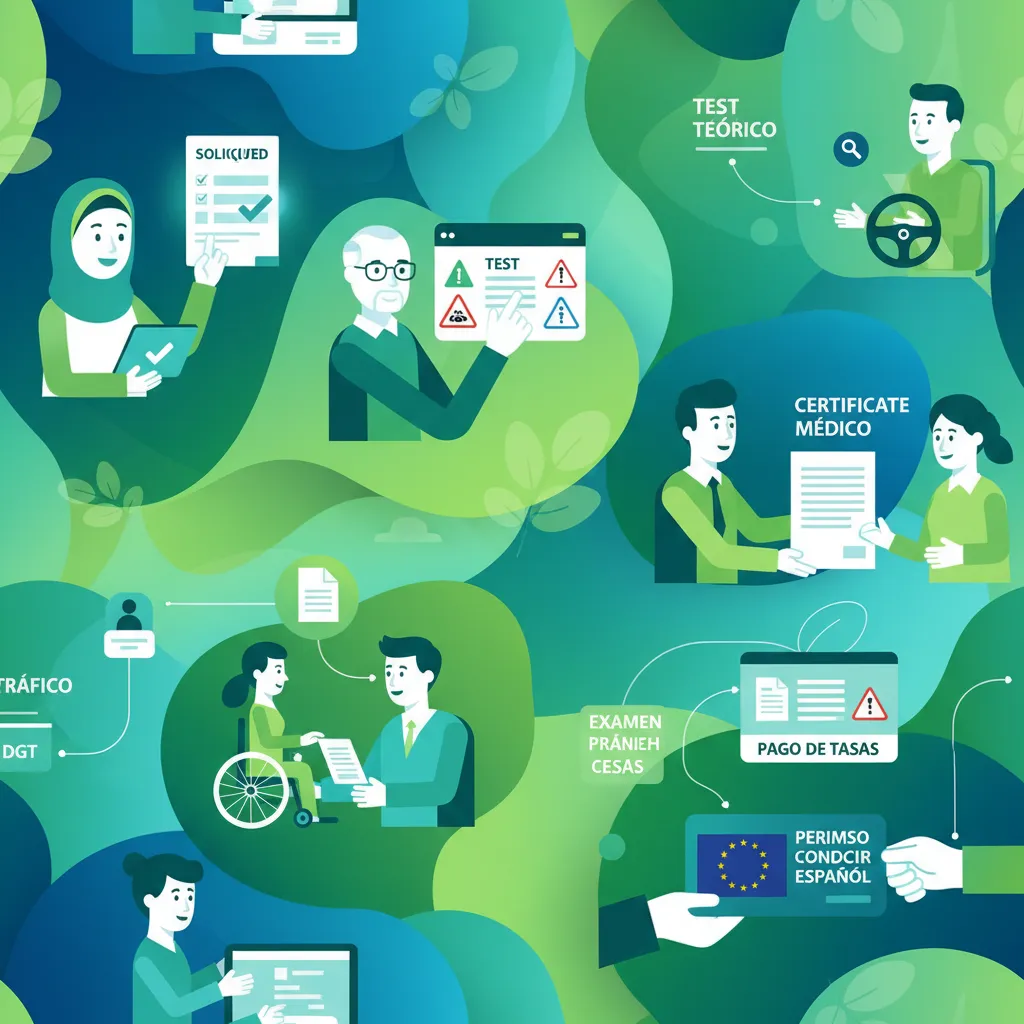
This lesson provides a step-by-step guide to the licensing process for professional truck drivers in Spain. It covers the necessary administrative procedures, including the mandatory medical examination and psychotechnical tests required for eligibility. Learners will understand the full scope of documentation needed for the application, such as training certificates and identity verification, to ensure a smooth process.
This lesson details the specific prerequisites for obtaining an AM licence, starting with the minimum age of fifteen and the mandatory medical fitness certificate. It guides learners through the administrative process at the DGT, including required identification, proof of residence, and parental consent for minors. The content explains the role of driving schools and the necessary steps for exam registration, ensuring a clear understanding of the entire application procedure.
Understand the minimum age requirements for Category B and BE driving licenses in Spain. This lesson also details the official procedures and intervals for renewing your Spanish driving license, including medical checks.
This lesson defines the minimum legal ages for driving categories B and BE and explains the importance of medical fitness for safe vehicle operation. It covers the specific health criteria set by the DGT, such as visual acuity, hearing capacity, and other physical capabilities. The content also outlines the distinctions between the two categories, focusing on the legal permissions and requirements for each.
This lesson provides a step-by-step guide to the licensing process for professional truck drivers in Spain. It covers the necessary administrative procedures, including the mandatory medical examination and psychotechnical tests required for eligibility. Learners will understand the full scope of documentation needed for the application, such as training certificates and identity verification, to ensure a smooth process.
In this lesson, the structure and administration of the driving licence examinations are explained, covering both the theory and practical components. It details the format of the multiple-choice theory test, the pass criteria, and the process of registering for examinations through the DGT platform. The content also discusses test locations, scheduling, and the issuance of certification upon successful completion.
This lesson details the specific prerequisites for obtaining an AM licence, starting with the minimum age of fifteen and the mandatory medical fitness certificate. It guides learners through the administrative process at the DGT, including required identification, proof of residence, and parental consent for minors. The content explains the role of driving schools and the necessary steps for exam registration, ensuring a clear understanding of the entire application procedure.
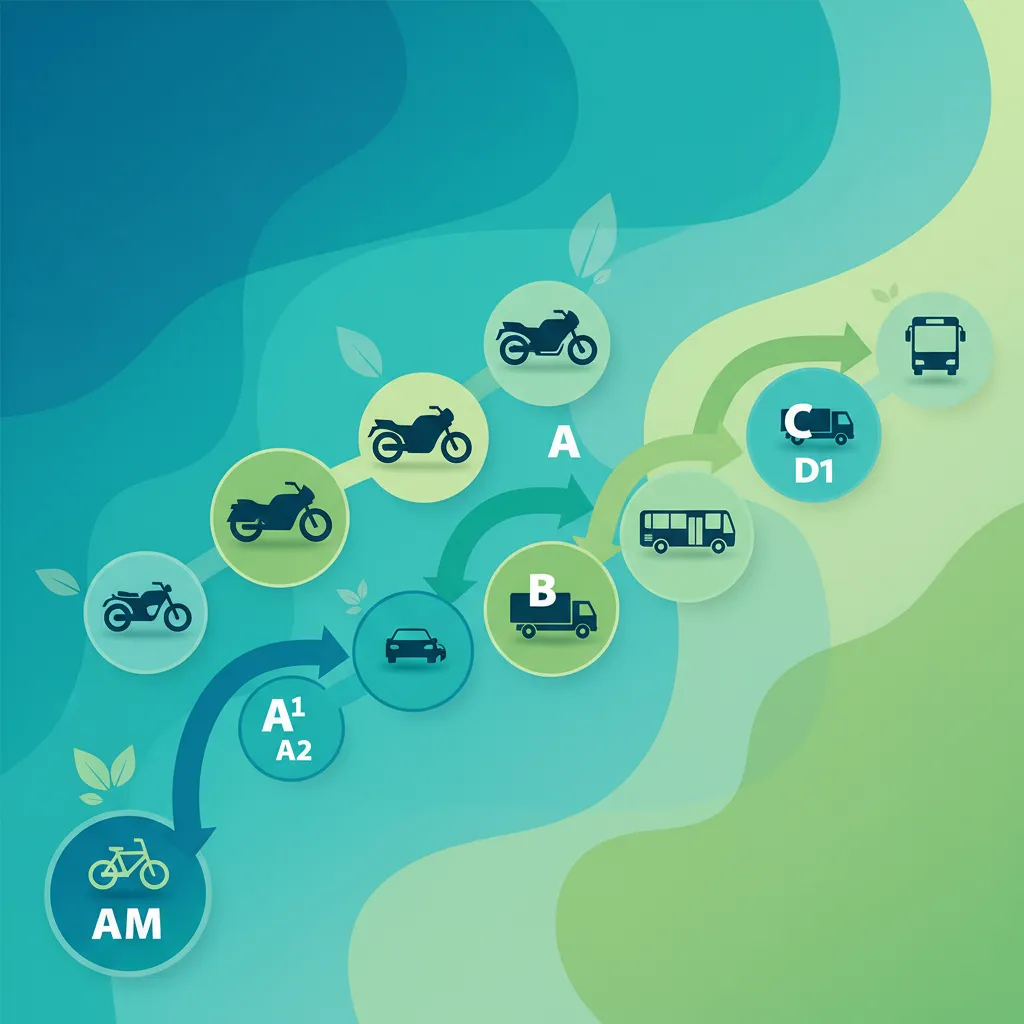
This lesson details the A1, A2, and A motorcycle licence categories recognized by the DGT, focusing on technical specifications like engine displacement and power limits. It explains the progressive licensing path, age thresholds, and mandatory training requirements for each stage. The content also covers the administrative procedures for applying and the legal responsibilities of each licence holder.
This lesson provides a detailed breakdown of the D and D1 license categories, defining the vehicle dimensions and passenger capacities for each. It explains the DGT's eligibility requirements, including minimum age, medical certification, and mandatory psychological assessments for professional drivers. Learners will understand the complete procedural path to obtaining a professional bus or coach license in Spain.
Find clear answers to common questions learners have about Licensing Requirements and Documentation. Learn how the lesson is structured, which driving theory objectives it supports, and how it fits into the overall learning path of units and curriculum progression in Spain. These explanations help you understand key concepts, lesson flow, and exam focused study goals.
The 'psicotécnico' is a medical and psychotechnical evaluation that assesses your physical and mental fitness to drive. It's a mandatory requirement set by the DGT to ensure all drivers meet the necessary health standards for safe operation of a vehicle. You must obtain this certificate from an authorized examination center before you can finalize your license application.
For Category B (standard car), you must be at least 18 years old. For Category BE (car with a heavy trailer), you must also be at least 18 years old, but you must already hold a Category B license. The BE license has specific requirements regarding the weight and type of trailer you can tow.
While you can often begin gathering some documentation, such as the 'psicotécnico', before your 18th birthday, you cannot officially submit your application or take the theory exam until you are at least 18 years old for Category B. The DGT outlines specific timelines for when each step can be completed.
Your medical certificate ('psicotécnico') has a validity period. If it expires before you complete your theory test and practical exam, you will be required to undergo another examination and obtain a new certificate. It's important to check the expiration date and plan your test dates accordingly to avoid this.
Yes, you typically need to provide official documentation proving your legal residence in Spain. This could be a certificate of residence ('certificado de empadronamiento') or other official identification that confirms your address within the country. The DGT uses this to verify you meet the residency requirements for obtaining a Spanish license.
Use our powerful search functionality to pinpoint specific Spanish DGT driving theory practice sets. Filter by road sign categories, traffic law topics, or question difficulty to build custom study sessions and reinforce your knowledge precisely where it matters for your official exam.